History of DYTEX
The History of DYTEX: Tracing the Journey of a Crypto Asset
DYTEX, a blockchain-driven crypto asset, has a history rooted in both innovative ambition and early operational challenges. Its inception can be traced back to a foundational whitepaper that proposed a unique dual-layer protocol aimed at scalability without sacrificing decentralization. This concept resonated with crypto enthusiasts who were keenly aware of the limitations inherent in first-generation blockchains. However, the road to adoption was anything but smooth.
The project officially launched its token distribution via a limited token sale. By opting for a capped private pre-sale followed by a token auction, DYTEX aimed to attract strategic investors while simultaneously avoiding criticisms of rampant centralization often associated with initial coin offerings (ICOs) during the same era. Despite these efforts, early transparency concerns were raised due to a lack of detailed disclosures surrounding wallet distribution and token vesting timelines. This resulted in skepticism from certain segments of the crypto community.
DYTEX's mainnet activation marked a milestone in its history. Leveraging an innovative consensus mechanism blending Proof of Stake (PoS) with time-bound governance, the chain promised high throughput while maintaining validator alignment. However, early technical hiccups marred its launch, including sporadic network outages and delays in enabling certain core features. Critics pointed to these issues as indicative of insufficient stress testing prior to the mainnet going live, though developers insisted that iterative improvement was a deliberate part of their roadmap.
One of the defining moments in the history of DYTEX was an unexpected fork necessitated by the discovery of a critical vulnerability in its smart contract framework. This was a pivotal episode that split the community between those advocating for immediate remediation via the fork and others pushing back, citing concerns over immutability principles. While the network ultimately implemented the fix and regained stability, the event highlighted lingering governance challenges, particularly related to how its decision-making structures operated under pressure.
Over time, DYTEX grew to boast diverse use cases, including decentralized finance applications, gaming integrations, and asset tokenization platforms. Yet, the crypto asset’s climb has not been without contention. Questions regarding chain interoperability and its relatively high barrier to entry for new validators remain unresolved, leaving a mixed historical legacy marked by both technological promise and notable growing pains.
How DYTEX Works
How Dytex Works: A Detailed Breakdown of Its Core Mechanisms
Dytex operates as a layer-1 blockchain protocol designed to prioritize high-frequency transactions and data-intensive smart contracts. Its architecture combines a unique consensus mechanism, dubbed Proof-of Temporal Staking (PoTS), and a modular approach to scalability, making it distinct within the crypto landscape. Below, we explore the specific workings of Dytex.
Proof-of-Temporal Staking (PoTS)
At the core of Dytex lies its proprietary consensus mechanism, Proof-of-Temporal Staking (PoTS). Unlike Proof-of-Stake (PoS) protocols that reward validators based primarily on the size of their staked assets, PoTS incorporates a time parameter. Validator eligibility and rewards are influenced not only by the staked amount but by how long the tokens have been continuously staked. This incentivizes long-term participation and reduces sudden token liquidity events that can destabilize the network.
However, PoTS is not without criticism. Critics highlight its tendency to disadvantage newer participants; those joining late often find themselves at a competitive disadvantage against long-standing validators with significant accumulated temporal weight, leading to a decentralized ecosystem in theory but potentially oligarchic in practice.
Modular Smart Contract Execution
Dytex employs a modular execution layer for smart contracts, breaking down deployment processes into discrete modules, including computation, validation, and data storage. This approach reduces resource strain on individual nodes and allows for concurrent execution of multiple contracts.
While this modularity enhances performance, the complexity of implementation has drawn attention. Developers cite a steep learning curve due to Dytex-specific frameworks, which differ significantly from more standardized smart contract platforms like Ethereum. Moreover, this design necessitates higher gas fees on certain operations, a tradeoff for scalability that could deter users with smaller balances.
Cross-Chain Data Relay
Dytex leverages a cross-chain data relay mechanism via Merkleized state commitments. A specific "bridge layer" allows users to transfer assets and information across decentralized networks without requiring third-party custodians. This interoperability positions Dytex as a viable solution for multi-chain ecosystems.
Yet, security concerns remain a sore point for cross-chain enthusiasts. Similar mechanisms on other networks have been vulnerable to exploits, and Dytex's bridge has been critiqued for its relative centralization during its chain relay validation process—validators tend to default to a small subset of nominated nodes for efficiency.
Microblock Technology
Dytex processes transactions using microblocks—smaller block units released in rapid succession. Microblocks prevent transaction bottlenecks during high-traffic periods, enabling Dytex to achieve sub-second finality.
This speed, however, introduces challenges in node synchronization, especially for participants with lower bandwidth or slower hardware. As a result, lightweight nodes may struggle to stay updated with the chain's pace, creating potential points of exclusion. Additionally, rapid finality decreases the "error recovery window," which means transactions cannot be reverted once confirmed.
Use Cases
Exploring the Use Cases of DYTEX: Unlocking Potential and Understanding Limitations
DYTEX is a blockchain-based crypto asset that has carved its niche through a focus on utility-driven applications. Here, we’ll examine its specific use cases while highlighting both its potential and the considerations that accompany its functionality.
Cross-Chain Liquidity Management
DYTEX facilitates decentralized liquidity solutions across multiple blockchain ecosystems. This interoperability makes it advantageous for users managing digital assets across disparate chains. By enabling liquidity pools that operate on-chain without needing custodial intervention, DYTEX provides a pathway to more frictionless token swaps and arbitrage opportunities. However, the reliance on cross-chain bridges introduces questions around security. Vulnerabilities in bridge protocols have often been exploited in the broader space, posing an inherent risk to DYTEX’s implementation in this area.
Decentralized Financial Instruments
One of the core use cases tied to DYTEX is its role in supporting derivative-like financial instruments. Users can stake DYTEX to mint on-chain synthetic assets pegged to things like commodities or index values. These instruments expand participation for those who might not otherwise have access to traditional markets. The challenge, however, lies in maintaining accurate collateral management and dealing with impermanent loss, two critical issues that could destabilize trust in the system if not tightly controlled.
Governance and Protocol Upgrades
DYTEX functions as more than a transactional asset; it also operates as a governance token, allowing holders to propose and vote on protocol upgrades. This structure aligns closely with the ethos of decentralization. However, the inherent risk of governance attacks or centralization by whale holders raises questions about how equitable and effective these mechanisms can be when scaled.
Incentivizing Decentralized Storage Networks
Another advancing use case for DYTEX lies in decentralized storage applications. The asset serves as a reward mechanism for users contributing storage capacity and bandwidth to peer-to-peer networks. While this makes it a useful incentive layer, network congestion and scaling challenges might affect performance. In addition, competition from specialized tokens in the decentralized storage industry may dilute its standing in this space.
Tokenized Community Platforms
Through integrations with token-gated communities, DYTEX enables access to exclusive memberships, resources, or privileges within decentralized social ecosystems. Although this drives user engagement, adoption hinges on developer support as well as whether these communities remain active over time. Dormant communities or low participation from ecosystem developers could hinder long-term utilization.
By focusing on specialized applications like liquidity management, decentralized finance, and community access, DYTEX showcases a range of innovative use cases. However, it also faces meaningful technical and scalability challenges that warrant close attention.
DYTEX Tokenomics
Tokenomics of DYTEX: A Detailed Breakdown
Supply Dynamics and Distribution
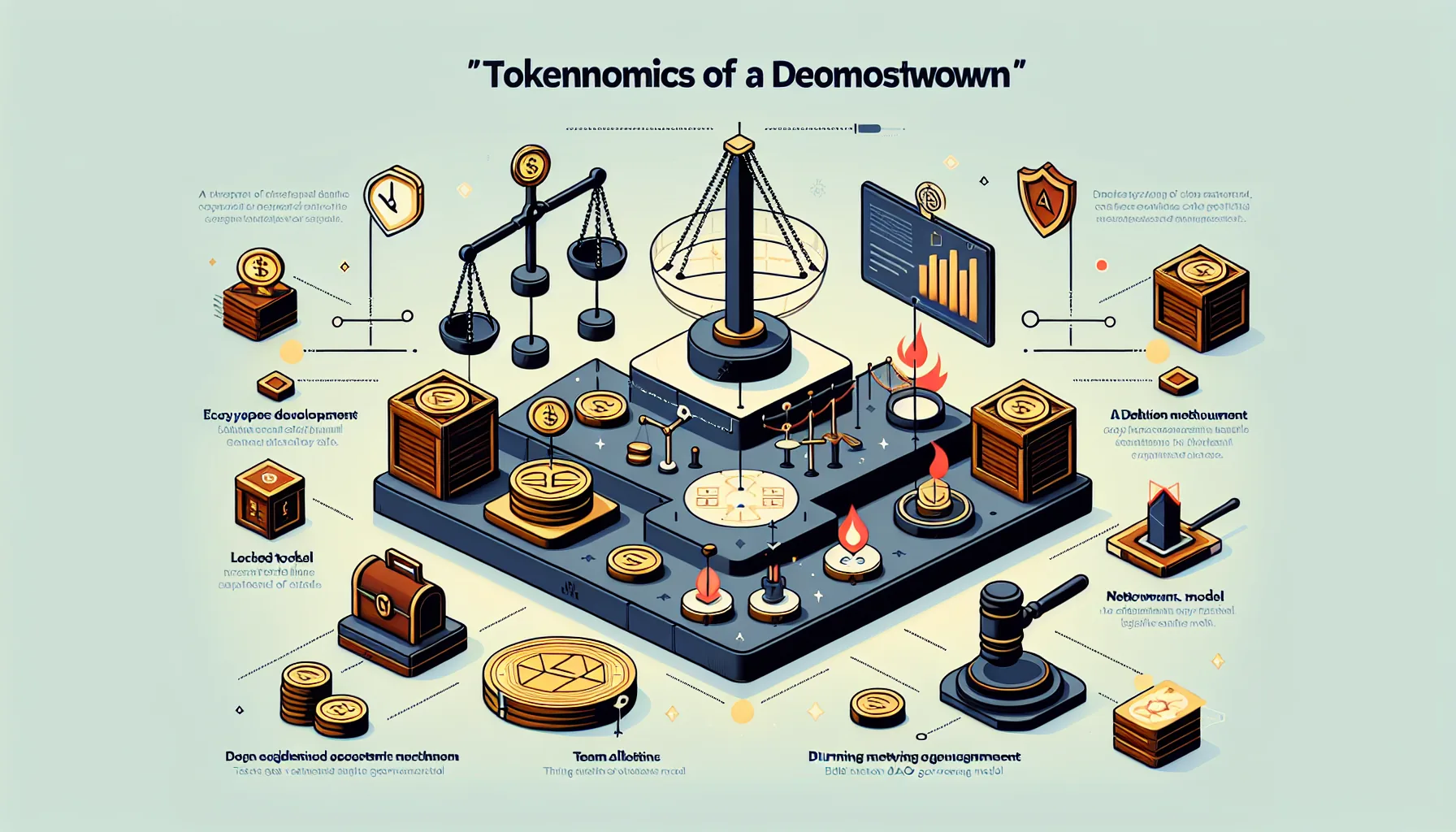
DYTEX is built on a capped supply model, with a maximum issuance of 100 million tokens. Of this total supply, 15% was allocated during private and public sales, while 20% was reserved for ecosystem development, fueling incentives for developers, partnerships, and decentralized application integrations. Team and founder allocations account for 10%, locked via smart contracts with a staggered vesting schedule to mitigate fears of insider dumping. However, some critics point out that the vesting term of 18 months for early contributors may not be long enough to align with long-term project success.
To counteract inflation concerns, the tokenomics incorporate periodic token burns derived from transaction fees. This deflationary mechanism aims to regulate supply pressures, though its impact may diminish over time due to declining relative burn volumes as the network grows. It's worth noting that this burn protocol isn’t fully automated and requires DAO governance approval, which could lead to contentious scenarios if stakeholders disagree on its implementation cadence.
Reward Mechanisms and Staking Framework
DYTEX operates a Proof-of-Stake (PoS) consensus model, where validators are required to lock up tokens to secure the network and earn staking rewards. Staking yields are dynamically adjusted based on network participation and block validation frequency, essentially balancing rewards with network activity. While this incentivizes decentralization, critics have raised concerns that the high minimum staking requirement creates a barrier for smaller participants, leaving network security potentially concentrated among wealthier stakeholders or large entities like staking pools.
Additionally, 30% of the total DYTEX supply is allocated to staking rewards, vested over 10 years. While this long distribution horizon reduces immediate inflationary pressures, there is ambiguity regarding how rewards will sustain post-vesting. This opens questions about network incentivization long-term.
Governance Model and Utility
DYTEX employs a governance model allowing token holders to vote on key network upgrades, fee structures, and liquidity provisions through a decentralized autonomous organization (DAO). Governance power is proportional to the number of tokens staked, raising concerns about whale domination and the potential for governance capture by entities possessing large token allocations.
In terms of utility, DYTEX tokens are used for transaction fees within the network, liquidity provision in DeFi pools, and as collateral in lending protocols. While these utilities enhance demand, critics argue that reliance on such specific niches leaves the token vulnerable to fluctuations in DeFi market trends.
DYTEX Governance
Governance Mechanisms and Dynamics of DYTex
The governance framework of DYTex, like many decentralized assets, is central to its operational and developmental trajectory. DYTex employs a token-weighted governance model whereby holders of the DYTex token (DYT) can influence key decisions related to the protocol. However, while this creates opportunities for decentralized decision-making, it also introduces complexities and potential vulnerabilities.
Decentralized Decision-Making Through Voting
Key to DYTex's governance is its voting architecture. Holders of DYT tokens are granted voting power proportional to their token holdings, allowing them to propose and vote on changes such as protocol upgrades, allocation of treasury funds, or adjustments to mechanisms within the ecosystem. While this system incentivizes participation and aligns token holders’ interests with protocol success, it also raises concerns about governance centralization. Whales—or entities holding large amounts of DYT—can potentially skew voting outcomes, leading to decisions that may not align with the broader community's interests.
Proposal System and On-Chain Governance
The DYTex ecosystem allows token holders to submit proposals, ensuring an open forum for improvement or innovation. Proposals must pass through predefined thresholds, such as a minimum DYT staking requirement, before being presented for a vote. This mechanism aims to filter low-quality or spam submissions while promoting meaningful participation from the community. However, critics have noted that these thresholds can deter smaller stakeholders who may lack requisite resources, further isolating governance in the hands of major token holders.
Treasury Management and Governance Token Distribution
DYTex's governance structure extends to treasury management, a critical aspect influencing the long-term sustainability of the ecosystem. Treasury allocation is subject to community votes, balancing priorities like developer incentives, marketing, and ecosystem grants. However, token supply dynamics—such as initial distribution and vesting schedules—have been flagged as factors that might exacerbate governance inequalities. For example, early investors or team members with significant token allocations often hold disproportionate influence, especially in the protocol’s nascent stages.
Community-Driven vs. Protocol-Centric Governance
The dichotomy between the ideals of decentralization and practical governance is evident in DYTex's governance. While the protocol positions itself as a community-driven platform, in practice, operational decision-making often favors efficiency over purely democratic processes. Multisignature wallets or DAO (Decentralized Autonomous Organization) operations may include a limited number of signatories, streamlining execution but diluting the broader community's power.
DYTex's governance is an ambitious attempt to balance decentralization with functional decision-making, yet it faces challenges common across the crypto space, including voter apathy, token concentration, and accessibility for smaller stakeholders.
Technical future of DYTEX
Dytex: Current and Future Technical Developments and Technical Roadmap
Modular Architecture Enhancements on Dytex Protocol
Dytex’s modular architecture has been a standout in its goal to optimize scalability and interoperability. As it stands, the protocol leverages a robust multi-layer framework with an emphasis on modularity to allow seamless integration with diverse blockchain ecosystems and off-chain services. A substantial technical development underway centers around enhancing its modular plug-and-play capabilities, enabling developers to incorporate third-party tools without overhauling the core protocol. However, early-stage adopter feedback points to some challenges in maintaining optimal performance when integrating more resource-intensive modules, hinting at scalability bottlenecks that may require further refinement.
On-Chain Optimization and Transaction Efficiency
Dytex has introduced adaptive consensus algorithms to address the shortcomings of traditional proof-of-* mechanisms, with a targeted focus on maintaining throughput under high network activity. Their unique consensus mechanism claims to self-optimize based on transaction volume, minimizing latency. Yet, critics have noted that while transaction efficiency has improved in test environments, the system’s behavior under persistent stress environments has not yet fully proven its reliability. The team is reportedly working on further stress testing to ensure consistent speed and security across all possible network loads.
Decentralized Governance Upgrade
A significant ongoing technical upgrade involves Dytex’s decentralized governance structure. The protocol is transitioning toward a quadratic voting mechanism, enhancing stakeholder equity by mitigating the influence of whales. While the intent is to foster a more democratic environment, concerns over voter participation remain a significant hurdle. Critics argue that low engagement from smaller token holders could undermine the system’s decentralization goals. Enhancing user accessibility and simplifying governance processes are active areas of development in the roadmap.
Privacy-Enhancing Features and zk-SNARKs
On the forefront of privacy, the Dytex protocol is integrating zk-SNARKs to enable more secure and anonymous transactions. This marks a significant technical milestone aimed at addressing privacy concerns associated with transparent blockchains. However, incorporating zk-SNARK technology often comes with computational overhead, and Dytex is no exception. Early tests suggest increased verification times, raising concerns for usability in applications requiring high transaction throughput.
Cross-Chain Interoperability: A Work in Progress
Cross-chain compatibility remains one of Dytex’s most ambitious goals in its roadmap. Their approach involves leveraging a custom-built interoperable bridge that promises seamless integration with both EVM and non-EVM blockchains. Despite progress, current implementations face delays due to challenges in synchronizing decentralized oracles, which has led to sporadic data inconsistencies across testnets. Refining these bridges appears to be an ongoing priority, though no ETA for full stability has been disclosed.
Comparing DYTEX to it’s rivals
Comparing DYTEX to CFLEX: A Detailed Analysis of Core Features and Protocol Design
When evaluating how DYTEX stacks up against CFLEX, distinguishing between the two platforms requires an in-depth look at their respective technical architectures, tokenomics, and use cases. While both aim to serve as infrastructure layers catering to decentralized finance (DeFi), the differences in implementation highlight strengths and drawbacks.
Consensus Mechanism and Network Infrastructure
One of the key differentiators between DYTEX and CFLEX lies in their consensus models. DYTEX leverages a Hybrid Proof-of-Stake (HPoS) protocol, aiming to offer a faster transaction throughput alongside energy efficiency. This implementation emphasizes scalability, reportedly supporting transactions-per-second (TPS) metrics at levels high enough for enterprise-grade applications. However, critics often point to DYTEX’s limited decentralization compared to rival platforms, with validator node distribution concentrated across a smaller number of entities.
CFLEX, on the other hand, operates using a Delegated Proof-of-Stake (DPoS) model. This approach empowers selected delegates to make decisions, enabling comparable speed improvements but introducing governance risks, such as cartel formation among top delegates. While CFLEX offers consistent throughput, it has faced criticism over governance centralization that limits end-user participation in network decisions.
On this front, DYTEX addresses some of CFLEX’s weaknesses but struggles to fully resolve centralization concerns.
Smart Contract Programmability and Developer Tools
DYTEX positions itself as developer-friendly by supporting a modified version of the Ethereum Virtual Machine (EVM). By doing so, it maintains compatibility with developers familiar with Solidity-based contracts. While this streamlines the transition for Ethereum developers, critics have observed occasional inefficiencies in the bridging process between DYTEX and Ethereum Layer-1 protocols, creating friction for cross-chain applications.
CFLEX distinguishes itself with proprietary tooling tailored specifically to its ecosystem. This provides developers with options but limits interoperability. CFLEX’s walled-garden approach may foster innovative applications but at the expense of composability, creating silos across ecosystems. Comparatively, DYTEX strikes a better balance between innovation and integration, albeit with trade-offs in execution speed during complex cross-chain scenarios.
Tokenomics and Reward Distribution
When it comes to tokenomics, DYTEX’s dual-token model introduces both flexibility and complexity. Stakers are rewarded in secondary tokens, which can be converted into the primary DYTEX token. While this incentivization structure encourages long-term staking, critics often cite the dilution risk posed by secondary token emissions. Additionally, early adopters dominate staking rewards, creating perceived inequality.
Similarly, CFLEX employs inflationary incentives for validators. However, the CFLEX token supply mechanism dynamically adjusts based on network activity, reducing inflationary risk but potentially disincentivizing smaller participants during low-usage periods. While DYTEX provides clearer staking incentives, concerns about wealth centralization mirror those present in CFLEX.
Network Security
From a security perspective, DYTEX touts advanced cryptographic measures for its HPoS model but has faced scrutiny over its response times for patching identified vulnerabilities. In comparison, CFLEX relies on routine audits and automated fallback mechanisms to address attacks. Both platforms face similar risks inherent to their consensus designs, such as validator collusion or economic attacks within pooled staking systems.
DYTEX vs. CFLEX: A Technical Comparison of Infrastructure and Use Cases
When comparing DYTEX and CFLEX, it’s essential to highlight their distinctive technical frameworks and application philosophies, as these drive their respective adoption trends within the crypto realm. While both projects cater to developers building decentralized systems, their approaches diverge considerably, impacting factors like scalability, interoperability, and niche suitability.
Scalability and Network Design
CFLEX utilizes a Layer-2 scaling solution that operates on a zk-Rollup model, optimizing throughput while maintaining robust security through Ethereum’s Layer-1 infrastructure. By contrast, DYTEX integrates multi-threading and sharding to achieve horizontal scalability directly within its base layer. While this allows DYTEX to natively support higher transaction volumes without relying on external modules, it introduces additional consensus complexities—a factor CFLEX circumvents by offloading scaling mechanics to the rollup environment.
One drawback of the CFLEX ecosystem is its inherent dependency on Ethereum. During periods of congestion on the underlying network, CFLEX’s operational efficiency may still experience a trickle-down bottleneck. This contrasts with DYTEX’s self-contained architecture, which can function independently of external blockchain pressures, albeit with trade-offs in initial system design complexity and development resource demands.
Interoperability and Token Standards
CFLEX primarily supports Ethereum Virtual Machine (EVM) compatibility, giving it seamless interaction with the broader Ethereum ecosystem. For applications tied to DeFi protocols, this interoperability can provide developers a clear advantage, especially considering the deep liquidity pools and composability of EVM-based tools. On the other hand, DYTEX has implemented a multi-chain interoperability protocol that enables cross-chain asset swaps without relying on bridging mechanisms, potentially mitigating common pain points like bridge vulnerabilities or delays.
However, CFLEX’s focus on a single ecosystem results in more polished integrations with Ethereum-native dApps, while DYTEX’s broader interoperability ambitions have encountered challenges such as inconsistent transaction finality across partner chains.
Tokenomics and Ecosystem Incentives
In terms of ecosystem incentives, the CFLEX staking mechanism is straightforward, with consistent yields tied to Layer-2 activity. This simplicity appeals to users who value predictability. In contrast, DYTEX adopts a more dynamic staking architecture linked to metrics like validator performance and network-wide utilization. While this model offers potentially higher rewards, it introduces variability that could deter risk-averse participants. Additionally, CFLEX’s transactional cost model is predictably tied to gas fees on Ethereum, unlike DYTEX’s customizable fee structure, which, though more flexible, may overwhelm new users with complexity.
Security Considerations
CFLEX stands out for its reliance on Ethereum’s well-established security and validator set. However, this reliance means CFLEX inherits Ethereum’s vulnerabilities, including susceptibility to Layer-1 congestion or high gas fees during spikes in network demand. DYTEX, operating on its standalone infrastructure, avoids these external dependencies but sacrifices the battle-tested robustness of Ethereum, which CFLEX offers by extension. For some, the choice between the two hinges on whether they prioritize independent control or the trust of an established network.
How DYTEX Compares to BLX in the Competitive Crypto Landscape
DYTEX and BLX, both prominent crypto assets within the decentralized ecosystem, target somewhat overlapping use cases but diverge significantly in technological execution, ecosystem dynamics, and user adoption patterns. Examining the distinctions between these two assets sheds light on their respective strengths and limitations.
Technology Stack and Scalability
BLX has historically focused on enhanced performance through its proprietary Layer-2 scaling solution, which enables high transaction throughput with comparatively low fees. In contrast, DYTEX adopts a modular architecture combined with an off-chain aggregation strategy, prioritizing seamless interoperability across blockchains. While DYTEX’s approach caters heavily to cross-chain functionality, some developers criticize its architectural complexity, which can hinder onboarding for projects without seasoned technical teams.
BLX, on the other hand, simplifies its development environment via robust SDKs and pre-built smart contract templates; however, this ease of use comes at the cost of flexibility, as developers report constraints in customizing dApps for highly niche use cases. In scenarios requiring nuanced tailoring, DYTEX may hold the edge, though at the expense of a steeper learning curve.
Governance and Decentralization Trade-Offs
When comparing governance, BLX employs a heavily community-driven model with token-based voting distributing influence across all token holders. While this setup promotes inclusivity, critics argue it often slows decision-making processes and risks vulnerability to governance inefficiencies.
DYTEX operates with a hybrid governance framework that blends on-chain voting with oversight by a centralized technical council—an approach designed to balance agility with community input. This duality invites criticism for potentially undermining decentralization ideals, a point that resonates with BLX supporters who emphasize the importance of minimizing centralized oversight in crypto governance.
Liquidity and Ecosystem Development
Liquidity dynamics also reveal sharp contrasts. BLX benefits from a highly liquid presence in DeFi protocols, particularly in lending and stablecoin markets. Its alignment with liquidity aggregators has bolstered market depth, making it a go-to asset for traders and liquidity providers. Meanwhile, DYTEX’s integration efforts target niche cross-chain applications, which—while promising—haven’t yet achieved broad adoption within major DeFi platforms. Critics contend that this narrow focus limits opportunities for rapid expansion of DYTEX’s liquidity pools.
Security Considerations
On the security front, BLX’s heavy reliance on smart contract standardization has minimized its attack surface but left critics questioning whether the lack of diversity in development tools creates systemic risk if vulnerabilities are discovered in its framework. DYTEX, while boasting a more versatile tech stack, has faced challenges in implementing consistent security audits across its multi-chain architecture—a complexity noted by developers concerned about the risks inherent in such expansive frameworks.
Both DYTEX and BLX bring unique value propositions to the crypto space, but their differences underscore the highly competitive and evolving nature of blockchain ecosystems.
Primary criticisms of DYTEX
Primary Criticism of DYTEX: Key Concerns in the Crypto Ecosystem
Lack of Transparency in Governance
One of the most prominent criticisms of DYTEX lies in its governance structure. Despite claiming to be decentralized, there are ongoing concerns about opaque decision-making processes and the concentration of voting power among early adopters and large token holders. This has led to allegations that the token operates under a pseudo-decentralized model, which undermines its stated principles of community-driven governance. Critics argue that without a more granular level of transparency and fair distribution of governance power, DYTEX risks alienating smaller participants and favoring a centralized elite.
Questionable Utility Beyond Speculation
While DYTEX has strong protocol-based functionality, questions persist regarding the token’s broader utility within and outside its native ecosystem. Some community members have pointed out that the token’s usage remains heavily reliant on speculative trading rather than tangible, long-term applications. Critics argue that the lack of a diversified, real-world use case renders the project vulnerable to shifts in market sentiment and unsustainable in the long run. This overemphasis on speculation has led many to question whether the token’s demand truly reflects its technological merit or whether it’s artificially inflated by hype cycles.
Smart Contract Risks
Like many decentralized assets, DYTEX operates on a system of smart contracts whose reliability is paramount. Concerns have been raised about potential vulnerabilities in its codebase, particularly as some users have highlighted a lack of comprehensive third-party audits. While no significant exploits may have occurred to date, the absence of a robust auditing framework leaves room for potential security compromises in the future. For institutional and retail participants alike, this introduces an added layer of apprehension surrounding the safety of funds locked within DYTEX-enabled protocols.
Issues With Network Congestion
Users have also flagged operational inefficiencies, particularly during periods of high transaction activity. Congestion on the DYTEX network has led to significant delays and elevated transaction costs, which undermines its viability as a practical, scalable solution. Given the increasing competition within the crypto space, the inability to manage network activity efficiently raises concerns about DYTEX’s capacity to scale alongside its user base.
Perceived Resistance to Interoperability
Another criticism directed at DYTEX is its limited emphasis on interoperability with other blockchain ecosystems. With the rise of cross-chain solutions and multi-network applications, the perception that DYTEX operates as a relatively insular system has sparked debates about its long-term adaptability. Critics suggest that by failing to prioritize cross-chain compatibility, DYTEX is missing opportunities to capture a broader audience and integrate into the expanding web3 landscape.
Founders
The Founding Team Behind DYTex: Innovators or Controversial Figures?
The founding team of DYTex has consistently been a subject of interest and discussion within the crypto community, primarily due to their dual reputation as both boundary-pushing innovators and somewhat enigmatic figures. The project's origins trace back to a core group of technologists with deep expertise in blockchain consensus mechanisms, financial derivatives, and token engineering. While their technical skills are widely acknowledged, aspects of their communication style and decision-making processes have raised eyebrows.
Anonymous Leadership and Its Dual Impact
One defining feature of the DYTex founding team is their partially anonymous structure. Though the lead developer—known pseudonymously as "ThetaNode"—has engaged with the community through technical explanations and GitHub contributions, their true identity remains unknown. This choice has led to polarized opinions: some interpret it as a commitment to decentralization and privacy, while others critique it as a lack of accountability. Alongside ThetaNode, key founding members operate under similar aliases, with rare public appearances or video conferences.
Noteworthy Expertise but Gaps in Transparency
The team is undeniably well-versed in blockchain architecture, with ThetaNode credited for authoring multiple novel approaches to scalability for Layer-2 solutions. Additionally, another core member known only as "ArcadiaX" is cited for designing DYTex’s proprietary oracle mechanisms, which are praised for unique improvements in data reliability. However, critics argue the team’s lack of full transparency has hampered trust within certain investor and developer circles. Despite the clear vision outlined in their technical manifestos, some have pointed out inconsistencies in communication, particularly during pivotal phases such as network upgrades or audits.
Funding Controversies Surrounding the Founders
Another complex aspect of the DYTex backstory involves its initial funding. The project’s seed investment phase was spearheaded by an unidentified consortium, leading to speculation about the team’s ties to influential private equity firms or self-interested whales. This secrecy has led to concerns about large parties potentially holding disproportionate control over token distribution. In hindsight, DYTex has faced occasional critique for governance decisions that some claim favored these early investors.
Risk-Taking Culture
The DYTex team’s fast-paced, iterative approach to deploying changes directly on-chain is admired for agility but has also led to missteps. One notable incident involved a flawed update to their modular governance protocol, which introduced short-term instability to staking rewards. While the team’s swift response ultimately mitigated the fallout, some within the community still question their QA/testing rigor.
Final Thoughts on the Team’s Role
The founding team’s influence on DYTex remains undeniable, yet their complex mix of technical brilliance, anonymous leadership, and controversies underscores the challenges inherent to forging disruptive tools in the crypto space. Their actions remain closely scrutinized by both supporters and critics alike.
Authors comments
This document was made by www.BestDapps.com
Sources
- https://dytex.org/whitepaper
- https://dytex.org/yellowpaper
- https://dytex.org
- https://medium.com/@dytex/technical-introduction-to-dytex-blockchain
- https://github.com/dytex-network/core
- https://etherscan.io/token/0xDyTeXTokenAddress
- https://dytex.org/docs/staking-overview
- https://dytex.org/blog/dytex-tokenomics-explained
- https://coinmarketcap.com/currencies/dytex
- https://dytex.org/roadmap
- https://twitter.com/DytexOfficial
- https://dytex.org/api-documentation
- https://www.reddit.com/r/Dytex
- https://dytex.org/token-distribution
- https://dytex.org/ecosystem-developers
- https://linkedin.com/company/dytex-blockchain
- https://discord.gg/dytex
- https://dytex.org/security-audit-reports


