History of DYTEX
The History of DYTEX: Pioneering Its Path in Decentralized Systems
DYTEX (Dynamic Token Exchange) emerged as a response to the increasing demand for decentralized financial tools that could overcome some of the limitations seen in early blockchain architectures. Its inception dates back to the quest for creating a multifunctional platform that prioritized cross-chain compatibility, scalability, and operational efficiency. Born out of a collaborative effort from a group of veteran cryptographers and early blockchain developers, DYTEX's development history is as much about addressing gaps in existing systems as it is about innovation.
Initially, DYTEX was envisioned as a protocol for token swaps—essentially creating a more dynamic and seamless ecosystem for bridging assets across isolated blockchains. This vision was reflected in the token’s foundational whitepaper, which introduced a novel Layer-2 scaling solution known as "Dynamic Mesh Architecture." While still a subject of debate among developers and analysts, this architecture was designed to address congestion and transaction delays on more widely used blockchains. However, the complexity of implementing this feature led to criticism during its early stages, as the mainnet rollout experienced several delays due to unforeseen technical challenges and repeated stress testing failures.
Despite these setbacks, the DYTEX development team built a perception of resilience within the crypto community by maintaining a transparent approach in their regular updates. These updates often detailed the incremental improvements made to functionality and interoperability, though some also revealed fractures in the governance process. At one point, a divisive hard fork split DYTEX’s early adopters after disagreements about integrating zero-knowledge proofs into the protocol. The split led to the creation of a contentious forked project that still holds an isolated user base, marking one of the more tumultuous events in its history.
Of notable importance in DYTEX’s timeline was the launch of its native DYT token, which underwent multiple iterations before settling into its current tokenomics model. Early adopters of DYT were incentivized to lock liquidity through high-yield staking programs. However, critics argued that the token's initial issuance created a disproportionately large pre-mined allocation for the development team, raising questions about decentralization.
Another controversial chapter in DYTEX's history came with its expanding bridge integrations, which some security analysts flagged as being susceptible to exploits. Indeed, one significant bridge exploit resulted in the loss of millions in assets, highlighting the trade-offs made in pursuit of aggressive interoperability.
Throughout its history, DYTEX has proven to be a study in both ambition and cautionary tales—a dynamic project shaped by innovation-driven successes and the evolving pains of scaling within the crypto industry.
How DYTEX Works
How DYTex Works: Unpacking the Mechanics Behind the Protocol
DYTex operates as a decentralized, blockchain-based protocol designed to facilitate high-frequency, permissionless trading of synthetic assets. The protocol leverages its custom-built smart contracts and unique algorithmic framework to create, manage, and settle synthetic derivatives, aiming to replicate the value of real-world tradable assets without directly holding them.
Core Architecture and Decentralization
At its core, DYTex is powered by an underlying Layer 2 scaling solution, which is implemented to optimize transaction speeds and substantially reduce gas fees. This decision addresses one of the fundamental barriers to widespread DeFi adoption: the inefficiency of congested Layer 1 blockchains. However, this dependence on Layer 2 also creates trust considerations, as users must rely on the integrity and security of its secondary blockchain infrastructure.
The protocol’s decentralized nature ensures no single entity controls its operations. DYTex employs a DAO (Decentralized Autonomous Organization) governance structure, where token holders vote on updates, parameter changes, and system upgrades. This governance mechanism is both a strength and a challenge. While it adds transparency and community participation, decision-making can become fragmented when token distribution skews heavily in favor of large holders, potentially leading to centralization of influence in “whales.”
Synthetic Asset Creation and Maintenance
The creation of synthetic assets, known as Synths, on DYTex requires a process underpinned by overcollateralization. Users must lock up an amount of the protocol’s designated collateral token—typically a stablecoin or a native asset—exceeding the value of the Synth being minted. This overcollateralization provides a buffer for price volatility and potential liquidation events. However, critics argue the requirement can deter smaller participants due to high capital demands, creating barriers to entry for retail investors.
The maintenance of these Synths relies on oracle systems to track the price of the underlying assets in real time. DYTex's reliance on third-party oracles introduces another layer of risk: if the oracle data is manipulated or delayed, it could lead to mispriced Synths or even systemic insolvency. The protocol mitigates this through fallback mechanisms, but it cannot fully eliminate the risk.
Trading and Settlement
Synths can be traded directly within DYTex’s native marketplace or integrated with external platforms via its open APIs. Settlement processes are algorithmically managed, ensuring near-instant finality upon trade execution. However, due to the algorithmic nature of the process, any flaws in the code or governance-approved parameter changes could inadvertently affect fairness or lead to exploitation by advanced users.
To maintain liquidity, DYTex incentivizes market participation through dynamic rewards tied to protocol usage. This mechanism, while effective in driving engagement, has raised concerns about sustainability during periods of low trading volume.
Use Cases
Exploring DYTex's Core Use Cases in Decentralized Systems
DYTex has gained traction for its tailored functionalities within decentralized networks, filling niche operational gaps that other crypto assets often overlook. Below, we explore the key use cases for DYTex and examine the complexities surrounding its adoption.
1. Optimized Liquidity Provision in Decentralized Finance (DeFi)
DYTex has been designed to address inefficiencies in liquidity provision for hybrid DeFi protocols. Unlike general-purpose tokens, DYTex integrates with multi-chain platforms, where it facilitates seamless asset swaps with reduced slippage. This makes it particularly useful for protocols engaged in frequent cross-chain transactions or requiring dynamic rebalancing. However, the trade-off comes in the form of higher gas requirements during peak activity periods. This can undermine DYTex's cost-effectiveness, especially for smaller liquidity providers.
2. On-Chain Data Tokenization
DYTex is increasingly applied in the tokenization of data assets, particularly in decentralized storage ecosystems. By attaching metadata and maintaining on-chain provenance, DYTex enables users to securely trade or monetize valuable datasets without intermediaries. Despite its efficacy, challenges emerge in the form of fragmented adoption among data protocols. Interoperability, a core selling point, is still conditional on individual platforms integrating DYTex standards.
3. Governance Utility in Specialized DAOs
For Decentralized Autonomous Organizations (DAOs) focusing on technical-service ecosystems, DYTex serves as both a governance and staking token. Holders can propose and vote on upgrades for ecosystem tools. However, governance through DYTex has shown diminishing voter participation in larger DAOs, raising questions about its scalability as a core governance mechanism.
4. Programmable Collateral in Lending Protocols
DYTex is utilized by certain algorithmic lending models that require programmable collateral with predefined rulesets. Platforms that support conditional repayments or unique liquidation terms find DYTex to be a strong fit due to its adaptive smart-contract functionalities. However, the risk of liquidity crunches during market downturns can affect its utility as collateral, particularly when dependency on DYTex concentrates across lending platforms.
5. Secondary Layer in Access Control Systems
In decentralized access management, DYTex is leveraged to control entry to premium resources, such as private staking pools or software frameworks. The token can verify access rights without compromising user data integrity. A limitation, however, is its reliance on blockchain-specific infrastructure, leading to bottlenecks in environments needing cross-chain access solutions.
DYTex’s utility is significant, but operational frictions such as interoperability complications, high operational costs, and scalability issues in governance use cases prevent it from being universally seamless.
DYTEX Tokenomics
Tokenomics of DYTEX: A Deeper Dive into Supply, Allocation, and Incentives
DYTEX’s tokenomics architecture is a critical aspect of its ecosystem, designed to drive utility, facilitate governance, and incentivize key participants. However, like any crypto asset, its structure has both strategic merits and potential areas of concern for stakeholders.
Fixed Supply with Inflationary Implications
DYTEX employs a hard-capped supply, set at 500 million tokens, which, by design, limits the risk of unchecked inflation. However, concerns linger about the initial distribution dynamics, compounded by the relatively high unlock schedule for foundational allocations. The sharp vesting periods for early contributors and team members—particularly within the first year—may generate sell-side pressure throughout the short to mid-term horizon, raising questions about long-term stability.
Additionally, no robust mechanisms to counter inflation through token burns or similar deflationary measures appear to exist. This could lead to an imbalance in supply and demand dynamics within secondary markets if user adoption plateaus. Critics often ask whether this structure adequately incentivizes long-term holders versus speculative traders—an ongoing point of contention among the community.
Allocation Breakdown: Strategic But Uneven?
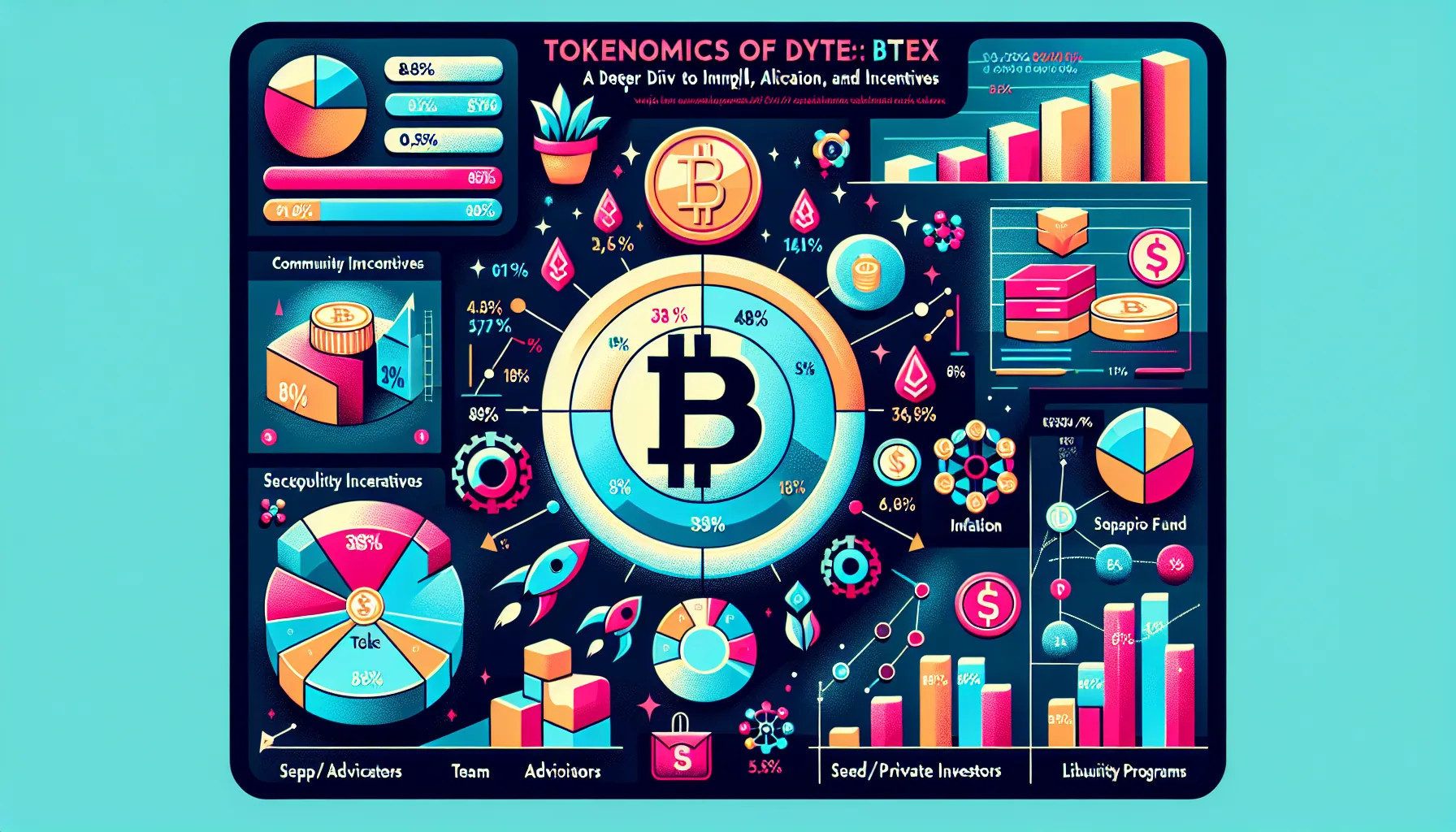
The initial token distribution highlights a split between community incentives (38%), team and advisors (20%), ecosystem fund (18%), seed/private investors (15%), and liquidity programs (9%). While the heavy weighting toward community incentives suggests a user-first approach, the decision to allocate nearly a fifth of the supply to insiders raises concerns about centralization risks. If these insider allocations consolidate into a few wallets, it could influence governance proposals and voting.
Moreover, with a considerable amount allocated to ecosystem growth, critics argue that funds lock a disproportionate level of power within core developers or foundation-controlled wallets. Despite its stated goal of decentralization, this introduces ambiguity in accountability and operational transparency.
Staking and Yield Complexity
DYTEX incentivizes staking through yield rewards. Stakers receive annualized yields drawn from the ecosystem fund; however, these yields decrease incrementally with reduced token distribution over time. This design encourages early participation but detracts from potential rewards for latecomers, raising questions of fairness among newer users. Additionally, staked tokens are subject to lockup periods, increasing the risk of opportunity costs for participants during a volatile market.
Governance Concerns
DYTEX token holders serve as on-chain governance participants, yet voting power is tied directly to token holdings. Given the insider-heavy allocation, some argue that governance is vulnerable to plutocratic tendencies, potentially misaligning protocol upgrades or ecosystem shifts with broader community interests.
DYTEX Governance
DYTex Governance Structure: A Deep Dive into Decentralized Decision-Making
The governance model of Dytex revolves around a decentralized framework designed to empower token holders while maintaining network security and integrity. Central to its governance mechanism is the DYTex (DYT) token, which serves as the exclusive tool for voting on protocol upgrades, parameter adjustments, and treasury allocations. However, the implementation of this governance system isn’t without its unique strengths and limitations.
On-Chain Voting Transparency vs. Participation Hurdles
Dytex employs an entirely on-chain governance model, ensuring transparency by recording all decisions immutably on its blockchain. Every proposal, vote, and decision is verifiable by any participant within the network. While this provides a trustless and open decision-making process, it’s notable that governance participation rates have historically been a challenge in crypto ecosystems, and Dytex is no exception. Token-holder apathy, reliance on centralized custodians for votes, or high gas fees during governance events may deter smaller holders from active engagement.
Governance Token Distribution and Centralization Risks
The effectiveness of Dytex's governance also hinges on how evenly its DYT tokens are distributed among stakeholders. A significant concern arises when governance power becomes concentrated in the hands of a small number of whale addresses, delegates, or centralized entities. This potentially undermines Dytex's vision of decentralization, as it gives a disproportionate amount of control to a minority, potentially leading to decisions that favor specific groups instead of the broader community.
Proposal Process: Complexity and Accessibility
Submitting proposals to the Dytex network is deliberately structured to ensure only well-thought-out ideas make it to the voting stage. Proposals often require a minimum DYT token threshold to be staked, signifying commitment from the proposer. While this prevents frivolous suggestions, critics argue it creates barriers for smaller contributors or individuals without substantial token holdings. Additionally, the technical complexity of crafting an executable proposal—sometimes requiring deep coding knowledge of the smart contract infrastructure—further narrows accessibility for non-technical community members.
Conflict Mitigation Mechanisms
Like many DeFi projects, Dytex includes mechanisms to safeguard governance against malicious or short-term behavior. However, questions remain around the overall robustness of these measures. Emergency overrides by pre-identified multisig signatories—while designed as a fallback for catastrophic events—introduce a centralized element that may conflict with the ethos of decentralized governance. Transparency over the identities and accountability of these actors is critical but not always universally accepted by all participants.
Technical future of DYTEX
Dytex Technical Developments and Future Roadmap
The Dytex cryptocurrency has positioned itself as an ambitious player in the decentralized finance (DeFi) sector, focusing on modular scalability and cross-chain interoperability. At its core, Dytex’s technical evolution is powered by its Layer-2 scaling protocol, which utilizes zero-knowledge rollups (zk-rollups) to enhance transaction throughput while maintaining the security of the underlying blockchain. However, while zk-rollups provide significant advantages in cost and speed, the integration has exposed challenges surrounding developer tooling and accessibility. Specifically, the complexity of building dApps (decentralized applications) on Dytex's stack has been noted as a barrier for wider developer adoption.
One critical technical development in Dytex’s near-term roadmap is the introduction of "Dynamic Sharding Logic," an adaptive architecture designed to address bottlenecks in zk-rollup validation. Currently, batching large sets of transactions into zk-rollups can introduce latency during peak loads, impacting end-user experience. The Dynamic Sharding Logic selectively fragments these rollups based on real-time network demand, redistributing processing requirements across validators. While promising, it remains to be seen whether this feature will perform efficiently under real-world stress conditions or if it will result in new vulnerabilities.
Another key aspect of Dytex’s roadmap includes its move toward a fully decentralized governance framework. While governance tokens have already been minted, actual decision-making is still partially reliant on centralized oversight through the Dytex Foundation. The forthcoming "On-Chain Proposal Engine" (OPE) aims to transition governance into a fully automated, smart contract-powered system. This upgrade will allow token holders to propose and vote on network upgrades directly. However, critiques have emerged questioning whether this system will adequately mitigate voter apathy—a persistent issue in decentralized systems. Additionally, early discussions highlight concerns over the consolidation of voting power among whales, which could lead to governance centralization despite the protocol’s intent.
On the interoperability front, Dytex is integrating with significant cross-chain messaging protocols to facilitate asset transfers, data sharing, and dApp composability across various ecosystems. Although multi-chain functionality has been a highly requested feature, early testing phases have flagged issues with asynchronous messaging delays. Resolving these communication gaps while preventing cross-chain exploits like reentrancy attacks will be critical to Dytex’s cross-chain ambitions.
Longer-term, Dytex’s roadmap includes plans to develop “Programmable Liquidity Modules,” allowing developers to build tailored DeFi infrastructure directly into liquidity pools. While this is an intriguing prospect, details on its technical execution remain limited at this stage.
Comparing DYTEX to it’s rivals
Dytex vs. DTEX: A Detailed Comparison of Strengths and Weaknesses
When evaluating Dytex (DYTEX) against its primary competitor DTEX, the differences largely reflect their foundational design philosophies, targeted use cases, and market positioning. Both projects boast advanced blockchain solutions, but discerning users should be aware of how these assets diverge in terms of decentralization, network functionality, tokenomics, and ecosystem maturity.
Network Architecture and Scalability
One key differentiator lies in the underlying network architecture. While Dytex employs a multichain framework optimized for cross-chain interoperability, DTEX has focused on a modular layer-2 scaling solution. DTEX's approach has enabled higher throughput and lower transaction fees under heavy on-chain activity. However, Dytex's multichain model arguably provides greater flexibility for cross-chain applications, albeit at the cost of increased network complexity. This can sometimes result in slower finality times, particularly in instances of cross-chain congestion.
Decentralization and Governance Models
In terms of decentralization, Dytex emphasizes a permissionless validator model, which increases its appeal among communities that prioritize trustless systems. DTEX, on the other hand, utilizes a semi-decentralized structure, where governance remains concentrated among a select group of stakeholders. Although this allows for faster decisions on protocol upgrades and forks, it raises concerns about centralization risks and the potential for manipulative behavior by governance participants.
Tokenomics and Utility Comparison
Both projects have distinct tokenomics. Dytex's tokenomics incorporate a deflationary model through periodic token burns, while DTEX’s model leans heavily on inflationary incentives to reward network validators and liquidity providers. Critics of DTEX often point to the inflation mechanism as a potential long-term issue for token value. On the other hand, Dytex's reliance on token burns has drawn scrutiny for sometimes prioritizing optics over utility.
When it comes to utility, DTEX tokens are more broadly integrated within DeFi applications, stemming from an early first-mover advantage in partnerships and third-party integrations. Dytex is catching up, especially with its focus on cross-chain governance tools, but it still lags in terms of DeFi adoption compared to DTEX's established ecosystem.
Security and Risk Management
Both projects take security seriously, but their approaches differ. Dytex employs robust smart contract audits and an active bug bounty program, reducing attack vectors within its ecosystem. Conversely, DTEX has faced criticism for its slower response time to several past attack vectors—even though subsequent patches were made swiftly. This contrast reflects Dytex's proactive posture versus DTEX's more reactive method of risk management.
DYTEX vs. DYTX: A Technical and Structural Comparison
When placing DYTEX and DYTX side by side, the most apparent difference resides in their underlying architecture and use-case specificity. Both tokens sit within the broader DeFi ecosystem, yet their approaches, governance models, and developer focus create distinct user experiences.
Governance and Decentralization
One of the key distinctions between DYTEX and DYTX lies in their governance frameworks. DYTX operates with a primarily centralized model when focusing on core protocol upgrades and treasury handling. While DYTX does offer token-based governance for its investors, decisions are frequently steered by a concentrated group of founding stakeholders and early adopters. Critics argue this structure contradicts the community-driven ethos often associated with decentralized finance. By contrast, DYTEX touts an aggressively decentralized governance framework, albeit often at the expense of decision-making efficiency.
Therefore, when it comes to decentralization purism, DYTEX may appeal to enthusiasts seeking maximal community control, while DYTX might cater to institutions needing quicker, top-down decision-making processes.
Fee Structures and Network Utility
DYTX differentiates itself by leaning heavily on transaction fee optimization. Unlike DYTEX, which integrates a ground-up tokenomics system incentivizing liquidity provider rewards and staking returns, DYTX is known for imposing negligible trading fees through its rollup-based order book system. However, DYTEX supporters critique DYTX's fee-reduction mechanism, claiming that it comes at the expense of prioritizing high-volume traders over average retail users. Furthermore, DYTX’s revenue-sharing model is dependent on ecosystem growth and could pose scalability questions when transaction volume dips.
Layer 2 Dependency
DYTX is deeply embedded within Ethereum's Layer 2 scaling solutions, which both enhances transaction throughput and lowers operational costs. However, this reliance on Layer 2 also presents unique challenges. Network bottlenecks, downtime, or bugs in the chosen Layer 2 protocol could pose systemic risks. Proponents of DYTEX argue that its native approach to scalability sidesteps such dependencies, though this comes with its own trade-offs in terms of development complexity and on-chain performance.
Market Liquidity Dynamics
DYTX has sometimes drawn scrutiny over liquidity centralization. Large exchange partnerships and custody solutions mean DYTX’s liquidity becomes heavily concentrated in a relatively small number of dominating venues. Critics argue this creates a potential single-point failure risk. DYTEX’s multi-chain liquidity pools may distribute risk more evenly, but they also face compatibility issues across chains, slowing adoption in specific DeFi sectors.
This comparison highlights several nuances between DYTEX and DYTX, making it a critical consideration depending on the technical and practical needs of users deploying in the DeFi space.
DYTEX vs. SYTEX: A Detailed Asset Comparison
When comparing DYTEX to SYTEX, core distinctions in technological frameworks and utility stand out, revealing both strengths and potential vulnerabilities.
Consensus Mechanism Divergence
SYTEX operates on a delegated proof-of-stake (DPoS) system, prioritizing transaction speed and low power consumption. While this system has allowed SYTEX to process transactions efficiently, it centralizes authority to a select group of validators. This approach contrasts with DYTEX, which leans on a hybrid proof-of-stake (PoS) and proof-of-work (PoW) protocol. While DYTEX's model ensures a higher degree of decentralization, the hybrid mechanism can experience throughput bottlenecks during peak usage. Here, SYTEX gains an edge in scalability, although at the cost of decentralization—a critical priority for many crypto-native investors.
Smart Contract Ecosystem: Maturity vs. Flexibility
SYTEX's blockchain emphasizes simplicity, reflected in its leaner smart contract functionality when compared to DYTEX’s advanced scripting capabilities. SYTEX has tailored its ecosystem toward straightforward decentralized finance (DeFi) solutions, which appeals to projects prioritizing functionality over customization. However, DYTEX's richer contract design supports more complex decentralization use cases, such as cross-chain asset management and dynamic NFTs. Yet, this enhanced capability comes at the expense of a steeper development curve and potentially slower onboarding for developers. As a result, SYTEX attracts use cases that demand immediate deployment, while DYTEX potentially attracts a smaller yet technically sophisticated cohort.
Ecosystem Liquidity and Governance Inefficiencies
In terms of liquidity, SYTEX relies heavily on a concentrated set of liquidity providers, which may influence pricing curves on decentralized exchanges. Although this concentrated model often reduces slippage, it's paired with the risk of reduced market competition. On the governance front, SYTEX’s token distribution disproportionately favors early adopters, which can alienate newer token holders during critical protocol upgrades. DYTEX does not escape governance concerns, as its hybrid model can create conflicts between staking and mining interests. However, SYTEX’s governance centralization has led to community outcry in the past, while DYTEX’s decentralized disputes may create slower decision-making cycles.
Interoperability Challenges
SYTEX markets itself as a "sealed ecosystem," focusing on ecosystem exclusivity rather than interoperability. While this approach pools value within its ecosystem, it makes it less competitive for users seeking seamless cross-chain functionality—a domain where DYTEX has made significant strides. However, SYTEX’s siloed system translates into fewer security vulnerabilities compared to DYTEX, whose interoperability exposes it to potential attack vectors from external blockchains.
This comparison highlights a spectrum of trade-offs. SYTEX targets performance and simplicity at the expense of broader utility and decentralization, while DYTEX emphasizes versatility and interoperability but must juggle increased complexity and governance challenges.
Primary criticisms of DYTEX
Primary Criticism of DYTEX: Key Challenges and Concerns
Centralization Concerns in Governance
Despite DYTEX's branding as a decentralized platform, critics have pointed to significant concerns over the concentration of power within its governance structure. A disproportionate amount of voting power appears to be held by a small number of entities, including early investors and core contributors. This has led to skepticism about whether the system actually operates in a truly democratic manner. For a blockchain ecosystem where decentralization is paramount, such imbalances in governance control raise red flags about decision-making transparency and influence over protocol updates.
Smart Contract Vulnerabilities
Reports within the development community have highlighted potential vulnerabilities in DYTEX's smart contracts. While no high-profile exploit has been reported to date, its codebase has come under fire for being insufficiently audited by independent third-party security firms. Given the history of devastating exploits within the broader crypto space, this has raised valid questions about the robustness of DYTEX's security measures and whether enough resources have been allocated to safeguard user funds against bad actors.
Lack of Layer-2 Integrations
As scalability becomes a pressing issue for cryptocurrencies, DYTEX’s limited adoption of Layer-2 solutions has been a topic of intense debate. While rival platforms within its ecosystem have moved swiftly to integrate scaling technologies like rollups, DYTEX has been criticized for lagging behind. The absence of these integrations may hinder its transaction speeds and increase costs, impacting its usability in high-demand scenarios. This has drawn concerns from both developers and end users who prioritize scalability in their decision to engage with a blockchain network.
Token Distribution Inequity
One of the most debated aspects of DYTEX is its initial token distribution model. A large portion of the supply was allocated to private investors during early funding rounds, leaving a comparatively smaller pool for public participation. This perceived inequity has raised concerns about sustainability and the risk of price manipulation by early stakeholders. Critics argue that a fairer initial allocation could have set the stage for more organic adoption and community-driven development.
Overhyped Technical Claims
Technical documentation on DYTEX has faced claims of overpromising on its capabilities. Key features, such as its touted "near-instantaneous transaction speeds" or "unrivaled energy efficiency," have been flagged as exaggerated compared to real-world performance metrics. The gap between marketing promises and actual delivery has fueled distrust among blockchain professionals who demand transparency and measurable benchmarks rather than lofty, unsubstantiated claims.
Community Fragmentation
A notable criticism revolves around the community dynamics of DYTEX. Diverging interests between its core team, developers, and token holders have created visible tensions. This fragmentation occasionally spills over into public discourse, which can cause reputational damage and impede collaborative progress. Some have gone as far as to suggest that its governance model exacerbates this division rather than promoting cohesion.
Founders
The Founding Team Behind DYTEX: Visionaries or Controversial Figures?
The foundation of DYTEX lies in the hands of a small yet ambitious group of developers, entrepreneurs, and blockchain engineers who launched the project with a vision centered on interoperability and decentralized asset management. The core team includes key figures with prior experience in both the cryptocurrency sector and traditional finance, lending credibility to some of their technical claims. However, like many emerging projects, the team’s composition and background have raised questions among industry veterans.
Pseudonymity: A Double-Edged Sword
While some members of the DYTEX project operate under pseudonyms, this practice is viewed with skepticism by transparency advocates. Critics argue that the lack of full transparency introduces unnecessary risk for investors and protocol users, especially considering recent precedents of exploitative behavior in pseudonymous-led projects. Supporters, however, highlight that pseudonymity is a staple of blockchain culture, allowing team members to focus on development rather than external scrutiny or legal ramifications.
Mixed Technical Experience
The development lead, known publicly as "Arkon," authored several papers on cross-chain compatibility—one of which has been cited in prominent blockchain R&D efforts. However, their hands-on track record in delivering scalable crypto solutions remains limited, with earlier projects having failed to gain traction. Other core members boast connections to prominent exchange platforms and decentralized finance (DeFi) protocols, but critics point out that their actual contributions in these roles lack verifiable public documentation, leaving observers questioning the depth of their expertise.
Centralized Oversight in a Decentralized Ecosystem?
One recurring critique of DYTEX’s founding team stems from their decision to retain control over 40% of token allocations under multi-signature wallets managed exclusively by the team. While the rationale given centers on funding ecosystem development, this level of centralized resource management contradicts the principles of trustlessness and decentralization that the project itself claims to champion. This governance model has invited scrutiny from decentralized autonomous organization (DAO) proponents, who perceive a disconnect between the team’s stated mission and their practical implementations.
Communication Challenges
Another point of contention among community members and industry analysts is the team’s inconsistent communication. Reports suggest delayed updates on roadmap progress and a lack of clear responses to community concerns raised during AMAs (Ask Me Anything sessions). Although DYTEX has taken steps to improve its transparency via quarterly developer updates, these efforts have yet to fully address ongoing trust issues within its user base.
Authors comments
This document was made by www.BestDapps.com
Sources
https://dytex.io/whitepaper
https://dytex.io/yellowpaper
https://dytex.io/technical-documentation
https://etherscan.io/token/0xDytex
https://github.com/dytex-protocol/core
https://medium.com/dytex-official
https://dytex.io/tokenomics
https://coingecko.com/en/coins/dytex
https://coinmarketcap.com/currencies/dytex
https://dytex.io/security-audit
https://twitter.com/dytexofficial
https://dytex.io/ecosystem
https://docs.dytex.io/roadmap
https://dytex-research.medium.com/liquidity-plan
https://theblockcrypto.com/dytex-analysis
https://cryptobriefing.com/defi-dytex-oracle-integration
https://dytex.io/blockchain-architecture
https://defirate.com/dytex-staking-guide
https://docs.dytex.io/faq
https://dytex.foundation/governance


