History of DYDXEX
The History of DYDXEX: Origins and Evolution
DYDXEX emerged during a pivotal era of decentralized finance (DeFi) innovation, shaped by the growing demand for non-custodial trading platforms that prioritize user autonomy and security. The protocol was designed to fill a gap in the derivatives market by delivering advanced trading functionalities, such as perpetual contracts, leveraged positions, and decentralized governance, without relying on centralized intermediaries. Its foundations are heavily influenced by the ethos of financial sovereignty, a core principle that resonated strongly with the DeFi community.
The initial iteration of DYDXEX's platform revolved around integrating Layer 1 Ethereum, which provided robust security but faced scalability challenges during periods of network congestion. These limitations hindered transaction speeds and led to soaring gas fees, creating accessibility issues for smaller traders. Recognizing these pain points, the development team prioritized migrating significant portions of the protocol to Layer 2 solutions. They adopted a StarkWare-based ZK-Rollup architecture to dramatically reduce costs and improve throughput while maintaining Ethereum's underlying security assurances. This strategic shift allowed the user base to scale exponentially by mitigating on-chain inefficiencies that previously plagued the ecosystem.
Despite its technical advancements, DYDXEX's history has not been without controversy. One notable issue involved criticisms of its tokenomics. The structure heavily favored early adopters and large institutional investors, creating concerns about centralization of governance power. Significant portions of the DYDXEX governance token supply were allocated to venture capital firms and early contributors, leading to heated community discussions about whether such allocation contradicted the ideals of decentralized governance.
Another controversial chapter in DYDXEX's history revolved around regulatory uncertainty. With the protocol offering complex financial products such as derivatives, it attracted scrutiny from global regulatory bodies. Its approach to sidestepping KYC (Know Your Customer) requirements, while celebrated by privacy advocates, has made the platform a potential target for enforcement actions in jurisdictions with strict financial regulations. This uncertainty has cast a shadow over DYDXEX's operations, leading some within the space to question the long-term viability of such a model in an environment of increasing regulatory oversight.
DYDXEX's history also highlights its role as a testbed for DeFi innovation. From pioneering decentralized order books to experimenting with liquidity mining incentives, the platform has often been at the forefront of pushing technological boundaries. However, these experimental approaches haven't always been successful; liquidity incentives, for instance, at times led to significant token price inflation, raising sustainability concerns for long-term users and investors alike.
How DYDXEX Works
How DYDXEX Works: A Deep Dive into its Mechanisms
At its core, DYDXEX is a decentralized platform designed to facilitate derivatives trading, offering users access to perpetual contracts without the need for intermediaries. The protocol operates on smart contracts deployed on a blockchain, enabling fast, borderless, and transparent trading directly from users' wallets. Its architecture incorporates advanced mechanisms to ensure functionality, security, and efficiency. Here's a breakdown of how DYDXEX works:
Layer-2 Scaling Solution
One critical component powering DYDXEX is its implementation of a Layer-2 scaling solution, which significantly enhances transaction throughput and reduces gas fees compared to Layer-1 operations. By leveraging zero-knowledge rollups (zk-rollups), DYDXEX batches multiple off-chain transactions and processes them on-chain in a single proof. This approach maintains the security of the main blockchain while ensuring minimal latency—a crucial aspect for high-frequency traders.
However, the dependency on zk-rollups does introduce some technical trade-offs. For example, the exit process back to Layer-1 can be cumbersome, with delays caused by the need for finality and fraud-proof validations. This could deter traders needing instantaneous access to their funds after off-chain activity.
Perpetual Contracts and Funding Rates
DYDXEX specializes in perpetual contracts, a type of derivative that does not have an expiration date. To keep the price of these contracts aligned with the underlying asset, DYDXEX uses a funding rate mechanism. Traders long on a perpetual position pay or receive fees based on the difference between the contract price and the index price of the asset.
While this model enables effective price tracking, it introduces a layer of complexity. Understanding and managing funding rates require sophisticated strategies, making DYDXEX more suitable for experienced market participants. Furthermore, volatile funding rates during rapid market swings can lead to losses for traders who are unprepared or highly leveraged.
Collateralization and Risk Management
On DYDXEX, margin trading is governed by strict collateralization rules. Users must deposit sufficient collateral to open leveraged positions, with liquidation occurring if the collateral ratio falls below a certain threshold. Liquidation bots, incentivized by the protocol, monitor and execute liquidations to maintain platform stability.
Although robust, the reliance on liquidation bots has inherent risks. In periods of extreme network congestion or downtime, delayed liquidations could lead to undercollateralized positions, exposing the system to potential insolvency. This represents a critical area for monitoring in decentralized derivatives platforms like DYDXEX.
Native Token Utility
The native token plays a crucial role in DYDXEX's ecosystem, primarily as a governance instrument and incentive mechanism. Holders can stake the token to earn rewards, influence protocol development, and gain fee discounts. However, this model is not without its weaknesses. Governance systems in DeFi protocols can sometimes be criticized for voter apathy, concentration of power, or coordination challenges among decentralized stakeholders.
As a result, while DYDXEX's tokenomics offer value to active participants, governance-related inefficiencies can create friction in the platform's evolution, especially if key decisions are bottlenecked.
Use Cases
Use Cases of DYDXEX: Exploring Practical Applications and Limitations
1. Decentralized Perpetual Trading
DYDXEX has carved a niche for itself primarily in the decentralized perpetual futures market. Perpetual contracts allow users to enter leveraged positions without any fixed expiration dates, a feature traditionally dominated by centralized platforms. DYDXEX eliminates intermediaries, offering traders the ability to execute perpetual trades directly on-chain. This decentralized approach reduces counterparty risk but introduces dependencies on the underlying blockchain’s performance, which can pose scalability and congestion issues during peak activity.
2. Non-Custodial Asset Management
Being a non-custodial platform, DYDXEX ensures users retain full control of their private keys and assets during trading. This suits crypto-savvy users who prioritize custody over convenience. However, this feature requires a steep learning curve, as mismanagement of private keys can lead to permanent asset loss. Additionally, complex user interfaces make it less accessible for casual retail participants.
3. Liquidity Provision and Market Making
DYDXEX incentivizes users to provide liquidity for its order book and smart contract pools. Advanced users can engage in market-making or arbitrage strategies using the platform’s APIs and protocol features. However, liquidity incentives tied to reward mechanisms can lead to unsustainable yield chasing, diminishing long-term participation once rewards taper off.
4. Hedging Volatility in Decentralized Finance (DeFi)
Professional traders and DeFi participants use DYDXEX as a hedging instrument against market volatility. For example, a user holding an underlying asset in a lending protocol can short the same asset on DYDXEX to mitigate downside risk. While effective in theory, this use case depends heavily on liquidity depth and margin thresholds, with risks of liquidation during periods of heightened volatility.
5. Governance and Token Utility
As a protocol with a governance layer, DYDXEX token holders can vote on changes to its core mechanics. This decentralization enhances the democratic nature of decision-making. Yet, governance participation often skews towards entities holding more influence, raising concerns about centralization masquerading as decentralization. Additionally, the utility beyond governance may be limited without continuous innovation.
6. Advanced Trading Strategies via Layer 2 Solutions
DYDXEX’s integration with Layer 2 scaling solutions enables cost-efficient execution of advanced trading strategies like scalping and arbitrage. The reduced fees and faster settlement times attract high-frequency traders. On the downside, reliance on Layer 2 introduces additional complexity, especially when bridging assets between Layer 1 and Layer 2 chains, which can incur extra fees and time delays for users unfamiliar with the process.
DYDXEX Tokenomics
In-Depth Analysis of DYDXEX Tokenomics: Supply Dynamics and Utility
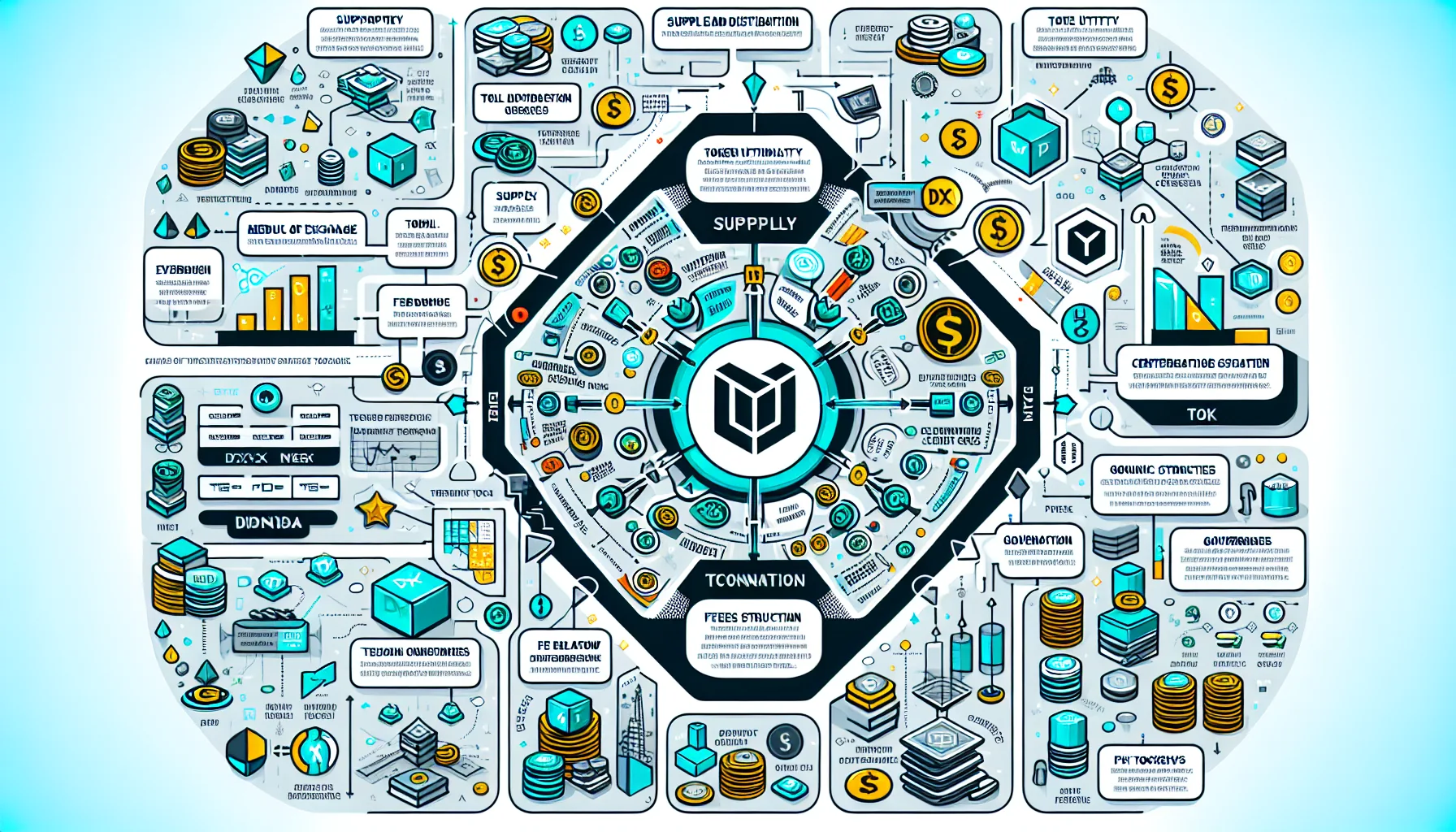
The tokenomics of DYDXEX is a critical component in understanding its ecosystem, driving its utility, governance structures, and long-term sustainability. At its core, DYDXEX leverages a detailed token model designed to incentivize network participation and facilitate decentralized decision-making, yet some specific aspects warrant scrutiny.
Supply and Distribution
DYDXEX operates on a fixed total token supply, allocated across various stakeholders including early contributors, developers, protocol incentives, and community reserves. Notably, the allocation to early backers and team members poses potential centralization risks, particularly with vesting schedules that could result in periodic release events. This concentration could create selling pressure during unlock periods and introduce volatility, raising concerns about equitable distribution.
An emphasis on incentivizing liquidity through token rewards introduces a double-edged sword. While this mechanism encourages adoption and user participation, it continually dilutes the circulating supply. Crypto-savvy investors monitoring dilution metrics may find this aspect a red flag, especially if usage growth fails to outpace the release of tokens into the market. Balancing user incentives without over-allocating is a delicate challenge for the protocol.
Token Utility
The DYDXEX token is designed to serve multiple purposes, such as governance participation, staking to secure network functions, and acting as a medium of exchange within the protocol. Users stake tokens to gain fee discounts or other forms of utility, reflecting an effort to tie operational efficiency directly to token demand.
A significant feature of the governance model is its delegation mechanism, enabling token holders to assign voting power to others. While this decentralizes decision-making on paper, it may inadvertently empower large token holders, limiting the influence of smaller holders. This consolidation can erode the core ideals of decentralized governance, a potential concern for community-driven protocols like DYDXEX.
Fee Structures and Economic Flow
Part of DYDXEX’s tokenomics revolves around transaction fees that are recycled back into the ecosystem. This creates a value accrual pathway for the token; however, the sustainability of this model depends on the growth of on-chain activity. If transaction volumes lag, token value capture diminishes, directly affecting the incentive structures for participants.
Additionally, relying heavily on fee-based revenue introduces vulnerability. Competing protocols with more aggressive fee models or innovative tokenomics structures could drain user activity, impacting DYDXEX’s economic flow.
In summary, DYDXEX’s tokenomics showcase a comprehensive yet intricate design that juggles supply dynamics, user incentives, and governance frameworks. However, inherent risks exist, particularly around supply concentration and competing protocol pressures.
DYDXEX Governance
Governance Mechanisms of DYDXEX: Decentralization or Centralization Dilemma?
The governance architecture of DYDXEX is intricately woven into its decentralized ethos, yet certain structural concerns challenge its aspirations for full decentralization. Unlike some other DeFi platforms, the governance of DYDXEX relies heavily on token-weighted voting, where the power dynamics can become skewed depending on the concentration of $DYDXEX token ownership. This introduces a practical question: does the system truly embody decentralized decision-making, or does it risk reinforcing oligopolistic behavior?
Token-Weighted Governance: Empowerment or Entrenchment?
The primary mechanism for proposing and voting on changes within DYDXEX revolves around token staking. Token holders can either participate actively by submitting proposals or passively by voting on pre-existing proposals. In theory, this empowers the community to steer protocol upgrades, fee structures, and treasury allocations.
However, the centralization of token holdings is a growing concern. Institutional stakeholders and early investors—typically holding substantial amounts of $DYDXEX—may wield disproportionate influence. This concentration creates governance asymmetry where smaller token holders’ voices, although collectively large in number, may become diluted in practice. Such entrenchment of voting power could slow progressive development or, conversely, create pathways for self-serving proposals.
Proposal Thresholds and Voter Turnout Concerns
DYDXEX governance utilizes thresholds for proposal creation and quorum requirements for passing decisions. While this system ensures that only serious initiatives move forward, it also creates friction for smaller participants. High token thresholds for proposal initiation might deter community-driven ideas emerging from less affluent token holders, effectively sidelining grassroot innovation.
Moreover, voter turnout often represents a weak point in decentralized governance systems. DYDXEX's staking mechanisms incentivize holding, but they fail to enforce active voting participation effectively. Token holders frequently delegate their voting power to a small subset of active participants, which further exacerbates governance centralization.
On-Chain Governance Vulnerabilities
As with any on-chain governance model, DYDXEX is not immune to security vulnerabilities. Bribe attacks and governance takeovers remain theoretical risks under the token-weighted voting paradigm. For instance, malicious actors could accumulate a significant stake to push through proposals that compromise the system’s integrity, either through direct exploitation or time-locked attacks to introduce delayed vulnerabilities.
Additionally, DYDXEX's reliance on smart contracts for governance introduces the standard pitfalls of DeFi: bugs, exploits, and the rigidity of code where amendments require cumbersome voting processes. These factors add layers of complexity that governance participants must navigate carefully.
In summary, DYDXEX governance showcases the duality of decentralization efforts—balancing community involvement with the pitfalls of token-based decision-making.
Technical future of DYDXEX
Current and Future Technical Developments for DYDXEX
Layer-2 Integration and Scalability Enhancements
DYDXEX operates on a Layer-2 scaling solution, leveraging StarkWare’s zk-rollup technology to achieve high transaction throughput and reduced gas costs. The technology is essential for supporting the platform’s decentralized trading mechanisms, especially as adoption grows. However, while zk-rollups provide significant improvements in scalability, they come with limitations. For instance, users must periodically rely on the Layer-1 Ethereum network for withdrawals, which could result in delays during times of network congestion. Additionally, reliance on StarkWare’s proprietary technology centralizes some aspects of the ecosystem, raising questions about decentralization and long-term trust.
Future development plans appear to focus on further optimizing the Layer-2 system while exploring solutions to reduce dependency on the Ethereum mainnet for specific operations. There’s potential for upgrades like composable rollups or hybrid models that could enhance interoperability with other DeFi protocols.
Cross-Protocol Interoperability
Interoperability remains a key focus for DYDXEX. The platform aims to integrate with other DeFi applications to enable seamless asset transfers and trading functionalities across multiple ecosystems. Currently, these efforts are hindered by fragmented standards for Layer-2 protocol communication. Addressing these barriers will likely involve adopting or co-developing cross-rollup frameworks, such as Ethereum’s ERC-4927 or other emerging interoperability protocols.
However, achieving interoperability raises its own challenges. Implementing a standardized solution without compromising security remains a significant technical hurdle, and delays in broader industry adoption of shared frameworks could slow down progress.
Decentralization via DYDXDAO
DYDXEX is gradually shifting toward a fully decentralized governance structure through its DAO (Decentralized Autonomous Organization). This is being achieved via a staged progression that includes implementing governance modules for on-chain voting and protocol upgrades. A major next step involves decentralizing the order book mechanism, currently managed semi-centralized by off-chain servers. Transitioning this function to fully decentralized infrastructure—while maintaining low latency and performance—will require significant technological innovation.
A notable concern, however, is the trade-off between usability and decentralization. While a decentralized infrastructure enhances censorship resistance, it may sacrifice user experience, particularly in terms of execution speed and reliability—critical factors for traders.
Multi-Chain Expansion
DYDXEX has hinted at ambitious multi-chain support to mitigate dependence on Ethereum. Integrating into alternative Layer-1s or Layer-2 ecosystems could diversify the protocol’s user base and mitigate risks related to Ethereum’s scalability. However, such plans come with technical complexities, including ensuring liquidity fragmentation is avoided and user experience is consistent across chains.
While these expansions are promising, they also present new vectors for technical vulnerabilities, like bridging exploits and synchronization failures between chains. Addressing these risks is critical for long-term success.
Comparing DYDXEX to it’s rivals
DYDXEX vs. GMX: A Head-to-Head Comparison in Decentralized Perpetual Trading
When comparing DYDXEX to GMX, it’s essential to recognize the shared ambition of both platforms: to create decentralized alternatives to traditional perpetual contract trading venues. Despite this common goal, their design philosophies and operating approaches diverge significantly, leading to distinct strengths and weaknesses within each ecosystem.
Protocol Design and User Experience
DYDXEX operates on an order book model, offering traders a familiar centralized exchange (CEX)-style experience with high transaction throughput and precise execution. Conversely, GMX employs a liquidity pool model, where trades are executed against a multi-asset liquidity pool supported by GLP holders. This divergence has a direct impact on user experience: DYDXEX provides finer trade order granularity and reduced slippage for large trades, thanks to its order-matching system. On the other hand, GMX’s liquidity pool can suffer from slippage in scenarios with sudden market shifts or low liquidity, especially for assets with low utilization.
Fee Mechanisms and Incentives
The fee structures of these platforms also highlight key contrasts. DYDXEX incentivizes trading activity through periodic fee rebates to high-performing users, fostering intense intra-platform competition among traders. GMX, by comparison, allocates a significant portion of trading fees to GLP stakers, rewarding liquidity providers directly. While this can attract long-term capital, it creates potential alignment risks if fee generation slows during periods of low trading volume. Additionally, GMX’s fee payouts are heavily influenced by asset price movements, exposing liquidity providers to risks such as impermanent loss when market conditions shift rapidly.
Governance and Token Utility Contrast
The governance tokens underpinning DYDXEX and GMX also diverge in functionality and application. The DYDXEX token is primarily used for governance and incentivization purposes, reinforcing trader loyalty through staking rewards and decision-making participation. GMX’s token, meanwhile, blends governance with fee-sharing benefits, directly tying token holder incentives to the fee generation capacity of the platform. While this creates an appealing revenue-sharing model, it also raises concerns over long-term scalability, as reliance on trading fees could strain the model if user growth plateaus.
Performance Bottlenecks and Scalability
One critical differentiation is the scalability trade-off. DYDXEX, built on a layer-2 solution, emphasizes low latency and high-speed trading. GMX, however, trades speed for simplicity, requiring fewer on-chain interactions but leaving some traders to question its ability to handle significant growth without modifications to its architecture. GMX's dependency on its liquidity pool as the counterparty for trades also limits capital efficiency compared to DYDXEX’s design, where capital can flow with fewer constraints.
By analyzing these distinctions, it’s clear both DYDXEX and GMX appeal to different trader profiles while facing unique challenges in achieving their vision for decentralized perpetual trading.
dYdXex vs PERP: A Detailed Comparison in Decentralized Perpetual Trading
When comparing dYdXex to PERP (Perpetual Protocol), both decentralized perpetual trading platforms bring noteworthy yet distinct features to the table, providing unique options for crypto traders. While they share a common focus on enabling perpetual swaps without centralized intermediaries, subtle yet critical differences exist in their architecture, user experience, and market functionality.
Underlying Infrastructure and Performance
PERP is built on an Ethereum Layer-2 scaling solution, leveraging Optimism to enhance transaction speeds and reduce gas fees. This gives PERP strong scalability, but it also ties its performance to the evolving ecosystem of Optimism. Unlike dYdXex, which runs on its own customized Layer-2 (based on StarkWare’s zk-rollups), PERP’s reliance on Optimism means its efficiency is vulnerable to broader network congestion and competition for block space within the Optimistic Rollup ecosystem.
The zero-knowledge proof architecture underlying dYdXex is often favored for its high throughput and nearly instant finality, whereas PERP’s optimistic framework introduces a delay in final transaction settlement. While this delay (due to the fraud proof dispute window) is generally not an issue for most trades, it may deter large institutional traders where timing can be critical.
Trading Mechanisms and Liquidity
PERP employs a Virtual Automated Market Maker (vAMM) model to facilitate trades, which fundamentally differs from dYdXex’s order book system. With the vAMM, PERP users maintain exposure to synthetic assets, and liquidity is not tied to individual assets but rather a shared collateral pool. This innovative approach reduces slippage in low-liquidity conditions. However, the downside lies in its dependency on stable collateral ratios, which can create liquidity imbalances during high-volatility events.
In contrast, dYdXex’s professional-grade order book model offers depth and granular control over trade execution, catering to seasoned traders with familiarity in traditional finance. While this model provides tighter spreads during normal market conditions, it could deter new users due to perceived complexity, giving PERP a potential edge in attracting retail traders.
Tokenomics and Incentives
PERP’s tokenomics are built around PERP tokens, which are employed for staking, governance, and insurance fund contributions. While this creates an alignment between token holders and platform incentives, the reliance heavily leans on the success of its staking rewards and insurance mechanisms to sustain long-term engagement. Additionally, the inflationary reward structure raises questions regarding sustainability as emission schedules progress, a common concern in DeFi models.
Compared to dYdXex, which tends to focus on incentivizing individual trading volumes, PERP’s model promotes liquidity provision. Nevertheless, this could mean that the platform struggles to scale its user base as effectively as dYdXex, considering traders may prioritize direct trading discounts over ecosystem participation.
Security Considerations
The choice of vAMM for PERP reduces the reliance on liquidity providers but comes with its own potential vulnerabilities. Unlike traditional AMMs, any malfunction with the collateralization of the shared pool could cause cascading liquidation risks. While no major exploits have occurred to date, PERP traders face a unique collateral exposure that requires constant monitoring. For dYdXex, the focus on zk-rollup technology enhances its security posture, offering very strong protections for user funds, though the centralization of its Layer-2 operation has been flagged as a potential bottleneck.
Final Thought
With its simplified approach and vAMM innovation, PERP appeals to certain audiences while revealing gaps in scalability and robustness that dYdXex sidesteps through its advanced zk-rollup model. Both platforms excel in their niches yet operate with distinct trade-offs, making their competition a closer examination of user priorities.
How dYdXEX Stacks Up Against Synthetic Asset Pioneer SNX
When evaluating dYdXEX within the broader decentralized derivatives ecosystem, comparing it to SNX (Synthetix) provides a focused lens on fundamental differences in architecture, user experience, and protocol scalability. Both projects contribute to decentralized trading, but their approaches, strengths, and challenges diverge sharply.
Core Protocol Design: Order Books vs. Synthetic Hedging Mechanism
dYdXEX distinguishes itself by leveraging a decentralized order book mechanism, mirroring traditional exchanges, which enables users to directly place and execute trades with greater granularity. This model contrasts significantly with SNX’s reliance on a synthetic asset issuance framework underpinned by a multi-collateral staking system. SNX holders mint synthetic assets (Synths) via over-collateralized debt positions, which counterparty risk is fundamentally minimized through global debt pooling.
One clear challenge for SNX’s model is the inherent dependency on a high Collateralization Ratio (C-Ratio), which often stifles more capital-efficient trading. Liquidity providers on SNX must maintain these elevated thresholds, creating barriers to scaling the system without additional capital inflows. Meanwhile, dYdXEX sidesteps this limitation by requiring margin deposits on a per-trade basis, which can, in theory, optimize trade execution efficiency for high-frequency users.
Liquidity Dynamics and Slippage Factors
SNX emphasizes pooled debt to underpin synthetic liquidity—removing the need for direct counterparties—but this mechanism isn’t without drawbacks. Slippage inefficiencies can arise under conditions of stagnant staking growth or during extreme market volatility. In such scenarios, Synths may struggle to track their underlying asset values with precision, raising potential risks for traders executing large positional orders.
Conversely, dYdXEX mitigates slippage risk due to its advanced perpetual contract architecture tied to oracle-based price feeds. However, dYdXEX’s reliance on layer-1 networks can result in operational slowdowns during network congestion periods, an issue potentially compounded by scaling bottlenecks for users operating on lower-cost networks compared to the likes of SNX’s focus on layer-2 scaling through Optimism.
Tokenomics Differences: Debt vs. Utility Incentives
The SNX native token plays a dual role, acting both as collateral within the protocol and as the primary means of capturing network rewards. A challenge exists in token performance: as the system grows, SNX stakers must absorb systemic risks tied to Synth issuance, correlating staking returns with broader DeFi volatility cycles. dYdXEX’s tokenomic strategy, in contrast, gravitates around governance and potentially incentivizing liquidity mining without directly integrating debt risk into its native asset’s value proposition—an approach potentially more user-friendly for long-term adoption, albeit less transformative in restructuring financial primitives.
Understanding these contrasts reveals the stylistic trade-offs between dYdXEX’s trading-centric design and SNX’s flexible synthetic asset ecosystem, reinforcing their varied appeals across use cases.
Primary criticisms of DYDXEX
Primary Criticism of DYDXEX: Key Challenges in Decentralization and Governance
Centralization Concerns in Protocol Decision-Making
Despite being marketed as a decentralized protocol, DYDXEX faces criticism for aspects of its governance that are perceived as centralized. While the platform relies on decentralized autonomous organization (DAO) mechanics to empower token holders in decision-making, skeptics point to the disproportionate influence of large stakeholders. Token distribution patterns often benefit early investors and protocol insiders, enabling them to dominate governance votes. This concentration of power is particularly troubling given that it contradicts the ethos of decentralization and could lead to changes in the protocol that prioritize profits for a select few over community-driven growth.
Limited On-Chain Transparency in Operations
Another area of contention is that DYDXEX’s core operations are not fully on-chain. Certain critical components, particularly those involving order matching and transaction execution, have been criticized for relying on off-chain processes. Critics argue that this hybrid approach dilutes the transparency and trustless nature expected from decentralized exchanges (DEXs). The reliance on external infrastructure introduces potential single points of failure and vulnerability to censorship. This has sparked debates in the broader crypto community about whether DYDXEX can truly be classified as a decentralized platform.
High Barriers for Retail Users
DYDXEX’s ecosystem, while designed for professional-level traders, poses challenges for smaller retail participants. The platform’s fee structure, which includes gas costs for on-chain interactions, can become prohibitive during periods of heightened network congestion. Additionally, the complex nature of perpetual trading, particularly the nuances of leveraged positions and funding rates, creates a steep learning curve. Critics argue that this level of complexity entrenches a divide between institutional users or experienced traders and the general public, making DYDXEX less inclusive compared to other decentralized exchanges.
Dependency on Ethereum Scaling Solutions
The platform’s operations rely heavily on Layer 2 Ethereum scaling solutions, which critics identify as another potential weakness. While these solutions significantly reduce costs and increase transaction speeds, they introduce reliance on external technologies and actors. If a scaling solution experiences downtime, security issues, or falls out of favor with developers, the usability and reliability of DYDXEX could suffer. This dependency reduces the protocol’s resilience and flexibility, particularly in a competitive environment where other DEXs are exploring alternative blockchain ecosystems.
Token Utility vs. Speculation
Critics also highlight concerns over the actual utility of DYDXEX’s native token relative to its prominence in speculative trading. While governance and staking mechanisms provide functional purposes for the token, a significant portion of its demand arises from purely speculative interest. This dynamic raises questions about the viability of long-term adoption and whether the tokenomics are sustainable without consistent user growth and activity.
Founders
Founding Team Behind DYDXEX: Expertise, Vision, and Challenges
The founding team of DYDXEX showcases a mix of seasoned blockchain engineers, experienced entrepreneurs, and finance veterans, setting the stage for a technically advanced and strategically minded decentralized platform. The core leadership is composed of individuals with strong technical expertise in smart contract development and distributed systems architecture. Notably, these founders have previously worked on high-performance infrastructure projects, with backgrounds spanning top-tier tech firms and decentralized finance (DeFi) initiatives.
One of the team's standout attributes is its early recognition of the scaling challenges associated with Ethereum’s Layer 1. This foresight drove the technical development toward Layer 2 scaling solutions, enabling non-custodial and high-performance trading for perpetual contracts. The team’s implementation of zero-knowledge rollups (zk-Rollups) reflects its technical depth and commitment to leveraging innovative approaches rather than relying on outdated scaling upgrades. However, the reliance on zk-Rollups has raised questions within the community about the team’s ability to manage the complexities associated with this technology over the long term, including potential bottlenecks in proving time optimization and interoperability with future blockchain upgrades.
From a strategic standpoint, the founding team prioritized non-custodial solutions, distancing DYDXEX from centralized exchange models. This decision aligns with the ethos of DeFi but has not been without challenges. Critics have pointed to early missteps in striking the balance between decentralization and generating sufficient user liquidity. Some high-frequency traders have voiced concerns about latency issues compared to centralized competitors, putting pressure on the founding team to deliver not just innovation, but parity with user experience expectations.
The team’s communication strategy has also garnered attention, occasionally sparking debate within crypto-savvy forums. Some argue that the founders are overly focused on technical achievements, with a less transparent roadmap and community engagement process. Others feel the team’s cautious approach to regulatory compliance isn’t addressing the looming uncertainties surrounding decentralized trading platforms, leaving gaps for speculation.
Overall, the founding team of DYDXEX demonstrates clear technical competence and strategic intent, but questions remain about how they will navigate the long-term complexities of scalability, user experience, and evolving regulations. These dynamics make the foundational leadership not just a selling point, but a recurring topic of scrutiny in the wider DeFi community.
Authors comments
This document was made by www.BestDapps.com
Sources
- https://dydx.exchange/
- https://docs.dydx.exchange/
- https://github.com/dydxprotocol
- https://dydx.foundation/
- https://blog.dydx.exchange/
- https://dydx.exchange/tokenomics
- https://whitepaper.dydx.exchange/
- https://etherscan.io/token/0xc2cB6F4B62A6E81cc543c57Bf9e52733C414e65c
- https://medium.com/dydxprotocol
- https://forum.dydx.community/
- https://gov.dydx.community/
- https://tokenomics.dydx.foundation/
- https://docs.dydx.community/
- https://crypto-com.github.io/price/dydx
- https://defillama.com/protocol/dydx
- https://messari.io/asset/dydx
- https://coinmarketcap.com/currencies/dydx/
- https://cryptoslate.com/coins/dydx/