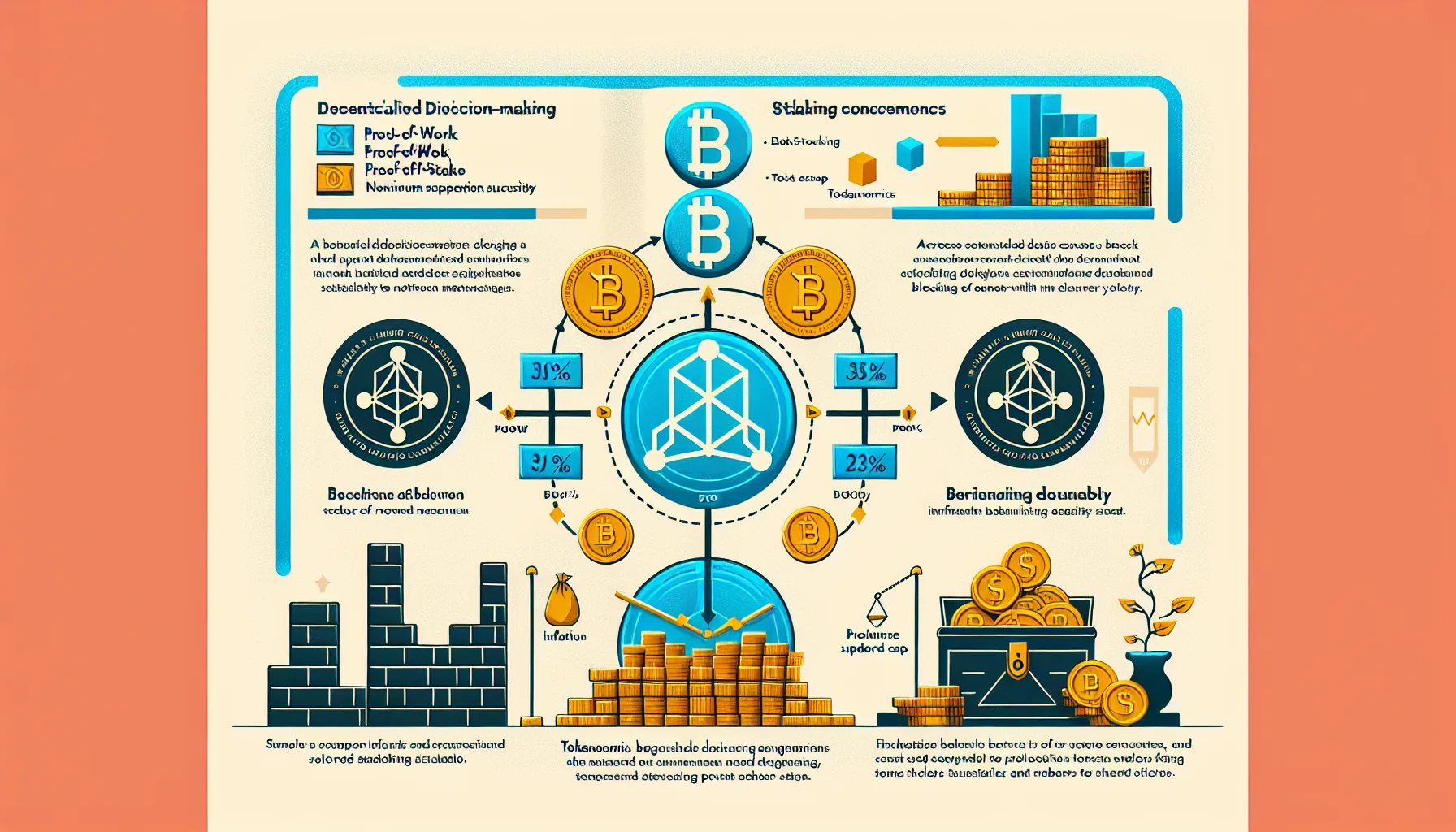
History of DCR
The History of Decred (DCR): Decentralized Evolution with Governance at Its Core
Decred (DCR) emerged in 2016 with the explicit goal of addressing governance challenges that many early blockchain projects faced, particularly Bitcoin. The project’s origin traces back to an open-source community led by developers at Company 0, who saw opportunities to create a cryptocurrency prioritizing decentralized decision-making and sustainable funding mechanisms.
One of the defining moments in Decred’s early history was the inclusion of its innovative hybrid consensus model, combining Proof-of-Work (PoW) with Proof-of-Stake (PoS). This design was implemented to prevent centralization risks observed in Bitcoin mining and allow stakeholders—not merely miners—to have a significant voice in the project’s governance. However, the hybrid model’s intricate design has sparked debates regarding its long-term scalability and whether it compromises efficiency compared to pure PoW or PoS systems.
Decred’s funding structure also broke ground within the crypto space. Ten percent of the block rewards are allocated to a self-sustaining treasury system, designed to fund development without external dependencies. While hailed as a solution to funding transparency, this mechanism has occasionally raised questions about how funds are allocated and whether the community’s input fully determines treasury use. Critics have pointed out potential centralization concerns regarding the developers’ influence over early treasury decisions.
An important milestone in Decred’s history was the launch of Politeia in 2018. Politeia is a governance platform that allows stakeholders to formally propose, discuss, and vote on changes to the network or treasury disbursements. While Politeia has been recognized as a step forward in blockchain governance, its user adoption rates and accessibility have at times fallen short of expectations, with some community members voicing concerns regarding voter apathy or the complexity of the system for non-technical participants.
Throughout its history, Decred has implemented consensus-breaking upgrades through its stakeholder voting system, where alterations to the protocol only activate following majority approval. This process aims to safeguard against contentious hard forks, a problem that has frequently plagued other projects. Despite this, critics argue that the slower decision-making process caused by stakeholder proposals may hinder Decred’s adaptability in the fast-paced cryptocurrency landscape.
Decred’s commitment to decentralization and governance has shaped its reputation, but every innovation has presented corresponding challenges. The network’s hybrid model, funding mechanisms, and user-driven governance have all positioned Decred as a unique player in the crypto ecosystem, albeit not without trade-offs and complexity. Its history reflects a deliberate, principle-focused path, avoiding short-term trends in favor of structural experimentation.
How DCR Works
How Decred (DCR) Works: A Technical Breakdown for Crypto Enthusiasts
Decred (DCR) operates as a hybrid consensus cryptocurrency designed to address the shortcomings of traditional blockchain governance. Its architecture integrates both Proof-of-Work (PoW) and Proof-of-Stake (PoS) mechanisms to ensure a balance of miner and stakeholder influence. Here's a closer look at its technical composition:
Hybrid PoW/PoS Consensus
Decred's hybrid model combines PoW miners, who validate transactions and create new blocks, with PoS stakeholders, who verify the work of miners and govern the network. PoW miners submit blocks to the chain, while PoS stakeholders use tickets to vote on block validity. A block must have at least 3 out of 5 votes from stakeholders to be accepted, adding a second layer of consensus that reduces miner centralization and double-spend risks.
Ticket-Based PoS Voting System
Stakeholders participate in governance by locking DCR in exchange for "tickets." These tickets are placed into a queue, where they have the chance to be selected randomly for voting. Once chosen, tickets allow stakeholders to vote on governance proposals, funding from the Decred Treasury, and validating mined blocks. The requirement to lock funds reduces the likelihood of governance manipulation and aligns incentives with long-term network health.
However, the ticket system depends on user participation, and low engagement rates can reduce the network’s decentralization. Additionally, the randomness of ticket selection may result in some participants waiting longer than anticipated for their tickets to vote, which may disincentivize smaller players from participating in PoS.
Governance Through Politeia
Decred integrates an off-chain proposal system called Politeia. This platform allows stakeholders to discuss, propose, and vote on development initiatives funded by its Treasury, which is sustained via 10% of block rewards. While Politeia fosters decentralized decision-making, the off-chain nature of the system has raised concerns about transparency and logistical complexity compared to fully on-chain governance solutions.
Multi-Layer Security Model
By relying on both PoW and PoS, Decred achieves a robust security model. PoW ensures computational integrity, while PoS diminishes the risk of majority attacks by requiring a dual-layer validation process. However, the hybrid model may result in inefficiencies, such as higher costs for infrastructure maintenance and reduced transaction throughput compared to more streamlined consensus mechanisms.
Challenges with Scalability
While Decred benefits from its hybrid model, this design introduces trade-offs in terms of scalability and usability. The reliance on ticket voting and layered governance processes can slow down decision-making and transaction speeds, making it less competitive with blockchains optimized for rapid throughput.
Use Cases
Decentralized Use Cases of Decred (DCR)
Decred (DCR) distinguishes itself by leveraging a hybrid consensus model (Proof-of-Work and Proof-of-Stake) to prioritize decentralization and governance. This unique structure facilitates a range of compelling use cases that extend beyond speculative trading. However, these applications are not without their limitations and challenges.
Governance Through On-Chain Proposals
One of Decred's primary use cases is decentralized governance. Stakeholders lock their DCR to participate in the Proof-of-Stake system, enabling them to vote on network policies, funding proposals, and protocol upgrades via the Politeia system. This creates an ecosystem where development is not dictated by a central authority but by community consensus. While this enhances transparency and autonomy, a potential bottleneck exists in participation rates. Governance models rooted in staking can risk consolidating power among larger stakeholders who own more DCR, potentially creating disparities in influence.
Secure Digital Transactions
Decred functions as a digital currency for peer-to-peer transactions. Its blockchain prioritizes security and robustness, making DCR suited for value transfer without intermediaries. Fast transaction settlement and low fees offer an advantage for those seeking an efficient payment method. However, its adoption for this use case remains niche compared to more widely recognized cryptocurrencies like Bitcoin. Lack of integration with major payment platforms is a significant barrier to mainstream use.
A Store of Value with Limited Inflation
Decred positions itself as a deflationary digital asset, with a maximum supply of 21 million DCR and decreasing block rewards. This scarcity-driven monetary policy supports the narrative of DCR being a long-term store of value, making it attractive to those hedging against inflation in fiat systems. Still, like all cryptocurrencies, DCR is subject to liquidity fluctuations in secondary markets, potentially affecting its reliability as a stable store of value in practice.
Funding Decentralized Projects
The Decred Treasury, funded by a portion of the block rewards, is explicitly designed for community-driven developments. Proposals for improvement or marketing initiatives can be submitted by anyone and voted upon using Politeia. This ensures an active approach to resource allocation and project scalability, but there are risks concerning the pacing and quality of funded initiatives, as the onus falls on stakeholders to vet and approve proposals effectively.
Privacy-Enhanced Transactions
Decred also supports privacy-focused transactions through its implementation of CoinShuffle++, reducing the traceability of transactions on the blockchain. While this increases anonymity, it may expose DCR to regulatory scrutiny in jurisdictions where privacy-centric features are discouraged or outright prohibited. Increased attention to compliance and the potential for future restrictions poses an ongoing challenge for this use case.
In summary, while Decred offers multiple practical applications aligned with decentralization and community-driven growth, its adoption and scalability still grapple with technical, regulatory, and market dynamics.
DCR Tokenomics
Decentralized Token Distribution and DCR Supply Dynamics
Decred (DCR) operates with a tokenomic model designed to align incentives across various network participants, namely stakeholders, miners, and developers. This model is rooted in its hybrid Proof-of-Work (PoW) and Proof-of-Stake (PoS) consensus mechanism, ensuring a distribution of rewards that fosters decentralized decision-making and network security. However, while Decred’s tokenomics stand out for their focus on decentralization, they are not without trade-offs.
Fixed Maximum Supply and Emission Schedule
DCR has a capped maximum supply of 21 million coins, echoing Bitcoin’s scarcity model. The emission rate follows a logarithmic decay schedule, with block rewards reducing slightly every 21 days. This predictable issuance ensures there is no sudden inflation, making the asset attractive to participants prioritizing hard cap tokenomics. However, some critics argue the diminishing block rewards may pose risks to miner and stakeholder participation over the long term, especially given the expectation of reliance on transaction fees once subsidy rewards become negligible.
Block Reward Allocation
Decred's block reward is split into three predefined allocations: 60% to Proof-of-Work miners, 30% to Proof-of-Stake voters, and 10% to the project’s Treasury. This structure incentivizes diverse contributors, with PoW miners securing the network, PoS voters validating blocks while participating in governance, and the Treasury funding future developments.
That said, the 10% allocation to the Treasury has sparked debate. While it ensures a steady supply of funds for on-chain proposals and project maintenance, some in the community have raised concerns about the centralized custody of Treasury funds. Even though the use of funds is governed by votes from stakeholders, questions about transparency and underutilization of certain funds persist.
Governance Through Ticket Staking
A unique feature of DCR’s tokenomics is its ticket-based staking system. To participate in governance, holders lock up DCR tokens to purchase tickets, which are then randomly selected to vote on proposals and validate blocks. This mechanism provides financial incentives for long-term holding and involvement in the network. However, the high ticket prices required for staking may create barriers to entry for smaller holders, centralizing governance power among wealthier participants unless they use staking pools, which reintroduces trust issues.
Inflation and Sustainability Concerns
Despite a fixed supply cap, Decred's current on-chain activity has drawn scrutiny regarding whether transaction fees alone will suffice to maintain miner and staker incentives once block rewards are significantly diminished. This sustainability question becomes more pressing when considering the relatively modest DeFi and dApp ecosystem surrounding Decred, which inherently limits user-generated activity and, by extension, transaction fee revenues.
DCR Governance
Decentralized Governance: How Decred (DCR) Handles Decision-Making
Decred (DCR) is often recognized for its robust and on-chain governance mechanisms, which aim to balance decentralization, transparency, and community input. At its core, Decred’s governance model leverages a hybrid Proof-of-Work (PoW) and Proof-of-Stake (PoS) consensus mechanism combined with a blockchain-integrated decision-making platform, Politeia. This structure enables stakeholders to have a significant voice in the direction of the project, but it's not without its complexities and potential trade-offs.
Proof-of-Stake Voting Power
One of Decred's standout features is its PoS system, in which DCR holders can lock up their tokens to purchase "tickets." Each ticket grants its holder the right to participate in voting that influences protocol-level changes, treasury expenditures, and consensus upgrades. This mechanism is designed to align incentives between the network’s miners and stakers, ensuring both PoW and PoS participants have a role in governance. However, the ticket system favors those with significant financial resources, potentially creating a barrier to entry for smaller holders, which could impact decentralization in the long run.
Politeia: The Decision-Making Hub
The Politeia proposal system allows any community member to propose changes to the ecosystem, whether they be code upgrades, marketing initiatives, or resource allocations. Proposals are submitted alongside detailed budgets and plans, which stakeholders can review, discuss, and vote on using their PoS tickets. This transparent and open system minimizes the likelihood of unilateral decision-making by project developers or core teams. However, Politeia introduces its own challenges, particularly in requiring considerable effort and expertise from the community to carefully evaluate proposals. Stakeholder apathy or low voter turnout could undermine the system if proposals fail to attract sufficient attention.
Treasury Governance and Resource Allocation
Decred’s self-funding model is tightly integrated with its governance. A portion of every block reward is allocated to the Decred Treasury, which is controlled directly by the stakeholders via governance voting. This ensures a sustainable funding source without reliance on external entities. That said, the process hinges on the efficient use of funds and active community oversight. Poor decision-making regarding treasury expenditures—whether due to lack of voter participation or ineffective proposals—could slow the project’s growth and adoption.
Challenges Around Voting Participation
The necessity for users to actively participate in governance by staking DCR and voting is both a strength and a potential limitation. While it creates a trustless and inclusive decision-making framework, it also risks voter fatigue over time. Complex governance systems require ongoing education and engagement, which may not always align with the incentives of all stakeholders, particularly those more interested in financial returns than active governance.
Decred's governance model is highly innovative while remaining dynamic and user-driven, though its reliance on active community involvement presents inherent trade-offs that demand vigilance and participation.
Technical future of DCR
Current and Future Technical Developments in Decred (DCR)
Decred (DCR) emphasizes decentralized governance, making its technical developments heavily dependent on community consensus and its integrated voting mechanism. At the core of these developments is Decred’s hybrid Proof-of-Work (PoW) and Proof-of-Stake (PoS) consensus mechanism, designed to mitigate centralization risks in mining while ensuring robust security. Below is a concise analysis of ongoing and future roadmap initiatives shaping the DCR ecosystem.
Implementation of Bison Relay for Decentralized Communication
Bison Relay is a protocol that leverages the Decred blockchain to enable censorship-resistant communication and content distribution. Unlike centralized platforms prone to surveillance, this system ensures privacy through encrypted channels routed via the Lightning Network. However, adoption hurdles exist, primarily due to the level of technical knowledge required from users. Further tooling for ease of use is flagged as essential to make this feature impactful at scale.
Privacy Enhancements with Mixed Transactions
Decred continues to prioritize privacy with developments in its StakeShuffle protocol, allowing seamless integration of CoinJoin-style mixed transactions. These ensure on-chain privacy for stakeholders without relying on third-party solutions. However, scaling this feature to ensure consistent participation in the privacy pools remains a challenge, as maintaining anonymity relies on participant liquidity. Future upgrades may focus on making privacy opt-out rather than opt-in to enhance obfuscation rates.
Lightning Network Adoption
Decred’s commitment to scalability is reflected in its partial integration of the Lightning Network. While this advancement reduces transaction bottlenecks and fees, full Lightning adoption still lags behind user expectations due to technical intricacies and lower community prioritization compared to other major developments. Addressing these issues could help strengthen the micro-payment and high-speed transaction ecosystem.
Decentralized Treasury Evolution
One of Decred’s distinguishing features is its decentralized treasury. Efforts are ongoing to refine the treasury mechanism, ensuring funds are distributed transparently and align with stakeholder interests. However, debates within the ecosystem raise questions about excessive centralization risks if high-level contributors dominate decision-making. Future technical governance updates may address these perceived vulnerabilities.
Modularization and Smart Contract Potential
Though not widely advertised, Decred is exploring modular upgrades to its blockchain—components that could eventually support advanced scripting languages and, potentially, smart contract functionalities. However, integrating advanced programmability risks overcomplicating the lightweight nature of the protocol. If implemented, these developments would need to maintain Decred’s signature balance of security and simplicity.
Incorporating these technical upgrades while remaining faithful to the project’s principle of decentralized governance will be critical to Decred's ongoing appeal to its technically inclined user base.
Comparing DCR to it’s rivals
How Decred (DCR) Stacks Up Against Monero (XMR)
When comparing Decred (DCR) to Monero (XMR), it’s clear that both blockchain projects have carved unique niches in the cryptocurrency ecosystem. However, their fundamental goals and technical implementations differ significantly.
Governance and Decision-Making Model
One of the most notable distinctions lies in governance. Decred operates on a hybrid Proof-of-Work (PoW) and Proof-of-Stake (PoS) consensus mechanism, which enables on-chain governance through its Politeia proposal system. This structure allows stakeholders to directly vote on development funding, protocol changes, and other pivotal decisions. While this fosters decentralization and limits centralized control, critics argue that the addition of PoS could lead to plutocracy, where wealthier stakeholders may exert disproportionate influence.
Monero, on the other hand, does not have an integrated on-chain governance mechanism. Instead, it employs a meritocratic model where decisions are made by community consensus and Core Team coordination. While this model promotes grassroots collaboration, the reliance on off-chain governance could potentially lead to slower consensus on critical updates or funding bottlenecks.
Privacy and Fungibility
A major differentiator between DCR and XMR is their approach to privacy. Monero is widely regarded as one of the most privacy-centric cryptocurrencies, with its use of ring signatures, stealth addresses, and confidential transactions. These features ensure that transaction details, including amounts and sender/receiver information, remain completely private and untraceable.
Decred, in comparison, only introduced optional privacy features in 2019 with its integration of CoinShuffle++. While this offers some degree of transactional privacy, it lacks the comprehensive, protocol-native privacy mechanisms available in Monero. Privacy advocates often highlight that because Decred’s privacy is optional, its participants may still leave identifiable traces when using the main ledger.
Adoption and Use Cases
Both projects have seen adoption within slightly different contexts. Decred's primary utility is tied to its governance, making it appealing to users interested in decentralized decision-making. Monero, meanwhile, is highly favored in privacy-critical scenarios, albeit accompanied by regulatory scrutiny in certain jurisdictions due to its anonymized nature.
Performance Considerations
In terms of scalability, Decred benefits from its Lightning Network integration, which enables faster off-chain transactions. However, adoption of this feature remains limited. Monero’s focus on privacy creates a tradeoff in its block size expansion and increased computational demand, making running full nodes more resource-intensive over time. This disparity in resource requirements affects each network's decentralization in distinct ways.
While Decred offers a robust governance model and evolving privacy tools, it faces challenges in achieving the level of confidentiality and fungibility that Monero is known for. Each project prioritizes different segments of the cryptocurrency landscape, which shapes their respective competitive advantages.
Decred (DCR) vs Dash (DASH): A Detailed Comparison
When evaluating Decred (DCR) against Dash (DASH), both cryptocurrencies bring unique value propositions to the table, particularly in how they approach on-chain governance, consensus mechanisms, and privacy features. However, the divergence in their design philosophies highlights notable differences that appeal to distinct subsets of the crypto community.
Governance: Decentralized Autonomy vs. Masternodes
Decred's governance model is lauded for its fully decentralized, community-driven proposal and voting system through the Politeia platform. Every DCR token holder has an equal opportunity to participate in shaping Decred's development roadmap. This stands in contrast with Dash's governance system, which is heavily reliant on masternodes. While masternodes efficiently streamline Dash's decision-making, their high entry cost concentrates power among wealthier participants, potentially creating centralization concerns. Critics of Dash argue that its masternode structure runs the risk of catering to the interests of a few, leaving regular token holders with limited influence over the network’s direction.
Consensus Mechanisms: Hybrid PoW/PoS vs. PoW with Masternodes
Decred employs a hybrid Proof-of-Work (PoW) and Proof-of-Stake (PoS) consensus mechanism, aiming to achieve a balanced compromise between security and decentralization. This system enhances network resilience by combining the computational power of miners with the stake-based voting of holders. On the other hand, Dash relies on traditional PoW augmented by its masternode layer, which processes InstantSend and PrivateSend transactions. While Dash’s masternode layer boosts transaction speed and enhances privacy features, its reliance on PoW at the base layer opens it to the same environmental and centralization issues faced by many PoW-centric cryptocurrencies.
Privacy Features: Optional vs. Integrated
Dash integrates privacy as an optional feature via its PrivateSend functionality, which mixes transactions to obscure the origin of funds. However, its reliance on masternodes for mixing introduces potential traceability concerns, as masternode operators could surveil transaction patterns. Compared to privacy-focused projects that adopt more sophisticated on-chain obfuscation techniques, Dash's privacy features may feel somewhat dated. Decred, conversely, has adopted its own privacy layer utilizing the CoinShuffle++ protocol, ensuring transaction anonymity without centralized dependencies. This protocol remains baked into the hybrid consensus model, minimizing the risk of privacy feature exploitation by specific network participants.
Tokenomics and Incentivization
Another key distinction is how rewards are distributed. Decred splits block rewards between PoW miners, PoS voters, and its treasury, ensuring a sustainable funding model for development. Dash allocates a portion of its block rewards to masternodes and a development treasury, but skeptics argue that the sizable share given to masternodes creates a disproportionate economic hierarchy, incentivizing accumulation among wealthier users.
In summary, while both DCR and DASH emphasize governance, scalability, and privacy, Decred’s holistic approach to decentralization and security sets it apart from Dash’s masternode-dependent architecture. These differing frameworks highlight the philosophical divide in their communities, catering to users with unique priorities and expectations.
Decred (DCR) vs. Zcash (ZEC): Privacy, Governance, and Development Funding Compared
When dissecting the competitive landscape between Decred (DCR) and Zcash (ZEC), it becomes clear that these two projects take markedly different approaches to privacy, governance, and long-term development sustainability. While Decred focuses heavily on self-governance and transparency, Zcash prioritizes advanced privacy protocols, leading to distinct tradeoffs for each crypto asset.
Privacy Protocols: A Divergent Philosophy
One of Zcash's core features is its use of zk-SNARKs (Zero-Knowledge Succinct Non-Interactive Arguments of Knowledge), a cutting-edge privacy technology that enables shielded transactions. These allow users to transact without revealing sensitive details such as sender, recipient, or transaction amounts. While this provides unparalleled user privacy, one major drawback is the significant computational overhead it requires, slowing down transaction verification times. Additionally, the reliance on a trusted setup during its initial creation has been a point of contention in crypto circles, as concerns around potential backdoors and initial key generation persist.
Decred, by contrast, does not emphasize privacy to the same degree. While Decred’s privacy solution based on CoinShuffle++ offers a more decentralized and less computationally intense method of mixing coins to obscure transaction details, it does not match the cryptographic sophistication of Zcash. This divergence shows the philosophical priorities of each project: Decred leans towards governance and self-funding, while Zcash is rooted in privacy innovation.
Governance: Transparency vs. Centralization Risk
Zcash governance has historically been a polarizing topic. The Zcash Foundation and Electric Coin Company play central roles in decision-making, raising concerns of potential centralization. Its funding mechanisms, like the controversial "Founders’ Reward," which allocates a portion of block rewards to early developers and investors, has drawn criticism for creating an uneven distribution of influence. The transition to a community-managed development fund has mitigated some of these issues, but skepticism remains within decentralization-focused communities.
Decred takes a more straightforward governance-first approach with its hybrid Proof-of-Work/Proof-of-Stake (PoW/PoS) consensus model, allowing stakeholders to vote on proposals and updates seamlessly via its Politeia platform. This ensures that changes are community-driven, addressing the centralization concerns associated with Zcash. However, some critics argue that Decred’s voter participation rates can be relatively low at times, raising questions about how representative its governance truly is.
Development Funding: A Contrast in Models
Zcash continues to fund its development via a fixed percentage of block rewards through its community-selected Dev Fund, which sustains its operations but often invites scrutiny over fund allocation and concentration. This contrasts with Decred’s self-funding treasury model, where 10% of every block reward is allocated to an on-chain treasury controlled by stakeholder voting. While the treasury gives Decred long-term financial sustainability and community control, the reliance on consistent block rewards could be a vulnerability if the network's growth stalls, as scaling limitations might strain resources in the future.
Decred and Zcash represent two sharply defined visions for blockchain utility. Privacy maximalists may gravitate toward Zcash's zk-SNARK-based model, while proponents of robust governance might prefer Decred’s decentralized funding and voting mechanisms. Both assets have unique challenges and advantages, yet the overlap in their target audience raises thought-provoking questions about tradeoffs in privacy and decentralization.
Primary criticisms of DCR
Key Criticisms of Decred (DCR): Governance, Incentives, and Accessibility
Decred (DCR) often positions itself as a next-generation cryptocurrency with strong emphasis on governance and sustainability. However, despite its unique hybrid consensus model and self-funding treasury, several criticisms and challenges have emerged around its design and ecosystem. Below, we delve into some of the primary criticisms of Decred that have sparked debate within the crypto community.
1. Centralization in Governance Processes
Although widely praised for its on-chain governance via Politeia, critics argue that Decred's governance may exhibit tendencies toward centralization. The ticket-holder system, which gives stakeholders voting power proportional to their coin holdings, inherently favors large holders ("whales") who can afford to lock significant amounts of DCR in stake. This wealth-concentration effect potentially undermines claims of fairness and democratic participation in decision-making processes. Smaller holders, unable to participate directly, may end up disenfranchised from the governance process, raising concerns about an oligarchic dynamic.
2. Barriers to Entry for Proof-of-Stake Voting
Decred’s hybrid Proof-of-Work (PoW) and Proof-of-Stake (PoS) consensus model relies on a ticketing system for staking. However, the ticket price has become a significant barrier for newer participants or smaller holders. As ticket prices scale with network demand, staking eligibility has grown more exclusive, necessitating substantial capital investment just to participate in governance or to earn staking rewards. While many cryptocurrencies aim to democratize network participation, the growing cost of DCR staking has generated criticism for inadvertently creating a system that favors wealthy participants.
3. Opaque Treasury Utilization
Decred's project treasury is funded via a 10% block reward allocation intended to sustain ongoing development and ecosystem growth. While this funding mechanism is innovative, concerns around transparency in treasury usage have been raised. Critics argue that some funding decisions or expenditures are not clearly communicated to the wider community. This opacity has led to skepticism about how effectively funds are being deployed and whether they align with the broader goals of decentralization and long-term growth.
4. Perceived Developer Influence
Despite Decred’s efforts to establish decentralized governance, the perception of a strong influence exerted by its core developers persists. A significant portion of the project’s governance and development pivots around small, centralized teams, raising concerns about the potential centralization of decision-making power. Some detractors claim this dynamic undercuts the ethos of decentralization and questions the future scalability of its governance model without external developer contributions.
5. Complexity and Accessibility Issues
Decred's dual-consensus mechanism and staking system bring technical sophistication, but also complexity that can be intimidating for less tech-savvy users. Configuring staking or participating in governance requires navigating specialized wallets, managing locked funds, and understanding nuanced voting mechanisms. While this is less of an issue for the crypto-savvy audience, it does present a steep learning curve for onboarding a broader user base, limiting its adoption potential outside of niche communities.
Founders
Decred (DCR) Founding Team: Vision, Decentralization, and Challenges
Decred (DCR) was launched by a team deeply rooted in the cryptocurrency space, with a demonstrated commitment to decentralization. Spearheaded by the founders of Company 0, the development group behind the project, the Decred founding team brought together a blend of experienced software engineers and Bitcoin veterans. Their shared vision was to address some of Bitcoin's governance and scalability challenges by incorporating community-driven decision-making into the cryptocurrency's DNA.
One of the most notable figures tied to Decred’s development is Jake Yocom-Piatt, the project lead at Company 0. Yocom-Piatt has a background in systems programming and security, and his involvement was instrumental in shaping Decred’s hybrid Proof-of-Work/Proof-of-Stake (PoW/PoS) consensus model. This model aims to thwart centralization risks seen in traditional Proof-of-Work-based protocols by giving stakeholders direct power in governance decisions. That said, questions have arisen from the crypto community about whether Company 0 itself exhibits too much control over key aspects of the ecosystem, a common critique leveled at projects reliant on founding teams for initial momentum.
A key differentiating factor in Decred's launch was its intentional airdrop and minimal pre-mine allocation. The pre-mine stood at roughly 8% of the total DCR supply, divided evenly between early developers and strategic airdrop participants. While the goal was to distribute governance power more equitably and avoid the conflicts often seen with heavily concentrated project launches, critiques remain. Some in the crypto space argue that even the relatively small pre-mine could lead to long-term centralization, as those initial stakeholders have significant sway in early protocol decisions and treasury fund allocations.
Another notable figure is Marco Peereboom, an open-source advocate and systems architect who played a pivotal role in Decred’s core development framework and organizational structure. His contributions underscore the project’s strong technical foundation, but some users question whether the leadership’s insistence on interoperability with legacy systems stifles the kind of innovation often demanded in the rapidly changing crypto space.
While the founding team has succeeded in building a robust governance-focused ecosystem, concerns linger over Company 0's sustained influence and whether their technical and strategic decisions align fully with the community's long-term vision. Despite claims of decentralization, the founding team’s degree of involvement remains a point of contention within the Decred community.
Authors comments
This document was made by www.BestDapps.com
Sources
- https://decred.org/
- https://decred.org/research/
- https://docs.decred.org/
- https://github.com/decred/dcrd
- https://github.com/decred/dcrwallet
- https://docs.decred.org/governance/politeia/
- https://blog.decred.org/
- https://www.decredmagazine.com/
- https://explorer.dcrdata.org/
- https://dcrstats.com/
- https://proposals.decred.org/
- https://github.com/decred/dcrdata
- https://btcmanager.com/interview-jake-yocom-piatt-decred/
- https://arxiv.org/abs/2104.06809
- https://www.youtube.com/c/Decred
- https://github.com/decred/dcrlnd
- https://decredpower.com/
- https://research.binance.com/en/projects/decred
- https://jalapeno.tools/
- https://twitter.com/decredproject


