History of DAO
The History of DAO: Decentralized Governance Unfolded
The concept of Decentralized Autonomous Organizations (DAOs) emerged as a natural evolution of blockchain technology’s promise to eliminate intermediaries, ensuring trustless, transparent governance. The earliest thought experiments surrounding DAOs originated from the blockchain and crypto community’s desire to extend decentralization beyond currency to organizational structures. This idea gained momentum with the advent of Ethereum, whose smart contract capabilities made such an entity feasible.
The first major DAO, commonly referred to as “The DAO,” was launched in 2016 and set the stage for both the potential and pitfalls of decentralized governance. Designed as a venture capital fund powered entirely by smart contracts, it raised an unprecedented amount of Ether during its token sale. However, a vulnerability in its code was exploited shortly after, resulting in the diversion of a substantial amount of ETH. This event didn’t just impact The DAO - it led to one of the most contentious moments in cryptocurrency history: the Ethereum/ Ethereum Classic hard fork. The hack exposed the critical importance of secure code audits and the broad implications of decisions made in decentralized ecosystems.
Despite this turbulent beginning, the DAO model persisted and evolved. Contributors across the crypto ecosystem continued to iterate on the idea, introducing frameworks to mitigate such risks. The development of multi-signature wallets, enhanced governance protocols, and modular DAO structures allowed for greater flexibility and security. More recent DAO architectures emphasize stakeholder accountability and have shifted toward balancing decentralization with pragmatism, recognizing the challenges of on-chain governance’s scalability.
Another key historical inflection point for DAOs was regulatory scrutiny. Some early projects skirted clear legal definitions, operating in a grey zone, which later prompted questions concerning their compliance with securities laws and other regulations. These complexities drew attention to how DAO participants, particularly token holders in speculative projects, might bear legal liabilities. Over time, legal frameworks for DAOs began crystallizing, with jurisdictions creating statutes to better define their operations and legal standing.
DAOs have since diversified far beyond their initial use cases. From protocol governance to decentralized investing and even social or philanthropic initiatives, DAOs have become a more nuanced corner of the blockchain industry. However, this growth also reignited debates about voter apathy, governance attack vulnerabilities, and whether truly decentralized organizations can efficiently respond to rapidly-changing situations. The history of DAOs remains marked by this tension: on one side, the pursuit of autonomy and transparency, and on the other, the enduring need for overcoming logistical and technical constraints.
How DAO Works
How a Decentralized Autonomous Organization (DAO) Works
A Decentralized Autonomous Organization (DAO) operates through smart contracts—self-executing code on a blockchain that automates rules and decision-making processes without requiring intermediaries. At its core, a DAO eliminates the need for centralized authority by distributing control directly to its members. This is achieved through cryptographic tokens, which act both as governance tools and economic incentives within the system.
Smart Contract Governance
The foundation of a DAO is its smart contract infrastructure, generally deployed on blockchains like Ethereum or others that support programmable functionality. These contracts execute predefined operations, such as voting, fund allocation, or proposal vetting. Anyone with the proper permissions or token holdings can interact with these contracts, ensuring transparent, tamper-proof execution of organizational tasks. The immutability of these contracts ensures that rules, once encoded and deployed, cannot be altered arbitrarily—though this is also a potential vector for challenges when bugs or inefficiencies arise.
Community Voting Mechanisms
Governance in DAOs relies on democratic or token-weighted voting processes. Members propose and vote on changes through a structured system. Each token holder typically holds voting power proportional to their token stake, though some DAOs use quadratic voting or other mechanisms to prevent whales from dominating decisions. These proposals can cover topics like treasury management, policy amendments, or protocol upgrades. However, voter apathy—a significant number of token holders failing to participate—can create centralization of power among a small, engaged minority.
Treasury and Asset Management
A DAO’s treasury is another central aspect of its operation. Managed through multi-signature wallets or smart contracts, these funds are usually denominated in cryptocurrencies and are allocated only after proposals have been approved via governance. While this setup ensures transparency, weak mechanisms for preventing malicious proposals or inadequate scrutiny of spending can lead to mismanagement or exploitations.
Decentralized Coordination Challenges
Despite their promise, DAOs face several limitations. Coordination across geographically distributed participants with diverse incentives can be cumbersome, leading to decision-making bottlenecks. Furthermore, the degree of “decentralization” in some DAOs is questionable, as concentrated token ownership often translates to de facto centralization in governance. Scalability is another issue; as the number of proposals or contributors grows, it increases voter fatigue and reduces operational efficiency unless off-chain voting or delegate models are implemented.
Risk Profile
DAOs are also vulnerable to security exploits that can drain treasuries or manipulate contract logic, as seen in high-profile cases in the space. The irreversibility of blockchain transactions compounds this risk, leaving many DAOs reliant on emergency mechanisms or even community forks to address catastrophic failures. Additionally, regulatory uncertainty surrounding DAOs creates legal gray areas, particularly in jurisdictions where liabilities for participants or “owners” are poorly defined.
Use Cases
Use Cases of DAOs in the Crypto Ecosystem
Decentralized Governance Mechanisms
DAOs (Decentralized Autonomous Organizations) excel at enabling decentralized governance. By utilizing token-weighted voting systems, DAOs allow token holders to directly influence organizational decisions. This eliminates intermediaries and ensures that power is distributed among participants. However, challenges persist, including voter apathy and the disproportionate influence of whale token holders—issues that can concentrate power in ways reminiscent of traditional systems.
Fundraising and Crowdfunding Models
One of the most immediate applications of DAOs is in decentralized fundraising. Projects can use DAOs to pool resources from a global base of contributors without geographical or regulatory restrictions. This has greatly simplified seed funding for crypto startups. On the downside, the trustless nature of DAOs has opened the door to scams, rug pulls, and mismanagement of funds due to limited oversight.
Collective Asset Management
DAOs serve as digital cooperatives for managing pooled capital, allowing participants to invest in DeFi protocols, NFTs, or even traditional assets. Investment decisions are made collectively, avoiding the need for centralized fund managers. However, the inherent transparency of blockchain systems in a DAO model can lead to copycat strategies from external actors, reducing competitive advantages.
Social and Community Coordination
DAOs have been increasingly used in coordinating communities, such as NFT projects or metaverse initiatives. These organizations enable members to propose, vote on, and implement community-driven objectives. The decentralized structure promotes inclusivity, but without proper moderation tools, these DAOs can easily descend into chaos or stagnation when conflicting interests arise.
Protocol Development and Maintenance
DAOs often govern decentralized protocols, allowing token holders to implement upgrades or allocate resources for development. This ensures that governance aligns with user incentives. However, smart contract vulnerabilities and poorly designed governance frameworks within DAOs have led to controversial decisions, including the freezing or loss of funds.
Legal Innovation and Experimentation
DAOs push the boundaries of legal structures, creating frameworks for borderless organizations. Some jurisdictions now recognize DAOs as legal entities, enabling them to sign contracts or interact with traditional legal systems. However, the lack of universal legal recognition creates uncertainty for participants, and liability in cases of failure remains murky.
Real-World Asset Tokenization
Organizations have experimented with using DAOs to tokenize real-world assets such as real estate, art, or intellectual property. This aims to make traditionally illiquid assets accessible and tradeable. Yet, bridging the gap between blockchain systems and real-world legal frameworks remains a bottleneck, with compliance and enforcement being significant hurdles.
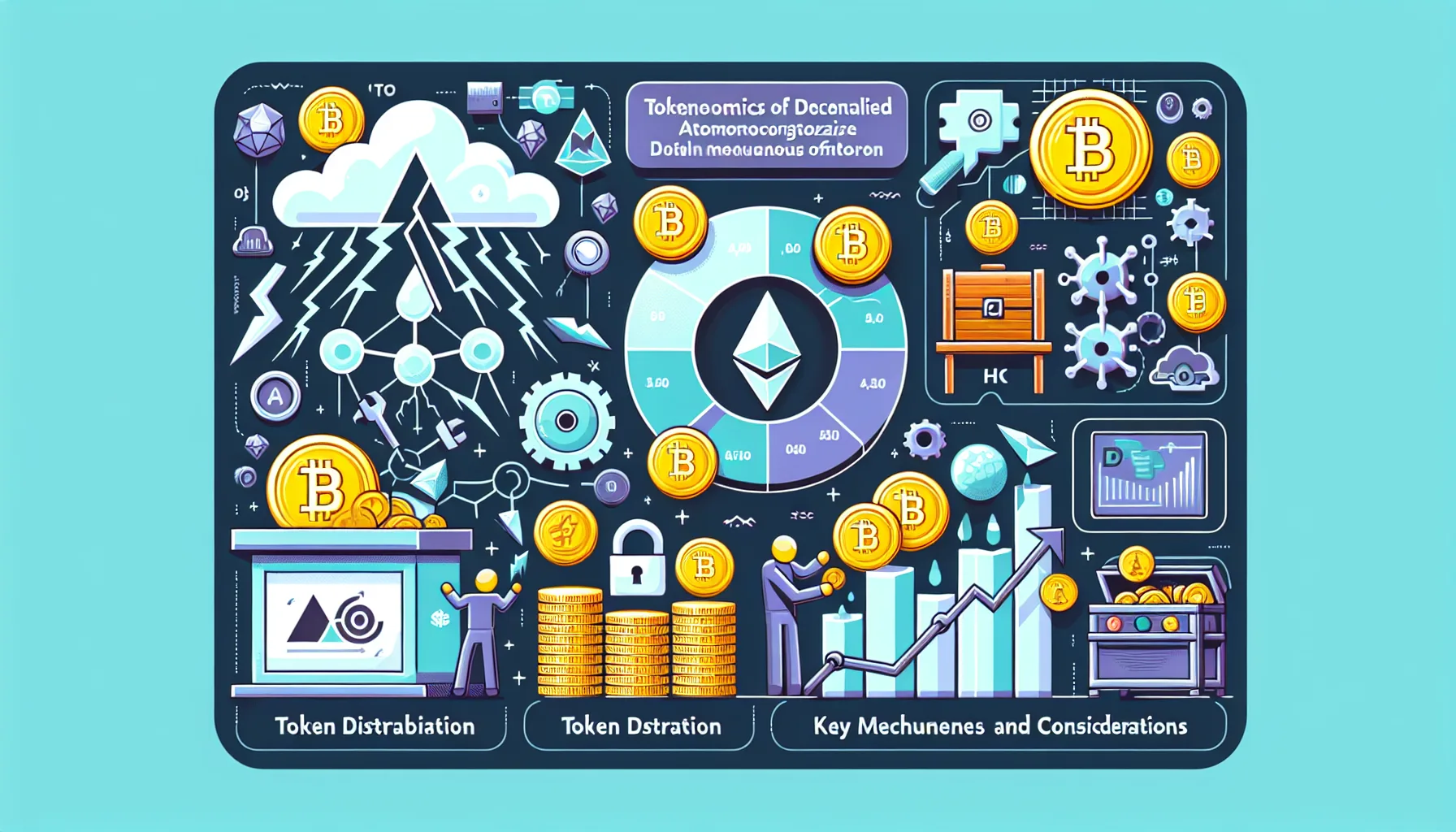
DAO Tokenomics
Tokenomics of DAOs: Key Mechanisms and Considerations
The tokenomics of decentralized autonomous organizations (DAOs) play a pivotal role in their function, governance, and utility. Since DAOs are underpinned by tokens, understanding how these tokens are structured, distributed, and utilized is critical for evaluating their effectiveness and long-term sustainability.
Token Distribution and Incentive Design
Unlike traditional corporate structures, DAOs rely on tokens to align incentives and facilitate participation. However, suboptimal token distribution models can expose DAOs to centralization risks, as a small group of token holders may accumulate overwhelming influence. Balancing initial allocations—between founders, investors, and community members—requires carefully calibrated economics to ensure inclusivity without undermining early development.
Another layer of complexity arises in reward mechanisms. While tokens are often used to incentivize participation, over-reliance on inflationary token emissions to fund contributions or pay rewards can erode long-term token value. Projects that implement unsustainable emission schedules often face declining participant interest as token prices drop, diluting the impact of subsequent incentives.
Governance Token Utility and Risks
DAO governance is often tokenized, where governance tokens determine voting power. However, the system is far from perfect. Token-weighted voting highly favors participants with large token holdings, potentially leading to plutocratic governance that diverges from the best interests of the broader DAO community. This concentration of power is a widely recognized issue, with some projects exploring quadratic voting or time-weighted mechanisms to mitigate this imbalance.
Furthermore, in many DAOs, the utility of governance tokens is restricted to voting rights alone. Token holders often lack opportunities for broader token utility, such as staking, access to network features, or revenue sharing. This lack of intrinsic value beyond governance diminishes demand for tokens, especially in markets driven by utility as much as speculation.
Treasury Management and Economic Security
The treasury, often controlled by token-based governance, is another critical piece of DAO tokenomics. Mismanagement or insufficient diversification within the treasury can jeopardize a DAO’s ability to fund initiatives during extended downturns in crypto markets. Addressing these vulnerabilities often requires multi-sig wallets or algorithmic treasury rebalancing, though these solutions introduce friction and potential single points of failure.
Additionally, DAOs are vulnerable to economic attacks, such as governance token buyouts or flash-loan exploits to manipulate voting outcomes. As DAOs grow in complexity, the ability of existing tokenomics to maintain security and fair participation has increasingly come into question.
Conclusion
By focusing on robust token distribution, meaningful utility, and secure treasury operations, DAOs can foster a healthier ecosystem, avoiding many pitfalls associated with simplistic or poorly designed tokenomics.
DAO Governance
Governance in DAOs: Decision-Making Structures and Challenges
Decentralized Autonomous Organizations (DAOs) have pioneered a new model of governance within the crypto ecosystem by leveraging smart contracts to automate and decentralize decision-making. Unlike traditional organizations, which rely on hierarchical leadership, DAOs distribute power to token holders, enabling collective decisions. However, the governance mechanisms of DAOs are far from flawless and often pose unique challenges.
Token-Weighted Voting: The Double-Edged Sword
The most common governance model in DAOs is token-weighted voting, where governance power scales with the number of tokens held. While this system ensures that stakeholders with the most investment have a voice proportional to their risk, it can centralize power in the hands of wealthy individuals or institutions. Whale dominance—where a single entity or a small group of entities control the majority of voting power—can effectively undermine decentralization, enabling them to steer the DAO in their own interests, potentially at the expense of smaller token holders.
Additionally, token-based voting systems are susceptible to governance manipulation through vote-buying or borrowing tokens from lending platforms just before a governance vote. These methods can distort decision-making and prioritize short-term gains over long-term sustainability.
Voter Apathy and Low Participation Rates
One of the most significant issues in DAO governance is voter apathy. Studies of governance participation across various DAOs indicate that a majority of token holders abstain from voting in key proposals, leaving the decisions to a highly concentrated minority of active participants. Low participation undermines the democratic ideals of DAOs and makes governance outcomes less representative of the larger community.
Factors contributing to voter apathy include the complexity of proposals, time requirements to stay informed, and lack of direct incentives for voting. While some DAOs have experimented with financial rewards or penalties to encourage participation, such mechanisms can have unintended consequences, such as incentivizing uninformed or careless voting behaviors.
Coordination and Scalability Challenges
DAOs face inherent coordination challenges due to their decentralized structure. Reaching consensus across a global and often anonymous base of participants is daunting, especially as the size of the DAO grows. Key decision-making processes can become bottlenecked if achieving quorum proves difficult or if contentious debates fracture the community. Additionally, decentralized governance mechanisms lack the ability to respond quickly in time-sensitive situations, such as security vulnerabilities or market opportunities.
Scalability challenges also emerge in complex or multi-layered DAOs, where sub-DAOs or working groups are created to handle specialized tasks. While this delegation can improve efficiency, it requires mechanisms to ensure accountability without reintroducing centralized points of failure.
Smart Contract Limitations
Critical to DAO governance is the use of smart contracts that automate proposal submissions, voting, and fund disbursement. However, smart contracts are immutable by design, meaning flaws in governance logic or unforeseen scenarios cannot be easily corrected. Governance exploits—such as manipulating quorum thresholds or abusing proposal frameworks—can result in catastrophic losses or systemic failures, as seen in several high-profile cases. This reliance on code underscores the need to balance decentralization with the flexibility to mitigate risks.
Governance in DAOs is an evolving experiment, and while the concept holds immense potential, it faces tangible challenges regarding fairness, inclusivity, and operational effectiveness.
Technical future of DAO
Current and Future Technical Developments in DAO Infrastructure
Decentralized Autonomous Organizations (DAOs) are witnessing significant technical evolution driven by ongoing innovations in blockchain scalability, interoperability, and governance mechanisms. These developments are reshaping their operational mechanics and laying the groundwork for future enhancements. However, challenges such as smart contract vulnerabilities and governance inefficiencies remain pressing concerns.
Enhanced Scalability and Layer 2 Integrations
Technical scaling has long been a bottleneck for DAOs operating on major blockchain networks. Emerging Layer 2 solutions, including rollups and state channels, are enabling DAOs to execute governance votes and proposals with significantly reduced gas fees and improved transaction throughput. These integrations are helping to alleviate congestion and empower smaller token holders to participate without prohibitive costs. However, standardizing these solutions across different DAOs remains a complex task, given the diverse architectures in place.
Interoperable Governance Frameworks
Cross-chain interoperability is another area undergoing rapid refinement, with multi-chain DAOs increasingly becoming a focal point. Technical frameworks like modular smart contracts are allowing DAOs to distribute voting power and treasury management across chains. Protocols that leverage bridging technologies aim to reduce fragmentation within the decentralized governance ecosystem. Despite this, issues like fragmented voting participation and oracle reliance for cross-chain synchronization present unresolved risks, particularly when it comes to securing accurate off-chain data inputs.
Advanced Smart Contract Automation
Many DAOs are now exploring sophisticated automation layers to streamline workflows. Upgrades to smart contract functionalities are allowing for more dynamic allocation of treasury funds, real-time payroll systems for contributors, and event-triggered voting mechanisms. These advancements are designed to minimize manual intervention. However, the increased complexity of these contracts may expose DAOs to a greater likelihood of coding errors and attack vectors, necessitating ongoing audits and updates.
Privacy-Enhancing Protocols
The implementation of privacy-preservation techniques is gaining traction as DAOs seek to address gaps in voter anonymity and sensitive data protection. Solutions like zero-knowledge proofs are being integrated to mask individual voting preferences without compromising the transparency of aggregate outcomes. While promising, integrating these cryptographic solutions introduces significant computational overhead and can be difficult to implement effectively within existing DAO infrastructures.
Long-Term Technical Governance Challenges
One of the persisting hurdles in DAO development is ensuring sustainable governance. Blockchain-based voting mechanisms often suffer from low voter turnout and susceptibility to governance capture by whales. Emerging proposals around quadratic voting and decentralized reputation systems aim to mitigate these issues but remain experimental and have yet to achieve widespread adoption.
DAOs represent an ever-evolving field with highly dynamic technical roadmaps. While strides are being made across scalability, interoperability, automation, and privacy, operational risks and governance inefficiencies continue to shape the technical decisions influencing their future trajectories.
Comparing DAO to it’s rivals
DAO vs UNI: A Closer Look at Governance and Decentralization
Decentralized Autonomous Organizations (DAOs) and UNI — the governance token underpinning Uniswap’s decentralized exchange — share the common goal of empowering decentralized decision-making, but their implementations and underlying philosophies diverge significantly. Comparing DAO (used here to broadly represent DAO-related crypto assets) with UNI exposes critical contrasts in governance mechanics, token distribution, and community prioritization.
Governance Mechanisms
DAO’s core focus is enabling governance across decentralized ecosystems, with structures often designed to align incentives among token holders, users, and contributors. Voting is generally conducted on proposals using a one-token-one-vote model, but this approach can lead to contentious issues, such as governance attacks and the outsized influence of large token holders. Further decentralization and transparency hinge on how each specific DAO asset navigates trade-offs between efficiency and inclusivity in governance participation.
UNI, as the governance token for Uniswap, also employs a token-weighted voting system, but its governance structure has faced scrutiny for high thresholds required to pass proposals. Critics argue this favors the most capital-rich participants, effectively centralizing power despite the protocol’s decentralized ethos. Meanwhile, DAOs built around their assets often incorporate innovative approaches to mitigate oligarchic tendencies, such as quadratic voting or time-weighted token stakes, granting them a strategic edge in fostering fairer representation across a wider spectrum of users. UNI, by comparison, has been slower to adopt experimental governance paradigms, sometimes drawing criticism from its community.
Liquidity-Driven Utility vs. Pure Governance Focus
A significant distinction lies in how the tokens are utilized. UNI’s primary utility exists within Uniswap, incentivizing liquidity provision and governance participation in a tightly-bound ecosystem. DAO assets, on the other hand, frequently operate with a broader mandate, extending into multi-platform utility or funding decentralized applications. This broader focus can attract diverse use cases but may dilute the specificity of the DAO asset’s mission. UNI’s singular dedication to Uniswap arguably provides it with a more streamlined function but limits its adaptability outside its immediate scope.
Token Distribution Concerns
Distribution models are another notable divergence. UNI’s initial airdrop rewarded early users of the platform but inadvertently exacerbated concerns regarding whale concentrations, as institutional investors maintain large portions of the total supply. While DAO tokens experience similar centralization challenges, some efforts have been made within DAO frameworks to experiment with vesting periods, staking mechanics, or redistributive mechanisms to address inequities. However, adoption remains uneven, with varying effectiveness depending on individual DAO governance structures.
Comparing DAO to AAVE: A Focus on Governance and Utility in Decentralized Finance
When comparing DAO to AAVE, two leading contributors to the decentralized finance (DeFi) ecosystem, governance structures and utility mechanisms stand out as key points of differentiation. Both projects aim to decentralize and democratize access to financial services, yet their approaches reveal distinct contrasts in user incentives and protocol operation.
Governance Models: Delegation vs. Community-Centric
DAO employs a fully community-driven governance model, emphasizing decentralized and participatory decision-making. Token holders are given direct voting rights to propose and approve changes, reinforcing a collective sense of ownership. However, the decentralized nature of DAO governance has occasionally led to coordination challenges, like lengthy decision-making processes or voter apathy due to low participation rates.
AAVE, on the other hand, utilizes a governance framework that includes both direct and delegated participation. Token holders can delegate their voting power to trusted representatives or voting pools, allowing for expedited decision-making while still maintaining an open and decentralized structure. This system may appeal to investors and users who lack the time or expertise to vote on every proposal directly. Yet, critics argue that delegation introduces potential concentration of power, which, in extreme cases, could undermine the principle of decentralization.
Focus of Ecosystem: Lending Protocol vs. DAO Utility
While DAO’s ecosystem is centered on building collective decision-making frameworks that can power applications across a range of industries, AAVE is tightly focused on providing defi lending and borrowing services. AAVE's protocol specializes in offering features like flash loans, which enable uncollateralized borrowing for arbitrage and liquidation opportunities. Such utility creates a clear revenue model and incentivizes liquidity providers to supply funds into the platform with the promise of interest payments.
In contrast, DAO’s utility is often criticized for its lack of immediate, revenue-generating use cases outside its governance function. While it lays the foundation for decentralized ownership, the absence of killer applications tied directly to DAO’s crypto asset has left some users questioning its longer-term functional value within the DeFi space.
Key Risks: Liquidity Lock vs. Security Concerns
AAVE’s dependency on liquidity provision carries risks, particularly during market downturns when liquidity pools could become strained or insufficient to meet withdrawal demands. Such events could lead to cascading failures across its ecosystem. For DAO, the main concern lies in the potential of governance manipulation by whale-sized token holders—an issue exacerbated by its relatively small active user base compared to larger rivals like AAVE.
In comparing DAO and AAVE, users must weigh their commitment to governance decentralization against protocol utility and risks, selecting the platform that aligns with their priorities in the rapidly evolving DeFi space.
DAO vs COMP: A Detailed Comparison
When examining DAO in comparison to COMP, several key distinctions emerge that shape their underlying value propositions and use cases within the decentralized finance (DeFi) ecosystem. Both projects serve distinct niches, but a deeper dive reveals important differences in governance models, token utility, and protocol mechanics.
Governance: Delegation vs. Participation
DAO and COMP diverge considerably in their approaches to decentralized governance. COMP operates on a delegation model, where token holders delegate voting power to representatives. While this approach streamlines decision-making and may prevent voter apathy, it runs the risk of centralizing influence among a small subset of active participants. DAO, on the other hand, typically emphasizes broader, more direct participation from its token holders. This creates a stark contrast in governance inclusivity, with DAO requiring more active engagement from its community but also potentially encountering slower decision-making processes due to the larger number of stakeholders involved.
Token Utility and Ecosystem Role
COMP is chiefly tied to its role as the governance token for the lending protocol Compound. Its utility is therefore constrained to the specific vertical of lending, borrowing, and collateral management. DAO, by contrast, often serves a more expansive role across varied use cases due to its open architecture and flexibility. However, with greater flexibility comes the challenge of establishing a consistent utility narrative beyond governance. This divergence reflects how COMP’s niche focus allows for clearer token alignment but limits adaptability, whereas DAO affords broader opportunities for innovation but risks diluting its core purpose.
Protocol Mechanics
From a technical standpoint, COMP relies heavily on collateralized pool-based lending, with smart contract mechanisms determining interest rates and managing liquidity incentive programs. While the protocol is robust, it has faced criticisms regarding its reliance on over-collateralization, which restricts accessibility for users with smaller asset pools. DAO assets, while not specifically limited to lending protocols, similarly face scalability challenges, particularly in environments with high transaction costs. Furthermore, COMP’s technical foundation is lauded for its potential composability with other DeFi protocols, which DAO may compete with but not yet fully surpass.
Decentralization Challenges
Both DAO and COMP contend with the ongoing challenges of decentralization. While DAO has an edge in fostering a more open governance framework, COMP’s delegation model often results in governance decisions being swayed by large token holders. This dynamic has sparked debates concerning whether COMP’s model compromises its decentralization ethos despite its functionality. In contrast, DAO prioritizes grassroots engagement but must find solutions to mitigate inefficiencies tied to community-driven workflows.
In comparing DAO to COMP, the landscape of DeFi reveals both compelling strengths and layered complexities that reflect each protocol’s priorities and trade-offs.
Primary criticisms of DAO
Primary Criticism of DAO: Structural Vulnerabilities and Governance Challenges
Decentralized Autonomous Organizations (DAOs) have introduced a revolutionary framework for decision-making and collective governance in the crypto ecosystem. However, their decentralized structure is not without significant criticisms that stem from both technical and philosophical perspectives. These criticisms often raise questions about security vulnerabilities, governance limitations, and broader operational concerns.
Smart Contract Exploits and Code Inflexibility
The reliance on immutable smart contracts is a double-edged sword for DAOs. While this ensures transparency and removes intermediaries, it also exposes DAOs to catastrophic vulnerabilities when flaws in the smart contract code are exploited. A widely cited concern is that malicious actors can manipulate the system in ways that are technically "legal" according to the code but still harm the DAO and its stakeholders. These exploits can drain funds or irreversibly damage the trust of participants. Since code is law in a DAO, patching these vulnerabilities often requires broad community agreement, which is not only time-consuming but may be impossible to achieve without undermining the decentralized ethos.
Low Participation and Voter Apathy
Another primary issue plaguing DAOs is low voter participation. Token-based governance often concentrates influence in the hands of large token holders, resulting in oligarchic governance rather than true decentralization. Smaller participants frequently abstain from voting, either due to lack of understanding of complex proposals or because the perceived impact of their vote is negligible. Voter apathy can lead to governance stagnation or decisions that fail to reflect the diverse interests of the DAO community, weakening the concept of decentralization over time.
Sybil Attacks and Token-Weighted Governance
Token-based voting mechanisms are susceptible to Sybil attacks, wherein an entity accumulates a significant number of tokens to gain disproportionate influence over governance. This remains one of the existential risks for DAOs since it can allow wealthy players or coordinated groups to co-opt the system. The undue influence of these entities may steer decisions in directions that benefit a minority rather than the collective.
Legal Ambiguity and Compliance Hurdles
DAOs operate in a grey area of legal and regulatory frameworks. The decentralized nature of DAOs makes it difficult to assign accountability, which becomes a significant problem when actions performed by the DAO conflict with existing laws. Additionally, their undefined legal status exposes them to potential lawsuits, fines, or bans, which could harm both their operation and reputation.
Decision-Making Bottlenecks
Ironically, the decentralization of DAOs can hinder efficient decision-making. Reaching consensus within a large and distributed community often leads to delays in implementing critical changes. Proposals may undergo prolonged debates, creating bottlenecks that hinder the DAO’s ability to adapt to rapidly changing external conditions or internal challenges.
These core criticisms reveal substantial technical, governance, and legal challenges that DAOs must address to achieve their potential while remaining truly decentralized.
Founders
The Founding Team Behind DAOs: Visionaries or Risk Factors?
Decentralized Autonomous Organizations (DAOs) have captured significant attention in the crypto ecosystem, but a critical yet often overlooked factor in their success lies in the profiles and dynamics of their founding teams. DAOs are inherently designed to operate without central leadership, but paradoxically, the founding team plays an outsized role in shaping the project's trajectory during its formative stages.
Technical Expertise and Credibility
The technical competence of a DAO's founding team directly influences the robustness of its smart contracts, governance mechanisms, and security frameworks. Flaws in smart contract code have led to some of the most infamous DAO failures, including crippling hacks and exploits. While many teams undergo rigorous audits, the depth of expertise within the team matters significantly. If the team lacks experienced blockchain developers, reliance on third-party auditors isn’t always sufficient. Crypto-savvy investors often scrutinize the technical credentials of the founding members, placing weight on individuals with well-documented histories in blockchain development or cryptography.
Anonymous vs. Public Founders
Anonymity in founding teams is a double-edged sword. On one hand, it aligns with the decentralized ethos and protects individuals from regulatory or political pressure. On the other, anonymous teams raise severe trust and accountability issues. Rug pulls and exit scams continue to plague the crypto space, and the lack of transparency around a team’s identity can deter serious contributors or investors. A balance is often sought by savvy community members who demand verifiable accountability, even if full anonymity is maintained publicly.
Governance Biases at Inception
While DAOs strive for decentralization, early governance structures can be heavily centralized due to a founding team's influence. Token allocations, decision-making frameworks, and even the roadmap are often controlled by the team during the initial phase, setting the stage for potential conflicts of interest. Founders retaining disproportionate power can skew a DAO's priorities, causing friction within the community as the project matures. True decentralization is generally a gradual process, but some teams resist relinquishing control, effectively undermining the DAO model.
Communication and Alignment
How a founding team communicates its vision plays a pivotal role in fostering a strong and cohesive community. However, misalignment between the founders’ stated goals and subsequent actions can erode trust quickly. Unrealistic timelines, pivoting strategies, or poorly handled crises (such as governance disputes) can send a DAO into chaos. Discerning community members look for transparency, consistency, and proactive engagement from the founding team during the DAO’s build-out phase.
Institutional Ties
The involvement of large institutional backers or VCs in DAO formation has sparked debates about authenticity. Founding teams that emerge with heavy institutional ties often face criticism for perceived centralization or ulterior motives. While such backing provides resources and credibility, it can also cast doubt on the fairness of token distribution and governance equality.
The founding team's choices and actions often shape the foundation on which a DAO thrives—or falters.
Authors comments
This document was made by www.BestDapps.com
Sources
- https://github.com/slockit/DAO
- https://daohub.org/
- https://ethereum.org/en/dao/
- https://medium.com/@VitalikButerin/the-daos-smart-contract-explained-59075a1733cd
- https://www.coindesk.com/learn/what-is-a-dao
- https://arxiv.org/abs/1608.03755
- https://blockchainhub.net/dao-decentralized-autonomous-organization/
- https://messari.io/article/anatomy-of-a-dao-lessons-from-the-original-decentralized-autonomous-organization
- https://github.com/ethereum/wiki/wiki/White-Paper
- https://eips.ethereum.org/EIPS/eip-20
- https://daostack.io/whitepaper.pdf
- https://snapshot.org/
- https://consensys.net/blog/blockchain-explained/what-is-a-decentralized-autonomous-organization-dao/
- https://solidgraph.io/resources/dao_hack_analysis.pdf
- https://molochdao.com/
- https://gnosis.io/daos/
- https://aragon.org/
- https://banklessdao.substack.com/p/what-is-a-dao
- https://thedefiant.io/tag/dao/
- https://mirror.xyz/


