History of DAGB
The History of DAGB: Evolution of a Unique Crypto Asset
DAGB’s origins trace back to its launch as an ambitious project aimed at addressing the challenges surrounding blockchain scalability, efficiency, and transaction throughput. Built on Directed Acyclic Graph (DAG) technology, the asset sought to differentiate itself from traditional blockchain-based cryptocurrencies by leveraging a structure that eliminated the reliance on sequential block confirmations. This foundational shift allowed DAGB to position itself as one of the pioneers in scalable and feeless cryptocurrency networks.
The initial development phase of DAGB was marked by heavy experimentation and a strong focus on innovation. Early adoption primarily stemmed from the fact that DAG technology offered distinct advantages for high-frequency micro-transactions, often cited as a limitation of conventional proof-of-work (PoW) or proof-of-stake (PoS) systems. However, this novel architecture also brought with it some unforeseen challenges. Chief among them was ensuring security without a centralized checkpoint to establish transaction finality. Unlike blockchain networks that rely on miners or validators, DAGB’s early versions struggled with attacks aimed at exploiting delayed consensus in low-usage periods.
The governance model of DAGB during its formative years also sparked considerable debate among the crypto community. While the lack of mining made the asset environmentally appealing, the reliance on early-node operators concentrated control in the hands of a few key stakeholders. Critics pointed out that such centralization ran counter to the crypto world’s ethos of decentralization. These concerns prompted a series of updates to the network, introducing features like weighted voting mechanisms to better distribute decision-making power.
Another significant challenge in DAGB’s history was its initial struggle with network congestion when transaction volumes unexpectedly surged. While the DAG model was theoretically scalable, the practical reality revealed bottlenecks due to reliance on network participants to continuously validate incoming transactions. As a result, some periods of the network’s growth were marked by slower transaction processing times, instigating skepticism in its scalability claims.
Nonetheless, DAGB’s development trajectory has been defined by relentless iteration. Core updates frequently prioritized optimizing network security while retaining scalability advantages. The project’s community-driven approach to resolving these issues demonstrated its adaptability but also showcased potential risks associated with too many forks and experimental implementations. Milestones in DAGB’s early history indicate a focus on balancing technological innovation with practical usability. However, its path has not been without hurdles, many of which influenced its reception and use case within decentralized economies.
How DAGB Works
Understanding How DAGB Works: A Deep Dive into Its Mechanisms
DAGB operates on a Directed Acyclic Graph (DAG) architecture, fundamentally distinct from traditional blockchain structures. Unlike blockchains, where transactions are chronologically grouped into blocks and appended sequentially, DAGB utilizes a more decentralized and scalable framework. In the DAG model, each transaction itself becomes a node, and new transactions must verify and connect to prior ones, forming a web-like structure. This approach eliminates the concept of “block times” and greatly enhances throughput by enabling parallel processing—making high-frequency transactions possible without network congestion.
One of DAGB’s standout features is its confirmation protocol. For a new transaction to be validated, it must reference and verify two or more previous transactions within the DAG. This self-contained verification mechanism reduces reliance on centralized validators or a large-scale consensus mechanism like Proof-of-Work (PoW) or Proof-of-Stake (PoS). However, this also introduces the challenge of maintaining transaction ordering without blocks, which can complicate certain implementations, such as timestamp verification or enforcing smart contract sequences.
Scalability and Decentralization Trade-Offs
DAGB’s architecture enables theoretically unlimited scalability because there is no bottleneck caused by block size or block validation times. The system becomes more efficient as transaction volume increases, a property often referred to as “positive scalability.” However, critics point out that this efficiency depends on active transaction participation—low transaction volumes can lead to lower security, as the web-like structure needs active verification to maintain its integrity against potential double-spending attacks or throughput degradation.
Centralization concerns also arise in certain DAG networks, including DAGB, due to the necessity of an entry point authority, often referred to as a Coordinator Node or similar structure. This node is designed to mitigate early-stage vulnerabilities like sybil attacks, but its existence can impose temporary centralization risk. The ideal scenario—phasing out the Coordinator—often relies on achieving a critical mass of network activity, which is by no means guaranteed in every implementation.
Fee-Less Transactions: Efficiency or Vulnerability?
A defining characteristic of DAGB is its zero-fee transaction model. This is an attractive proposition for users, particularly for microtransactions, where traditional blockchain fees can be prohibitive. However, the absence of transaction fees opens avenues for potential abuse. Malicious actors could flood the network with spurious transactions (commonly referred to as spam attacks), which might overwhelm or destabilize the verification process. DAGB employs rate-limiting features like Proof-of-Work on a micro-scale to deter such behavior, but the efficacy of these measures remains dependent on evolving attack vectors and activist development.
Smart Contract Support
While DAGB is designed with flexibility in mind, its structure presents unique challenges to the implementation of smart contracts. Without the linearity of blockchains, managing execution order and dependencies in a decentralized manner can become highly complex. Advanced features like condition-based contract execution may be hindered by the absence of universal synchronicity. DAGB has pursued innovative approaches to address these issues, but adoption remains uneven, particularly in highly regulated industries where auditable transaction sequencing is critical.
Use Cases
Exploring the Use Cases of DAGB: Practical Applications and Challenges
The DAGB cryptocurrency, built on a Directed Acyclic Graph (DAG) infrastructure, facilitates unique use cases stemming from its distinct approach to scalability, low-latency transactions, and decentralized consensus. Below, we analyze specific applications while addressing challenges inherent to these scenarios.
Microtransactions and Nano-Payments
DAGB’s DAG-based architecture minimizes transaction fees, making it highly suitable for microtransaction-heavy industries. Use cases include in-game economies, tipping platforms, and IoT devices where high-frequency, small-value transactions are required. For example, IoT ecosystems can leverage DAGB to settle energy-sharing payments between devices autonomously. However, this reliance on fee-less models can bring risks, such as spam transactions clogging the ledger or incentivization structures collapsing if the network struggles to sustain validator participation without a native staking mechanism.
Supply Chain Optimization
Thanks to DAGB's ability to handle high-throughput transactions, it finds potential utility in supply chain logistics. Businesses can utilize DAGB for real-time tracking of goods, automated smart contract execution for vendor payments, and verifying authenticity within multi-layered supply chains. The DAG structure enables tamper-resistant data trails, enhancing transparency. However, logistical adoption hurdles remain, particularly in traditional industries resistant to change. Additionally, developing standardized protocols for DAGB integration across disparate systems has proven complex, raising interoperability concerns.
Cross-Border Payments
DAGB's infrastructure offers nearly instantaneous settlements, which has spurred interest in cross-border payment solutions. Its distributed network bypasses intermediaries, delivering lower costs and faster clearing times compared to traditional banking. Still, the broader adoption of DAGB in international finance is hindered by regulatory scrutiny, particularly in jurisdictions with stringent anti-money laundering (AML) or know-your-customer (KYC) requirements, which may necessitate compliance frameworks incompatible with its decentralized ethos.
Decentralized Data Marketplaces
The scalability of DAGB positions it as a potential backbone for decentralized data economies. It can enable individuals to monetize their anonymized data in peer-to-peer networks or enterprises to exchange datasets securely in healthcare or AI training. While promising, these marketplaces face issues with data quality verification and buyer-seller trust, challenging widespread adoption. Furthermore, concerns arise about the privacy implications of storing sensitive data transaction metadata within immutable DAG networks.
Tokenizing Real-World Assets
DAGB can facilitate the tokenization and fractional ownership of real-world assets, including real estate and fine art. Its DAG-based structure ensures seamless handling of high-transaction volumes demanded by secondary markets. However, this use case introduces technical and legal complexities such as compliance with securities regulations and reconciling fiduciary responsibilities with the decentralized governance model.
Gaming and Metaverse Enablement
The low-latency characteristics of DAGB make it an appealing choice for integrating with gaming economies and metaverse ecosystems. It supports high-speed peer-to-peer transactions for digital goods, in-game currencies, and NFTs. Yet, challenges include fragmentation between competing platforms and scalability tested against sudden demand influxes during viral moments or game launches, which may strain the network’s capabilities.
By delving into these specific use cases, it becomes evident that while DAGB offers significant utility, challenges in adoption, compliance, and scalability must be addressed to unlock its broader potential.
DAGB Tokenomics
Deep Dive into DAGB Tokenomics: A Crypto Asset Framework
DAGB's tokenomics is central to its utility, governance, and network sustainability within the blockchain ecosystem. The design encompasses a mix of economic incentives and operational mechanisms aimed at ensuring both scalability and security. However, like any crypto asset, it faces unique challenges that warrant critical examination.
Supply Distribution and Token Allocation Structure
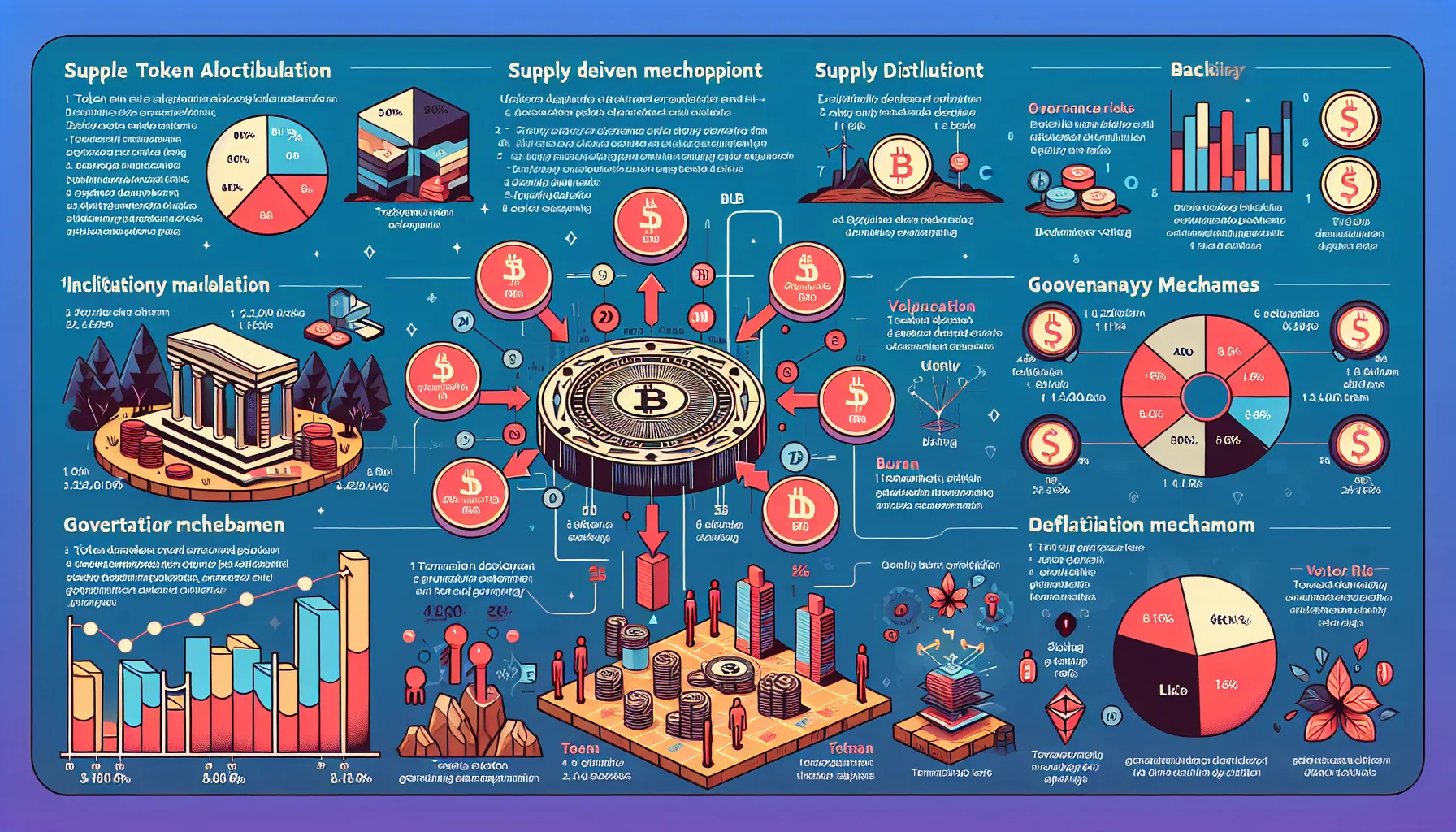
DAGB's token supply is capped at [X], with distribution stratified into various strategic allocations. A significant portion is reserved for ecosystem development, aimed at incentivizing adoption and partnerships. Early adopters and validators were also allocated a substantial percentage of tokens, which raises concerns about potential centralization risks, especially if these stakeholders wield disproportionate influence over governance. Furthermore, vesting schedules for team and advisor tokens add an additional layer of complexity; any disruptions to these schedules could affect market sentiment and token dynamics.
Utility-Driven Mechanism Design
At its core, DAGB tokens power an innovative Directed Acyclic Graph (DAG)-based network aimed at optimizing transactional throughput. Token utility revolves around three main functions: transaction fees, staking for consensus validation, and governance voting. One notable element is its low transaction fee model, which is designed to drive network efficiency. However, this also creates an economic tension, as fee-based rewards for validators may not scale proportionally to network growth, potentially impacting long-term validator incentives.
Governance Implications and Risks
The tokenomics model supports decentralized decision-making through a token-weighted voting system. While this is aligned with the ethos of community-driven governance, high token concentration among whales poses a risk of governance capture. Additionally, lower voter participation rates, a challenge across many blockchain projects, can exacerbate centralization and hinder equitable decision-making.
Inflationary vs. Deflationary Balancing Act
DAGB incorporates a dynamic token model, balancing deflationary mechanics for token scarcity (via burn mechanisms) with moderate inflation to reward validators. This dual approach introduces complexity in predicting token supply dynamics over time, which could lead to unintended market distortions if either mechanism outweighs the other.
Liquidity and Market Dynamics
Liquidity for DAGB tokens is supported across decentralized and centralized platforms. However, like many tokens built on DAG-based architectures, thin liquidity in certain trading dimensions can result in significant slippage for large trades. Moreover, market participants should weigh how secondary markets respond to changes in token utility or governance decisions.
DAGB Governance
Governance in the DAGB Ecosystem: Decentralization and Decision-making
The governance framework of DAGB plays a pivotal role in how the network evolves, ensuring adaptability and sustainability while maintaining a decentralized ethos. At its core, DAGB governance aims to provide token holders with a say in protocol upgrades, parameter adjustments, and strategic decisions. However, like any decentralized system, this framework comes with its strengths and limitations.
Token Holder Participation and Voting Mechanism
DAGB governance is structured around on-chain voting, where token holders can propose and vote on changes to the network. The weight of a vote is typically proportional to the number of tokens staked in governance contracts. While this approach empowers stakeholders with tangible control, it also raises concerns about governance centralization. Entities holding a significant portion of tokens can disproportionately influence decisions, potentially undermining the idea of decentralized participation.
Proposal Process and Stakeholder Engagement
To ensure transparency, DAGB employs a proposal process where participants draft formal improvement proposals. These proposals undergo a review phase during which community members deliberate and assess their implications. The structured approach encourages collaboration but can sometimes lead to a slow decision-making process, particularly if complex proposals split the community. Furthermore, the mandatory staking of tokens to submit proposals can be both a barrier to entry for smaller holders and a mechanism to deter spam or frivolous suggestions.
Governance Token Utility and Risks
Governance introduces utility to the DAGB token beyond its transactional roles, incentivizing community involvement. However, this model is not without risks. Speculative market behavior around the governance token can distort decision-making, where economic incentives may overshadow the network's long-term welfare. Additionally, token delegation — where smaller holders delegate their votes to more technically proficient participants — risks turning decision-making into a de facto oligarchy, concentrating power among a few known entities.
Challenges of Voter Participation
A critical issue with DAGB’s governance model, and one shared across many crypto ecosystems, is voter apathy. Participation rates often remain strikingly low compared to the total token supply, leading to key decisions being made by a minority of stakeholders. Efforts to boost engagement through incentives run the risk of introducing moral hazards, promoting participation for rewards rather than informed decision-making.
Smart Contract Implications on Governance
The reliance on smart contracts for executing approved proposals adds another layer of complexity. While they ensure transparency and automation, vulnerabilities in the underlying code could be exploited, putting the network at risk. Properly auditing governance contracts remains a priority, but the evolving nature of the protocol means that audit results are never permanently foolproof.
Technical future of DAGB
Current and Future Technical Developments and Roadmap of DAGB
The technical evolution of DAGB is centered around its directed acyclic graph (DAG) structure, a design that optimizes scalability, transaction throughput, and network efficiency. Unlike traditional blockchain systems, DAGB's architecture prioritizes asynchronous transactions, promoting parallel processing and reducing network congestion. However, this infrastructure is not without its challenges, including potential bottlenecks in transaction validation and the risk of compromised security when scaling validation nodes.
Current Developments in DAGB's Architecture
DAGB's core development team has recently shifted focus toward enhancing consensus mechanisms. The implementation of a hybrid consensus model aims to fortify network security by combining elements of both Proof-of-Work and Proof-of-Stake paradigms. This dual system intends to balance energy efficiency with the decentralization principles foundational to crypto assets.
Another notable upgrade lies in smart contract integration. DAGB has introduced a lightweight framework for executing smart contracts, prioritizing modularity to avoid slowing down transaction speeds. This feature, though promising, remains in its infancy; community developers have flagged limited language support and debugging tools as significant pain points.
The asset's approach to scalability also deserves mention. DAGB recently introduced a tiered transaction weighting system to counteract the potential for spam transactions. While this system has shown improvements in network stability, critics argue that it could inadvertently create a stratified ecosystem where high-volume participants have advantages over smaller network users.
Planned Updates and Future Roadmap
Looking ahead, DAGB is exploring cross-chain interoperability protocols, enabling seamless integration with other DAG networks and conventional blockchains. This initiative could significantly widen DAGB's use cases, particularly in decentralized finance (DeFi). However, interoperability comes with its own technical hurdles, particularly around achieving atomic swaps and preventing double-spending between chains.
Another key item on the roadmap is optimized storage. Developers plan to deploy sharding-based techniques for data partitioning, which, in theory, would minimize resource usage while maintaining the integrity of historical transactions. This approach, however, could amplify synchronization issues between shards, a concern that requires further analysis.
Lastly, DAGB is in the testing phase of integrating zero-knowledge proofs (ZKPs) to enhance privacy within its network. While this would elevate transaction confidentiality, early testing indicates potential trade-offs between ZKP implementations and computational efficiency.
Challenges to Watch
DAGB’s reliance on a tight-knit developer ecosystem could inhibit external contributions, slowing progress on key technical issues. Additionally, scaling node participation while retaining security in a DAG structure remains an unresolved concern. Balancing innovation with current network stability is likely to be a defining technical challenge for this asset as it continues to evolve.
Comparing DAGB to it’s rivals
DAGB vs. HBAR: A Comparative Breakdown of Distributed Ledger Technologies
When examining DAGB in the context of its prominent rival HBAR, the differences reveal deep contrasts in architecture, consensus mechanisms, and scalability priorities. Both crypto assets lean heavily into distributed ledger technology (DLT) but take divergent paths in achieving efficiency and decentralization.
Architecture: DAG vs. Hashgraph
DAGB employs a Directed Acyclic Graph (DAG) structure, a non-linear approach that forgoes the traditional blockchain paradigm. Instead of chaining blocks sequentially, transactions validate one another, allowing for parallel processing and greater throughput under ideal network conditions. In contrast, HBAR leverages the Hashgraph consensus algorithm—a gossip-about-gossip protocol combined with virtual voting. Hashgraph emphasizes fairness in transaction ordering while retaining high-speed processing and minimal latency. The trade-off between these architectures is notable: DAGB's DAG model excels with lightweight nodes and asynchronous consensus, but it often faces complexities when it comes to governance and network security. HBAR’s Hashgraph model, though efficient, operates under a more centralized Governing Council model that has garnered criticism for limited decentralization.
Consensus Mechanisms: Asynchronous vs. Ordered Efficiency
DAGB’s asynchronous consensus design theoretically enables limitless scalability but relies heavily on node honesty and strategic transaction placement to prevent potential bottlenecks. On the other hand, HBAR’s Hashgraph consensus achieves Byzantine Fault Tolerance with deterministic finality, delivering high security but requiring all participating nodes to validate in a synchronized and orderly fashion. The asynchronous nature of DAGB may appeal to applications requiring flexibility, though it opens the door to subtle network vulnerabilities under adversarial conditions. In contrast, HBAR’s deterministic approach benefits enterprise-grade solutions but at the cost of decentralization aspirations due to fixed council members.
Fee Structures and Token Utility
HBAR’s network introduces fixed and predictable transaction fees, offering businesses clarity for operational costs. DAGB, while boasting dynamic fee schedules that can trend lower in clusters of high activity, may experience uncertainty in markets where fee spikes occur during sudden bursts of demand. Furthermore, the utility models for both tokens contrast significantly. HBAR positions itself as a token securing enterprise-grade applications like supply chain logistics or identity validation, while DAGB is often optimized for niche applications where microtransactions dominate.
Challenges in Adoption
Both DAGB and HBAR encounter distinct hurdles. For DAGB, questions surrounding its ability to prevent spam at scale and coordinate decentralized governance remain critical areas of skepticism. Conversely, HBAR’s reliance on a Governing Council limits its appeal to truly decentralized proponents, particularly within the crypto-native community.
This side-by-side highlights fundamental trade-offs between two advanced DLT models, each carving its own niche with architectural and governance considerations.
DAGB vs. ALGO: A Comparative Look at Architectures and Use Cases
When comparing DAGB to ALGO, one of the primary differentiators lies in the underlying architecture. DAGB operates on a Directed Acyclic Graph (DAG) structure, which contrasts with ALGO's pure proof-of-stake (PPoS) blockchain model. This divergence in design has notable implications for transactions per second (TPS), scalability, and security dynamics.
Scalability: Decentralized Throughput Differences
DAGB's DAG-based framework inherently enables asynchronous processing of transactions, eliminating the need for sequential block confirmations. This allows DAGB to achieve high throughput in environments with increased network activity, theoretically allowing for near-infinite scalability. ALGO, while boasting impressive TPS due to its PPoS consensus mechanism, still processes transactions in blocks. This block-based approach—though efficient compared to traditional proof-of-work systems—can present bottlenecks in extreme demand scenarios, making it dependent on periodic upgrades to maintain performance parity.
Consensus and Decentralization Spectrum
ALGO’s PPoS model prioritizes security and user participation by relying on randomized validators chosen proportionally to their staked tokens. This ensures decentralization while still maintaining network speed. DAGB, in contrast, relies on a reputation-based consensus mechanism tied to its DAG framework, where trust is built over time based on node activity and honesty. Critics of DAGB’s approach point out that this may lead to an unequal distribution of influence, favoring nodes with extended uptime and activity. Meanwhile, proponents argue that ALGO's staking mechanism privileges wealthier participants who control larger stakes, potentially centralizing power over time. Each system thus carries trade-offs between inclusivity and influence.
Smart Contract Ecosystems: Contrasting Design Philosophies
While both assets support smart contract functionality, DAGB's implementation is heavily optimized for efficiency within its DAG framework, potentially limiting the complexity of programmability compared to ALGO’s virtual machine architecture. ALGO utilizes the Algorand Standard Assets (ASA) protocol and a robust developer ecosystem that allows for diverse tokenization, DeFi applications, and enterprise use cases. Conversely, DAGB’s architecture leans towards streamlining microtransactions and data transfer, which—while advantageous for specific industries—may lack the flexibility needed for broader, more complex applications. This difference in focus results in distinctive market positioning for the two technologies.
Network Security and Operational Longevity
A recurring technical critique of DAGB lies in the reliance on cumulative reputation for maintaining consensus integrity, a method some analysts argue could be vulnerable to attack vectors targeting trust relationships. ALGO, leveraging cryptographic sortition within its PPoS design, is commonly viewed as more resistant to such systemic risks. However, operational sustainability may hinge on ALGO’s dependency on staking rewards to incentivize participation, which raises concerns about long-term validator engagement if these rewards diminish over time.
By highlighting these nuanced differences between DAGB and ALGO, it’s clear that their respective architectures and use cases offer distinct advantages and drawbacks, tailored to varying user needs within the crypto ecosystem.
DAGB vs. FTM: A Detailed Comparison of Architecture and Use Cases
When comparing DAGB to Fantom (FTM), one of the most striking contrasts lies in the underlying architecture. While DAGB operates on a Directed Acyclic Graph (DAG) framework, providing asynchronous processing and a unique approach to transaction validation, FTM relies on a modified DAG model specifically tied to its Lachesis protocol. This distinction is crucial, as it influences scalability, speed, and consensus finality across the two networks.
FTM's Lachesis protocol employs a leaderless consensus mechanism and achieves rapid finality, which is one of its standout features. However, DAGB's approach focuses on true asynchronous transaction flow, potentially eliminating bottlenecks caused by block constraints, a limitation that FTM partially abstracts through its Opera Chain structure. While both systems avoid traditional blockchain architecture, DAGB’s design may appeal to projects prioritizing full decentralization and fluid scalability. On the other hand, FTM’s hybrid approach, incorporating DAG elements but structured to resemble blockchain functionality, caters to developers familiar with block-based ecosystems.
In terms of developer tooling and ecosystem support, FTM has invested heavily in integrations compatible with the Ethereum Virtual Machine (EVM). This opens a broad array of DeFi and smart contract use cases for its platform. In contrast, DAGB’s ecosystem is less focused on EVM compatibility and more tailored toward enterprise-driven applications. While this divergence in target audience provides DAGB unique positioning, it also narrows its appeal for developers who prioritize modularity and compatibility offered in EVM-laden ecosystems like FTM’s.
Transaction costs and throughput are other pivotal aspects. While both platforms flaunt significantly reduced fees compared to traditional blockchains, FTM’s fee model may suffer from occasional spikes due to its partial reliance on validator node incentives. DAGB, given its DAG-centric nature, benefits from a more adaptive transaction fee structure, although the cost advantage may diminish as network activity scales.
Another key divergence lies in governance structures. FTM allows staking and validator participation to influence protocol decisions, giving token holders measurable sway over network direction. DAGB’s governance approach, on the other hand, is often critiqued as opaque and overly reliant on centralized entities during critical decision-making phases. This difference could influence institutional trust and user adoption depending on their priorities.
While both DAGB and FTM serve as innovative alternatives to traditional blockchain designs, the nuanced differences in architecture, developer accessibility, and governance create clear trade-offs for users and developers to consider.
Primary criticisms of DAGB
Primary Criticism of DAGB: Key Challenges and Drawbacks
Scalability Bottlenecks and Network Efficiency Concerns
While DAG-based blockchains like DAGB are often touted as scalable alternatives to traditional blockchain architectures, DAGB has faced persistent criticism regarding its actual network efficiency under high transaction loads. Theoretically, Directed Acyclic Graphs should eliminate bottlenecks by enabling asynchronous transaction validation, but DAGB’s implementation has occasionally showcased limitations under practical conditions. Problems such as transaction confirmation slowdowns and validation conflicts during network congestion have raised concerns about its ability to handle a sustained increase in transactions, particularly when compared to widely adopted Proof-of-Stake (PoS) or Layer-2 blockchain solutions.
Potential Overcentralization Risks
A core point of contention around DAGB is its governance and network validation system, which some argue leans toward overcentralization. Unlike proof-of-work or proof-of-stake systems where decentralization is achieved through large distributed networks, DAGB employs a coordinator node system to validate and order transactions. Critics argue this creates a reliance on centralized checkpoints. Despite claims about the transitional nature of such measures, the prolonged coordinator dependence raises questions about whether DAGB genuinely aligns with the decentralized ethos that underpins blockchain technology.
Security and Double-Spend Vulnerabilities
Despite its unique architecture, concerns linger regarding DAGB’s mechanisms to prevent double-spending. Unlike blockchains that require all nodes to agree on a single global ledger state, the DAG structure enables nodes to independently verify subsets of the ledger. In practice, this introduces a theoretical attack vector where malicious actors could exploit inconsistencies between nodes. Although DAGB incorporates countermeasures, skeptics argue that these are untested at the scale of a heavily active network, making security a recurring topic of scrutiny.
Adoption Barriers Linked to Ecosystem Maturity
Critics also highlight DAGB's broader ecosystem as a potential bottleneck for growth. The limited number of applications and developer tools available within its ecosystem has slowed adoption. This fragmentation may hinder its ability to compete with more developer-friendly platforms, especially those offering robust smart contract capabilities and established interoperability frameworks. Detractors argue this could result in DAGB remaining a niche solution rather than achieving wider use and recognition.
Resource Costs of Transaction Validation
While DAG structures are promoted as environmentally sustainable compared to traditional blockchains, DAGB’s critics point out that its transaction validation mechanism, requiring repeated confirmations from multiple nodes, may still lead to significant computational overhead. This challenges the perception that DAGB's footprint is meaningfully lighter than its competitors, particularly as usage scales.
These criticisms underline the significant challenges DAGB faces as it seeks its place within the broader crypto landscape.
Founders
Founding Team of DAGB: A Look Behind the Project
The founding team behind DAGB is a critical component in understanding the project’s origins and potential pitfalls. The ecosystem was conceptualized and built by developers with a deep focus on directed acyclic graph (DAG) architecture as a solution to blockchain scalability challenges. However, while their technical expertise has been evident, certain aspects of their organizational approach have raised questions within the crypto community.
Backgrounds and Expertise
DAGB was launched by a small group of blockchain engineers, cryptographers, and software architects, many of whom brought significant prior experience in distributed ledger technology (DLT) development. The lead developer, who remains pseudonymous, reportedly contributed to earlier DAG-based projects before pivoting to DAGB with a vision to address transaction speed and energy efficiency.
The team is globally dispersed, with core contributors operating out of crypto-friendly jurisdictions. This global setup has made the project adaptable, but it has also led to occasional criticisms over potential coordination challenges, especially regarding updates and community engagement.
Transparency Concerns
One of the more controversial aspects of DAGB’s founding team is the lack of full transparency regarding their identities. While pseudonymity is not uncommon in crypto, it has led to skepticism within certain corners of the industry. Critics argue that the absence of clear accountability could pose challenges, especially in scenarios where trust in leadership becomes critical.
Further, while the founding members have regularly highlighted their technical credentials, less is known about their financial expertise or governance principles, leading to concerns about how resources are allocated and long-term strategies are shaped.
Communication and Community Engagement
The team’s approach to community engagement has been noted as inconsistent. While they are active on technical forums and contribute to open-source repositories, their broader communication efforts, including social media and governance proposals, often feel sporadic. This has occasionally led to frustration within their user base, particularly when clarity is needed regarding upgrades or features tied to the native token ecosystem.
Strengths and Weaknesses
DAGB’s founding team clearly prioritizes innovation on the technical front, and their work has consistently reflected a high level of engineering expertise. However, their approach to broader operational challenges, such as transparency, resource allocation, and community building, remains a point of debate. For a project heavily reliant on trust in its underlying technology, these aspects of governance and leadership may require sharper focus over time.
Authors comments
This document was made by www.BestDapps.com
Sources
https://dagb.org/whitepaper.pdf
https://dagb.org/yellowpaper.pdf
https://dagb.org
https://github.com/dagbprotocol
https://medium.com/dagb
https://dagb.substack.com
https://explorer.dagb.org
https://docs.dagb.org
https://forum.dagb.org
https://twitter.com/dagbnetwork
https://reddit.com/r/dagb
https://coinmarketcap.com/currencies/dagb
https://coingecko.com/en/coins/dagb
https://messari.io/asset/dagb
https://cryptoslate.com/coins/dagb
https://www.binance.com/en/dagb
https://www.kraken.com/prices/dagb
https://www.dagb.info/technical-specifications
https://www.dagb.org/roadmap.pdf
https://icodrops.com/dagb