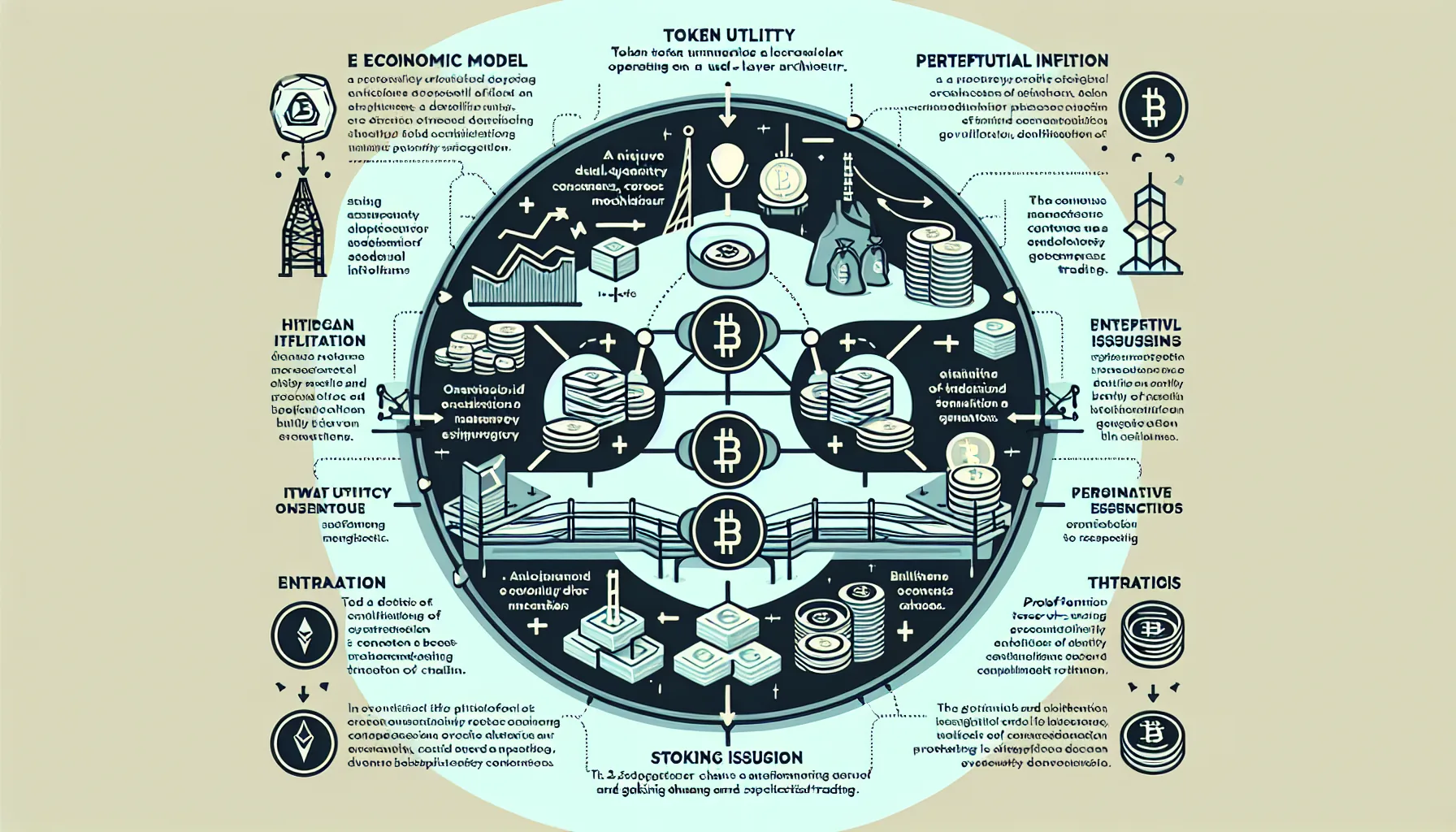
History of CKB
The History of CKB: From Inception to Innovation
CKB, also known as the Common Knowledge Base, represents the native blockchain protocol of the Nervos Network. Its journey traces back to the broader vision of solving one of the most persistent challenges in blockchain technology: balancing scalability, decentralization, and security—a dilemma often referred to as the "blockchain trilemma."
Nervos Network was established with the core idea of creating a layered architecture. CKB, launched as the Layer 1 protocol in Nervos’ ecosystem, debuted with the mission of serving as a secure and decentralized base layer designed for storing and preserving common knowledge. The development process began after a meticulous analysis of existing blockchain infrastructures, heavily influenced by the deficiencies of platforms like Ethereum, which struggled with sustainability and scalability under high usage scenarios.
The Nervos team opted for a more unique design anchored around the concept of a store-of-value blockchain. Unlike other projects that aim solely for high throughput or transaction optimization, CKB was built to prioritize long-term data storage, state consistency, and compatibility with a multi-chain future. Leveraging Proof of Work (PoW)—a somewhat controversial decision in a landscape increasingly favoring Proof of Stake (PoS)—the protocol emphasizes neutrality and fairness while accepting trade-offs like higher energy consumption and limited throughput compared to PoS counterparts.
CKB's tokenomics were intentionally crafted to address inflation challenges faced by other cryptocurrencies. The layered issuance model of the CKB token introduces a secondary issuance mechanism that incentivizes active use of the network. Even so, this mechanism has sparked debate, with some critics arguing that it may deter long-term holders and make the asset less appealing for speculative purposes.
Another milestone in the history of CKB is its implementation of the cell model, inspired by Bitcoin's UTXO, but designed to offer the flexibility of account-based systems. The cell model has been praised for its simplicity and modularity while drawing criticism for being potentially more complex for developers integrating with existing systems.
Over the years, CKB has faced hurdles in adoption, partially due to its focus on long-term infrastructure over immediate usability. While the design aligns closely with blockchain purists' goals, critics have argued that its comparatively low transaction throughput and heavy reliance on developer adoption make it slower to gain traction in the fast-moving crypto space. These challenges, however, have not deterred its supporters, who view it as a foundational layer with the potential to endure beyond the current blockchain hype cycles.
CKB’s history reflects its broader ambition: to scale trust in a way that retains decentralization and open accessibility. However, its deliberate focus on long-term utility sets it apart while also amplifying the need for education and ecosystem maturity to achieve widespread traction.
How CKB Works
How CKB Works: Understanding the Nervos Common Knowledge Base Protocol
The Nervos Common Knowledge Base (CKB) operates as the foundational layer of the Nervos Network, designed to enable secure, decentralized, and multi-asset interoperability. At its core, CKB is a layer-1 proof-of-work (PoW) blockchain tailored to the unique requirements of a crypto-asset-centric economy, distinguishing itself through its focus on state storage and application logic.
The Cell Model: CKB’s Unique Data Structure
CKB leverages an innovative “cell model,” which is conceptually similar to the UTXO model in Bitcoin but significantly more flexible. Each cell in the CKB system acts as a programmable storage unit, capable of representing tokens, identities, or even code. This structure ensures developers can write custom smart contract logic without being locked into a restrictive or predefined format. However, the system's flexibility brings additional complexity, requiring developers to carefully design cells for specific use cases to maintain efficient resource usage.
NervosDAO and State Rent Economics
CKB introduces a state rent model to address the problem of infinite state bloating, a challenge seen in many general-purpose blockchain platforms. The NervosDAO serves as the mechanism to enforce this model, allowing CKB token holders to deposit their assets and effectively offset the "storage rent" required to maintain on-chain state. While this achieves sustainability, some critics argue that the complex economic design may present a learning curve for users and developers unfamiliar with state rent or CKB’s specific mechanics.
Layer-1 and Layer-2 Synergy
CKB's architecture is explicitly designed to function alongside layer-2 solutions, facilitating high-throughput applications without compromising its base layer’s decentralization or security. Layer-2 platforms can operate on top of CKB while benefiting from the shared security and trust of its PoW consensus. However, like other projects adopting similar approaches, the success of this synergy is contingent on robust adoption and developer tooling, both of which may face challenges depending on the ecosystem's growth trajectory.
Flexible Virtual Machine: The CKB-VM
CKB-VM (Virtual Machine) is a RISC-V-based environment that supports multiple cryptographic algorithms and programming languages, making it highly developer-friendly. By choosing this design, the platform maximizes freedom for dApp creators. However, this broad flexibility brings inherent trade-offs—some developers voice concerns about the steep learning curve when onboarding to CKB’s VM compared to more established environments like Ethereum's EVM.
Scalability Through Specialized Design
Unlike generic layer-1 solutions competing for all functionalities, CKB focuses exclusively on enabling secure, trustless data storage for public knowledge. This specialization ensures efficient scalability but may leave CKB overly reliant on complementary layers for processing-intensive functions, potentially limiting its impact if layer-2 adoption falters.
Use Cases
Unlocking Use Cases with CKB: A Look at Its Real-World Applications and Limitations
The Nervos Network's native cryptocurrency, CKB (Common Knowledge Base), is intricately designed to support an ecosystem optimized for scalability, security, and decentralization. Its layered architecture provides a base layer for decentralized applications while being uniquely positioned to address blockchain interoperability and governance models. Below, we delve into the use cases where CKB excels, as well as the drawbacks that could limit its adoption.
Enabling Layer 2 Interoperability and Flexibility
CKB’s most prominent use case lies in its role as the foundational security and trust layer for Layer 2 solutions. By using its unique Cell Model, inspired by Bitcoin’s UTXO mechanism, CKB allows developers to tailor dApps with flexible data structures while offering seamless programmability via smart contracts. This architecture is particularly suitable for projects requiring a highly composable and adaptable base layer. For instance, CKB facilitates off-chain scalability by enabling Layer 2 chains to anchor their data and secure state proofs on the Layer 1 blockchain.
However, this benefit brings into focus its complexity for developers. The Cell Model’s learning curve can be steep compared to other platforms like Ethereum’s account-based model, which may deter projects without deep technical expertise. Without robust tooling and developer mentorship, onboarding remains a challenge.
Use in DeFi and Cross-Chain Asset Transfers
CKB supports trustless, decentralized cross-chain asset transfers via the Nervos Force Bridge, allowing interoperability between Ethereum, Bitcoin, and other networks. This feature holds significant promise in enabling DeFi ecosystems to leverage assets across multiple blockchains, establishing CKB as a critical infrastructure component. For example, CKB’s capacity to package token states from other chains into its own secure environment offers deep liquidity and composability for DeFi protocols.
Yet, scalability-related bottlenecks on the Layer 1 chain can hinder transaction throughput when the network faces increased demand. While scaling solutions exist, there’s an inherent tradeoff between decentralization and speed that may impact its usability for high-frequency transactions.
Digital Identity and Data Ownership
The Nervos Network aims to empower users with self-sovereign identity solutions using CKB, giving individuals control over their personal data. In an era where privacy is critical, CKB's programmability supports creating verifiable credentials and decentralized identifiers. This unlocks use cases in decentralized social networks, edtech verification, and healthcare solutioning.
Nevertheless, mass adoption in this area remains theoretical due to competition from other blockchain platforms specializing in digital identity. Without a concentrated market focus, Nervos may struggle to dominate this niche use case, even as the functionality exists on paper.
Tokenizing Real-World Assets
CKB also has the potential to support tokenized representations of physical assets, from real estate to supply chain goods. Its immutability and security make it a compelling choice for projects requiring transparent asset audits. Moreover, the ability to lock data and tokens into Cells allows for flexible business logic and smart contracts.
However, regulatory challenges present significant hurdles for such enterprise implementations. Jurisdictions worldwide lack standardization in bridging real-world assets to decentralized ecosystems, and Nervos is not uniquely insulated from these concerns.
In conclusion, CKB provides a versatile foundation with broad use case potential, but technical, usability, and regulatory aspects must be carefully navigated to unlock its full value.
CKB Tokenomics
Tokenomics of Nervos CKB: Unpacking the Economic Model
Nervos CKB (Common Knowledge Base) operates on a unique dual-layer architecture, and its tokenomics are equally distinctive. The design is centered around balancing utility, sustainability, and incentivization. However, as with most crypto assets, the economic model of CKB comes with both strengths and challenges.
Native Token and Inflationary Model
The native token of the Nervos Network, CKB, combines utility with a store-of-value mechanism. CKB's primary utility is its role as a "state storage token." Users consume the token, measured in "CKBytes," to store data on the blockchain. This mechanism theoretically limits resource overuse and ensures fair usage of network storage.
The network employs an inflationary model designed to support long-term sustainability. CKB has two issuance tracks: a fixed primary issuance (mined over 32 years) and a perpetual secondary issuance. Secondary issuance introduces a continuous 1.344 billion new tokens annually, designed to incentivize miners and validators while preventing resource centralization. Still, the perpetual inflation mechanism is polarizing within the crypto community. Critics argue that inflation could dilute holders' stakes if token demand fails to outpace supply growth, while proponents see this as a necessary trade-off for sustaining decentralized security.
Token Utility Beyond Storage
CKB's utility extends beyond its primary role in state storage. Its interoperability via the Nervos Layer 2 solutions makes it a bridge across chains, allowing the token to serve as a gateway for multi-chain compatibility. Users can lock CKB tokens to mint additional assets or participate in Layer 2-specific activities. This multi-use design enhances utility but also introduces competition with other blockchain platforms vying for similar roles.
Mining Incentives and Economic Security
Nervos CKB employs a Proof-of-Work (PoW) consensus mechanism to secure its network. Rewards consist of both primary and secondary issuance, distributed to miners and validators. While this model aligns incentives for network participants, concerns arise regarding the ongoing energy consumption and potential centralization of mining pools—a concern for nearly all PoW blockchains.
Concerns with Hodler Incentives
The Nervos DAO offers a staking mechanism where users can lock their CKB to earn a share of secondary issuance distribution. However, the staking yields are derived from inflation rather than intrinsic network demand, which may not align with the interests of long-term holders. Critics argue that this could discourage holding during periods of low utility adoption. Additionally, the need for more sophisticated DeFi integrations on Layer 1 puts Nervos at a competitive disadvantage in attracting liquidity compared to more established ecosystems.
Balancing Usage and Speculation
The dual-purpose design of CKB combines speculative trading with utility-driven demand. Its success, however, depends heavily on its ability to drive adoption for Layer 1 storage and Layer 2 applications. Without robust on-chain activity or meaningful user acquisition, token inflation could outweigh demand, leading to pressure on its value over time.
CKB Governance
On-Chain Governance and Decentralization of CKB
Nervos Network's native token, CKB (Common Knowledge Base), plays a pivotal role in the on-chain governance framework of the ecosystem. Unlike some crypto assets that rely on off-chain voting mechanisms or centralized decision-making entities, CKB governance strives to uphold decentralization principles. However, this design presents both strengths and challenges that require ongoing scrutiny from the community.
Governance Structure and Decision-Making Process
CKB governance is integrated into its Layer 1 blockchain, incentivizing token holders to participate in voting processes, such as protocol upgrades, network parameter adjustments, and funding decisions. The structure is designed to ensure that any proposal impacting the network is subject to transparent deliberation, with stakeholders required to reach consensus before implementation.
Proposals can originate from developers, organizations, or individual community members. They are submitted through a formalized process, typically requiring detailed documentation outlining the technical and economic implications of the suggested change. The approval process then involves token-weighted voting, where those holding CKB tokens exert influence proportional to their stake. While this model enhances active participation and aligns incentives, it has raised concerns regarding potential centralization of power among large token holders or entities with substantial CKB reserves.
Decentralization Challenges
One of the key issues associated with CKB’s governance is balancing participation and influence. While the protocol empowers token holders to have a direct say in the network's evolution, it is inherently vulnerable to governance centralization. Wealth concentration among early adopters, institutional stakeholders, or venture-funded whales could skew voting power, limiting the impact of smaller token holders. This creates a persistent challenge for the network’s ambition to maintain equitable decision-making.
Additionally, voter apathy remains a pressing issue. Like many Proof-of-Stake (PoS) or token-governed systems, a significant portion of CKB holders do not actively participate in governance, either due to technical inexperience, lack of interest, or logistical barriers. This disengagement can lead to low voter turnout, resulting in governance decisions that may not reflect the broader community's interests.
Governance Transparency and Security Risks
While governance proposals and voting outcomes are publicly auditable via the blockchain, critics have raised questions about the accessibility and clarity of governance documentation. Complex technical jargon and procedural intricacies create a barrier to entry for less-experienced participants, further insulating governance processes within a subset of highly technical or resourceful individuals.
Moreover, any on-chain voting mechanism carries inherent risks, such as vulnerabilities to 51% attacks or malicious actors exploiting governance loopholes. Safeguarding against these risks without compromising decentralization remains a long-term challenge for the CKB network.
Technical future of CKB
Current and Future Technical Developments and Technical Roadmap for CKB
Nervos Network’s Common Knowledge Base (CKB) represents a unique Layer 1 blockchain that adopts a proof-of-work (PoW) consensus mechanism with a critical focus on scalability, interoperability, and sustainability. Within its ecosystem, technical developments and future roadmap plans play a pivotal role in addressing the limitations of blockchain infrastructure while fostering a secure, extensible environment for decentralized applications.
Native Support for Flexible Smart Contract Models
One of the advanced technical features of CKB is its cell-based architecture, which introduces a flexible state model akin to a generalized account model. Developers benefit from its UTXO-like structure, enabling precise control over transaction logic and state management. A major focus in ongoing development is expanding the native programming capabilities of smart contracts via enhanced tooling for its RISC-V virtual machine (VM). While this innovation holds significant promise, attracting a broader pool of developers unfamiliar with RISC-V architecture remains a persistent challenge, potentially limiting adoption.
Layer 2 Scaling Solutions and Interoperability Focus
CKB’s technical roadmap remains highly invested in architecting robust Layer 2 scaling solutions, with Nervos’ Godwoken being a flagship optimistic rollup framework. This initiative is designed to handle high-throughput demand while retaining CKB's security guarantees. However, operationalizing Layer 2 solutions consistently encounters friction in balancing computational cost, transaction latency, and user experience. For interoperability, CKB continues development efforts with the Force Bridge cross-chain solution, facilitating seamless asset transfers across blockchain networks. While Force Bridge has made strides in connecting ecosystems, maintaining decentralization while scaling multi-chain compatibility is an ongoing technical hurdle.
Innovation in Storage and On-Chain Data Management
A standout target for future development is fine-tuning the blockchain’s native economic model centered around state rent. By implementing mechanisms to preserve storage costs efficiently—without compromising long-term decentralization—the network aims to combat "state bloat," a problem plaguing many blockchain platforms. However, practical implementation of state rent is an ongoing issue, requiring careful calibration to prevent user deterrence due to excessively high fees while ensuring adequate resource availability for existing participants.
Decentralization and PoW Enhancements
As a PoW blockchain, CKB faces traditional criticisms surrounding energy consumption and network efficiency. To this end, the technical team seeks to upgrade consensus algorithms and miner incentives to align better with environmental concerns while retaining PoW’s inherent trustlessness. However, community fragmentation around transitioning to alternate consensus models highlights the potential risks of governance disputes stalling progress in this area.
The technical developments for CKB are rooted in overcoming blockchain inefficiencies, but their execution reveals areas requiring significant coordination and innovation.
Comparing CKB to it’s rivals
CKB vs. DOT: A Deep Dive into the Tech and Use Case Differences
When comparing Nervos Network’s CKB (Common Knowledge Base) to Polkadot (DOT), the distinctions in architecture and design goals become clear. Both projects aim to address scalability, interoperability, and decentralization, but they take radically different approaches to these challenges. While Polkadot emphasizes enabling specialized blockchains, Nervos positions itself as a key player in retaining universal, immutable knowledge for decentralized applications.
Architecture and Design Philosophy
Polkadot operates on a multi-chain framework wherein its core component, the Relay Chain, ensures security and interoperability for connected parachains. These parachains are highly customizable, allowing developers to create specialized blockchains for specific use cases, either sacrificing or maximizing certain trade-offs like speed, security, or cost-efficiency.
Nervos CKB, on the other hand, takes a different route by focusing on being the foundational layer for a decentralized economy. Rather than breaking into multiple purpose-specific chains, CKB operates as a Layer 1 blockchain with a universal knowledge base. This allows any and all blockchain states to be stored on a single, secure ledger. Its architecture supports Layer 2 solutions for scalability while keeping the base layer immutable and universally accessible.
Interoperability Approaches
Polkadot’s interoperability hinges on its Relay Chain as the hub, allowing all parachains to communicate with each other seamlessly. However, this setup creates a central point of dependency, as parachains must operate under Polkadot’s governance umbrella and follow its consensus mechanism. While highly efficient for internal interoperability, it requires developers to buy into Polkadot’s ecosystem entirely, limiting flexibility for non-native integrations.
CKB addresses interoperability differently. It does not require application-specific chains but relies on standards like PW-Core and Polyjuice (an EVM-compatible Layer 2 scaling solution) to interact with external blockchains. This promotes a more flexible environment for dApps while leaving the ecosystem open-ended for cross-chain solutions outside Nervos’ direct governance framework.
Tokenomics Comparison
Polkadot’s DOT token is heavily tied to staking and governance, requiring participants to lock up significant amounts to secure parachain slots and help govern the network. This often creates a high barrier to entry for smaller participants.
CKB, however, is rooted in store-of-value mechanisms through its economic model, which separates state storage (via CKBytes) from transactional throughput. Developers and users pay "rent" for data storage, which incentivizes efficient use of blockchain space while ensuring scalability.
Potential Bottlenecks
Polkadot’s reliance on parachains presents scalability dilemmas; competition for parachain slots can limit the diversity of use cases, as smaller projects may not afford the auction process. Furthermore, its security model scales only as far as the Relay Chain’s capacity, potentially resulting in bottlenecks for heavily populated ecosystems.
CKB’s primary bottleneck lies in its early-stage reliance on Layer 2 scaling. While its Layer 1 architecture is inherently efficient, widespread applications and integrations are still building momentum. The economic model also requires developers to familiarize themselves with a rent-based utility, which differs from traditional blockchain frameworks.
Comparing CKB to ATOM: Layer 1 vs Interoperability Hub
When examining Nervos Network's CKB against Cosmos (ATOM), the comparison centers on their fundamentally different approaches to blockchain infrastructure. While CKB positions itself as a generalized Layer 1 blockchain optimized for universal asset storage and dApp development, ATOM functions as the utility token for the Cosmos ecosystem, which is heralded as the “Internet of Blockchains.” This contrast in design philosophy forms the backbone of the rivalry between the two.
Core Architecture: UTXO vs Zones
CKB employs a UTXO-based model that enables unique cell (storage) functionality for assets and smart contracts, asserting itself as a highly inclusive environment for cross-chain asset management. In contrast, Cosmos employs a zone architecture, where specialized blockchains (zones) interoperate using the Inter-Blockchain Communication (IBC) protocol. While CKB focuses on creating a standardized platform for asset storage across multiple chains, Cosmos emphasizes creating a network of independent, application-specific chains.
However, the complexity of Cosmos’ zone model has raised concerns. Managing upgrades and maintaining uniformity across zones can be challenging, especially as more chains plug into the Cosmos Hub. CKB, being a single-chain solution, avoids such fragmentation but sacrifices the scalability afforded by ATOM’s modular ecosystem.
Interoperability Vision: Complementary or Overlapping?
ATOM has arguably captured much of the market narrative around interoperability through its native IBC implementation. In contrast, Nervos relies on its Force Bridge—a trustless bridge technology—to connect with external blockchains. While Force Bridge enables streamlined, trust-minimized asset transfers, the adoption of IBC as an industry standard raises the question of whether CKB's approach to interoperability risks becoming sidelined over time.
On the other hand, integrating CKB with IBC has been floated among ecosystem participants, which could position Nervos as a complementary player rather than a rival. However, such integrations remain speculative and implementation-heavy, which could slow adoption.
Tokenomics and Incentives
ATOM benefits from incentivizing its ecosystem builders through staking rewards and delegations across various zones, creating strong incentives for developers to connect their chains to the Cosmos Hub. By contrast, CKB’s tokenomics center on state storage, rewarding miners (Proof of Work) and encouraging developers to manage storage efficiently via its native rent mechanism. While innovative, CKB’s model is less appealing to developers prioritizing immediate economic incentives, potentially limiting early adoption compared to Cosmos’ built-in economic motivators.
Fragmentation vs Complexity Trade-offs
Where CKB pursues security, universality, and efficient asset management, ATOM's decentralized zone system offers superior scaling but introduces governance asymmetry and technical overhead. Critics argue Cosmos’ fragmentation could weaken its long-term resilience, while others believe CKB’s singular focus on universal storage lacks the flexibility to support niche ecosystems flourishing around independent zones.
Comparing CKB and FIL: A Deep Dive into Storage and Layering
When analyzing the Nervos Network's CKB (Common Knowledge Base) in comparison to Filecoin (FIL), the contrasting approaches to blockchain utility and decentralization emerge as critical points of discussion. While both projects operate within the broader Web3 ecosystem, their core functionalities separate them into distinct categories. However, overlaps in use cases spotlight areas of competition, particularly when it comes to storage efficiency and network design.
Layer 1 Versus Specialized Storage
CKB positions itself as a universal Layer 1 blockchain, emphasizing flexibility and developer customization through its cell model. This design permits storing state, scripts, and even off-chain data references within its cells—offering certain decentralized storage-related features. On the other hand, Filecoin specializes solely in decentralized data storage, operating as a Distributed File System (DFS) atop its own blockchain using proof-of-replication (PoRep) and proof-of-spacetime (PoSt) to enable transparent and cryptographically verifiable storage.
While FIL thrives as a niche solution explicitly tailored for storage, CKB's approach does not rely on large-scale dedicated storage mechanisms. Instead, CKB offers modularity for developers who may layer storage-specific systems atop its Layer-1 architecture via dApps or secondary protocols. This difference often situates CKB more flexibly in multi-purpose environments but with constraints when directly competing with FIL’s specialized infrastructure.
Incentive Models: Universal Versus Niche
The incentive models of these assets reflect their utility gaps. Filecoin’s reliance on a twofold incentive for storage and retrieval providers creates a strong but highly niche environment for those focused on data-driven use cases. However, critics argue its market model for data retrieval remains underutilized due to the complexities of participant onboarding and the potential for storage redundancy.
In contrast, CKB’s economic model hinges on its state-rent mechanism, which incentivizes efficient blockchain space usage by charging for occupied "state storage" resources over time. While this mechanism aligns with CKB’s broader vision of promoting sustainable blockchain operations, it doesn't cater specifically to the decentralized storage market where demand for raw space and retrieval services is key—something FIL does much more directly.
Technical Bottlenecks
Filecoin’s biggest challenge lies in its heavy infrastructure requirements, with high barriers to mining participation. This industrial-scale demand for computational and storage resources can limit network decentralization. CKB, while simpler in its baseline infrastructure requirements, faces critique for its current reliance on off-chain storage solutions if large data sets are involved. This creates a gray area where the network isn't a direct substitute for dedicated storage systems like FIL.
Development Ecosystem and Integrations
When comparing ecosystems, CKB benefits from its general-purpose design that supports a wide range of use cases through scalable dApp integration. Developers have the flexibility to build decentralized solutions with storage as one possible layer. Filecoin’s ecosystem, while innovative, remains dominantly focused on bridging its protocol with broader Web3 tools like IPFS. This narrow alignment may limit its adaptability to other functionalities CKB inherently accommodates.
In summary, while the CKB network’s versatility provides users the ability to incorporate storage as part of more extensive, enterprise-grade multi-purpose applications, it lacks the specialization and scale-focused infrastructure that Filecoin delivers specifically for decentralized storage markets. These differences leave room for both coexistence and distinct challenges, depending on the demands of specific developer and infrastructure needs.
Primary criticisms of CKB
Primary Criticism of CKB: Challenges Facing Nervos Network
One major critique often levied against CKB (or Nervos Network's Common Knowledge Base) is its ambitious but highly complex technological framework. While many find its layered architecture—comprising the Layer 1 CKB and Layer 2 scaling solutions—conceptually promising, skeptics argue that it introduces significant overengineering. The broad goal of making Layer 1 fully decentralized and maximizing trust while offloading scalability solutions to Layer 2 may deter developer adoption due to steep learning curves and an ecosystem that remains underdeveloped compared to competitors. This raises questions about whether simplicity was sacrificed in favor of theoretical robustness.
Another associated issue is CKB's heavy reliance on a unique programming model centered around the Cell model and its RISC-V-based virtual machine. While these primitives enable incredible flexibility to store and process complex data, they differ significantly from Ethereum's widespread EVM standard, which dominates the smart contract space. This divergence creates potential friction for developers accustomed to Ethereum environments, who often prefer to deploy on platforms that offer greater interoperability or EVM compatibility. Without extensive tooling, documentation, or incentives to overcome the added complexity, Nervos risks losing mindshare to more developer-friendly ecosystems.
The economic model of CKB has also come under scrutiny. Nervos follows a unique "store of value" design, where network participants must lock (or "cellar") tokens to leverage network resources. While this model is innovative in addressing state bloat and incentivizing careful state usage, critics argue that it could stifle user activity. Skeptics claim this cost structure might discourage smaller developers or projects that cannot afford to lock up significant CKB, potentially limiting the network’s broader adoption. In comparison, other platforms with simpler and more transparent fee models often attract more casual users and small-scale projects.
Governance and decentralization concerns have also sparked debate. Although the Nervos Network champions decentralized principles, critics highlight that its developer ecosystem is still relatively concentrated within the founding team. This raises questions about the long-term resilience of the platform’s development and whether decision-making could become bottlenecked by its core contributors if more community-driven initiatives fail to emerge. Critics argue that true decentralization involves fostering a larger network of contributors, and the imbalance seen here could hinder both innovation and scalability over time.
Lastly, liquidity fragmentation of the CKB token between multiple exchanges and ecosystems remains a practical concern rather than a technical one. Should this persist, increased difficulty in managing token availability across platforms may deter potential users and institutional participants alike.
Founders
The Founding Team Behind CKB: Expertise, Vision, and Controversies
The Nervos Network, the blockchain ecosystem behind CKB (Common Knowledge Base), was founded by an experienced group of developers and entrepreneurs with notable backgrounds in both crypto and traditional technology sectors. Their expertise is central to the project's mission of solving scalability while preserving decentralization and security. However, the formation of this team and their decisions have not been without scrutiny.
The core founding members of Nervos include Kevin Wang, Jan Xie, and Daniel Lv. Kevin Wang, who serves as a key strategist in the project, has a background in enterprise software development and product management. His previous experience includes leadership roles at IBM, where he worked on complex systems involving data integration and analytics. Wang’s skillset has been praised for bringing a structured, long-term vision to CKB's development, but some critics have questioned whether his enterprise-focused approach aligns fully with the ethos of decentralized blockchain ecosystems.
Jan Xie, the chief architect, is primarily responsible for designing Nervos’s Layer 1 blockchain and its unique "store of value" model. With extensive experience in cryptography and consensus algorithms, Xie was also previously a core developer for Ethereum. His technical depth is often highlighted as a major asset for the project, especially given the nuanced technical demands of the CKB architecture. However, skeptics sometimes criticize his association with Ethereum’s development, arguing that certain design philosophies carried into Nervos have created challenges in achieving adoption, particularly among developers who prefer simpler, less complex solutions.
Another prominent figure in the Nervos ecosystem is Daniel Lv, co-founder and a key engineer. Lv was formerly the CTO of Yunbi, a cryptocurrency exchange that was eventually shut down—an incident tied to the broader regulatory crackdown on exchanges in China. While his extensive experience in building cryptocurrency-related products has been vital for Nervos, the past association with Yunbi has drawn occasional criticism. Detractors question whether the team’s history in centralized exchange operations could influence the project’s commitment to decentralization.
Collectively, the Nervos founding team brings together a robust combination of technical expertise and strategic experience. However, their diverse backgrounds also leave room for differing interpretations regarding the project’s alignment with blockchain’s decentralized ethos. Founding decisions—such as the initial roadmap or tokenomics—have drawn mixed reactions in the crypto community. While some celebrate their innovative work, others believe more transparency is required to ensure full trust in the team's long-term intentions.
Authors comments
This document was made by www.BestDapps.com
Sources
- https://www.nervos.org/
- https://github.com/nervosnetwork/ckb
- https://docs.nervos.org/
- https://github.com/nervosnetwork/rfcs
- https://talk.nervos.org/
- https://explorer.nervos.org/
- https://medium.com/nervosnetwork
- https://nervosnetwork.github.io/docs-ckb/#/
- https://xangle.io/project/Nervos/profile
- https://cryptoslate.com/coins/nervos-network/
- https://coinmarketcap.com/currencies/nervos-network/
- https://messari.io/asset/nervos-network
- https://tokeninsight.com/en/coin/nervos-network/research
- https://decrypt.co/resources/what-is-nervos-network
- https://www.coingecko.com/en/coins/nervos-network
- https://www.binance.com/en/projects/nervos-network
- https://docs.nervos.org/docs/basics/introduction
- https://hub.knsdomains.org/
- https://www.stakingrewards.com/earn/nervos-network/
- https://research.binance.com/en/projects/nervos-network


