History of CELO
The History of CELO: An In-Depth Look at its Evolution
CELO traces its origins to 2017, when a team of seasoned technologists, economists, and entrepreneurs co-founded cLabs, the organization behind the Celo blockchain. The project was designed with a mission to create an inclusive financial ecosystem aimed at democratizing access to decentralized finance (DeFi) tools, particularly targeting unbanked populations globally. From the outset, the vision of CELO stood out for its focus on mobile-first blockchain infrastructure, an approach that remains central to its identity.
The development of CELO’s technology began with the creation of a proof-of-stake (PoS) blockchain and the integration of native stablecoins such as cUSD, pegged to the U.S. dollar, which could be used for low-cost, mobile-accessible payments. What set CELO apart from its inception was its acknowledgment of smartphone adoption as a key driver of financial inclusion. The Celo team sought to leverage mobile numbers as public keys, simplifying user experience for those with limited exposure to blockchain technology.
CELO’s initial funding rounds attracted a notable group of backers. The project secured investments from both venture capital firms specializing in blockchain ecosystems and prominent angel investors. Over time, its backers came to include multiple household names in the crypto venture space. While this facilitated the growth and development of the network, critics have pointed to the centralized nature of early funding as a potential vulnerability. Unlike projects that emerged more organically through community-driven efforts, CELO’s developmental model arguably left early token economics somewhat top-heavy.
The Celo Mainnet launched in April 2020, following years of technical iteration and beta testing. This launch was accompanied by the establishment of the CELO token, a governance and utility asset within the ecosystem. However, its architecture also gave rise to skepticism. Some analysts noted that CELO’s dual-token model—CELO for governance and stability tokens like cUSD for transactions—introduced complexities around maintaining robust peg mechanisms, especially during periods of high market volatility.
Despite early success in forging partnerships with NGOs and socially minded enterprises, the network has faced challenges attracting liquidity and institutional-grade DeFi integrations relative to comparable ecosystems. Furthermore, scalability concerns have occasionally surfaced, particularly given its ambitions to onboard an exponentially growing user base.
CELO’s history is a blend of innovation, targeted design for financial inclusion, and the challenges of standing out in an increasingly crowded crypto landscape. Its ongoing evolution continues to shape conversations around blockchain’s role in developing economies.
How CELO Works
How CELO Works: A Deep Dive into Its Mechanisms
CELO operates as the native token of the Celo blockchain, a proof-of-stake Layer 1 protocol designed to facilitate globally accessible, mobile-first decentralized applications and payments. At its core, CELO is integral for network governance, staking, and serving as collateral to support the platform's stablecoin ecosystem. Here’s a closer look at how it all works.
Proof-of-Stake and Validator Incentives
The Celo network relies on a proof-of-stake (PoS) consensus mechanism, where CELO holders can delegate their tokens to elect validators. Validators are responsible for securing the network through block production and transaction validation, and they accrue staking rewards in return. CELO stakers, including delegators, earn a share of these rewards proportionate to their delegated amounts. However, the PoS system has faced criticism around centralization risks, as staking is often concentrated among a relatively small pool of larger validators due to high economic entry barriers.
Governance and Protocol Updates
CELO is a governance token, enabling token holders to propose and vote on protocol upgrades, parameter changes, or new feature implementations. While this governance system helps maintain decentralization in decision-making, it also introduces potential challenges. Voting power is directly tied to the amount of CELO held, which has raised concerns about wealth concentration granting disproportionate influence over the network’s future direction.
Reserve-Backed Stablecoins
A defining feature of the Celo blockchain is its focus on stable, mobile-accessible currencies. The protocol supports stable assets like Celo Dollar (cUSD) and Celo Euro (cEUR), which are algorithmically stabilized and backed by a reserve of diversified crypto assets, including CELO itself. This reserve mechanism includes features like automatic rebalancing and on-chain stability algorithms. While innovative, such reliance on CELO for collateral raises systemic risks, as any potential failures in CELO’s price integrity could impact the stability of dependent stablecoins.
Mobile-First Design and Lightweight Nodes
Celo is uniquely optimized for mobile devices, employing ultralight clients that reduce resource demands for running blockchain nodes. This architecture ensures broader accessibility, especially in regions with limited infrastructure for high-end hardware. However, lighter nodes make trade-offs in terms of decentralization and security since users typically delegate trust to full nodes instead of independently verifying blockchain data. Critics also argue this model remains overly reliant on mobile ecosystems and may struggle with scaling execution-layer demands in the long term.
By dissecting CELO’s hybrid approach toward enabling an inclusive, mobile-first crypto economy, the inherent complexities and trade-offs in its design become evident. From staking to reserve management, the protocol's unique features are heavily intertwined, which can amplify both its strengths and vulnerabilities.
Use Cases
CELO Use Cases: Exploring Real-World Applications and Challenges
Mobile-First Financial Solutions
One of CELO's primary use cases lies in enabling mobile-first financial access. With its design focused on lightweight clients, CELO offers an infrastructure that makes it possible for smartphone users, even with limited or intermittent internet connectivity, to interact seamlessly with blockchain services. This initiative resonates with its mission to enhance financial inclusivity in underbanked or unbanked regions. Although this goal presents a compelling use case, CELO's reliance on smartphones may inadvertently exclude individuals in areas where access to affordable mobile devices remains a challenge.
Stablecoin-Powered Payments
CELO supports an ecosystem of stablecoins—including cUSD, cEUR, and others—designed to provide price-stable mediums of exchange. These assets serve as tools for cross-border remittances and everyday transactions, especially in regions plagued by currency volatility. However, like all stablecoin initiatives, the effectiveness of this use case is contingent on the stability of the underlying peg mechanisms and market adoption. Additionally, the platform's dependency on third-party oracles introduces potential risks around centralization and reliability.
Decentralized Applications and Smart Contracts
The CELO blockchain runs on the Ethereum Virtual Machine (EVM), enabling developers to deploy smart contracts and build decentralized applications (dApps). This interoperability makes CELO an attractive platform for developers accustomed to Ethereum’s ecosystem. Popular dApps on CELO often focus on DeFi and microfinance. However, competition with other scalable EVM-compatible chains means CELO must navigate challenges in maintaining developer engagement and dApp growth.
Tokenization of Real-World Assets
Tokenizing real-world assets (RWAs) on CELO offers another promising use case, particularly in areas like fractional property ownership or tokenized supply chains. The blockchain’s low fees and fast transaction times provide the infrastructure for such initiatives. However, regulatory uncertainty and legal complexities surrounding asset tokenization remain hurdles, slowing mass adoption for this sector.
Governance and Ecosystem Participation
CELO leverages its native governance token (CELO) to support decentralized governance, enabling token holders to shape the network's future direction. Proposals can address key upgrades, ecosystem rewards, or fee structures. While this participatory governance model embodies decentralization, some critics point to centralized voting influences from large token holders, raising concerns about true equity in decision-making.
Carbon Offset Initiatives
Another unique use case tied to CELO is its focus on sustainability through tokenized carbon credit markets. Applications within its ecosystem enable users to offset their carbon footprints directly on-chain. While compelling for environmentally conscious participants, the market size for blockchain-based carbon credits remains niche, with questions about transparency and tangible impact yet to be fully addressed.
CELO Tokenomics
CELO Tokenomics: A Deep Dive into the Economic Design
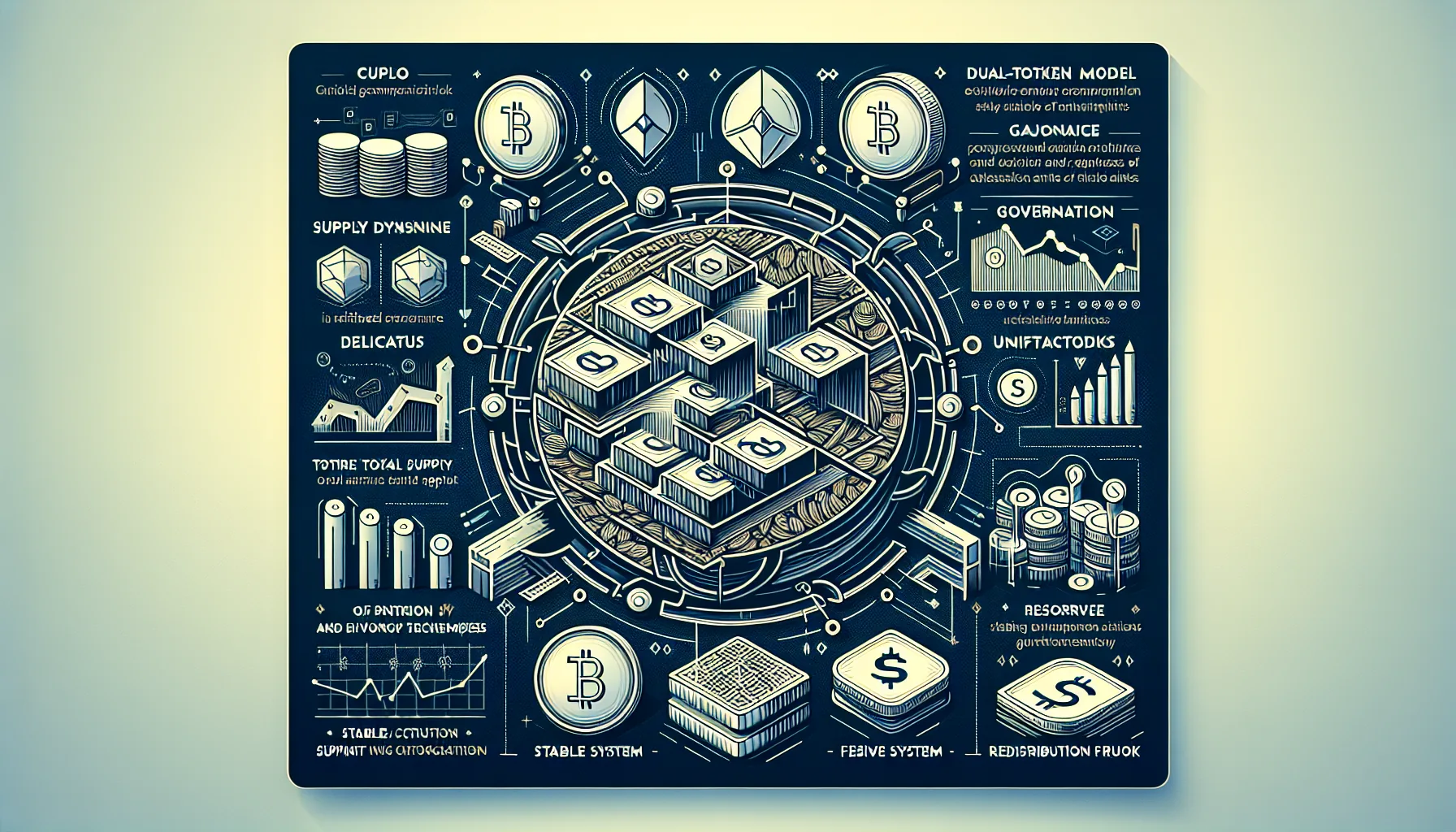
CELO operates on a distinctive dual-token model within its ecosystem, which warrants close examination when assessing its tokenomics. The CELO token serves two primary purposes: it acts as the network's governance asset and enables staking for securing the decentralized proof-of-stake (PoS) blockchain. Alongside CELO, there are various stable assets (e.g., cUSD, cEUR) designed to maintain stability and cater to diverse use cases. This dual-token setup introduces both opportunities and complexities.
Supply Dynamics and Inflation Mechanism
CELO has a capped total supply of 1 billion tokens, with allocations designed to incentivize network participants and grow the ecosystem. Approximately 60% of the total supply is reserved for community or ecosystem incentives, which are gradually unlocked over time to support projects, initiatives, and early adopters. This allocation tilts heavily towards fostering ecosystem development, yet it raises concerns about long-term distribution fairness and centralization of control in the initial stages.
The protocol implements an annual issuance rate of approximately 2-3%, intended to reward validators and secure the network. This inflation is counterbalanced by a burn mechanism tied to transaction fees paid in CELO. However, the inflationary dynamics may create downward pressure on the asset’s value, depending on the level of network activity and corresponding fee burns. This tradeoff is critical for investors to monitor.
Utility and Governance
The CELO token functions as the core governance mechanism within its network. Token holders vote on proposals pertaining to the protocol's upgrades, treasury spending, and ecosystem decisions. Governance participation is heavily incentivized through staking rewards, but this reliance on economic incentives might skew decision-making power toward large token holders or centralized entities, raising concerns about governance centralization.
In addition to governance, CELO is used for staking to ensure the platform's security. Validators must bond a significant amount of CELO, aligning their interests with the network's stability. Yet, the concentration of validators with high capital requirements may limit robust decentralization, a common tradeoff in PoS networks.
Reserve System and Stable Asset Integration
CELO’s tokenomics also supports a reserve-backed model for its suite of stable assets. A basket of cryptocurrencies backs these assets, with CELO itself acting as the reserve's centerpiece. This model introduces inherent risks, particularly during significant market downturns when reserve collateral could lose value. The stability of CELO-based assets is thus highly dependent on the reserve model’s resilience, highlighting a potential vulnerability to adverse market cycles.
The reserve system is also noteworthy for its semi-flexible design, which balances algorithmic and collateralized mechanisms. While this hybrid approach can enhance stability, it remains unproven under extreme conditions. This can expose the CELO ecosystem to systemic issues if the reserve model does not meet expectations during stress scenarios.
Fee Structure and Redistribution
Transaction fees in the CELO network are customizable but follow a unique redistribution framework. Part of the fees are burned, another portion incentivizes future ecosystem participants, and the remainder funds governance-selected initiatives. While these features enrich the ecosystem, they also add long-term economic complexity, as balancing incentives between network security, utility, and user affordability may prove challenging.
CELO Governance
Governance Mechanisms of the CELO Ecosystem
CELO operates on a proof-of-stake (PoS) blockchain, governed by a robust on-chain voting system that emphasizes decentralization and community participation. Governance plays a critical role in shaping the protocol’s decision-making processes, as it allows CELO token holders to directly influence the network's parameters, upgrades, and overall direction. However, while the governance framework offers flexibility and inclusivity, it is not without its challenges and complexities.
Staking and Voting Dynamics
Governance on CELO is intrinsically tied to its staking mechanism. CELO holders can lock their tokens in the system to participate in governance votes. This locked state, known as "Voting Celo," ensures that voters are financially incentivized to participate responsibly. Importantly, voters’ weight in decisions is proportional to the amount of CELO staked, which raises concerns about the risks of centralization. A small number of large token holders could potentially have outsized influence on governance proposals, a vulnerability that undermines the decentralized ethos of the platform.
Proposal Creation and Smart Contract Interaction
CELO’s governance structure enables community members to submit proposals for protocol changes or funding initiatives. These proposals are submitted as smart contracts, ensuring transparency and immutability. To encourage only serious proposals, CELO requires a submission fee—a deterrent against spam but potentially an obstacle for smaller contributors. The smart contract execution of proposals ensures that approved changes are implemented trustlessly, but this reliance on smart contracts introduces the possibility of exploits or bugs, especially with complex proposals.
Epoch-Based Decision Making
The CELO blockchain uses an epoch-based governance model, where decisions are made in fixed intervals. This prevents governance from being an impulsive, real-time mechanism and instead ensures a more deliberate, structured process. However, this periodic model can delay urgent operational changes. For example, if a smart contract vulnerability or parameter adjustment needs immediate attention, the delay created by governance epochs could expose the system to prolonged risk.
Decentralization vs. Voter Apathy
A recurring issue with CELO governance, as with many PoS blockchains, is voter apathy. Despite a potentially large base of stakeholders, voter turnout for proposals can be relatively low, often requiring extensive outreach to reach quorum thresholds. Additionally, the system’s reliance on delegation—where smaller holders often delegate their voting power to larger validators—further concentrates decision-making within a small group, making true decentralization an ongoing challenge.
Security Risks and Upgrade Controversies
As a blockchain that allows on-chain governance, CELO is also exposed to governance-driven security risks. Malicious actors or coordinated groups could theoretically push proposals that weaken the protocol or exploit its vulnerabilities. Additionally, controversy can arise when well-intentioned updates lead to unintended consequences, such as increased gas fees or changes that inadvertently affect other dependent smart contracts.
Technical future of CELO
CELO's Technical Developments and Roadmap: Innovations and Challenges
Advances in Interoperability and Layer-2 Solutions
CELO continues to focus on improving interoperability and scalability through technical innovations. One key area of progress includes the integration with Ethereum Virtual Machine (EVM) compatibility, enabling CELO to support a wide array of decentralized applications (dApps) initially developed for Ethereum. This compatibility lowers barriers to entry for developers migrating from Ethereum, fostering further growth in CELO's ecosystem. Additionally, efforts are underway to enhance cross-chain functionality via bridges to networks such as Polygon and Cosmos, aimed at positioning CELO as a hub for seamless asset and data transfers.
In parallel, CELO is exploring Layer-2 scaling solutions. While its current proof-of-stake (PoS) consensus mechanism supports high transaction throughput with low latency, expanding user adoption could stress the network. The community and development teams are evaluating rollups and state channels to alleviate potential congestion. However, critics point out that the ecosystem may face challenges in properly implementing these technologies without compromising decentralization or security.
Deepening Focus on Mobile-First Decentralized Infrastructure
Given its foundational mission to make blockchain accessible to mobile users globally, CELO remains heavily focused on mobile-first experiences. The project has introduced innovations like lightweight client protocols to support seamless blockchain interaction on low-resource devices. Future technical developments aim to further optimize mobile syncing times and reduce data usage without diminishing performance.
However, some developers have raised concerns about the limitations of prioritizing mobile optimization, pointing out potential omissions of features or bottlenecks in user experience for non-mobile use cases. Balancing technical priorities between mobile devices and desktop platforms may become increasingly complex as the ecosystem scales.
Expanding Utility Through Native Algorithmic Tools
CELO’s introduction of cStables, algorithmically backed stablecoins pegged to various fiat currencies, marks a significant milestone in its technical roadmap. The development team is working on integrating additional algorithmic stability mechanisms to improve resiliency under volatile market conditions. Furthermore, efforts are focused on upgrading CELO's on-chain governance to provide better fine-tuning of these mechanisms.
However, algorithmic-based systems in crypto have drawn skepticism due to risks of instability. The CELO protocol must continue refining its economic models to maintain trust, as failure in these systems could ripple across its ecosystem.
Security and Decentralization Initiatives
Efforts to improve validator decentralization remain a priority, as the current setup has been critiqued for a relatively low number of independent validators compared to more mature networks. Upcoming proposals include incentive adjustments for staking and delegation, alongside further decentralization of node operations. This initiative is crucial but poses risks if not properly managed, as overcomplicating access to staking rewards could alienate new participants. Technical enhancements to the protocol’s cryptographic safeguards are also in development as part of its continued focus on maintaining network integrity.
Comparing CELO to it’s rivals
CELO vs. ALGO: A Deep Dive into Ecosystem Dynamics
Consensus Mechanisms: PoS vs. Pure PoS
CELO and ALGO both leverage Proof-of-Stake (PoS) systems, but their implementations differ fundamentally. CELO utilizes a Byzantine Fault Tolerant (BFT) PoS mechanism with a fixed number of validators, requiring a more centralized validator set compared to ALGO’s Pure PoS. Algorand’s Pure PoS assigns block validation responsibility to randomly selected participants in its network, ensuring high levels of decentralization and security. In contrast, CELO's limited validator set could pose potential concerns about centralization, particularly as the ecosystem scales.
Smart Contract Flexibility
One of CELO’s standout features is its ability to natively integrate with mobile networks, targeting financial inclusion. However, ALGO has been praised for its Layer-1 smart contract capabilities, which allow developers to build complex decentralized applications (dApps) using the robust Teal programming language. CELO, while functional, depends heavily on Ethereum Virtual Machine (EVM) compatibility for smart contract deployment, which some argue restricts its flexibility when compared to Algorand’s custom-built Layer-1 framework.
Transaction Finality & Speed
Transaction speeds and finality are critical benchmarks for blockchain performance. Algorand's finality is near-instant (approximately 4.5 seconds) due to its Pure PoS consensus, making it consistently faster than CELO, whose transaction finality ranges between 5-8 seconds depending on network activity. While the performance gap may appear marginal, it can become a differentiator in scalable use cases such as payment gateways or high-frequency trading.
Energy Efficiency
Both CELO and ALGO market themselves as environmentally friendly blockchains. Notably, Algorand is carbon-negative, largely because of its minimal computational requirements for consensus. CELO has also taken steps toward carbon neutrality by partnering with organizations focused on climate-positive initiatives, leveraging its ecosystem for regenerative finance solutions. However, CELO’s validator design requires computational power that scales with the number of users, raising questions about its longer-term energy footprint compared to ALGO’s highly optimized model.
Development Ecosystem
CELO’s emphasis on financial inclusion in developing regions offers a niche focus, but it often struggles with developer adoption when measured against ALGO’s broad appeal. Algorand has cultivated a global developer community with grant programs and well-documented resources, making it particularly attractive to teams working on diverse dApps, not just financial tools. In contrast, CELO’s ecosystem risks being too narrowly defined, potentially limiting its appeal beyond its core mission.
Tokenomics
Both CELO and ALGO utilize deflationary mechanics to incentivize network participation and secure their blockchains. However, ALGO’s straightforward tokenomics, heavily reliant on staking rewards and governance mechanisms, are easier to understand and participate in compared to CELO’s more complex dual-token model (CELO and cStablecoins). The additional layer of complexity in CELO's tokenomics could deter some users, particularly those outside the crypto-savvy demographic.
CELO vs. NEAR: A Technical and Strategic Comparison
When comparing CELO and NEAR, two blockchain platforms designed with scalability and user-focused decentralization in mind, key differences in architecture, economic models, and target use cases emerge. While both networks prioritize bringing blockchain technology to the mainstream, their approaches diverge significantly, offering unique strengths and challenges.
Consensus Mechanisms: A Diverging Path to Decentralization
CELO operates on a proof-of-stake (PoS) mechanism within the Celo blockchain, optimized for mobile accessibility and lightweight operations. Its focus is on performance for mobile-first economies, though critics have noted that its simplicity on mobile devices could limit advanced decentralization features.
NEAR Protocol, on the other hand, employs a more complex sharding-based PoS consensus called Nightshade. Nightshade enables NEAR to achieve better scalability by processing transactions across multiple shards in parallel. While theoretically more efficient than CELO, Nightshade is often criticized for introducing operational complexity, especially for developers unfamiliar with advanced sharding structures, which can create potential entry barriers for smaller projects.
Developer Ecosystem and Tooling
NEAR Protocol has made significant investments in its developer ecosystem through initiatives like its Rust and AssemblyScript support, appealing to tech-savvy teams who value robust tooling. NEAR’s innovative account structures and developer-friendly features, such as human-readable account names and contract-based wallets, stand out. However, building within NEAR can require expertise not yet widespread in the developer community, which may deter early adopters.
CELO, by contrast, takes a more user-first approach with streamlined tooling and SDKs tailored to mobile-based dApps and fintech solutions. Its EVM compatibility is an advantage, permitting developers to port Ethereum-based applications more seamlessly. While easier to grasp for developers familiar with Ethereum tools, CELO’s narrower focus on mobile-first economies can make it less appealing for teams aiming to create more expansive or complex global applications. Consequently, CELO might feel restrictive to projects that need a broader infrastructure beyond mobile users.
Tokenomics and Stable Asset Integration
CELO employs an innovative elastic supply mechanism alongside stable assets like cUSD and cEUR that are integral to its ecosystem. This positions CELO strongly within mobile-based payment systems but exposes the platform to risks associated with the stability and adoption of its stablecoins in real-world contexts.
NEAR, while more traditional in its tokenomics, emphasizes staking rewards and transaction fee burns, creating a deflationary potential over time. However, critics of NEAR often question whether its relatively lower liquidity in comparison to CELO—especially in emerging markets—could hinder its adoption in similar mobile-driven environments.
Use Cases and Target Markets
CELO has carved a niche in financial inclusion, particularly in emerging economies, by targeting unbanked populations reliant on mobile-first solutions. NEAR, by contrast, adopts a broader vision of being a platform for web3 innovation, which encompasses DeFi, gaming, and decentralized identity projects. This strategic divergence makes NEAR more appealing to developers seeking flexibility but could dilute the platform’s focus in comparison to CELO's more concentrated mission.
Summary of Challenges
While NEAR’s advanced sharding capabilities give it a technological edge over CELO, its complexity poses an onboarding challenge. Conversely, CELO’s targeted mobile-first infrastructure may restrict its applicability for broader, more complex dApp ecosystems. Each blockchain occupies distinct niches, creating a clear but complex dynamic in competing for adoption among developers and users.
CELO vs SOL: A Detailed Comparison of Technical and Ecosystem Differences
In the world of blockchain technology, CELO and Solana (SOL) take markedly different approaches to scalability, decentralization, and real-world usability, making this comparison particularly relevant to developers and investors alike.
Consensus Mechanism and Scalability
CELO operates on a proof-of-stake (PoS) protocol, leveraging a Byzantine Fault Tolerant (BFT) consensus mechanism designed for energy efficiency and lower environmental impact. Solana, by contrast, employs a hybrid Proof of Stake (PoS) and Proof of History (PoH) system. While Solana’s PoH innovation enables extremely high transaction throughput (theoretical capacity stands at tens of thousands of transactions per second), CELO opts for a balance between scalability and decentralization, eschewing the kind of centralization concerns that occasionally dog Solana.
This divergence represents a core difference: Solana prioritizes speed at all costs, even at the potential expense of network resilience, evidenced by periodic reports of network downtime due to validator overload or processing inefficiencies. In contrast, CELO values predictable performance, with an emphasis on maintaining validation stability across the network globally.
Ecosystem Focus
Another major distinction lies in the ecosystems these projects are building. CELO is focused heavily on financial inclusion and usability in underbanked areas, targeting mobile-first solutions to enable global payments and decentralized applications with a low technical barrier. Solana, meanwhile, has cultivated a reputation as a high-throughput chain predominantly drawing developers of DeFi apps, NFT marketplaces, and gaming platforms.
This strategic focus gives each an edge in their domains but limits them as well. Solana’s high-performance chain appeals to throughput-intensive workloads but can alienate users seeking geographically distributed decentralization. CELO’s ecosystem, while emphasizing real-world adoption, struggles with broader integration into developer-centric trends such as on-chain gaming or NFT interoperability, which Solana has significantly capitalized on.
Validator Dynamics and Cost
Validator entry requirements also differ significantly between the two. Solana has faced criticism for its high hardware requirements, which prevent participation from smaller nodes and raise concerns about centralization. CELO designs its validator system to be more accessible, promoting a diverse node network, which can be a critical factor for users prioritizing decentralization.
However, Solana’s blazing speed and evolving developer resources have given it an edge in attracting high-profile projects, albeit with concerns about long-term sustainability due to possible centralization risks.
Network Reliability
One of the most pressing issues in comparing CELO to Solana is network reliability. Solana has occasionally experienced outages, leading critics to question the robustness of its architecture under duress. CELO’s blockchain, while inherently slower, benefits from a design that has so far avoided such high-profile disruptions. This trade-off—speed versus stability—remains a key differentiator.
Primary criticisms of CELO
Primary Criticism of CELO: Challenges Facing the Celo Ecosystem
Token Distribution and Perceived Centralization
One of the most prominent critiques of CELO revolves around concerns about its token distribution and governance structure, which can give rise to perceived centralization. While the Celo platform positions itself as a decentralized network, some observers argue that its early-stage allocation of CELO tokens—specifically to founders, investors, and key contributors—creates disproportionate influence among a small group of stakeholders. This could potentially limit the effectiveness of its governance model, which relies on proof-of-stake (PoS) voting, as these large token holders may dominate governance decisions. Critics often highlight this concentrated distribution as a significant departure from the ethos of decentralization that underpins the broader blockchain space.
Limited Appeal Beyond Mobile-First Use Cases
Celo’s USP lies in its focus on mobile users, especially in regions with underdeveloped financial infrastructure. However, this narrow focus has also drawn criticism. Critics contend that the project’s extensive optimization for mobile devices, such as phone number-linked wallets and SMS-based verification, might inadvertently limit its broader appeal. Large-scale institutional players or developers building diverse decentralized applications (dApps) often seek platforms that can offer more universal support and general-purpose functionality. Hence, some see Celo's niche targeting as potentially hampering its ability to scale beyond a specific subset of users.
Dependence on Stablecoins and Collateral Concerns
The use of stablecoins like cUSD (Celo Dollar) and cEUR (Celo Euro) within the Celo ecosystem is also not without contention. Critics note that while stablecoins aim to bring stability to volatile crypto markets, their value often depends on effective collateralization strategies. Questions arise around the robustness of the asset reserves backing these stablecoins. For example, periods of market stress or failures in liquidation mechanisms could potentially render the stability promises of cUSD or cEUR ineffective, posing risks to users reliant on the ecosystem for financial transactions.
Liquidity Constraints and Ecosystem Growth
Another issue often cited is liquidity concerns within the Celo ecosystem. While CELO is available on many exchanges, liquidity for its stable assets and other ecosystem tokens can be relatively thin compared to major blockchain networks like Ethereum. Lower liquidity negatively impacts trading, lending, and yield-generation activities, which are crucial for attracting a larger user and developer base. This creates potential roadblocks in fostering a vibrant ecosystem of dApps and decentralized finance (DeFi) solutions on the platform.
Competition in EVM-Compatible Blockchains
Finally, Celo’s choice to support Ethereum Virtual Machine (EVM) compatibility has invited direct competition from numerous other EVM-compatible blockchains. Networks such as Avalanche, Binance Smart Chain, and Polygon are also targeting developers seeking high scalability with lower transaction fees. Critics argue that Celo does not offer enough differentiation in terms of performance or developer tooling to stand out in this crowded and competitive landscape. As a result, it could struggle to attract sustained attention in a highly saturated market.
Founders
CELO Founding Team: Visionaries and Controversies Behind the Blockchain
Celo traces its origins to the ambitions of its co-founders, a group of seasoned technologists and entrepreneurs with backgrounds spanning cryptography, economics, and mobile technology. The project was primarily founded by Rene Reinsberg, Marek Olszewski, and Sep Kamvar. Each of these individuals brought specialized expertise to the table, shaping CELO’s aspirations for mobile-first, user-friendly blockchain technology. While their collective vision has been instrumental in creating the platform, certain aspects of their journey have elicited questions from the crypto community.
Key Members and Their Backgrounds
-
Rene Reinsberg: Reinsberg, a former VP at GoDaddy following the company's acquisition of his startup Locu, brought deep entrepreneurial expertise to CELO. His prior experience in decentralized and community-focused projects laid the groundwork for the blockchain’s mobile-first and inclusivity-driven ethos. While his leadership is highly respected, some skeptics have noted that transitioning from traditional tech startups to blockchain can present challenges in fully addressing decentralized governance dynamics.
-
Marek Olszewski: With a PhD in Computer Science from MIT, Olszewski’s technical acumen is one of CELO’s foundational pillars. He is a co-founder as well as contributor to Xapo and other secure-payment projects. However, some in the crypto space have pointed to occasional scalability concerns in projects Marek has worked on as potential red flags. Critics argue that while his theoretical credentials are excellent, execution in high-pressure blockchain environments requires a different skill set.
-
Sep Kamvar: Known for his work on socially responsible computing and systems design, Kamvar brought a unique ethical dimension to CELO’s foundation. His academic contributions, particularly in the field of social computing, reflect CELO’s stated focus on financial inclusion. However, Kamvar stepped down from active roles early in Celo’s lifecycle, raising questions about how much influence his original ideals currently exert on the platform’s development.
Broader Implications for Celo’s Leadership
While the founding team’s diversity of expertise is undoubtedly a strength, the dynamic between traditional technology expertise and the decentralized ethos of blockchain continues to be an ongoing tension. Some critics in the crypto community argue that the founding team established a strong central vision but left unresolved questions about governance decentralization and long-term community leadership. As the project evolves, observers continue to debate to what extent CELO’s roots in Silicon Valley pedigree contribute to a potential disconnect with grassroots blockchain communities focused on decentralization.
Authors comments
This document was made by www.BestDapps.com
Sources
https://celo.org/papers/Celo__White_Paper.pdf
https://celo.org/papers/Celo__Yellow_Paper.pdf
https://celo.org/
https://docs.celo.org/
https://github.com/celo-org/celo-monorepo
https://medium.com/celoorg
https://explorer.celo.org/
https://stake.id/celo
https://ethereum.org/en/whitepaper/
https://thecelo.com/
https://www.coingecko.com/en/coins/celo
https://www.youtube.com/c/CeloOrg
https://celo.foundation/
https://celo.org/community/grants
https://twitter.com/CeloOrg
https://github.com/celo-org/celo-blockchain
https://cryptosec.info/celo-smart-contract-audit/
https://www.celoreserve.org/
https://docs.celo.org/validator-guide/celo-codebase-protocol
https://docs.celo.org/community/releases/celo-upgrade-protocol


