History of CAKE
The History of CAKE: Tracing the Evolution of PancakeSwap's Governance Token
CAKE, the native token of PancakeSwap, emerged as a critical component within the decentralized finance (DeFi) ecosystem during the rapid rise of decentralized exchanges (DEXs). Conceived amid the growing popularity of Binance Smart Chain (BSC), CAKE was launched to support PancakeSwap’s operations, incentivize liquidity provision, and empower the platform’s governance.
PancakeSwap, created in late 2020, positioned itself as a cost-effective and faster alternative to Ethereum-based DEXs. CAKE was introduced not only as a medium for rewarding users but also as a mechanism to differentiate PancakeSwap in the saturated DeFi landscape. Unlike some early DeFi tokens with limited utility, CAKE was intentionally designed with multiple functions, including staking in Syrup Pools, farming, and participating in PancakeSwap’s governance. These applications helped it gain rapid traction, making it one of the flagship tokens within the BSC ecosystem.
During its formative phase, CAKE’s tokenomics played a pivotal role in its adoption yet also stirred significant debates. Initially, CAKE was characterized by an inflationary supply model, supported by high emission rates. While this approach allowed for aggressive incentivization of liquidity providers, it led to concerns about long-term sustainability. Critics pointed out that unlimited supply could dilute token value, especially if PancakeSwap’s ecosystem demand failed to scale proportionally.
To counter inflationary pressures, multiple deflationary mechanisms were introduced, including token burns from trading fees, lottery tickets, and Initial Farm Offerings (IFOs). The regular "burn events" were publicized as a way to enhance transparency and drive community engagement. Even so, balancing emissions and burns remained an ongoing challenge, occasionally leading to questions about whether the system was sustainable in the long term.
CAKE’s governance utility invited DeFi enthusiasts to shape PancakeSwap’s future through proposals and voting. However, centralized concerns also emerged. Despite operating on Binance Smart Chain, a network often critiqued for its relatively centralized node structure, CAKE’s development and major decisions have often appeared closely tied to Binance’s ecosystem, sparking debates about DeFi’s true decentralization.
As PancakeSwap grew beyond its initial liquidity farming offering, CAKE continued to evolve. Its utility expanded into areas like prediction markets, lotteries, and NFTs. Yet, increased competition from other chains and DEXs prompted ongoing discussions about whether CAKE could hold its position in an ever-changing DeFi market. While inherently innovative, its reliance on high incentivization and constant innovation created persistent pressures.
How CAKE Works
How CAKE Works: A Technical Breakdown of PancakeSwap’s Token Mechanism
CAKE is the native utility and governance token of PancakeSwap, a decentralized exchange (DEX) built on the BNB Smart Chain (formerly Binance Smart Chain). Designed to facilitate decentralized finance (DeFi) operations, CAKE powers a range of functionalities within the PancakeSwap ecosystem. Here's a deep dive into how it works:
Key Utility Mechanisms
-
Liquidity Provision and Incentives
CAKE plays a critical role in incentivizing users to provide liquidity for trading pairs on PancakeSwap. By depositing assets into liquidity pools (LPs), users receive LP tokens in return, which can be staked to farm CAKE as rewards. The platform employs an automated market maker (AMM) model, meaning that trades are executed against pooled liquidity provided by the community, with CAKE supply and demand intricately tied to the platform's activity levels. -
Staking through Syrup Pools
PancakeSwap users can stake CAKE in “Syrup Pools” to earn additional tokens. These pools often support dual rewards, including other project tokens, which helps expand the user experience ecosystem. However, the staking model introduces inflationary pressure, as new CAKE tokens are minted as part of the reward mechanism. This inflation needs to be carefully managed to maintain CAKE’s value over time. -
Governance Participation
CAKE holders play an integral role in the governance of PancakeSwap. Through voting mechanisms, token holders can propose or vote on changes to the platform, including liquidity pool adjustments, fee models, and token allocations. While designed to be community-driven, this voting structure can raise concerns over centralization if large token holders dominate decision-making, a potential drawback for long-term decentralization goals. -
Deflationary Measures
To counterbalance the inflationary nature of CAKE’s issuance, PancakeSwap integrates deflationary mechanisms such as token burns. Burn events are primarily funded through transaction fees, including CAKE earned from trading fees, lottery activity, or NFT-related services. While these measures help to reduce inflation, their efficacy depends on maintaining high DEX usage and trading volumes—an aspect susceptible to market trends and competition within the DeFi space.
Limitations and Concerns
Despite its functional utility, CAKE's operational model has challenges. Firstly, its inflationary reward system requires consistent demand, which can be difficult to sustain in a highly competitive DeFi market. Secondly, the reliance on the BNB Smart Chain, though advantageous for low fees and transaction speeds, exposes it to risks tied to centralization of the underlying network. Lastly, as with many governance tokens, participation disparity can concentrate power among whales, reducing the democratized vision of decentralized decision-making.
Use Cases
Use Cases of CAKE: Navigating Its Ecosystem
CAKE stands as the native utility token of PancakeSwap, a decentralized exchange (DEX) built on the BNB Smart Chain. Designed to fuel various functionalities within its ecosystem, CAKE’s use cases span multiple aspects, from governance to yield generation. However, these applications are not without challenges, as scaling, fee structures, and risk factors remain important considerations.
1. Governance Participation
One of CAKE’s core use cases is enabling decentralized governance. Holders of CAKE can stake tokens to participate in voting on proposals that dictate key changes to the PancakeSwap ecosystem. This includes updates to fee structures, reward distribution rates, or decisions on partnerships and new token listings. A significant challenge, however, lies in voter centralization—whales or entities holding substantial amounts of CAKE can disproportionately influence decisions, effectively skewing governance outcomes.
2. Yield Farming and Staking
Yield farming within PancakeSwap heavily revolves around CAKE, allowing users to earn rewards by providing liquidity to pools or staking their tokens in Syrup Pools. By staking CAKE, users can earn additional CAKE or other tokens as rewards. While this can attract high annual percentage yields (APYs), it carries inherent risks, such as impermanent loss and potential smart contract vulnerabilities. The sustainability of high APY incentives has also been questioned, as over-rewarding participants could dilute the token’s value.
3. Lottery and Gamification
CAKE powers PancakeSwap’s gamified components, such as the lottery system and prediction markets. In the lottery, users spend CAKE to purchase tickets for a chance to win a pot funded by other participants. While this adds an entertaining dimension to the ecosystem, critics argue that these features may border on gambling mechanisms, which could alienate users seeking purely financial utility. Furthermore, participation in such systems exposes users to the outright loss of their tokens.
4. NFT Marketplace Integration
CAKE is increasingly being used within PancakeSwap’s NFT marketplace for transactions or as an additional utility component. While this integration expands creative use cases, the practicality of NFTs remains niche, and their speculative nature introduces price uncertainty and low liquidity risks for participants.
5. Token Burning Mechanism
A portion of CAKE is burned in various processes, aiming to combat inflation and create scarcity. While this deflationary approach theoretically supports token value, its real-world effectiveness depends on consistent usage growth and adoption—factors not guaranteed in a competitive crypto landscape.
CAKE serves as a versatile tool within the PancakeSwap platform, encompassing governance, DeFi yield generation, and gamified engagement. However, inherent risks, scalability concerns, and the broader market environment play a critical role in determining the true utility of CAKE beyond speculative trading.
CAKE Tokenomics
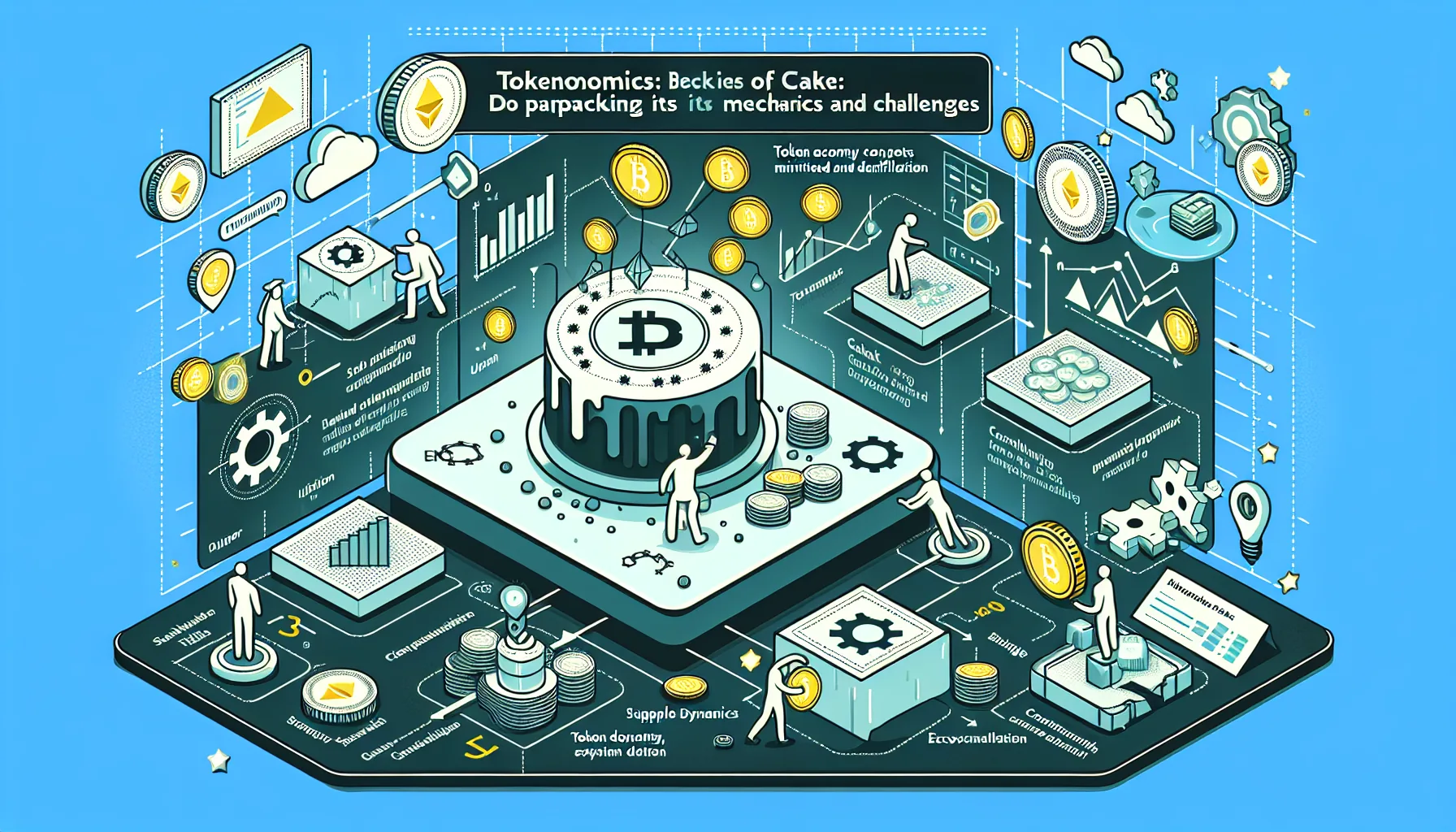
Tokenomics of CAKE: Unpacking Its Mechanics and Challenges
CAKE, the native token of the PancakeSwap ecosystem, operates on a carefully designed tokenomics model with a significant emphasis on utility, emission schedules, and deflationary mechanisms. Understanding its framework reveals not only its functional incentives but also potential pain points that savvy crypto users should consider.
Supply Dynamics and Emission Structure
CAKE is characterized as an inflationary token, with new tokens minted regularly to support platform incentives, including staking rewards in Syrup Pools and yield farming rewards. Unlike capped supply tokens, CAKE lacks a hard limit, which theoretically allows unlimited token minting. This uncapped emission model is inherently inflationary, potentially diluting token value if the demand and utility do not scale proportionally with supply. For investors and ecosystem participants, this necessitates a close watch on network growth relative to CAKE's circulating supply and total emissions.
To counterbalance its inflationary tendencies, PancakeSwap employs multiple deflationary mechanisms, including token burns. These burns occur through mechanisms such as a percentage of trading fees being directed towards buybacks and burns, lottery ticket burns, NFT-related burns, and manual burns initiated by the team. While these measures reduce circulating supply, they must effectively offset the high rate of token emissions to avoid long-term inflationary pressure.
Utility and Ecosystem Integration
CAKE serves multiple functions within the PancakeSwap ecosystem, including liquidity provisioning, voting in governance proposals, participating in Initial Farm Offerings (IFOs), and unlocking various platform features. Its diverse utility creates intrinsic demand for the token, encouraging holders to interact with the ecosystem. However, this demand largely depends on the platform's continued user growth and activity. Should transaction volumes or user activity decline, the demand for CAKE could stagnate, amplifying inflationary concerns.
Centralization Concerns
A critical observation within CAKE's tokenomics is the potential centralization risk associated with large token holdings. Certain governance and staking actions are controlled by a concentration of token holders, which may limit the true decentralization of decision-making processes. For a DeFi token like CAKE, this could be a red flag for those prioritizing decentralization as a core principle of blockchain technology.
Rewards Saturation and Market Impact
The continuous issuance of rewards in CAKE to incentivize farming and staking raises the challenge of reward saturation. Over time, high APYs (annual percentage yields) may attract unsustainable farming behavior, where users farm rewards mainly for profit-taking, leading to sell pressure on CAKE. If the rewards system does not evolve to create sustainable value for participants, this could introduce persistent downward pressure on the token's valuation.
CAKE's tokenomics blend innovative utility with notable risks, underscoring the criticality of monitoring emission schedules, deflationary efforts, and governance dynamics for participants in its ecosystem.
CAKE Governance
Governance and the Role of CAKE in the PancakeSwap Ecosystem
In the decentralized ecosystem of PancakeSwap, governance plays a pivotal role, with CAKE functioning as the key governance token. Holders of CAKE have the ability to participate in the platform's decision-making process, thereby shaping the future trajectory of the protocol. Governance through CAKE manifests primarily in the decentralized voting mechanism, enabling users to propose and vote on core updates, new feature integrations, and changes to operational parameters like fee structures or liquidity incentives.
The governance model is rooted in on-chain voting, ensuring transparency and verifiability. The more CAKE tokens a user holds, the greater their voting power, providing a direct correlation between token holdings and influence over the platform. However, this concentration of influence does create opportunities for centralization if a small number of entities or individuals accumulate significant portions of the circulating supply. This reality could lead to governance outcomes that prioritize the interests of large stakeholders over the broader user base, raising concerns about equitable representation.
Additionally, proposals within the CAKE governance framework require active community participation to pass. This dependency on quorum thresholds can sometimes pose challenges, especially in instances where voter apathy or uneven distribution of CAKE holdings leads to insufficient engagement. Token holders may hesitate to participate due to gas fees associated with on-chain voting, even on a cost-efficient network like BNB Chain, potentially deterring smaller token holders from taking part in key governance decisions.
Beyond voting, CAKE is intricately connected to yield farming, staking (through Syrup Pools), and liquidity provisioning across PancakeSwap. This multi-purpose utility could dilute the governance participation rate, as many holders consider CAKE primarily a yield-generating asset rather than a governance tool. As a result, governance engagement may not reflect the views of the majority of stakeholders but instead a more niche subset focusing on long-term outcomes.
Another factor worth considering is the lack of delegate voting, a feature that many other DeFi ecosystems have adopted to streamline governance participation. Without this mechanism, non-technical or passive token holders who may align with a particular vision for the platform are sidelined unless they vote directly.
While the CAKE governance system enables decentralized decision-making, its current structure presents critical challenges around inclusivity, equitable participation, and ensuring representation aligns with the diverse stakeholder interests within the PancakeSwap ecosystem.
Technical future of CAKE
Current and Future Technical Developments and Roadmap for CAKE
Focus on Increased Decentralization
One of the key technical objectives for CAKE lies in pushing toward greater decentralization within the PancakeSwap ecosystem. While its automated market maker (AMM) model has functioned effectively, community governance and decentralized decision-making stand as priorities for enhancing long-term sustainability and community-driven adaptation. The protocol has been refining its governance framework through adjustments to tokenomics, allowing CAKE stakers (via voting mechanisms) to exert influence over liquidity pool parameters, fee structures, and protocol upgrades. However, decentralization efforts remain somewhat constrained by the concentration of CAKE holdings, posing potential risks regarding governance centralization and voter apathy.
Layer-2 Integration and Gas Fee Solutions
To address scalability concerns, the PancakeSwap team has been exploring integration with Layer-2 solutions. The expanding adoption of BNB Smart Chain (BSC) has led to congestion during periods of heightened network activity, which indirectly impacts CAKE’s utility and desirability. Ongoing discussions and developments around Layer-2 compatibility aim to reduce transactional bottlenecks and provide ultra-low gas fees for trading and staking. This will enhance the user experience and boost the competitiveness of PancakeSwap in relation to Ethereum-based AMMs. However, integration with Layer-2 solutions comes with challenges concerning interoperability and user onboarding, especially given the inherent learning curve for less technical users.
Multi-Chain Accessibility
CAKE has actively pursued cross-chain expansion, which is key to diversifying its user base and liquidity sources. By extending its reach to chains such as Ethereum, Aptos, and others in the future, the project seeks to secure its relevance in an increasingly multi-chain DeFi world. This has required the development of cross-chain bridges and compatibility features that allow users to swap and stake assets seamlessly across various networks. Despite these advancements, the complexity of cross-chain infrastructure means susceptibility to risks like bridge exploits and cross-chain liquidity fragmentation, both of which could undermine the protocol's stability.
Yield Farming 3.0 and Advanced Tokenomics
Further development initiatives include the concept of what can loosely be termed “Yield Farming 3.0.” Planned features involve dynamically adjusting reward emissions, concentrated liquidity strategies akin to Uniswap v3, and incentivizing long-term liquidity provision with minimal impermanent loss. Enhanced token-burning mechanisms are also being explored to curtail inflationary pressures on CAKE’s supply. While these initiatives sound promising, the reliance on novel mechanisms introduces the risk of unforeseen vulnerabilities and affects user trust should bugs or exploits arise in their implementation.
Security and Audit Enhancements
As the protocol evolves, the importance of fortifying security infrastructure continues to hold precedence. Smart contract audits and real-time security monitoring are integral components of PancakeSwap’s operational enhancements. Notably, third-party audit firms are frequently employed to evaluate updates to the protocol. However, as with any DeFi project, the risk of undetected vulnerabilities remains an ongoing concern, particularly as CAKE continues to innovate and expand its feature set. Measures like bug bounty programs help mitigate such risks but cannot entirely eliminate them.
By focusing on the above technical elements, CAKE’s roadmap underscores both its ambitions and the challenges intrinsic to maintaining competitiveness in a rapidly evolving DeFi landscape.
Comparing CAKE to it’s rivals
CAKE vs. SUSHI: A Comparative Dive into DeFi Functionality
When examining CAKE, the native token of PancakeSwap, in comparison to SUSHI, the native token of SushiSwap, distinct differences emerge in their decentralized finance (DeFi) ecosystems, incentivization structures, and user experience. Both tokens are central pillars of their respective decentralized exchanges (DEXs), but they address liquidity provision, yield farming, and governance in unique ways.
Blockchain Ecosystem and Cost Efficiency
One of the most notable distinctions is that CAKE operates within the Binance Smart Chain (BSC) ecosystem, while SUSHI powers SushiSwap on Ethereum. This divergence has implications for transaction costs and speeds. CAKE benefits from the lower fees and faster transaction finality inherent to BSC, fostering access for smaller traders who might be priced out on Ethereum's congested network. Conversely, SUSHI is tightly integrated into Ethereum’s mature DeFi landscape, offering access to a broader ecosystem of protocols but often at the expense of higher gas fees.
Incentivization Models and Yield Farming
Both CAKE and SUSHI rely heavily on incentivizing users through liquidity pools and farming opportunities. PancakeSwap tends to emphasize hyper-yield options, attracting attention with high annual percentage yields (APYs) tied to new tokens. However, this model has at times led to unsustainably inflated yields, which risk rapid liquidity flight when incentives taper off. SUSHI, by contrast, has focused on balancing its rewards structure, offering more conservative but potentially robust long-term returns within its liquidity provision framework. This difference highlights a philosophical split: CAKE appeals to more risk-tolerant yield-seekers, whereas SUSHI might cater to prudent capital allocators.
Governance and Community Dynamics
CAKE employs a governance staking mechanism with a heavy focus on incentivization, but criticism has emerged about the token’s inflationary supply dynamics. SushiSwap’s governance model, powered by SUSHI staking and xSUSHI benefits, has been lauded for aligning token holders' incentives more closely with protocol usage. On PancakeSwap, the inflationary pressure on CAKE often dilutes governance incentives, raising questions about the long-term viability of token economics.
Market Focus and Product Innovation
PancakeSwap, with CAKE at its core, has a more retail-centric focus, catering to newer users within the BSC ecosystem. Its gamified approach, including lotteries and prediction markets, broadens its appeal but can detract from its perception as a serious protocol. SushiSwap, although not without its own controversies, has pursued cross-chain expansion and more experimental product offerings, such as BentoBox and Kashi lending, which may appeal to sophisticated DeFi users seeking multi-functional solutions.
While both CAKE and SUSHI serve as integral components of their ecosystems, they embody contrasting approaches to DEX operations, user incentivization, and innovation philosophy. These differences emphasize the diverse needs and risk appetites of the broader DeFi community.
CAKE vs UNI: A Detailed Comparison of Utility, Governance, and Ecosystem
When contrasting CAKE with UNI, it’s essential to dive into the fundamental differences in their ecosystems, token utility, and governance structures. While both tokens serve as pivotal elements within their respective decentralized exchanges (DEXs)—PancakeSwap for CAKE and Uniswap for UNI—their distinct approaches to decentralization and user experience highlight clear areas where they diverge.
Token Utility: Multi-Chain vs. Ethereum-Centric
CAKE has increasingly positioned itself as a multi-chain facilitator, with a strong emphasis on Binance Smart Chain (BSC) and cross-chain operability. In contrast, UNI is firmly entrenched within the Ethereum ecosystem. While Ethereum's dominance as a Layer 1 platform and Uniswap’s integral role within DeFi provide UNI with unrivaled liquidity depth and user recognition, it also means that users often face limitations such as high gas fees during periods of network congestion.
CAKE, operating on BSC, offers a more cost-efficient approach with lower transaction fees and faster confirmation times, which appeals to retail investors and smaller stakeholders. However, this affordability comes with trade-offs, as critics point to BSC’s perceived centralization risks and reliance on a smaller validator set compared to Ethereum’s robust decentralized architecture.
Governance: Centralization vs. Accessibility
UNI benefits from a highly active governance framework, where UNI holders can participate in decision-making directly on proposals that shape the future of Uniswap. Although this governance model signifies major steps towards decentralization, voter participation rates remain relatively low, often leading to whale dominance in key decisions.
In comparison, CAKE’s governance has focused on accessibility and simpler mechanisms for stakeholder engagement, which caters to a broader, more casual audience. However, some within the crypto-savvy community argue that this approach risks oversimplifying key governance functions, reducing the opportunities for granular improvements typically seen in Ethereum-based models.
Ecosystem Integration: Depth vs. Breadth
Uniswap often sets the gold standard for DeFi integrations, acting as a hub for ERC-20 token swaps, liquidity pools, and Layer 2 scaling solutions. Its alignment with Ethereum provides UNI with a deep bedrock of integrations across the DeFi stack, but it also restricts its operations to Ethereum-compatible environments.
PancakeSwap’s CAKE, on the other hand, expands its ecosystem by branching into ancillary features like lottery systems, NFT marketplaces, and yield farming with a gamified edge. Although these features provide a broader appeal, some argue they distract from the platform’s core function as a DEX and dilute its focus compared to Uniswap’s streamlined approach.
Usability and User Base Demographics
While both platforms dominate usage metrics in their respective ecosystems, Uniswap’s user base skews toward technically experienced DeFi veterans due to Ethereum’s complexity and cost barriers. CAKE, by focusing on more affordable and beginner-friendly alternatives, has captured a growing demographic of users exploring DeFi for the first time. However, questions surrounding the security of BSC DApps and the durability of CAKE’s incentives remain as lingering concerns for those prioritizing long-term sustainability.
In essence, when examining UNI as a rival to CAKE, the comparison reflects broader trade-offs between Ethereum and Binance Smart Chain ecosystems, impacting everything from cost and accessibility to governance and user experience.
How CAKE Stacks Up Against BAL in the Decentralized Finance Space
In the competitive realm of decentralized finance (DeFi), PancakeSwap’s native token, CAKE, and Balancer's BAL token occupy overlapping but distinct niches. While both platforms allow users to trade tokens and earn yield, their differences in technology, user experience, and tokenomics become apparent under closer inspection.
Liquidity Pool Innovations: Weighted vs. Fixed Ratios
One of Balancer’s defining features is its use of multi-token weighted pools. Unlike PancakeSwap, which primarily operates on fixed 50/50 token pair liquidity pools, Balancer allows pools with up to eight tokens and custom weightings. This flexibility enables liquidity providers to maintain diversified exposure in a single pool, minimizing impermanent loss risks. In contrast, CAKE’s ecosystem focuses on simplicity and uses traditional token pair models, catering to less complex strategies but potentially limiting advanced liquidity management.
Layer-1 Dependency: BNB Chain Versus Ethereum
CAKE operates exclusively on the BNB Chain (formerly Binance Smart Chain), which offers lower transaction fees and faster block times compared to Ethereum, Balancer's primary blockchain of operation. While this advantage gives CAKE access to a wider retail base, it may deter institutional users who prefer Ethereum’s stability and robust ecosystem. Moreover, Balancer’s expansion to other Ethereum Virtual Machine-compatible chains like Arbitrum and Optimism demonstrates a multi-chain approach that CAKE has yet to fully embrace. This could potentially constrain PancakeSwap’s appeal to Ethereum-native liquidity providers.
Yield Complexity and Tokenomics
BAL token holders benefit from a governance-focused model and earning opportunities like fee sharing and boosted liquidity rewards. In contrast, CAKE employs aggressive inflationary strategies to incentivize staking and farming. While this garners high short-term yield, long-term holders may question the sustainability of CAKE’s tokenomics compared to BAL’s more controlled issuance. Balancer’s revenue-sharing model, where part of the platform’s fees directly rewards BAL stakers, contrasts with CAKE’s reliance on perpetual emissions for ecosystem growth.
User Experience and Institutional Appeal
Balancer's interface and feature set are designed with advanced users in mind, providing tools for custom liquidity management and route optimization. While this appeals to sophisticated DeFi users, it can pose a steep learning curve for newcomers. PancakeSwap’s CAKE, by comparison, benefits from a more user-friendly experience and gamified elements such as lotteries and collectibles. However, these features may not resonate with institutions or high-net-worth individuals, who largely value functionality and reliable fee revenue over gamification.
Security and Governance Structures
Balancer emphasizes decentralized governance, allowing BAL holders to participate in decisions such as protocol upgrades and fee structures. On the other hand, CAKE maintains a more centralized governance model due to its ties with Binance—raising concerns among users who prioritize decentralization. Additionally, Balancer has a strong focus on audit transparency and has historically taken active measures to mitigate smart contract risks. While PancakeSwap also undergoes regular audits, operating on the BNB Chain adds potential risks tied to centralizing influences at the layer-1 level.
Key Takeaway
When comparing CAKE to BAL, the divergences in liquidity mechanisms, blockchain ecosystems, and tokenomic models demonstrate fundamentally different approaches to attracting DeFi participants. Each token caters to unique users, but both face challenges in scalability and user retention through differing strategic trade-offs.
Primary criticisms of CAKE
Primary Criticism of CAKE: Challenges Facing PancakeSwap's Native Token
The CAKE token, central to the PancakeSwap ecosystem, has been subject to several criticisms within the crypto space. While PancakeSwap has emerged as a leader among decentralized exchanges (DEXs), particularly on BNB Chain, the CAKE token itself faces scrutiny that raises concerns about its long-term value proposition and utility.
Inflationary Tokenomics
One of the most frequently cited criticisms of CAKE revolves around its inflationary tokenomics. CAKE is used to reward liquidity providers and staking participants within the PancakeSwap ecosystem, but the high rate of issuance often outpaces token burns. Critics argue that this over-distribution heavily dilutes its value, especially for long-term holders. While mechanisms like buybacks and burns aim to counteract inflation, these efforts have not been universally perceived as sufficient to address what some see as unsustainable token issuance. This inflationary pressure can deter investors who demand scarcity or value retention in their crypto assets.
Reliance on Yield Farming Incentives
Another common point of criticism is the token's reliance on yield farming incentives. Many participants join PancakeSwap to earn high annual percentage yields (APYs) through staking or liquidity farming. However, this model inherently ties CAKE’s value to speculative demand rather than intrinsic utility. Once APYs decline or alternative platforms offer more lucrative farming opportunities, CAKE holders face significant risk of decreased interest and liquidity migration. Critics highlight this as a vulnerability in retaining its active user base.
Centralization Concerns
Despite operating as a DEX, PancakeSwap has faced skepticism over the degree of centralization in its ecosystem, and CAKE is not immune to this critique. Unlike fully decentralized governance models, PancakeSwap’s governance structure allows only users holding substantial amounts of CAKE to meaningfully influence decisions. Smaller holders often feel disenfranchised, raising concerns about whether the token truly facilitates inclusive and equitable DeFi governance.
Lack of Broader Utility Beyond PancakeSwap
CAKE’s utility largely remains confined to the PancakeSwap ecosystem. While the platform enables staking, voting, and farming rewards, critics argue that CAKE lacks broader applications that could enhance its adoption beyond PancakeSwap’s domain. This narrow focus limits its relevance in wider crypto ecosystems, making it heavily reliant on the platform’s success and unable to stand out independently.
Overdependence on BNB Chain
Finally, CAKE's performance is tightly coupled with the success and stability of the BNB Chain. While BNB Chain is popular for its low fees and robust infrastructure, its centralization has at times raised concern. Any significant interruptions, regulatory scrutiny, or competitive shifts affecting BNB Chain could directly undermine CAKE’s relevance and usability.
Critics suggest that without addressing these core issues, CAKE may struggle to sustain long-term confidence among crypto-savvy investors focused on fundamentals.
Founders
Founding Team Behind CAKE: Insights into PancakeSwap’s Creators
PancakeSwap, the decentralized exchange (DEX) that issued the CAKE token, was developed by an anonymous team or group of developers. Unlike projects with rosters of public-facing leadership to claim credit for their success, the PancakeSwap creators chose anonymity, which aligns with the decentralized ethos of many blockchain projects. This decision has sparked both intrigue and scrutiny within the crypto community.
The lack of transparency about the founding team has raised concerns among some investors and users about accountability and long-term trust. In scenarios where issues arise—like security vulnerabilities, smart contract bugs, or governance debates—anonymous developers might complicate efforts to address such matters effectively. Critics argue that while decentralization is the key ideological foundation of PancakeSwap, anonymity could lead to difficulties in establishing lines of responsibility or recourse in case of problems.
Despite anonymity, the founding team has demonstrated technical expertise and a deep understanding of the decentralized finance (DeFi) ecosystem. PancakeSwap is built on Binance Smart Chain (BSC), benefiting from faster transaction speeds and lower fees compared to Ethereum-based DEXs. The team also implemented liquidity pools, yield farming, and lottery features to create a fully-fledged ecosystem, cementing CAKE’s role as a utility token. Nevertheless, skepticism lingers about whether other key figures—such as Binance developers—had an unpublicized hand in PancakeSwap’s creation, given its ties to the BSC infrastructure.
The lack of a visible face for leadership also makes it difficult to assess the team’s future roadmap or alignment with community interests. While the platform’s decentralized governance allows CAKE holders to vote on development proposals, some critics view these voting mechanisms as insufficient to replace traditional accountability frameworks. The possibility that anonymous developers may act against the best interests of the broader community remains a contentious issue.
In contrast to projects like Ethereum or Solana, where public figures play leadership roles, PancakeSwap’s decision to maintain anonymity marks a significant deviation. For some, this is a testament to prioritizing decentralization over hierarchy. For others, it’s a potential vulnerability in an otherwise innovative platform. The legacy and credibility of CAKE and PancakeSwap, as well as their long-term trustworthiness, are inherently tied to this decision to operate under the cover of anonymity.
Authors comments
This document was made by www.BestDapps.com
Sources
- https://pancakeswap.finance/
- https://docs.pancakeswap.finance/
- https://pancakeswap.finance/syrup-pools
- https://github.com/pancakeswap
- https://bscscan.com/token/0x0e09fabb73bd3ade0a17ecc321fd13a19e81ce82
- https://whitepaper.pancakeswap.finance/
- https://coinmarketcap.com/currencies/pancakeswap/
- https://cryptorank.io/price/pancakeswap
- https://tokenomics.pancakeswap.finance/
- https://defillama.com/protocol/pancakeswap
- https://messari.io/asset/pancake-token
- https://blog.pancakeswap.finance/
- https://docs.binance.org/smart-chain
- https://medium.com/pancakeswap
- https://www.dextools.io/app/bsc
- https://www.coingecko.com/en/coins/pancakeswap-token
- https://docs.pancakeswap.finance/products/yield-farming
- https://blockchainhub.net/binance-smart-chain/


