History of CAKE
The History of CAKE: Understanding PancakeSwap’s Token Evolution
CAKE, the native token of PancakeSwap, emerged as a cornerstone of the Binance Smart Chain (BSC) ecosystem, designed to power decentralized finance (DeFi) operations on the platform. PancakeSwap itself launched in the latter half of 2020, quickly gaining traction as a decentralized exchange (DEX) utilizing the Automated Market Maker (AMM) model. The platform’s growth was fueled by the lower transaction costs and faster processing times offered by the BSC, positioning CAKE as an integral element of the ecosystem.
Initial Token Launch and Distribution
CAKE’s tokenomics were designed to incentivize platform participation. Unlike capped cryptocurrencies, CAKE adopted an inflationary model to continuously reward users for staking and liquidity provision. This decision sparked debate within the community; while the model supports ecosystem growth through rewards and farming, it also introduces the risk of long-term value dilution. Initially, CAKE rewards were dispersed at high rates, amplifying the token’s appeal among yield farmers, but also creating concerns about oversupply and sustainability.
CAKE was distributed primarily to early adopters who contributed liquidity to PancakeSwap’s pools or staked it in the platform’s Syrup Pools. These mechanisms created strong feedback loops of engagement, encouraging users to lock their assets within the ecosystem. However, the token’s high inflation rate in its early stages drew criticism, as some skeptics associated the strategy with diminishing long-term holder value.
Key Milestones in Governance and Utility
In response to criticism over inflation, PancakeSwap introduced the concept of periodic token burns funded by trading fees, lottery earnings, and NFT sales to balance supply and demand dynamics. These burns removed significant quantities of CAKE from circulation over time, a move that somewhat mitigated concerns about perpetual inflation while showcasing the team’s responsiveness to the community.
CAKE evolved beyond its initial role as a reward mechanism and liquidity mining token, expanding into governance functions. Holders of CAKE were granted the ability to vote on platform proposals, enabling decentralized decision-making within PancakeSwap. This governance capability solidified the token’s position as more than a farming tool, giving it a pivotal role in shaping the platform’s future.
Challenges in Scaling Adoption
Despite its success, CAKE faced challenges. Competition from Ethereum-based DEXs, criticism of the Binance Smart Chain’s perceived centralization, and the pressure to maintain reward sustainability amid inflation all influenced the token’s trajectory. Additionally, the reliance on speculative participation in yield farming at times cast doubt on the stability of the platform’s growth model. Critics have pointed out that PancakeSwap’s focus on gamified DeFi features, while innovative, hasn’t fully addressed operational risks tied to the broader DeFi ecosystem.
How CAKE Works
How Does CAKE Work? A Deep Dive into Its Mechanisms
CAKE, the native utility token of PancakeSwap, is integral to the operation of the decentralized exchange (DEX). PancakeSwap is built on the Binance Smart Chain (BSC), leveraging its high-speed and low-cost infrastructure for transactions. Designed as a BEP-20 token, CAKE facilitates a number of key functions within the PancakeSwap ecosystem while operating with distinctive technical mechanisms.
Liquidity Provision and LP Tokens
At its core, CAKE plays a critical role in incentivizing liquidity provision. Liquidity providers (LPs) deposit token pairs into PancakeSwap’s liquidity pools, enabling seamless token swaps for users. In return, LPs are rewarded with LP tokens, which represent their stake in the pool. By staking these LP tokens into various pools on PancakeSwap—commonly referred to as “farms”—participants earn CAKE rewards. The size of the reward often depends on the relative weighting and demand of a given pool.
Staking Mechanics: Syrup Pools
PancakeSwap offers users the ability to stake CAKE in “Syrup Pools” to earn returns. These pools allow locked staking, where users can commit CAKE for a fixed period in exchange for higher yields, or flexible staking, which lets users withdraw without penalties but at lower returns. However, this staking mechanism has been criticized for its lockup incentives, as they may disincentivize user flexibility. Additionally, Syrup Pools occasionally enable staking CAKE to earn other tokens, supporting newer projects on BSC and furthering PancakeSwap’s utility.
Deflationary Measures and Supply Management
A distinctive feature of CAKE is its aggressive deflationary model, a necessary counterbalance to its relatively uncapped supply. Mechanisms such as token burns (funded through transaction fees, lottery tickets, and NFT sales) are regularly implemented to manage inflationary pressures. While these deflationary strategies aim to sustain token value, critics have pointed to their dependence on high-volume activity—raising concerns about potential inefficiencies in bear market conditions.
Governance Role and Limitations
CAKE also functions as the governance token for PancakeSwap. Token holders vote on proposals, including adjustments to protocol-level features like fee structures or the introduction of new farms. While this decentralized governance model prioritizes community input, skeptics argue that token distribution dynamics could potentially result in whales having outsized influence, undermining equitable decision-making.
Perpetual Incentive Cycle Challenges
One inherent challenge in the CAKE tokenomics model is its reliance on perpetual incentives to attract liquidity. The high-yield farming opportunities sustained by CAKE distribution can lead to continuous token emissions, which may dilute existing holders should burn mechanisms fail to match issuance rates. This cycle has been a subject of scrutiny, particularly among those concerned about long-term sustainability in a highly competitive DeFi landscape.
This overview of CAKE’s operational mechanics highlights both its strengths and notable challenges, offering a closer look at the complexities underpinning its role in the PancakeSwap ecosystem.
Use Cases
Use Cases of CAKE: Navigating Practical Utility within the Crypto Ecosystem
CAKE, the native token of PancakeSwap, serves as the backbone of the platform's decentralized finance (DeFi) ecosystem. Its primary use cases are deeply rooted in facilitating DeFi activities, governance, and incentivization. However, while CAKE offers multiple practical functionalities, there are nuances and potential setbacks associated with its use cases that demand thorough evaluation.
1. Yield Farming and Staking Mechanisms
One of the most prominent use cases of CAKE lies in its role within yield farming and staking protocols. Users can stake CAKE tokens in "Syrup Pools" to earn passive rewards, often in additional CAKE or other tokens. Similarly, CAKE is utilized in liquidity pools to empower decentralized trading while rewarding liquidity providers with additional tokens. While highly profitable for some, this model introduces risks of impermanent loss for liquidity providers and exposes participants to potential vulnerabilities, such as smart contract exploits.
2. Token-Based Governance
CAKE offers token holders governance rights on PancakeSwap. These rights enable users to vote on proposals that shape the platform's features, development updates, or token emissions. However, the governance model raises questions about decentralization. Larger stakeholders with significant holdings may disproportionately influence decision-making, reducing the platform's democratic appeal.
3. Deflationary Tokenomics
CAKE employs deflationary mechanisms, such as token burns, to help control supply and potentially increase token value long-term. These mechanisms are fueled by revenue from PancakeSwap’s ecosystem activities like transaction fees. While such tokenomics are attractive to participants, they hinge significantly on transaction volume and consistent platform usage, which could fluctuate and lead to periods of slower deflation or stagnation.
4. Payments and Rewards
CAKE is integrated into PancakeSwap’s gamified features, such as lotteries and prediction markets, as a means of entry or wagering. Additionally, it operates as a stateless payment token within certain ecosystems. However, its adoption for payments beyond the PancakeSwap ecosystem remains limited, restricting its utility to a more niche user base.
5. Cross-Chain Interactions
CAKE operates across multiple blockchain networks thanks to PancakeSwap’s expanding reach beyond Binance Smart Chain. This interoperability fosters access to diverse assets and DeFi protocols. That said, cross-chain activity often involves additional fees, bridging delays, and potential security concerns associated with bridge vulnerabilities.
CAKE's utility is dynamic and multi-faceted, though it is not without its challenges. Understanding its full potential requires weighing these nuanced use cases against the inherent risks.
CAKE Tokenomics
CAKE Tokenomics: A Detailed Analysis for Savvy Crypto Enthusiasts
CAKE, the native token of PancakeSwap, operates on a sophisticated tokenomics model designed to support its role in the decentralized finance ecosystem. However, like any crypto asset, its mechanisms are a mix of strengths and potential challenges that warrant examination.
Inflationary Supply Dynamics
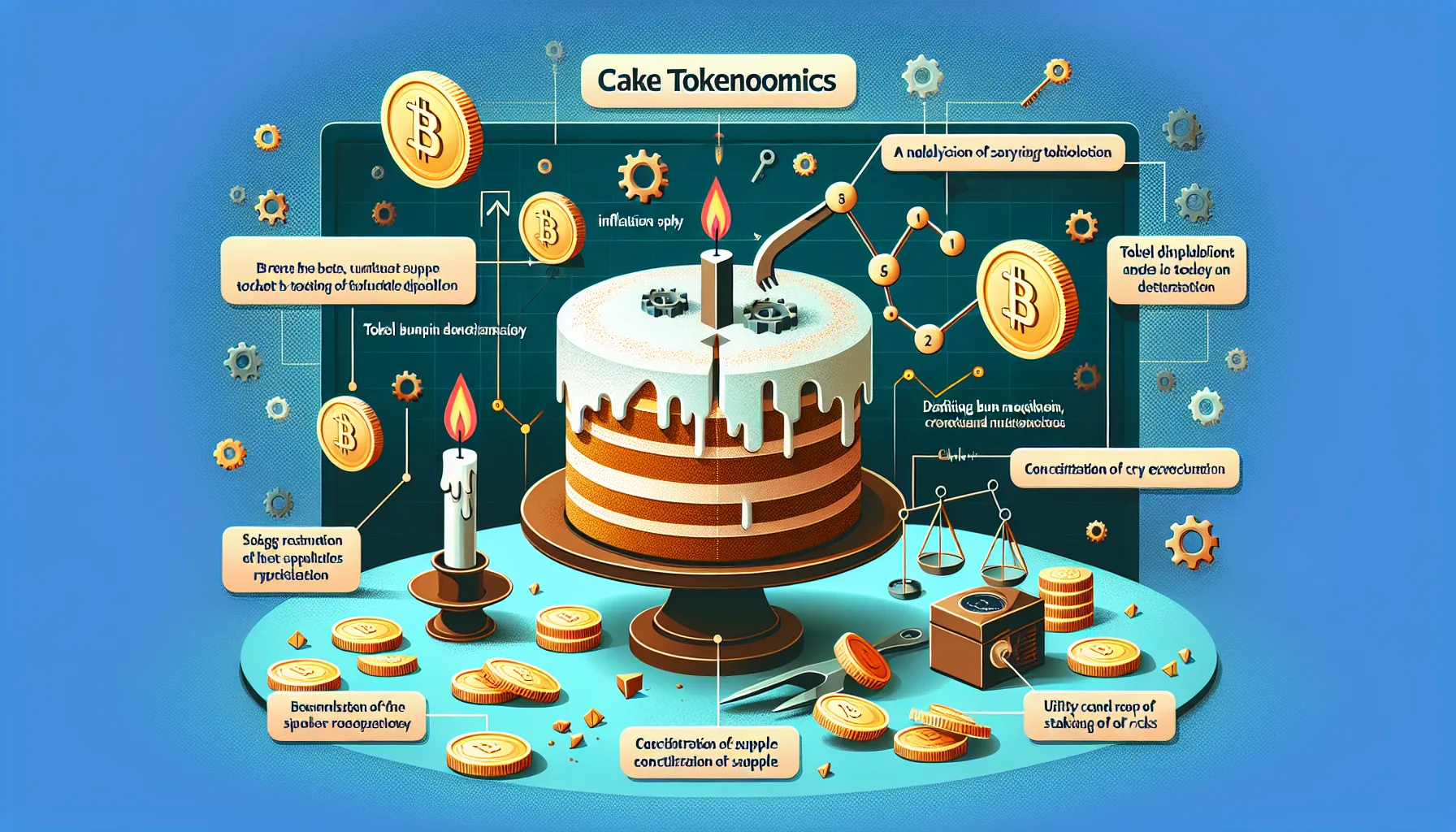
One of the most notable aspects of CAKE’s tokenomics is its inflationary supply model. The token lacks a hard cap on supply, which can be a double-edged sword. On one hand, continuous minting allows for the rewarding of liquidity providers, stakers, and participants in PancakeSwap's ecosystem. On the other hand, perpetual inflation has the potential to erode the token’s value over time, especially if demand fails to outpace supply increases. This structure necessitates constant token burns to mitigate inflationary pressure—a critical balancing act.
Token Burn Mechanism
The deflationary counterbalance to CAKE’s inflation is its aggressive burn mechanism. PancakeSwap employs multiple avenues for burning tokens, such as using portions of trading fees, staking penalties, and lottery proceeds. These processes aim to systematically reduce circulating supply, fostering scarcity and, theoretically, greater value retention. However, the real efficiency of these burns is often debated. Critics argue that the rate of burns may not fully offset inflationary emissions, leaving long-term supply pressures unaddressed.
Utility Within the Ecosystem
CAKE derives significant utility within PancakeSwap’s ecosystem. Token holders can participate in yield farming, staking for SYRUP pools, and governance voting within the platform. Despite these established use cases, there is skepticism around its dependency on ecosystem-specific applications. If PancakeSwap's broader adoption falters, CAKE’s utility may diminish, potentially decreasing its attractiveness to holders and speculators.
Concentration of Supply
Decentralization is a hallmark of blockchain, but CAKE’s supply distribution has periodically drawn scrutiny. A portion of tokens is allocated to developer and treasury funds, raising questions about centralization risks. While proponents view these allocations as necessary for project sustainability, detractors warn of possible misalignment between founding teams and community interests. Careful monitoring of token movements in these categories remains essential for transparency.
Volatility in Staking Rewards
CAKE's staking rewards are a pivotal component of its tokenomics. However, these rewards are highly dependent on emission rates and market conditions. While lucrative yields have historically drawn significant interest, they are susceptible to dilution over time as more participants enter the ecosystem or as emissions decrease. For savvy investors, this creates both an opportunity and a risk that must be carefully balanced.
Closing Remarks on Tokenomics Design
CAKE’s tokenomics design reflects the complexities of balancing utility, incentives, and sustainability. While it offers innovative approaches to liquidity incentives and decentralized governance, its inflationary supply structure and dependency on ecosystem demand remain areas of inherent risk. Evaluation of these trade-offs is essential for any potential participant in the ecosystem.
CAKE Governance
Governance in CAKE: Exploring Decentralized Decision-Making
The governance framework of CAKE, the native token of the PancakeSwap ecosystem, plays a pivotal role in determining the platform's operational direction and community involvement. As with many decentralized finance (DeFi) protocols, governance via CAKE emphasizes the balance between decentralization and pragmatic decision-making, though it comes with its set of unique strengths and challenges.
At the core, CAKE operates as the governance token, granting holders voting rights on protocol changes, new features, fee structures, and other key proposals. Token holders can stake their CAKE and directly participate in governance discussions or delegate their voting power to other stakeholders. This structure enables the PancakeSwap community to prioritize development pathways that align with collective user needs. However, inherent in this mechanism is the risk of governance domination by large CAKE holders, which can skew the decision-making process towards centralized influence, raising concerns about "whale governance."
Despite these concerns, the ease of participation in CAKE-based governance has fostered consistent community engagement. Governance proposals are typically conducted via on-chain voting mechanisms, where the weight of a participant's vote corresponds to their staked CAKE tokens. This governance model has allowed PancakeSwap to iterate on features like syrup pools, yield farming mechanisms, and fee optimization strategies. However, voter turnout and distribution of participation have shown patterns of inequality, a common issue in token-based governance systems.
Additionally, the PancakeSwap ecosystem’s governance relies heavily on broader communication across its community—discussion forums, social channels, and governance portals. While this transparency aligns with DeFi’s values of openness, it can make the decision-making process lengthy and contentious when debates arise over highly technical or polarizing proposals. Furthermore, stakeholders with less technical expertise might find themselves at a disadvantage, given the nuanced nature of some governance choices.
Another notable consideration is the lack of binding mechanisms for some governance decisions. While proposals may receive overwhelming support, their implementation often depends on external developers and contributors to the PancakeSwap ecosystem. This highlights the stark reality that token-based voting does not always guarantee execution, especially in decentralized environments where development roadmaps are contingent on resource availability and technical feasibility.
The governance architecture of CAKE continues to evolve, reflecting the broader DeFi sector's experimentation with decentralized organizational practices. As challenges around voter participation, whale influence, and proposal execution persist, CAKE governance remains a critical and contentious aspect of the PancakeSwap ecosystem.
Technical future of CAKE
Current and Future Technical Developments and Technical Roadmap for CAKE
CAKE, the native token of PancakeSwap, continues to evolve alongside the decentralized exchange (DEX) it powers, driven by a technical roadmap that underscores scalability, security, and user experience improvements. PancakeSwap operates on the Binance Smart Chain (BSC), offering lower transaction costs and faster confirmation times compared to Ethereum-based alternatives. Despite these benefits, several technical challenges and opportunities remain on the horizon for CAKE’s ecosystem.
Ongoing Developments
One of the most notable developments for PancakeSwap and CAKE is the shift toward multi-chain operability. While BSC remains the primary network, PancakeSwap has been expanding its presence to other blockchains, such as Ethereum and Aptos. This diversification aims to mitigate reliance on a single chain and address concerns about centralization in BSC’s validator structure. However, adding multi-chain support introduces complexity, requiring rigorous cross-chain asset interoperability frameworks and security audits to ensure safety.
Another technical area of improvement is optimizing liquidity provision through innovations in automated market maker (AMM) algorithms. PancakeSwap has already adopted features like concentrated liquidity akin to Uniswap V3, enabling capital efficiency. However, the challenge lies in balancing simplicity for beginner users with advanced tools for professional market makers—this remains an issue that the CAKE ecosystem is still refining.
Future Technical Enhancements
A core focus for CAKE’s technical roadmap is Layer-2 scaling solutions. While BSC provides a comparatively scalable environment, rising adoption and potential network congestion could necessitate off-chain solutions or rollups. No official implementation has been disclosed, but the trend across DeFi sectors points toward a likely push in this direction as user demand grows.
Additionally, governance enhancements are in progress to expand the decentralization of decision-making. Currently, the Syrup Pool staking mechanism allows users to participate in voting, but critics argue the system still places disproportionate voting power in larger token holders. Anticipating these concerns, the roadmap hints at governance token adjustments, potentially moving toward quadratic voting or similar frameworks to amplify smaller stakeholders’ influence.
Risks and Challenges
Even as CAKE’s ecosystem grows, it remains exposed to vulnerabilities in smart contract logic and reliance on third-party infrastructure. While PancakeSwap employs regular audits, the complexity of its cross-chain expansions amplifies the risk of exploit via bridge vulnerabilities—a concern the team will need to address proactively.
Further, CAKE’s model of perpetual emissions to incentivize staking and liquidity poses risks of inflationary pressure on token value. While tokenomics adjustments have been proposed as part of the roadmap, striking the right balance between rewards and supply control is an ongoing technical and economic challenge for the network’s sustainability.
Comparing CAKE to it’s rivals
CAKE vs. SUSHI: A Deep Dive into Competitive Dynamics
The rivalry between CAKE, PancakeSwap’s native token, and SUSHI, the governance token of SushiSwap, reflects a deeper competition between their respective decentralized exchange (DEX) infrastructures. Though both tokens serve as the backbone of their respective ecosystems, they operate within distinctive environments and reveal unique strengths and weaknesses.
Network and Ecosystem Compatibility
CAKE is exclusively tied to the Binance Smart Chain (BSC), which boasts low fees and high transaction throughput but has faced criticism for its degree of centralization. In contrast, SUSHI operates within the Ethereum ecosystem, known for its decentralized and security-driven orientation but also infamous for elevated gas fees, especially during network congestion. While CAKE has attracted high retail and small-cap investor interest due to nominal transaction costs on BSC, SUSHI has historically been better positioned to tap into Ethereum’s large pool of liquidity and mature developer community.
Tokenomics and Incentive Structure
CAKE employs an aggressive token inflation mechanism and perpetual staking rewards, allowing users to continuously reap high Annual Percentage Yields (APYs) through PancakeSwap’s "Syrup Pools." While lucrative for short-term yield farming, this model has raised concerns about long-term inflationary pressures on CAKE’s value. SUSHI, on the other hand, has implemented capped supply mechanisms, accompanied by a revenue-sharing model (via xSUSHI) where a portion of exchange fees is redistributed to token stakers. This divergence in tokenomics highlights the philosophical divide: CAKE targets liquidity depth and user acquisition via inflationary incentives, while SUSHI leans toward sustainable value accrual for long-term holders.
User and Developer Experience
PancakeSwap's BSC-based architecture undeniably provides faster and cheaper transactions, making it an attractive alternative for non-Ethereum users frustrated by high gas fees. However, its user interface has often been critiqued for prioritizing gamified elements over professional-grade trading functionalities. Conversely, SushiSwap emphasizes multi-chain compatibility, extending services to Layer 2 platforms like Arbitrum or other networks entirely, but this broad approach has sometimes led to fragmented user experiences.
Security and Governance
One area where SushiSwap outpaces CAKE is governance decentralization. SUSHI holders participate directly in decision-making over protocol upgrades and fund allocations. CAKE, while offering voting options, does so within the inherently centralized nature of BSC, which could discourage some participants. Moreover, SushiSwap has historically faced fewer security breaches or controversies when compared to vulnerabilities occasionally flagged in the PancakeSwap ecosystem.
While the competition between CAKE and SUSHI underscores many parallels, these differences root themselves in network preferences, tokenomic strategy, and community focus, appealing to distinct segments of the DeFi sector.
How CAKE Stacks Up Against UNI: A DeFi Protocol Showdown
When comparing CAKE to UNI, it's crucial to understand the nuanced differences between PancakeSwap, which powers CAKE, and Uniswap, the foundational force behind UNI. Both platforms dominate the decentralized finance (DeFi) space, but their strategic approaches, underlying technology, and ecosystems vary in significant ways.
Technology & Network Infrastructure
One of the primary distinctions lies in the blockchain networks they operate on. CAKE runs on the Binance Smart Chain (BSC), leveraging lower transaction fees and faster block times compared to Ethereum—the network Uniswap relies on. While this allows CAKE to be more accessible for retail traders and yield farmers who value cost efficiency, the scalability benefits of BSC come with trade-offs. Critics often point to BSC’s centralization concerns, given its more restricted number of network validators. Conversely, UNI’s Ethereum foundation ensures a higher degree of decentralization and robustness, albeit at a higher cost in gas fees.
Liquidity Depth and Tokenomics
Uniswap historically dominates in terms of liquidity and trading volume, largely due to its early-mover advantage and position on Ethereum, which holds the lion’s share of DeFi activity. However, PancakeSwap has made significant inroads by attracting liquidity providers through higher yield farming APRs. While these incentives have proven effective, sustainability remains a question. In contrast, UNI takes a more conservative approach with its token issuance, aiming for longevity over short-term growth.
Another point of differentiation lies in token utility. UNI serves primarily as a governance token, with its holders having a direct say in protocol decisions. CAKE, on the other hand, extends beyond governance to offer staking and yield farming benefits, giving it broader utility but at the expense of inflationary tokenomics. UNI’s capped supply provides a scarcity element that CAKE lacks, potentially impacting long-term value retention.
User Experience & Ecosystem Growth
PancakeSwap caters heavily to retail users with relatively simpler operations and cheaper transactions, making it a gateway for newer entrants to DeFi. Uniswap, however, remains the de facto platform for Ethereum’s mature DeFi ecosystem, offering access to a wider range of assets and integrations. The trade-off is that Uniswap's user experience can be daunting for newcomers, given Ethereum’s gas fees and occasional congestion.
Security Considerations
Lastly, platform security has been a focal point in DeFi. Uniswap’s smart contracts, battle-tested over years, are considered among the most secure in the industry. Meanwhile, PancakeSwap, while largely secure, has faced scrutiny over the vulnerabilities commonly associated with BSC's relative centralization and a history of exploits on the chain.
In summary, the competition between CAKE and UNI revolves around network preferences, liquidity strategies, and user priorities, with each protocol exhibiting distinct strengths and weaknesses.
CAKE vs GMX: A Detailed Comparison of Two DeFi Powerhouses
When it comes to decentralized finance (DeFi), both CAKE and GMX have carved out distinct niches within the broader ecosystem. While CAKE powers PancakeSwap, a Binance Smart Chain (BSC) giant with a focus on liquidity provision and yield farming, GMX operates in the more specialized realm of decentralized derivatives and perpetual trading. Despite catering to different aspects of DeFi, their overlap in attracting crypto investors and liquidity providers makes it valuable to compare the two.
Protocol Design and Use Cases
CAKE thrives as the flagship token of PancakeSwap, leveraging its position as a leading automated market maker (AMM) on the BSC. It excels at providing fast, low-cost swaps in a multichain environment while incentivizing users through staking, farming, and lotteries. GMX, however, positions itself differently, focusing on perpetual swaps and spot trading functionality with leverage. Its platform is designed specifically for traders looking to hedge, speculate, or execute leveraged positions directly on-chain.
The inherent difference in protocol design creates an adoption gap. CAKE benefits from PancakeSwap’s ability to attract a broad range of users, from beginner DeFi participants to advanced yield strategists. However, GMX targets a more niche audience with its trading-focused features, appealing primarily to experienced traders who are familiar with perpetuals. This narrower focus limits the general accessibility of GMX compared to CAKE’s more versatile platform appeal.
Fee Structures and Revenue Models
An intriguing point of comparison lies in how these ecosystems handle fee generation and revenue sharing. PancakeSwap redistributes trading fees to liquidity providers (LPs) and stakers, encouraging continual platform engagement. However, its reliance on high emission rates for CAKE has led to inflationary concerns, which could dampen long-term token value if not managed effectively. Conversely, GMX employs a unique dual-token fee-sharing mechanism, using its tokens GMX and GLP to distribute rewards from trading activity. Its deflationary dynamics, driven by fee buybacks and burns, provide a counterbalance to inflationary pressures.
That said, GMX's model introduces complexity for participants unfamiliar with derivatives or perpetual trading mechanics, potentially alienating users who are accustomed to CAKE's more straightforward farming rewards. Additionally, GMX’s focus on the Arbitrum and Avalanche chains further limits its accessibility to users unfamiliar with Layer 2 (L2) or alternative scaling ecosystems.
Risk Exposure and Scalability
CAKE’s appeal is partially rooted in its ties to BSC and multichain interoperability. This reliance introduces vulnerability to any systemic issues within the BSC ecosystem, including centralization concerns. On the other hand, GMX's dependence on smaller ecosystems like Arbitrum and Avalanche brings its own risks, particularly in relation to network adoption and congestion. Furthermore, perpetual trading markets are inherently riskier than standard AMM swaps, exposing GMX users to additional financial hazards tied to market volatility.
While GMX has made strides in offering a low-slippage trading experience through its synthetic model, it remains less liquid than traditional AMM platforms like PancakeSwap, which can still serve a broader market with more diverse trading pairs.
Primary criticisms of CAKE
Primary Criticism of CAKE: Challenges Facing PancakeSwap’s Native Token
CAKE, the native token of PancakeSwap, has garnered significant attention within the decentralized finance (DeFi) space. However, like most crypto assets, it is not without its share of criticism. Below are some of the primary challenges often cited by critics and seasoned market participants regarding the token's design and ecosystem.
Inflationary Tokenomics and Dilution Concerns
One of the most commonly discussed issues with CAKE is its inflationary tokenomics. While token minting was designed to incentivize liquidity provision and staking on PancakeSwap, the constant issuance of new tokens has led to concerns about long-term value retention. High token emissions often dilute the value of existing tokens for holders who are not actively staking or farming, leaving them at a disadvantage in terms of token appreciation. Critics argue that without a more robust mechanism for balancing emissions and burns, CAKE risks prolonged inflationary pressure that could undermine its broader utility.
Centralization in Governance
CAKE's governance model, while ostensibly decentralized, has faced scrutiny for potential centralization concerns. Critics point to the ability of whales—entities or individuals with large holdings of CAKE—to disproportionately influence decisions within the ecosystem. This could create scenarios where governance outcomes favor a small, concentrated user base over the broader community. Although governance is a key feature of many DeFi protocols, the implementation in CAKE has raised questions about whether it effectively achieves equitable decentralization.
Dependence on Binance Smart Chain (BSC)
PancakeSwap, and by extension CAKE, is built on Binance Smart Chain, which brings both opportunities and drawbacks. While BSC offers low transaction fees and speed, it has been criticized for its level of centralization compared to other networks like Ethereum. This dependence introduces a single point of failure, tying CAKE’s success closely to the performance and reputation of BSC. Critics often express concerns that BSC’s centralized validation model undermines the trustless ethos of DeFi, creating systemic risks for projects built on the chain.
Over-Reliance on Yield Farming Incentives
A significant portion of CAKE’s demand stems from its role in yield farming and staking within PancakeSwap’s ecosystem. While these mechanisms drive short-term adoption, they have also been criticized for potentially incentivizing unsustainable token demand. Critics highlight that users may treat CAKE as merely a tool for earning yields rather than for its broader utility. This over-reliance on financial incentives creates a situation where interest could decline rapidly should more attractive farming opportunities arise elsewhere, leaving CAKE vulnerable to liquidity migrations.
By addressing these criticisms head-on, the CAKE community and development team face a challenging but necessary path to ensuring the token's long-term sustainability and relevance in the fast-evolving DeFi landscape.
Founders
Founding Team Behind CAKE: Who’s Steering PancakeSwap?
The founding team of CAKE, the native token of PancakeSwap — one of the most popular decentralized exchanges (DEX) built on the Binance Smart Chain (BSC) — has chosen an anonymous identity, a relatively common practice in the crypto space. Unlike projects with publicly visible founders, PancakeSwap was launched in late 2020 by a team of developers whose backgrounds and credentials remain undisclosed. This anonymity sparks both intrigue and debate, especially for a protocol that commands a significant share of activity on the BSC.
While the decision to remain anonymous might resonate with crypto's ethos of decentralization and censorship resistance, it also raises concerns around accountability and trust. Critics argue that founder anonymity can make it difficult to assess the credibility and intentions of the development team. This can create a heightened sense of risk for investors and users, especially in the context of a highly competitive and volatile industry where exit scams and rug pulls are not uncommon.
Despite the team's anonymity, PancakeSwap's developers have managed to cultivate significant trust within the crypto community through continuous platform updates, innovative features like liquidity farming and lottery systems, and an open-source codebase. The project has undergone security audits by reputable third-party firms, attempting to counterbalance the risks posed by the lack of identifiable leadership. However, the absence of more transparent decision-making structures could still be a red flag for those who equate transparency with legitimacy.
Another point of contention lies in the governance dynamics. While CAKE holders have a say in certain protocol decisions, the initial parameters and ongoing development efforts are still heavily dictated by this undisclosed core team. Skeptics question whether the anonymous founders may have substantial, undisclosed control over protocol mechanics, especially with no public checks on their influence or holdings.
On the other hand, proponents argue that founder anonymity contributes to the egalitarian nature of PancakeSwap, reinforcing the idea of a protocol that belongs to the entire community rather than being personality-driven. The project’s ability to compete with Ethereum-based DEXs such as Uniswap can be partly attributed to the team’s technical expertise and consistent ability to deploy efficient solutions on BSC — even if their specific identities remain hidden.
While this secrecy has not directly hindered CAKE’s adoption or PancakeSwap’s growth, it undoubtedly forms a topic of continued discussion, especially within the context of decentralization versus transparency in DeFi projects.
Authors comments
This document was made by www.BestDapps.com
Sources
- https://docs.pancakeswap.finance/
- https://github.com/pancakeswap
- https://pancakeswap.finance/whitepaper
- https://bscscan.com/token/0x0e09fabb73bd3ade0a17ecc321fd13a19e81ce82
- https://medium.com/pancakeswap
- https://coinmarketcap.com/currencies/pancakeswap/
- https://www.coingecko.com/en/coins/pancakeswap
- https://academy.binance.com/en/articles/what-is-pancakeswap
- https://cryptomarketpool.com/pancakeswap-decentralized-exchange-dex/
- https://defillama.com/protocol/pancakeswap
- https://research.binance.com/en/projects/pancakeswap
- https://support.pancakeswap.finance/hc/en-us
- https://pancakeswap.info/
- https://dappradar.com/binance-smart-chain/defi/pancakeswap
- https://analytics.pancakeswap.finance/
- https://www.pancakeswap.finance/portfolio
- https://pancakeswap.lol/
- https://cointelegraph.com/tags/pancakeswap
- https://cryptoslate.com/coins/pancakeswap/
- https://bscproject.org/#/project/16