History of BZX
The History of bZx (BZRX): From Ambitious Vision to Security Challenges
The bZx protocol, known for its decentralized margin trading and lending functionality, has had a complex history marked by innovation, security breaches, and structural shifts. Initially, bZx aimed to disrupt traditional finance by offering a trustless and permissionless way to trade with leverage directly on-chain. However, its journey has been shaped by both technological advancements and repeated security setbacks.
Early Development and Launch
bZx was developed as a lending and margin trading protocol operating on Ethereum, with a vision of enabling decentralized leverage trading without intermediaries. The project's core offering included Fulcrum, a trading platform, and Torque, a lending product. These products aimed to provide traders with an alternative to centralized exchanges while maintaining smart contract-based transparency.
The protocol adopted an innovative approach to decentralized trading, allowing for non-custodial, permissionless lending and borrowing. Unlike traditional margin trading platforms, bZx's model ensured users retained control of their funds through smart contract execution. This model resonated within the DeFi community, attracting early adopters interested in leverage trading without reliance on centralized platforms.
Security Breaches and Exploits
Despite its ambitious goals, bZx faced multiple high-profile security breaches that exposed vulnerabilities in its smart contract design. The protocol suffered from a series of exploits, leading to significant losses for users and raising concerns about DeFi security.
One of the earliest incidents involved a flash loan attack, where an attacker exploited price discrepancies to drain protocol funds. This highlighted the risks associated with relying on third-party oracles in DeFi systems. Subsequent incidents continued to reveal weaknesses in protocol security, emphasizing the broader challenge of protecting on-chain financial applications from sophisticated attacks.
These security breaches significantly impacted bZx’s reputation and forced the team to implement multiple security audits and protocol upgrades. However, each incident eroded trust and raised questions about whether improvements were keeping pace with evolving attack vectors.
Migration and Governance Evolution
In response to security issues and changing market dynamics, the bZx team introduced governance and structural changes to decentralize decision-making further. The BZRX token was designed to allow holders to participate in protocol governance, vote on upgrades, and share financial incentives.
Over time, bZx transitioned elements of control to a decentralized autonomous organization (DAO), aligning itself with broader DeFi governance trends. However, security risks and evolving regulatory landscapes continued to shape the project’s trajectory, influencing community engagement and development priorities.
bZx’s history reflects both the potential and vulnerabilities of DeFi innovations, illustrating how technical risks and governance shifts impact a protocol’s long-term success.
How BZX Works
How BZX Works: Protocol Mechanics and Utility
BZX operates as a decentralized finance (DeFi) protocol designed for margin trading, lending, and borrowing, utilizing smart contracts to facilitate trustless financial interactions. Built on blockchain technology, it eliminates intermediaries by using a set of autonomous smart contracts that execute lending, borrowing, and margin trading functions.
Smart Contract Architecture
The protocol relies on a system of lending pools where users can deposit assets to provide liquidity. These pools are governed by smart contracts that allocate funds to borrowers under predetermined conditions. Lenders receive yield generated from interest payments by borrowers leveraging the platform’s margin trading and borrowing functionalities.
Loans are collateralized, requiring users to lock assets to obtain funds. If a borrower’s position becomes undercollateralized, liquidation mechanisms trigger automatically to protect lenders and ensure the solvency of the pool. This process is executed by liquidators who can repay a portion of the loan in exchange for a discounted purchase of the borrower’s collateral.
BZX Token Utility and Governance
The native token within the BZX ecosystem facilitates governance and protocol utility. Token holders can propose and vote on changes to key protocol parameters, including interest rates, collateralization ratios, and platform fees. This decentralized governance model theoretically democratizes decision-making, though participation rates and governance efficiency often face challenges in practice.
Beyond governance, the token is used within staking mechanisms, incentivizing long-term participation in the ecosystem. However, like many DeFi governance tokens, its value and utility depend on sustained adoption and engagement by users and liquidity providers. Low participation in governance or liquidity fragmentation across competing platforms can impact its long-term viability.
Risks and Security Considerations
While BZX’s trustless architecture removes reliance on traditional financial intermediaries, it introduces smart contract risks. Several historical exploits targeting DeFi protocols highlight vulnerabilities in lending and margin trading mechanisms. A flaw in any core smart contract could result in loss of funds, potentially undermining confidence in the protocol.
Additionally, reliance on external price oracles presents another attack vector. Fluctuations or manipulation in the sources feeding price data to the protocol could lead to incorrect liquidation events, impacting traders and liquidity providers. Protocol adjustments typically aim to mitigate such risks, but they cannot eliminate them entirely.
Leverage and Liquidation Dynamics
BZX allows leveraged trading, amplifying both potential returns and risks. Overleveraging can lead to rapid liquidation in volatile market conditions, making risk management essential for participants. The protocol’s automated liquidation systems help maintain stability but may also contribute to cascading liquidations during periods of extreme price movement.
Use Cases
Use Cases of BZX: Leveraging DeFi Lending and Margin Trading
BZX is integral to decentralized finance (DeFi) protocols that facilitate lending, borrowing, and margin trading without intermediaries. It enables users to access on-chain financial services while maintaining custody of their assets, making it particularly valuable for traders seeking leverage and lenders looking for yield opportunities.
Lending and Borrowing in a Decentralized Framework
One of the core use cases of BZX is its role in decentralized lending markets. Users can deposit assets into liquidity pools to earn interest based on demand for borrowing. The protocol algorithmically sets interest rates, ensuring dynamic adjustments to supply and demand conditions. Borrowers, in turn, can take out crypto-backed loans by locking collateral, with loan-to-value (LTV) ratios determining their borrowing capacity.
However, this system comes with risks, particularly in liquidation mechanics. If collateral values drop below required thresholds, positions can be liquidated automatically, often at unfavorable prices for borrowers. Additionally, smart contract vulnerabilities remain a concern, as any exploit could lead to loss of funds for both lenders and borrowers.
Margin and Leverage Trading
BZX supports leveraged trading, allowing users to open margin positions without relying on centralized exchanges. Traders can take long or short positions by borrowing assets from lending pools, significantly amplifying their potential gains—or losses. This decentralized approach eliminates the counterparty risks inherent in centralized platforms, but it also introduces challenges such as liquidity constraints and reliance on oracle price feeds, which can sometimes result in inaccurate liquidations.
Slippage and collateral efficiency also impact usability. Unlike centralized platforms, where deep liquidity often ensures minimal price impact, decentralized trading can suffer from high slippage during volatile market conditions. This makes BZX-based margin trading less attractive for high-frequency traders who require fast execution with minimal spread.
Governance and Protocol Participation
Beyond just trading and lending, BZX plays a role in governance decisions. Token holders can vote on protocol upgrades, interest rate models, and risk management parameters. This decentralized governance ensures that the platform evolves according to community consensus rather than centralized decision-making.
However, governance participation often skews toward larger stakeholders, meaning decision-making power isn't always evenly distributed. Low voter participation can also lead to governance inefficiencies, allowing small but coordinated groups to push proposals that may not align with broader user interests.
Yield Optimization Through DeFi Strategies
BZX can be incorporated into yield farming strategies, where users optimize their returns by strategically lending, borrowing, and re-investing assets. This allows for complex strategies that leverage interest rate arbitrage and liquidity mining incentives.
While this presents opportunities, it also increases systemic risk. Users leveraging multiple protocols expose themselves to smart contract failures and liquidation cascades, especially during market downturns. Additionally, fluctuating network fees can eat into profits, making yield farming strategies less viable during periods of high congestion.
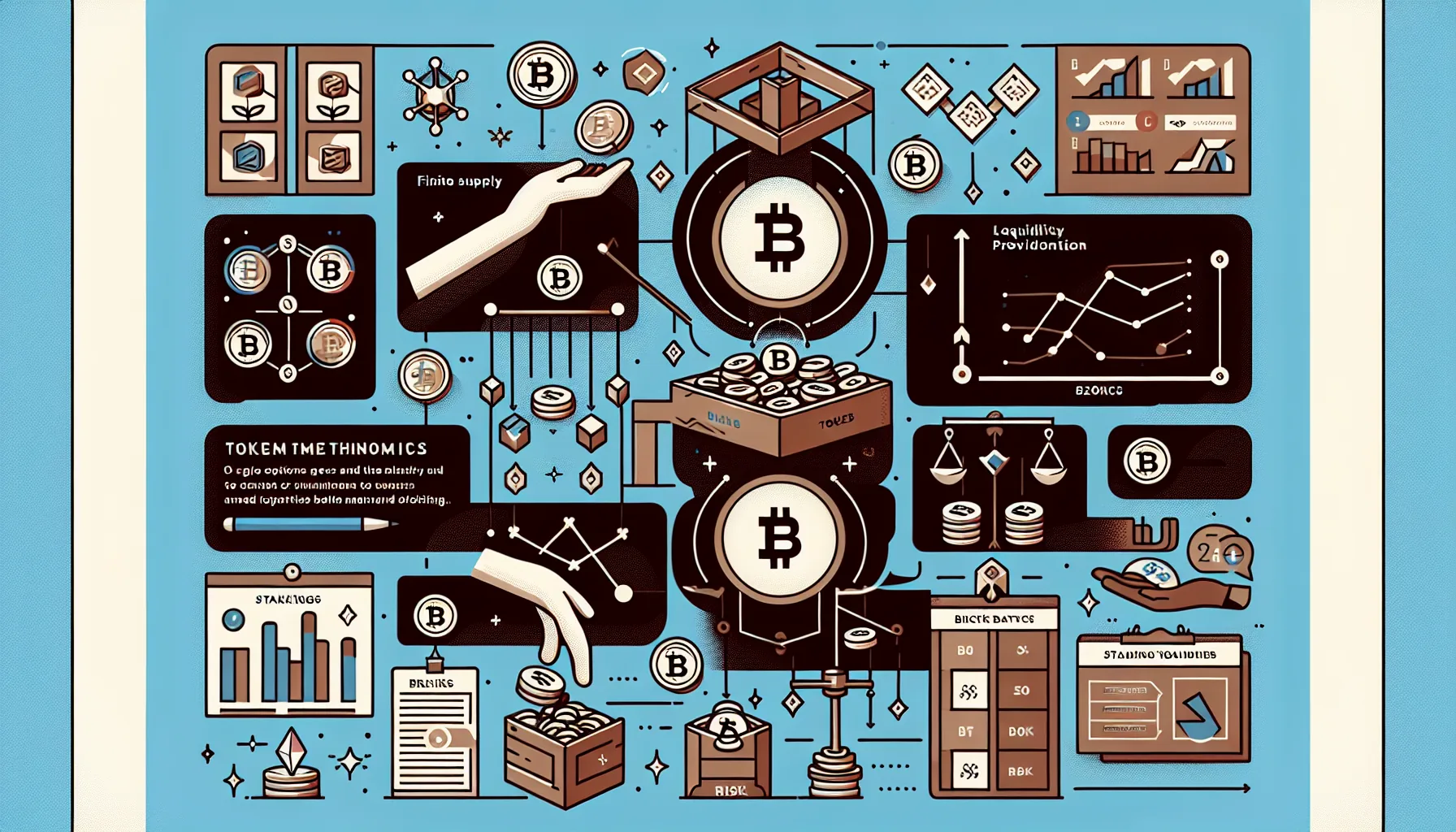
BZX Tokenomics
BZX Tokenomics: Supply, Distribution, and Utility
Fixed Supply and Emission Model
BZX operates with a predetermined maximum supply, ensuring that no additional tokens can be minted beyond this cap. This scarcity mechanism is designed to mitigate inflationary pressure. However, the emission model and vesting schedules for early contributors, team allocations, and ecosystem incentives play a significant role in circulating supply dynamics. Sudden unlocks or vested distributions can create market fluctuations and impact price stability.
Governance and Staking Mechanisms
BZX is structured for governance participation, allowing token holders to vote on protocol upgrades, fee structures, and other key decisions. The governance framework is intended to decentralize decision-making over time. However, concerns arise regarding voting power distribution, as early adopters and large investors with substantial holdings may exert disproportionate control. Participation incentives for smaller holders are critical in preventing governance centralization.
Staking mechanisms are integrated into the token design, with rewards allocated to participants who secure the ecosystem. These rewards are sourced from network fees, inflationary emissions (if applicable), or redistribution from penalties and liquidations. The balance between staking yields and long-term sustainability remains a key parameter in the protocol’s economic model.
Fee Model and Token Utility
The token’s primary utility within the ecosystem is tied to transaction fees, collateralization, and other operational costs. Depending on the protocol structure, users may need to hold BZX to participate in borrowing, lending, or other DeFi activities. Fee burns, buybacks, or redistribution models influence the token’s deflationary or redistributionary characteristics. If fees are too high, adoption may suffer, whereas overly generous incentives can lead to unsustainable emissions.
Liquidity and Market Dynamics
Liquidity provisioning plays a crucial role in the token’s usability. If liquidity is concentrated in specific venues or relies heavily on incentivized pools, there is a risk of capital flight when incentives expire. Thin liquidity can lead to high slippage, making large transactions impractical. Furthermore, token vesting schedules and unlock events can introduce unpredictability, as early holders may offload significant positions upon release.
Risks in Token Distribution
A significant portion of BZX’s supply allocation is tied to early investors, team members, or ecosystem development funds. If these allocations are mismanaged or poorly structured, dumping risks can emerge, negatively affecting long-term viability. Additionally, if a large share of supply remains off-chain or in inactive wallets, actual circulating supply dynamics may differ from perceived market availability.
BZX Governance
Governance of BZX: Decentralization, Voting Power, and Challenges
BZX governance operates through a decentralized model where token holders influence protocol decisions. Governance is executed via a token voting system, allowing participants to propose changes or adjust smart contract parameters such as fees, interest rates, and security mechanisms.
On-Chain Governance and DAO Structure
BZX relies on a decentralized autonomous organization (DAO) to manage protocol upgrades and policy changes. Token holders submit proposals, which are then subject to a voting period. If a proposal meets the required quorum and threshold, it is executed automatically via smart contracts. This governance model aims to create a trustless and transparent system, reducing reliance on centralized entities.
Voting Power and Token Influence
Voting power in BZX governance is directly proportional to token holdings, meaning large stakeholders exert significant influence over decisions. While this model aligns incentives, it has raised concerns about centralization risks. Smaller participants often struggle to impact governance outcomes unless they coordinate through delegation or governance coalitions.
Proposal Mechanisms and Community Participation
Governance proposals in BZX are categorized based on the type and scope of changes. Some require a simple majority, while systemic upgrades may demand a higher consensus threshold. Community participation remains critical, yet voter apathy can lead to governance stagnation, where only a small fraction of token holders shape decisions. Governance tooling, such as discussion forums and governance dashboards, plays a role in mitigating this issue by increasing transparency and engagement.
Risks and Governance Security
Smart contract vulnerabilities and governance exploits pose risks to BZX governance. Malicious proposals or flash loan attacks targeting governance mechanisms have been an issue in the broader DeFi space, impacting several protocols with similar setups. Governance security measures, including voting time delays, quorum requirements, and security audits, aim to minimize these risks. However, the effectiveness of these safeguards depends on active monitoring and rapid community response.
Governance Token Utility and Its Impact
The governance token's utility extends beyond voting, influencing staking mechanisms, fee-sharing models, and potential incentives for participation. However, governance token volatility can impact its effectiveness, as fluctuating value affects incentive structures. Additionally, governance token concentration among a few large holders can lead to governance centralization, contradicting the goal of a truly decentralized system.
Evolution and Governance Upgrades
DAO structures in DeFi often undergo adjustments to optimize participation and security. BZX governance has potential avenues for improvements, including quadratic voting to reduce centralization risks, delegation mechanisms for improving involvement, and modular governance frameworks for more adaptable decision-making. Governance remains an evolving element of the protocol, shaped by both technical innovations and community engagement.
Technical future of BZX
BZX Technical Developments and Roadmap
Protocol Upgrades and Smart Contract Enhancements
The BZX protocol continues to evolve with ongoing smart contract refinements aimed at improving security, efficiency, and decentralization. A primary focus is reducing known attack vectors and mitigating past vulnerabilities through audited contract adjustments. Enhancements to the liquidation mechanisms, oracle dependencies, and interest rate models are being prioritized to ensure stability and minimize systemic risks. Smart contracts are also being optimized for gas efficiency, particularly in high-frequency trading and lending scenarios.
Decentralization and Governance Changes
A major area of technical development centers on increasing the protocol’s decentralization. Efforts include transferring more governance functions to on-chain mechanisms, reducing developer intervention, and enhancing DAO-based control. However, achieving full decentralization remains a challenge due to the complexity of smart contract management and the necessity of timely security patches. Some governance decisions still require centralized oversight, which has led to debates within the community regarding autonomy versus security trade-offs.
Cross-Chain Expansion and Layer 2 Integrations
BZX is exploring interoperability solutions to expand beyond its current blockchain ecosystem. Research and development into cross-chain functionality via bridges and wrapped assets are underway, although security concerns related to bridge exploits remain a significant hurdle. Additionally, Layer 2 scaling solutions are being assessed to provide lower transaction costs and improve user experience. While integrating with established rollups and sidechains could boost adoption, fragmentation across chains may pose liquidity and arbitrage challenges.
Automation and Smart Contract Self-Sufficiency
Future iterations of BZX aim to increase automation in areas such as liquidation processing, yield distribution, and collateral management. Automating these mechanisms reduces reliance on external actors but introduces complexity in maintaining deterministic execution. Developers are working on ensuring that automation does not lead to unintended cascading failures or economic inefficiencies that could be exploited by adversarial entities.
Security Enhancements and Attack Mitigations
Given the historical challenges with security incidents, BZX continues to prioritize robust security measures. Audits and formal verifications are being expanded, though the effectiveness of these measures depends on the scope and depth of testing. Bug bounty programs have been proposed to incentivize external security research, but long-term success will depend on continuous stress testing against evolving DeFi attack vectors.
Infrastructure and Front-End Improvements
Improvements to the user interface and infrastructure are being developed to enhance accessibility and responsiveness. However, maintaining a decentralized front-end remains difficult due to censorship resistance concerns and the ongoing need for hosting resilience. Additionally, API optimizations for third-party integrations are being worked on to improve compatibility with DeFi aggregators and portfolio trackers.
Comparing BZX to it’s rivals
BZX vs. SPY: How the Crypto Asset Stacks Up Against the Legacy ETF
Structural Differences Between BZX and SPY
BZX operates as a decentralized crypto asset, while SPY is a traditional exchange-traded fund (ETF) tracking the S&P 500 index. SPY is backed by physical assets and regulated within the framework of U.S. securities laws, whereas BZX exists on a blockchain and interacts with smart contracts. This fundamental difference impacts accessibility, custody, and counterparty risk. BZX can be traded 24/7 without intermediaries, while SPY is limited to stock market hours and depends on authorized participants for liquidity.
Liquidity and Market Access
SPY is one of the most liquid ETFs, trading on centralized exchanges with deep institutional order books. It benefits from arbitrage mechanisms ensuring price stability relative to its underlying index. BZX, in contrast, relies on decentralized liquidity pools, where slippage and temporary liquidity shortages can impact execution quality. Heavy reliance on liquidity providers in the DeFi space means BZX may experience impermanent loss risks, while SPY’s liquidity structure is more stable.
Costs and Fees
A direct comparison of holding costs shows SPY charging an expense ratio, but with highly efficient price tracking. BZX generally avoids traditional fund fees but introduces variable costs linked to transaction fees, gas costs, and staking incentives. For high-frequency traders, blockchain fees could significantly impact profitability relative to SPY, which benefits from tighter spreads and lower trading costs on traditional exchanges.
Governance and Transparency
SPY operates within a centralized regulatory framework, adhering to SEC regulations, with decisions made by fund managers. BZX, as a crypto asset, may incorporate governance mechanisms allowing token holders to vote on protocol updates or asset allocations. This decentralized governance structure allows for greater flexibility but also introduces risks, including governance attacks and community disputes. Transparency is another key difference—BZX transactions are publicly verifiable on-chain, while SPY relies on periodic disclosures mandated by regulators.
Collateralization and Risk Exposure
SPY holds physical shares of S&P 500 companies, whereas BZX may be backed by on-chain reserves or algorithmic mechanisms. This introduces different risk profiles—SPY holders are exposed to equity market risk, while BZX may face additional risks related to smart contract vulnerabilities, protocol exploits, or fluctuations in collateral value. Unlike SPY, which benefits from investor protections and insurance mechanisms, BZX holders have fewer recourse options in the event of hacks or failures.
BZX vs. QQQ: How They Compare
BZX and QQQ serve different market segments, yet they both attract traders seeking exposure to broad-based asset performance. While QQQ represents a traditional equity-based ETF tracking the Nasdaq-100, BZX operates as a crypto-native asset with structural differences that impact liquidity, volatility, and underlying mechanics.
Market Exposure Differences
QQQ provides exposure to the Nasdaq-100, which consists of high-growth technology companies and large-cap stocks. This index is a benchmark for tech-heavy portfolios, offering diversification within the traditional financial sector. In contrast, BZX functions within the crypto ecosystem, meaning its valuation and price action are influenced by blockchain network activity, smart contract mechanisms, and overall crypto market sentiment rather than corporate earnings or macroeconomic trends.
Liquidity and Trading Efficiency
Among crypto assets, BZX aims to provide deep liquidity, but it does not match the trading volume and spread efficiency of QQQ. Since QQQ is one of the most actively traded ETFs in the world, it benefits from tight bid-ask spreads and minimal slippage, making high-frequency trading more viable. BZX, being part of a decentralized market structure, is subject to liquidity fragmentation across exchanges, potential reliance on on-chain liquidity pools, and variable transaction fees that can introduce inefficiencies absent in QQQ’s order book-driven trading environment.
Volatility Considerations
While QQQ can experience high volatility due to earnings reports, rate decisions, or macroeconomic events, it remains constrained by circuit breakers and institutional trading frameworks designed to mitigate extreme moves. BZX, by contrast, is entirely exposed to crypto market dynamics, including liquidation cascades, smart contract risks, and the absence of centralized controls to prevent sudden price shifts. This open-market structure can amplify price swings, presenting both opportunities and risks for traders accustomed to traditional asset behavior.
Asset Backing and Custody
QQQ holds shares in Nasdaq-listed corporations, backed by company equity and financial disclosures. Investors in QQQ own fractional portions of these firms, benefiting from dividends and corporate governance protections. In contrast, BZX's backing structure depends on its underlying crypto mechanisms, which may include algorithmic protocols, smart contract execution, or liquidity provider participation. The absence of traditional financial oversight means BZX holders must assess security risks, such as smart contract exploits and systemic vulnerabilities unique to decentralized assets.
Fee Structures and Costs
Traditional brokers often charge minimal fees for trading QQQ, especially within commission-free platforms. In contrast, interacting with BZX might involve network gas fees, potential slippage, and exchange-specific trading costs. These additional expenses can affect short-term trading strategies, particularly during periods of network congestion or on platforms with lower liquidity depth.
BZX vs. GLD: Crypto-Backed Exposure vs. Physical Gold Holdings
The comparison between BZX and GLD centers on the fundamental distinction between crypto-backed and physically-backed assets. GLD, as an ETF, directly tracks the price of physical gold, while BZX operates within a decentralized framework that lacks direct backing by any physical commodity. This creates several implications in terms of liquidity, custody, and risk management.
Custody and Counterparty Risk
GLD relies on traditional financial institutions to store and manage physical gold reserves. Investors in GLD must trust these custodians, along with the broader regulatory framework, to ensure that the gold holdings remain verifiably secure. While this centralized model provides regulatory oversight, it also introduces counterparty risk through reliance on financial intermediaries.
BZX, operating on decentralized rails, eliminates reliance on traditional custodians but introduces its own risks. Exposure to smart contract vulnerabilities, governance exploits, and issues related to decentralized exchange (DEX) liquidity must be considered when evaluating BZX’s risk profile against GLD’s centralized storage model.
Liquidity and Trading Accessibility
GLD benefits from high liquidity on traditional stock exchanges, making it easily accessible to institutional and retail investors. Market-making mechanisms ensure relatively tight spreads and deep order books during market hours.
BZX, in contrast, is tradable 24/7 on decentralized platforms, but liquidity can fluctuate depending on the availability of market participants. On-chain transaction fees and slippage may present additional trading considerations, particularly during periods of heightened network congestion or low market depth.
Inflation Hedge and Market Correlation
Gold has long been perceived as a store of value and an inflation hedge. GLD reflects this positioning, often reacting inversely to inflationary pressures and fiat currency devaluation. While BZX aims to offer an alternative store of value, its correlation with broader crypto market dynamics introduces volatility that may not align with traditional inflation-hedging characteristics.
Additionally, gold's historical acceptance as a reserve asset gives GLD systemic legitimacy that crypto assets like BZX have yet to achieve. Institutional adoption of crypto-based assets is growing, but regulatory uncertainty remains a potential headwind compared to the well-established market role of GLD.
Regulatory and Structural Considerations
GLD operates within a heavily regulated environment, subject to compliance controls and reporting requirements that ensure transparency. BZX, as a crypto asset, exists in a more fluid regulatory landscape, where jurisdictional differences and evolving enforcement actions could impact adoption and usage.
While GLD's regulatory clarity appeals to traditional investors, BZX's decentralized and permissionless nature provides utility not found in legacy financial products. However, this also means that security risks and smart contract vulnerabilities must be carefully assessed when considering exposure.
Primary criticisms of BZX
Primary Criticism of BZX
Security Vulnerabilities and Past Exploits
One of the most persistent criticisms of BZX revolves around its history of security vulnerabilities. Multiple incidents have exposed weaknesses in its smart contracts, leading to significant exploits. These attacks have not only resulted in financial losses but have also severely impacted trust in the platform’s security model. Despite various audits and security upgrades, skepticism remains about whether the protocol has fully addressed its historical weaknesses.
Governance Concerns and Centralization Risks
While BZX presents itself as a decentralized platform, concerns have been raised over the concentration of control within its governance structure. The decision-making process, token distribution, and protocol upgrades have sometimes been criticized for being overly controlled by a small group of participants. This raises questions about the integrity of the platform’s decentralization claims, particularly in cases where governance decisions impact critical security measures or economic incentives.
Liquidity and Market Stability Issues
Liquidity challenges have also been a recurring issue for BZX. The protocol has experienced periods of low liquidity, affecting user experience and the stability of lending and borrowing mechanisms. Reduced liquidity increases the likelihood of slippage, liquidation inefficiencies, and unbalanced market conditions. Furthermore, in times of extreme market stress, the protocol's ability to handle large liquidations and prevent cascading failures comes into question.
Regulatory and Compliance Risks
BZX operates within a rapidly evolving regulatory landscape, and this has raised concerns regarding its long-term viability. Previous enforcement actions and legal scrutiny related to DeFi lending and margin trading platforms have put protocols like BZX under increased pressure. The potential for regulatory intervention, ranging from compliance requirements to outright restrictions, remains a significant uncertainty that could impact the platform’s future usability and adoption.
User Experience and Complexity
The technical nature of BZX’s platform presents another point of criticism. While it offers sophisticated features, the overall user experience has been noted as less intuitive compared to competitors. The complexity of interacting with smart contracts, understanding borrowing and lending mechanics, and managing risks effectively creates a steep learning curve. For a protocol aiming to drive DeFi adoption, these barriers could limit broader engagement beyond highly technical users.
Reputation and Community Trust
Finally, the combination of past security issues, governance concerns, and regulatory uncertainty has affected community trust in BZX. While the platform continues to operate, its reputation within the DeFi ecosystem remains a point of debate. Trust is a crucial factor in decentralized finance, and overcoming skepticism remains one of the protocol’s biggest challenges.
Founders
Founding Team Behind bZx (BZRX)
The founding team of bZx (BZRX) played a crucial role in shaping its trajectory within the decentralized finance (DeFi) space. The project was spearheaded by Tom Bean and Kyle Kistner, who positioned bZx as a decentralized protocol focused on margin trading, lending, and borrowing.
Tom Bean – Technical Leadership and Smart Contract Development
Tom Bean served as the CEO and core developer, contributing significantly to the technical infrastructure of bZx. With a background in software engineering, he was responsible for the design and implementation of smart contracts that powered the protocol. His work ensured that bZx functioned in a non-custodial manner, emphasizing automation through Ethereum-based smart contracts.
However, despite his technical expertise, bZx faced multiple security breaches during its operation. Critics pointed to contract vulnerabilities and questioned whether the team's smart contract auditing process was thorough enough before deployment. Each security exploit raised concerns about whether leadership effectively balanced innovation with security in the DeFi space.
Kyle Kistner – Strategy and Community Engagement
Kyle Kistner, as a co-founder, focused on the strategic direction of bZx and its engagement with the broader DeFi community. His role involved shaping the project’s governance model, liaising with early adopters, and advocating for decentralized finance principles.
Kistner often communicated updates and changes to the bZx protocol, particularly after key security incidents that impacted user funds. While his transparency in addressing major issues was noted by the community, some users became skeptical of the team’s ability to ensure long-term security given the repeated setbacks.
Team Expansion and Governance Challenges
At its peak, bZx expanded beyond its original founders, onboarding developers, security researchers, and business strategists to strengthen the protocol. However, governance decisions often faced scrutiny, particularly regarding how the team handled exploit responses and fund recoveries. The decision-making process around compensation for exploited funds became a point of contention, with some users questioning whether bZx should remain under the direct control of its original founders or transition entirely to a decentralized autonomous organization (DAO).
While the founding team had a strong vision for decentralized trading and lending, their execution was challenged by persistent security threats and governance dilemmas. These factors significantly shaped the reputation and trajectory of bZx in the DeFi space.
Authors comments
This document was made by www.BestDapps.com
Sources
- https://bzx.network/
- https://bzx.network/whitepaper.pdf
- https://bzx.network/docs/
- https://github.com/bZxNetwork
- https://docs.bzx.network/
- https://etherscan.io/token/0x56d811088235F11C8920698a204A5010a788f4b3
- https://defillama.com/protocol/bzx
- https://bzx.network/security/
- https://bzx.network/governance/
- https://bzx.network/audits/
- https://twitter.com/bzxHQ
- https://medium.com/bzx-network
- https://bzx.network/roadmap/
- https://bzx.network/team/
- https://forum.bzx.network/
- https://bzx.network/faq/
- https://bzx.network/tokenomics/
- https://bzx.network/liquidity/
- https://bzx.network/staking/
- https://bzx.network/integrations/


