History of BURST
The History of BURST: A Journey Through Innovation and Challenges
BURST, a blockchain-based cryptocurrency, emerged in 2014 with a vision set apart from the energy-intensive proof-of-work models dominating the crypto space at the time. Its creation is attributed to an anonymous developer who introduced it on the Bitcointalk forum. BURST’s claim to fame was its pioneering implementation of the novel Proof-of-Capacity (PoC) consensus mechanism, a protocol designed to reduce the environmental impact of mining by leveraging unused hard drive space.
The early days of BURST were marked by rapid innovation. PoC mining enabled a decentralized network where participants could contribute by plotting data on hard drives—eschewing energy-hungry GPUs or ASICs. This approach generated early attention among tech-savvy users looking for a more sustainable alternative to Bitcoin or Ethereum.
A major milestone for BURST occurred in 2015, when it became the first blockchain to successfully execute a smart contract. This feature, termed Automated Transactions (ATs), predated Ethereum’s smart contract functionality and highlighted what BURST could achieve. Use cases of ATs included decentralized lotteries and trustless escrow services, demonstrating proof-of-concept applications for programmable money. Despite this innovation, adoption remained limited, overshadowed by larger, more visible ecosystems.
During this time, the community-led nature of BURST also shaped its trajectory. With no initial coin offering (ICO) or centralized foundation, development depended heavily on grassroots contributions and volunteers. Over time, inconsistent development cycles hindered progress as contributors came and went. Many in the crypto industry praised the decentralization ethos but criticized the lack of structured governance, which occasionally resulted in periods of stagnation.
In 2017, the project faced major challenges, including wallet vulnerabilities and a lack of active development. These issues spurred a community-driven fork, and the creation of the Burst Alliance gave the ecosystem a second wind. New developers refactored code, improved security, and expanded documentation. Despite these efforts, BURST struggled to recapture its early momentum and compete with newer, more robust platforms.
BURST’s history stands as a testament to its innovative beginnings, resilient community, and battles with underfunded development. While the technology behind its PoC mechanism and early smart contract capabilities showcases significant achievements, the lack of sustained growth and development continuity has posed lasting hurdles.
How BURST Works
How Burstcoin Works: Proof of Capacity and Eco-Friendly Mining
Burstcoin (BURST) stands out in the blockchain ecosystem due to its innovative use of a unique consensus mechanism called Proof of Capacity (PoC). Unlike the energy-intensive Proof of Work (PoW) or the capital-heavy Proof of Stake (PoS), Burstcoin employs disk space as the key resource for securing the network and validating transactions. This distinct approach offers advantages, but it also comes with its own set of complications and trade-offs.
Proof of Capacity Explained
At the core of Burst’s operation is the precomputation and storage of cryptographic solutions, known as “plots,” on a miner’s hard drive. During the mining process, rather than continuously performing complex computations, miners scan through their pre-stored plots to identify solutions for validating the next block. The larger the storage capacity allocated, the higher the probability of successfully mining a block.
This process drastically reduces the energy consumption typically associated with cryptocurrency mining. While PoW requires high-performance GPUs or ASICs operating non-stop, PoC leverages already-available disk storage, which uses a fraction of the power. Burstcoin claims to support a decentralized and more eco-friendly mining infrastructure, as anyone with spare storage space can participate.
Key Components of Burstcoin’s Infrastructure
Burstcoin operates on its independent blockchain, where transactions are validated and recorded. Smart contracts—offered natively on the chain via Automated Transactions (AT)—enable programmable logic execution, although their functionality is considered somewhat limited compared to ecosystems like Ethereum. That being said, Burst paved the way for innovations such as Tangle-free Direct Acyclic Graph (TDAG) integration in decentralized platforms.
Transactions on Burst are secured using standard cryptographic algorithms, while additional features, such as multi-sig capabilities, opt-in anonymity (via privacy features like Dymaxion), and decentralized asset exchanges, complement the system’s functionality. Despite these features, the blockchain’s scalability has often been criticized. The network has occasionally struggled to efficiently process high transaction volumes, raising questions about its long-term viability with increasing adoption.
Challenges with Storage-Based Mining
While Proof of Capacity minimizes energy usage, it isn’t without drawbacks. Mining efficiency heavily favors those with larger disk capacities, creating a potential centralization risk as wealthier participants dominate the network. Furthermore, the implementation of plots is technically complex, and some critics note inefficiencies in plot formatting and mining software. Over time, wasted and unused plots could lead to large-scale inefficiencies in storage utilization.
The use of PoC could also face scrutiny as hard drive manufacturing itself consumes significant industrial resources. While Burstcoin positions itself as eco-friendly, critics argue that the reliance on physical hardware indirectly perpetuates resource dependency. Rising costs and shortages in storage devices might further affect PoC’s sustainability.
Dual Functionality and Trade-Offs
Burstcoin’s architecture supports dual functionality as both a cryptocurrency and a platform for decentralized services. However, the focus on general-purpose utility may dilute its performance, limiting its competitive relevance in niche areas. Some users report difficulties in balancing the energy savings provided by PoC with the computational overhead and technical expertise required to manage and maintain the infrastructure correctly.
Use Cases
Decentralized Storage and Beyond: The Use Cases of BURST
BURST stands out in the crypto ecosystem due to its unique approach to enabling use cases through its Proof-of-Capacity (PoC) consensus mechanism. Unlike the energy-intensive Proof-of-Work (PoW) or the staking requirements of Proof-of-Stake (PoS), BURST leverages unused hard drive space to secure the network and validate transactions. This gives rise to several noteworthy and practical applications, though not without their challenges.
Decentralized File Storage
BURST's infrastructure supports decentralized solutions for file storage. By utilizing PoC, users can allocate storage space for blockchain operations, including creating decentralized data storage applications. This can reduce reliance on centralized cloud storage providers and provide censorship-resistant solutions. However, scalability remains a concern. With BURST storing data across a global, decentralized network, data retrieval speeds can lag compared to traditional solutions, potentially limiting its adoption for time-sensitive use cases.
Smart Contracts Integration
BURST incorporates smart contracts into its blockchain, albeit in a more simplified manner compared to platforms like Ethereum. These "Automated Transactions" enable programmable conditions for payments and services. Examples include escrow contracts, lottery systems, and decentralized crowdfunding campaigns. While innovative, BURST's smart contract functionality has been criticized for its limited feature set. Its scripting language lacks the flexibility of more robust platforms, which can restrict complex dApp development.
Tokenization via Assets Platform
BURST allows the creation and trading of custom tokens through its built-in Assets Platform. Users can tokenize real-world assets, raise funds, and manage dividends while operating within the BURST ecosystem. This feature caters to niche markets and provides unique opportunities for microtransactions. That said, adoption levels for the Assets Platform remain relatively low, partially due to competition from more widely recognized tokenization platforms that offer greater interoperability with other blockchains.
Energy-Efficient Mining and Green Blockchain Initiatives
A remarkable use case of BURST lies in its environmentally friendly mining model. By utilizing hard drive space rather than power-hungry computational processes, BURST helps reduce the carbon footprint associated with traditional cryptocurrency mining. However, "green mining" introduces its own vulnerabilities, such as reduced security against certain attack vectors (e.g., storage device tampering) and challenges in incentivizing participation within such a niche operational model.
Payment Systems and Low-Cost Transactions
BURST facilitates fast, low-cost peer-to-peer transactions, making it a viable option for remittances and micropayments. Transaction fees are kept relatively low due to its efficient PoC mechanism. Still, the limited mainstream adoption of BURST as a payment method raises questions about liquidity and real-world usability, especially when stacked against larger, more established blockchain networks focused on financial applications.
BURST Tokenomics
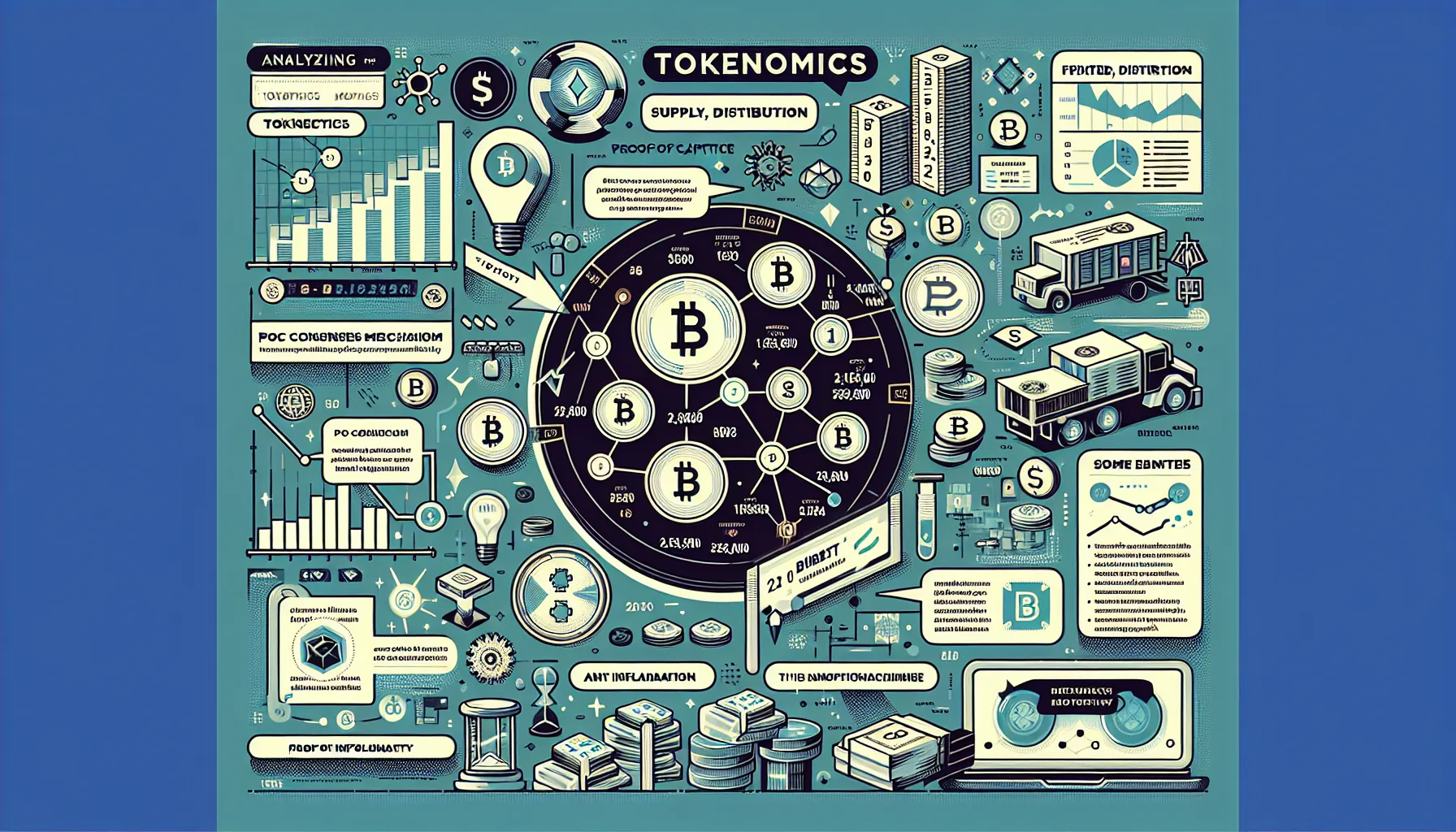
Analyzing Burst Tokenomics: Supply, Distribution, and Mechanisms
Burst (BURST) operates on robust tokenomics principles designed to leverage its blockchain's unique Proof of Capacity (PoC) consensus mechanism. However, its economic model has nuances that warrant closer inspection for those evaluating its utility and long-term viability.
Fixed Supply Model and Emission Rate
BURST has a hard cap of 2,158,812,800 tokens, established at its inception. Unlike cryptocurrencies with infinite inflationary models, this fixed supply ensures scarcity over time. BURST implements a deflationary emission model, where block rewards diminish at a geometric rate until an eventual equilibrium is reached, approximately 100 years post-launch. This gradual reduction reflects the pseudo-halving system, which impacts mining incentives and the long-term velocity of token distribution. While this hard cap aligns BURST with anti-inflationary ideals, critics argue that the decline in block rewards may ultimately reduce miner participation and network security.
Mining Dynamics and Initial Distribution
BURST’s native Proof of Capacity mining mechanism plays a pivotal role in its token distribution. BURST's blockchain rewards miners based on storage capacity rather than computational power, theoretically addressing the inefficiencies of energy-intensive Proof of Work (PoW) systems. However, this raises questions about fair distribution, as early adopters with access to substantial storage devices were able to accumulate BURST at lower cost, potentially centralizing holdings.
An additional issue lies in accessibility. While mining via PoC may appear more democratized than PoW on paper, those with larger storage capacity still maintain a competitive advantage, a dynamic not dissimilar to traditional mining pools in other ecosystems.
Transaction Fees and Utility
BURST tokenomics incorporate transaction fees as a core network feature. These fees are integrated into the reward system, incentivizing miners while limiting on-chain spam. However, one challenge for BURST lies in its relatively low transaction volumes when compared to high-throughput blockchains. Lower transactional usage could reduce miner fee incentives and impact the economic sustainability of the ecosystem.
Token Distribution Concerns
Over time, concerns about BURST’s token distribution and liquidity have surfaced. Significant holdings concentrated in early adopter wallets may influence market dynamics, raising the specter of whale manipulation during trading activity. Furthermore, as a less prominent crypto asset, BURST may face liquidity challenges, leading to price inefficiencies and reduced adoption by DeFi projects or exchanges where broader token utility may be required.
Ultimately, BURST’s tokenomics showcase innovative design but are not without substantial potential risks tied to miner incentives, liquidity distribution, and overall adoption.
BURST Governance
BURST Governance: Decentralization and Challenges
BURST operates on a unique governance structure that aligns with its commitment to decentralization. As a blockchain network built on the Proof of Capacity (PoC) consensus mechanism, BURST’s governance model reflects its grassroots community origin. Unlike some crypto projects that rely heavily on centralized decision-making or a small group of influential stakeholders, BURST employs a community-driven approach. However, like any decentralized system, it faces both opportunities and limitations.
Community Decision-Making Mechanisms
BURST’s governance is inherently tied to its open-source development ethos. Key decisions regarding updates, protocol improvements, or feature additions are made through informal consensus within the community. Developers, technical experts, and users frequently engage in discussion through public communication channels, such as forums or social media. While this inclusivity ensures that no single entity holds overarching control, the lack of a formalized voting mechanism can lead to decision-making bottlenecks.
Governance by Miners and Node Operators
Since BURST utilizes Proof of Capacity, miners and node operators play a significant role in its network governance. The degree of influence largely depends on computational storage power, as miners with higher storage capacities contribute more to the network's security and transaction processing. This setup fosters decentralization since storage-based mining avoids the energy centralization concerns seen in Proof of Work systems. However, critics argue that large-scale storage providers still have the potential to dominate the network, introducing governance risks similar to mining centralization in traditional blockchains.
Lack of Formal Governance Tokens
Unlike some blockchains that issue governance tokens to enable structured voting on proposals, BURST does not currently operate with a native governance token framework. While this avoids potential issues such as token hoarding or speculative manipulation, it can also make it harder to implement urgent protocol changes. Decisions become reliant on community goodwill and the ability of contributors to remain aligned on long-term goals, which may be challenging as the ecosystem evolves.
Developer Influence
Although BURST aims for decentralization, the core development team naturally holds a certain degree of influence, especially when implementing technical improvements. The challenge lies in maintaining transparency while avoiding over-reliance on developers. Historically, disputes about the direction of protocol upgrades have caused fragmentation in blockchain communities, and BURST’s decentralized governance must continually navigate these risks.
External Participation Constraints
While BURST thrives on a dedicated base of contributors, its niche status can limit broader participation from institutional players or large developers. Unlike blockchains with ample funding or structured incentives, BURST relies heavily on grassroots engagement. This could hinder its ability to rapidly adapt to changing market needs or integrate complex features.
Technical future of BURST
Burstcoin's Technical Developments and Roadmap: Advancing Eco-Friendly Innovation
Burstcoin (BURST) distinguishes itself in the blockchain space with its unique Proof-of-Capacity (PoC) consensus mechanism, aimed at revolutionizing energy efficiency. The platform has been undergoing continuous development to fortify its technical underpinnings and integrate features that enhance scalability, privacy, and user accessibility. Below, we examine its current developments and expected future advancements based on the existing roadmap.
Current Technical Developments
-
Dynamic Plot File Optimization: Burstcoin’s storage-based PoC relies on precomputed “plot files” stored on hard drives for mining. A key technical enhancement has centered on optimizing plot generation, reducing the computational burden on miners. This adjustment has lowered entry barriers for new participants while simultaneously fostering decentralized adoption across low-energy hardware.
-
Smart Contracts and Automated Transactions (AT): While Burstcoin’s smart contract implementation predates that of Ethereum, there has been an increased focus on upgrading its Automated Transaction (AT) framework. Developers are working on refining AT reliability for use cases like on-chain crowdfunding and decentralized financial instruments. Enhancing usability and auditability remains a priority to compete with more modern blockchain ecosystems.
-
Network Layer Upgrades: A crucial area of development has been the repair of known bottlenecks in networking layers. Peer-to-peer connectivity issues and occasional performance lags represent ongoing challenges. Recent proposals aim to implement better block propagation algorithms to reduce delays, improve throughput, and minimize fork risks.
-
Mobile Wallet & Browser Extensions: Expanding access to Burst’s functionality is an important goal. The ongoing development of lightweight mobile wallets with integrated PoC mining capabilities is a noteworthy step toward improving user experience. There’s, however, a lack of widespread adoption of these tools amidst stiff competition from more streamlined multi-asset solutions.
Future Development Roadmap
-
Cross-Chain Interoperability: Interoperability has become a focal area in Burstcoin's roadmap. Establishing compatibility with Ethereum and other high-utilization networks via atomic swaps or bridges is under discussion. Technically, one primary hurdle lies in reconciling the inherently different consensus mechanisms between Proof-of-Capacity chains and Proof-of-Stake/Proof-of-Work-based platforms.
-
PoC 2.0 Enhancements: Upgrades to the PoC algorithm, dubbed “PoC 2.0,” aim to further reduce mining storage redundancy while sustaining decentralized security. This could involve overhauling the plotting format and instituting intelligent measures to prevent adversarial attacks, such as grinding for hash advantages.
-
Energy Efficiency Metrics: While Burstcoin markets itself as energy-efficient, the high energy demands during the initial plotting phase remain a critique. Developers are exploring innovations to make plotting a continuous and less resource-intensive process. However, trade-offs could arise related to hash quality and mining fairness.
-
Sustainability Concerns in Network Incentives: Long-term challenges include maintaining miner incentives as block rewards diminish. A proposed solution is a focus on transaction fee enhancements through increased network activity. Yet, a robust solution to balance demand with network security remains in development.
The technical trajectory of Burstcoin underscores both its innovative approach and inherent limitations—particularly when pitted against newer platforms with more robust ecosystems.
Comparing BURST to it’s rivals
Comparing BURST to XCH: A Deeper Look at Proof of Space and Mechanisms
When examining BURST alongside its rival XCH on a technical level, the focus narrows to their implementation of Proof of Space (PoS) and the unique approaches both take to address environmental sustainability, decentralization, and practicality within the blockchain space.
Consensus Mechanism Differences
Both BURST and XCH use Proof of Space at their core, but the execution diverges in ways that affect usability and adoption. BURST relies on its proprietary PoC+ (Proof of Capacity Plus) mechanism, which integrates Proof of Capacity with additional layers of validation through Proof of Stake to reinforce the network’s security and reduce vulnerabilities. By contrast, XCH employs a distinct Proof of Space and Time (PoST), which introduces an extra entropy variable, “Time,” to reduce the potential for attacks and increase the reliability of farming rewards. While both approaches aim to leverage hard drive capacity over energy-heavy Proof of Work (PoW), XCH's added reliance on time synchronization adds complexity and hardware requirements for operators, which can create a less user-friendly experience. BURST, on the other hand, maintains a more minimalist hardware load, appealing to users with lower technical overhead needs.
Storage Utilization and Cost Efficiency
A major factor in comparing BURST and XCH is the efficiency of their storage utilization. BURST has long been lauded for its ability to function on nearly any hard drive size, thanks to its optimized plotting and minimal overhead. This approach has democratized mining and farming, encouraging small-scale participants who might otherwise be priced out of more resource-intensive systems. XCH, while also lowering entry barriers through its space-centric farming model, imposes higher initial plotting demands, requiring SSDs for optimal performance during the setup process. This increases the cost overhead for new participants, ironically making it less accessible for genuinely eco-conscious or budget-constrained users despite the network’s objectives. BURST’s system is notably leaner, both in plotting and maintenance phases, leading to a more straightforward user experience.
Network Centralization Concerns
In terms of decentralization, BURST benefits from a long-standing, grass-roots community and broad geographical node distribution — attributes that help resist centralization pressure. In contrast, XCH's funding structure and development are tied to a for-profit entity (Chia Network Inc.), creating lingering questions about governance and centralization risks. This dynamic has fostered skepticism among some in the crypto community, particularly those who prioritize open-source ideals and decentralized leadership.
BURST’s edge in ease of use and cost-effectiveness contrasts sharply with XCH’s ambition to pioneer through complexity, frequently making the choice between the two contingent on user goals and risk tolerance.
Comparing BURST to STORJ: Key Differentiators in Decentralized Storage
When evaluating BURST against STORJ, both assets cater to decentralized storage use cases, but their unique approaches highlight clear divisions in technology, audience, and implementation. While both aim to disrupt centralized storage paradigms, the specifics of their ecosystems and infrastructure create distinct trade-offs for users and developers.
Storage Model and Ecosystem
BURST leverages its foundational proof-of-capacity (PoC) protocol, which enables storage mining as the core mechanism for chain security and utility. This means that unused hard drive space is repurposed for both block validation and decentralized service provisioning, creating an overlap between blockchain operation and storage incentives. However, its lack of a fully streamlined storage layer dedicated exclusively to large-scale enterprise or consumer data hosting may limit its adoption as a pure decentralized storage solution.
STORJ, on the other hand, is laser-focused on providing cloud-like decentralized storage services through its globally distributed network. It does not rely on blockchain consensus for securing the network but focuses on facilitating peer-to-peer storage contracts. Users are connected via the STORJ ecosystem to independent node operators providing bandwidth and storage capacity. This specialization in pure decentralized storage services positions STORJ as a competitor to Web2 systems like AWS S3 or Google Cloud rather than as a generalized blockchain like BURST.
Efficiency Trade-Offs
BURST's PoC mechanism is highly energy-efficient compared to traditional proof-of-work (PoW) systems, but its storage mining approach necessitates pre-plotting and hard disk usage. Over time, concerns regarding file durability, write-amplification impact on drives, and potential fragmentation of plotted disk space may create inefficiencies. BURST miners often face challenges scaling their infrastructure due to the continuously growing blockchain storage and plotting requirements.
STORJ sidesteps some of these issues by focusing wholly on file hosting and retrieval. Still, it does introduce complexities linked to data redundancy and availability. While STORJ’s architecture provides user-friendly bridges for developers through features like erasure coding and encryption, the heavy reliance on voluntary node operators sometimes creates uncertainty regarding uptime and the stability of node participation.
Token Incentives and Participation
STORJ uses a pre-mined token structure, compensating storage providers based on bandwidth and capacity utilization. BURST, in contrast, has an emission-dependent PoC model. This divergence in tokenomics reveals a significant difference in how incentives align within their respective ecosystems. BURST participants are incentivized to contribute to mining and chain governance, while STORJ’s compensation is directly tied to storage service delivery.
Both assets compete in the decentralized storage space, yet STORJ’s commercial focus and streamlined interface come at the cost of dependency on off-chain orchestration, an area where BURST’s blockchain-centric model offers a different type of robustness. Which system thrives often depends on user requirements around storage precision versus holistic blockchain integration.
How Does BURST Compare to Siacoin (SC) in the Decentralized Storage Market?
When comparing BURST to Siacoin (SC), it's essential to focus on the distinct methodologies both projects use to achieve decentralized storage and the broader implications for their ecosystems. While both projects operate in the distributed ledger space, they diverge significantly in technology application, community priorities, and scalability.
Storage Mechanisms: PoC vs. File Contracts
BURST utilizes Proof-of-Capacity (PoC), which allows users to mine the cryptocurrency using pre-allocated hard drive space. This eco-friendly alternative to Proof-of-Work (PoW) inherently ties BURST’s infrastructure to storage capabilities, but the network's primary goal isn’t explicitly decentralized file storage. Instead, its storage engagement is secondary to its mining system, which may dilute its role as a dedicated storage platform.
In contrast, Siacoin is singularly focused on decentralized file storage, leveraging smart contracts called "file contracts." These mechanisms allow users to rent excess storage on the network, where payment is facilitated via SC tokens. BURST’s lack of comparable storage-only smart contracts places it at a disadvantage for users seeking specialized decentralized storage arrangements.
Centralization Concerns
One notable distinction is Siacoin’s reliance on Sia’s parent company, Skynet Labs, for protocol governance and development. While this creates a streamlined approach to iterative improvements, it can raise centralization concerns among purists in the decentralized finance (DeFi) and crypto communities. BURST, operating more as a community-driven project, offers a decentralized ecosystem where development isn't reliant on a single entity. This difference may appeal to users wary of corporate overreach but simultaneously places additional strain on BURST's ability to match pace with specialized advancements in storage technology.
Scalability and Barriers to Adoption
On scalability, Siacoin offers a more mature infrastructure for storage-intensive applications. SC integrates features like redundancy, encryption, and erasure coding, optimizing file resilience and security. BURST, while functional for use cases that leverage distributed space, does not offer similar built-in tools for storage reliability, which may limit its broader appeal in enterprise or developer-heavy contexts.
Moreover, BURST’s focus on mining through hard drives creates an entry point for broader participation in the network. However, its dual-purpose use case (mining and storage) introduces an identity challenge—it may lack the specialization required to compete with Siacoin’s clear, singular mission as a decentralized storage provider.
Token Economics
Finally, a distinctive difference lies in their token economics. SC's ecosystem requires users to purchase Siacoin for renting storage or uploading files. This tight integration between the token and its application strengthens SC’s utility. BURST’s PoC model doesn't impose a similar direct-use requirement, making its ecosystem more flexible but arguably less purpose-driven from a storage perspective.
In summary, BURST offers significant decentralization and participation incentives through its PoC framework but remains fundamentally different from Siacoin in its depth and focus on decentralized storage technologies.
Primary criticisms of BURST
Primary Criticism of BURST: Evaluating Its Challenges and Limitations
Network Scalability Concerns
One of the most cited criticisms of BURST revolves around its scalability limitations. While BURST’s use of the Proof of Capacity (PoC) consensus mechanism is touted as an environmentally friendly alternative to Proof of Work (PoW), its ability to handle a high throughput of transactions is still under scrutiny. The block time of roughly four minutes, combined with a block size limit of 1MB, creates a bottleneck during periods of high network activity. For users relying on the network for fast and efficient transactions, these limitations can result in delays and increased fees as the blockchain becomes congested.
Dependency on Legacy Codebase
The BURST blockchain has faced criticism for relying heavily on its original and somewhat outdated codebase. While developers within the community have made strides to modernize, patch vulnerabilities, and introduce upgrades, the inherited technical debt has been a persistent stumbling block. Critics argue that this reliance on older architecture makes BURST less competitive compared to newer blockchains built from the ground up with modern tools and security considerations. Additionally, the older code structure can slow down development cycles for introducing new functionalities or implementing optimizations.
Limited Ecosystem Development
Compared to blockchains with robust ecosystems supporting DeFi, NFTs, and cross-chain compatibility, BURST’s ecosystem appears underdeveloped. While its focus on storage-based consensus is innovative, critics point out that this specialization narrows its appeal and limits practical use cases beyond mining. Moreover, efforts to attract third-party developers to build on the BURST network have been less successful when compared to platforms like Ethereum or Solana. This lack of a thriving application layer calls into question the network’s long-term viability and competitiveness in a rapidly evolving crypto landscape.
Centralized Mining Risks
Despite being promoted as a decentralized blockchain, there are concerns about mining centralization within the BURST network. Some claim that large mining pools dominate the ecosystem, reducing decentralization and potentially exposing the network to risks like a 51% attack. These claims are compounded by the fact that participating in BURST mining often requires substantial initial storage capacity, which can deter smaller, independent miners from securing the network.
Governance and Community Fragmentation
Finally, criticisms have been aimed at the BURST community itself. There have been reports of fragmented governance, where overlapping or conflicting visions among key stakeholders have led to challenges in prioritizing and executing updates. This perceived lack of unified direction has raised questions about the project's ability to drive meaningful growth and adapt to evolving market demands. For a blockchain like BURST that depends heavily on community-driven development, such fragmentation could hinder progress over time.
Founders
The Founding Team Behind BURST: Pioneers of Eco-Friendly Blockchain Solutions
BURST, often recognized for its unique implementation of Proof of Capacity (PoC), owes much of its foundation to a group of anonymous developers who initially launched the project in 2014. The origins of BURST are uniquely tied to its focus on sustainability, as the founding team sought to address the energy-intensive nature of traditional Proof of Work (PoW) protocols. However, the anonymity of the original developers has been a double-edged sword for the project, catalyzing both innovation and skepticism within the crypto community.
The early development of BURST is largely attributed to a pseudonymous figure known as "Burstcoin." While credited with bringing the project to life on the BitcoinTalk forum, this individual or team of developers disappeared shortly after BURST’s release. This lack of ongoing participation by the original creators left a void in leadership, forcing the nascent community to rally independently around the project’s core principles: decentralization and energy efficiency.
Post-launch, the BURST ecosystem has relied on volunteers and an ever-evolving network of contributors. While decentralization aligns with the crypto ethos, it has occasionally led to coordination challenges, particularly during phases requiring major technological upgrades or marketing efforts. The loosely defined leadership structure has also raised concerns within the investor community, especially regarding long-term strategy and accountability.
In 2017, a turning point occurred when an informal development initiative known as the “Burst Alliance” emerged. Unlike the anonymous originators, these developers and community organizers aimed to drive transparency and revitalization within the BURST ecosystem. The alliance successfully launched the "Burst Dymaxion" whitepaper, outlining a scalable second-layer solution, but the group's loosely knit nature perpetuated a sense of fragmentation.
Critics of BURST often point to the decentralization of governance as a stumbling block. The lack of a formal hierarchy, while valuable in preserving autonomy, has created inconsistencies in project communication and roadmap execution. Conversely, supporters argue that this distributed approach reinforces BURST’s core identity, ensuring no single entity wields undue influence.
The evolution of the BURST founding team reveals a decentralized experiment with both promise and persistent challenges. While their innovative PoC protocol cemented BURST’s reputation as a sustainability pioneer, the absence of an enduring original leadership team remains a source of ongoing debate within the community.
Authors comments
This document was made by www.BestDapps.com
Sources
- https://www.burst-coin.org/
- https://burstwiki.org/wiki/Main_Page
- https://bitcointalk.org/index.php?topic=1541317.0
- https://burstecosystem.com/
- https://github.com/Burst-App-Team/burstcoin
- https://github.com/burst-apps-team
- https://ciyam.org/burst-gen
- https://coinmarketcap.com/currencies/burst/
- https://explorer.burstcoin.network/
- https://publicburstnode.com/
- https://burst-alliance.org/
- http://burstneon.com/
- https://burst.cryptoguru.org/
- https://dymaxion.burst.cryptoguru.org/
- https://www.reddit.com/r/burstcoin/
- http://forums.burst-team.us/
- https://medium.com/burstcoin
- https://burstforum.net/
- https://twitter.com/burstcoin_dev
- https://burstcoin.community/