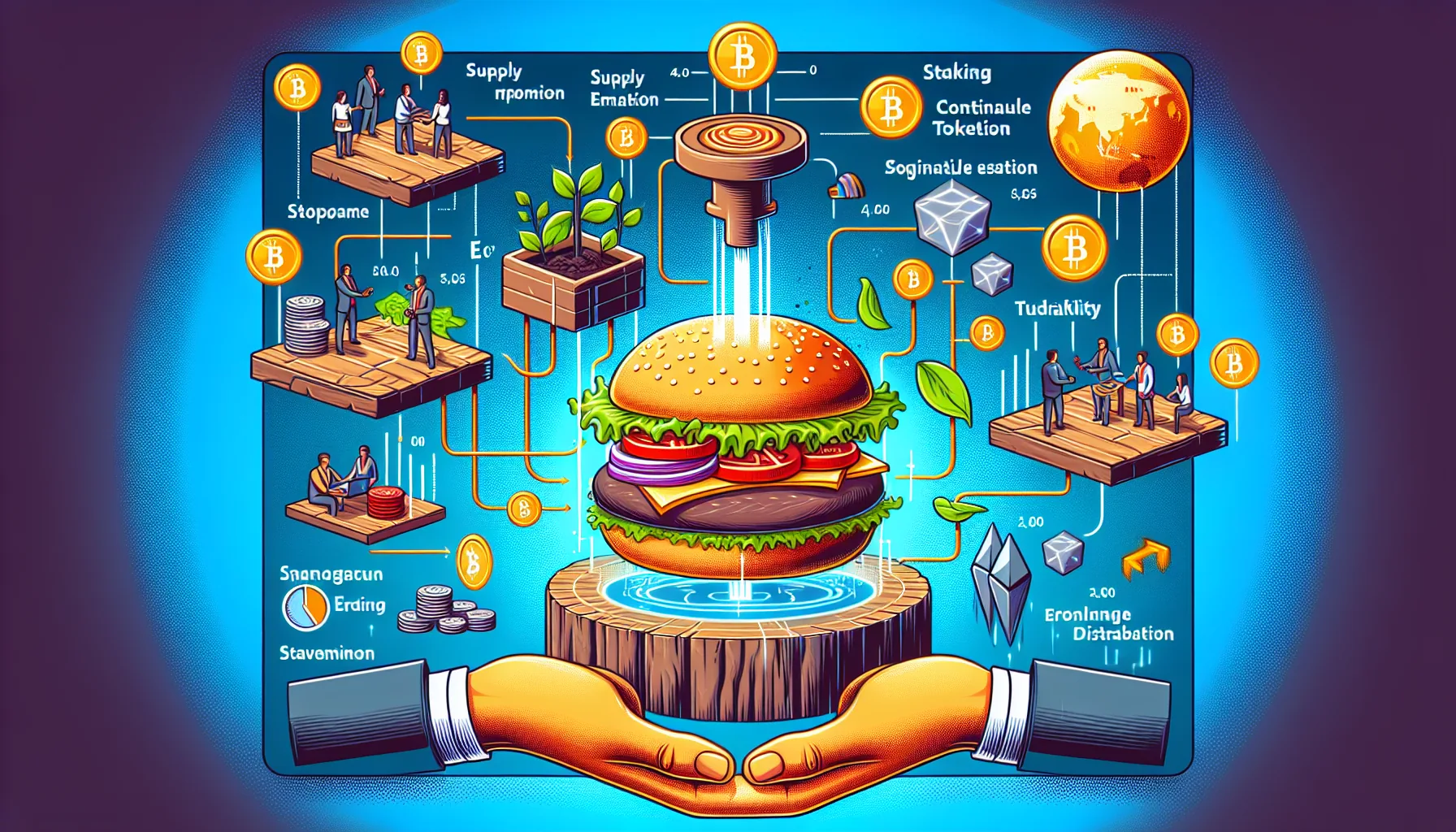
History of BURGER
The History of BURGER: Tracing the Origins of BurgerSwap and Its Crypto Evolution
BURGER, the native token of BurgerSwap, emerged during the evolution of decentralized finance (DeFi) as an experiment in reimagining automated market makers (AMMs). Launched initially on Binance Smart Chain (BSC), BurgerSwap was created to address some of the limitations of first-generation AMMs like Uniswap. By incorporating a democratic and community-driven approach to governance, the project sought to differentiate itself in the crowded DeFi space. However, its history is layered with innovation, challenges, and controversies.
BurgerSwap made its debut with the intention of combining AMM functionalities with improved user governance. Unlike AMMs such as Uniswap, which operated on Ethereum, BurgerSwap leveraged BSC’s lower transaction fees and faster speeds to cater to retail investors deterred by Ethereum’s soaring gas prices. A defining feature in its initial release was the governance voting requirement, where users were encouraged to stake BURGER tokens to participate in decisions regarding the platform’s fee structures and protocol parameters. This democratic approach aligned well with the ethos of DeFi, but over time, the reliance on active participation posed challenges as voter apathy became apparent in certain critical moments.
The BURGER token entered the DeFi ecosystem with relatively simple tokenomics but later faced scrutiny for its inflationary model. The protocol rewarded liquidity providers and voters with BURGER tokens, a design intended to promote user activity and bootstrap the system. However, this incentive structure led to concerns about unsustainable token emissions and dilution of existing token holders’ value. Compounding these concerns was BurgerSwap’s inability to maintain liquidity incentives compelling enough to retain users when newer, more complex DeFi protocols emerged.
Its history also includes a significant security incident. In May 2021, BurgerSwap was targeted in a flash loan attack, resulting in the loss of millions in assets. This exploit exploited the protocol's vulnerability to synthetic price manipulation. While the attack underscored the risks inherent to DeFi projects operating with minimal oversight, it also raised questions about the team’s commitment to ensuring robust security audits and contract testing. The aftermath saw a sharp decline in user confidence, even as the team worked on patches and improvements.
BURGER’s trajectory highlights the volatility and risks faced by small to mid-sized DeFi projects. While it succeeded in garnering initial attention for its innovation, its history is marked equally by growing pains that echo broader trends in the crypto space.
How BURGER Works
How BURGER Token Works: Mechanisms and Protocols
The BURGER token operates as the native utility asset within the BurgerCities ecosystem, a platform positioning itself at the intersection of decentralized finance (DeFi), non-fungible tokens (NFTs), and the metaverse. At its core, BURGER integrates gamification, yield farming, and liquidity provision, aiming to create an interactive economy built around user participation and decentralized protocol incentives.
Core Functionality and Utility
BURGER is used to power various aspects of BurgerCities, including governance, transaction fees, and incentivization for platform activity. Within the ecosystem, token holders can participate in decentralized governance, staking their BURGER to propose or vote on crucial protocol improvements and decisions. This mechanism ensures a level of user-driven development but also exposes the platform to potential risks of governance centralization, where large stakeholders dominate voting power.
Additionally, BURGER plays a significant role in facilitating liquidity on the platform. In decentralized finance, the token incentivizes users to provide liquidity to the protocol or to engage in yield-generating activities, such as staking in specific pools. However, like many DeFi governance tokens, the emission of BURGER as staking rewards raises concerns about inflationary pressures, potentially impacting long-term value retention.
Integration Between DeFi and GameFi
A unique feature of BURGER's utility is its integration into BurgerCities' "GameFi" elements, involving NFTs and metaverse assets. Users can deploy BURGER to acquire in-game assets, upgrade existing items, or interact with the metaverse environment. This cross-utilization creates a dual incentive for token holders: financial yield opportunities and digital asset progression within a gamified space. Nonetheless, the demand for BURGER in this context heavily relies on the consistent engagement of its user base. Any decline in user activity within the metaverse ecosystem could directly affect the token’s liquidity cycles and broader functionality.
Potential Risks and Limitations
One consideration with the BURGER token is its dependency on the broader success of the BurgerCities ecosystem. Without sustained adoption of both DeFi and GameFi elements, the token’s utility could become fragmented, impacting its overall sustainability. Furthermore, high reliance on staking rewards to attract liquidity providers could lead to "yield farming churn," where participants withdraw liquidity after earning rewards, leaving pools underfunded. Additionally, while the combination of BURGER with NFTs and gaming assets may appeal to niche participants, it risks creating barriers to entry for broader crypto users who may be uninterested or unfamiliar with these features.
Lastly, tokenomics-related challenges persist, with critics noting that BURGER’s value framework faces potential vulnerabilities from market speculation and limited cap adjustments, issues seen across many governance tokens.
Use Cases
Use Cases of BURGER Token in Decentralized Finance
The BURGER token, created as the native utility asset of the BurgerSwap ecosystem, serves multiple high-value functions within its decentralized platform and extends its utility beyond simple governance mechanisms. Here, we’ll explore its specific use cases within the ecosystem and highlight considerations for crypto-savvy users.
1. Governance and Decentralized Decision Making
A primary use case of BURGER lies in its role as a governance token within the BurgerSwap DAO. Token holders can propose and vote on changes to the protocol, including liquidity pair additions, transaction fee adjustments, and parameter changes, such as slippage tolerances. The decentralized governance structure empowers stakeholders to influence the platform, though it's worth noting that low voter participation can skew decision-making power toward a concentrated group of large token holders.
2. Liquidity Provision and Yield Incentives
In decentralized exchanges, incentivizing liquidity is critical for maintaining seamless token swaps. BURGER rewards liquidity providers who contribute assets to BurgerSwap’s pools. By staking LP tokens generated from liquidity provision, users are rewarded in BURGER, a process that reinforces liquidity depth. However, impermanent loss—a common risk across AMM-based platforms—remains a key concern for liquidity providers. Superficial rewards may not always outweigh losses, especially in volatile market conditions.
3. Staking for Passive Income
BURGER offers staking functionality, allowing users to lock their tokens in return for periodic rewards. This staking serves dual purposes: it helps reduce active circulating supply while providing holders with a mechanism to earn additional benefits. However, the staking model’s attractiveness is subject to the inflationary nature of tokenomics. As BURGER rewards enter circulation, there’s a risk of dilution, which may impact long-term token value.
4. Cross-Chain Interoperability
Through the integration of bridges, BurgerSwap facilitates cross-chain token swaps. BURGER itself is used as an intermediary in transactions, providing utility in shifting assets between otherwise isolated blockchain ecosystems. While the promise of interoperability is critical in broadening its use case, cross-chain bridges have occasionally been targets for exploits across DeFi. Users must weigh the benefits of using BURGER in bridging operations against potential security vulnerabilities.
5. Fee Reduction Mechanism
BURGER can also serve as a mechanism for reducing transaction fees within the platform. Holders who opt to pay platform fees using BURGER may benefit from discounts, incentivizing native token use within the protocol. However, this practice creates a reliance on the token’s stability and continued adoption. Should demand falter, the utility of BURGER for fee reductions could diminish rapidly.
6. Token Burns and Deflationary Effects
To manage supply economics, BURGER incorporates token burn mechanics tied to platform usage. A percentage of transaction fees collected in BURGER is periodically burned, which theoretically decreases supply and adds a deflationary element. That said, the actual impact of burns on circulating supply is often contingent on the platform's activity levels, and its effectiveness remains a subject of scrutiny in the broader crypto space.
While BURGER demonstrates versatility across governance, staking, and cross-chain interoperability, users must remain aware of inherent risks tied to protocol security, inflation, and centralized accumulation of voting power.
BURGER Tokenomics
BURGER Tokenomics: Unpacking the Foundation of Its Ecosystem
The tokenomics of BURGER, the native asset of the BurgerSwap ecosystem, is a pivotal aspect of its utility and governance framework. Designed to fuel a decentralized exchange protocol, BURGER’s structure integrates mechanisms aimed at incentivizing participation, maintaining liquidity, and fostering community-driven governance. However, like any tokenomics model, it is not without its challenges and considerations.
Supply and Emission Dynamics
One of the cornerstones of BURGER’s tokenomics is its supply design. BURGER is primarily distributed through liquidity mining, incentivizing users to provide liquidity to the protocol. This mechanism rewards participants by issuing BURGER tokens proportional to their contribution, creating a decentralized and community-driven approach to liquidity provisioning. Despite these incentives, inflation resulting from the continuous minting of tokens can be a cause for concern. Without a robust token burn mechanism or strict emissions control, there is potential for the token supply to balloon, which could dilute long-term value for holders if demand fails to keep pace.
Governance and Utility
BURGER holders play a significant role in BurgerSwap’s governance, with the token granting voting rights on key protocol decisions such as fee structures, liquidity pool parameters, and platform updates. This fosters a decentralized decision-making framework. However, high voter participation levels are often required to avoid centralized control by large stakeholders, a challenge that many governance-token models face. If token concentration is an issue, smaller participants may feel disenfranchised, reducing community engagement and undermining the protocol’s decentralized ethos.
Beyond governance, BURGER is positioned as a utility token, enabling users to earn transaction fee rebates and rewards within the ecosystem. Still, its value primarily hinges on the level of activity on the BurgerSwap platform. If user growth stagnates or there is competition from other DeFi ecosystems with more lucrative incentives, BURGER’s utility could face diminishing returns.
Fee Distribution Model
The fee redistribution model in BurgerSwap utilizes BURGER as its core, allowing users to stake their tokens and earn rewards derived from platform trading fees. While this creates a clear incentive to hold the token, the sustainability of this system is contingent on consistent trading activity. Declines in trade volume could significantly impact staking rewards, potentially reducing the attractiveness of the token to prospective holders. Additionally, the model’s effectiveness depends on its ability to maintain competitive staking yields compared to alternative DeFi platforms.
BURGER Governance
Governance in the BURGER Ecosystem: Decentralization and Challenges
One of the defining aspects of the BURGER crypto asset is its governance framework, which empowers token holders to participate in decisions shaping the future of its associated platform. BURGER token governance relies on a decentralized mechanism where key proposals are voted on, granting the community significant influence over protocol upgrades, fee structures, and other critical parameters. Despite this seemingly inclusive framework, the governance model exhibits both merits and drawbacks that warrant examination.
Governance Token Utility and Voting Mechanism
BURGER tokens function as governance tokens, enabling holders to propose and vote on decisions that impact the ecosystem. Importantly, the governance process typically adheres to a token-weighted voting model, where one's voting power is directly proportional to their token holdings. While this structure incentivizes participation by aligning governance influence with investment, it inherently favors large token holders, which can result in a concentration of decision-making power—a common point of criticism in decentralized governance systems. Smaller stakeholders, despite being part of the community, may find their voices diluted due to this imbalance.
Decentralization vs. Centralization Risk
The distribution of BURGER tokens plays a pivotal role in determining how decentralized its governance is in practice. If token distribution skews toward a small group of whales, governance outcomes risk being captured by parties with outsized influence. Such a distribution raises questions about the actual decentralization of the governance process, potentially undermining the broader ethos of blockchain-based decision-making. While BURGER's team may have initially designed the governance model to promote equitable participation, the practical application of these mechanisms can sometimes diverge from their intended goals.
Governance Proposal Dynamics
The BURGER governance system requires community members to introduce structured proposals for consideration. However, the threshold for submitting or voting on proposals can act as both an enabler and a barrier. A higher threshold ensures only significant proposals move forward, reducing noise and spam. Conversely, overly stringent requirements can discourage smaller holders from contributing ideas, reinforcing governance imbalances. Additionally, complex or technical governance proposals may alienate participants lacking the necessary expertise, leading to voter abstention and lower engagement metrics across the board.
Governance Security Concerns
Governance models relying on smart contracts, like that of BURGER, are not immune to potential vulnerabilities. The risk of proposal hijacking (in cases of low voter turnout) or exploitation through malicious smart contract interactions remains a constant consideration. BURGER's leadership must balance enabling trustless governance with implementing safeguards to prevent exploitation or collusion within the ecosystem's framework. Inadequate safeguards could erode trust among stakeholders and harm the platform's long-term integrity.
Technical future of BURGER
Current and Future Technical Developments of the BURGER Crypto Asset
Modular Architecture Enhancements for Cross-Chain Functionality
One of the core technical focuses of BURGER lies in its evolving modular architecture to support cross-chain interoperability. With the crypto space increasingly demanding seamless interactions between different blockchain ecosystems, BURGER’s development team has prioritized integrating cross-chain capabilities via advanced bridging protocols. This initiative aims to facilitate token swaps, liquidity sharing, and multi-chain governance functionalities. However, challenges persist, particularly around scalability and ensuring security in the face of bridging vulnerabilities, which remain a common weak point across the industry.
Smart Contract Upgrades and Audit Integrations
BURGER’s technical upgrades have recently involved refining the underlying smart contracts for their DeFi services, particularly in yield farming and automated market-making functionality. The emphasis has been on improving efficiency, reducing gas fees, and preventing vulnerabilities inherent in contract logic, such as reentrancy attacks. The BURGER team is also working towards implementing more robust integrations with third-party auditing tools and services. However, speed of execution in deploying these upgrades has been slower than some competitors, potentially impacting adoption.
Decentralized Governance Refinements
Governance has been a recurring theme in BURGER's roadmap. Current developments are targeting a more decentralized governance model by upgrading its voting mechanism to include a quadratic voting system. While this aims to mitigate the concentration of power among large token holders, its technical complexity and potential for game theory exploits create areas of concern. Additionally, scalability issues related to high voter participation and computational load are being actively addressed, as these could impede execution efficiency.
Layer-2 Scaling and zk-SNARKs Exploration
To address network congestion and high transaction costs, BURGER has been exploring Layer-2 scaling solutions. Early-stage experiments with zk-Rollups and other zero-knowledge proof technologies, such as zk-SNARKs, highlight technical ambition. These technologies promise improved scalability and privacy features but remain far from full deployment on the network. The uncertainty around the integration timeline and the high degree of complexity that zero-knowledge proofs bring to user experience could hinder their adoption in the short term.
Focus on Decentralized UX Development
From a user-centric perspective, BURGER is working on tools to simplify interactions across DeFi services. This includes developing an intuitive dashboard and wallet compatibility integrations, such as with WalletConnect and hardware wallets. However, the platform still faces criticism regarding the steep learning curve for newer users, which continues to be a barrier despite efforts toward accessibility.
Comparing BURGER to it’s rivals
BURGER vs. SUSHI: Comparing the Decentralized Dining Tokens
In the decentralized finance (DeFi) space, BURGER (BurgerSwap) and SUSHI (SushiSwap) are both players positioned within the category of decentralized exchanges (DEXs), yet they operate with significant contrasts in their design, use cases, and ecosystems. While both are food-themed assets utilizing automated market maker (AMM) protocols, their differences reveal strengths and shortcomings that serve divergent audiences.
Key Protocol Differentiators
BURGER distinguishes itself by placing particular emphasis on governance via its DAO (Decentralized Autonomous Organization). BURGER holders directly shape the protocol’s evolution, including voting on trading fees, liquidity incentives, and other critical parameters. In comparison, although SUSHI also has governance mechanisms, SushiSwap’s decentralized governance has faced criticism over coordination inefficiencies and occasional opacity in decision-making processes. Some would argue that BURGER’s governance model is slightly more nimble and transparent, which may appeal to DeFi purists.
Additionally, BurgerSwap incorporates cross-chain functionality designed to cater to users outside the Ethereum ecosystem. BURGER extends its network to Binance Smart Chain (BSC), offering reduced transaction costs and faster transaction speeds compared to Ethereum-based operations. In contrast, SUSHI, while diversifying beyond Ethereum to include Polygon, Arbitrum, and other Layer-2 solutions, often grapples with the scalability and congestion issues that plague the Ethereum environment. However, critics might point out that BSC’s centralization sacrifices decentralization for speed, a tradeoff that doesn’t sit well with those prioritizing blockchain ethos.
Tokenomics and Utility
BURGER’s tokenomics lean heavily on governance and providing liquidity, but its staking rewards and incentives, while functional, don’t rival the robust ecosystem created by SUSHI’s token farming mechanisms. SushiSwap enables lucrative yield farming strategies, giving SUSHI a more compelling financial lure for liquidity providers and token stakers. This creates a competitive edge for SUSHI in terms of liquidity depth and trading volume. BURGER, in contrast, hasn’t fully matched this level of economic magnetism, which may contribute to its smaller market presence relative to SushiSwap.
User Interface and Accessibility
When considering user experience, BURGER opts for an intuitive, minimalistic interface tailored to Binance Smart Chain users. In comparison, SushiSwap offers a more expansive and sophisticated interface with the ability to interact with multiple chains. While BURGER’s simplicity is accessible to newer users, it can feel overly basic to seasoned traders accustomed to SUSHI’s advanced features like BentoBox (SushiSwap’s lending/borrowing solution). Moreover, SUSHI’s integrations with other DeFi protocols, such as Yearn Finance and Aave, make it a more ecosystem-rich platform, a realm where BURGER lags.
Potential Risks and Centralization Concerns
One of the recurring criticisms of BURGER is its heavy reliance on Binance Smart Chain, which draws scrutiny for being more centralized than Ethereum or other Layer-1 solutions. This reliance may deter users who prioritize decentralization as a core value in their crypto investments. Meanwhile, SushiSwap has faced its share of controversies, including governance drama and leadership changes, raising red flags for stakeholders who value organizational stability. However, SushiSwap’s broader ecosystem and multi-chain strategy may mitigate these concerns for some.
While BURGER and SUSHI both compete for liquidity and users within the AMM space, their approaches mark distinct paths in the DeFi landscape.
BURGER vs CAKE: A Detailed Comparison in the Crypto Space
When evaluating BURGER and CAKE, two noteworthy players in the decentralized finance (DeFi) ecosystem, it's essential to dig into their features, strengths, and drawbacks without resorting to broad generalities. While both projects fall within the decentralized exchange (DEX) and yield farming niche, there are distinct differences between them, from utility to tokenomics to platform design.
Protocol Origins and Market Positioning
CAKE powers PancakeSwap, a Binance Smart Chain (BSC)-native decentralized exchange. This gives it a unique edge in terms of low transaction fees and high transaction speeds. BURGER, on the other hand, while also utilizing BSC in its infrastructure, has attempted to diversify its focus with cross-chain features and increased emphasis on NFT-based products. BURGER offers tools to expand beyond the narrow scope of just being a DEX, but CAKE remains laser-focused on cementing its dominance as BSC’s flagship DeFi protocol. This hyper-focus allows CAKE to capture a much larger liquidity pool but can lead to questions surrounding its adaptability for emerging trends beyond traditional DeFi.
Token Utility
CAKE integrates deeply into PancakeSwap's ecosystem. Staking through Syrup Pools, yield farming, and governance are straightforward and widely accessible. Its tokenomics, which rely on deflationary mechanics such as buybacks and burns, bring an added sense of scarcity to the token. BURGER, in contrast, structures its utility differently, targeting specific use cases like powering NFT transactions and incentivizing liquidity mining in a cross-chain environment. While BURGER’s multi-use approach shows flexibility, the added complexity may deter users who prefer a more streamlined DEX experience as CAKE offers.
Platform Features
One area where CAKE firmly outshines BURGER is in user base and transaction volumes. PancakeSwap consistently ranks among the top DEXs in the entire DeFi industry, not just on BSC. This popularity translates to greater liquidity, less slippage, and more robust trading pairs for its users. For BURGER, the smaller market share and liquidity pool mean users face higher slippage on trades, particularly during periods of high volatility. Additionally, CAKE enjoys strong integrations with BSC-focused wallets, giving it an accessibility advantage.
Issues and Criticism
While CAKE's dominance is undeniable, it also draws criticism for its reliance on one chain: Binance Smart Chain. This single-chain dependence exposes it to potential risks tied to the centralization of BSC itself, which has faced scrutiny over its validator model. BURGER mitigates this to a degree with its cross-chain intentions, though its implementation lacks the depth needed to make a significant difference at scale. Meanwhile, CAKE’s token inflation continues to be a pain point, with concerns about its long-term value retention despite periodic burn events.
Ultimately, CAKE’s massive liquidity and streamlined user experience place it as a formidable rival to BURGER, but its reliance on BSC and inflationary mechanics remain sticking points within the crypto community.
BURGER vs UNI: A Focused Comparison
When comparing BURGER (BurgerCities) to UNI (Uniswap), the differences in their underlying design, utility, and target audience become apparent, reflecting their distinct niches in the decentralized finance (DeFi) sector. While both are pivotal in their respective ecosystems, their functionalities and growth trajectories cater to different aspects of the booming DeFi landscape.
Decentralized Exchange (DEX) Infrastructure
UNI drives the Uniswap platform, a pioneer in automated market-making (AMM) and liquidity provision. Its focus is on facilitating permissionless token swaps through liquidity pools, a feature that has positioned it as one of the most highly used DEXs globally. In contrast, BURGER incorporates a metaverse-centric element into its mechanism, branching into GameFi and virtual economies. This divergence in focus translates into fundamentally different use cases, with UNI primarily serving as the backbone of token swaps and DeFi liquidity and BURGER aiming to blend decentralized exchanges with gamified ecosystems.
Ecosystem Compatibility and Innovation
Uniswap gained substantial traction for its simplicity and first-mover advantage in Ethereum-based DeFi interactions. However, it is predominantly locked within the Ethereum ecosystem (despite later multichain expansions), which sometimes results in higher gas fees and slower transaction speeds during periods of high network congestion. BURGER attempts to circumvent such limitations by functioning across multiple blockchain ecosystems more seamlessly, offering cheaper and faster transactions for its gaming and DeFi hybrid model. Nevertheless, UNI remains the go-to choice for traders requiring high levels of liquidity for Ethereum-based assets, which BURGER's ecosystem cannot yet match at scale.
Tokenomics Considerations
While both tokens are governed by decentralized communities, UNI’s relatively higher liquidity and market penetration have contributed to its dominance among DeFi enthusiasts. BURGER, while focusing on broader utility through its metaverse, has faced challenges in establishing similar levels of adoption among liquidity providers and traders. Furthermore, UNI benefits from its widely recognized governance framework, enabling token holders to propose and vote on critical protocol changes, while BURGER’s governance structure is still in an evolving phase, which could potentially slow down decision-making processes.
Challenges in Usability
The user experience differs significantly. For beginners in DeFi, UNI provides a straightforward and robust solution with lower learning curves. On the other hand, BURGER’s integration of GameFi mechanics may alienate users strictly seeking financial functionality, as the platform requires deeper engagement in activities like staking within its virtual economy for optimal benefits. UNI's maturity thus remains appealing to users who prioritize established systems over exploratory ecosystems like BURGER’s.
In summary, while both projects address the DeFi sector, UNI’s dominant market presence, liquidity depth, and streamlined mechanics often outshine BURGER’s more experimental and less battle-tested model tailored to next-generation financial gaming.
Primary criticisms of BURGER
Primary Criticism of BURGER: Key Concerns Surrounding the Ecosystem
Centralization Within Governance
A notable criticism of BURGER lies in its governance framework. Despite its branding as a decentralized finance (DeFi) platform, there are recurring concerns over how decision-making power is distributed. Token holders may nominally have a say in proposals and ecosystem upgrades, but reports of disproportionate influence by whales and early investors have raised questions about the actual extent of decentralization. This perceived power imbalance has the potential to alienate smaller participants and undermine the principles of community-driven governance that the broader DeFi space strives to promote.
Limited Utility Beyond Niche Applications
While BURGER is positioned as part of the DeFi ecosystem, its utility has primarily been tied to its native platform's use cases, which some argue are too narrow in scope. Critics suggest that the token’s reliance on protocol-specific functionality limits its attractiveness beyond its core audience, posing a challenge for long-term adoption in the broader crypto market. Moreover, the lack of substantial interoperability with other DeFi protocols may hinder its ability to gain traction among more diversified applications.
Sustainability of Tokenomics Model
The BURGER tokenomics model has been another focal point of critique. Token inflation mechanisms and rewards structures have led to concerns about oversupply in the long term, which could erode token value and dilute the incentives for participants. Additionally, the way rewards are distributed may disproportionately favor early adopters, creating a dynamic where newer participants face diminishing returns and reduced motivation to engage with the protocol. Critics argue that such issues may lead to declining ecosystem interaction and a shrinking user base over time.
Security Vulnerabilities in Smart Contracts
As with many DeFi projects, BURGER is not immune to critiques regarding smart contract security. Despite audits and public assurances, skeptics point to the inherent risk of coding bugs, exploits, or vulnerabilities that could expose users’ funds to potential loss. In a space notorious for high-profile hacks, the burden of trust remains on BURGER to prove its resilience under varied conditions and against evolving attack vectors. Audited code does not eliminate the risk entirely, and this remains a lingering concern for would-be adopters.
Overreliance on Market Trends
Lastly, BURGER’s trajectory and perceived utility are often tied closely to prevailing market trends within the DeFi sector. Critics suggest that this overreliance on a hot but volatile niche might leave the asset vulnerable during downturns or shifts in user preferences. Without a more diversified value proposition, BURGER risks losing relevance, particularly if interest in its specific sector wanes.
Founders
BURGER Crypto Founding Team: Key Insights into Leadership and Origins
The founding team behind the BURGER crypto asset, linked to the BurgerSwap decentralized exchange (DEX) on the Binance Smart Chain (BSC), played a pivotal role in shaping its initial direction. However, the project’s relatively decentralized and pseudonymous nature means that understanding its founding team requires navigating through some opacity, raising both intrigue and questions.
BurgerSwap was launched in 2020, emerging as one of the early automated market makers (AMMs) on BSC, aiming to provide an alternative to Ethereum-based DEXs burdened with high gas fees at the time. While the initiative was clearly inspired by the DeFi space’s rapid evolution, the specific individuals or organizations behind the early development of BURGER remain a topic of discussion. Unlike projects with high-visibility personalities attached—such as Ethereum with Vitalik Buterin—BurgerSwap’s creators intentionally stayed low-profile. This deliberate anonymity mirrors practices by figures like Bitcoin's Satoshi Nakamoto, but it also makes tracing accountability or long-term commitment from the team more challenging.
What is known, based on blockchain forensics and some community statements, is that the project originated from a group experienced in both blockchain technology and finance, with a clear focus on fostering decentralized governance. Initial promotional materials suggested a focus on creating a Uniswap alternative that was not merely a clone but an ecosystem enriched by governance capabilities through staking BURGER tokens. However, the lack of direct communication channels from the development team to the community during the early stages left BURGER users to rely heavily on GitHub repositories and periodic updates for insights into ongoing project development.
Some crypto-savvy users have critiqued this lack of transparency as a vulnerability, particularly in an industry where trust in the leadership team can significantly impact adoption. Additionally, skepticism has surfaced around the decision-making processes during pivotal moments in BURGER's lifecycle. Given the platform's reliance on community governance, critics argue that empowering token holders alone may not adequately address technical or strategic challenges that arise. This has led to recurring speculation about whether the founding team might hold a “shadow influence” over governance, despite BURGER's advertised decentralization.
In conclusion, while the anonymity and decentralized ethos of BurgerSwap’s founding team align with core principles of DeFi, they also introduce elements of uncertainty. For a crypto-savvy audience, understanding these dynamics becomes crucial to evaluating the ecosystem.
Authors comments
This document was made by www.BestDapps.com
Sources
- https://burgercities.org/
- https://docs.burgercities.org/
- https://github.com/BurgerCities
- https://medium.com/burgercities
- https://etherscan.io/token/0x97a30c692ece9c317235d48287d23d358170fc40
- https://coinmarketcap.com/currencies/burger-swap/
- https://www.coingecko.com/en/coins/burger-swap
- https://www.binance.com/en/trade/BURGER_USDT
- https://www.pancakeswap.finance/swap?outputCurrency=0x97a30c692ece9c317235d48287d23d358170fc40
- https://burgercities.medium.com/burger-tokenomics-update-2023-cd71c9e023a9
- https://defillama.com/protocol/burger-swap
- https://dappradar.com/binance-smart-chain/defi/burger-swap
- https://cryptoslate.com/coins/burger-swap/
- https://academy.binance.com/en/articles/what-is-burgercities
- https://bscscan.com/token/0xae9269f27437f0fcbc232d39ec814844a51d6b8f
- https://mirror.xyz/0x97a30c692ece9c317235d48287d23d358170fc40
- https://www.linkedin.com/company/burgercities/
- https://twitter.com/BurgerCities
- https://www.blockchain-expo.com/exhibitors/burgercities/
- https://www.gate.io/trade/BURGER_USDT


