History of BOME
The History of BOME: Origins and Key Developments
BOME, short for Book of Meme, emerged within the Solana ecosystem, gaining rapid traction due to its memetic appeal and community-driven narrative. The token was initially launched as part of a broader trend of meme coins leveraging Solana's low fees and high-speed transactions. Unlike some predecessors, which relied purely on viral marketing, BOME integrated an artistic and cultural layer, attracting both retail traders and NFT enthusiasts.
Token Launch and Early Hype
BOME's launch saw extreme volatility, a common characteristic among meme coins that experience speculative trading. The token quickly secured listings on major centralized and decentralized exchanges, fueling a surge in volume. A mix of retail interest and opportunistic market-making contributed to massive price swings. While this drove engagement, it also led to concerns about sustainability, with skeptics questioning the token’s long-term viability beyond hype cycles.
Role of Community and Influencers
The rapid rise of BOME was heavily influenced by high-profile traders and crypto influencers who capitalized on the narrative-driven nature of meme coins. Their engagement played a significant role in amplifying awareness, but also introduced risks of whale manipulation and large sell-offs. Some early adopters accumulated significant positions before retail interest spiked, leading to discussions about fairness and decentralization within the BOME ecosystem.
Exchange Listings and Liquidity Growth
Major exchange listings provided critical liquidity for BOME, making it easily accessible to a wider audience. While these listings added credibility, they also introduced problems commonly associated with new tokens: liquidity imbalances, bot-driven trading, and extreme price volatility. Some traders exploited these inefficiencies, leading to large liquidations for leveraged positions and sharp price corrections.
Smart Contract and Security Considerations
As with many rapidly deployed tokens, BOME faced scrutiny regarding its smart contract implementation and security. Early on, concerns were raised about potential vulnerabilities, including centralized control over token supply and possible governance risks. While no catastrophic exploits have been reported, security-conscious investors continue monitoring BOME-related contracts for any indications of exploits or manipulation.
Market Cycles and Speculative Trading
BOME’s history reflects the broader pattern of meme coin speculation—initial surge, community-driven enthusiasm, and periods of high volatility. As with many tokens in this category, liquidity providers and early entrants tend to benefit the most, while late adopters face higher risks. This dynamic has fueled ongoing debates about whether BOME represents purely speculative trading or if it has potential beyond short-term hype cycles.
How BOME Works
How BOME Works: The Mechanisms Behind the Token
Smart Contract Structure and Tokenomics
BOME operates on a smart contract framework designed for high-speed transactions and efficient gas usage. The token’s supply dynamics, including minting and burning mechanisms (if applicable), are coded into the contract, ensuring transparency in issuance and distribution. The allocation of tokens, whether through presales, liquidity pools, or staking incentives, influences its usability and adoption. Any vesting schedules or team allocations also impact market dynamics, affecting potential supply shocks or investor sentiment.
Consensus and Security Model
BOME runs on a blockchain that utilizes a proof-of-stake (PoS) or similar consensus mechanism, depending on its host chain. This ensures validators secure the network by staking tokens, reducing the risks of Sybil attacks compared to traditional proof-of-work systems. However, risks such as validator centralization or governance manipulation could impact security. The token’s reliance on network stability means that any congestion or failures in the underlying blockchain could affect transaction efficiency and user experience.
Utility and Transaction Mechanisms
BOME's adoption hinges on its defined utility within its ecosystem. Whether serving as a governance token, a medium of exchange, or a collateral asset, its value depends on actual network usage. Transaction speeds and fees depend on the blockchain protocol, where scalability concerns could introduce bottlenecks during high-demand periods. If the token interacts with bridges or cross-chain protocols, security risks from smart contract exploits become a major concern.
Liquidity, Market Dynamics, and Risks
Liquidity provision plays a critical role in BOME's tradeability. The depth of liquidity pools and centralized exchange listings define slippage levels during trades. Low liquidity periods could expose traders to severe price fluctuations, while large token holders or whales may have the ability to influence price movements significantly. Impermanent loss is another factor affecting those providing liquidity in decentralized finance (DeFi) pools. Additionally, if staking is involved, users must consider risks such as lock-up periods and potential validator misbehavior.
Governance and Control Risks
If BOME incorporates on-chain governance, decision-making power often rests with token holders through voting mechanisms. However, governance participation can be skewed towards early adopters or large holders, potentially leading to centralized decision-making. Smart contract governance upgrades can also introduce vulnerabilities, such as malicious proposals or hard forks that could split the community.
Dependence on Ecosystem Growth
Like many crypto assets, BOME’s functionality depends on the broader ecosystem’s expansion. Developer activity, integrations with decentralized applications (dApps), and institutional interest all play a role in maintaining active use cases. If adoption stagnates, the token risks becoming a speculative asset with limited utility beyond trading.
Use Cases
Use Cases of BOME: Exploring Practical Applications and Limitations
Microtransactions and Tipping
BOME has been increasingly utilized for microtransactions, particularly within creator-driven ecosystems. Given its low-cost and high-speed transaction capabilities, users employ BOME for tipping artists, meme creators, and content producers. However, liquidity constraints and integration challenges with major platforms limit its reach outside of specific communities.
Meme Culture as a Utility Layer
Unlike purely speculative meme tokens, BOME attempts to embed itself into the broader meme economy. Some platforms experiment with BOME-based incentives for viral content creation and engagement. Yet, the challenge remains whether such models can sustain beyond early adopter enthusiasm. Without ongoing developer support to build an ecosystem, this use case risks fading into novelty status.
Community Governance and Participation
BOME holders often gain access to community-driven initiatives, including governance mechanisms where token-based voting determines project directions. That said, the effectiveness of governance is questionable in meme-oriented projects, where whales can disproportionately influence outcomes. Furthermore, governance in meme ecosystems often lacks structured frameworks, making decision-making unpredictable.
Payments and P2P Transfers
Some users leverage BOME for peer-to-peer payments due to its fast finality on the blockchain. While this offers an alternative to traditional payment rails, merchant adoption is virtually nonexistent. The speculative nature of BOME also means its practical viability for routine transactions remains severely limited.
Speculation-Driven Utility
A significant portion of BOME’s usage stems from speculative trading. While trading liquidity and exchange support can make BOME attractive for short-term movements, this speculative utility is not a long-term fundamental use case. Additionally, high volatility can hinder real-world adoption for payments or other transactional purposes.
NFT and Digital Asset Integration
Some projects explore integrating BOME into NFT ecosystems for minting, trading, or exclusive access. While this aligns with BOME’s cultural and meme-driven branding, success depends on sustained adoption. If NFT markets cool or demand for BOME-specific NFTs dwindles, this use case may struggle.
Challenges and Limitations
Despite multiple potential use cases, BOME faces structural limitations. Network congestion, potential regulatory scrutiny, and dependency on community momentum all impact its longevity. Unlike utility-driven cryptocurrencies, BOME’s foundational use cases currently rely on market sentiment and social engagement rather than technical necessity.
BOME Tokenomics
BOME Tokenomics: Supply, Distribution, and Incentive Structures
Fixed Supply and Allocation Breakdown
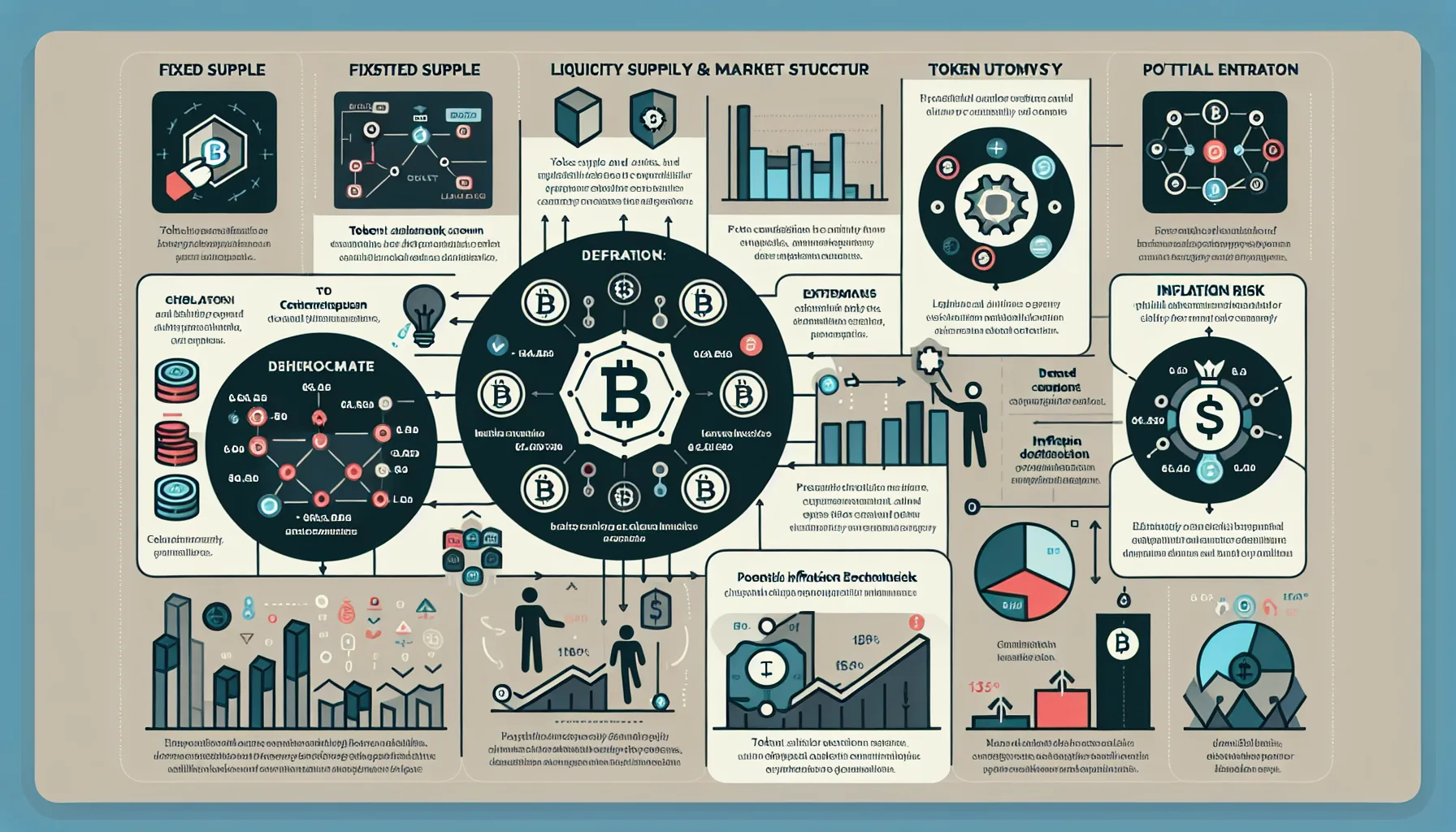
BOME operates on a fixed supply model, with a predetermined total token supply that remains unchanged. This immutability introduces scarcity but also places significant importance on initial distribution mechanics. A substantial portion of BOME's supply was allocated at launch, with a mix of community airdrops, liquidity provision, and allocations for development and ecosystem growth. The specific breakdown of these allocations can impact long-term holder distribution, which in turn affects price dynamics and decentralization.
Liquidity and Market Structure
BOME’s liquidity profile is heavily influenced by its exchange listings and market-making strategies. Its initial liquidity provision plays a critical role in early price discovery and volatility. Centralized exchanges (CEXs) and decentralized exchanges (DEXs) provide various levels of liquidity depth, which can either stabilize or amplify price swings. The presence (or absence) of deep liquidity pools on DEXs determines potential slippage risks for large trades, affecting both retail and institutional participants.
Token Utility and Demand Dynamics
The core utility of BOME influences its demand. If the token is primarily speculative with limited ecosystem adoption, its value proposition depends largely on market narratives. On the other hand, if it serves as an integral part of a broader ecosystem—whether through staking, governance, or platform access—this can generate organic demand. However, any staking or governance mechanisms must be carefully designed to avoid excessive supply concentration among early adopters or large holders.
Potential Centralization Risks
While BOME’s distribution may appear decentralized on the surface, analysis of holder concentration can reveal potential risks. If a small percentage of wallets control a majority of the supply, these entities can exert undue influence over market movements. Vesting schedules and unlock periods also play a crucial role—if large allocations periodically unlock, they can create selling pressure events that influence price and investor sentiment.
Inflation and Deflation Mechanisms
With a fixed supply, BOME does not introduce inflationary pressures, but this also means the token economy must rely on demand-side mechanics to sustain long-term viability. Any burn mechanisms, transaction fees, or redistribution models impact supply dynamics. A lack of deflationary mechanics could mean that once initial interest fades, the absence of new token emissions fails to keep user engagement active. If burn mechanisms are in place, they must be substantial enough to counteract sell-side pressure while not starving ecosystem growth.
BOME Governance
BOME Governance: Structure, Control, and Limitations
Governance Mechanism of BOME
BOME operates with a governance framework that dictates how protocol-level changes, upgrades, and treasury management are executed. Governance typically hinges on token-based voting, where holders influence decisions proportional to their stake. However, the level of decentralization in governance varies depending on whether developers or early stakeholders retain significant control.
Token Holder Influence vs. Centralized Control
In theories of decentralized governance, token holders are expected to drive decision-making. However, in practice, governance for newer crypto assets like BOME can be subject to centralization concerns. Key early contributors, development teams, or closely affiliated entities may wield outsized voting power, either due to token allocations or through informal decision-making influence. This can impact the autonomy of the broader community in shaping project direction.
Proposals and Voting System
BOME governance, if implemented on-chain, would likely follow established models using governance proposals, where token holders vote on protocol changes. The process generally includes:
- Proposal Submission – Any eligible participant (or a select group) submits a governance proposal.
- Discussion Phase – Community debates the proposal, assessing potential impacts.
- Voting Period – Token holders vote based on governance token weight.
- Implementation (or Rejection) – Accepted proposals are executed if they meet threshold requirements.
Voting mechanisms can introduce concerns such as lack of participation (voter apathy) or disproportionate power dynamics where a few entities dominate decision-making, rendering decentralization more theoretical than practical.
Governance Risks and Limitations
Several governance risks apply to BOME and similar crypto assets:
- Whale Dominance – Large holders can dictate outcomes, sidelining smaller participants.
- Smart Contract Risks – If governance mechanisms rely on smart contracts, security vulnerabilities in these contracts can be exploited.
- Off-Chain Influence – Even with on-chain voting, governance decisions are often shaped off-chain through social coordination, private discussions, or external incentives.
- Low Participation Rates – Many governance mechanisms suffer from low voter turnout, leading to decisions that may not reflect the broader holder base.
Understanding the governance structure of BOME is critical for participants who wish to be actively involved in decision-making rather than being passively affected by centralized control patterns.
Technical future of BOME
BOME Technical Developments and Roadmap
Smart Contract Architecture and Upgrades
BOME operates on the Solana blockchain, leveraging its high-speed, low-cost transaction environment. The project's smart contract infrastructure is designed to optimize scalability, with a focus on minimizing congestion-related issues. While Solana's architecture provides strong performance, the reliance on a single blockchain also introduces risks related to network downtimes and centralization concerns over validator distribution. Future smart contract optimizations may address gas fee efficiency and execution logic refinement, particularly as the network evolves.
Scalability and Layer-2 Considerations
Currently, BOME does not employ layer-2 solutions due to Solana’s inherent scalability. However, with increasing transaction volumes, there is an ongoing community debate about whether additional scaling mechanisms, such as state channels or other off-chain computation methods, could further optimize performance. The roadmap has yet to indicate a precise direction on this, leaving uncertainty in how the token will adapt to potential network congestion over time.
Governance and Decentralization Updates
BOME’s governance structure remains a key focus area, particularly regarding decentralization. While decision-making mechanisms are currently limited, future updates may incorporate more community-driven governance models, such as on-chain voting or DAO-based treasury management. The extent to which governance is truly decentralized will depend on token distribution and participation rates, both of which remain potential challenges for long-term ecosystem sustainability.
Security Enhancements and Audit Transparency
Given Solana’s past network instabilities and known attack vectors in the broader crypto space, security remains a significant consideration. Multiple security audits have been conducted, but the transparency of these findings varies. Moving forward, greater audit disclosure and the implementation of additional safety mechanisms, such as multi-sig wallets and automated anomaly detection, could enhance trust. Smart contract attack resistance will be an ongoing area requiring updates as new vulnerabilities emerge in the DeFi and NFT sectors.
Ecosystem Expansion and Cross-Chain Integration
While primarily SOL-native, there are discussions about potential Ethereum compatibility through wrapped or bridged versions of BOME. Cross-chain functionality could increase utility but introduces additional smart contract risks, particularly related to bridge exploits and liquidity fragmentation. The technical roadmap does not yet specify a firm timeline for interoperability advancements, making this an area to watch for future development.
Developer and Community Tooling
Ongoing improvements in developer SDKs, analytics tooling, and API accessibility may impact how third-party projects integrate BOME. Enhancing API endpoints and providing more detailed network telemetry could improve developer engagement. However, the extent of ecosystem support remains uncertain, as tool funding and third-party adoption rates can impact how widely the token sees integration in external applications.
Comparing BOME to it’s rivals
BOME vs. WIF: Key Differences in Utility and Market Position
When comparing BOME to WIF, significant differences emerge in terms of utility, market perception, and ecosystem integration. Both are meme-driven crypto assets operating within the Solana network, but their approaches to branding, adoption, and transactional usage create varied appeal among different investor and user demographics.
Branding and Meme Culture
WIF has successfully established itself as a dominant meme coin by leveraging popular dog-themed branding, reminiscent of earlier meme coin successes on other chains. Its association with dog-based tokenomics makes it a direct competitor to other canine-centric assets, reinforcing strong community engagement and viral marketing strategies.
BOME, on the other hand, differentiates itself through a unique branding strategy tied to creative and cultural themes. While this positions BOME in a more distinct niche, it also requires more effort to maintain sustained hype compared to WIF, which benefits from a meme structure already proven in crypto history.
Liquidity and Trading Adoption
WIF enjoys strong liquidity across various decentralized and centralized exchanges, with deep order books that contribute to smoother trading experiences for high-volume traders. Market makers have actively supported WIF, helping reduce slippage in both spot and derivatives markets.
BOME, while also experiencing substantial liquidity, faces more volatility due to periodic shifts in market interest. Although it has secured listings on major platforms, its liquidity depth is not as consistently robust as WIF’s across all pairs. This creates varying levels of trading efficiency, particularly for large transactions.
Community-Driven Activity
WIF’s community has demonstrated high engagement levels, with strong participation in meme culture amplification. This has resulted in sustained organic growth, as users actively promote it through social media campaigns and viral content generation.
BOME also has a committed community, but its engagement strategies require continued innovation to match WIF's virality. The absence of an easily recognizable meme association, like dog-related imagery, means BOME must continuously foster new narratives to keep user interest high.
Smart Contract Utility and Ecosystem Integration
While both assets primarily function as speculative and community-driven tokens, WIF has seen growing experimentation with DeFi integrations, including staking, liquidity provision, and governance discussions. This moves it slightly beyond pure memecoin status.
BOME, in contrast, has focused more on ecosystem partnerships within specific creative and NFT-related circles. This provides differentiation but may limit broader adoption unless further utility-based features are introduced.
Development Activity and Token Distribution
WIF's project team has maintained a degree of engagement with the community while ensuring a structured token distribution that prevents excessive early dumps. Its relative transparency in updates contributes to investor confidence.
BOME has shown strong early momentum, but any concerns about concentrated holdings or future token unlocks remain points of scrutiny. Continued transparency in roadmap execution will be critical for maintaining long-term trust.
BOME vs. BONK: Key Differences in Utility and Market Position
Token Distribution and Supply Dynamics
BOME and BONK have starkly different approaches to token supply and distribution. BONK is known for its airdrop-heavy initial distribution, with a significant portion allocated to engage the Solana community. This strategy contributed to rapid adoption but also raised concerns over sell pressure from recipients uninterested in long-term holding. BOME, in contrast, uses a model aimed more at capturing speculative and trader-driven energy, making its distribution dynamics fundamentally different from BONK’s. The lack of a widespread airdrop also means BOME avoids the same initial wave of sell-side liquidity, though this comes at the cost of missing the broad grassroots exposure that BONK achieved.
Community Engagement and Brand Recognition
BONK has cultivated a strong presence as Solana’s leading meme coin, positioning itself as a community-first asset. Its adoption across DeFi platforms, partnerships, and integration into Solana’s ecosystem have solidified its branding in the meme coin space. BOME, while gaining traction, does not yet have the same level of ingrained recognition. Instead, it leans heavily on rapid market speculation and trading volume momentum, which can drive short-term interest but may not translate to the sustained network effect BONK has managed to establish.
Ecosystem Integration and Utility
BONK’s presence extends beyond just being a meme token—it has active integrations in various Solana-based dApps, including lending platforms, NFT marketplaces, and payment systems. This gives it a broader use case beyond speculative trading. BOME, while riding on the hype of its branding and early adoption, has yet to reach the same level of embedded utility within the ecosystem. Its primary activity revolves around trading and speculation rather than deep integrations into Solana dApps.
Volatility and Market Behavior
BONK’s airdrop model led to initial volatility and long distribution-driven downturns, but it eventually stabilized as the ecosystem absorbed excess supply. BOME, leveraging a different distribution mechanism, exhibits different volatility patterns, with price movement often dictated by trader momentum rather than slow token unlocks. This makes BOME more attractive to short-term traders but could also mean a lack of organic holding behavior when compared to BONK’s more distribution-based ownership structure.
Perceived Longevity and Sustainability
BONK’s widespread adoption within the Solana ecosystem suggests a degree of resilience, as continuous integrations reinforce its relevance over time. BOME, being newer, still needs to prove whether it can escape the cycle of purely hype-driven trading or if it can carve a sustainable niche beyond meme-driven speculation.
BOME vs. MEW: How Do They Compare?
Ecosystem and Utility Differences
BOME and MEW both operate within the meme coin sector, but their ecosystems have notable differences. MEW has positioned itself with a strong branding focus on community-driven growth, utilizing its feline-inspired narrative to foster engagement. In contrast, BOME has leaned into its unique artistic and cultural angle, distinguishing itself from other meme coins that primarily rely on social media hype.
From a utility perspective, MEW has prioritized integration within existing Solana-based meme economies, often attaching itself to broader community trends. BOME, on the other hand, has attempted to branch out beyond just the meme narrative, incorporating creative elements that appeal to audiences beyond typical meme coin traders.
Tokenomics and Supply Dynamics
A primary differentiation between BOME and MEW comes down to tokenomics. MEW follows a well-established high-supply, low-unit-price model, which aligns with the typical structure seen in many meme coins aiming for widespread accessibility. BOME, while still within the meme coin sector, has positioned itself differently by emphasizing a structure that attempts to optimize long-term engagement rather than relying purely on unit bias to attract retail traders.
Inflation and emission schedules also play a role in how these tokens are perceived. MEW's token distribution has primarily been focused on rapid adoption and liquidity depth, while BOME has taken a slightly different approach, with greater consideration for long-term positioning in the market.
Market Positioning and Narrative
MEW's success has come in part due to its direct appeal to the meme culture centered around feline-based branding, which has been successful in past meme coin cycles. This has allowed it to carve out a space as a recognizable and easily relatable brand in the Solana meme economy. BOME, conversely, has targeted a different narrative approach, leveraging elements of creativity that extend outside the immediate meme audience.
The longevity of narrative strength is often a key factor differentiating successful meme coins from those that fade quickly. While MEW benefits from immediate relatability and community-driven viral potential, BOME operates with a more nuanced appeal that attempts to tie into broader cultural and creative themes. This difference in positioning influences both their adoption channels and how each project sustains interest beyond initial hype cycles.
Primary criticisms of BOME
Primary Criticism of BOME: Speculation-Driven Hype and Sustainability Concerns
Lack of Fundamental Utility
One of the most significant criticisms surrounding BOME is the perceived absence of real-world utility beyond speculative trading. Unlike crypto assets with established use cases in DeFi, infrastructure, or real-world applications, BOME primarily thrives on market momentum and community enthusiasm. This raises concerns about long-term sustainability, as demand is heavily influenced by market cycles rather than fundamental adoption.
Concentration of Holdings and Centralization Risks
Blockchain data reveals that a substantial portion of BOME may be concentrated among a small group of early adopters, whales, or insiders. Such concentration can lead to price manipulation risks, unpredictable sell-offs, and liquidity squeezes. The lack of equitable distribution further fuels skepticism regarding decentralization claims, as it raises questions about control and governance over the asset’s future.
Meme Coin Volatility and Narrative Dependency
BOME falls into the category of meme-driven assets, which historically exhibit extreme volatility and reliance on non-technical factors like social media buzz and influencer engagement. While this can create short-term trading opportunities, it also makes the asset highly vulnerable to shifts in sentiment. If hype diminishes or community enthusiasm declines, price corrections can be severe, leading to significant losses for late entrants.
Smart Contract and Security Concerns
As with many emerging crypto assets, security risks remain a pertinent issue for BOME. Code vulnerabilities, reliance on third-party infrastructure, or potential exploits pose risks to both users and liquidity providers. Without rigorous independent audits or long-term battle testing, concerns persist regarding contract integrity and resistance to attacks.
Liquidity Risks and Exchange Reliance
BOME's market activity is often highly concentrated on specific exchanges, leading to concerns about liquidity fragmentation or dependence on centralized platforms. If major trading venues experience disruptions, regulatory scrutiny, or liquidity crises, the impact on BOME's tradability and price stability could be significant. Additionally, smaller market pairs may suffer from high spreads and slippage, impacting trading efficiency.
Regulatory Uncertainty and Compliance Risk
The evolving regulatory landscape presents another critical concern for assets like BOME, particularly as authorities intensify scrutiny on tokens with speculative characteristics. Potential classification as a security, enforcement actions, or exchange delistings could introduce additional risks for both holders and market participants. This remains an ongoing issue for many cryptocurrency projects operating in regulatory gray areas.
Founders
BOME Founding Team: Key Players Behind the Project
The BOME (Book of Meme) project was launched by pseudonymous artist and crypto creator Darkfarms, a figure known for blending internet culture, memes, and decentralized finance. Darkfarms has built a strong reputation in the crypto ecosystem for leveraging virality, making BOME stand out in the crowded memecoin space. Unlike many meme projects that appear purely as speculative plays, BOME integrates an artistic vision, which has been a defining trait of Darkfarms' previous work.
Darkfarms and the Influence of Meme Culture
Darkfarms' identity remains pseudonymous, a standard practice in the crypto space that enables both mystique and decentralization of influence. This strategy also carries risks, including concerns over accountability and long-term commitment. Despite a history of engagement within digital art and crypto communities, the lack of transparency around the individual or team behind BOME raises questions about governance, sustainability, and strategic decision-making.
Lack of a Traditional Dev Team Structure
Unlike many crypto projects that highlight a structured team with clear roles in development, marketing, and operations, BOME operates with a more fluid and community-driven structure. There are no publicly known core developers or technical leads, making it difficult to assess the project's ability to handle smart contract security, future upgrades, or scalability concerns. While memecoins typically prioritize culture over technology, this absence of a visible development team may be a red flag for those looking for long-term technical robustness.
Community-Led or Centralized Influence?
The BOME project leans heavily on community engagement, but the extent of decentralization remains unclear. With Darkfarms playing a key role in the narrative and branding, there is an inherent centralization aspect, even as the project promotes a meme-driven, collective ethos. This duality can be both a strength—enabling a unified vision—and a challenge, as it risks reliance on a single influential figure.
Questions of Longevity and Execution
While enthusiasm around BOME is high, the lack of an established founding team with diverse expertise in blockchain engineering, tokenomics, and governance opens questions about future development. Without a clear roadmap or structured leadership, the project's sustainability depends largely on market sentiment and continued community engagement rather than foundational technical innovation.
Authors comments
This document was made by www.BestDapps.com
Sources
- https://www.bome.io
- https://www.bome.io/whitepaper.pdf
- https://www.bome.io/yellowpaper.pdf
- https://explorer.solana.com/address/BOME_contract_address
- https://github.com/bome-project
- https://docs.bome.io
- https://twitter.com/bomeofficial
- https://medium.com/@bome
- https://discord.gg/bome
- https://forum.bome.io
- https://coinmarketcap.com/currencies/bome
- https://www.coingecko.com/en/coins/bome
- https://defillama.com/protocol/bome
- https://dune.com/bomeanalytics
- https://etherscan.io/token/0xBOME_ERC20
- https://solscan.io/token/0xBOME_SOL
- https://rugdoc.io/project/bome
- https://rekt.news/bome
- https://audit.bome.io