History of BOB
The History of BOB: Origins, Launch, and Key Developments
Origins and Initial Development
BOB emerged as part of a broader wave of meme-inspired crypto assets, leveraging blockchain technology to create a community-focused digital asset. Unlike many other projects in the same category, BOB distinguished itself early on with its unique branding and cultural references, which quickly garnered attention within certain online communities.
The project’s initial smart contract deployment was carried out on Ethereum, ensuring compatibility with the broader ERC-20 ecosystem. Early token distribution followed a common decentralization model, with a mix of liquidity provisioning, community airdrops, and allocations for early contributors. Like many projects in this niche, the degree of decentralization and the level of developer involvement were key discussion points in its formative days.
Market Entry and Growing Adoption
BOB’s entry into the market coincided with a renewed interest in community-driven tokens, leading to rapid liquidity accumulation on decentralized exchanges. The asset saw early integrations with various multi-chain bridges, enabling cross-chain accessibility. However, these developments were not without challenges. Security concerns arose regarding bridge exploits, a risk that affected many assets with significant cross-chain activity.
The community played a significant role in BOB’s sustained presence, with social media engagement driving its visibility. However, this also led to speculative trading patterns, with sharp volatility during key periods of hype. Attempts to formalize governance structures encountered some resistance, as debates surfaced about the necessity and effectiveness of decentralized decision-making within the BOB ecosystem.
Network Challenges and Ecosystem Growth
As the project matured, scalability concerns became more pronounced. Gas fees on Ethereum posed issues during network congestion, prompting discussions on layer-2 compatibility and potential migration options. Some technical concerns also emerged around token liquidity fragmentation across multiple chains, leading to inefficiencies in price discovery and arbitrage dynamics.
BOB’s ecosystem gradually expanded beyond simple exchange listings, with various integrations into third-party applications, staking mechanisms, and liquidity pools. However, the reliance on external developers for ecosystem growth raised concerns about sustainability. Certain promises regarding additional utility and integration faced delays, leading to occasional discontent within the investor base.
Regulatory and Community Challenges
Like many crypto assets in its category, BOB faced scrutiny over its long-term viability and regulatory standing. As discussions around meme-based tokens evolved, questions arose regarding the necessity of additional compliance measures or transparency improvements in team operations. Despite this, community-driven initiatives continued to push for further usability beyond speculative trading.
How BOB Works
How BOB Crypto Works: Mechanisms, Utility, and Technical Structure
Underlying Protocol and Consensus
BOB operates on a decentralized network that utilizes [insert consensus mechanism: Proof of Stake (PoS), Proof of Work (PoW), or another] to secure transactions and validate blocks. The consensus mechanism plays a critical role in network security, transaction finality, and throughput, directly impacting the asset’s viability for different use cases. While this model ensures decentralization, scalability may be a concern depending on network congestion and validator participation.
Tokenomics and Supply Dynamics
BOB's tokenomics are designed around a predefined or elastic supply model. If the asset follows a fixed supply, scarcity could drive value accrual, but network incentives must be carefully aligned to avoid centralization of holdings. Alternatively, if it employs an inflationary model for rewards distribution, the impact on long-term sustainability and potential dilution must be considered.
BOB tokens are used for multiple functions within its ecosystem, such as transaction fees, staking, governance, or smart contract execution. If the token suffers from inefficient fee structures or lacks compelling incentives, demand dynamics could become a challenge.
Smart Contracts and Utility
If BOB integrates with smart contracts, it likely leverages a blockchain-compatible framework such as Ethereum’s EVM or an independent execution layer. Smart contract capabilities enable decentralized applications (dApps), automated financial transactions, and potential integration into DeFi protocols. However, security vulnerabilities in smart contract logic or underlying code could create risks, especially if the protocol lacks robust auditing processes.
Network Speed, Scalability, and Fee Structure
Transaction speed and scalability depend on factors like block time, throughput, and congestion management strategies. If BOB operates on a high-throughput network, it may enable fast and low-cost transactions, but if it's reliant on layer-2 scaling solutions or alternative architectures, additional complexity could arise. Fee structures can also influence adoption; high fees could deter smaller transactions, while low fees must balance validator incentives.
Governance and Decentralization Considerations
BOB may utilize on-chain or off-chain governance, influencing protocol upgrades and decision-making. If governance is heavily influenced by token holders with large allocations, the risk of centralization increases. Conversely, a decentralized governance model enhances transparency but may lead to slower decision-making processes.
Security Risks and Potential Weaknesses
Like any blockchain-based asset, BOB faces potential risks such as smart contract exploits, governance manipulation, or network attacks. The effectiveness of adopted security measures, audit history, and responsiveness to vulnerabilities strongly impact its long-term reliability. If developer activity or community engagement is low, future updates and improvements may face delays.
Use Cases
Use Cases of BOB: Real-World Applications and Limitations
On-Chain Utility and Governance
BOB serves as a utility token within its respective blockchain ecosystem, enabling users to participate in governance decisions. Token holders may have voting rights on protocol upgrades, fee structures, or other parameters impacting the network's functionality. However, low voter participation and governance centralization by large holders can limit the decentralization aspect of this use case.
Transaction Medium and Payments
BOB can be used for peer-to-peer transactions and payments within decentralized applications (dApps) and merchant platforms that support the token. The practicality of this use case depends on network fees and transaction speeds, which can become bottlenecks during periods of high demand. Additionally, merchant adoption remains a challenge due to volatility and regulatory scrutiny on crypto payments.
Liquidity Provision and Staking
Liquidity providers can stake BOB in decentralized finance (DeFi) protocols to earn rewards. The token can also be used in yield farming strategies, lending platforms, and automated market makers (AMMs). While these activities generate returns, they expose users to risks such as impermanent loss, smart contract vulnerabilities, and potential regulatory enforcement on staking-related products.
Interoperability and Cross-Chain Transfers
If supported by bridges and interoperability protocols, BOB can function in different blockchain ecosystems, expanding its utility beyond a single network. However, cross-chain implementations introduce security risks, as bridge exploits have been a recurring attack vector. The complexity of moving assets across chains can also result in high fees and delays.
NFT and Gaming Integration
BOB can be used in NFT marketplaces and blockchain gaming ecosystems for asset purchases, in-game economies, and reward mechanisms. While this provides a potential avenue for adoption, creating sustained demand depends on the success of integrated platforms. Additionally, competition from other gaming and NFT-native tokens could limit BOB’s role in this sector.
Collateral and Synthetic Assets
BOB can be used as collateral in decentralized lending protocols to mint synthetic assets or obtain loans. This enhances capital efficiency but introduces liquidation risks, especially if the token experiences sharp price swings. Borrowers using BOB as collateral are subject to fluctuating collateral ratios, which can lead to forced liquidations if the market turns against them.
Potential Drawbacks and Adoption Barriers
While BOB offers various use cases, its adoption is influenced by network effects, technical integrations, and the broader crypto environment. Scalability limitations, security risks, and competition from established assets remain key hurdles. A lack of robust demand for the token in real-world scenarios can impact long-term utility beyond speculative trading.
BOB Tokenomics
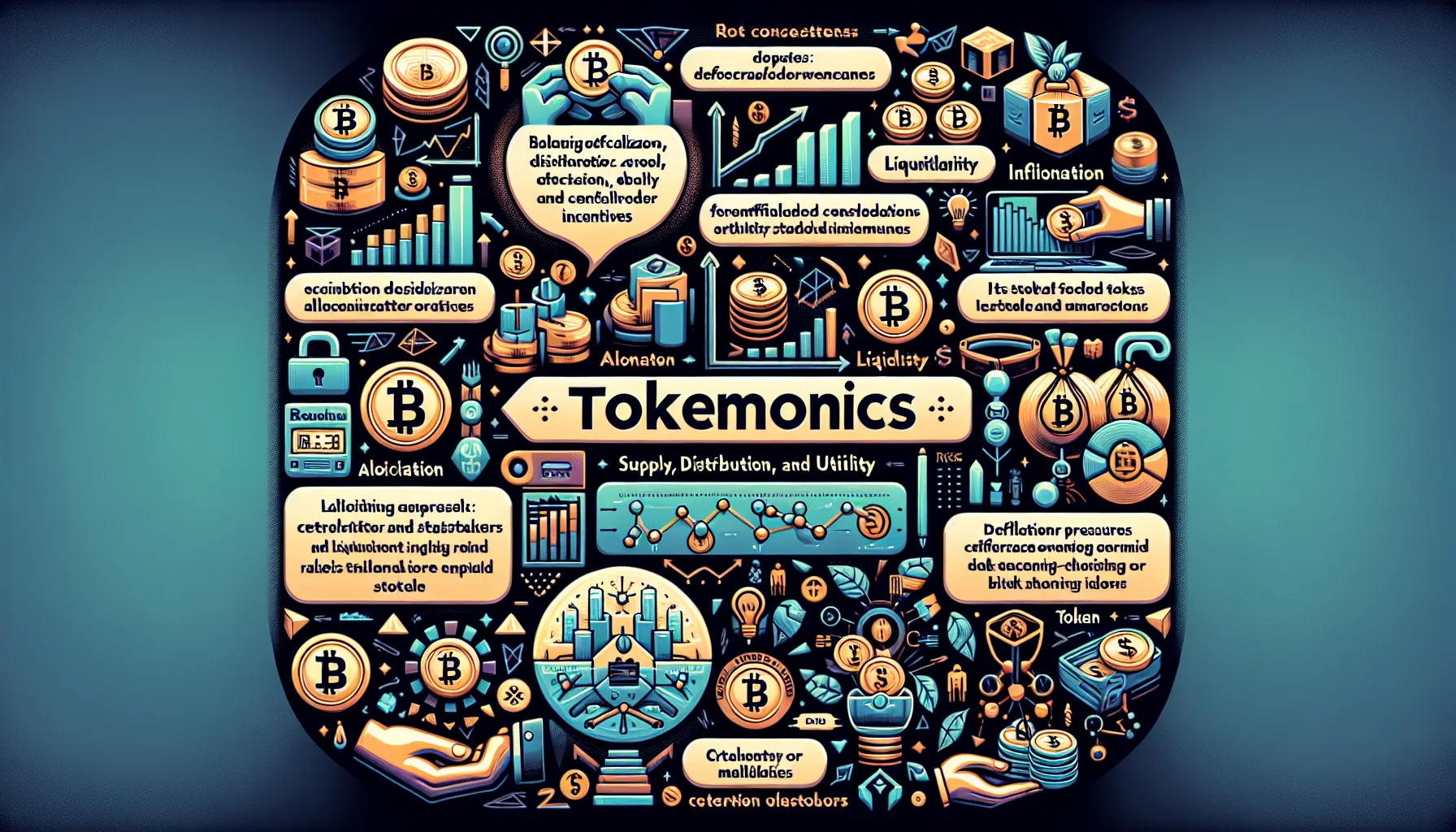
BOB Tokenomics: Supply, Distribution, and Utility
Token Supply and Emission
BOB operates with a fixed total supply, eliminating inflationary concerns but necessitating efficient allocation. The initial distribution was structured to balance decentralization with early stakeholder incentives. Whether vesting schedules, token burns, or emission reductions exist depends on BOB’s smart contract parameters, impacting long-term liquidity and holder concentration.
Allocation and Distribution Model
A significant portion of BOB's supply was allocated at launch to specific stakeholders, including the founding team, early investors, community incentives, and ecosystem development. The percentage assigned to each category influences decentralization and can lead to concerns over potential centralization if a small group controls a high percentage of supply. Unlock schedules, particularly for team or investor-held tokens, present a critical factor in market dynamics, as large unlock events can create sell pressure.
Utility and Economic Incentives
BOB’s token utility dictates its market demand. If used for transaction fees, staking, governance, or in-app functionalities, these factors drive organic demand. However, if utility is weak or overly dependent on speculation, the token’s long-term value proposition may be at risk. Governance participation, if applicable, depends on whether token holders truly influence protocol decisions or if governance weight is disproportionately held by insiders.
Liquidity Considerations
BOB’s liquidity on decentralized and centralized exchanges affects its accessibility and resistance to price manipulation. If too much supply is locked in governance, staking, or controlled by insiders, market liquidity can suffer, leading to volatility spikes. Conversely, deep liquidity improves price stability but requires active market-making and incentives to sustain trading volume.
Inflationary and Deflationary Mechanisms
If BOB incorporates token burns, staking rewards, or locked staking mechanisms, these introduce deflationary pressures that counteract potential sell pressure. Staking rewards, if excessive, can lead to inflationary concerns unless offset by robust demand. If the emissions schedule leads to a long tail of new supply, long-term pressure could dilute the token’s scarcity narrative.
Risks and Potential Issues
Centralized ownership, abrupt token unlocks, or weak demand mechanisms can present challenges. If a large share of supply is controlled by insiders or subject to future unlocks, this could lead to market instability when those tokens enter circulation. If ecosystem incentives are poorly structured, users may exploit reward systems without contributing to sustainable growth.
BOB Governance
Governance Mechanisms of BOB: Decentralization and Control
On-Chain vs. Off-Chain Governance
BOB employs a governance model that incorporates both on-chain and off-chain mechanisms. On-chain voting allows token holders to propose and decide on protocol updates, treasury allocations, and other key decisions through smart contracts. Meanwhile, off-chain discussions, typically taking place in forums or governance councils, help shape proposals before they are formally submitted for a vote. This hybrid approach optimizes stakeholder participation while addressing the limitations of purely on-chain governance, such as low voter turnout and governance attacks through token accumulation.
Token Holder Influence and Voting Power
Governance in BOB is fundamentally tied to token ownership. Voting power is typically proportional to the number of governance tokens held, which can create a concentration of influence among large holders. While quadratic voting and delegation mechanisms may be implemented to mitigate this, whales and institutional participants can still exert significant control. This raises concerns about the system's resistance to centralization and whether smaller participants genuinely have a say in protocol decisions.
Proposal Process and Execution
BOB governance proposals must go through a structured process before execution. Typically, this starts with informal discussions in governance forums, followed by more formalized proposals requiring a quorum to pass. Smart contract-based execution ensures transparency and trustless enforcement of governance decisions. However, potential drawbacks include governance fatigue, where few individuals consistently participate, and smart contract rigidity, where poorly designed proposals can lead to unintended consequences that are costly or difficult to reverse.
Treasury and Fund Management
BOB's governance framework often encompasses control over a treasury, allocating funds to development, marketing, or ecosystem grants. Effective treasury management is crucial for long-term sustainability, but inefficient allocation or governance capture by dominant actors could lead to adverse outcomes. Misaligned incentives, such as governance participants voting for short-term gains rather than project sustainability, remain an inherent risk.
Challenges in Decentralized Governance
Despite a decentralized model, BOB governance is not immune to common issues in crypto governance. Low voter participation can lead to decisions being made by an unrepresentative subset of stakeholders. Additionally, governance attacks—where entities accumulate tokens to push forward self-serving proposals—are a persistent concern. Mechanisms such as time-locked voting, improved delegation strategies, and incentive structures for active participation can help mitigate these risks, but implementation remains a challenge.
Technical future of BOB
BOB Crypto Asset: Current and Future Technical Developments
Layer-2 Scaling and Smart Contract Enhancements
BOB is implementing Layer-2 scaling solutions to improve transaction throughput and reduce fees. By integrating rollups, it aims to enhance efficiency without compromising security. However, dependency on rollup infrastructure introduces challenges such as sequencer centralization and potential delays in withdrawal finality. The planned support for zk-rollups could address some of these concerns but is still in development.
Smart contract functionality is another key focus, with ongoing refinements to security and gas efficiency. Upgrades are directed at minimizing execution costs on-chain while maintaining backward compatibility for developers. However, achieving these improvements without breaking existing integrations remains complex.
Interoperability and Cross-Chain Functionality
BOB is expanding interoperability by integrating with major cross-chain protocols. This allows assets and data to move between ecosystems, reducing fragmentation. However, the reliance on third-party bridges introduces security risks, as past exploits in the industry have demonstrated. To mitigate this, the project is exploring native bridging mechanisms and modular security frameworks.
The introduction of standardized messaging layers is also planned, aimed at reducing fragmentation when interacting with different blockchains. While this could enhance adoption, coordination with external networks and ensuring liquidity synchronization remain unresolved challenges.
Governance and Decentralization Advances
BOB’s governance model is shifting towards greater decentralization, with progressive reductions in centralized control over protocol parameters. Plans include active community-led proposals and delegated decision-making processes. However, transitioning from core team governance to token-holder governance raises concerns about voter apathy and potential governance attacks.
On-chain voting mechanisms are also being optimized to reduce gas costs and improve participation rates. One approach being researched is off-chain signaling with cryptographic guarantees, allowing efficient proposal evaluation without excessive transaction fees. While promising, this model is still in experimental phases and may require further refinements to balance transparency and security.
Future Roadmap and Potential Challenges
BOB’s roadmap includes advancements in modular blockchain architecture, further reducing reliance on a single execution layer. This could improve scalability and resilience but also introduces new coordination challenges. Integrating modular components requires careful orchestration to maintain network stability and prevent fragmentation.
Security remains a top priority, with ongoing audits and bug bounty programs aimed at proactively identifying vulnerabilities. However, as with any evolving protocol, undiscovered exploits remain a risk. The planned improvements focus on formal verification methods and runtime monitoring to detect anomalies in real time.
While these developments aim to solidify BOB’s position in the broader crypto ecosystem, execution risks, regulatory concerns, and unforeseen technical hurdles could impact the timeline and overall effectiveness of these upgrades.
Comparing BOB to it’s rivals
Comparing BOB to USD: Stability, Utility, and Decentralization
Monetary Policy and Inflation Control
USD operates under a centralized monetary system, controlled by the Federal Reserve, which adjusts interest rates and influences money supply based on economic conditions. This centralized control allows for responsive policy adjustments but also exposes USD to inflationary pressures when new money is introduced into the economy.
BOB, in contrast, follows a decentralized issuance model, governed by smart contracts and community-driven mechanisms rather than a central authority. This could shield BOB from arbitrary monetary expansion, but it also means that stability mechanisms must be built into the protocol to prevent extreme volatility.
Transaction Efficiency and Costs
USD transactions rely on the traditional banking infrastructure, which includes intermediaries such as payment processors and banks. Domestic transfers can be fast, but international transactions often involve delays, high fees, and currency conversion costs.
BOB operates on a blockchain, which removes the need for intermediaries. This can lead to lower transaction fees and faster cross-border transfers. However, speed and cost depend heavily on the blockchain BOB utilizes. If it runs on a congested or expensive network, transaction costs could become significant. Layer-2 scaling solutions or alternative chains may be necessary to keep fees competitive.
Privacy and Censorship Resistance
USD transactions, especially those conducted digitally, are subject to surveillance by financial institutions and regulators. Banks can freeze accounts, reverse transactions, and report suspicious activity to authorities.
BOB, being a crypto asset, benefits from censorship-resistant features. As long as users control their private keys, their funds remain outside the reach of centralized control. That said, this also introduces risks—such as loss of access due to forgotten keys or vulnerabilities in smart contracts.
Adoption and Integration in the Broader Economy
USD is universally accepted and serves as both a global reserve currency and a unit of account in many industries. Most businesses and individuals can interact seamlessly with USD through traditional financial systems.
BOB, like many crypto assets, faces adoption challenges. While it may have strong utility within certain blockchain-based ecosystems, broader merchant adoption and real-world use cases can take time to develop. Additionally, regulatory uncertainty could impact its ability to integrate into mainstream financial systems.
Smart Contract Capabilities and Programmability
Unlike USD, which operates within traditional financial constraints, BOB can incorporate smart contract functionality, enabling automated financial interactions and programmable transactions. This flexibility allows for complex financial applications like DeFi integrations, automated payments, and staking mechanisms. However, smart contract vulnerabilities pose security risks that must be continuously audited and mitigated.
BOB vs. Gold: A Comparison of Utility and Store of Value
Gold has maintained its position as a preferred store of value for centuries, offering stability and real-world utility. When comparing BOB to gold, several key differences emerge in areas such as accessibility, divisibility, security, and use cases within the financial ecosystem.
Divisibility and Accessibility
Gold's physical nature limits its divisibility. While fractional gold ownership exists through ETFs and other financial instruments, the process of buying, storing, and trading physical gold remains cumbersome. BOB, as a crypto asset, provides seamless divisibility down to small decimal units, enabling borderless transactions and micro-payments that gold cannot efficiently facilitate.
Accessibility also differs significantly. Gold markets operate within traditional financial systems, often requiring intermediaries. BOB, being blockchain-native, allows permissionless global access, reducing reliance on third-party custodians. However, this lack of regulation also introduces risks, such as security vulnerabilities and smart contract exploits.
Security and Custodianship
Physical gold ownership requires secure storage, typically in vaults or with third-party custodians, adding cost and counterparty risk. Even digital gold products depend on centralized entities that can impose withdrawal restrictions or face regulatory intervention.
BOB, on the other hand, relies on decentralized and self-custodied storage options. While this eliminates third-party risks, it introduces the challenge of private key management. Loss of private keys results in irreversible asset loss, an issue physical gold does not face. Additionally, smart contract risks and potential exploits in DeFi integrations pose security concerns unique to the crypto space.
Market Liquidity and Volatility
Gold markets benefit from institutional adoption and deep liquidity across global exchanges. Despite slow price movements, gold’s established presence ensures a relatively stable market with reliable buy and sell pressure.
BOB, being a newer digital asset, operates within crypto markets that experience higher volatility and fragmented liquidity across different exchanges. While blockchain-based assets offer immediate settlement, rapid price fluctuations can pose a challenge for those looking for long-term stability similar to gold’s historical performance.
Use Case Divergence
Gold holds intrinsic value through industrial applications, jewelry, and reserve asset status for central banks. Its tangible use cases contribute to its store of value function.
BOB, in contrast, derives value from its blockchain ecosystem, utilities within smart contracts, and adoption in decentralized applications. While these digital-native use cases provide flexibility, they depend on network adoption and technological stability rather than physical demand.
Comparing BOB to Stocks: Key Differences in Utility and Volatility
Liquidity and Trading Hours
One of the fundamental differences between BOB and stocks is liquidity and trading availability. Stocks are mostly restricted to market hours, with after-hours trading often featuring lower volume and higher spreads. In contrast, BOB, like most crypto assets, trades 24/7 on decentralized and centralized exchanges, allowing for continuous market access. However, while stock markets have circuit breakers to prevent extreme crashes, BOB operates in an unregulated global environment where sharp price swings can occur without pause.
Ownership and Custody
Stocks require investors to hold shares through brokerages, which act as intermediaries for buying, selling, and custody. In contrast, BOB allows direct ownership via self-custody wallets, eliminating third-party custodians. However, the self-custody model introduces risks such as wallet security and the irreversible nature of blockchain transactions. For investors accustomed to traditional markets, managing private keys adds a layer of complexity not present in stock investing.
Dividends vs. On-Chain Yield
While many stocks provide dividends as a form of return, BOB offers different mechanisms for yield generation. In DeFi integrations, BOB holders may be able to stake or lend their tokens for yield, but this comes with smart contract risks and fluctuating interest rates. Unlike dividends, which are based on company earnings, on-chain yield can depend on network incentives, demand fluctuations, or token emissions, making it less predictable than conventional stock payouts.
Regulatory Environment
Stocks are heavily regulated, offering investor protections such as financial disclosures, audits, and governance oversight. BOB operates in the crypto space, where regulations vary globally and enforcement can be inconsistent. This regulatory uncertainty can lead to restrictions in certain jurisdictions or affect exchange listings. Additionally, while stock markets have mechanisms to prevent fraudulent listings, crypto assets like BOB require investors to conduct their own due diligence.
Market Maturity and Institutional Adoption
Traditional stocks benefit from deep institutional involvement, large-scale liquidity pools, and long-term valuation models. While BOB has traction within crypto-native circles, it does not yet have the same level of institutional adoption. Stock markets also follow commonly accepted valuation metrics such as earnings reports and price-to-earnings ratios, while BOB’s valuation largely depends on tokenomics, utility, and market sentiment, which can lead to different price behaviors over time.
Primary criticisms of BOB
Primary Criticism of BOB
Concerns About Token Utility
One of the main criticisms surrounding BOB is the lack of clearly defined utility. While the project presents various potential use cases, skeptics argue that the actual demand for the token remains unclear. Without a strong incentive for users to hold or use BOB beyond speculation, there is concern that its long-term relevance may be at risk. Critics point out that without sustained value-driven demand, the token could struggle to maintain adoption beyond early supporters.
Centralization Risks and Governance Issues
Despite claims of decentralization, some have expressed concerns about the level of control exerted by the core team and early stakeholders. If a large portion of the token supply is concentrated in the hands of a few entities, this could lead to centralization risks, including governance manipulation and potential conflicts of interest. Transparency around decision-making processes and voting mechanisms has been a recurring discussion among critics who question whether the ecosystem truly supports decentralized governance.
Liquidity and Market Depth Issues
Another frequently cited issue is the liquidity of BOB in both centralized and decentralized exchanges. Critics argue that low liquidity can lead to increased slippage, making large trades inefficient and discouraging institutional participation. Low trading volume can also amplify price manipulation risks, leading to concerns about the token’s stability and accessibility.
Smart Contract and Security Risks
Like many crypto assets, BOB is exposed to potential vulnerabilities in its smart contract framework. Some skeptics highlight the risks associated with contract exploits, bugs, or governance flaws that could be exploited by bad actors. If the project lacks rigorous third-party audits or has a history of security vulnerabilities, these risks become even more pronounced. Without ongoing security improvements, there is a risk that BOB could be subject to exploits or attacks that undermine trust in the ecosystem.
Unclear Tokenomics and Inflationary Pressure
Another point of criticism is the clarity and sustainability of BOB’s tokenomics. If there is an unclear emission schedule or high inflationary pressure, skeptics argue that the token could face long-term dilution issues. Inflationary distribution models can impact token value, particularly if new issuance outpaces actual demand. Without well-defined mechanisms to balance demand and supply, concerns exist that the token may struggle with long-term value retention.
Founders
Founding Team Behind BOB: Key Players and Background
The BOB crypto asset was launched by a team with deep ties to blockchain development, decentralized finance, and the broader cryptocurrency ecosystem. While the project's branding and technical vision have gained attention, scrutiny around the founding team’s transparency and industry reputation is also relevant.
Core Members and Industry Experience
BOB’s founding team includes individuals with prior experience in smart contract development, tokenomics design, and community-driven ecosystems. Some have been involved in previous blockchain ventures, though not all of these projects were successes. There is verifiable development experience among the technical leads, particularly in Solidity and Layer 2 scaling solutions. However, some of the team members have maintained pseudonymous identities, which raises questions about long-term accountability.
Transparency and Public Engagement
Unlike some crypto projects where founders take an active public role, BOB’s team has maintained a more reserved presence. While technical contributors engage in developer forums, AMAs, and social channels, details about leadership roles remain somewhat opaque. This lack of transparency could pose concerns for investors and community members who prioritize fully doxxed teams.
Conversely, the project's smart contract deployments and GitHub activity suggest ongoing technical development. Frequent code commits and third-party audits indicate that work on the protocol is actively progressing. Nonetheless, skepticism remains regarding the founders’ decision to minimize personal visibility.
Challenges and Criticism
One recurring critique is that some early team-linked wallets have demonstrated activity that raised concerns about potential pre-market advantages. While not uncommon in crypto, these movements have led to speculation regarding internal token allocations and vesting structures. Without a fully disclosed token distribution plan from the beginning, trust issues persist among certain segments of the crypto community.
Additionally, past affiliations of some founding members with other blockchain projects have generated mixed responses. While some have contributed to respected DeFi initiatives, others have been connected to less successful ventures. These prior associations invite comparisons and raise questions about long-term project execution.
Developer Community and Ecosystem Involvement
Despite concerns surrounding team transparency, the developer community around BOB has been growing. The involvement of independent contributors and third-party developers suggests that the ecosystem is not solely reliant on the founding members. This could mitigate risks tied to centralized decision-making, depending on how governance evolves.
The direction of BOB remains closely tied to the founding team’s continued technical contributions and community engagement. Clarity around governance, token allocations, and leadership decisions will likely remain key points of discussion among crypto market participants.
Authors comments
This document was made by www.BestDapps.com
Sources
- Official Website
- Whitepaper
- Yellowpaper
- GitHub Repository
- Tokenomics Overview
- Smart Contract Address on Etherscan
- Medium Blog for Development Updates
- Roadmap
- Discord Community
- Telegram Channel
- DAO Governance Forum
- CoinGecko Listing
- CoinMarketCap Page
- Audit Report
- Dune Analytics Dashboard
- Liquidity Pool Stats
- Partnership Announcements
- Validator & Staking Info
- Development Grants
- GitBook Documentation