History of BNB
The History of Binance Coin (BNB): From Utility Token to Ecosystem Cornerstone
Binance Coin (BNB) was initially launched in July 2017 as part of Binance's Initial Coin Offering (ICO), a pivotal event during the crypto boom of that era. Created primarily as a utility token on Binance’s exchange, BNB originally ran on the Ethereum blockchain as an ERC-20 token. Its early use cases were straightforward: to pay for trading fees on the Binance platform at a discounted rate, which incentivized adoption among active traders.
BNB's evolution began taking shape in 2019 when Binance launched its proprietary blockchain, Binance Chain. With the migration of BNB from Ethereum to Binance Chain, the token ceased being an ERC-20 asset and became the native coin of the new blockchain. This transition marked a significant milestone, as BNB transformed from a simple utility token into a central component of Binance’s expanding ecosystem. The Binance Chain emphasized speed and efficiency but was criticized for its lack of decentralization, as Binance retained significant influence over its governance.
Another major development occurred with the unveiling of Binance Smart Chain (BSC) in September 2020. BSC was designed to run parallel to Binance Chain, introducing smart contract functionality and broader DeFi capabilities. BNB became integral in this dual-chain architecture, serving as both gas fees on BSC and the standard token for decentralized applications (dApps) within the Binance ecosystem. However, this raised concerns about centralization and competition with Ethereum. Critics argued that Binance's networks were heavily centralized in their validator structures, with a small number of validators controlled or influenced by Binance itself.
Burn mechanics have also played a noteworthy role in BNB’s history. Binance implemented a quarterly token burn mechanism, using a portion of its revenue to permanently remove BNB from circulation. Initially, these burns were determined by Binance’s trading activity, but later, the burn process underwent alterations with the introduction of BEP-95, an on-chain burning protocol that implemented real-time fee burns on Binance Smart Chain. While this deflationary policy was designed to reduce supply and drive scarcity, skeptics have pointed to the lack of transparency in Binance’s operations, which clouds independent verification of these mechanisms.
Throughout its history, BNB has been both celebrated for its utility and criticized for its ties to Binance’s centralized infrastructure. Its journey from an exchange-focused token to a multi-faceted asset reflects not only the ambitions of Binance but also the broader debates surrounding decentralization and governance in the crypto space.
How BNB Works
How BNB Works: A Detailed Look at Its Utility and Ecosystem Mechanics
BNB (Binance Coin) operates as a multi-utility token within the Binance ecosystem, designed to enhance user interactions, reduce fees, and serve various auxiliary functions. Originally an ERC-20 token on the Ethereum blockchain, BNB eventually migrated to Binance’s native chains, Binance Chain and Binance Smart Chain (now collectively referred to as BNB Chain). These chains introduce unique mechanisms for scalability, efficiency, and decentralized application (dApp) development, all centered around the utility and functionality of BNB.
Core Utility in Transactions
BNB's most recognized utility lies in fee reduction. When users hold BNB in their Binance accounts and choose to pay trading fees with it, they receive discounts that were initially structured to decrease over time. While this incentivizes holding BNB, users must weigh the potential volatility of using a crypto asset as a fee payment tool. Additionally, the cost-saving model introduces complexities for compliance, as discounts tied to BNB usage may classify it differently in varying jurisdictions.
Beyond central trading fee reductions, BNB operates as "gas" on the BNB Chain. Similar to Ethereum’s native ETH, BNB is required to pay transaction fees when interacting with smart contracts or transferring assets on the blockchain. A critical distinction, however, lies in the chain's emphasis on low-cost, high-speed transactions, which cater toward high-frequency traders and projects constrained by Ethereum's elevated gas fees.
Burning Mechanisms and Supply Adjustment
A key aspect often highlighted in BNB’s operational model is its token-burning mechanism. Binance periodically conducts token “burns” to permanently reduce the supply, executed through two primary methods: the Quarterly Burn based on Binance’s revenue from trading fees and the BEP-95 mechanism, which burns a portion of gas fees generated on the BNB Chain. These burns contribute to potential scarcity but have drawn criticism due to a lack of transparency in revenue metrics, leaving the community dependent on the platform’s claims without full on-chain verification.
Centralization Concerns
Despite the blockchain infrastructure, criticism has been aimed at BNB Chain’s governance model. Validators on the network are capped at 21 active participants, reinforcing centralization concerns compared to Ethereum or other highly decentralized networks. The consensus model and validator selection process are determined largely by economic barriers and Binance's influence, raising questions about the level of true decentralization achievable. For users prioritizing decentralized ethos, this is a significant trade-off when engaging within the BNB ecosystem.
Integration with Other Sectors
BNB extends its utility through integrations with decentralized finance (DeFi), staking, yield farming, non-fungible token (NFT) ecosystems, and payment solutions, making it a multipurpose tool. However, the heavy reliance on Binance’s ecosystem presents a potential issue of over-centralization. Should Binance face regulatory scrutiny or operational disruptions, BNB holders could find their utility disproportionately impacted. While the token’s utility remains broad, users dependent on it should consider this level of concentration risk.
Use Cases
Exploring the Use Cases of BNB: Beyond Transactions
Binance Coin (BNB) has established itself as a multifaceted utility token within the blockchain ecosystem, primarily within the Binance ecosystem, but its use cases extend beyond simple transactions. Below are some of the most notable applications for BNB, alongside challenges tied to its real-world utility.
1. Transaction Fee Discounts on Binance Exchange
One of BNB's earliest and most prominent use cases is offering discounted trading fees on Binance Exchange. When users pay transaction fees with BNB instead of the native currencies being traded, they can benefit from reduced costs. However, this utility is predicated on active participation in the Binance platform, making its value inherently tied to Binance’s dominance in the exchange landscape. Critics argue that the fee discount model could be less compelling over time due to a diminishing discount structure implemented in BNB’s token economics.
2. Participation in Binance Launchpad and Launchpool
BNB grants holders access to Binance’s token sale platform, Launchpad, and its farming program, Launchpool. These services allow users to participate in early-stage projects or earn rewards by staking BNB. While this creates alignment between token holders and burgeoning projects, these opportunities can heighten centralization concerns since Binance maintains tight control over access and selection criteria. Moreover, the system often favors large-scale holders, making it less inclusive for retail investors.
3. Gas Fees on BNB Smart Chain (BSC)
BNB is the native token of Binance Smart Chain (BSC), where it is used to pay gas fees for executing smart contracts or transferring tokens. BSC’s low transaction costs have made it a popular alternative to Ethereum, particularly for decentralized applications (dApps) and DeFi platforms. However, the centralization of validators in the BSC ecosystem has led to criticism, with detractors pointing out the risks this could pose to decentralization principles that underpin blockchain technology.
4. Payment Utility in Real-World and Digital Ecosystems
BNB has been increasingly adopted for payments, both within Binance’s ecosystem (such as Binance Pay) and through partnerships with third-party service providers. It is often used for booking travel, shopping, and even entertainment services. Nonetheless, its widespread adoption as an everyday payment method is still limited, as merchants and users contend with regulatory uncertainty and potential tax implications surrounding crypto transactions.
5. Collateral and Lending in DeFi Protocols
With the expansion of BSC, BNB is widely utilized in decentralized finance (DeFi) protocols for lending, borrowing, and yield farming. Users can leverage BNB as collateral to access liquidity without selling their holdings. However, its price volatility and dependency on market demand could pose risks to borrowers, particularly in cases of liquidation during abrupt market downturns.
6. Token Burn Mechanism Influencing Supply
BNB employs a periodic token burn mechanism where Binance reduces the total supply of the token based on earnings and usage metrics. While this deflationary approach helps bolster scarcity, critics argue it centralizes control in the hands of Binance. This mechanism heavily ties BNB's value proposition to Binance’s profitability, raising concerns about transparency and over-reliance on a centralized entity to drive demand.
In summary, the utility of BNB spans a range of applications, empowering token holders within and beyond Binance’s ecosystem. Yet, many of these use cases intermingle with questions about centralization, regulatory hurdles, and accessibility for everyday users. These considerations should be weighed against its advantages when evaluating the true scope of its utility in the broader crypto market.
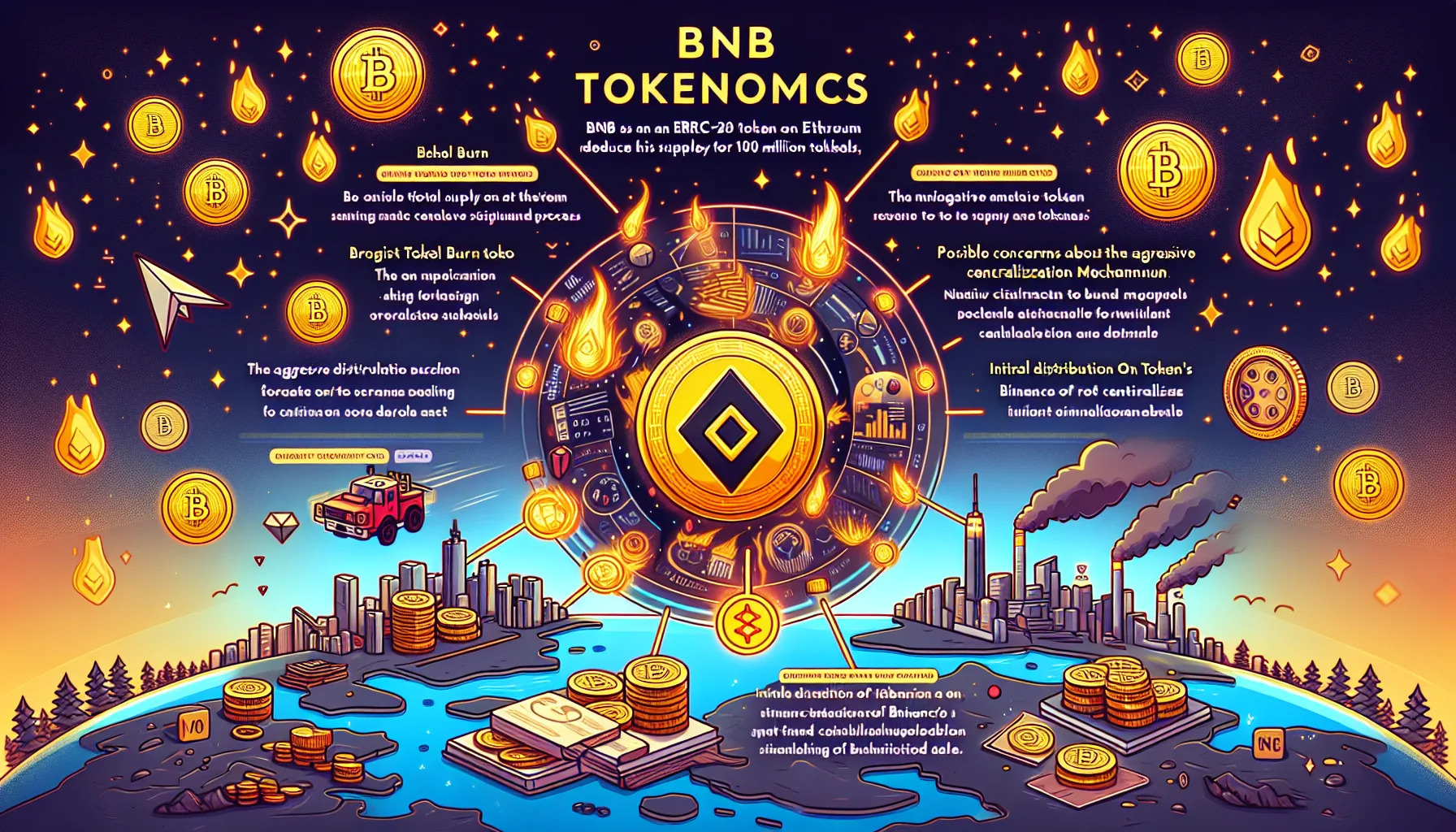
BNB Tokenomics
BNB Tokenomics: Analyzing Supply, Burn Mechanisms, and Distribution
BNB's tokenomics are fundamental to its position within the crypto ecosystem, driven by mechanisms designed to encourage utility, scarcity, and network participation. Originally launched as an ERC-20 token on Ethereum with a total supply of 200 million tokens, its eventual migration to Binance Chain established it as the network's native asset. However, the evolving tokenomics have not been without their complexities and points of scrutiny.
Deflationary Supply Through Burning
One of the most discussed aspects of BNB is its deflationary model, underpinned by regular token burns. A significant portion of BNB's supply reduction historically occurred through quarterly burns, governed by Binance's commitment to decreasing the total supply to 100 million tokens. Initially, these burns were tied to a percentage of Binance's profits. However, Binance transitioned to an automated mechanism known as the BNB Auto-Burn.
The Auto-Burn mechanism calculates the burn amount using on-chain data and a formula accounting for BNB's price and total blocks generated. While this enhances transparency compared to a profit-tied model, critics argue that adapting burn intensity based on token price could result in uneven supply shocks, potentially impacting broader utility for users reliant on stable token availability.
In addition to the Auto-Burn system, a portion of BNB used for transaction fees on Binance Smart Chain (BSC) is permanently removed from circulation through a separate real-time burning process. Together, these mechanisms reduce BNB's circulating supply while promoting network activity. However, skeptics note that overly aggressive burns could risk liquidity constraints, especially during periods of heightened demand.
Distribution: Initial Allocations and Market Concerns
The token's initial allocation raised questions about centralization. Out of the original 200 million supply, 50% was allocated to the initial coin offering (ICO) participants, while 40% was reserved for the Binance team and the ecosystem development fund. Centralization concerns hinge on the significant share held by early stakeholders, linked to potential governance risks or disproportionate market influence.
Although Binance claims sufficient vesting schedules and allocations for development purposes, transparency about exactly how BNB reserves have been deployed remains limited. This opacity has fueled ongoing debate about whether sufficient checks are in place for fair market dynamics.
Utility, But with Strategic Dependencies
BNB's utility is tightly intertwined with both the Binance exchange and the Binance Smart Chain (BSC). It functions as a fee reduction tool, a staking asset, and a medium for participation in BSC decentralized applications (dApps). While these use cases bolster demand, reliance on Binance's ecosystem makes its long-term tokenomics inherently tied to the exchange's prominence. Such dependencies pose risks if external market competition or regulatory actions disrupt Binance’s operations.
BNB Governance
Governance Mechanics of BNB: Centralization, Voting, and Utility
BNB’s role in governance within the Binance ecosystem offers an impactful yet centralized model that significantly influences the Binance Chain and Binance Smart Chain (BSC). Unlike many decentralized blockchain networks focused on democratizing decision-making, BNB governance relies heavily on the validators and delegators within its ecosystem. This approach blends on-chain governance with centralized oversight, raising both benefits and concerns.
Validator Governance and Centralization
BNB’s governance framework is tightly coupled with its validator system. On Binance Smart Chain, the Proof of Staked Authority (PoSA) consensus mechanism limits the number of validators to 21, selected based on the amount of staked BNB and delegations received. While this ensures high transactional throughput and efficiency, it naturally introduces centralization risks. Critics argue that this validator cap could lead to a concentration of voting power in the hands of a few large token holders, diminishing the voice of smaller stakeholders. This creates an environment where governance may not be fully representative of the broader community.
Limited On-Chain Voting
For a crypto asset of BNB’s scale, on-chain governance mechanisms remain relatively limited. Unlike fully decentralized protocols like Ethereum or Polkadot, where token holders vote directly on network upgrades or parameter changes, BNB governance decisions often involve Binance as a key orchestrator. While users can delegate voting power to validators, critical protocol changes are typically coordinated by Binance itself, prompting discussions about the role of centralized entities in shaping BNB’s future.
BNB Utility in Governance
BNB serves as the native token for governance processes in both Binance Chain and BSC. Delegators stake BNB to elect validators, who in turn have a direct say in network upgrades and community proposals. However, the utility of BNB in governance is constrained to the validator-selection process, with few mechanisms currently in place for direct community-driven proposals via token-weighted voting. This further amplifies concerns about the lack of grassroots involvement in decision-making.
Challenges in Transparency
Another contentious issue is the perceived lack of transparency in the governance process. While validators and delegators do participate in decision-making, the overall process is seen by some as opaque, with Binance playing a significant behind-the-scenes role. This perceived opacity reinforces skepticism from segments of the crypto community who advocate for trustless, fully decentralized governance models.
BNB’s governance structure offers efficiency but raises critical questions about decentralization, transparency, and community involvement, which could impact its broader adoption and acceptance in decentralized finance (DeFi) ecosystems.
Technical future of BNB
Current and Future Technical Developments in BNB: Exploring the Roadmap
Binance Coin (BNB), the native cryptocurrency of the Binance ecosystem, continues to evolve with technical upgrades that aim to enhance its functionality, scalability, and utility within the blockchain landscape. The continual integration of new features and structural improvements underscores a commitment to adaptability in a quickly changing ecosystem, though challenges remain.
BNB Chain Upgrade Initiatives and Scalability Focus
One of the critical areas of development for BNB is its blockchain infrastructure. BNB Chain, composed of the Beacon Chain and the Smart Chain, seeks to maximize transaction throughput and interoperability. Recent upgrades have expanded block processing capacity to diminish congestion during periods of high network demand. These efforts cater directly to the rapid adoption of decentralized applications (dApps) and enable higher transaction-per-second (TPS) capabilities. However, critics argue that aggressive scalability improvements may intensify centralization risks, given that a limited number of validators are responsible for network consensus.
Enhanced EVM Compatibility for Wider dApp Integration
BNB’s development consistently emphasizes Ethereum Virtual Machine (EVM) compatibility. By aligning with extensive tools and frameworks already dominant in Ethereum's ecosystem, BNB Chain attracts developers who may otherwise focus on Ethereum or other EVM-compatible blockchains. Plans to improve cross-chain operability between BNB Chain and non-EVM-compatible networks remain technically challenging. Achieving seamless integration without introducing vulnerabilities or sacrificing performance presents a formidable task for developers.
Security Audits and Layered Defensive Strategies
Acknowledging the risks associated with DeFi hacks and exploits, the BNB ecosystem has made strides in fortifying its security measures. Periodic third-party code audits and bug bounty programs are central to these efforts, but targeted attacks continue to expose weaknesses, especially in smart contracts deployed by third-party developers. The growing complexity of BNB Chain’s architecture may compound the challenge of maintaining robust security protocols across all layers.
The Transition to Binance Account Bound Tokens (BAB)
A noteworthy technical evolution is the introduction of Binance Account Bound (BAB) tokens, a shift toward decentralized identification (DID). As non-transferable tokens, BABs aim to provide verifiable identity credentials for users engaged in Web3 applications. Although innovative, their adoption remains limited, and critics cite concerns over social engineering risks and potential misuse of personal data linked to decentralized identities.
Optimizing Validator Decentralization Without Sacrificing Efficiency
BNB Chain faces ongoing scrutiny regarding its tendency toward centralization. While some recent roadmap updates hint at increasing the number of validators, questions persist regarding the potential for reduced consensus efficiency. Critics often highlight that boosting the validator set does not automatically correlate to improved decentralization, particularly if larger validators dominate staking power.
Perpetual Development on Layer-2 Scaling and ZK Rollups
Future developments on BNB’s roadmap suggest intensified focus on layer-2 scaling solutions, including the integration of zero-knowledge rollups (ZK rollups). These promise to increase transaction throughput while significantly lowering gas fees. Despite their potential, implementation poses challenges related to efficient proof generation and maintaining sufficient computational resources for verifiers.
BNB’s technical evolution remains a double-edged sword. While innovation drives adoption and diversifies use cases, concerns surrounding centralization, security, and operational complexity persist as focal points for ongoing scrutiny and discussion.
Comparing BNB to it’s rivals
BNB vs. SOL: A Detailed Comparison of the Ecosystem Dynamics
When comparing BNB to Solana (SOL), one of the standout differences lies in their fundamental design philosophies. BNB operates as the utility token powering Binance's extensive ecosystem, which includes the Binance Smart Chain (BSC)—a scaled approach geared toward high throughput and compatibility with Ethereum's Virtual Machine (EVM). In contrast, SOL's architecture prioritizes speed and scalability through its unique Proof of History (PoH) mechanism. This creates a dichotomy between BNB’s ecosystem interconnectedness and SOL’s pursuit of technical efficiency.
Network Scalability and Throughput
BNB-backed Binance Smart Chain supports a block generation time of roughly 3 seconds, which caters to a wide range of decentralized applications (dApps). However, the consensus mechanism underpinning BSC, Delegated Proof of Stake (DPoS), sacrifices decentralization to achieve this speed and ease of use. In comparison, Solana’s high-performance blockchain boasts significantly higher transaction per second (TPS) capacity, but it often grapples with network instability issues, as demonstrated in multiple high-profile outages. While BNB’s network stability remains consistent, this reliability comes at the cost of lower TPS compared to Solana.
Developer and dApp Ecosystem
BSC’s EVM compatibility lowers barriers for developers transitioning from Ethereum, giving projects greater flexibility to migrate or deploy dApps with minimal friction. This has contributed to a robust dApp ecosystem, particularly in decentralized finance (DeFi) and non-fungible tokens (NFTs). On the other hand, Solana employs its own development language, Rust, which, although efficient, is less familiar to the vast Ethereum developer community. This potentially slows the onboarding process for developers opting for Solana over other EVM-compatible options like BSC.
Centralization Concerns
One of the more contentious aspects of BNB lies in the centralization of its network validators. While Binance argues that this semi-centralized approach ensures reliability, critics claim it undermines blockchain principles by concentrating too much influence within Binance’s control. Though Solana also faces scrutiny over the substantial hardware requirements for validators (which limits broader participation), BSC’s association with Binance has drawn more skepticism regarding its governance.
Use Cases and Ecosystem Composition
BNB retains competitive advantages through its deep integration with the Binance ecosystem, enabling use in trading fee discounts, launchpads, and more. However, such reliance also exposes the token to risks should Binance face regulatory hurdles or enforcement actions. Solana’s tokenomic diversity, driven by gaming, DeFi, and NFT-specific projects, contrasts with BNB's comparatively centralized focus on Binance-related applications.
In summary, BNB and Solana each address scalability challenges in distinct ways, yet their trade-offs reflect broader differences in priorities and execution—speed vs. reliability, decentralization vs. accessibility.
BNB vs. ETH: Comparing Utility, Ecosystem, and Efficiency
When evaluating BNB against ETH (Ethereum), key differences emerge in network design, utility, and overall user experience. Both assets reside at the core of their respective ecosystems; however, the architectural distinctions between Binance Smart Chain (BSC) and Ethereum greatly influence their comparative performance and appeal.
Transaction Speed and Scalability
A primary difference lies in scalability. Ethereum, leveraging its established Proof-of-Stake (PoS) system post-Merge, continues focusing on decentralization while addressing throughput limits. However, even with Ethereum’s ongoing Layer 2 adoption (Optimism, Arbitrum, etc.), its base layer transactions still wrestle with congestion and fluctuating gas fees during high network activity. In contrast, BNB Smart Chain prioritizes scalability and performance, processing transactions faster and with significantly lower fees due to its consensus mechanism—a modified Proof-of-Staked-Authority (PoSA). This trade-off, however, comes at a cost to decentralization, as critics often highlight BSC’s relatively centralized validator model.
Developer Ecosystem and Smart Contract Activity
Ethereum has consistently led the way in developer engagement and innovation. Its robust community has birthed extensive tooling, widespread adoption of the Solidity programming language, and the deployment of groundbreaking dApps. BNB Smart Chain, though competitive, still lags behind in developer loyalty and project diversity. While BSC has successfully mirrored much of Ethereum’s dApp infrastructure using its Ethereum Virtual Machine (EVM) compatibility, critics argue this replicative strategy comes at the expense of fostering organic innovation.
Tokenomics and Network Incentives
ETH serves as both a utility token for gas fees and a deflationary asset due to Ethereum Improvement Proposal (EIP)-1559, which burns a portion of transaction fees. This mechanism aligns with the long-term goal of making ETH a "sound money" asset. Conversely, BNB incorporates token burns via its Auto-Burn mechanism, effectively reducing supply over time. Yet, the centralized nature of its burn process raises questions about transparency and governance compared to Ethereum’s community-driven improvement protocols.
Security and Decentralization
Ethereum’s more extensive validator distribution enhances its security and democratized governance. This starkly contrasts with BSC’s limited set of validators, which contributes to better efficiency yet introduces significant concerns over network centralization. Ethereum’s historical resilience to attacks bolsters its standing as a reliable network, whereas BSC has occasionally faced scrutiny regarding exploits tied to its ecosystem due to potential vulnerabilities introduced by its speed-centric design.
While both BNB and ETH cater to similar use cases, their methodologies, priorities, and trade-offs highlight unique strengths and weaknesses, influencing adopters based on specific expectations and needs.
BNB vs ADA: A Detailed Comparison of Key Features and Limitations
When evaluating BNB against one of its primary competitors, ADA (Cardano), several differences in their ecosystems, technical foundations, and use cases emerge. Both projects cater to specific niches within the crypto space, but their approaches and results diverge in meaningful ways.
Blockchain Architecture and Scalability
BNB operates primarily on the BNB Smart Chain (formerly Binance Smart Chain), which utilizes a Proof-of-Stake Authority (PoSA) consensus mechanism. This hybrid model allows for significant transaction throughput and low fees, making it ideal for DeFi applications and frequent on-chain activity. ADA, on the other hand, is built on Cardano's Ouroboros Proof-of-Stake (PoS) protocol, which emphasizes energy efficiency and formal verification of its code.
One of Cardano's touted advantages is its meticulous, research-driven developmental approach, where updates follow rigorous peer-reviewed processes. However, this measured pace has drawn criticism for slower implementation of new features, which can hinder its competitiveness in a fast-moving industry. In contrast, BNB’s ecosystem tends to prioritize speedier rollouts and iterative adaptation, albeit sometimes sacrificing a degree of decentralization and security scrutiny.
Ecosystem and Adoption
BNB enjoys a robust ecosystem linked to Binance, one of the largest crypto exchanges globally. This direct integration promotes seamless utility for exchange discounts, token burns, and exclusive participation in Binance Launchpad projects. ADA, while exchange-independent, focuses heavily on creating a decentralized global ecosystem encompassing areas such as decentralized finance (DeFi), identity solutions, and supply chain logistics.
Cardano's development is characterized by higher interoperability through native multi-asset support and its focus on decentralized governance via Project Catalyst. However, adoption remains a challenge for ADA in comparison to the extensive functionality offered within the BNB-driven Binance ecosystem. BNB has cultivated a vibrant and active development community but often faces criticism that its ecosystem revolves too heavily around Binance’s influence.
Smart Contract Capabilities
BNB and ADA both support smart contract functionality, but the execution strategies differ. BNB Smart Chain, Ethereum Virtual Machine-compatible (EVM), makes it relatively simple for developers to port applications originally built for Ethereum. ADA's Plutus smart contract platform, built using Haskell, is lauded for its focus on security and correctness. This comes at the cost of steep learning curves and slower developer adoption compared to more widely used languages in BNB’s ecosystem.
Decentralization and Criticisms
ADA has often promoted itself as more decentralized than competitors like BNB. The concentration of validators and perceived centralization of decision-making tied to Binance’s operations remain points of critique for BNB. Cardano’s node distribution and governance are usually discussed as counterexamples, although critics argue ADA’s progress has been hampered by its reliance on staged rollouts and unfulfilled timetables.
Overall, BNB and ADA serve different needs, but the trade-offs in decentralization, speed, and developer accessibility raise distinct questions for users evaluating which aligns better with their goals.
Primary criticisms of BNB
Primary Criticism of BNB: Centralization and Regulatory Risks
One of the most frequent criticisms of BNB (Binance Coin) revolves around its perceived centralization. While BNB plays a vital role in the Binance ecosystem, its close ties to Binance, the centralized entity behind it, raise significant concerns among crypto purists. Critics argue that this centralization undermines the decentralized ethos foundational to blockchain technology. Binance maintains substantial control over the total supply of BNB, with management decisions having a direct impact on the token’s value and utility. Such a concentration of power in one organization has made some question whether BNB performs as a truly democratic, trustless crypto asset, or more as a utility within a single corporation’s walled garden.
In addition, the token burn mechanism — a process where Binance uses a percentage of its quarterly profits to repurchase and burn BNB — has also drawn scrutiny. While token burns theoretically benefit holders by reducing supply over time, the process relies heavily on Binance’s transparency regarding its profits and token activity. Critics claim the reliance on Binance's reporting introduces an element of trust that stands in contrast to blockchain’s core principle of trustless verification. Questions about whether profit data or burn strategies are fully auditable continue to spark debate within the crypto community.
Another key criticism is the regulatory exposure BNB faces. As BNB is so intricately tied to the Binance Exchange and its global operations, it becomes a natural target for regulators seeking greater oversight of centralized exchanges. Regulatory crackdowns or fines against Binance could negatively impact BNB's reputation or compel changes to how it is issued or utilized. Furthermore, some commentators argue that BNB’s classification could potentially run into compliance challenges with securities laws in certain jurisdictions, further emphasizing regulatory risk.
Lastly, some argue that BNB’s wide use as a discount mechanism for Binance trading fees may limit its broader adoption outside the Binance ecosystem. While it has expanded into DeFi (e.g., in the BNB Chain) and is used for other purposes, skeptics suggest its utility becomes significantly less compelling when detached from the Binance platform. This perception creates a dependency critique — BNB appears tied to Binance’s market dominance and ecosystem rather than flourishing as a truly standalone digital asset.
These criticisms form the centerpiece of debates surrounding BNB’s status as a leading crypto asset, urging both holders and the broader market to weigh its powerful utility against its centralized underpinnings and potential regulatory vulnerabilities.
Founders
The Founding Team Behind BNB: Strategic Vision and Controversies
The origins of BNB (Binance Coin) are tightly intertwined with the founding team of Binance, one of the most influential entities in the crypto space. Binance was co-founded in 2017 by Changpeng Zhao (commonly known as CZ) and Yi He, both of whom brought a mix of technical expertise and market acumen to the venture. From its inception, the team envisioned BNB as more than just a utility token, embedding it deeply within the Binance ecosystem for trading fee discounts and other platform-specific uses.
Changpeng Zhao: The Driving Force Behind BNB
CZ has become synonymous with Binance and, by extension, BNB. Before co-founding Binance, he gained valuable experience in trading systems and blockchain technologies. CZ previously held leadership roles at Blockchain.com and OKCoin, providing a foundation for overseeing Binance's rapid growth. His aggressive market strategies, focus on global expansion, and vocal presence on social media have made him a polarizing figure in the crypto community.
Despite his successes, critics have often raised concerns regarding the level of control CZ and the Binance team exert over BNB. Governance frameworks tied to blockchains are typically decentralized to varying degrees, but Binance is perceived by many as highly centralized. Decisions around BNB-related token burns, use cases, and ecosystem developments are reportedly made at the discretion of a small group led by CZ, raising issues of transparency and accountability.
Yi He: The Low-Profile Powerhouse
Yi He co-founded Binance with CZ after a tenure at OKCoin, where she worked as the VP of Marketing. Often operating behind the scenes, her influence over branding, market positioning, and user acquisition strategies proved instrumental during Binance’s initial rise. Less vocal than CZ, Yi He nonetheless wields significant decision-making power within Binance, contributing to BNB’s strategic direction.
However, her strong marketing background has led critics to question whether the platform's successes owe more to promotional tactics than to a truly revolutionary tokenomics model. Additionally, her limited public engagement within the crypto community sometimes creates gaps in accountability compared to other well-known industry leaders.
Control Dynamics and Centralization Concerns
One of the most persistent criticisms of the Binance founding team lies in the centralization of both Binance and BNB. While CZ and Yi He’s leadership has undoubtedly strengthened the project in its formative years, concerns linger around how much control is concentrated within a single entity. Centralization risks not only impact market perception but also introduce potential regulatory scrutiny—Binance’s compliance with international laws has often been a contentious topic.
By extension, this centralization has implications for holders of BNB, as they are dependent on executive decisions largely made behind closed doors. Critics argue this undermines the decentralized ethos that many blockchain and crypto projects aim to uphold.
In sum, the founding team’s vision and operational approach have played a defining role in BNB’s integration into the broader Binance ecosystem, but ongoing debates around centralization and governance continue to shape its narrative within the crypto sphere.
Authors comments
This document was made by www.BestDapps.com
Sources
- https://www.binance.com/en/whitepaper
- https://bnbchain.org/en/whitepaper
- https://research.binance.com/en/projects/bnb
- https://bnbchain.org/en/
- https://docs.bnbchain.org/
- https://github.com/bnb-chain
- https://www.binance.com/en/blog
- https://defillama.com/protocol/binance
- https://etherscan.io/token/0xb8c77482e45f1f44de1745f52c74426c631bdd52
- https://bscscan.com/
- https://academy.binance.com/en/glossary/binance-coin-bnb
- https://cryptoslate.com/coins/binance-coin/
- https://coinmarketcap.com/currencies/bnb/
- https://messari.io/asset/bnb
- https://dune.com/BinanceResearch/BNB
- https://stakingrewards.com/asset/binance-coin/
- https://www.coingecko.com/en/coins/binancecoin
- https://binance.zendesk.com/hc/en-us
- https://www.cryptocompare.com/coins/bnb/overview
- https://tokenterminal.com/terminal/projects/binance


