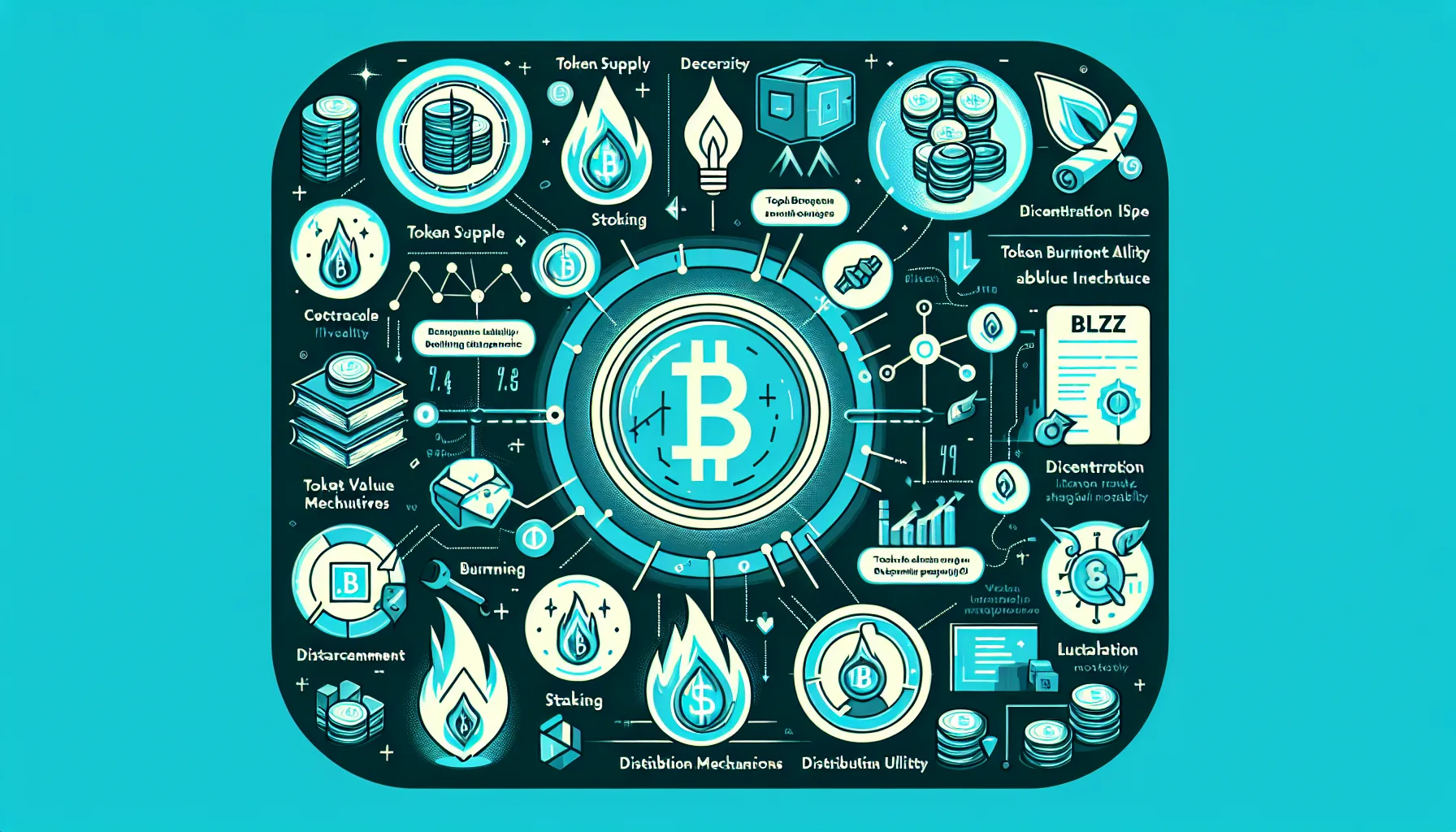
History of BLZ
The History of BLZ: Tracing the Evolution of Bluzelle
Bluzelle (BLZ) launched as a decentralized data storage and management platform, aiming to solve key inefficiencies in traditional cloud-based storage solutions by leveraging blockchain technology. Initially conceptualized in 2014, the project gained significant traction during the heightened crypto-adoption phase in 2017. This was the same year Bluzelle conducted its Initial Coin Offering (ICO), raising approximately $19.5 million in funding through the sale of 165 million BLZ tokens, representing 33% of its total supply.
Bluzelle positioned itself as a decentralized database tailored for Web3 applications, with the ambition to offer developers a secure, censorship-resistant, and high-speed data layer. Its main value proposition centered around eliminating single points of failure in data storage by creating a swarm of nodes used to shard and store encrypted data across a decentralized ecosystem. However, early competitors like Filecoin and Storj—operating in overlapping segments—created challenges for Bluzelle to differentiate itself, especially considering market dominance and first-mover advantages held by these entities.
BLZ tokens initially gained attention as a utility token within the network, designed for payments, staking, and incentivizing node operators. Early adopters saw its integration as inventive, but friction within the ecosystem hampered user adoption. Like many other blockchain projects of that era, Bluzelle’s early roadmap faced delays, with several key features rolling out later than anticipated, impacting the project's momentum in the industries it aimed to disrupt.
Bluzelle’s pivot into DeFi in the early stages of its history also raised eyebrows. While the move aligned with broader crypto trends, the platform’s shift to incorporate decentralized finance functionalities left some in the community questioning whether Bluzelle was spreading itself too thin rather than perfecting its core decentralized database product. These strategic diversifications both attracted new users but simultaneously diluted its primary narrative, leaving certain stakeholders uncertain about its long-term focus.
Despite facing obstacles like funding allocation scrutiny and competition from larger data storage networks, the project continued to evolve technically. Over time, Bluzelle transitioned from an Ethereum-only framework to a multi-chain support system, particularly integrating with ecosystems like Cosmos to enhance interoperability.
Bluzelle’s historical journey underscores its resilience and adaptation, but its narrative includes friction points that reflect broader challenges in launching and scaling novel blockchain projects in competitive and rapidly evolving markets.
How BLZ Works
How BLZ Works: Decentralizing Data and Accelerating Access
At its core, BLZ (the native token of the Bluzelle network) empowers a decentralized database ecosystem designed to optimize data storage, retrieval, and security. The Bluzelle ecosystem operates as a blockchain-based, decentralized storage layer specifically tailored for Web3 applications. This allows it to overcome the limitations of centralized infrastructure that often plagues projects requiring rapid data responses, scalability, and censorship resistance.
Bluzelle’s architecture combines the principles of blockchain with distributed database technology. It uses a swarm-based, peer-to-peer (P2P) network of nodes to store encrypted fragments of data across multiple participants. These nodes work together to provide redundancy and robustness, ensuring that no single point of failure exists. By leveraging features like sharding and data replication, Bluzelle optimizes both security and availability, which is critical for decentralized finance (DeFi) platforms, NFT marketplaces, and other data-intensive dApps.
BLZ functions as the gas that powers the network, enabling users to pay for database services such as data queries, writes, and updates. Node operators, in turn, are compensated in BLZ tokens for their contributions to the network’s reliability and performance. However, a key operational challenge lies in balancing token economics to avoid potential centralization risks from large-scale node operators dominating the network. Since rewards fluctuate with demand, maintaining adequate decentralization without over-rewarding monopolistic players is an ongoing consideration.
One of Bluzelle's distinguishing features is its integration with Cosmos, using the advanced Inter-Blockchain Communication Protocol (IBC). This cross-chain functionality allows BLZ to serve the growing demand for interoperability across blockchain ecosystems. However, the downside is that projects dependent on IBC face existential risks from emerging vulnerabilities or systemic failures in the Cosmos ecosystem.
Bluzelle enforces data immutability through cryptographic integrity proofs, which make it impossible to alter or delete stored data without consensus approval. While this enhances trustlessness and transparency, certain use cases—such as industries requiring compliance with GDPR or HIPAA—may find immutability a bottleneck instead of a feature.
While Bluzelle is designed for high throughput and scalability, adoption hurdles related to onboarding traditional developers remain an issue. Bridging the knowledge gap for Web2 developers looking to transition into Web3 continues to be a challenge, even with Bluzelle’s attempts at providing SDKs and user-friendly APIs.
In conclusion, BLZ powers an innovative decentralized data network that attempts to tackle persistent problems with scalability, censorship, and security. However, like many blockchain-based projects, its continued momentum relies heavily on ecosystem adoption and maintaining a delicate balance between scalability and decentralization.
Use Cases
BLZ Use Cases: Empowering Decentralized Infrastructure and Beyond
BLZ, the native token of the Bluzelle ecosystem, plays a critical role in facilitating the functionality of its decentralized storage and database solutions. Bluzelle aims to address significant gaps in decentralized application (dApp) infrastructure by focusing on secure, scalable, and censorship-resistant storage. Below, we delve into the specific use cases of BLZ, discussing both its applications and the technical considerations that crypto-savvy users should be aware of.
1. Data Storage for dApps and NFTs
One of the primary use cases for BLZ lies in powering Bluzelle's decentralized storage layer. Unlike centralized systems, Bluzelle leverages a swarm of nodes to store and retrieve data, essential for dApps that require tamper-proof and highly available metadata storage. This has gained traction in the NFT sector, where immutable metadata is a critical need. BLZ incentivizes nodes to maintain the integrity of this ecosystem through staking and rewards mechanisms.
However, decentralized storage solutions are not without challenges. Network latency and data retrieval speed can become critical concerns as the system scales. For dApps with real-time requirements, Bluzelle’s current infrastructure may not match the performance of centralized cloud providers. Developers must assess the trade-off between decentralization and speed when integrating BLZ.
2. Decentralized Finance (DeFi) Oracle Services
BLZ also powers Bluzelle Oracles, a service designed to feed trustless, real-time data into DeFi protocols. By utilizing its network of nodes, Bluzelle ensures that oracles are resistant to single points of failure, reducing risks of price manipulation or network downtime. This use case answers a clear need for more robust data integrity in DeFi, where malicious exploits often stem from unreliable or poorly maintained oracles.
That being said, the use of BLZ in oracle services faces stiff competition. Established oracle services with broader ecosystems already dominate this space, making it imperative for Bluzelle to differentiate through unique features or expanded integrations.
3. Staking and Governance
BLZ holders can participate in network governance by staking their tokens. Staking helps secure the network while allowing users to weigh in on key decisions, such as protocol upgrades or parameter adjustments. Additionally, stakers earn rewards, which further aligns incentives between users and network growth.
However, staking introduces a potential risk of centralization. As with many proof-of-stake ecosystems, there is the possibility of large token holders gaining disproportionate influence over governance and network operations. This is an aspect any potential participant should carefully monitor.
4. File Streaming for Web3 Gaming
A niche but emerging use case for BLZ lies in Web3 gaming, particularly in delivering decentralized file streaming services such as game assets or updates. This aligns well with the increasing need for decentralized infrastructure in gaming ecosystems. Developers building blockchain-based games could leverage Bluzelle to avoid relying on centralized distribution networks.
Yet, this use case is still in its infancy compared to the broader possibilities. Adoption hurdles remain, as many Web3 game developers continue to prioritize performance over decentralization. Moreover, integrating a decentralized file streaming solution like Bluzelle may require significant technical effort, limiting its rate of adoption.
BLZ Tokenomics
Understanding BLZ Tokenomics: A Deep Dive into Supply, Utility, and Distribution
Token Supply and Issuance Mechanics
The BLZ token operates with a fixed total supply, which introduces scarcity into its ecosystem. However, the pre-mined nature of the supply distribution is a point of contention within the crypto-savvy community. While scarcity theoretically supports long-term value, initial token allocations may raise concerns for those who prioritize decentralization. Early allocations were directed toward private investors, ecosystem development, and team reserves, which could potentially centralize supply in the hands of a few entities. For those assessing BLZ's tokenomics, scrutinizing the percentage locked in wallets associated with core contributors and the foundation is critical to understanding any bottlenecks in decentralization.
Staking and Incentive Structures
One of the primary utilities of BLZ lies in staking mechanisms tied to the broader decentralized storage network it supports. By staking BLZ, participants gain access to various network functionalities, including running nodes and securing the system. However, these staking structures are double-edged. While they incentivize long-term holding and contribute to network security, they may exacerbate token illiquidity in secondary markets, potentially increasing volatility for regular traders. Furthermore, while staking rewards are typically distributed from reserved allocations, questions about the sustainability of these payouts across the long term remain relevant.
Utility Beyond Transactions
Unlike utility tokens limited to powering transactions within their ecosystems, BLZ extends its use case to data-centric applications such as decentralized file sharing and secure storage. Despite these use cases, some argue that the reliance on BLZ for service payments could create barriers for non-crypto-native users, as they must first navigate the token acquisition process. Additionally, tying all functionality to the BLZ token may introduce friction if broader adoption occurs, as congestion or token scarcity could limit scalability.
Burning Mechanisms and Deflationary Policies
BLZ incorporates token-burning mechanisms that aim to reduce circulating supply over time. These mechanisms are designed to help stabilize token value and align incentives for long-term holders. However, burning policies must be balanced carefully with overall ecosystem growth. Excessive token burns could reduce liquidity for network participants and hinder active usage, while insufficient burns may slow deflationary pressures or fail to mitigate supply concentration concerns.
Distribution Transparency
Key to BLZ tokenomics is the level of transparency in ongoing token allocations. Monitoring periodic token unlocks for vesting schedules and development funds remains critical for analysts tracking potential dilution. Lack of clarity in reporting such allocations can erode trust in the project's long-term incentive structures, an issue that has emerged as a challenge for some similar tokens in the space.
BLZ Governance
Governance in BLZ Token: Decentralized Oversight or Centralized Constraints?
When examining the governance framework of BLZ, the native token of the Bluzelle ecosystem, it becomes apparent that the current design shows both potential and limitations for a decentralized environment. Governance is a critical component for any crypto asset aiming to support a protocol involving interactive decision-making and resource allocation on a distributed network.
Staking and Voting Mechanism
BLZ governance integrates a staking system, where token holders gain the right to propose and vote on key network decisions. Stakers delegate their tokens either to validators or directly participate in governance discussions. This mechanism incentivizes active participation by combining governance with network rewards. However, this creates a potential drawback: the higher the stake, the higher the influence over decisions. This means that governance decisions could become dominated by a handful of entities with significant holdings, potentially moving away from the democratized ethos of blockchain governance.
Validator Responsibility in Consensus
Validators play a dual role in BLZ governance and consensus, acting as nodes responsible for securing the network while simultaneously influencing the protocol's future direction. While validators are required to adhere to a set of predefined rules and be accountable to token holders, coordination among them appears to be centralized at times. A concentration of validators in certain geographic regions or organizations can open the door to collusion risks or censorship, which undermines the core principle of decentralization.
Lack of Off-Chain Proposal Discussions
A criticism of BLZ’s governance structure lies in the lack of robust off-chain forums for community deliberation and proposal refinement. Without established channels for transparent dialogue on governance issues, many token holders may feel disenfranchised or excluded from shaping the protocol’s trajectory. This could stymie innovation and reduce the community’s overall stake in the direction of the ecosystem.
Challenges in Protocol Upgrades
Governance does play a critical role in approving and implementing protocol upgrades within the Bluzelle ecosystem. However, certain updates are technically complex, requiring a significant understanding of both the proposal and its implications. This presents a steep learning curve for average token holders, who may abstain from voting altogether. The result? Governance participation metrics could skew toward a minority of technically adept users, inadvertently introducing a barrier for broader community involvement.
Balancing Incentives with Long-Term Sustainability
Lastly, while staking rewards are designed to encourage participation, the reward structure raises questions about long-term sustainability. Without clear mechanisms to recalibrate incentive levels, there’s a possibility of voter apathy once rewards diminish, potentially weakening the governance ecosystem over time.
BLZ governance provides a functional structure for decision-making but carries inherent risks related to centralization, accessibility, and long-term incentive alignment. This balance between contribution and control remains an essential area of focus moving forward.
Technical future of BLZ
Current and Future Technical Developments of BLZ: Innovation and Roadblocks
BLZ, the native token of the decentralized storage protocol Bluzelle, continues to focus its technical roadmap on advancing its infrastructure for dApp developers and Web3 applications. At the core of its developments are high-performance data storage and retrieval solutions, a critical need for the blockchain ecosystem.
Key Current Technical Initiatives
Bluzelle has prioritized the rollout of its high-speed, decentralized database services. This involves leveraging its Byzantine Fault Tolerance (BFT)-based consensus mechanism to ensure data reliability and consistency across its network of nodes. The protocol has also integrated features such as replication to improve the availability of stored data and minimize latency—focusing on serving demanding use cases like GameFi, NFTs, and DeFi.
A significant innovation in progress is the recent emphasis on Bluzelle R3, which upgrades the network's throughput to enhance file storage services. By incorporating a focus on NFT data hosting and metadata consistency, the network positions itself as a competitor to solutions like IPFS without solely relying on centralized file systems. Developers increasingly utilize BLZ to pay for storage fees and data access, though this usage remains gated by network adoption. A notable current gap is the underdevelopment of user-friendly APIs, which some developers cite as a barrier to integrating Bluzelle with other protocols.
Future Technical Developments
The Bluzelle team is gearing up for the deployment of Interchain Compatibility, aligning with the growing necessity for cross-chain solutions. By adopting Cosmos SDK and IBC (Inter-Blockchain Communication), the protocol aims to enhance interoperability between blockchains, amplifying its appeal as a lightweight data oracle for multi-chain dApp ecosystems. While this step bolsters functionality, concerns have risen regarding potential increased attack vectors in an interconnected ecosystem.
Additionally, efforts are underway to expand the functionality of BluzelleNet with decentralized computation capabilities. By enabling on-chain processing for real-time data analytics, Bluzelle envisions extending its utility beyond storage to active data management. Achieving this level of versatility, however, demands significant refinement of its underlying infrastructure, particularly to address scaling challenges inherent to diverse computational workloads.
Technical Roadmap Challenges
Despite robust planning, stamina for execution will be critical for Bluzelle’s roadmap. The scaling of its node network has faced criticism due to computational bottlenecks under high traffic. Enhancements in storage capacity and network reliability are heavily contingent on incentivizing broader node adoption through sustainable reward mechanisms, a challenge many projects in the space face. Furthermore, Bluzelle must ensure its middleware solutions are sufficiently modular and compatible with broader blockchain systems—a delicate balance between specialization and adaptability.
BLZ’s ability to navigate these hurdles while rolling out these technical updates will significantly impact its relevance within the rapidly evolving Web3 ecosystem.
Comparing BLZ to it’s rivals
BLZ vs ZIL: A Comprehensive Comparison for Blockchain Enthusiasts
When analyzing BLZ (Bluzelle) in the context of its competition, ZIL (Zilliqa) stands out as a direct parallel in terms of its focus on scalability and decentralized network architecture. Both projects aim to address crucial limitations within the blockchain ecosystem, but their differentiated approaches and underlying technologies reveal clear trade-offs.
Scalability: Consensus Mechanisms in Focus
A key differentiator between BLZ and ZIL is their respective consensus mechanisms. Zilliqa has implemented a sharding-based model combined with a Practical Byzantine Fault Tolerance (PBFT) consensus protocol, enabling high throughput by processing multiple shards in parallel. In contrast, Bluzelle's proprietary consensus design, based on Byzantine Fault Tolerance (BFT) via Tendermint Core, prioritizes data integrity and consistency over pure transaction-speed optimizations. This distinction places ZIL in a better position for high-frequency applications, such as payment processing, while BLZ appeals to use cases demanding robust data storage and reliability.
However, Zilliqa’s reliance on computational sharding introduces complexities in shard management and cross-shard communication, which can sometimes lead to latency issues as the network scales. Bluzelle doesn’t require sharding for its decentralized database layer, which simplifies its architecture but could result in throughput limitations for data-heavy dApps.
Application-Specific Markets
The market positioning of BLZ versus ZIL is shaped by their primary target use cases. Bluzelle focuses on decentralized data management, appealing to projects that require tamper-proof databases for NFTs, DeFi, and gaming applications. It delivers content-centric solutions with features like data caching and edge computing, making its token utility inherently tied to resource consumption within its decentralized storage ecosystem.
On the other hand, Zilliqa targets broader blockchain adoption, with a heavy emphasis on dApp development and smart contract execution. ZIL’s strong performance in hosting generalized dApps creates overlap but also defines broad differences in scope. This divergence may limit Zilliqa’s ability to dive deep into specialist domains such as decentralized data storage, where BLZ holds an advantage.
Crypto Economic Models: Token Utility
Zilliqa employs a dual-token model where miners are incentivized separately from transaction fees, helping mitigate inflationary concerns but adding complexity to its tokenomics. In contrast, Bluzelle’s BLZ token supports a simpler structure, directly linking network usage to token demand. However, this simplicity comes at a potential cost: a higher dependency on sustained user adoption for consistent demand generation.
Nonetheless, ZIL's focus on mass adoption and its willingness to introduce programmability through Scilla, its custom smart contract language, creates a competitive edge in technical versatility. For BLZ, this difference is both an opportunity and a challenge—investors and developers must weigh the trade-offs between specialized functionality versus a general-purpose blockchain ecosystem.
Development Ecosystem
One ongoing challenge for both competitors is attracting developers, but ZIL appears to have spent more effort nurturing its ecosystem. Its grant programs and the adoption of its custom toolkit have seen broader third-party integration. Conversely, Bluzelle's niche application focus narrows its developer appeal, although its cross-compatibility with other existing app frameworks such as Cosmos SDK creates opportunities for bridging ecosystems.
BLZ vs. COTI: A Focused Comparison on Network Capabilities and Use Cases
When comparing BLZ (Bluzelle) to COTI (Currency of the Internet), one critical differentiation lies in their core functionalities and approaches to blockchain scalability. While both projects aim to tackle inefficiencies within decentralized infrastructures, their methodologies and target markets diverge significantly.
COTI is heavily focused on creating a decentralized payment ecosystem. At its core, it leverages a Directed Acyclic Graph (DAG)-based Trustchain protocol to handle transactions at scale. This allows COTI to theoretically process up to 100,000 transactions per second (TPS), dwarfing the throughput of many blockchain networks. This scalability is crucial, as COTI primarily markets itself as a one-stop shop for decentralized payments, bridging gaps for merchants, enterprises, and developers looking for fast, stable payment layers. BLZ, in contrast, focuses on decentralized data storage and retrieval systems, targeting DApp developers and use cases directly tied to data management.
One of the fundamental advantages of COTI lies in its robust payment-specific infrastructure. By providing a stablecoin creation framework, a merchant-facing payments processing system, and integrations for fiat conversions, COTI offers a more tailored approach to financial service providers. BLZ, on the other hand, does not directly compete in the payment sector but is pivotal in ensuring the reliability and availability of decentralized storage—an entirely different focus area.
However, COTI's focus on payment processing has raised questions among skeptics regarding network centralization. Its Trustchain architecture relies on cluster nodes, which, while efficient, introduce concerns around validator centralization compared to fully decentralized blockchains. In contrast, BLZ emphasizes decentralization in its nodes, providing higher resilience for its storage network but trading off TPS as a result, which might not meet the needs of high-frequency data streaming applications.
Another point of differentiation is adoption. COTI has strategically aligned itself with enterprise-level payment systems, creating integrations that appeal to businesses needing scalable, efficient transaction systems. This business-to-enterprise (B2E) focus drives partnerships but often alienates smaller developers or users, who may find the underlying complexity unnecessary. BLZ, aiming to serve decentralized application developers, appeals more broadly to blockchain-native projects but relies on continued adoption within the relatively niche domain of Web3 storage solutions.
Ultimately, BLZ and COTI pursue vastly different objectives, with COTI excelling in the payment domain but facing challenges in decentralization perceptions. These differences define their appeal to distinct user bases and determine how they coexist in a diverse blockchain ecosystem.
BLZ vs. HBAR: A Technical and Ecosystem Comparison
When evaluating BLZ (Bluzelle) relative to HBAR (Hedera Hashgraph), it becomes crucial to scrutinize their architectural differences, consensus mechanisms, and ecosystem focuses to delineate their respective strengths and challenges. Both are prominent in the decentralized space, but they approach scalability, decentralization, and use case specialization from fundamentally different angles.
Consensus Mechanism: Tendermint BFT vs. Hashgraph
One of the most significant differentiators lies in their underlying consensus protocols. Bluzelle leverages Tendermint-based Byzantine Fault Tolerance (BFT), an established mechanism that optimizes for secure and fast finality. On the other hand, Hedera Hashgraph utilizes its proprietary Hashgraph protocol, which also achieves Asynchronous BFT but claims higher throughput and fairness through its unique gossip-about-gossip and virtual voting system. While Hashgraph offers theoretical advantages in speed and efficiency, it is not entirely open-source, which has raised concerns within segments of the crypto community regarding transparency and decentralization. Bluzelle, in contrast, benefits from the broad adoption and scrutiny of Tendermint, contributing to its robustness but perhaps limiting cutting-edge innovation compared to Hedera's proprietary approach.
Decentralization and Governance
HBAR frequently touts its "Council-based governance" model, where decisions are made by a consortium of multinational corporations, such as Google and IBM. This structure ensures stability but introduces a level of centralization that has drawn criticism from purists in the decentralized ecosystem. Bluzelle, operating as a decentralized storage network, emphasizes broader node participation, adhering closer to the ethos of permissionless systems. However, this can also mean slower consensus times and higher energy/resource demands when compared to Hedera's more streamlined governance framework.
Ecosystem and Use Case Focus
Bluzelle centers its ecosystem around decentralized data storage and scalability for blockchain applications, making it particularly appealing to developers looking for robust solutions to combat the constraints of traditional storage systems. In contrast, Hedera Hashgraph promotes itself as a multipurpose network optimized for enterprise-grade applications, including supply chain, identity verification, and micropayments. This broader scope could dilute focus and developer attention compared to Bluzelle's targeted concentration on storage-specific utility.
Network Accessibility and Adoption
Hedera's enterprise-driven focus has facilitated integration with large organizations, which may limit access for smaller-scale developers due to licensing or cost barriers. Bluzelle, as a decentralized data provider, offers a more open entry point for developers needing affordable, secure, and scalable storage solutions. However, Hedera’s enterprise partnerships also bring higher levels of credibility and immediate institutional use cases, putting pressure on Bluzelle to carve out a niche in more grassroots, developer-forward ecosystems.
While both BLZ and HBAR attempt to resolve blockchain’s trilemma of scalability, security, and decentralization, their trade-offs reflect differing priorities—Bluzelle leans into decentralization and open accessibility, whereas Hedera focuses on high throughput and enterprise adoption. These distinctions reveal potential alignment or misalignment depending on the specific use case and priorities of crypto stakeholders.
Primary criticisms of BLZ
Primary Criticism of BLZ: Limitations and Concerns Surrounding Bluzelle's Ecosystem
The BLZ token, central to the Bluzelle decentralized data storage network, has drawn significant attention for its innovative approach to data storage, but not without its share of criticisms. Below, we examine some of the primary concerns raised by industry participants.
Scalability Challenges in High-Throughput Environments
One key criticism revolves around Bluzelle's ability to scale effectively in environments requiring exceptionally high transaction throughput. While its decentralized nature promises security and immutability, critics point out that these benefits may exact a toll on performance under heavy network use. This might deter larger enterprise clients or projects that require seamless and instantaneous execution for high-volume operations. Without demonstrable advancements in transaction efficiency, BLZ’s utility could remain constrained to narrower applications.
Competition in the Data Storage Sector
The storage and data-management niche targeted by Bluzelle is highly competitive, with numerous established players like Filecoin, Arweave, and Storj vying for market dominance. BLZ faces a double-edged challenge of distinguishing itself from both centralized data solutions and decentralized alternatives. Critics argue that despite its novel architecture, it has not clearly articulated unique value propositions that position it as a superior option. This has fueled skepticism about whether it can carve out and sustain a sizable user base in the long term.
Fragmented Adoption of Blockchain-Based Storage Solutions
A prominent industry-wide challenge referenced by BLZ detractors is the limited consumer adoption of blockchain-based data storage services. Although Bluzelle has positioned itself as a decentralized alternative to centralized storage, the sector hasn't seen substantial traction beyond niche use cases. Critics question whether this resistance to adoption stems from gaps in technical education, usability issues, or a broader lack of trust in decentralization as a whole. Some believe BLZ has not invested sufficiently in onboarding tools or consumer-friendly interfaces to help bridge this gap.
Token Utility and Economic Concerns
Another frequently mentioned issue is the perceived lack of comprehensive tokenomics design within the BLZ ecosystem. Critics claim there is insufficient clarity about how the token integrates with all layers of the network, particularly as it relates to incentivizing consistent storage providers and ensuring demand for BLZ from end users. This economic opacity raises concerns over speculative activity overshadowing actual utility, potentially hampering organic growth within Bluzelle's ecosystem.
Systemic Reliance on Validators
Finally, BLZ has faced criticism for a reliance on network validators to maintain its system's integrity and performance thresholds. This raises questions about decentralization as validators in low-participation periods could exert disproportionate influence. Balancing high validator incentives without inflating costs for users remains an outstanding challenge that BLZ has yet to fully address, further fueling skepticism about the project’s operational sustainability.
Founders
Exploring the Founding Team Behind BLZ: Visionaries and Challenges
The development of Bluzelle (BLZ) revolves around a core founding team with extensive experience in blockchain technology, distributed networks, and software development. At the heart of the project are Pavel Bains and Neeraj Murarka, two individuals whose collective expertise has played a pivotal role in shaping BLZ into a decentralized data storage solution aimed at addressing emerging challenges in the Web3 ecosystem.
Pavel Bains – CEO & Co-Founder
Bains brings a diverse background in fintech, digital media, and entrepreneurship to BLZ. Prior to co-founding Bluzelle, he gained recognition for his tenure as the general manager at Disney Interactive Studios, where he managed significant P&L operations. Though his leadership has been instrumental in crafting Bluzelle’s vision, some critiques within the crypto community have noted a lack of high-profile blockchain project involvement prior to this endeavor. This has occasionally led to skepticism surrounding his ability to navigate the competitive nature of decentralized storage markets. However, his business acumen and passion for building technological solutions appear to be the driving force behind Bluzelle's goals.
Neeraj Murarka – CTO & Co-Founder
Murarka is a CTO with a rich background in computer science and software development. His technical expertise has been vital in engineering Bluzelle’s decentralized infrastructure. Murarka boasts previous experience in major tech firms, including IBM and Google, working on critical projects like distributed computing systems. This has provided a solid foundation for addressing the technical demands of BLZ. However, detractors have argued that the technical roadmap for Bluzelle has faced delays or challenges in execution, raising questions about the scalability and consistent delivery of the platform. Some within the developer community have expressed concerns about the team possibly overcommitting to ambitious technical milestones without transparent updates on progress.
Broader Team Strength and Collaboration
While Bains and Murarka are at the forefront, Bluzelle's broader team is composed of engineers, blockchain specialists, and advisors with various backgrounds. However, there have been periodic criticisms regarding the project's relatively small team size compared to competitors in the same niche, which has sparked debates about their ability to meet long-term technological demands and adoption targets. The team’s efforts are also tightly focused on their core blockchain solutions, which some see as a double-edged sword, potentially limiting the scope for innovation in adjacent fields beyond decentralized storage.
While the founding team has demonstrated competency and a clear vision, external observers note the importance of maintaining transparency, refining deliverables, and ensuring sufficient resources are allocated to meet competitive pressure in this rapidly evolving space.
Authors comments
This document was made by www.BestDapps.com
Sources
- https://bluzelle.com/
- https://github.com/bluzelle
- https://bluzelle.com/s/Bluzelle_Whitepaper_v1_1.pdf
- https://docs.bluzelle.com/
- https://medium.com/@Bluzelle
- https://etherscan.io/token/0x5732046a883704404f284ce41ffadd5b007fd668
- https://coinmarketcap.com/currencies/bluzelle/
- https://coingecko.com/en/coins/bluzelle
- https://bluzelle.network/
- https://dexscreener.com/ (specific BLZ pairs)
- https://bluzelle.substack.com/
- https://forum.bluzelle.com/
- https://twitter.com/BluzelleHQ
- https://www.reddit.com/r/Bluzelle/
- https://explorer.bluzelle.com/
- https://blog.bluzelle.com/
- https://snapshot.org/#/bluzelle.eth
- https://defillama.com/protocol/bluzelle
- https://cryptoslate.com/coins/bluzelle/


