History of BLUR
The History of BLUR: Origins and Development of the Ecosystem
BLUR, a crypto asset synonymous with decentralization in the NFT marketplace space, has its roots firmly planted in addressing inefficiencies faced by traders and collectors. Developed with the objective of catering to professional NFT traders, BLUR emerged as a response to the lack of robust tools and processes in existing NFT platforms. The team behind BLUR sought to combine speed, advanced analytics, and a user-focused marketplace, all while prioritizing decentralization at the core of its infrastructure.
The development of BLUR was spearheaded by an anonymous team with a strong emphasis on community-first principles, signaling their intention to avoid the issues related to control centralization seen in some competing platforms. Initially conceptualized as both a governance token and reward mechanism within the ecosystem, BLUR’s tokenomics were strategically designed to incentivize usage of the platform without compromising its long-term sustainability. However, this design also received criticism, as skeptics questioned the sustainability of reward systems that rely on token issuance to drive engagement.
The token’s launch represented a turning point in BLUR’s history, as it was distributed through a highly anticipated airdrop tied to user participation. The campaign not only galvanized the crypto community but also drew criticism for fostering speculative behavior rather than organic growth in the usage of the platform's core functionalities. Additionally, the airdrop model raised questions about how value can be retained over time, particularly as traders increasingly sought short-term gains instead of deeper ecosystem involvement.
BLUR’s development also reflects a deliberate focus on competing with entrenched players in the NFT space. By offering lower fees, faster transaction capabilities, and aggregated marketplace access, BLUR positioned itself as a challenger. However, this focus on professional trading tools and incentives came with its share of concerns. Critics contended that the project catered to experienced traders at the expense of NFT creators, whose royalties became a point of contention and debate within the community.
Paramount to BLUR’s journey are the challenges of balancing decentralization, user acquisition, and governance. As the project grew in prominence, the decentralization narrative faced scrutiny, with critics pointing out areas where decision-making remained concentrated, particularly in the early stages of development. The history of BLUR marks a reflection of crypto’s growing pains, where innovation and ambition collide with fundamental issues of fairness, usability, and sustainability.
How BLUR Works
How BLUR Works: A Technical Overview of the NFT Marketplace Token
BLUR is a utility token at the center of the BLUR NFT marketplace, offering a suite of mechanisms aimed at enhancing liquidity, incentivization, and decentralized governance. Designed with a focus on high-frequency traders and power users, the underlying mechanics of BLUR enable unique interactions within its platform that cater to a rapidly evolving NFT ecosystem.
Core Functionality of BLUR Token
The primary function of BLUR is to facilitate protocol incentives, rewarding active participants in the marketplace. By participating in trades, listing NFTs, and contributing to liquidity, users can earn BLUR tokens through the platform's incentive structure. This mechanism is integral to stimulating trading volume, as users are rewarded based on factors like bid depth, listing activity, and timely participation. However, this gamification of trading activity could potentially introduce issues around wash trading, as users may be overly incentivized to game the system to earn more BLUR.
Additionally, BLUR plays a critical role in governance. Token holders can propose and vote on changes to the protocol, covering topics like fee structures and feature development. While governance mechanisms promote decentralization, there is always the risk that token distribution could skew voting power toward a small group of whales, limiting true democratization.
Aggregation and Fee Model
What sets BLUR apart is its integration of an advanced NFT marketplace aggregator. Users can sweep floors or place bids across multiple marketplaces seamlessly, all within the BLUR platform. This aggregation system significantly improves trade execution and efficiency compared to traditional NFT marketplaces, making the platform particularly appealing to arbitrage traders. However, the heavy reliance on aggregation may create vulnerabilities tied to the health and uptime of external integrated marketplaces.
Notably, BLUR operates with a zero-fee trading model (excluding external marketplace fees), which is positioned to attract liquidity providers and market participants. While this model fosters volume growth, it also raises sustainability concerns for the protocol, as the lack of trading fees limits its ability to generate revenue independent of token issuance or external funding.
Mechanisms for Token Supply and Distribution
BLUR has a vested token distribution system, with allocations for early adopters, marketplace participants, and contributors. The allocation structure aims to build loyalty within the ecosystem. However, these vesting schedules could contribute to sudden sell-pressure events as tokens unlock, jeopardizing both price stability and long-term adoption. This dynamic underscores the importance of monitoring how supply distribution impacts governance participation and market behavior.
In summary, BLUR employs a combination of utility token incentives, governance mechanisms, and advanced NFT aggregation to enhance its marketplace offering. While these features cater to experienced traders, potential challenges like wash trading, governance centralization, sustainability issues, and token unlock cycles present critical areas to watch.
Use Cases
BLUR Crypto Asset: Exploring Its Use Cases
BLUR, the governance token of the Blur NFT marketplace, has carved a niche within the intersection of decentralized finance (DeFi) and the non-fungible token (NFT) ecosystem. Its utility cascades across several functional areas, each tied closely to empowering active participants in the platform while creating an incentivized ecosystem. Below, we dissect the key use cases for BLUR while highlighting potential challenges.
Governance and Decentralized Decision-Making
A cornerstone of BLUR’s utility lies in enabling decentralized governance within its ecosystem. Token holders possess the ability to steer the development and strategic direction of the Blur marketplace by participating in proposals and voting mechanisms. While this promotes community alignment and decentralization, the challenge lies in balancing the governance model to prevent power concentration among whales or early investors. In some scenarios, limited voter turnout can also diminish the impact of governance decisions.
Marketplace Rewards and Liquidity Incentives
BLUR operates as an integral component of the Blur marketplace’s reward system. Users who actively list, buy, or bid on NFTs can earn BLUR tokens as part of the platform's incentivization structure. This model creates a feedback loop that encourages liquidity and volume on the marketplace. However, these reward mechanics can sometimes lead to inorganic activity, wherein users engage in behaviors primarily to farm tokens rather than contribute to organic marketplace growth. Unchecked, such activities may undermine other participants' trust in the platform.
Collateralization and NFT-Fi Integration
With the rapid rise of NFT-Fi (the intersection of NFTs and financial primitives), BLUR has speculative potential to support collateralization or even integration into lending and borrowing protocols. As tokenized NFT liquidity grows, BLUR could theoretically facilitate new forms of financial instruments tethered to NFT assets. Still, these applications are largely nascent and contingent on broader DeFi adoption within the NFT space. Risks related to over-leverage and illiquidity underscore the complexity of implementing these use cases sustainably.
Facilitating Fee Discounts and Ecosystem Perks
The token may also be employed for transaction fee reductions or exclusive perks within the Blur platform. This mirrors similar utility models in other token ecosystems, where loyal users or high-volume traders benefit financially. However, this use case often requires a consistent and scalable user base to generate meaningful adoption. Without sustained marketplace activity, such incentives could underperform, reducing their long-term viability.
Challenges in Scalability and Tokenomics
An overarching issue with the use cases tied to BLUR is the reliance on the health of the Blur marketplace itself. If the platform fails to sustain its user growth, scalability, or trading activity, the utility of BLUR may diminish proportionally. Moreover, tokenomics adjustments or oversupply of rewards could result in dilution concerns, complicating its integration into more durable utility models within the NFT ecosystem.
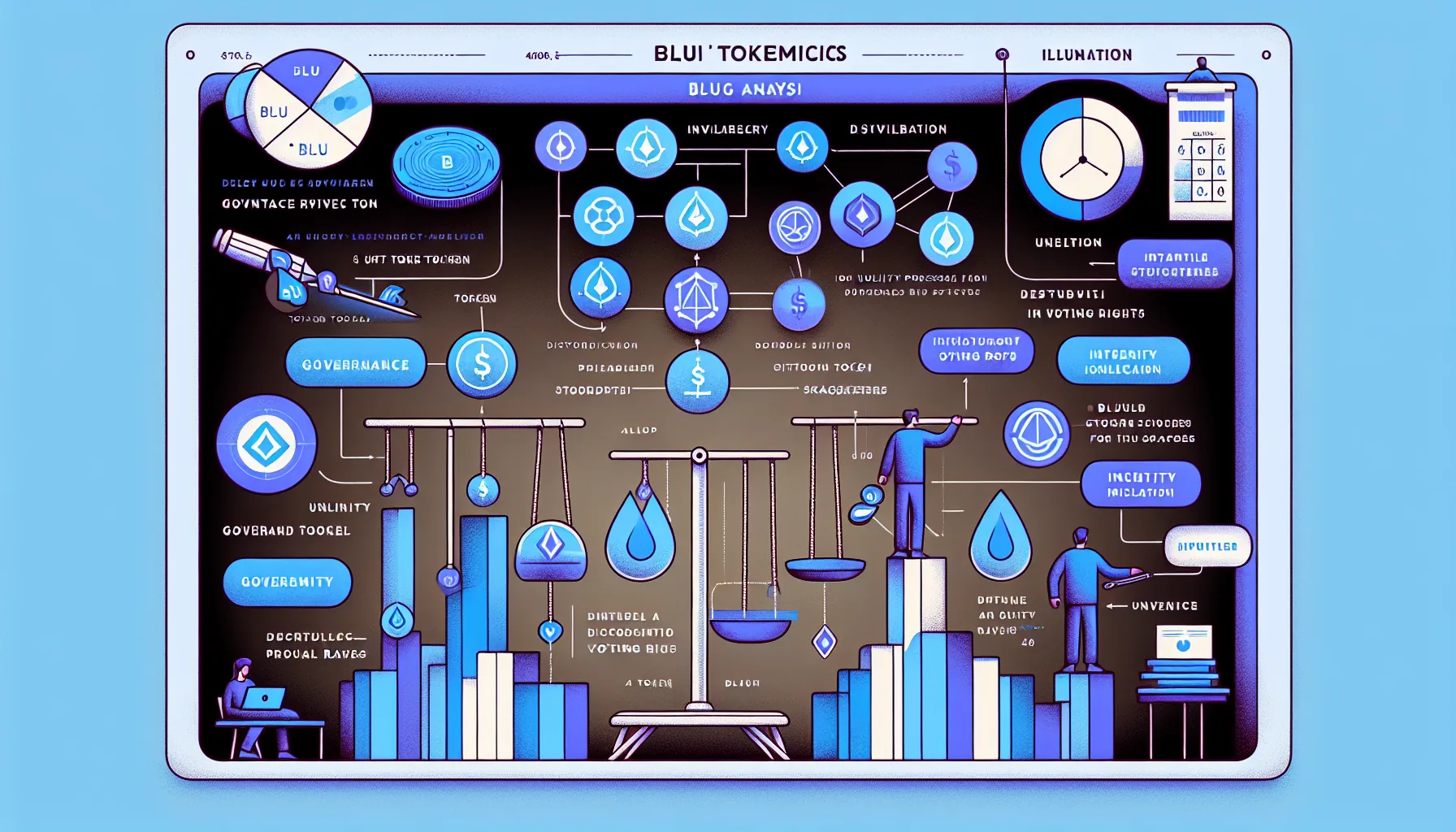
BLUR Tokenomics
BLUR Tokenomics: Critical Insights into Utility and Distribution
BLUR’s tokenomics is structured to support its role within the Blur ecosystem as a governance token and key mechanism for aligning incentives within its NFT marketplace. Its design is rooted in decentralized principles, with an emphasis on fostering user participation and liquidity provisioning. However, certain aspects, such as supply distribution and inflationary pressure, require careful analysis from investors and participants.
Token Supply and Allocation
The total supply of BLUR is capped at a fixed amount, which is distributed across several stakeholder categories. A significant portion is allocated to early adopters and contributors via retroactive airdrops, rewarding early platform activity such as listing and bidding. While this mechanism stimulates initial demand and engagement, retroactive rewards can result in disproportionate holdings concentrated among early participants, potentially leading to centralization risks if improperly managed.
Blur also commits a substantial allocation to its DAO treasury, designed to fund platform development, infrastructure scaling, and community-driven initiatives. While this approach bolsters long-term sustainability, concerns about how treasury funds are governed and spent remain critical. Transparent DAO governance will be crucial to minimize misuse and ensure community alignment.
Emission Schedule and Potential Inflation
The release schedule of BLUR is structured to ensure liquidity but may introduce inflationary pressures over time. While this gradual unlocking incentivizes ongoing ecosystem participation, it could dilute token value if demand fails to grow in parallel with emissions. Market participants should monitor the emission rate closely, as well as the events surrounding periodic token unlocks, which may cause volatility.
Governance and Utility
BLUR’s utility primarily derives from its role in platform governance, enabling token holders to vote on protocol updates, fee structures, and airdrop mechanisms. This introduces a higher level of decentralization, but voter apathy or reliance on substantial holdings to influence proposals may limit true community representation. Moreover, as BLUR’s utility is currently concentrated on governance, its dependence on market cycles and user activity highlights potential vulnerabilities in extended bear markets.
Incentive Misalignment
A recurring critique of BLUR’s tokenomics lies in the heavy reliance on airdrops and short-term incentives to drive growth. While this approach can rapidly bootstrap platform engagement, it risks creating a "mercenary capital" problem, wherein users participate solely for rewards without genuine long-term commitment. For sustainability, the ecosystem must transition from incentive-driven growth to value-driven participation, fostering organic utility that transcends speculative engagement.
By closely examining BLUR’s tokenomics, participants can better understand both its potential strengths and critical risks, ensuring more informed decision-making in this evolving ecosystem.
BLUR Governance
BLUR Token Governance: Decentralizing Control in the NFT Marketplace
The governance framework of BLUR token stands at the core of its decentralized approach to managing the ecosystem. As the native governance token for Blur, an NFT marketplace built for professional traders, BLUR empowers token holders to actively influence decisions surrounding the platform's development, operations, and resource allocation. However, beneath the appearance of decentralization, several considerations and potential challenges emerge.
Voting Dynamics and Decision-Making Power
BLUR token holders participate in governance decisions through on-chain voting mechanisms. Key proposals could include adjustments to the marketplace fee structure, development of new trading tools, integrations with other protocols, or treasury management strategies. While this system appears inclusive, governance token distribution inherently impacts who wields the majority of influence. Critics have raised concerns about the concentration of voting power, as early adopters, team members, or venture capital stakeholders typically acquire a significant portion of tokens during initial distributions. This concentration can skew decision-making toward the interests of a minority, rather than the broader user base.
Proposal Framework and Accessibility
To initiate changes within the Blur ecosystem, token holders can submit governance proposals. However, drafting and navigating governance proposals often require technical expertise and in-depth familiarity with the platform's inner workings. This prerequisite could unintentionally exclude smaller, less technically-inclined participants, reducing the diversity of voices in the decision-making process. Moreover, high voting thresholds required for proposal approval might slow down the pace of innovation, as reaching consensus can often prove challenging in decentralized setups.
Treasury and Resource Management
BLUR token governance also encompasses control over Blur's community treasury. The treasury serves as a critical tool for funding ecosystem growth initiatives, from platform development to marketing campaigns and partnerships. While decentralized treasury management is theoretically beneficial, its execution poses significant risks. Poorly thought-out funding proposals, insufficient oversight, or misallocations could drain resources, harming the platform’s long-term sustainability. Ensuring transparency in fund disbursements and establishing robust accountability measures remains an area requiring constant vigilance.
Potential for Governance Token Stagnation
Governance participation through BLUR is only as effective as the engagement levels of its holders. Like many crypto projects with governance tokens, Blur faces the risk of voter apathy—a situation where the majority of token holders choose not to participate in decision-making processes. This trend could undermine the platform’s decentralization ethos, leaving governance decisions to a small, committed minority while the rest remain passive observers.
BLUR’s governance framework offers a pathway toward decentralized decision-making but is not without challenges. Concentrated voting power, complex participation processes, and potential inefficiencies raise valid concerns regarding the effectiveness of BLUR token governance in serving the diverse interests of its community.
Technical future of BLUR
Current and Future Technical Developments of BLUR: A Deep Dive into the Roadmap
BLUR, a decentralized protocol designed for NFT marketplace aggregation and advanced trading mechanisms, has been focusing on defining its technical capabilities while laying the groundwork for future advancements. As the NFT ecosystem grows, understanding BLUR’s technical trajectory is essential for both developers and users operating in its environment.
Current Technical Framework
The BLUR platform is underpinned by its robust multi-signature wallet support, efficient order-matching algorithm, and real-time data streaming for market analytics. These technical features have been central to BLUR’s positioning as a high-performance aggregator. The reliance on Layer 2 (L2) scaling solutions has further optimized transaction finalities and lowered gas fees, making frequent NFT trading feasible. However, this reliance also introduces potential bottlenecks as L2 solutions themselves face scalability concerns.
BLUR’s use of off-chain data for accelerated order placement introduces opportunities for speed but raises questions about censorship resistance, especially in scenarios where centralized off-chain servers are compromised. Further, integrating various marketplace APIs into a single cohesive interface provides users with flexibility, but the system’s ability to handle API versioning changes or outages has shown occasional fragility.
Near-Term Developments: Enhancing Protocol Efficiency
Key near-term upgrades include the deployment of a broader decentralized architecture to reduce dependency on centralized off-chain components. Plans are in place to introduce zk-SNARK integration, which aims at enhancing transaction privacy while maintaining verifiability. This development can provide a competitive edge in maintaining trader confidentiality but will require careful implementation to avoid overriding transparency—a critical factor in blockchain trust.
Improved gas efficiency is also on the agenda with proposals for further leveraging Ethereum Virtual Machine (EVM)-compatible scaling technologies. However, these upgrades hinge on ongoing community consensus and audit readiness, presenting delays compared to competitors who have already implemented similar solutions.
Long-Term Roadmap Aims: Interoperability and Governance
Future iterations of BLUR focus significantly on interoperability with other blockchain ecosystems, including non-EVM chains. By creating cross-chain bridges, the protocol intends to expand its reach and liquidity pool. However, this introduces added complexity and an increased attack surface for potential exploits.
On the governance front, BLUR plans to incrementally decentralize decision-making through DAO mechanisms. While promising, DAO-based governance faces known challenges such as low voter participation and governance capture by highly vested participants. There is also limited clarity on how contentious upgrades will be balanced against trading reliability, leaving room for community skepticism.
BLUR’s technical ambitions align with addressing the increasing demand for scalability, security, and user control, though it remains subject to challenges inherent to decentralized protocol growth and multi-chain expansion efforts.
Comparing BLUR to it’s rivals
BLUR vs OpenSea: A Detailed Comparison of Decentralized NFT Marketplaces
When comparing BLUR to OpenSea, it’s important to focus on the mechanics and philosophies underpinning each platform. While both cater to the NFT ecosystem, their approaches differ significantly, particularly in terms of governance, fee structures, and user prioritization.
Decentralization and Governance
BLUR positions itself as a decentralized, community-first platform, distributing governance to its users through its native token, $BLUR. This decentralization model empowers collectors and traders with decision-making capabilities, such as defining platform fees and other operational policies.
OpenSea, on the other hand, operates as a more centralized entity. While the marketplace has historically dominated NFT trading, its centralized governance has drawn criticism, especially from segments of the Web3 community that value transparency and user autonomy. This centralized approach sometimes leads to slower adaptability when responding to emerging trends or user demands.
Fee Structures
BLUR has gained traction among active traders due to its competitive fee system. By allowing users to set custom royalty payments or even bypass royalties altogether, BLUR directly caters to professional NFT traders seeking to maximize profitability. This disruptive approach has been applauded in some circles but heavily criticized by NFT creators, who rely on royalties for sustainable income.
OpenSea, in contrast, enforces standard royalty payments for creators, a feature that has historically been seen as pro-artist. However, the mandatory royalty model has been labeled rigid by critics who argue that it alienates traders and limits scalability for frequent buyers and sellers. OpenSea’s relatively higher fee structure (including platform fees) can also deter high-volume users, amplifying BLUR’s appeal to cost-conscious traders.
Trading Experience
From a user interface and functionality perspective, BLUR focuses on the needs of pro-level traders. Its advanced analytics tools, snipe functionality, and portfolio management cater to users executing swift trades and managing multiple assets in real-time. The minimalist yet data-dense dashboard sets BLUR apart for those prioritizing speed and efficiency.
OpenSea, in comparison, leans toward accessibility for a broader audience. Its user-friendly interface is tailored for newcomers to NFTs, but lacks the granular tools demanded by power users. This simpler interface makes it approachable but less appealing for traders seeking deeper customization and control.
Aggregate Marketplaces & Liquidity
BLUR’s aggregator functionality provides users with access to multiple marketplaces in a single dashboard, creating greater liquidity and reducing the need to hop between platforms. For traders, this efficient pooling of listings optimizes execution speeds and price discovery.
OpenSea, while deeply integrated into the NFT space, has traditionally not prioritized aggregation. This creates a siloed ecosystem, which some view as less efficient for liquidity optimization compared to BLUR.
Community and Brand
Although BLUR is a newcomer, it leans heavily on building a trader-centric culture aligned with the ethos of decentralization. Conversely, OpenSea’s longstanding dominance in the market has afforded it brand recognition and trust, though this legacy status is sometimes seen as synonymous with slower innovation.
In summary, BLUR caters heavily to professional NFT traders with decentralized governance and cutting-edge tools, while OpenSea maintains its position as an established and accessible entry point for mainstream users. Both platforms have merits, but BLUR’s disruptive strategies better meet the needs of savvy traders willing to prioritize cost and efficiency over traditional models.
BLUR vs. X2Y2: A Detailed Comparison of NFT Market Dynamics
In the competitive landscape of NFT marketplaces, BLUR's rivalry with X2Y2 stands out due to their contrasting approaches to decentralization, fee structures, and incentive mechanisms. While both platforms cater to power users and traders seeking efficient NFT liquidity solutions, their underlying philosophies and operational nuances set them apart.
Decentralization and Governance
One of the distinguishing features of X2Y2 is its focus on a decentralized framework, which aligns closely with its staking and profit-sharing model. X2Y2 token holders are incentivized to participate in governance decisions, shaping the platform’s evolution through community votes. However, critics have pointed out that, in practice, decision-making can be influenced disproportionately by large token holders, leading to concerns over centralization within the governance process. BLUR, while also decentralized, chooses to focus on speed and user experience over direct participatory governance, potentially appealing to traders who prioritize performance over community-driven input.
Fee Model Comparison
X2Y2's fee model gives it a unique edge in the NFT ecosystem. It allows sellers to customize their royalty fees, offering flexibility that was initially praised as innovative. This buyer-friendly approach, however, has sparked significant backlash from creators who feel sidelined by declining royalty payments. In comparison, BLUR takes a different stance by optimizing royalty fees through aggressive discounting strategies aimed at fostering high-frequency trading. This divergence reflects contrasting priorities: X2Y2 emphasizes a balance between creator compensation and marketplace control, whereas BLUR is laser-focused on liquidity and trade efficiency.
Incentive Mechanisms
X2Y2 has heavily leaned on staking rewards and commission-sharing to attract users, an approach that has brought in a dedicated audience of stakers and traders. However, the sustainability of these incentives has been questioned, considering the inflationary pressure caused by consistent reward distributions. BLUR, in contrast, has experimented with engaging users through airdrops and gamified trading mechanics, which some argue offer more dynamic, albeit short-term, engagement. This difference highlights a fundamental tradeoff: X2Y2’s incentives are geared towards long-term platform loyalty, while BLUR prioritizes grabbing immediate market share.
User Interface and Experience
When comparing interfaces, X2Y2 has faced criticism for being less intuitive, particularly for users accustomed to highly streamlined platforms. The complexity of managing staking rewards, coupled with fewer real-time trading tools, can alienate high-frequency traders. BLUR capitalizes on this gap by providing a fast and feature-rich platform tailored for professional users. However, the simplicity and efficiency of BLUR’s interface come at the cost of onboarding accessibility for new or less technologically proficient users.
Both platforms serve different niches within the NFT ecosystem, but their contrasting models underscore critical differences in user priorities, operational strategies, and community engagement challenges.
BLUR vs. LOOKS: A Detailed Comparison of NFT Marketplace Tokens
When examining BLUR in relation to other NFT-focused crypto assets, one noteworthy rival is LOOKS, the native token of the LooksRare platform. Both cater to participants in the NFT ecosystem, but their approaches to incentivization, user experience, and token utility reveal critical differences.
Incentivization Models: BLUR's Gamification vs. LOOKS' Passive Rewards
LOOKS primarily gained traction through significant staking rewards and trading fee revenue sharing, intended to draw in both traders and liquidity providers. LOOKS token holders can stake their tokens to earn a portion of marketplace fees, promoting passive income opportunities. While this model initially proved effective in onboarding users, it has faced criticism for unsustainable token emissions, leading to inflationary pressure over time. Some savvy participants argue that this approach prioritizes speculative staking over ecosystem usage, creating barriers to long-term value retention.
In contrast, BLUR uses a more active gamification model, rewarding traders for platform engagement, such as listing NFTs or placing bids. However, this hands-on approach can lead to market inefficiencies, as incentivized behaviors sometimes distort actual demand. The stark difference between passive and active reward mechanics creates a divergence in how each project develops user loyalty, particularly among professional NFT traders.
Fee Structures and Trader Appeal
LOOKS distinguishes itself with a competitively low trading fee structure, targeting traders who are cost-conscious and willing to explore alternatives to established marketplaces. Lower fees often directly appeal to high-frequency NFT traders looking to maximize profitability. However, fees alone may not guarantee user retention, as criticisms around platform liquidity and diversity in NFT collections have persisted since launch.
BLUR, on the other hand, aggressively courts pro-level traders with zero royalties as a default setting, challenging royalty reliability across the ecosystem. This decision has sparked a heated debate within the NFT community, with creators and collectors polarized over the ethical implications. While both BLUR and LOOKS aim to reduce barriers, their fee-related strategies reflect contrasting philosophies about who ultimately benefits—creators, collectors, or traders.
Tokenomics and Market Perception
LOOKS tokenomics are shaped by heavy token issuance and a reward pool system, which some argue can dilute token value over time. Critics of LOOKS suggest that this economic structure has resulted in a diminishing interest after its explosive early success. BLUR's tokenomics, while tightly controlled at launch, leave open-ended questions about sustainability, especially as it scales.
Both platforms continuously adapt their models to attract NFT market participants. However, LOOKS’ initial focus on passive rewards and revenue sharing continues to define its trajectory, despite emerging challenges to maintain engagement in a highly competitive market.
Primary criticisms of BLUR
Primary Criticism of BLUR: Challenges Facing the Token and Ecosystem
-
Centralization Concerns
One of the most prominent criticisms of BLUR stems from accusations of centralized decision-making within its governance framework. Despite being marketed as a decentralized platform, some crypto-savvy observers note that the core team and early stakeholders wield significant influence. This disproportionate power dynamic raises concerns about the long-term decentralization of both the protocol and its value proposition. Critics argue that such centralization enables decisions that may disproportionately benefit insiders at the expense of broader community interests. -
Sustainability of Token Incentives
BLUR heavily relies on token-based incentives to attract and retain users. While incentivization mechanisms such as high rewards for participation or usage are effective in the short-term, they bring long-term sustainability into question. High rewards can dilute the token value over time, and there’s skepticism about whether the platform can retain user interest once rewards are reduced or removed. This approach may incentivize “mercenary capital,” where users are primarily motivated by returns rather than genuine engagement with the underlying ecosystem. -
Limited Differentiation in a Crowded Market
The crypto space is saturated with platforms and tokens promising innovation, speed, and lower fees. Critics argue that BLUR struggles to differentiate itself meaningfully from competitors. While it may have introduced notable features or approaches, these are often seen as iterative rather than revolutionary. Naysayers suggest the project’s marketing often overshadows its actual technical or functional edge, creating a gap between expectations and the reality of what the protocol provides. -
Regulatory Risks
Like many crypto assets, BLUR faces mounting concerns over regulatory scrutiny. The way its tokenomics and user incentives are structured could eventually attract legal challenges, particularly in jurisdictions with strict securities laws. Some crypto purists worry that potential regulatory intervention could lead to operational disruptions, token delistings, or even reclassification of the token’s utility status. These risks create a layer of uncertainty that critics emphasize as a weakness. -
Potential Sybil Attack Vulnerabilities
The platform's mechanisms for rewarding users may expose it to Sybil attacks, where bad actors exploit systems by creating multiple fraudulent nodes or accounts to reap higher rewards. If protections against such attacks aren’t robust enough, these vulnerabilities could undermine the fairness and security of the ecosystem while eroding trust among legitimate users. -
Community Governance and Participation Issues
While BLUR claims to operate under a decentralized governance model, critics highlight low participation rates from its token-holder community. Active engagement in voting and decision-making is often concentrated in a small subset of participants, reducing the efficacy of governance proposals and leading to perceptions of disillusionment within the wider community.
These criticisms illustrate some of the significant challenges the BLUR token and ecosystem are currently contending with, reflecting broader uncertainties around its long-term viability.
Founders
The Founding Team Behind BLUR: Innovators Shaping NFT Marketplace Dynamics
The BLUR crypto asset originates from the decentralized NFT marketplace Blur, which is backed by a specialized founding team that blends experience in blockchain development, finance, and Web3 product architecture. Though the project's creators have embraced a community-centric ethos, the team has chosen to maintain a semi-anonymous public presence—a hallmark of some successful crypto projects, but also a point of contention for transparency-focused investors.
At its core, BLUR's development was spearheaded by Pacman, a pseudonymous figure in the crypto space, who has positioned themselves as the public face of the team. Pacman’s technical expertise reportedly stems from a background of studying computer science at a leading U.S. university, coupled with professional experience at both tech-focused startups and major trading firms. This blend of exposure effectively bridges the divide between efficient platform design and navigating liquidity-centric markets. Critics, however, have highlighted the reliance on anonymity as a potential trust gap, particularly for users accustomed to fully doxxed teams.
Notably, Blur has benefited from the strategic involvement of Web3-native engineers, product designers, and market analysts who collectively address pain points in the existing NFT marketplace ecosystem. The team’s ability to execute features like gas-optimized trading contracts and an advanced user interface for high-frequency traders is indicative of a deep understanding of the intersection between NFTs, DeFi, and user behavior. However, the lack of fully disclosed team member details occasionally raises questions about accountability, especially as the project scales.
The BLUR token itself reflects the team’s desire to build a decentralized platform where the community governs its trajectory—a goal supported by significant venture capital partnerships during the early stages of development. While this approach fosters innovation, some in the crypto space remain cautious about the role of VC influence in supposedly decentralized projects. The founding team's association with notable blockchain investors has spurred debates regarding equitable token allocation and potential centralization risks.
In summary, the founding team of BLUR is a mix of determined builders and strategic thinkers, whose semi-anonymous operational style and early reliance on venture capital provoke both admiration and skepticism. Their ability to maintain user trust while prioritizing protective decentralization mechanisms will remain a critical element for community acceptance.
Authors comments
This document was made by www.BestDapps.com
Sources
https://blur.io/
https://blur.io/whitepaper
https://etherscan.io/token/0x5283d291dbcf85356a21ba090e6db59121208b44
https://docs.blur.foundation/
https://dune.com/LucaNet/Blur-Marketplace-Analytics
https://community.blur.io/
https://medium.com/@blur_io
https://twitter.com/blur_io
https://www.coingecko.com/en/coins/blur
https://coinmarketcap.com/currencies/blur/
https://github.com/blur-dev
https://app.blur.io/
https://blurdao.com/
https://opensea.io/assets/blur
https://defillama.com/chain/blur
https://cryptoslate.com/coins/blur/
https://nftnow.com/blur/
https://academy.binance.com/en/articles/blur-marketplace-and-token-explained
https://blurscan.io/
https://rekt.news/protocol-profile-blur/


