History of BLD2
The History of BLD2: Development, Challenges, and Key Milestones
BLD2 emerged as a response to the limitations of first-generation blockchain networks, aiming to bring enhanced scalability and interoperability. The early development phase was rooted in addressing bottlenecks seen in legacy protocols, with the project’s initial architecture prioritizing modular design and cross-chain functionality.
Early Development and Launch
The initial whitepaper outlined a vision for a high-throughput, governance-driven ecosystem that would integrate with multiple blockchain infrastructures. Early testnet phases encountered significant hurdles, particularly in optimizing consensus mechanisms and ensuring efficient finality without compromising decentralization. These challenges led to several revisions in the technical framework before a stable version of the network was deployed.
Governance and Protocol Adjustments
Following the mainnet rollout, BLD2 saw multiple governance proposals aimed at refining its staking model and validator incentives. Some of the initial economic parameters led to centralization concerns, as a small subset of validators gained disproportionate influence. Community-driven governance played a crucial role in adjusting slashing conditions and fine-tuning inflationary mechanics to ensure long-term sustainability.
Security Incidents and Network Upgrades
BLD2’s early iterations faced security vulnerabilities that prompted urgent patching efforts. A notable exploit in the smart contract layer resulted in a temporary halt of certain network operations, pushing developers to introduce a more rigorous auditing process. Subsequent hard forks addressed these concerns while also enhancing the network’s ability to process higher transaction volumes.
Market Adoption and Liquidity Challenges
Despite strong technological foundations, early market adoption of BLD2 was hindered by liquidity fragmentation. Initial exchange listings provided some traction, but trading volumes remained inconsistent compared to competing assets. Efforts to bridge liquidity across multiple chains were met with varying success, with some cross-chain implementations experiencing delays due to unforeseen technical dependencies.
Ongoing Developments and Roadblocks
BLD2’s evolution continues to be shaped by governance decisions and protocol optimizations. While significant progress has been made in network efficiency, unresolved concerns around validator centralization, governance participation rates, and long-term economic sustainability remain subjects of active debate within the community.
The asset’s history reflects both the challenges and adaptability required to maintain a competitive presence in the broader crypto ecosystem.
How BLD2 Works
How BLD2 Works: Mechanisms, Utility, and Risks
BLD2 operates on a delegated proof-of-stake (DPoS) consensus mechanism, meaning token holders can delegate their stake to validators who secure the network. This system ensures fast finality and low-latency transactions while relying on an incentive structure that rewards both validators and delegators with protocol-generated rewards. However, validator centralization risks exist, particularly if staking concentration leads to governance imbalance or diminished network security.
Staking and Governance Incentives
BLD2 is integral to governance and staking, where token holders participate in network upgrades and parameter adjustments via on-chain voting. Delegating BLD2 provides proportional governance power, but a limitation arises when smaller stakeholders effectively lose influence compared to large BLD2 holders. Governance efficiency depends on active participation, but voter apathy or collusion among major stakeholders can undermine decentralization.
Transaction Settlements and Smart Contract Execution
BLD2 is used to pay for transaction execution, smart contract deployments, and network fees. While this ensures continuous demand for BLD2, it also means users must hold a balance for network interactions. High transaction throughput and low fees improve scalability, but potential network congestion, validator performance bottlenecks, or fee model inefficiencies can create friction for users.
Native Utility and Interoperability
BLD2 facilitates cross-chain interoperability through an integrated bridging mechanism, allowing seamless asset transfers between compatible networks. The security of this interoperability mechanism depends on bridge validators and underlying smart contract security, which introduces potential vulnerabilities if poorly maintained or exploited. Additionally, cross-chain interaction complexity can deter non-technical users from fully utilizing these functions.
Inflationary Emissions and Supply Dynamics
Network incentives for validators and delegators are distributed via inflationary token emissions, directly impacting BLD2’s circulating supply. While this sustains staking rewards, excessive inflation risks diluting token value over time. Emission rates are adjustable via governance, but if changes occur too frequently or unpredictably, they could create instability in staking yields and overall economic predictability.
Slashing and Economic Risks
Validators engaging in malicious activities or failing to meet performance requirements can be slashed, leading to partial loss of staked BLD2. While slashing strengthens network security, it also introduces delegation risks—particularly for users who stake with underperforming validators. Additionally, long unbonding periods limit immediate liquidity for stakers, making delegation a trade-off between security participation and fund accessibility.
Use Cases
Exploring BLD2's Primary Use Cases
1. Governance and Protocol Decision-Making
BLD2 plays a critical role in the governance of its respective blockchain network. Holders can participate in on-chain voting mechanisms that influence protocol upgrades, parameter adjustments, and strategic decisions. Token-based governance can be efficient, but it also comes with centralization risks if a small number of large holders exert disproportionate influence. Low voter participation is another issue, often leading to governance decisions being made by a minority of active token holders rather than reflecting broader stakeholder consensus.
2. Network Security and Staking Incentives
A major utility of BLD2 is securing the network through staking. Token holders can lock up BLD2 to contribute to consensus mechanisms, earning staking rewards in return. While this provides a financial incentive to secure the blockchain, it also introduces risks related to slashing penalties if validators engage in malicious activity or fail to perform correctly. Additionally, staking can lead to liquidity constraints, as tokens must remain locked for specific periods to participate.
3. Fee Payments and Transaction Settlements
BLD2 is utilized for transaction fees within its ecosystem, ensuring that users pay for interactions like smart contract executions and asset transfers. This mechanism aligns incentives by reducing spam transactions while providing a consistent demand for the token. However, scalability concerns arise if transaction costs become unpredictable during periods of network congestion, potentially limiting usability for smaller participants.
4. Collateralization in DeFi Applications
Within the decentralized finance (DeFi) ecosystem, BLD2 serves as collateral for lending, borrowing, and synthetic asset issuance. By locking up BLD2, users can access liquidity without selling their holdings. That said, volatility in valuation can pose risks, especially in undercollateralized systems where token price fluctuations result in forced liquidations. The reliance on smart contracts also introduces potential exploit vectors, requiring rigorous security measures.
5. Interoperability and Cross-Chain Utility
BLD2 is designed to function across multiple blockchain ecosystems, acting as a bridge asset for interoperability use cases. This enhances its utility beyond a single network, allowing it to be used in multi-chain applications. While cross-chain compatibility expands use cases, it also increases exposure to security risks, especially in bridge protocols that have been historically vulnerable to exploits.
6. Incentives and Ecosystem Growth
A portion of BLD2 is often allocated for ecosystem development, including grants, developer incentives, and liquidity mining programs. These initiatives foster adoption but also raise concerns over long-term sustainability. Over-reliance on token emissions for incentivization can lead to sell pressure, potentially impacting the asset’s broader economic model.
BLD2 Tokenomics
BLD2 Tokenomics: Supply Mechanics, Emissions, and Utility
Fixed or Elastic Supply Mechanism?
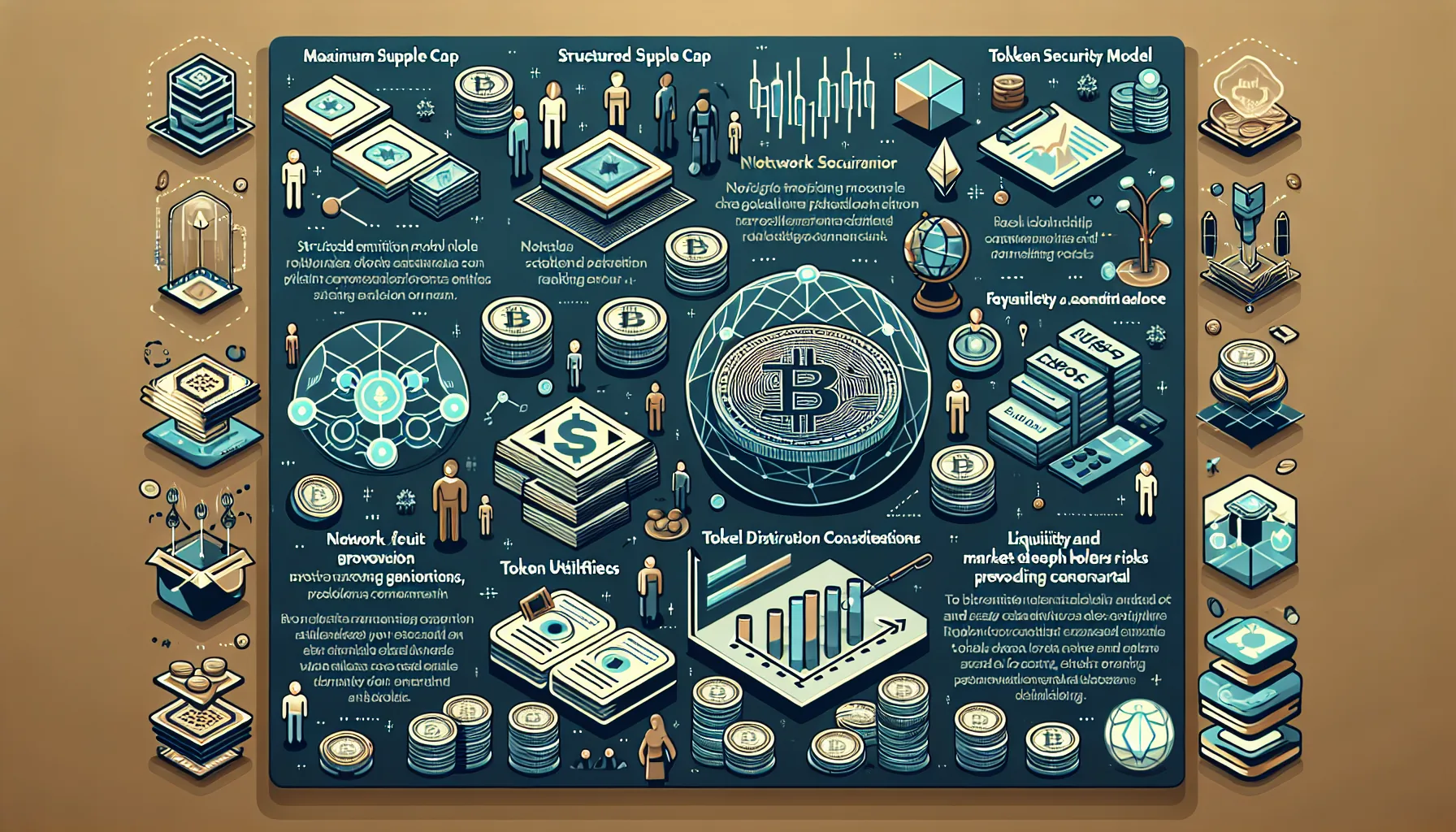
BLD2's supply structure is crucial in determining its long-term sustainability. The project has opted for a capped maximum supply, meaning no additional tokens can be minted beyond this threshold. However, vesting schedules and token unlocks impact the circulating supply over time, which can introduce periods of increased sell pressure.
Emission Schedule and Inflation Considerations
A structured emission model governs BLD2’s release into the market. Early distributions were front-loaded to incentivize adoption, with emissions gradually tapering. However, despite this controlled release, certain allocations—such as those for ecosystem incentives—remain a potential source of ongoing inflationary pressure. If demand does not scale in tandem, it risks downward price movements.
Staking and Delegation Incentives
BLD2 incorporates a staking mechanism where participants earn rewards for securing the network. While this provides a yield opportunity, staking emissions could lead to reward dilution over time, particularly if staking participation outpaces network growth. Staked tokens also introduce lock-up periods, impacting token liquidity.
Governance and the Role of Token Holders
BLD2 also acts as a governance token, allowing holders to influence protocol decisions. While this theoretically aligns incentives, governance participation rates often trend low in similar mechanisms, leading to control by a smaller subset of large holders. Additionally, smart contract governance structures can introduce on-chain inefficiencies if voting apathy prevails.
Utility Beyond Staking
Beyond staking, BLD2 is utilized for transaction fees, collateral, and ecosystem access. However, the challenge remains in ensuring sufficient demand for these utilities. If usage fails to grow alongside token emissions, inflationary risks increase.
Liquidity and Market Depth
BLD2’s liquidity is dictated by its exchange listings and incentive mechanisms. While market-making efforts sustain deeper order books, potential liquidity fragmentation across multiple platforms may impact price stability. A high percentage of supply locked in staking can also constrain freely available liquidity, creating volatility when large positions are moved.
Token Distribution and Concentration Risks
The token distribution model shows a division between team allocations, treasury reserves, investors, and community incentives. If early backers or large holders dominate supply, selling pressure from vested unlocks could introduce supply shocks. Monitoring how allocations shift over time is crucial for assessing centralization risks.
BLD2 Governance
Governance Mechanics of BLD2
BLD2 utilizes a governance framework that integrates on-chain voting with a delegation mechanism, allowing token holders to participate in protocol decisions. Governance proposals cover areas such as upgrades to smart contracts, changes to staking rewards, or modifications to network parameters.
On-Chain Voting Structure
Token holders vote directly on proposals using their BLD2 holdings. Voting power is proportional to the amount of tokens staked or actively delegated, ensuring that governance decisions are influenced by economic participation. The process typically follows a structured timeline:
- Proposal Submission – Anyone meeting the governance threshold can submit a proposal. Proposals often require a deposit to prevent spam submissions.
- Voting Period – Token holders cast their votes within a predefined window. Options generally include ‘Yes’, ‘No’, ‘No with Veto’, or ‘Abstain’.
- Quorum and Approval Requirements – Proposals must reach a predefined quorum to be considered valid. Some decisions, particularly protocol-critical changes, may require supermajority approval.
Delegation and Influence
BLD2’s governance incorporates delegation, enabling token holders to assign their voting power to other participants without transferring ownership. This delegation model encourages governance participation while allowing technically proficient or highly engaged members, often referred to as validators or delegates, to influence decisions. However, it also introduces concerns about centralization, with a concentration of power among large token holders or entities managing significant delegations.
Challenges and Participation Barriers
Despite an open governance structure, participation remains a challenge. A common issue is voter apathy, where a significant portion of holders do not engage in proposals, leading to governance being dictated by a relatively small percentage of active participants. Additionally, governance attack vectors exist, such as governance takeovers where a single entity or coordinated group accumulates enough delegated voting power to override decentralized decision-making.
Another notable challenge is the complexity of governance proposals. Highly technical or intricate proposals may deter participation from smaller holders who lack the expertise or time to analyze potential implications. This dynamic often shifts governance influence toward large stakeholders, developers, or institutional participants who have the resources to dissect and advocate for specific measures.
Governance Upgrades and Flexibility
While BLD2 governance operates under a predefined framework, modifications can be proposed and enacted through the same governance process. Governance evolution remains a balancing act between adaptability and preventing governance capture. Additionally, if structural changes require off-chain coordination or significant social consensus, execution may become delayed despite on-chain approval mechanisms.
Technical future of BLD2
BLD2 Technical Roadmap and Upcoming Developments
Scalability Enhancements and Layer 2 Integrations
BLD2’s roadmap includes multiple scalability solutions aimed at improving transaction throughput and efficiency. A key focus is the integration of Layer 2 technologies to offload transactions from the base chain while maintaining security guarantees. Optimistic and ZK-rollup implementations are under evaluation, with initial testing emphasizing transaction finality and gas optimization. However, these approaches introduce trade-offs, including potential delays in withdrawal finalization for certain rollup models.
Smart Contract Upgrades and VM Optimization
Upcoming versions of BLD2’s smart contract infrastructure will emphasize security hardening and gas efficiency. The development team is working on refactoring contract logic to reduce redundant state changes, which should lower execution costs. Additionally, research into alternative virtual machine (VM) compatibility, including WASM-based execution environments, continues. If adopted, this could enable cross-chain compatibility with ecosystems prioritizing WASM over EVM. However, implementing such changes requires extensive auditing, potentially slowing deployment.
Cross-Chain Interoperability Expansions
BLD2 is advancing its cross-chain interoperability by integrating additional bridge protocols and native support for inter-blockchain messaging frameworks. The roadmap outlines phased deployment of new bridging mechanisms to improve asset transfer efficiency and reduce reliance on centralized custodians. However, the security risks associated with multi-chain interactions remain a concern, with past exploits in the ecosystem serving as case studies for improved security architectures.
Validator and Network Decentralization Initiatives
The validator set expansion is a core priority aimed at enhancing the resilience of BLD2’s network. Current initiatives involve reducing staking centralization by adjusting delegation mechanics and incentivizing broader validator participation. However, ensuring network security while decentralizing stake distribution is a persistent challenge, as larger validators continue to dominate participation. The roadmap specifically addresses governance proposals to mitigate these imbalances.
Privacy and Zero-Knowledge Proof Research
BLD2 developers are exploring integrating zero-knowledge proof (ZKP) methodologies for transaction privacy and verification efficiency. Preliminary work on ZK-SNARK and ZK-STARK implementations suggests potential improvements in scalability and confidentiality. However, computational overhead and integration complexity remain obstacles, requiring further refinement before mainnet deployment.
Governance and Protocol Upgrade Mechanisms
A streamlined governance framework is in development to increase transparency and efficiency in protocol upgrades. Planned improvements include adjusting on-chain voting systems and refining incentive structures to prevent governance manipulation. The move towards a more modular upgrade system aims to reduce migration risks but requires extensive testing to ensure backward compatibility with existing smart contract infrastructure.
Comparing BLD2 to it’s rivals
BLD2 vs. BTC: A Comparative Analysis
Consensus Mechanism and Security
BLD2 and Bitcoin (BTC) differ significantly in their consensus mechanisms. BTC relies on Proof of Work (PoW), ensuring security through computational power and economic incentives for miners. This approach has made Bitcoin the most battle-tested and secure blockchain, but it also results in high energy consumption and slower transaction finality.
In contrast, BLD2 operates on a consensus model that prioritizes speed and efficiency. While this allows for quicker transactions and lower fees, it does introduce concerns around decentralization and network resilience, particularly when compared to Bitcoin’s robust and widely distributed network of miners.
Scalability and Transaction Speed
Bitcoin's design prioritizes security and decentralization, but this comes at the cost of scalability. With its 10-minute block time and constrained block size, BTC struggles with throughput, often leading to network congestion and increased fees during periods of high demand. Off-chain solutions like the Lightning Network attempt to address this, but adoption and usability challenges persist.
BLD2 takes a different approach, focusing on native scalability within its architecture. By leveraging a more efficient consensus model and optimized block propagation, BLD2 achieves higher transaction throughput with significantly faster finality. However, this comes with trade-offs in terms of validation decentralization, as higher efficiency often coincides with a more permissioned or semi-trusted validator set.
Economics and Token Utility
Bitcoin operates as a pure store of value with minimal programmability. Its fixed supply of 21 million BTC and strong network effects have cemented its position as "digital gold." However, its lack of native smart contract functionality limits its use cases beyond value transfer and settlement.
BLD2 incorporates more utility within its ecosystem. Token holders may have governance rights, participate in staking, or access additional functionalities embedded within its protocol. While this utility adds more potential value to BLD2, it also exposes the asset to additional risks related to governance centralization, smart contract exploits, and evolving economic incentives.
Network Effect and Adoption
Bitcoin benefits from unparalleled brand recognition, liquidity, and institutional adoption. It has become the default crypto asset for long-term investors, sovereign wealth funds, and corporate treasuries seeking a hedge against traditional financial systems.
BLD2, being a newer asset, does not yet command the same level of trust or adoption. While its technical advantages may make it more appealing in certain applications, it faces an uphill battle in establishing the same level of credibility and network effect that Bitcoin has cultivated over time.
BLD2 vs ETH: A Technical and Functional Comparison
Smart Contract Ecosystem and Execution
Ethereum (ETH) pioneered the smart contract revolution with its robust virtual machine (EVM), enabling a vast ecosystem of decentralized applications (dApps). BLD2, while adopting a different architectural approach, aims to improve upon Ethereum’s strengths by optimizing execution efficiency and scalability. Unlike Ethereum’s current reliance on gas fees denominated in ETH, BLD2 introduces a distinct resource allocation model designed to reduce network congestion and offer more predictable transaction costs. However, the extent to which this model can sustain heavy network demand remains an open question.
Consensus Mechanism and Network Security
Ethereum’s transition to Proof-of-Stake (PoS) with Ethereum 2.0 fundamentally altered its security and participation structure, reducing reliance on energy-intensive mining while introducing staking-based network validation. BLD2 also employs a PoS-based mechanism but differentiates itself with a specific validator incentive structure aimed at improving decentralization and reducing centralization risks commonly associated with high-capital staking models. While this approach may offer benefits in theory, its long-term resilience under network stress has yet to be fully tested.
Transaction Costs and Throughput
Ethereum’s scalability challenges are well-documented, leading to high gas fees during periods of network congestion. Layer 2 solutions and rollups have mitigated some of these issues, but base-layer transaction fees can still be volatile. BLD2 attempts to address this directly on Layer 1 with optimized block propagation and parallel processing capabilities. While this may result in lower transaction costs compared to Ethereum’s mainnet, real-world adoption and network effects will determine the effectiveness of BLD2’s approach when subjected to significant usage levels.
Developer Ecosystem and Tooling
Ethereum benefits from an extensive developer ecosystem, with well-established tooling such as Solidity, Hardhat, and Foundry. BLD2’s compatibility with existing crypto development frameworks impacts its adoption potential—if it requires significant new tooling, developer onboarding could become a friction point. While BLD2 may offer performance benefits, fragmentation in developer ecosystems often slows adoption, making Ethereum’s long-established infrastructure a difficult competitive benchmark.
dApp and DeFi Integration
Ethereum dominates DeFi and NFT markets, with most major protocols initially launching on its network. BLD2’s approach to interoperability, asset liquidity, and smart contract execution speed will play a crucial role in determining whether it can attract similar levels of adoption. While its architecture may introduce advantages in efficiency, Ethereum’s massive liquidity pools and strong network effects present a significant hurdle for any competitor attempting to capture market share.
BLD2 vs. Solana (SOL): A Detailed Comparison
Consensus Mechanism and Network Performance
BLD2 and Solana (SOL) utilize fundamentally different consensus mechanisms. Solana employs Proof-of-History (PoH) combined with Proof-of-Stake (PoS) to achieve high throughput and low transaction costs. This approach enables sub-second block finality and tens of thousands of transactions per second (TPS) under ideal conditions. However, its reliance on high-performance hardware means validator participation is resource-intensive, leading to concerns over decentralization.
BLD2, in contrast, leverages a unique consensus model, which emphasizes a balance between security, decentralization, and speed. While it does not match Solana’s raw TPS capacity, it offers more predictable network reliability. Solana has experienced multiple high-profile network outages, often due to validator congestion or design flaws, which have raised questions about its suitability for mission-critical applications.
Smart Contract Execution and Developer Experience
Solana’s smart contract architecture relies on Rust and C-based development via its own execution environment. While Rust offers security advantages and low-level control, the learning curve can be steep for developers accustomed to Ethereum-based environments. Solana’s parallel processing model (Sealevel) provides unique efficiency benefits but requires a specialized approach to transaction structuring.
BLD2, on the other hand, provides compatibility with EVM and alternative frameworks, reducing the barrier to entry for developers already familiar with Ethereum-based tooling. This makes it easier for existing dApps to migrate or launch cross-chain applications. Solana, despite its speed advantages, has struggled with attracting long-term developer ecosystems due to its distinct programming model and recurring technical issues.
Decentralization and Validator Infrastructure
A frequent criticism of Solana is its high hardware requirements, which limit node participation and create a more centralized validator set. Many SOL validators operate under the infrastructure of a few large entities, raising questions about the resilience of the network against coordinated attacks or failures.
BLD2, in contrast, has focused on reducing validator hardware overhead, allowing for broader participation without requiring enterprise-grade infrastructure. This contributes to a more decentralized validator set, though it may come at the cost of transaction speeds compared to Solana’s approach.
Gas Fees and Cost Considerations
Solana is well known for its extremely low transaction fees, often costing fractions of a cent. This makes it attractive for high-frequency trading, NFT minting, and DeFi applications. However, there have been instances where fee spikes during congestion events hurt usability.
BLD2, while maintaining competitive fees, implements dynamic fee adjustments to better handle network congestion. This ensures more predictable costs for users while avoiding Solana’s occasional struggles with fee predictability during peak demand.
Primary criticisms of BLD2
Primary Criticism of BLD2
Concerns Over Token Utility and Adoption
One of the main criticisms of BLD2 is the uncertainty surrounding its real-world utility and adoption. While the project presents a compelling vision, some critics argue that its use cases remain too niche or undefined to sustain long-term demand. Without widespread integration into crypto ecosystems or traditional finance, concerns persist about whether the token's utility is strong enough to drive organic adoption beyond speculative trading.
Tokenomics and Inflationary Pressures
Another frequent point of contention is BLD2’s tokenomics, particularly the emission schedule and inflation rate. If token supply expands too aggressively, it risks diluting existing holders and suppressing long-term price appreciation. Some observers question whether the token model properly balances incentives for security, governance, and ecosystem growth without leading to unsustainable token emissions. The design choices in this area directly impact staking rewards, lock-up mechanisms, and overall holder incentives.
Decentralization and Governance Criticism
Decentralization is often a key selling point for blockchain projects, but some critics argue that BLD2’s governance structure may not be entirely in the hands of a distributed community. Large token holders, early adopters, or affiliated entities could wield disproportionate influence over network decisions. If governance power becomes too concentrated, it may undermine the protocol's credibility within decentralized finance (DeFi) communities. Additionally, governance participation rates are a concern—low voter engagement can lead to critical decisions being made by a small number of stakeholders.
Liquidity Constraints and Market Depth
A challenge that some crypto traders highlight is the liquidity profile of BLD2. If the token’s trading volume and market depth are insufficient, it may experience higher slippage and greater price volatility during large trades. This can discourage institutional players and active market participants who require deep liquidity to execute sizable orders efficiently. Limited exchange listings or fragmented liquidity across multiple decentralized exchanges (DEXs) can compound this issue.
Interoperability and Ecosystem Limitations
The ability of BLD2 to integrate seamlessly with existing blockchain infrastructures and cross-chain protocols is another area where skepticism arises. If compatibility with major smart contract platforms or interoperability with other chains remains limited, the token’s functionality may be constrained. Without robust bridges or native support in widely adopted DeFi applications, the network effect of BLD2 could be weaker compared to competing assets that have prioritized interoperability from the outset.
Founders
Founding Team of BLD2: Background, Expertise, and Challenges
The founding team of BLD2 consists of experienced blockchain developers, cryptographers, and industry veterans with prior involvement in decentralized finance (DeFi), Layer 1 blockchain development, and interoperability protocols. Their collective expertise spans smart contract security, protocol architecture, and decentralized governance, contributing to BLD2’s technical foundation. However, despite their track record, questions remain regarding execution speed and long-term commitment.
Key Members and Their Blockchain Experience
Several core team members have previously worked on Layer 1 blockchain projects, including modular blockchain frameworks and high-performance consensus mechanisms. A few have backgrounds in cryptographic research, playing key roles in ensuring BLD2’s security architecture. Others come from traditional finance and fintech, bringing risk management perspectives to the design of its staking and reward mechanisms.
The founding team has maintained a public presence within the crypto community, engaging in panel discussions and developer conferences. However, their level of transparency when addressing technical setbacks has been inconsistent. Some critics argue that while the developers are highly skilled, their communication around roadmap adjustments or delays is lacking, raising concerns about governance responsiveness.
Challenges in Execution and Development
The BLD2 team launched with ambitious technical goals, including building a robust validator ecosystem and optimizing gas efficiency. However, early development cycles faced delays, reportedly due to resource allocation issues and discrepancies in project priorities. Some developers left the team during critical periods of testnet development, prompting community concerns about internal stability.
Additionally, while the founding team has deep blockchain expertise, some argue that the project lacks strong go-to-market leadership. The absence of a clear business development strategy in the early phases led to slow adoption, placing additional pressure on community-driven growth initiatives.
Community Perception and Governance Approach
While the BLD2 team originally promoted a decentralized governance ethos, decision-making has occasionally leaned toward core team directives rather than full community participation. Some governance proposals, especially those related to tokenomics adjustments, were introduced with minimal prior discussion, leading to backlash within the community.
Despite these issues, the team has demonstrated a willingness to iterate on governance structures, incorporating feedback from validators and liquidity providers. However, their ability to balance decentralization with efficient protocol upgrades remains a topic of debate among stakeholders.
Authors comments
This document was made by www.BestDapps.com
Sources
- Official Website
- Whitepaper
- Yellowpaper
- GitHub Repository
- Tokenomics Overview
- Governance Documentation
- Smart Contract Audit
- Medium Blog
- Roadmap
- Developer Documentation
- Blockchain Explorer
- Official Announcements
- DAO Forum
- Discord Community
- Community Governance Proposals
- Liquidity Pools and Staking
- Ecosystem Partnerships
- Technical Papers
- Bug Bounty Program