History of BLD
The History of BLD: From Inception to Evolution
BLD, the native token of the Agoric ecosystem, has a history deeply rooted in the development of secure smart contracts and composable decentralized finance (DeFi). The vision for BLD emerged as part of the Agoric project’s core objective: bridging traditional JavaScript development with blockchain infrastructure. This alignment aimed to lower barriers for developers wanting to build decentralized applications (dApps) while prioritizing security and usability.
The origins of BLD trace back to Agoric's foundational work in creating programmable money using safe, deterministic code. The team, composed of experts in software engineering, cryptography, and financial system design, recognized early challenges in creating a scalable and composable protocol. A significant step in BLD’s history was aligning the token’s purpose with the ecosystem’s goals. BLD was designed not only as a governance token but also as a staking asset to ensure the security of Agoric’s proof-of-stake blockchain. This dual use case differentiated it from many other tokens in the crowded crypto landscape, though it raised questions among some in the community about diluted usability or fragmented token incentives.
One pivotal milestone in BLD's timeline was its token distribution phase, which sought to ensure a broad allocation across strategic stakeholders while avoiding speculative concentration. However, the allocation process wasn’t without its controversies. Critics argued that the vesting schedules and initial allocations favored private investors and early backers, potentially marginalizing retail participants. This sparked debates within the Agoric community, highlighting the often-contentious balance blockchain projects must strike between funding and decentralization.
The history of BLD is also closely tied to Agoric’s chain upgrades and the introduction of key DeFi primitives like the native stability token, IST (Inter Protocol Stable Token). These developments were central to increasing BLD’s utility within the ecosystem. However, scalability constraints, particularly related to onboarding JavaScript developers into the blockchain space, have slowed adoption more than some anticipated. Additionally, as competition among DeFi protocols intensified, questions arose about whether Agoric’s unique engineering focus would be enough to distinguish BLD.
BLD's journey is marked by a deliberate approach to community-driven governance and utility expansion. Yet, challenges surrounding complexity, competition, and community inclusivity have remained focal points in its evolving narrative, sparking both innovation and debate.
How BLD Works
How BLD Crypto Asset Works: A Technical Breakdown
The BLD token operates as the native governance and utility asset within the context of the Agoric blockchain, a platform that emphasizes leveraging decentralized finance (DeFi) with smart contract functionality. At its core, BLD is engineered to power key economic mechanisms across the ecosystem, fulfilling roles both as a staking token and as a fundamental component for securing network operations.
Staking and Security of the Agoric Chain
BLD holders play a direct role in maintaining the security of the Agoric chain, which is built on the Cosmos SDK with Tendermint consensus. Token holders have the option to delegate or stake BLD with validators to support transaction processing and block validation. Staking incentivizes users through a reward mechanism derived from transaction fees and network inflation. However, delegating BLD exposes stakeholders to potential slashing risks if a validator underperforms or behaves maliciously, which could deter participation depending on individual risk tolerance.
Governance Functionality
In addition to securing the network, BLD tokens give holders a voice in Agoric's governance framework. Token stakers can participate in protocol upgrades, parameter tuning, and broader decision-making processes. Governance decisions can directly impact ecosystem growth, but centralized tendencies among whale stakeholders pose a potential risk to decentralization values. The high barrier to entry for smaller participants in governance discussions may limit their influence relative to institutional or large-scale token holders.
Collateralization and Economic Utility
A unique feature of BLD lies in its ability to back the Agoric stable token (IST) through collateralization. By locking BLD as collateral, users can mint stable assets used in DeFi applications within the Agoric platform. This functionality ties BLD directly to ecosystem liquidity and use cases. However, collateralization mechanisms can be exposed to cascading risks during liquidity crises or high market stress, which could undermine the token's reliability in emergencies.
Smart Contracts and Ecosystem Integration
The Agoric chain prioritizes accessible development of smart contracts in JavaScript, making it a unique offering in the smart contract space. BLD plays a key operational role in this by integrating seamlessly into transaction fees and protocol operations. That said, reliance on JavaScript as a programming language may attract criticism from those wary of its inherent limitations or security vulnerabilities, potentially posing technical adoption challenges.
Inflationary Tokenomics
BLD's inflationary model is programmed to balance token supply relative to network needs. While inflation functions as a driver for validator rewards, it may also dilute token value for non-staked BLD, incentivizing participation but penalizing long-term holders who opt against staking.
Use Cases
Use Cases of BLD in the Crypto Ecosystem
BLD, as the native governance and utility token within the blockchain ecosystem it operates in, serves a multifaceted role that drives core functionalities and contributes to network decentralization. Here’s an in-depth look into its specific use cases:
1. Governance Participation
One of the primary use cases of BLD is enabling token holders to participate in on-chain governance mechanisms. This includes proposing, discussing, and voting on key protocol upgrades or economic parameters, such as fee structures or validator requirements. The governance framework allows for decentralized decision-making, theoretically ensuring that the network evolves in the interests of its stakeholders. However, the governance model is not without challenges. Concentration of BLD in the hands of a few entities can lead to governance capture, undermining the fairness and decentralization claimed by the protocol.
2. Staking and Security
BLD holders can delegate their tokens to validators for staking, a critical function in maintaining network security and achieving consensus. By staking BLD, users actively contribute to the blockchain’s security and earn staking rewards in return. However, staking introduces risks such as slashing penalties, which can occur for validator misbehavior or downtime. Moreover, the necessity of maintaining liquidity while staking can deter some participants, especially in scenarios where staked BLD becomes illiquid for extended periods.
3. Economic Alignment in the Ecosystem
BLD serves as the economic backbone of the ecosystem, aligning incentives among stakeholders. Validators, delegators, and developers benefit from its distribution mechanism, which supports various aspects of the network. Yet, such a model can lead to inflationary pressure if token emissions are too aggressive. Over time, this could erode the token’s value, presenting a potential deterrent for long-term holders.
4. Collateral in DeFi Applications
Depending on its integration within decentralized finance (DeFi) platforms, BLD can act as collateral for lending, borrowing, or synthetic asset creation. While this expands its utility, the reliance on BLD as a singular collateral asset could expose users to liquidation risks during extreme market downturns, as its value is correlated to the health of the blockchain ecosystem it supports.
5. Bridging Across Chains
BLD is also used in cross-chain applications, offering interoperability through bridging solutions. These facilitate transferring BLD between supported networks, broadening its usability. However, cross-chain bridges are inherently complex and prone to vulnerabilities, including potential exploits and downtime, which could impact the token's usability and security.
Final Note on Considerations
The outlined use cases for BLD underline its integral role within its ecosystem, while also exposing critical points of concern. As the ecosystem grows, the effectiveness and challenges of these use cases will play a pivotal role in shaping its adoption and functionality.
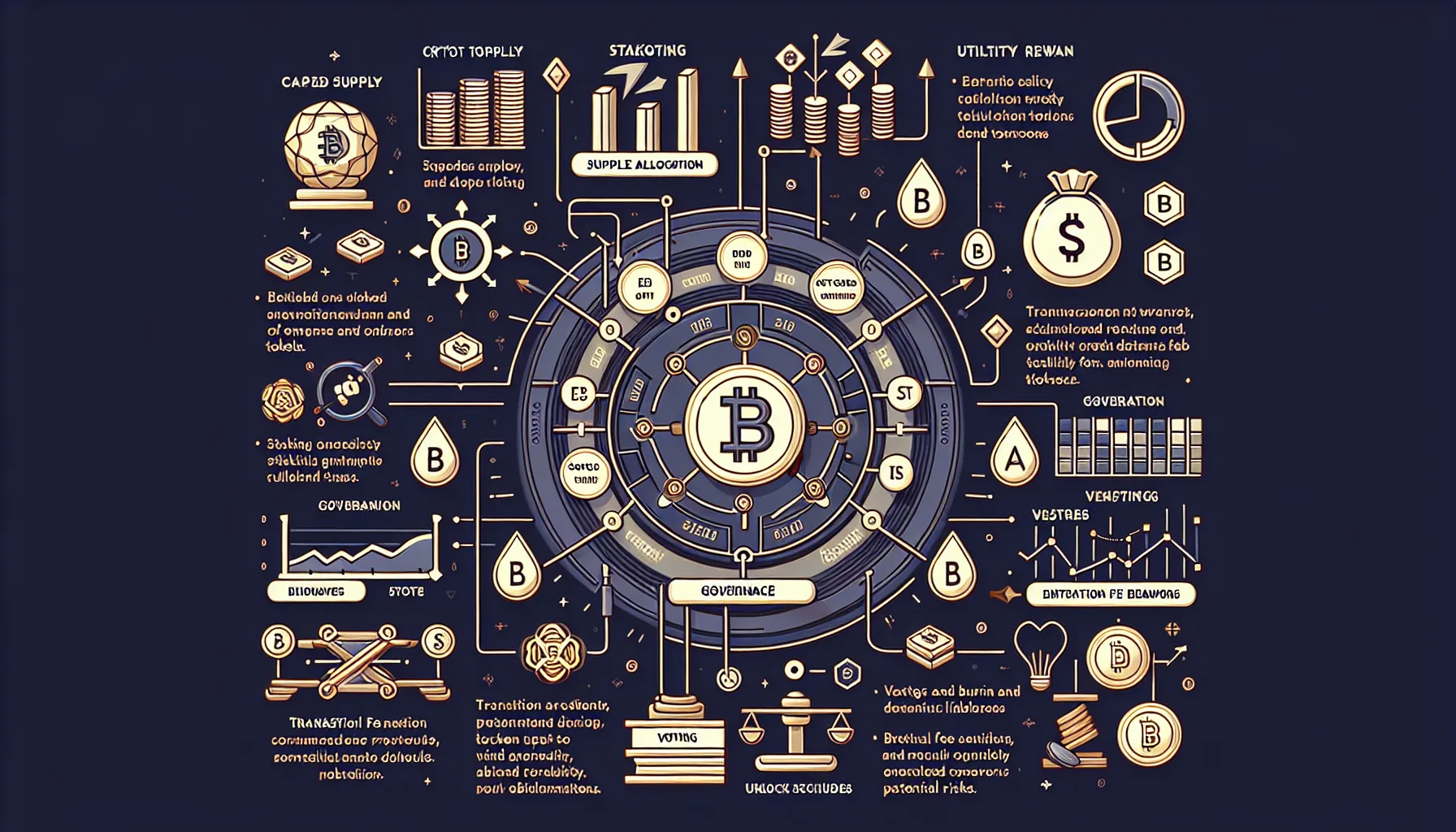
BLD Tokenomics
BLD Tokenomics: A Detailed Breakdown
Supply and Allocation Strategy
The tokenomics of BLD (short for "Build") revolves around a careful distribution model aimed at incentivizing network participation while balancing supply dynamics. The total supply is capped, ensuring scarcity, which aligns with common practices in the crypto landscape. However, BLD doesn't rely solely on fixed supply mechanics. Instead, a portion of the supply is allocated to an emissions-based reward structure, which introduces inflationary pressure over time. This dualistic approach, while fostering participation, can pose long-term risks if inflation mechanisms aren’t tied to sustainable value creation.
Staking and Rewards Mechanisms
BLD integrates staking as a core element of its tokenomics. By staking BLD tokens, participants actively secure the network and, in return, earn inflation rewards and potentially participate in governance. While this encourages token lockup and reduces circulating supply, the reward structure could inadvertently create sell pressure if staking yields are disproportionately high compared to organic demand for the token. Furthermore, the reward emissions schedule needs to be monitored, as overly aggressive emissions could dilute token value and discourage long-term holding.
Governance Rights
A unique aspect of BLD’s tokenomics is its use in decentralized governance. Token holders are granted voting power proportional to their holdings, enabling them to influence protocol upgrades and key decisions. However, this governance model could potentially centralize power unless implemented carefully. Wealthy stakeholders or entities with large token reserves could dominate decision-making, limiting the efficacy of "decentralized" governance.
Utility and Burn Mechanisms
BLD derives utility from its role in transaction fee payments, staking, and governance participation. Additionally, fee-based burn mechanisms are being explored in an attempt to counterbalance inflation by removing tokens from circulation. While burn models are effective in theory, their success depends entirely on the network's transaction volume. If usage remains low, the burn rate will not sufficiently neutralize token emissions, potentially leading to downward price pressure over time.
Vesting and Unlock Schedules
The tokenomics of BLD employs vesting schedules for early stakeholders, including developers, investors, and ecosystem participants. While this aligns incentives over the long term, periodic token unlocks could introduce sell pressure. Such events need to be communicated transparently to avoid misinterpretation as sudden liquidity flooding the market, which could harm perception.
Potential Risks and Challenges
While BLD’s tokenomics are well-thought-out in theory, several factors warrant concern. Dependency on staking for token demand creates a risk of liquidity crunches if yield-seeking behavior wanes. Additionally, governance mechanisms could face centralization risks, particularly if wealth disparity among stakeholders widens. Lastly, the token's inflation mechanics must remain aligned with adoption growth; failure to manage this balance could lead to market dilution concerns.
BLD Governance
Governance in BLD: Decentralized Decision-Making and Stakeholder Influence
BLD, as the native governance token of its ecosystem, plays a critical role in shaping the future direction of the protocol through decentralized governance mechanisms. Token holders are empowered to participate in a wide range of governance activities, from proposing changes to voting on protocol upgrades, parameter adjustments, and policy implementations. However, the governance model, while ambitious in its decentralization goals, presents certain challenges alongside its opportunities.
A core feature of BLD's governance is its token-weighted voting system, where the influence of a participant's vote is directly proportional to the amount of BLD they hold or have delegated to them. This creates a system where larger stakeholders can have significant power in driving decision-making. While this structure is efficient in incentivizing active participation, it raises concerns around centralization of influence. Wealthier actors or entities with higher token holdings may dominate critical votes, potentially sidelining the preferences of smaller holders and the broader community.
The ability to delegate votes further complicates this dynamic. While delegation can increase voter turnout—an issue common in many decentralized governance setups—it also introduces risks of power consolidation if delegates amass disproportionate control without meaningful accountability. This places a heavy burden on token holders to consistently monitor the activities and decision-making patterns of their chosen delegates.
Another governance consideration in the BLD ecosystem is the proposal process itself. While intended to encourage open participation, creating a viable proposal often requires a deep understanding of the protocol, technical expertise, and coordination with the community. This high barrier to entry can inadvertently exclude less technically advanced stakeholders from fully engaging in governance, limiting the diversification of voices in protocol decision-making.
Economic incentives also shape governance participation in BLD. The staking mechanism, which ties token utility and rewards to network security, impacts how and when users engage in governance. For instance, users who stake their BLD might prioritize short-term yield optimization over long-term strategic planning when voting on proposals. Misaligned incentives between securing immediate tokenholder value and achieving the protocol’s broader goals can create friction in governance outcomes.
On-chain governance mechanisms in BLD rely heavily on transparency and immutability but are not immune to governance attacks or exploitation. Coordination failures and vulnerability to malicious actions, such as vote buying or proposal spam, remain active challenges.
Governance within the BLD ecosystem reflects both the potential and pitfalls of decentralized protocols, requiring ongoing experimentation and refinement to ensure robust, equitable, and sustainable decision-making.
Technical future of BLD
Current and Future Technical Developments in BLD: A Deep Dive into the Ecosystem's Evolution
Enhancements to Protocol Efficiency and Scalability
BLD has been iterating its technical architecture to address the common bottlenecks of transactional speed, scalability, and cost-efficiency. The development team has focused on optimizing its consensus mechanism, aiming to reduce latency without sacrificing security or decentralization. Recent improvements leverage modular design principles, enabling streamlined upgrades to core functionalities with minimal disruption to the network. However, some in the community have raised concerns about the fragmentation of these updates, potentially leading to compatibility challenges for node operators who fail to upgrade in sync.
The introduction of novel data sharding methods is also under discussion, with a focus on achieving higher throughput for decentralized applications (dApps) deployed in the BLD ecosystem. While promising, this approach may introduce challenges related to cross-shard communication complexity, an area where prior implementations by other projects have historically struggled.
Governance Upgrades for Decentralized Decision-Making
A significant portion of ongoing development efforts is directed toward enhancing the on-chain governance model. The team has proposed transitioning from a rudimentary token-weighted voting system to a more nuanced quadratic voting mechanism. While this aims to combat governance centralization by large token holders, it introduces potential vectors for collusion and gaming, particularly in its quadratic structuring.
Additionally, efforts to establish autonomous governance modules via smart contract libraries are underway. These aim to reduce manual intervention in executing governance votes while increasing transparency. However, rolling out such automation necessitates exhaustive testing to mitigate the risk of malicious proposal execution or vulnerabilities in governance mechanisms.
Interoperability Initiatives via Cross-Chain Bridges
Looking to expand its ecosystem, BLD is implementing cross-chain communication protocols to facilitate asset and data transfers between different blockchains. These bridges, leveraging standards like IBC (Inter-Blockchain Communication), aim to position BLD as a hub within the broader crypto ecosystem. Despite the opportunities, cross-chain bridges are prone to security risks, and the long-term resilience of BLD's approach remains contingent upon continuous audits and active community oversight.
Future Features: Privacy and Tokenomics Refinements
Discussions about introducing privacy-enhancing technologies (e.g., zero-knowledge proofs) have gained traction. These developments aim to provide higher transactional privacy while maintaining regulatory compliance. However, integrating such features without hindering usability or compliance will be a complex issue.
On the tokenomics side, updates to staking reward models are being explored, particularly around dynamic inflation control to mitigate potential value dilution. This move aligns with addressing long-term economic sustainability but has sparked debates over its impact on smaller stakeholders.
Comparing BLD to it’s rivals
Comparing BLD to ATOM: Ecosystem Design and Interoperability
When analyzing BLD against ATOM, the most noticeable differences lie in the core design philosophies, governance mechanisms, and interoperability frameworks that define these crypto assets. Both projects aim to support blockchain scalability and ecosystem development but take divergent approaches with unique implications for the respective communities.
Interoperability: Layer Protocols vs. Modular Frameworks
BLD operates as a central element of the Agoric platform, which emphasizes JavaScript smart contracts and composability within its chain's economy. Its integration with the Cosmos SDK makes it natively interoperable with other chains in the Cosmos ecosystem via Inter-Blockchain Communication (IBC). However, while BLD benefits from this modularity, its broader appeal, especially among developers, is gated by how effectively Agoric’s ecosystem can encourage innovation. Compared to ATOM, which positions itself as the cornerstone of the Cosmos Hub, BLD’s dependency on Agoric’s unique developer tooling (JavaScript-focused) could create barriers for adoption. Many developers still lean toward industry-standard languages like Solidity or Rust, potentially limiting cross-ecosystem utility.
ATOM, on the other hand, revolves around enabling hubs and zones for interconnected chains, offering greater flexibility for developers who want to launch new projects without being tied to specific programming languages. This flexibility arguably positions ATOM as a more neutral participant in the ecosystem, especially for teams creating highly tailored blockchains. BLD’s reliance on JavaScript as a "familiar" language appeals to web developers, but ATOM’s broader reach in terms of blockchain-agnostic tooling attracts a more diverse mix of use cases.
Governance and Incentives: Specialized vs. Generalized
BLD is designed with a clearly defined purpose, ensuring economic security for the Agoric platform by backing its native stablecoin, IST (Inter Stable Token). This specificity serves as both a strength and a possible limitation. While it clarifies BLD’s role within its ecosystem, it also makes it less versatile compared to ATOM, which has adopted a more generalized utility within the Cosmos network. ATOM’s role extends beyond securing the Cosmos Hub, as holders influence ongoing upgrades and governance decisions across the broader ecosystem.
BLD governance focuses on Agoric-specific proposals, which carries the inherent risk of centralization within a smaller ecosystem. Issues may arise as BLD holders have less direct influence over the larger Cosmos-connected landscape compared to ATOM stakers, who are directly vested in decisions shaping interchain developments.
Scalability and Adoption Challenges
While both assets leverage Tendermint-based systems for consensus, ATOM's first-mover advantage as a Cosmos Hub token has resulted in wider adoption across IBC-enabled chains. BLD, being tied to the Agoric ecosystem, must contend with the need to grow that specific ecosystem significantly to compete at scale with the wider utility offered by ATOM. This becomes an adoption challenge, as convincing developers and users to build within Agoric rather than on the broader Cosmos Hub presents additional friction.
In summary, while both BLD and ATOM operate within the Cosmos ecosystem using IBC, their design trade-offs reflect fundamentally different priorities: BLD thrives on a focused, application-specific economy, whereas ATOM champions universal interoperability and modularity in Web3 infrastructure.
Comparing BLD to ETH: How They Stack Up
In the ever-evolving world of decentralized technology, BLD brings unique attributes to the table, yet its comparison to Ethereum (ETH), a veteran and foundational layer-1 blockchain, highlights distinct contrasts. Both BLD and ETH aim to enable decentralized ecosystems, but their fundamental approaches, network architecture, and user incentives vary significantly. Understanding these differences sheds light on how each fits into the broader crypto landscape.
Consensus Mechanism and Scalability
Ethereum recently transitioned to a Proof-of-Stake (PoS) consensus mechanism courtesy of the Merge, which has replaced its former energy-intensive Proof-of-Work (PoW). BLD, on the other hand, employs a PoS-based system tailored to support its native decentralized stablecoin infrastructure and governance functionalities. While both networks technically employ PoS, ETH’s staking ecosystem is far larger in scale and complexity, involving a multitude of validators, liquid staking derivatives like Lido, and node operators. Conversely, BLD stakes are tightly integrated into its ecosystem’s specific requirement of supporting collateralization processes and ensuring stability.
Scalability is a central challenge for ETH, which continues to rely heavily on an expanding layer-2 ecosystem (e.g., rollups, optimistic solutions) to offload traffic from its main chain. BLD’s ecosystem doesn’t face the same degree of congestion yet, as its focus is narrower, though this narrower focus means it does not yet match the modular extensibility achieved by the Ethereum network.
Ecosystem and Development
Ethereum's smart contract and developer tooling ecosystem is simply unmatched: it hosts the majority of DeFi, NFT, and DAO innovation, with developers widely adopting Solidity and the Ethereum Virtual Machine (EVM). BLD, while specialized and designed for its unique use case, operates in a smaller niche, which could limit developer interest in building extensive third-party projects or integrating in broader use cases.
BLD is not EVM-compatible, which is a clear drawback when compared to ETH’s highly interoperable design. This lack of compatibility could frustrate developers who are accustomed to Ethereum’s tooling and might hesitate to switch to an environment requiring new infrastructure and support systems. While this might promote ecosystem independence for BLD, it could equally hinder adoption compared to ETH’s universally recognized standards.
Fees and Accessibility
Ethereum’s fees (gas) remain a hotly debated issue. Even with Layer-2 solutions reducing costs for specific applications, base-layer transactions on Ethereum can become prohibitively expensive during times of congestion. In comparison, BLD achieves lower baseline fees due to its less congested ecosystem. However, achieving lower fees might also reflect its relatively limited adoption rather than an inherently superior mechanism.
ETH’s accessibility is also bolstered by its deep liquidity and inclusion on virtually all major exchanges, wallets, and DeFi dApps. BLD, while supported in select environments, does not yet enjoy this level of accessibility or integration, which could present friction for end users.
Comparing BLD and SOL: A Deep Dive into Performance and Utility
When evaluating BLD alongside its rival SOL, the conversation inevitably leads to a comparison of technical architecture, ecosystem maturity, and network dynamics. Both projects aim to address scalability, but their approaches and outcomes differ significantly.
Network Architecture
SOL's claim to fame lies in its hybrid consensus model, which combines Proof of Stake (PoS) with Proof of History (PoH). This design allows it to achieve theoretically high throughput, often touting figures in the tens of thousands of transactions per second (TPS). In contrast, BLD employs a design centered around Cosmos SDK infrastructure, which prioritizes modularity and interoperability. While this architecture is advantageous for building custom app-specific blockchains, it doesn't natively achieve the raw TPS that SOL advertises.
Where SOL runs into issues is in its trade-off of decentralization for speed. SOL validator requirements are resource-intensive, making it less accessible for those who want to participate in network security. In comparison, BLD may offer a more approachable validation process, in line with the broader ethos of decentralization, but at the expense of processing speed.
Ecosystem Development
The SOL ecosystem has been aggressively expanding in decentralized finance (DeFi), non-fungible tokens (NFTs), and other high-frequency transaction use cases. Its low fees and high speed have attracted a variety of dApps and developers. However, the centralization concerns and historical network outages have damaged SOL’s reputation among a subset of crypto enthusiasts.
For BLD, the focus leans more towards sovereign chain interoperability within its overarching ecosystem. While this is a strong selling point for developers looking to launch app-specific chains, it doesn’t necessarily cater to the high-throughput applications where SOL excels. As a result, BLD may lag in attracting developers for dApps that require instant finality and near-zero transaction fees.
Technical Challenges
One significant criticism of SOL is its network outages, which have sparked debate about its infrastructure’s reliability under stress. SOL has shown vulnerability in terms of downtime caused by high traffic or poorly optimized resource management. While BLD may not face this exact issue, its architecture is more conservative and could be considered less battle-tested in extreme conditions.
Additionally, SOL's focus on maximizing throughput sometimes leads to trade-offs in decentralization and security. For crypto developers seeking to avoid these risks, BLD's emphasis on stability and sovereignty might appear more appealing, albeit at the cost of throughput and network effect.
Perception in Crypto Circles
SOL's vibrant marketing and community-building have resulted in a strong, user-focused presence. However, there have been persistent whispers regarding centralization risks due to its validator design and VC-heavy backing. In contrast, BLD's profile among crypto-savvy audiences remains more niche and understated, aiming to appeal to builders prioritizing cross-chain flexibility over transaction speed. This narrower focus could limit its appeal in markets that reward rapid adoption and mass scalability—a space where SOL continues to stake its claim.
Primary criticisms of BLD
Primary Criticism of BLD: Navigating Challenges in Decentralized Governance and Tokenomics
One of the primary criticisms levied against BLD revolves around its decentralized governance framework, specifically its complexity and participation barriers. While decentralization is a cornerstone of blockchain ideals, critics argue that BLD's governance model may inadvertently alienate smaller token holders or less active community participants. Proposals and voting processes often require a deep understanding of intricate protocol mechanics, which can deter engagement from a more diverse demographic within the ecosystem. As a result, many governance decisions risk becoming disproportionately influenced by whales or highly active insiders, leading to centralization concerns within an ostensibly decentralized system.
Another issue frequently raised surrounds the tokenomics of BLD, particularly the potential inflationary pressure. Depending on how the token's distribution and staking rewards are structured, critics worry about dilution over time, which could erode value for long-term holders. This is further compounded by questions about the sustainability of staking yields and whether they incentivize genuine network participation or attract purely speculative behavior. Critics highlight that excessive reliance on staking rewards might create a "rate-chasing" environment, where participants prioritize short-term earnings over long-term network growth.
Interoperability is also a point of contention. While the technical ambitions of BLD are significant, skeptics point out the risk of overextending into too many areas without fully optimizing usability within its core ecosystem. Complex integrations with existing blockchain infrastructure or other decentralized applications sometimes lead to interoperability bottlenecks, hindering seamless functionality or adoption. This challenge is amplified when bugs or inefficiencies emerge, which can strain user confidence in the system and detract from wide-scale adoption.
Furthermore, critics of BLD's consensus mechanism often highlight concerns around scalability and validator incentives. As the network grows, managing cost-effective scalability while ensuring robust validator participation remains a delicate balancing act. This is especially true if validator incentives disproportionately benefit early adopters or disproportionately leave smaller operators at a disadvantage, raising questions about true economic decentralization.
Lastly, transparency in decision-making, particularly around developmental roadmaps and fund allocations, has occasionally been criticized as insufficient. While robust systems may exist to communicate updates, the perceived opaqueness in certain decisions or funding processes has stirred debate about whether BLD achieves the accountability expected of a fully transparent decentralized system.
These criticisms, while not universally agreed upon, remain central to the broader discourse surrounding BLD and its position within the crypto space.
Founders
The Founding Team Behind BLD: Builders of the Core Ecosystem
The BLD crypto asset is the product of a team with deep roots in decentralized technologies and blockchain innovation. This founding team comprises a blend of technologists, developers, and strategic thinkers. Their combined expertise in consensus mechanisms, decentralized application architecture, and token economics has played a pivotal role in shaping BLD’s underlying ecosystem. However, like many crypto projects, the team’s decisions have not been free from scrutiny within the ecosystem.
At the core, the BLD team has demonstrated a strong commitment to optimizing the blockchain’s scalability without compromising decentralization—a recurring focal point for many crypto assets. Key team members include individuals who were instrumental in developing elements of the ecosystem’s staking infrastructure and governance model. The emphasis on participatory governance reflects the team's dedication to decentralized decision-making, but critiques have been raised about whether this model overly prioritizes early adopters and insiders, potentially leading to governance over-concentration.
The team’s technical work indicates a preference for modular and interoperable infrastructure, a choice meant to ensure long-term adaptability in a rapidly evolving crypto landscape. A significant portion of the team previously participated in prominent open-source blockchain projects, bringing valuable experience to BLD’s development. However, some skeptics have pointed out that the team’s over-reliance on theoretical blockchain scalability solutions—while forward-thinking—leaves questions about their pragmatic implementation when real-world stress occurs on the network.
Transparency has been an area of both strength and criticism for the BLD team. On the one hand, the team has made efforts to engage its community through technical documentation, public forums, and regular updates. They’ve shared extensive details about the project’s underlying mechanisms, which experts in the space have analyzed and debated at length. On the other hand, certain aspects of the funding structure and token allocation processes have been met with demands for greater clarity. Critics argue that without more explicit disclosures, trust could erode over time, particularly in a space where community alignment matters deeply for success.
Finally, while the team’s technical acumen shines, less is known about their approach to long-term operational sustainability. As with many projects, questions about developer incentives and infrastructure funding persist. While these challenges aren’t unique to BLD, they are crucial topics for observers and participants aiming to contextualize the team's strategy within the larger crypto sphere.
Authors comments
This document was made by www.BestDapps.com
Sources
- https://agoric.com/whitepaper/
- https://agoric.com/
- https://github.com/Agoric/agoric-sdk
- https://blog.agoric.com/introducing-bld-token/
- https://github.com/Agoric/documentation
- https://medium.com/agoric/understanding-the-agoric-platform-and-bld-token-da8938f39f00
- https://docs.agoric.com/
- https://explorer.ustake.agoric.net/
- https://community.agoric.com/
- https://www.coingecko.com/en/coins/agoric
- https://coinmarketcap.com/currencies/agoric/
- https://github.com/Agoric/realms-shim
- https://github.com/Agoric/dapp-samples
- https://validator.agoric.com/
- https://medium.com/agoric/agoric-mainnet-phase-3-what-you-need-to-know-73eb40647e7
- https://docs.keplr.app/overview/agoric.html
- https://agoric.com/blog/
- https://www.stakingrewards.com/earn/agoric/
- https://forum.agoric.com/


