History of BICO2
The History of BICO2: Development, Launch, and Key Events
BICO2 emerged as a response to the growing demand for efficient, scalable, and sustainable blockchain infrastructure. Initially developed to optimize cross-chain interoperability, BICO2 sought to enhance transaction throughput while maintaining decentralization. The project’s early design was influenced by limitations observed in first-generation interoperability solutions, particularly concerning network congestion and high transaction fees.
Development and Early Milestones
The development of BICO2 was marked by extensive research into multi-chain bridging mechanisms and decentralized sequencing. A core focus was creating an architecture that could facilitate high-speed transactions without compromising security. The project's testnet phase gained significant traction among developers, with various stress tests undertaken to ensure network resilience against spam transactions and potential exploits.
One of the key early milestones was the introduction of a novel staking mechanism, which aimed to create a balanced reward structure for validators and delegators. However, this mechanism also faced criticism due to concerns over long bonding periods and capital inefficiency. Despite these challenges, early adoption within developer communities signaled strong interest in the network’s capabilities.
Token Generation Event and Network Challenges
The official launch of BICO2’s token generation event (TGE) was met with significant on-chain activity. Liquidity provision mechanisms were pre-structured to ensure a smooth initial rollout, but volatility in early trading highlighted the challenges of price discovery in emerging interoperability networks.
Within months of its launch, certain governance proposals sparked debate regarding staking incentives and validator centralization. Some participants raised concerns over the potential for stake concentration among a small group of entities, which could introduce security and governance risks. In response, protocol adjustments were proposed to rebalance delegation rewards and encourage broader participation.
Security Incidents and Smart Contract Upgrades
Like many emerging blockchain projects, BICO2 faced its share of security scrutiny. An early vulnerability in cross-chain messaging prompted a rapid patch, reinforcing the need for continuous security audits. Additionally, minor congestion issues surfaced as transaction volume increased, prompting a series of network upgrades focused on optimizing gas efficiency.
Another critical moment in its history was the implementation of enhanced smart contract standards. These upgrades allowed developers to build more complex dApps on the network, further expanding its utility. However, some early adopters voiced concerns over backward compatibility issues, requiring adjustments from teams building on the protocol.
Ecosystem Expansion and Strategic Partnerships
As the network matured, BICO2 began forming partnerships aimed at strengthening liquidity, expanding integrations, and fostering developer adoption. Liquidity incentive programs were rolled out to encourage protocol usage, though discussions continued regarding their long-term sustainability.
Throughout its trajectory, BICO2 has navigated technological progress alongside governance and security debates, shaping the project’s position within the broader interoperability landscape.
How BICO2 Works
How BICO2 Works: Mechanisms, Emissions, and Utility
BICO2 is a tokenized carbon credit asset that operates within a blockchain-based framework designed for transparency and traceability in carbon offsetting. It represents one metric ton of verified carbon dioxide (CO2) equivalent emissions, sourced from certified environmental projects. The mechanics of BICO2 involve token issuance, retirement, and secondary market trading, all occurring on a decentralized blockchain to ensure auditability and fraud resistance.
Tokenization and Verification
Each BICO2 token corresponds to a carbon credit originating from projects that adhere to established certification standards. These projects—such as reforestation, carbon capture, or renewable energy initiatives—undergo third-party audits to verify the legitimacy of the emission reductions. Once verified, carbon credits are tokenized and issued as BICO2, enabling their movement on a blockchain without reliance on traditional registries.
On-Chain Tracking and Retirement
A fundamental aspect of BICO2 is its retireability. When an entity uses BICO2 to offset its carbon footprint, the token is permanently removed from circulation via an on-chain retirement mechanism. This prevents double counting, a common issue in carbon markets, and ensures that each credit is used only once. However, the process relies on the integrity of the original issuer, and any flaws in verification methods, retroactive devaluations, or miscalculations in carbon accounting could impact the legitimacy of a token's offsetting claim.
Decentralized Trading and Liquidity Risks
BICO2 can be freely traded on compatible decentralized exchanges and token marketplaces, giving traders direct access to carbon credits without intermediaries. While this increases accessibility, it also exposes the asset to speculative trading, which may detach its price from the cost of actual emission reductions. Unlike regulated carbon markets, where prices are often stabilized through policy mechanisms, BICO2 exists within the volatility of a permissionless financial system. This can lead to rapid price swings influenced by demand surges or sell-offs unrelated to the real-world carbon market.
Potential Issues in Regulatory Compliance
BICO2 operates in a rapidly evolving regulatory landscape where government policies on tokenized carbon credits remain inconsistent. Some jurisdictions may challenge its validity as a compliance instrument, limiting its adoption among institutional players seeking regulatory certainty. Additionally, discrepancies in carbon credit quality—such as outdated methodologies or overestimated reductions—could undermine trust in tokenized credits if discrepancies come to light.
The efficiency of BICO2 depends on sustained verification credibility, active market demand, and regulatory clarity. While blockchain offers transparency, the reliability of the underlying carbon offsets remains a critical factor in the asset’s fundamental value.
Use Cases
BICO2 Use Cases: Utility in Carbon Offsetting and Blockchain Ecosystems
Tokenized Carbon Offsets
BICO2 is primarily used within carbon offset markets, allowing businesses and individuals to purchase tokenized carbon credits. These credits represent verified carbon reductions, enabling holders to offset their emissions in a transparent, blockchain-verifiable manner. Tokenization reduces inefficiencies in the traditional carbon credit market by improving liquidity, traceability, and accessibility. However, challenges remain, including regulatory uncertainty and discrepancies in carbon credit quality, which can impact the actual environmental benefits of the token.
On-Chain Compliance and ESG Reporting
Companies integrating environmental, social, and governance (ESG) strategies can leverage BICO2 for compliance reporting. The token’s presence on the blockchain ensures immutability of transactions, enabling verifiable proof of sustainability efforts. This can be particularly useful for corporations facing increasing pressure to disclose carbon footprints. However, reliance on blockchain-based transparency does not inherently solve the issue of greenwashing—some entities may accumulate BICO2 tokens without making meaningful sustainability improvements.
Integration With DeFi Protocols
BICO2 is also utilized in decentralized finance (DeFi), where it can be incorporated into liquidity pools, staked for rewards, or used as collateral. By assigning financial utility to carbon credits, the token encourages further market participation. However, the illiquidity of certain carbon credits and variations in verification standards may pose obstacles to widespread DeFi adoption. Additionally, fluctuating demand for carbon offsets can lead to inconsistent valuation, potentially impacting its use in lending and yield farming strategies.
Carbon-Neutral Transactions in Web3 and NFTs
Blockchain projects, including NFT marketplaces and decentralized applications, leverage BICO2 to offset transaction-related carbon emissions. This allows platforms to promote carbon neutrality by embedding offset mechanisms directly into smart contracts or payment flows. Despite its potential, effectiveness depends on the legitimacy of the carbon credits being tokenized—an issue that has plagued carbon offset markets due to inconsistent verification and double-counting risks.
Governance and Ecosystem Participation
In some implementations, BICO2 holders may have governance rights within carbon credit ecosystems. This could include voting on sustainability initiatives, project funding, or credit issuance policies. However, governance utility remains dependent on the level of decentralization within the platform, and centralized control over token issuance could limit the influence of token holders.
BICO2’s use cases demonstrate its role in both the carbon credit sector and blockchain ecosystems, but its impact relies on the credibility of tokenized offsets and the broader adoption of blockchain-based sustainability initiatives.
BICO2 Tokenomics
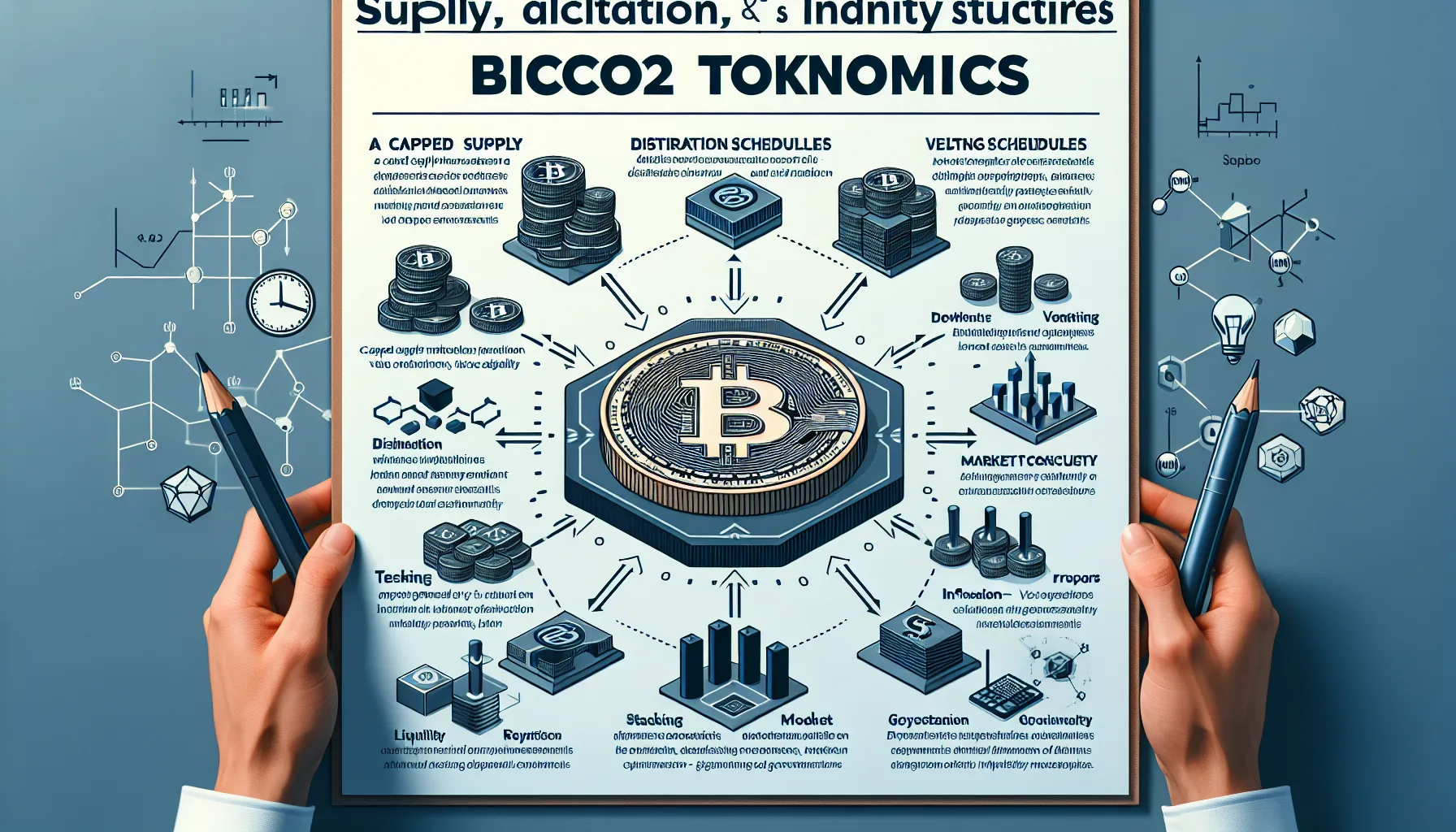
BICO2 Tokenomics: Supply, Allocation, and Incentive Structures
Fixed vs. Elastic Supply Considerations
BICO2 operates with a predefined supply mechanism designed to balance network incentives while maintaining long-term value stability. The total supply is capped, preventing inflationary dilution beyond the initial design. However, a predetermined emissions schedule governs the release of tokens into circulation, impacting short- and mid-term liquidity dynamics.
Allocation Model and Vesting Schedules
The token distribution includes allocations for early backers, ecosystem incentives, development funds, and the core team. A structured vesting period is implemented to mitigate early-stage sell-offs, with linear unlock mechanisms dictating token release over time. This approach aims to stabilize market impact but also introduces concerns regarding bulk unlock events that could lead to short-term volatility.
Staking and Network Participation
BICO2 incorporates staking incentives, allowing token holders to participate in securing the network while earning rewards. The staking yield is dynamically adjusted, balancing network security with economic feasibility. However, the risk of concentrated staking power remains a factor, as larger holders can potentially exert disproportionate influence over governance and reward distributions.
Utility Within the Ecosystem
The token’s primary utility extends beyond staking, integrating transaction fee settlements, governance voting, and liquidity provisioning. The governance mechanism enables token holders to influence protocol upgrades and treasury allocations. Fee-burning mechanisms help regulate supply over time, though their effectiveness depends on sustained network activity.
Liquidity and Market Considerations
Liquidity incentives are structured to encourage decentralized exchange (DEX) participation. However, reliance on incentive programs raises sustainability concerns once emissions taper off. Market depth fluctuates based on token unlock schedules and demand cycles, posing challenges for slippage-sensitive transactions.
Governance Implications and Token Holder Influence
A governance model underpins BICO2’s protocol adjustments, granting token holders voting power based on their stake. While this decentralized approach enhances community input, it also introduces governance concentration risks, where a small group of early adopters or institutional participants may disproportionately influence outcomes.
Inflationary vs. Deflationary Mechanics
While no new tokens are minted beyond the predefined supply, BICO2 incorporates controlled burning mechanisms to counteract supply expansion from staking rewards. The effectiveness of these deflationary measures hinges on transaction volume and uptake within its ecosystem, making long-term supply pressure a variable factor.
BICO2 Governance
Governance Mechanisms of BICO2: Structure, Voting Power, and Challenges
BICO2 governance is structured around a decentralized model, allowing token holders to influence protocol decisions. Governance is primarily executed through on-chain proposals, with voting mechanisms determining the implementation of changes. Token-based voting is the dominant structure, where governance power is proportionate to the amount of BICO2 held or staked. However, this introduces concentration risks, particularly if governance is dominated by a small number of large stakeholders.
Delegation and Proposal Mechanisms
BICO2 governance includes a delegation system, permitting holders to assign voting power to representatives. This can improve governance participation but also raises concerns about centralization if voting power becomes too concentrated among prominent delegates. Proposals typically require a minimum threshold of tokens to be submitted, ensuring that only serious or well-backed initiatives reach a vote.
Once a proposal is live, governance participants engage in voting, often with a predefined quorum. The quorum requirement is crucial to prevent low-participation votes from passing major changes but can also lead to governance stagnation if holders fail to participate actively.
Smart Contracts and On-Chain Execution
Decisions ratified through governance are often executed via smart contracts, removing the need for intermediaries. While this enhances transparency and eliminates counterparty risk, it also introduces potential attack vectors through governance attacks or vulnerabilities in the contract logic. If an exploit exists within a governance-controlled contract, malicious actors could hijack governance power to execute unintended protocol modifications.
Governance Token Concentration and Its Implications
A key issue with BICO2 governance, similar to other token-driven models, is the risk of governance token hoarding by a few influential entities. This dynamic can lead to oligarchic control, where significant protocol decisions are determined by a small group rather than a broader community. Moreover, governance mining or incentive-driven participation can distort decision-making, as actors may vote based on incentive structures rather than long-term protocol integrity.
Forking and Community Disputes
If governance disputes escalate without resolution, splintering or hard forks can occur. Governance disagreements in decentralized systems have historically led to contentious network splits, and BICO2 is not immune to these risks. If governance mechanisms fail to accommodate diverse viewpoints, dissenting participants could opt for creating a competing version of the protocol.
Technical future of BICO2
BICO2 Technical Roadmap and Upcoming Developments
Layer-2 Integration and Cross-Chain Expansions
BICO2’s development trajectory includes deeper integration with Layer-2 scaling solutions, aiming to mitigate network congestion and reduce transaction fees. The roadmap outlines bridging capabilities that will allow seamless asset movement across multiple blockchains, improving interoperability. However, cross-chain security remains a concern, with potential risks related to liquidity fragmentation and smart contract vulnerabilities. Developers are working on refining cryptographic proofs and optimizing relayer networks, but the complexity of ensuring trust-minimized interoperability remains a challenging aspect.
Smart Contract Enhancements and Gas Optimization
Ongoing protocol upgrades are targeting smart contract efficiency by implementing more streamlined execution paths and storage optimization. Gas fee reductions are a primary focus, with proposals for integrating newer EVM-compatible opcodes to minimize computation costs. However, despite these improvements, smart contract overhead and execution risks—such as re-entrancy attacks and state inconsistencies—are areas requiring continuous audits and stress testing.
Decentralized Validation Network Expansion
BICO2’s roadmap includes an expansion of its validator set to enhance network robustness and decentralization. This involves increasing the number of node operators while ensuring incentive structures align with network security and uptime requirements. The shift toward enhanced validator diversity is designed to reduce centralization risks, but it also introduces governance challenges, particularly in decision-making processes related to protocol upgrades and dispute resolution.
Modular Architecture and Upgradeability
Plans are underway to transition BICO2 toward a more modular architecture, allowing independent protocol components to be upgraded without necessitating full-chain upgrades. This aims to improve network adaptability, but modular upgradeability also introduces a higher degree of complexity in coordinating seamless transitions. Issues such as backward compatibility, contract migration, and user adoption of new features remain technical bottlenecks requiring structured deployment strategies.
Privacy Enhancements and Zero-Knowledge Integrations
Privacy-preserving transactions are a key development focus, with research being conducted on implementing zero-knowledge proofs (ZKPs) for efficient transaction validation without revealing sensitive data. While promising, ZKP adoption faces challenges related to computational costs and integration complexity. Ensuring that privacy features do not compromise network scalability or compliance requirements remains an ongoing balancing act.
Potential Bottlenecks and Development Risks
Despite the ambitious roadmap, challenges persist in protocol execution, particularly in maintaining security while implementing frequent network upgrades. Ensuring developer tooling remains robust, minimizing technical debt, and handling evolving regulatory concerns are potential friction points that could impact overall progress.
Comparing BICO2 to it’s rivals
BICO2 vs. BICO: Key Differences in Carbon Tokenization
Token Structure and Underlying Assets
BICO2 and BICO are both carbon credit-related crypto assets, but their structural differences define how they function in carbon markets. BICO2 is built around tokenized carbon credits, often emphasizing retired credits for verifiable climate impact. In contrast, BICO follows a more generalized token model, which may include both unretired and retired credits, creating potential discrepancies in how carbon offset claims can be made.
This distinction has significant implications for organizations and individuals looking to purchase carbon credits. If the goal is verifiable offsetting, BICO2’s methodology may offer more transparency, while BICO's approach could provide flexibility but also raise concerns about double counting and ownership provenance.
Market Liquidity and Adoption
Liquidity differs between BICO and BICO2, affecting usability in trading markets. BICO has been positioned as a more flexible asset with broader exchange listings and integration into decentralized finance (DeFi) applications. Meanwhile, BICO2, due to its structured approach focusing on retired credits, may face limitations in secondary market trading, making it less attractive to market speculators.
For users prioritizing staking, liquidity pools, or carbon credit rebundling, BICO's wider adoption in DeFi ecosystems can be an advantage. However, this accessibility raises concerns about the actual carbon offset integrity, as bridging across platforms and rehypothecation could dilute real-world impact.
Governance and Control Mechanisms
Governance models for BICO2 and BICO vary, impacting decentralization and decision-making. BICO2 typically operates under structured oversight mechanisms to ensure carbon credit quality, verification, and retirement procedures align with regulatory and voluntary market standards. BICO, on the other hand, may have fewer direct controls, allowing for greater market participation but also increasing risks related to unverifiable credit legitimacy.
For institutional buyers and environmentally focused organizations, these governance gaps could be a deciding factor. Without strict validation mechanisms, BICO could allow less transparent carbon credits into circulation, which might reduce trust in its offset claims.
Smart Contract and Blockchain Risks
Smart contract architecture influences security, transaction finality, and risk exposure. BICO2 employs stricter validation protocols that can introduce friction in transfers but enhance credit legitimacy. BICO, operating with a more flexible framework, may see more frequent contract migrations and integrations, heightening smart contract vulnerabilities and security risks.
These risks become particularly relevant when considering cross-chain operability. If BICO assets are bridged across chains without strong verification layers, there's an increased risk of fraudulent or improperly classified carbon credits entering circulation.
BICO2 vs. BCT: A Comparative Breakdown
When assessing BICO2 alongside BCT, key distinctions emerge in terms of token mechanics, liquidity structures, and carbon credit integrations. While both are pivotal in the tokenized carbon credit space, their structural differences impact accessibility, utility, and market adoption.
Carbon Credit Sourcing and Verification
BCT operates as a broad-spectrum carbon credit token, aggregating credits from various Verra-approved projects. This contrasts with BICO2’s more selective credit backing. BCT’s open approach increases supply liquidity but can lead to uncertainty regarding the vintage and quality of the underlying credits. Certain market participants view this as advantageous for scale, while others see it as a potential drawback for high-certainty offsetting strategies.
Liquidity Considerations
One of BCT's primary advantages lies in its deep liquidity pools, facilitated through decentralized exchanges and integrations with key liquidity providers. This fosters efficient entry and exit for traders within the on-chain carbon market. However, this liquidity-centric model comes with trade-offs, particularly the potential for price discrepancies due to variations in credit quality. BICO2, by contrast, seeks to address these imbalances with a more structured issuance framework—though sometimes at the cost of immediate liquidity depth.
Use Case Alignment
BCT’s structure makes it particularly favorable for large-scale DeFi participants and institutional players seeking exposure to carbon credits without stringent project-selection constraints. The ability to easily wrap and integrate BCT into existing protocols has led to broader adoption in yield generation strategies. However, this broad applicability sometimes results in less direct impact transparency compared to BICO2, which prioritizes clearer traceability for end-users.
Governance and Market Perception
BCT operates within a model that prioritizes adaptability and rapid market responsiveness. The open redemption framework provides flexibility but also invites criticism for allowing potentially lower-quality credits to circulate freely. In contrast, BICO2 enforces stricter sourcing mechanisms, though some argue this limits its scalability.
Potential Limitations
Criticism of BCT often revolves around the risk of significant price fluctuations due to opaque credit aggregation. Additionally, concerns exist that legacy carbon offsets mixed into its pools may not fully meet evolving regulatory and corporate sustainability expectations. While these risks do not invalidate its utility, they highlight potential hurdles as the market for tokenized carbon credits matures.
BICO2 vs. NCT: Key Differences in Carbon Offset Tokenization
Carbon Credit Models and Verification Standards
NCT operates as a meta-registry token that pools various Verra-issued carbon credits into a single on-chain asset. This structure allows for broader diversification but introduces potential concerns regarding the quality and vintage of underlying credits. While NCT standardizes tokenized credits to meet its predefined set of eligibility criteria, the lack of direct project-specific selection may deter users looking for granular transparency.
BICO2, on the other hand, focuses on tokenizing nature-based carbon credits with a more specific screening process. This can appeal to users who prioritize higher environmental integrity and direct traceability over broad liquidity. However, this approach may also restrict supply, potentially affecting accessibility and market depth compared to NCT's more aggregated model.
Liquidity and Utility in Crypto Markets
One of NCT’s core strengths is its broader liquidity due to its design as a composite carbon token that pools credits from multiple projects. This mechanism enhances accessibility and integration across decentralized finance (DeFi) applications. The deeper liquidity pool can facilitate easier trading, making it attractive for users prioritizing convenience and volume efficiency.
In contrast, BICO2's stricter sourcing framework may limit its overall trading volume. While this ensures a differentiated focus on high-quality nature-based credits, it comes at the potential cost of wider adoption within DeFi applications compared to the more flexible NCT model. Users prioritizing immediate liquidity and integration into DeFi protocols may find NCT’s structure more appealing.
Market Risks and Regulatory Implications
NCT’s reliance on Verra’s credit pool introduces some risk factors related to regulatory compliance and shifting carbon credit standards. While using an aggregated model allows for scalability, it also means users need to trust NCT’s screening mechanisms to maintain credit quality over time. If regulatory shifts impose stricter oversight on voluntary carbon markets, NCT’s pooled structure could require adjustments to maintain compliance.
BICO2’s focus on nature-based solutions potentially provides greater resilience in response to evolving ESG regulations, as these projects tend to align well with corporate sustainability goals. However, its narrower credit selection process may pose constraints in adapting to broader market demands or sudden shifts in carbon credit methodologies.
Smart Contract and On-Chain Operations
Both NCT and BICO2 operate through blockchain-based systems, ensuring transparency and verifiability. However, NCT’s broader inclusion criteria mean smart contract frameworks must continuously account for multiple project sources, which can introduce complexities in automation and auditability. This contrasts with BICO2’s more defined scope, potentially allowing for a cleaner on-chain verification process, though at the trade-off of less flexibility in integrating credits from varying origins.
Primary criticisms of BICO2
Primary Criticism of BICO2
Centralization Concerns
One of the most discussed criticisms of BICO2 revolves around centralization risks. While the project presents itself as decentralized, key aspects such as governance, validator selection, or treasury management may exhibit significant control by a small group of stakeholders. This raises concerns about the integrity of the network’s decision-making process, as well as the potential for collusion among influential entities. For a crypto asset that aims to attract a wide user base, any signs of centralization can undermine trust among highly decentralized-focused investors.
Unclear Token Utility
A primary concern for many investors and developers is the lack of distinct and sustainable utility for the BICO2 token within its ecosystem. If the token's primary function is limited to transactions, governance, or staking, but without deeper integration into a broader ecosystem with compelling use cases, there is a risk that demand remains stagnant. In ecosystems where earning rewards through staking is a key incentive, inflationary pressures can further devalue the token over time if utility remains limited.
Scalability and Network Efficiency Issues
A persistent issue with many blockchain networks is the balance between scalability, security, and decentralization. BICO2 is not exempt from these challenges, and some users have raised concerns about network efficiency, particularly when transaction volumes increase. If the blockchain fails to maintain high-speed transactions with low fees, it risks becoming less attractive compared to more optimized competitors with better performance track records.
Regulatory Uncertainty
As with many crypto assets, BICO2 is not immune to regulatory scrutiny. Various jurisdictions have different approaches to handling tokens with governance or staking mechanisms, and uncertainty in legal frameworks can introduce risks for both institutional and retail users. If regulatory pressures increase, access to exchanges, custody solutions, or institutional integrations may be affected, leading to liquidity challenges or reduced adoption.
Sustainability of Incentive Mechanisms
Strong incentive mechanisms are critical to maintaining long-term network participation. However, if BICO2 heavily relies on incentive-driven staking rewards or validator compensation without a sustainable model, it could create long-term inflation issues. In cases where early participants benefit disproportionately from emissions or rewards, later adopters may find it less attractive to participate. Over time, a poorly designed incentive model can disincentivize long-term holding and weaken network security.
Founders
Founding Team Behind BICO2: Key Players and Background
BICO2 was launched by a team with deep roots in blockchain infrastructure and carbon credit tokenization. The founding members come from a mix of backgrounds in crypto development, environmental finance, and decentralized governance, with prior experience in Layer-2 scaling solutions and real-world asset integration on-chain.
Core Developers and Technical Leads
The technical leadership behind BICO2 includes blockchain engineers who have built on Ethereum and other EVM-compatible chains. Their expertise lies in smart contract development, bridge protocols, and carbon credit registry integrations. However, the level of transparency around specific developer identities has been inconsistent, raising concerns about long-term accountability. Unlike some projects that fully dox their teams, BICO2’s developers have remained pseudonymous in some instances, which could impact institutional adoption.
Business and Strategy Leadership
The strategic direction of BICO2 is driven by individuals with experience in both traditional environmental markets and Web3 ecosystems. Some key figures have backgrounds in carbon offset consulting, which has helped position BICO2 as a bridge between legacy carbon markets and blockchain-based verification. However, there has been skepticism about the project’s ability to gain traction with institutional stakeholders, given ongoing regulatory uncertainties.
Governance and Decision-Making Structure
BICO2’s founding team initially retained significant control over governance, with a gradual transition toward a decentralized autonomous organization (DAO) structure. While this allows for greater community participation, some early decisions—such as token allocations and initial validator selection—were heavily influenced by the core team. This centralization in the early phases raised concerns among decentralized finance (DeFi) participants who prioritize reduced founder influence over protocol operations.
Challenges with Transparency and Communication
While the founding team has released technical documentation and whitepapers, updates regarding partnerships, token emissions, and governance changes have not always been timely. Some community members have expressed frustration over delayed roadmaps and lack of direct engagement from leadership in governance discussions. The balance between corporate partnerships and decentralized control continues to be a point of tension.
Conclusion
BICO2’s founding team brings blockchain expertise and environmental finance experience, but challenges around transparency, governance, and regulatory adoption remain. How the leadership addresses these concerns will affect the project’s long-term positioning in the crypto and carbon credit ecosystems.
Authors comments
This document was made by www.BestDapps.com
Sources
- https://www.bico2.io/whitepaper.pdf
- https://www.bico2.io/yellowpaper.pdf
- https://www.bico2.io/
- https://docs.bico2.io/
- https://github.com/bico2/bico2-core
- https://explorer.bico2.io/
- https://medium.com/bico2-official
- https://twitter.com/bico2_official
- https://forum.bico2.io/
- https://research.bico2.io/
- https://governance.bico2.io/
- https://www.coingecko.com/en/coins/bico2
- https://coinmarketcap.com/currencies/bico2/
- https://defillama.com/protocol/bico2
- https://etherscan.io/token/0xBICO2
- https://bscscan.com/token/0xBICO2
- https://github.com/bico2/bico2-improvement-proposals
- https://discord.gg/bico2
- https://t.me/bico2_official


