History of BICO
The History of Biconomy (BICO): From Inception to Adoption
Biconomy (BICO) was founded to tackle blockchain's user experience challenges, particularly transaction complexity and high gas fees. The project set out to create a more seamless, gas-efficient ecosystem by introducing a scalable relayer infrastructure that enables meta-transactions. This vision was driven by the increasing demand for user-friendly Web3 applications capable of onboarding non-technical users without friction.
Early Development and Token Launch
Biconomy's initial development focused on middleware solutions that allowed decentralized applications (dApps) to sponsor gas fees and facilitate gasless transactions. This relayer network architecture positioned the project as a key infrastructure provider for Web3 applications aiming to enhance usability.
The BICO token was introduced as the governance and staking mechanism underlying Biconomy’s infrastructure. Token holders were granted governance rights over network upgrades and could stake BICO to participate in transaction validation and network security. The token launch generated significant interest, reflecting market enthusiasm for projects addressing blockchain usability.
Growth and Integration
Following its launch, Biconomy expanded its partnerships across multiple blockchains and Layer 2 networks, securing integrations within Ethereum, Polygon, and other major ecosystems. These integrations positioned Biconomy as a core infrastructure piece for dApps that required seamless, cost-efficient transaction processing.
Despite these integrations, adoption came with technical and market-related challenges. Initially, Biconomy's dependence on external protocols for liquidity and transaction execution introduced potential points of failure. Additionally, competition from alternative scaling solutions, such as native Layer 2 rollups and other relayer networks, created pressure for continual innovation and differentiation.
Challenges and Criticism
Biconomy’s centralized relayer model initially raised concerns regarding censorship resistance and trust assumptions. While the network aimed to decentralize over time, the early reliance on permissioned relayers meant that developers had to trust Biconomy’s infrastructure for transaction execution. This introduced a potential single point of failure and raised security concerns in cases of downtime or malicious activity.
Moreover, the BICO token's utility within the ecosystem encountered skepticism. Questions emerged over the long-term sustainability of staking incentives and the necessity of governance within a largely infrastructure-focused protocol. These concerns put the project under scrutiny as it continued to refine its economic model and decentralization roadmap.
Despite these challenges, Biconomy solidified its position as a transaction infrastructure provider for blockchain applications, contributing to the evolution of gasless transactions and Web3 usability.
How BICO Works
How BICO Works: Mechanisms and Functionality
BICO is the native token of the Biconomy protocol, designed to facilitate gas-efficient and user-friendly blockchain interactions. It primarily serves as a utility and governance token within Biconomy’s infrastructure, which focuses on improving Web3 usability through meta-transactions, gasless interactions, and cross-chain relays.
Transaction Fee Abstraction
One of the core functionalities of BICO is its role in enabling transaction fee abstraction. Through Biconomy's relayer network, users can interact with decentralized applications (dApps) without manually handling gas fees or native blockchain tokens. This system works by allowing dApps to subsidize or dynamically manage transaction costs using BICO. However, reliance on BICO for such functions introduces a level of dependency on its liquidity and network adoption.
Staking and Node Participation
BICO is essential for maintaining the network’s decentralized relayer infrastructure. Validators and node operators stake BICO to participate in transaction relaying, ensuring network security and reliability. Staking incentivizes honest behavior, but it also requires nodes to lock up assets, exposing them to potential impermanent losses or market fluctuations. Additionally, the staking mechanism means network security is tied to token concentration, which can lead to concerns regarding centralization if a few entities control a significant portion of staked BICO.
Governance and Decentralization
BICO token holders have governance rights within the Biconomy ecosystem, determining protocol upgrades, fee models, and operational parameters. While governance by token holders aligns with decentralization principles, it also introduces potential governance capture risks, where concentrated holdings could impact decision-making disproportionately. This model depends on active participation, which can sometimes be lower than expected, limiting the effectiveness of on-chain governance.
Multi-Chain Compatibility and Gas Optimization
BICO facilitates cross-chain interoperability by supporting multiple Layer 1 and Layer 2 networks. Users and developers can leverage Biconomy’s infrastructure to conduct gas-efficient transactions across chains. This approach optimizes costs but relies on the efficiency of the underlying relayers and smart contract implementations. If relayer incentives weaken or network congestion rises, transaction efficiency could degrade.
Potential Limitations and Challenges
While BICO plays a critical role in gas abstraction and transaction relaying, it faces risks associated with token volatility, liquidity constraints, and reliance on relayer incentives. Additionally, the protocol’s success is tied to its adoption by dApps and developers, meaning market competition and integration challenges could impact long-term viability.
Use Cases
BICO Token Use Cases
Transaction Facilitation on Biconomy Network
BICO serves as the key utility token within the Biconomy ecosystem, enabling gasless transactions and improving blockchain usability. The token is used to pay network fees when interacting with dApps integrated with Biconomy's multi-chain relayer infrastructure. This allows applications to subsidize gas fees for users or implement meta-transactions where a third party covers costs. While this enhances user experience, reliance on BICO for fees means that fluctuating token demand and liquidity can sometimes impact transaction efficiency.
Staking for Network Security
BICO holders can stake their tokens to participate in the network’s decentralized infrastructure. Validators and node operators stake BICO to secure Biconomy’s relayer protocols and ensure transaction integrity. In return, they earn rewards for their services. However, staking introduces risk, including potential slashing for misbehavior or network instability affecting rewards. Since validator participation directly impacts network performance, the reliability of staking incentives plays a crucial role in maintaining a consistent relay service.
Governance and Protocol Decisions
BICO functions as a governance token, empowering holders with voting rights on ecosystem upgrades, protocol changes, and treasury decisions. Token-based governance allows the community to guide Biconomy’s future, but it also presents challenges. Low voter participation or token concentration among large holders can potentially lead to governance centralization or decisions favoring a minority rather than the broader ecosystem.
Liquidity Incentives and Ecosystem Growth
To encourage adoption, BICO is often used in incentive programs, including liquidity mining and staking rewards. This helps maintain liquidity across different integrations but also raises concerns about token emissions. High reward distributions can lead to sell pressure, impacting token stability, while insufficient incentives could result in lower participation from liquidity providers, reducing overall network performance.
Cross-Chain Transaction Optimization
Biconomy enables seamless interactions across multiple blockchain networks, with BICO playing a role in facilitating gas-efficient and cross-chain transactions. By integrating with different Layer 1 and Layer 2 solutions, Biconomy’s relayer network reduces friction in multi-chain interactions. However, the long-term efficiency of this model depends on continuous adoption from developers and sustained integration within the broader Web3 infrastructure.
Potential Barriers to Adoption
While BICO plays a critical role in streamlining blockchain interactions, adoption hurdles remain. Its effectiveness in gasless transactions is contingent on dApp integration, meaning reliance on external developers for widespread usage. Additionally, dependency on staking and governance participation means that shifts in network incentives could influence overall functionality.
BICO Tokenomics
BICO Tokenomics: Supply, Distribution, and Utility
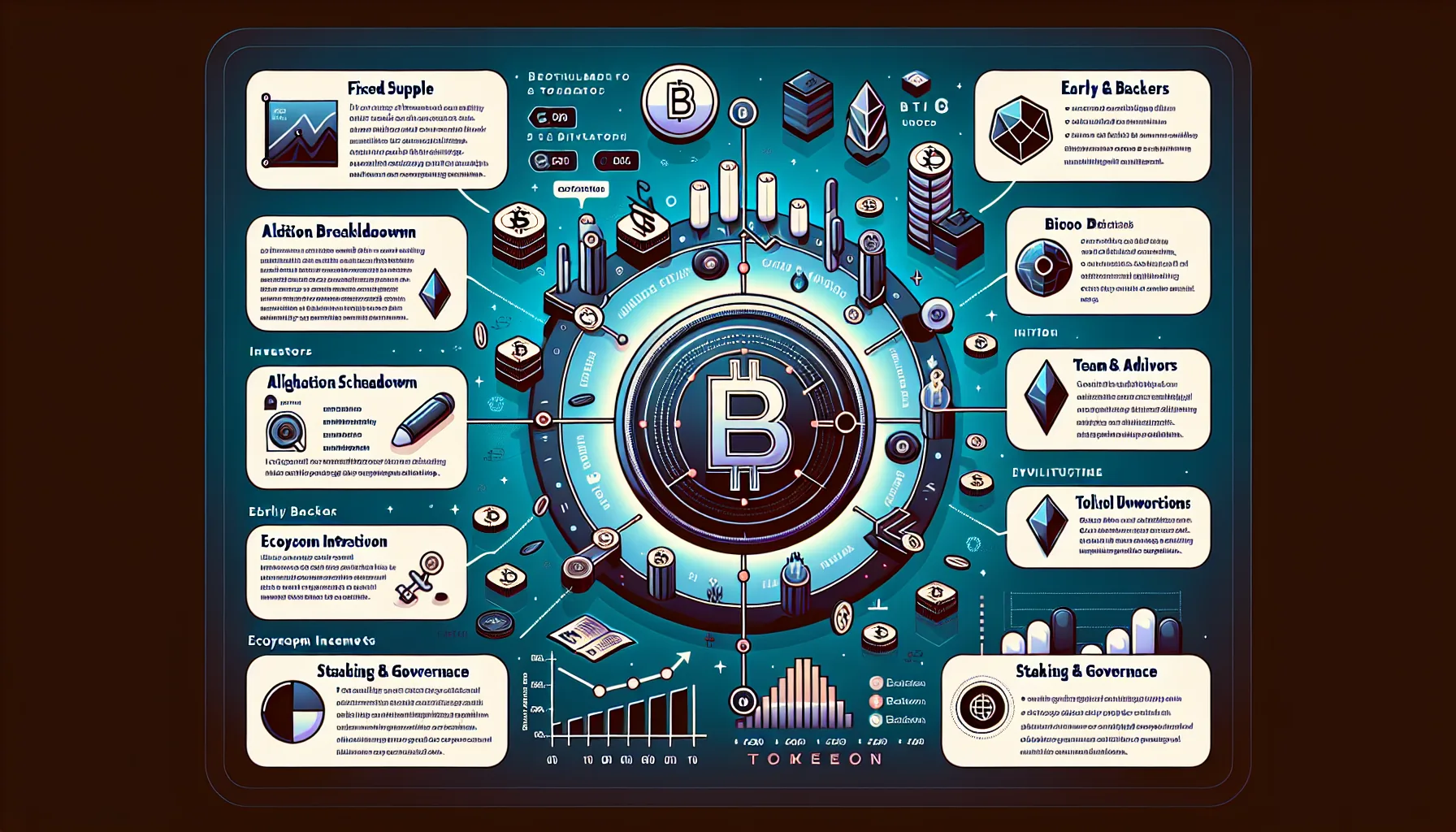
Fixed Supply and Emission Schedule
BICO has a fixed total supply of 1 billion tokens, designed to be fully distributed over a multi-year period. The token emission follows a pre-determined schedule, with allocations spread across various stakeholders, including the team, investors, ecosystem incentives, and staking rewards. A notable aspect of BICO’s distribution is the significant share allocated to early-stage contributors, raising concerns about long-term decentralization. Unlock schedules for large holders can introduce sell pressure at specific intervals.
Allocation Breakdown
- Investors and Early Backers: A substantial portion of BICO’s supply was allocated to venture capital investors and early supporters, with vesting schedules to mitigate immediate dumping risks. However, periods of token unlocks can still create volatility.
- Team and Advisors: A sizeable percentage is allocated to the founding team and advisors, also subject to vesting terms. Team-controlled allocations introduce potential concerns about centralization of governance.
- Ecosystem Incentives: A significant portion is dedicated to incentivizing adoption, particularly for network participants providing infrastructure services. These rewards decline over time, which could impact long-term validator participation.
- Staking and Governance: Holders can stake BICO to participate in governance and earn staking rewards. However, governance is heavily influenced by large token holders, raising centralization concerns.
Utility Within the Biconomy Network
BICO plays a critical role in securing and operating the Biconomy network, functioning as:
- Gas Fee Payment: BICO is utilized for covering transaction fees across supported chains. However, with gas abstraction services, reduced demand for direct BICO transactions could impact its long-term utility.
- Staking for Validator Incentives: Nodes must stake BICO to participate in network validation, earning rewards in return. Declining emission incentives could challenge node profitability over time.
- Governance Voting Power: BICO holders influence protocol upgrades and ecosystem developments. However, large token distributions to early investors lead to governance concentration risks.
Inflation and Token Unlock Risks
While the total BICO supply is fixed, periodic unlocks from early allocations introduce episodic inflationary pressures. As significant portions of tokens become liquid, sell pressure spikes can occur, impacting market dynamics. Additionally, the sustainability of staking rewards remains a key factor, as declining emission rates may affect validator engagement and overall network security.
BICO Governance
BICO Governance: Decentralized Decision-Making and Its Challenges
BICO serves as the governance token for the Biconomy network, giving holders the ability to participate in protocol-level decision-making. Governance is executed through a decentralized autonomous organization (DAO) framework, where token holders vote on key proposals that impact the network’s development, fee structures, and protocol upgrades.
Token-Based Voting and Power Concentration
Biconomy relies on a token-weighted voting system, where governance power is proportional to the number of BICO tokens held. While this aligns incentives with network stakeholders, it also introduces centralization risks. Large token holders, including early investors and the core team, can exert significant influence, potentially sidelining smaller participants. Governance participation rates can also be an issue, as many token holders do not actively engage in decision-making, leading to a small subset of users determining network upgrades.
Proposal Mechanism and Decision Latency
Governance decisions follow a structured proposal process, typically beginning with community discussions that transition into formal BICO improvement proposals (BIPs). These proposals must undergo a voting period where token holders can either approve or reject changes. However, the decentralized voting process can introduce delays in executing critical updates, especially if voter turnout is low or contentious debates emerge within the community. While this ensures security and thorough review, it can slow the protocol’s ability to respond to urgent technical or market-driven needs.
Delegated Governance and Stakeholder Influence
To address potential voter apathy, Biconomy allows for governance delegation, where token holders can assign voting power to representatives or DAOs specializing in protocol governance. This delegation mechanism provides greater efficiency, but it also raises concerns about concentrated power in the hands of a few influential entities. If governance delegates prioritize their own interests over the broader ecosystem, protocol decision-making can become misaligned with user needs.
Smart Contract Risks and Governance Exploits
On-chain governance introduces smart contract dependencies, making it crucial to ensure that governance execution mechanisms are secure and resistant to exploits. If vulnerabilities exist in governance-related smart contracts, malicious actors could manipulate voting results, execute unauthorized protocol changes, or stall critical network updates. Given the history of governance-based attacks in DeFi, BICO’s governance system is subject to continuous security evaluations to prevent such risks from materializing.
Network Evolution and Governance Responsibilities
BICO’s governance framework continues to evolve, with adjustments made to improve participation and decentralization. The balance between community-driven decision-making and maintaining protocol agility remains a key challenge. As the Biconomy network grows, governance structures may require further refinement to ensure that decision-making remains inclusive, secure, and adaptive to the ecosystem’s needs.
Technical future of BICO
Biconomy (BICO) Technical Developments and Roadmap
Smart Contract Infrastructure and Gasless Transactions
Biconomy is continuously refining its smart contract architecture to enhance meta-transactions and improve gasless experiences. The protocol relies on modular smart contracts that abstract gas fees through paymaster mechanisms and ERC-4337 account abstraction. However, maintaining security while enabling gasless interactions remains a challenge, as attackers could exploit subsidized gas models without proper validation layers. The protocol is working towards more robust rate-limiting and fraud detection mechanisms to mitigate risks.
Cross-Chain Transaction Efficiency
Biconomy is developing optimizations to reduce latency in cross-chain relays. Currently, transaction confirmations across different networks can introduce delays due to the dependencies on third-party validators and consensus mechanisms. The technical roadmap includes improvements to reduce finality time by refining optimistic relays and leveraging zk-rollup-based message verification. While these solutions enhance efficiency, their implementation remains complex, potentially introducing new failure points that need rigorous testing.
Enhanced Developer Tooling and SDK Expansion
Biconomy offers plug-and-play SDKs to facilitate dApp integration with gasless transaction capabilities. The roadmap includes deeper integrations with Layer 2 solutions and alternative execution environments like Optimistic and ZK-Rollups. However, fragmentation in Ethereum scaling solutions presents a challenge, as each Layer 2 has unique gas models and contract requirements. Standardizing these integrations while maintaining performance is an ongoing technical hurdle.
Node and Network Reliability Improvements
Biconomy's relayer network is a critical backbone, and improvements are being made to enhance uptime and decentralization. Currently, centralized relayers pose risks of single points of failure or censorship. Plans include implementing decentralized relayer selection mechanisms and integrating distributed node coordination. However, achieving effective load balancing across relayers while avoiding excessive congestion remains a work in progress.
Governance and Smart Contract Upgrade Mechanisms
Biconomy is exploring improved governance frameworks for managing protocol upgrades efficiently. The challenge lies in maintaining upgradeability while ensuring security—on-chain governance models can introduce attack vectors if voting mechanisms are exploited. To counteract this, time-locked upgrades and multi-sig enforced contract changes are being considered. Ensuring backward compatibility for existing integrations during upgrades will also require careful smart contract design.
Scalability and Future Protocol Enhancements
Scalability enhancements include reducing relayer costs and expanding support for additional networks outside Ethereum. Multi-chain expansion introduces complexities, especially around fee abstraction for non-Ethereum chains. Ensuring that gasless interactions remain seamless across different EVM and non-EVM chains is a major technical undertaking.
Biconomy’s roadmap reflects an ambitious push for an improved developer and user experience, though execution challenges remain in balancing security, decentralization, and scalability.
Comparing BICO to it’s rivals
BICO vs. MATIC: A Layer-2 Showdown
Architecture and Scaling Approach
Biconomy (BICO) and Polygon (MATIC) both aim to enhance Ethereum’s scalability, but they take fundamentally different approaches. Biconomy focuses on transaction abstraction and gas optimization, enabling dApp developers to create gasless and frictionless experiences for users. Its architecture primarily supports enhanced usability rather than directly scaling Ethereum’s throughput. In contrast, MATIC is the native asset of the Polygon network, a full-fledged Layer-2 scaling solution utilizing sidechains, rollups, and hybrid models to increase transaction throughput and lower costs.
Gas Efficiency and Transaction Experience
BICO’s core thesis revolves around meta-transactions, where users can interact with the blockchain without holding ETH for gas fees. This is particularly useful for onboarding non-crypto native users and reducing drop-off rates in dApps. On the other hand, MATIC powers Polygon’s high-speed and low-cost environment, where users still need to handle gas fees but at a fraction of Ethereum’s cost. The difference in approach is significant; BICO focuses on abstracting complexity, whereas MATIC reduces costs through scalable infrastructure.
Adoption Among Developers and dApps
Polygon’s ecosystem benefits from deep liquidity, strong exchange support, and widespread adoption across DeFi, gaming, and NFTs. Many Ethereum dApps have migrated to or integrated with Polygon to leverage its lower fees and faster finality. Biconomy, while growing, has primarily been adopted by applications needing smart contract wallets, gasless transactions, and relayed transactions. Its use case remains strong for enhancing UX in Web3, but its adoption isn’t as broad in terms of full-scale DeFi applications compared to Polygon.
Security and Decentralization Trade-offs
Polygon operates as a Proof-of-Stake (PoS) chain with a larger validator set that introduces a certain level of centralization concerns, particularly with its bridging mechanics and reliance on validators that initially had ties to the project’s founding team. Biconomy, on the other hand, operates as a middleware network facilitating meta-transactions, meaning security largely depends on its relay infrastructure and integrations rather than running an independent blockchain. This makes its attack surface different but also raises concerns about trust assumptions in its relayers and whether potential downtimes could hinder its reliability.
Interoperability and Ecosystem Growth
Polygon has built bridges to multiple ecosystems, working with Ethereum, BNB Chain, and Layer-1s beyond the Ethereum space. Biconomy’s focus remains within Ethereum-based applications, optimizing for an Ethereum-native experience rather than expanding into a broader multi-chain framework. While both networks emphasize UX improvements, Polygon’s interoperability gives it additional flexibility compared to Biconomy’s more specific niche in transaction abstraction.
BICO vs. OP: A Layer-2 Showdown
Biconomy (BICO) and Optimism (OP) are both key players in Ethereum scaling, but they approach the problem from different angles. While BICO focuses on transaction optimization and gas fee abstraction, OP is a full-fledged Layer-2 rollup that bundles transactions for efficiency.
Architecture and Technical Differentiation
OP operates as an Optimistic Rollup, inheriting Ethereum’s security while executing transactions off-chain to reduce congestion. This rollup model batches multiple transactions into a single submission, lowering costs but introducing a challenge: the delay in finality due to the seven-day fraud-proof period. BICO, in contrast, doesn’t use rollups but rather optimizes gas usage for dApps by implementing meta-transactions, letting users transact without holding ETH. This makes BICO uniquely focused on usability, whereas OP prioritizes scalability at the protocol level.
Gas Fees and Cost Efficiency
Both networks aim to reduce gas fees, but the user experience differs significantly. OP batches transactions efficiently, but fees are still subject to Ethereum’s Layer-1 congestion—pushing costs up during network spikes. BICO eliminates the need for end users to interact with gas fees altogether, shifting the burden to developers or decentralized applications that use the relayer infrastructure. However, BICO's dependence on external stakeholders covering fees can introduce sustainability questions, whereas OP’s model benefits from clear economic incentives for validators and sequencers.
Ecosystem and Integration
OP has gained traction as a foundation for DeFi applications, benefiting from its synergy with the broader Optimism Superchain initiative. It provides developers with access to EVM compatibility while tapping into shared liquidity across OP-based chains. BICO, while not a direct competitor in the rollup space, offers an alternative infrastructure for dApp onboarding, focusing on improving user experience rather than building a standalone execution layer. The trade-off is that OP enjoys direct integrations with DeFi protocols at the chain level, while BICO operates more as an auxiliary service rather than a primary settlement layer.
Security and Decentralization
OP’s reliance on Optimistic Rollups means it depends on fraud proofs, leaving room for potential security delays if validators do not challenge fraudulent transactions in time. BICO’s relayer network introduces different risks, particularly around centralization concerns tied to who controls the infrastructure relaying these transactions. While both projects work toward decentralization, OP has a clearer roadmap toward multi-party validation, while BICO’s trust assumptions still depend on third-party relayers operating as intended.
Biconomy (BICO) vs Arbitrum (ARB): Comparing Layer-2 Efficiency and Ecosystem Support
When comparing Biconomy (BICO) with Arbitrum (ARB), the most critical distinction lies in their approach to Ethereum scaling and transaction efficiency. While both aim to reduce gas costs and enhance user experience, their underlying architectures and ecosystem priorities set them apart.
Transaction Processing and Network Efficiency
Arbitrum is a rollup-based Layer-2 solution that batches transactions off-chain before settling them on Ethereum. This Optimistic Rollup mechanism enables high throughput while maintaining Ethereum’s security guarantees. However, Arbitrum's reliance on fraud proofs introduces a challenge: withdrawal times can extend up to seven days unless users rely on third-party liquidity providers, which can introduce additional risk.
In contrast, Biconomy focuses on meta-transactions and gasless interactions, allowing users to offload gas fees to dApp developers. This framework significantly enhances user experience by removing friction from transactions. However, Biconomy does not operate as a full-fledged Layer-2 with its own execution environment, which limits its ability to scale complex smart contract operations in the same way Arbitrum does.
Ecosystem and Developer Adoption
Arbitrum has established itself as one of the leading Layer-2s, attracting a broad range of DeFi and NFT projects. Its compatibility with the Ethereum Virtual Machine (EVM) ensures minimal adjustments for developers migrating from Ethereum. However, congestion on Arbitrum during peak usage has occasionally led to higher-than-expected fees, raising concerns about its ability to maintain consistently low costs.
Biconomy, while not a direct Layer-2 competitor, offers an alternative scaling solution via account abstraction and gas optimization tools. Developers using Biconomy’s SDK can integrate gasless transactions into their dApps, making onboarding smoother. However, this model depends on relayers and sponsors, which introduces potential centralization risks if those entities become single points of failure.
Security and Decentralization Trade-offs
Security remains a key differentiator between the two. Arbitrum inherits Ethereum’s security through its rollup design, but its sequencer remains centralized, which has drawn criticism from the crypto community. While the Arbitrum DAO governs major protocol upgrades, decision-making still leans heavily on core contributors and early stakeholders.
Biconomy’s meta-transaction infrastructure, meanwhile, relies on a set of relayers that handle gas payments on behalf of users. While this improves accessibility, it also centralizes some aspects of transaction processing, potentially exposing users to censorship risk if relayers decide to filter transactions.
Primary criticisms of BICO
Primary Criticism of BICO
Concerns Over Token Utility and Value Capture
One of the most frequent criticisms of BICO revolves around the token’s utility within the Biconomy ecosystem. While BICO is positioned as a governance and staking asset, skeptics argue that its role in transaction fee payments is not deeply entrenched. Many gasless transactions on networks utilizing Biconomy's infrastructure still rely on native chain tokens for execution, limiting direct demand for BICO. This raises concerns about long-term value accrual and whether usage growth directly translates into sustainable buy-side pressure.
Network Centralization and Reliance on Relayers
Despite its positioning as a key infrastructure layer for Web3, some argue that Biconomy’s architecture introduces a centralization risk. The system’s relayer network, which facilitates gasless transactions and meta-transactions, relies on a relatively small number of node operators. This raises questions about censorship resistance and whether the network can function in a sufficiently decentralized manner. If relayers experience downtime, abuse sybil-resistant mechanisms, or prioritize specific transactions, it could create systematic dependencies that undermine decentralization goals.
Competitive Pressure from Alternatives
The crypto space is highly competitive, and Biconomy is not the only project tackling gasless transactions and transaction abstraction. Alternatives, including direct chain-level improvements like ERC-4337, modular rollups, and embedded account abstraction solutions, may reduce the reliance on external middleware like Biconomy. Critics argue that as blockchain networks evolve natively to handle transaction abstraction, middleware solutions powered by standalone tokens like BICO may struggle to maintain long-term relevance.
Token Emission and Inflationary Pressure
Another point of criticism comes from BICO's tokenomics. A significant portion of the total supply remains locked or subject to vesting schedules, leading to concerns over future sell pressure as allocations unlock. If inflation is not offset by organic demand, this could create sustained downward pressure on BICO's price relative to its circulating supply. Additionally, dependency on incentivization programs for network participants raises questions about sustainability once emissions taper off.
Governance and Decision-Making Risks
While decentralized governance is a central value proposition for BICO, skepticism remains about the degree of community influence. As with many governance token models, there are concerns that early investors or large token holders disproportionately influence decision-making. This creates potential misalignment between the long-term needs of the broader Biconomy ecosystem and those with significant voting power.
Founders
BICO Founding Team: Key Figures Behind Biconomy
The founding team behind Biconomy (BICO) consists of a group of blockchain professionals focused on improving Web3 transaction infrastructure. Their backgrounds span engineering, finance, and decentralized systems, shaping the project’s approach to gas optimization and cross-chain relays.
Co-Founders and Core Leadership
Ahmed Al-Balaghi – As a co-founder, Ahmed brings extensive experience from the blockchain sector. Before Biconomy, he worked with projects in both the Middle East and Asia, contributing to research and development efforts in decentralized technologies. His deep industry ties have played a role in Biconomy’s adoption across various dApps.
Aniket Jindal – Another co-founder, Aniket specializes in the technical and operational aspects of blockchain infrastructure. With a background in decentralized networks and security, he plays a key role in Biconomy’s protocol architecture. His prior experience includes work in India’s crypto ecosystem, which has informed Biconomy’s global strategy.
Sachin Tomar – As the third co-founder, Sachin is responsible for the technical execution of Biconomy’s core functionalities. His work in smart contract development and Layer 2 scaling solutions contributes directly to Biconomy’s gasless transaction capabilities. His engineering expertise has been crucial in maintaining the protocol’s performance.
Team Strengths and Strategic Alignments
The team's collective background in decentralized finance (DeFi), smart contract execution, and Layer 2 scaling has positioned Biconomy as a key infrastructure player. Their focus on meta-transactions and reducing friction in Web3 interactions has attracted users seeking gas fee optimizations. Further, their ties to major blockchain networks have facilitated integrations with Ethereum, Polygon, and other ecosystems.
Challenges and Criticism
Despite the founding team’s experience, certain challenges have arisen. The project’s reliance on relayers introduces potential centralization concerns, as transaction execution is partially dependent on Biconomy-operated nodes. While the team has aimed for progressive decentralization, critics argue that full trustless infrastructure is still a work in progress.
Additionally, execution risks exist around scalability and competition. Similar projects offering transaction simplification are emerging, putting pressure on the team to maintain technological leadership. Strategic decisions regarding partnerships and ecosystem adoption remain critical factors in Biconomy’s trajectory.
The founding team’s capability in navigating these challenges will continue to be a focal point as the protocol evolves within the broader Web3 landscape.
Authors comments
This document was made by www.BestDapps.com
Sources
- https://biconomy.io
- https://biconomy.io/whitepaper.pdf
- https://docs.biconomy.io
- https://github.com/bcnmy
- https://etherscan.io/token/0xf17e65822b568b3903685a7c9f496cf7656cc6c2
- https://coinmarketcap.com/currencies/biconomy/
- https://www.coingecko.com/en/coins/biconomy
- https://medium.com/biconomy
- https://twitter.com/biconomy
- https://discord.com/invite/biconomy
- https://blog.biconomy.io
- https://biconomy.io/developer-docs
- https://defillama.com/protocol/biconomy
- https://dappradar.com/multichain/tools/biconomy
- https://research.binance.com/en/projects/biconomy
- https://messari.io/asset/biconomy/profile
- https://thegraph.com/explorers/subgraph/bcnmy
- https://github.com/bcnmy/scw-contracts
- https://www.linkedin.com/company/biconomy
- https://docs.biconomy.io/products/gasless


