History of BELT
The History of BELT: Origins and Evolution in the DeFi Ecosystem
BELT, the native token for the Belt Finance protocol, emerged as a strategic player within the decentralized finance (DeFi) sector, with its primary focus on optimized yield aggregation and stablecoin liquidity management. Launched as part of the Binance Smart Chain (BSC) ecosystem, Belt Finance was introduced at a time when scalability and high transaction fees were significant challenges for Ethereum-based DeFi protocols, leading to adoption in ecosystems offering lower transaction costs.
The origins of BELT can be traced back to the growing demand for efficient yield farming strategies during the height of DeFi's rapid expansion. Belt Finance initially positioned itself as a solution for users seeking streamlined access to farming pools and auto-compounding benefits. BELT’s tokenomics were designed to incentivize liquidity provision and ensure long-term protocol sustainability, with supply mechanisms that integrated emissions caps and deflationary mechanics via burning processes.
Early on, the protocol gained traction by offering a competitive edge with its multi-strategy vaults. These vaults enabled users to gain exposure to strategies that balanced risk versus reward while maintaining a focus on stablecoins, which were increasingly favored by risk-averse yield farmers. However, BELT's rapid rise to prominence was not without challenges. The protocol faced scrutiny regarding the complication of its vault mechanisms and uncertainties around potential smart contract vulnerabilities, both common concerns with nascent DeFi projects.
Belt Finance’s history also saw moments of operational disruption. One notable setback was an exploit in the protocol’s smart contract, which led to a significant fund loss. This event highlighted the risks inherent in rapidly evolving DeFi architectures. Although mitigation measures were implemented—including enhanced audits and community governance mechanisms—it underscored the importance of robust security practices within the space.
Despite initial hurdles, the BELT token saw popularity among users seeking cross-chain yield opportunities, as Belt Finance expanded its integrations and partnerships with other protocols. However, criticisms persisted regarding the sustainability of BELT’s reward emissions and their long-term impact on token holder value. Moreover, as competition intensified in the yield aggregation space, efforts to innovate while maintaining user confidence became a key touchpoint in BELT’s trajectory.
This complex history reflects the dual nature of DeFi innovation—offering compelling alternatives to traditional finance while navigating systemic risks and a competitive landscape. On one hand, BELT contributed to expanding the BSC ecosystem and stabilizing yield aggregator functionality. On the other, its vulnerabilities and market pressures serve as reminders of the volatility and risks inherent in the DeFi world.
How BELT Works
How BELT Works: A Deep Dive into Yield Optimization and Liquidity Efficiency
BELT is a decentralized finance (DeFi) protocol that operates on the Binance Smart Chain (BSC), primarily aimed at automating yield optimization and improving liquidity efficiency for its users. At its core, BELT focuses on combining automated portfolio management with efficient stablecoin swapping, making it a dual-purpose utility for liquidity providers (LPs) and yield farmers alike.
The Belt.fi Vault Mechanism
BELT operates a series of yield-optimizing vaults designed to generate high returns for depositors. These vaults automatically compound rewards from liquidity providers by harvesting yields from integrated protocols—such as AMM platforms—and reinvesting those yields into the same pools. Unlike manual staking and compounding, this automation reduces transaction costs and maximizes efficiency. BELT differentiates itself by offering multi-strategy vaults where users can deposit their assets into a single vault that diversifies risks and augments yields across multiple DeFi platforms.
Stable Asset Swap Pools
The protocol's second pillar is its stable asset swap pools. Similar to protocols like Curve Finance, BELT enables low-slippage swaps between stablecoins and other pegged assets, such as wrapped tokens. These pools utilize an advanced AMM algorithm designed to support high liquidity and minimal price impact, making them particularly appealing to arbitrage traders and institutional players. However, BELT's relatively lower trading volume on certain pools can be a limiting factor for users needing substantial liquidity for large transactions.
Protocol Tokenomics and Governance
The platform is governed by the BELT token, which acts both as a medium for staking and a tool for decentralized governance. By staking BELT tokens, users can earn a portion of the platform's protocol fees, thus incentivizing long-term holding. However, heavy inflationary pressures during its initial stages of operation remain one of the protocol’s weaknesses. Early adopters with significant rewards have exited positions, occasionally leading to liquidity crunches and diminished incentives for newer participants.
Impermanent Loss Mitigation
BELT aims to mitigate impermanent loss for liquidity providers by concentrating on stable asset pairs and implementing strategies that reduce volatility exposure. While this approach theoretically limits losses in volatile market conditions, the returns are also capped compared to riskier yield farming strategies. For users seeking higher yields, this trade-off may dampen the appeal of the platform.
Auditing and Security Concerns
Like many DeFi protocols, BELT has faced questions regarding its security infrastructure. While the project has undergone smart contract audits, the platform is not immune to exploits. Past incidents of other BSC-based protocols being compromised have raised concerns about centralization risks and the speed of response in the event of vulnerabilities.
Use Cases
BELT Crypto Asset: Use Cases for Decentralized Yield Optimization
BELT, the native token of Belt Finance, operates within a specialized ecosystem focused on yield optimization and decentralized finance (DeFi). Designed for efficiency in liquidity provision, BELT powers a number of transparent mechanisms that serve advanced DeFi users seeking enhanced returns on their crypto holdings.
Yield Aggregation and Auto-Compounding
One primary use case for BELT lies in its role in yield optimization. Through Belt Finance’s platform, BELT holders can access advanced auto-compounding strategies for stablecoins and other digital assets. The platform employs automated yield-accruing strategies that rotate liquidity towards the most efficient protocols. For high-frequency DeFi users, these strategies save time and effort by eliminating manual tracking and reinvestment. However, the complexity of the underlying strategies may obscure risk and reward calculations for non-expert users.
Governance and Protocol Control
BELT functions as a governance token, allowing holders to influence the direction of the Belt Finance protocol. Governance participation includes voting on proposed upgrades, integrations, or adjustments to platform fees. While this decentralized dimension is intended to benefit the community, its effectiveness heavily depends on participation rates, which can be low if token holders are not incentivized to actively engage with governance proposals.
Liquidity Incentives and Yield Farming
BELT is also extensively utilized as a reward for liquidity provision. Users supplying liquidity to certain stablecoin pools or participating in farms can earn BELT as an incentive. However, like many DeFi tokens, BELT's reward-based use case is reliant on maintaining a balance between token supply growth through emissions and the potential for token inflation adversely affecting its perceived value.
Staking for Fee Redistribution
BELT enables a staking mechanism where holders can benefit directly from platform fees. Staked BELT grants users a portion of transaction fees accrued across the Belt Finance ecosystem, creating an additional source of passive income. While this function caters to long-term holders, the percentage of redistributed fees may fluctuate depending on protocol activity, which can introduce unpredictability in rewards.
Risk Mitigation via Stablecoin Vaults
BELT supports Belt Finance's optimization of stablecoin vaults, aimed at providing users with lower-risk opportunities to maximize their returns. These vaults aggregate liquidity into multiple protocols to minimize single-point failure risks. Nevertheless, reliance on smart contracts opens users to potential vulnerabilities, such as contract bugs or exploits.
BELT Tokenomics
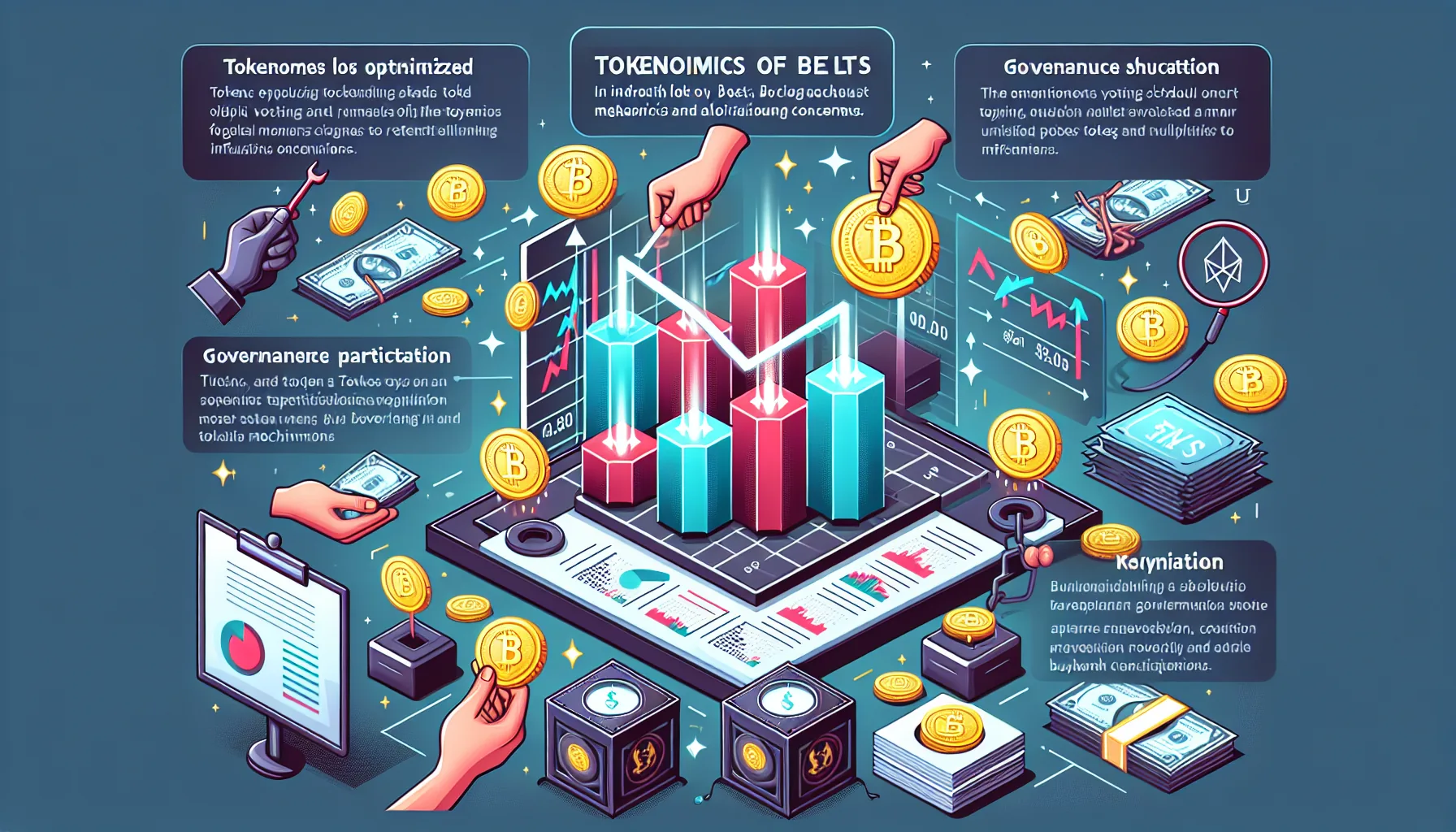
Tokenomics of BELT: An In-Depth Look at Mechanics and Allocation
BELT operates as the native governance and utility token of the Belt Finance ecosystem, designed with DeFi yield optimization at its core. The tokenomics of BELT are crafted to align incentives for liquidity providers (LPs), governance participants, and ecosystem developers. However, like many DeFi projects, these mechanics come with complexities and potential challenges.
Emission Schedule and Inflation Concerns
BELT is distributed primarily through farming rewards, incentivizing LPs to supply liquidity to the Belt Finance protocols. The emission schedule is designed with a fixed periodic rate, leading to predictable inflation. However, such a model risks hyperinflation if demand for the token does not scale proportionately. As token supply grows, downward pressure on the token's price can erode its perceived value, dampening incentives for long-term holding.
Utility Driving Demand
The utility of BELT primarily revolves around governance rights, staking, and participation in fee-sharing mechanisms. BELT holders can propose and vote on key changes to Belt Finance, such as protocol upgrades or allocation adjustments. Additionally, staking BELT allows users to earn a share of the platform's revenue, which theoretically enhances token demand. However, as with many governance tokens, the actual participation rate in governance remains a concern. A disconnect between governance utility and holder engagement could reduce the token's functional impact.
Fee Structures and Buyback Mechanisms
Belt Finance integrates specific fee mechanisms designed to bolster the BELT token's value over time. A portion of platform fees is allocated for token buybacks, which are intended to offset the inflationary pressure of token emissions. While buyback-and-burn mechanics have been employed in other DeFi protocols with varying success, their efficiency depends heavily on platform growth and sustained user activity. If protocol usage stagnates, the buyback system may struggle to counteract inflation adequately.
Token Allocation and Centralization Risk
BELT's token allocation includes farming rewards, team reserves, ecosystem development, and partnership incentives. While this allocation mix supports wide adoption and protocol growth in theory, the proportion reserved for team members and project treasury has sparked concerns about centralization. Concentrated token holdings by insiders could lead to governance centralization or speculative behavior, which might not always align with the interests of the community.
Understanding BELT's tokenomics, therefore, requires carefully weighing its robust reward mechanisms against the risks posed by inflation, low governance participation, and potential centralization. These factors make BELT an interesting case study for tokenomics in yield-aggregating DeFi platforms.
BELT Governance
Governance in BELT: Decentralization and Voting Power
BELT’s governance framework revolves around enabling its community to play an active role in shaping the direction of the protocol. Built on the principles of decentralization, governance responsibilities are distributed among token holders, giving them a voice in protocol upgrades, parameter adjustments, and feature implementations. However, like many decentralized finance (DeFi) projects, BELT's governance system carries both strengths and challenges worth examining.
Token-Based Voting System
BELT utilizes a token-based voting system where governance rights are typically tied to the BELT token. Holders can use their tokens to cast votes on proposals that determine major changes in the ecosystem. The weight of each holder’s vote is directly proportional to their token balance, a common practice in DeFi governance models. While this approach ensures that those with the most at stake in the protocol have the most influence, it raises concerns about centralization of power. Whales — accounts holding large quantities of BELT tokens — can disproportionately control voting outcomes, potentially dominating governance processes.
Proposal System and Community Input
The proposal system allows for the initiation and discussion of changes by the BELT community. Proposals often go through stages such as idea submission, community discussion, and formal voting. This multi-step process is designed to promote transparency and inclusivity in decision-making. However, participation can sometimes be limited due to the technical complexity of proposals or a lack of engagement from smaller token holders. This imbalance can result in governance being primarily driven by highly engaged or well-resourced participants, marginalizing input from the broader community.
Governance Fees and Incentivization
BELT governance may incorporate fee structures or incentives linked to participation in decision-making. These rewards aim to encourage token holders to stay active in voting processes and prevent governance apathy, a common issue in DAO ecosystems. Nevertheless, there’s a risk that voters may focus solely on short-term financial gains from incentives instead of prioritizing the protocol’s long-term health.
Smart Contract Risks and Exploits Exposure
As a DeFi project, BELT’s governance operates through smart contracts, which automate processes like proposal execution. While this removes intermediaries and enforces transparency, it also exposes governance outcomes to potential smart contract vulnerabilities. Exploits or bugs in governance-related code could lead to malicious actors influencing the protocol, an issue that underscores the need for rigorous audits and community oversight.
Accessibility and Education
For governance to thrive, accessibility and user education are essential. However, BELT faces challenges in engaging new participants due to the specialized knowledge required to fully understand its governance mechanics. Token holders new to DeFi may find the process intimidating, further contributing to low voter turnout and concentration of control among experienced users or large stakeholders.
Technical future of BELT
Technical Developments and Roadmap of BELT: Current and Future Updates
Enhancing Cross-Chain Capabilities
BELT Finance has set its sights on expanding its cross-chain interoperability, a key area of focus in decentralized finance (DeFi). As of now, BELT operates primarily within the Binance Smart Chain (BSC) ecosystem, leveraging its low transaction fees and scalability. However, the limitations of being tied to a single chain include restricted liquidity access and exposure to risks unique to the BSC network. Current development on cross-chain bridges aims to integrate with networks like Ethereum, Polygon, and Avalanche, enabling BELT's vaults and yield optimization tools to function across multiple chains. Such expansion could attract a larger user base but presents a challenge in maintaining the security of cross-chain bridges, a notorious vulnerability in DeFi.
Vault Optimization and Auto-Compounding Improvements
BELT’s yield optimization functionality relies heavily on automated compounding and leveraging strategies through its vaults. Recent updates have focused on refining smart contract efficiency to reduce gas fees for compounding operations, directly benefiting end-users by improving net yields. However, concerns remain regarding the audit frequency and real-time monitoring of these contracts. Bugs or exploits in similar systems have caused catastrophic fund losses across DeFi, making this a critical area requiring ongoing advancements.
Tokenomics Reform for Sustainability
The team behind BELT has hinted at upcoming modifications to the tokenomics model, attempting to address inflationary pressures of the reward structure. Current liquidity mining rewards are high but unsustainable over the long term, potentially eroding the token’s utility and encouraging short-term farming by users. Future developments look to incorporate token burning mechanisms and governance lock-in to incentivize longer-term participation. The success of these updates remains uncertain, as balancing user incentives while controlling inflation has proven to be a delicate challenge across similar protocols.
Governance System Overhaul
BELT currently operates with a governance mechanism that could see further iterations in the future. Improvements are rumored to include granting BELT token holders more granular control over decisions such as fee adjustments, parameter changes, and vault integrations. However, the protocol's reliance on governance could bring about slower adaptability to market conditions, as changes depend on decentralized consensus. Additionally, the governance power is weighted in proportion to token holdings, raising questions about centralization risks if whale accounts dominate decision-making processes.
Security Enhancements
BELT has continued to prioritize security through third-party audits of its smart contracts. However, limited focus on post-deployment monitoring leaves room for improvement. A shift toward leveraging decentralized insurance models and continuous live auditing tools could reduce vulnerabilities. Future developments will likely address these gaps, though implementation speed and cost-efficiency remain significant barriers.
Comparing BELT to it’s rivals
Comparing BELT to CVX: Key Differences in Yield Optimization Strategies
BELT and CVX both occupy a critical space in the decentralized finance (DeFi) ecosystem, facilitating mechanisms to maximize yields for liquidity providers. However, their approaches and underlying protocols diverge significantly, creating a nuanced landscape of trade-offs for users.
Protocol Design Philosophy
While BELT focuses on combining multiple strategies within vault-based systems to optimize yield with stablecoins and more established liquidity pairs, CVX (Convex Finance) leverages its integration with Curve Finance to boost rewards specifically for Curve LP token stakers. CVX’s alignment with Curve gives it a targeted, niche advantage in amplifying CRV staking rewards but limits its versatility in strategies outside the Curve ecosystem. BELT, on the other hand, seeks to expand its scope by aggregating strategies from various protocols, providing broader exposure but with added levels of complexity and potential smart contract risk.
Token Utility and Incentives
A fundamental distinction lies in the utility of their native tokens. BELT facilitates governance and incentivization within its vaults, where staking BELT can augment yields for users engaging in its broader spectrum of available strategies. CVX adopts a more concentrated approach where CVX holders are rewarded specifically for locking their tokens, granting amplified governance power within the Curve ecosystem and increased staking rewards. CVX’s focused utility can lead to a more predictable flow of incentives, whereas BELT’s multi-protocol dependency introduces variability in its incentive mechanisms.
Liquidity and Adoption Challenges
One critical differentiation is market positioning. CVX has successfully entrenched itself as a critical layer for Curve participants, effectively monopolizing Curve’s liquidity incentive structure by enabling LPs to maximize their CRV rewards. BELT’s broader strategy means it isn't tied to a single protocol, giving it flexibility but diluting its positioning relative to CVX, especially among Curve-dominant users. This strategic disparity has led to CVX capturing a more consolidated user base with clearer use cases, whereas BELT faces the challenge of establishing itself in an increasingly crowded DeFi aggregator space.
Risks and Trade-Offs
From a risk standpoint, CVX’s model introduces a dependency on Curve’s ecosystem. Any disruption within Curve could have cascading effects on CVX. BELT, with its multi-protocol strategy, mitigates this single-point-of-failure risk but requires robust smart contract execution across various integrations, potentially amplifying attack surfaces and fragmentation of developer focus.
This interplay of focus versus flexibility encapsulates the key difference between BELT and CVX, offering distinct value propositions depending on a user's strategy and risk appetite.
An Analytical Comparison Between BELT and CRV: DeFi Yield Optimization Face-Off
When discussing BELT, a protocol specializing in yield optimization and liquidity aggregation, it's apt to examine its most notable competitor in the DeFi space—CRV, the governance token of Curve Finance. Curve has cemented itself as a major player in decentralized finance, primarily by catering to stablecoin and low-slippage trading. Here's how BELT stacks up against CRV in some key operational dimensions:
Liquidity Pool Dynamics
Curve Finance's primary focus on stablecoins and similar assets ensures minimal impermanent loss, making its liquidity pools especially appealing to risk-averse investors. CRV’s architecture employs an innovative "automated market maker" (AMM) that optimizes trades with low slippage, effectively capturing the lion's share of the stablecoin liquidity market. BELT, on the other hand, adopts a multi-strategy approach that leverages yield farming opportunities from integrated protocols. While this provides higher APYs across diverse digital assets, it also exposes users to greater market risk due to dependency on volatile assets. For users purely seeking risk-mitigated returns, Curve often offers a more specialized and safer alternative to BELT's broader scope.
Emphasis on Governance and Utility
CRV is deeply integrated into Curve’s governance, offering stakers the ability to lock their tokens and receive veCRV (vote-escrowed CRV) in return. This mechanism not only drives user loyalty but also redistributes rewards while incentivizing long-term participation. BELT lacks this same level of governance integration, where its token utility is comparatively limited to liquidity rewards and staking incentives. This narrower governance model has led to criticisms regarding centralization and reduced community influence over protocol evolution.
Security and Protocol Risks
Both BELT and Curve Finance have experienced their share of vulnerabilities. However, Curve’s code has undergone rigorous third-party audits over time, instilling higher confidence within the community. While BELT has also engaged in security audits, its reliance on multi-layered strategies introduces additional exposure to upstream protocol risks—issues that could cascade downward if any integrated protocol is compromised. This interconnected dependency does raise some concerns relative to the more siloed design of Curve’s offerings.
Tokenomics: A Mixed Bag
CRV’s tokenomics are characterized by its inflationary model and lock-based system, structured to reward long-term holders. While this has helped CRV maintain robust liquidity incentives, critics argue that the inflationary supply dynamics could dilute value over time. BELT, conversely, employs a deflationary model but has drawn criticism for its token distribution, which some claim disproportionately favors early adopters and insiders. Both models come with trade-offs, though CRV’s time-tested structure may be more appealing to participants prioritizing stability.
By design, CRV’s single-minded focus on stable assets and low-slippage trading directly contrasts with BELT’s multi-strategy approach. Each protocol has its clear strengths and corresponding trade-offs, making the suitability of one over the other deeply contingent on user goals and risk tolerance.
Comparing BELT to Ellipsis (EPS): A Deep Dive into Key Differences
When examining BELT against Ellipsis (EPS), several distinct differences emerge, reflecting each platform's unique value proposition and operational approach to decentralized finance (DeFi). While both aim to optimize yield, their mechanisms and ecosystem integrations significantly diverge.
Fee Structure and User Incentives
Ellipsis (EPS) has built its model heavily around providing low slippage and minimal fees for stablecoin swaps. This lean approach can be advantageous for users seeking efficient transfers without significant overhead. However, the tradeoff is that EPS relies heavily on Curve Finance’s veCRV mechanism, integrating its tokenomics to attract liquidity providers. This reliance makes EPS both more specialized and potentially rigid in its use case.
On the other hand, BELT takes a broader, multi-strategy yield optimization approach, designed to capture yield opportunities across a spectrum of DeFi platforms. This allows BELT to diversify how it generates returns for its users. Yet, this difference introduces complexity into BELT’s system, potentially alienating users who favor EPS for its simplicity in delivering stablecoin efficiency.
Asset Management and Flexibility
BELT's focus on multi-strategy vaults distinguishes it from Ellipsis' liquidity pools. BELT utilizes automation to re-balance and harvest yield across various protocols, aiming for consistent returns. While this approach provides diversification, it requires users to trust the platform’s strategy decisions and smart contract reliability. EPS, in contrast, targets a more straightforward use case: low-friction stablecoin swaps. This narrower focus reduces complexity but limits EPS growth to its core functionality.
That said, BELT's flexibility can be a double-edged sword. The potential for higher returns is accompanied by greater exposure to protocol risks, including smart contract vulnerabilities across multiple platforms. For EPS users, the dependence on Curve's ecosystem, while limiting in scope, provides them with the benefits of a more battle-tested and audited framework.
Tokenomics
EPS incorporates a veCRV-derived model that incentivizes long-term staking and governance participation, locking value into the system. This mechanism aligns well with users who value stability over speculative growth. BELT's tokenomics, however, cater more to active users seeking optimized yield returns. BELT incentivizes its users with layer-specific rewards, but the inflationary nature of its token distribution has drawn criticism from some in the DeFi community. EPS, by comparison, maintains a more straightforward token issuance model.
Final Thoughts on Functional Differences
The starkest contrast between BELT and EPS resides in their underlying strategies: BELT prioritizes yield optimization through flexibility and diversification, while Ellipsis seeks to dominate stablecoin swaps with efficiency and minimal friction. Users will likely gravitate toward the protocol that best aligns with their risk tolerance and DeFi needs.
Primary criticisms of BELT
Primary Criticism of BELT: Exploring Weaknesses in the Protocol
Centralization Concerns
One of the core criticisms of BELT Finance lies in its perceived centralization. Despite being marketed as a decentralized finance (DeFi) project, skeptics have raised concerns about the control exerted by the core development team. Key protocol functions, such as parameter adjustments and governance decisions, appear to rely heavily on the team, which could limit decentralization and increase the risk of single points of failure. This degree of central control may dissuade purists or institutions that prioritize fully decentralized ecosystems from engaging with BELT.
Vulnerabilities in Smart Contracts
Another critical issue relates to smart contract security. BELT Finance has faced scrutiny from the crypto community regarding its code. Like many protocols in the DeFi ecosystem, the risk of exploits or bugs within its smart contracts is ever-present. Even with audits, the project's reliance on complex yield optimization mechanisms amplifies the attack surface. Past incidents in the DeFi space, involving exploits or vulnerabilities in seemingly robust protocols, cast a shadow of doubt over BELT. Users critical of the project often highlight the potential for catastrophic losses if an exploit were to occur.
Impermanent Loss and Sustainability Challenges
BELT's focus on yield optimization exposes users to the risks of impermanent loss, particularly for those providing liquidity in certain pools. While this is a widespread issue within DeFi, BELT’s critics argue that its protocol does not sufficiently mitigate these losses for liquidity providers. Moreover, questions about the sustainability of the yields promised by the platform persist. With reward tokens sometimes inflating to attract participation, there is an ongoing critique of how the protocol will handle diminishing returns as adoption grows or rewards taper off.
Limited Transparency in Tokenomics
Concerns have also been raised about the transparency of BELT's tokenomics. Some users point to the lack of clarity around emissions schedules and token distribution mechanisms. Skeptics argue that insufficient communication of this information could lead to distrust among token holders, particularly in scenarios where large allocations are reserved for the team or early backers. Critics suggest that such practices may contribute to potential imbalances in how value is distributed across the network.
Complexity as a Barrier to Entry
Finally, the inherent complexity of BELT's yield optimization strategies is a topic of contention. While designed to maximize returns, the sophisticated strategy may alienate less experienced users. Critics argue that this steep learning curve could hinder broader adoption. Additionally, some users claim that the protocol’s UI/UX does little to bridge this gap, further emphasizing its appeal to only a niche audience.
Founders
The Founding Team Behind BELT: Insights and Controversies
BELT Finance, the platform powering the BELT token, is the result of collaborative efforts predominantly rooted in DeFi innovation. The founding team remains somewhat enigmatic, a hallmark not uncommon in the crypto ecosystem, though this anonymity has led to speculation and debate in certain circles.
Anonymous Core Development Team
BELT’s founding team has opted for a relatively low profile, with minimal public exposure of individual identities. While this can be seen as an effort to emphasize the technology and platform over personalities, it is not without its criticisms. Some within the crypto community argue that this level of anonymity makes it difficult to hold the developers accountable in the event of issues like hacks, failures, or mismanagement. Skepticism often intensifies when large-scale financial systems or yield-aggregating platforms, such as BELT, employ this approach.
Expertise in DeFi and Smart Contracts
Despite this anonymity, BELT Finance is widely considered to be the creation of individuals with significant expertise in smart contract development and yield optimization algorithms. Early adopters of the ecosystem point to sophisticated use of multi-strategy vaults and robust tokenomics as indicators of a strong technical foundation. However, questions remain about the depth and experience of the team when it comes to navigating regulatory concerns or addressing large-scale scalability—a challenge faced by most protocols in the DeFi sector.
Governance Approach and Community Leadership
BELT’s development also includes a commitment to decentralized governance, a reflection of its team's intent to prioritize community-driven decision-making. However, some critics suggest this may be a convenient way for the founding members to reduce their visible involvement in key policy decisions, possibly deflecting criticism when the protocol faces challenges. Additionally, questions linger about how much actual influence the founding team continues to wield behind the scenes, despite the governance structures that have been put in place.
Mixed Reception Over Transparency
The lack of publicly accessible information about the team has led to mixed reception from the crypto community. On one hand, this approach shields the developers from potential legal and social pressures, but on the other, it stirs doubts among investors who prioritize transparency. In a space where trust plays a significant role, this decision is viewed as both a strength and a potential risk, depending on stakeholder perspectives.
While the founding team’s expertise has been instrumental in establishing BELT’s technical framework, their anonymity and selective transparency leave room for ongoing scrutiny.
Authors comments
This document was made by www.BestDapps.com
Sources
- https://belt.fi/
- https://belt.fi/assets/documents/belt-docs.pdf
- https://github.com/BeltFi
- https://beltfinance.medium.com/
- https://bscscan.com/token/0xe0e514c71282b6f4e823703a39374cf58dc3ea4f
- https://www.coingecko.com/en/coins/belt
- https://coinmarketcap.com/currencies/belt/
- https://docs.belt.fi/
- https://community.belt.fi/
- https://twitter.com/belt_finance
- https://defillama.com/protocol/belt-finance
- https://dappradar.com/binance-smart-chain/defi/belt-finance
- https://etherscan.io/address/0xe0e514c71282b6f4e823703a39374cf58dc3ea4f
- https://rewards.belt.fi/
- https://pancakeswap.finance/info/token/0xe0e514c71282b6f4e823703a39374cf58dc3ea4f
- https://bscproject.org/#/project/47
- https://rugdoc.io/project/belt-finance/
- https://debank.com/projects/belt
- https://www.binance.org/en/smartChain
- https://api.belt.fi/