History of BCH
The History of Bitcoin Cash (BCH): From Hard Fork to Independent Blockchain
Bitcoin Cash (BCH) emerged from one of the most contentious hard forks in cryptocurrency history. The split occurred due to long-standing debates within the Bitcoin (BTC) community over transaction scaling, block size limits, and network efficiency.
The Block Size Debate and the BCH Hard Fork
Bitcoin's original block size limit of 1MB led to increasing congestion and higher fees as network usage grew. Two primary camps formed: one advocating for off-chain scaling solutions like the Lightning Network, and another pushing for an on-chain increase in block size to accommodate more transactions per block. The latter faction, led by prominent developers and miners, argued that Bitcoin was drifting away from its intended use as a peer-to-peer electronic cash system.
This ideological and technical divide led to the Bitcoin Cash hard fork on August 1, 2017. The fork increased the block size to 8MB, with subsequent upgrades expanding it further to allow more transactions within each block. The goal was to enable faster, cheaper payments while preserving Bitcoin’s core principles.
Early Adoption and Challenges
Following the fork, Bitcoin Cash received support from major exchanges, mining pools, and wallet providers. The project aimed to offer lower transaction fees and faster processing times, making it a viable alternative for everyday transactions. Despite initial adoption, BCH faced intense competition from BTC, which maintained its dominant network effect and broader developer ecosystem.
The Bitcoin Cash network also encountered technical and governance challenges. Disagreements among BCH developers and miners led to additional chain splits, most notably the Bitcoin SV (BSV) fork in November 2018. This event further fragmented the community and raised concerns over the stability of the Bitcoin Cash development roadmap.
Development and Protocol Upgrades
Over time, Bitcoin Cash implemented several protocol enhancements, including Schnorr signatures for improved privacy and efficiency, as well as building infrastructure to support smart contracts and tokenization through standards like the Simple Ledger Protocol (SLP). Despite these efforts, BCH struggled to gain significant traction against competitors that offered more comprehensive smart contract functionality, such as Ethereum and newer blockchain projects.
Network security has been another point of contention. Lower mining profitability compared to Bitcoin has led to concerns over hash rate fluctuations and potential security risks. While BCH has mechanisms to adjust mining difficulty, periods of reduced miner participation have raised questions about the network's resilience against potential attacks.
Bitcoin Cash continues to operate as an independent blockchain, maintaining its focus on peer-to-peer electronic cash, but ongoing challenges around adoption, security, and developer alignment remain central topics within its community.
How BCH Works
How Bitcoin Cash (BCH) Works: Transaction Processing, Consensus, and Scalability
Bitcoin Cash (BCH) operates as a peer-to-peer electronic cash system, utilizing a proof-of-work (PoW) consensus mechanism to secure its network. Miners validate transactions by solving cryptographic puzzles, bundling them into blocks, and competing to add them to the blockchain. The primary incentive for miners comes from block rewards and transaction fees.
Block Size and Transaction Throughput
One of the core differences between BCH and Bitcoin (BTC) is its block size limit. BCH supports significantly larger blocks, allowing for higher transaction throughput. This larger capacity reduces congestion and minimizes transaction fees, making BCH more suitable for everyday payments. However, an increased block size also raises concerns about centralization, as larger blocks demand more storage and bandwidth, potentially sidelining smaller node operators.
Difficulty Adjustment Algorithm (DAA)
BCH employs a dynamic difficulty adjustment to stabilize block production times. Unlike BTC's adjustment every 2016 blocks, BCH utilizes an algorithm that recalculates difficulty after every block to respond more quickly to hashrate fluctuations. This feature is crucial for maintaining block time consistency but has historically led to periods of instability when large miners entered or exited the network.
Native Smart Contracts and Script Enhancements
While BCH primarily focuses on payments, its scripting language allows for certain smart contract functionalities. Op-codes that were disabled in BTC have been re-enabled or introduced in BCH, enabling features like time-locked transactions and atomic swaps. However, BCH lacks the widespread smart contract ecosystem found in dedicated platforms such as Ethereum.
CashAddr and Privacy Considerations
BCH uses the CashAddr address format to improve human readability and reduce address confusion with BTC. While transactions on BCH are pseudonymous, they are fully transparent on the blockchain. Unlike privacy-focused cryptocurrencies, BCH lacks built-in privacy features such as confidential transactions or zero-knowledge proofs. Users seeking privacy often rely on coin mixing services, which have limitations and are not as robust as native privacy solutions.
Security and 51% Attack Risks
Since BCH operates on a PoW model, its security is tied to its total hashrate. Compared to BTC, BCH has a lower hashrate, making it more susceptible to 51% attacks. If a malicious entity gains control of a majority of the mining power, they could potentially double-spend transactions or censor specific payments. This remains a key security consideration for network participants.
Use Cases
BCH Use Cases: Payments, Smart Contracts, and More
Peer-to-Peer Electronic Cash
BCH is primarily designed for fast and low-cost transactions, making it a strong candidate for everyday payments. With lower fees than BTC, it is often used for microtransactions, remittances, and merchant payments. Some businesses accept BCH for goods and services, particularly in regions where traditional banking is restrictive. However, merchant adoption remains inconsistent, and while it excels for payments, its volatility can deter mainstream usage.
On-Chain Scaling for Transactions
Unlike BTC’s reliance on Layer 2 solutions like the Lightning Network, BCH increases its block size to accommodate more transactions on-chain. This allows for higher throughput and lower fees, especially during periods of network congestion. However, it also means higher storage and bandwidth requirements for nodes, which centralization critics argue could limit decentralization over time.
Smart Contracts and Tokenization
Although primarily a payment-focused blockchain, BCH supports basic smart contracts through CashScript, enabling escrow, multi-signature wallets, and rudimentary DeFi applications. Additionally, the introduction of tokenization standards like SLP (Simple Ledger Protocol) allows for the creation and transfer of tokens on the BCH network. However, adoption of these features is relatively niche compared to Ethereum or Solana, and BCH lacks the robust developer tooling found in ecosystems dedicated to smart contracts.
Privacy Options with CashFusion
While BCH is not a privacy coin, users seeking enhanced transaction privacy can utilize CashFusion, a protocol that enables transaction obfuscation without requiring native protocol changes. It improves fungibility by making it difficult to trace coin origins. However, privacy implementations are optional, meaning most transactions remain fully transparent. Furthermore, BCH does not offer the same level of built-in anonymity as Monero or Zcash, which may deter users prioritizing privacy.
Cross-Border Transactions and Adoption Challenges
Given its low fees and fast confirmation times, BCH is often seen as a viable option for cross-border remittances. Its censorship resistance makes it appealing in regions with unstable banking systems. However, challenges include liquidity constraints, regulatory barriers, and limited fiat on-ramps in some regions. Additionally, while some adoption has occurred in emerging markets, network effects and merchant acceptance remain hurdles compared to more widely used alternatives.
Decentralized Finance (DeFi) and Layer 2 Solutions
BCH has a growing yet small DeFi presence, with projects exploring lending, staking, and AMMs. Unlike Ethereum or BSC, BCH's DeFi ecosystem lacks mature infrastructure, and interoperability remains limited. Some Layer 2 experiments, such as SmartBCH, aimed to expand BCH's capabilities for DeFi, but adoption and sustainability remain challenges.
BCH Tokenomics
Bitcoin Cash (BCH) Tokenomics: Supply, Distribution, and Incentives
Fixed Supply and Inflation Schedule
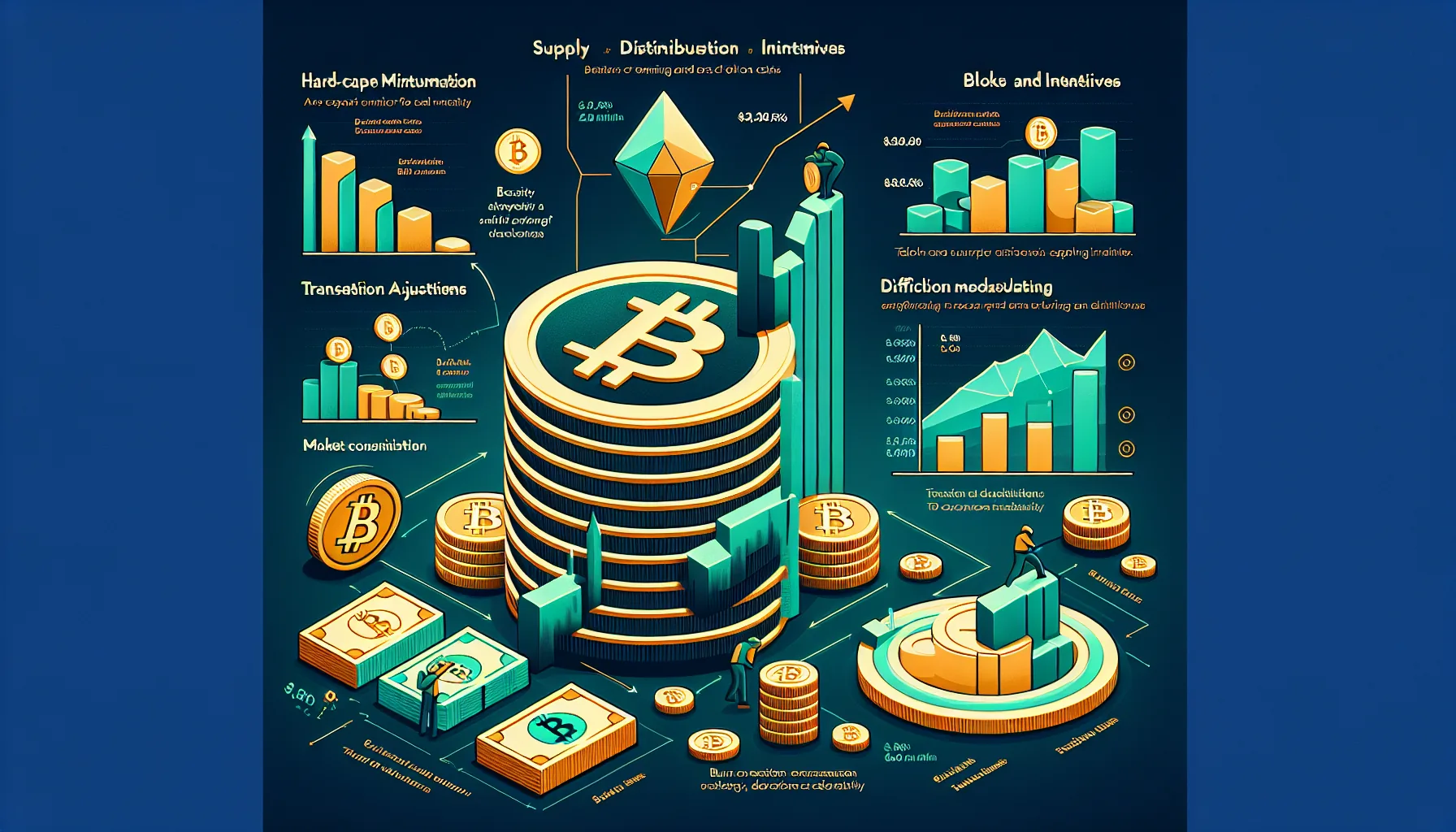
Bitcoin Cash (BCH) follows Bitcoin’s supply model with a hard-capped maximum of 21 million coins. New BCH enters circulation through mining rewards, which started at 50 BCH per block and halve approximately every four years. This predictable issuance schedule ensures diminishing supply inflation over time, reinforcing BCH’s scarcity.
Mining Rewards and Security Incentives
BCH uses the same proof-of-work (PoW) consensus mechanism as Bitcoin, relying on SHA-256 miners to secure the network. Miners earn rewards from both block subsidies and transaction fees. However, BCH faces competition from BTC mining due to its identical algorithm. This creates hash rate fluctuations, as miners can switch chains based on profitability. This dynamic has led to security concerns, particularly during periods of low BCH profitability when hash power can drop significantly.
Difficulty Adjustment and Mining Stability
To address mining inconsistencies, BCH employs an Emergency Difficulty Adjustment (EDA) mechanism and a rolling difficulty algorithm (DAA). These adjustments help stabilize block production times but have previously resulted in exploitable oscillations where miners strategically mine BCH during low-difficulty periods and abandon it when adjustments reset. Such volatility can impact network security and transaction confirmations.
Transaction Fees and On-Chain Scaling
BCH promotes low transaction fees as a core feature, enabled by its larger block size compared to BTC. While this facilitates on-chain scaling, it also impacts miner incentives. Since block rewards diminish over time, long-term security depends on transaction fees. If fees remain low and block rewards disappear, sustaining mining incentives becomes a challenge. Unlike BTC, which relies on high-fee transactions during congestion, BCH’s model assumes continuous high transaction volume to compensate for low fees. If usage remains insufficient, security risks could emerge as mining incentives decrease.
Token Distribution and Market Concentration
Like Bitcoin, BCH’s initial distribution followed proof-of-work mining, but its origin as a hard fork means every BTC holder at the time of the split received an equivalent amount of BCH. Post-fork, market dynamics determined further redistribution. However, BCH’s ownership concentration remains a concern, with a significant portion held by early adopters, exchanges, and large entities. This concentration can influence governance decisions and price volatility, impacting decentralization principles.
Burn Mechanisms and Supply Adjustments
BCH has no built-in coin burning mechanisms to reduce supply. However, some transactions can lead to lost coins, such as unspendable outputs or accidental burns by protocol design flaws. Unlike some models that incorporate deflationary mechanics, BCH’s supply remains constant aside from natural losses, keeping inflation strictly dictated by the halving schedule.
BCH Governance
Governance in Bitcoin Cash (BCH): On-Chain vs. Off-Chain Decision Making
Bitcoin Cash (BCH) governance is a mix of off-chain coordination and economic incentives, with no formalized on-chain governance mechanism. Unlike some blockchains that use voting mechanisms or governance tokens, BCH relies on miner coordination, developer proposals, and community consensus to implement changes. This model follows the precedent set by Bitcoin (BTC), but with BCH-specific dynamics influencing its evolution.
Miner Influence and Network Upgrades
Since BCH, like Bitcoin, operates under Nakamoto Consensus, miners play a significant role in governance indirectly. They signal support for network upgrades by choosing which code to run and which blocks to mine. However, miners do not have direct voting power beyond their ability to enforce or reject protocol changes through hash power. Forks in BCH's history have demonstrated that governance disputes, if unresolved, can lead to network splits, as seen with Bitcoin SV (BSV) and the Bitcoin ABC-led fork that resulted in eCash (XEC).
Development Teams and BIP Process Adaptations
Bitcoin Cash lacks a single, dominant development team. Multiple independent groups, such as Bitcoin Cash Node (BCHN) and other client implementations, contribute to protocol development. This decentralized approach prevents centralized control but also creates governance friction when coordination is required. Unlike Bitcoin’s BIP (Bitcoin Improvement Proposal) process, BCH has adopted a more flexible and informal proposal method, where different teams propose updates, discuss them within the community, and seek miner support for activation.
Challenges with Funding and Decision-Making
One of the recurring governance issues in BCH is developer funding. Without an enforced treasury system, development relies on donations, sponsorships, and voluntary contributions. This has led to periodic funding crises and attempted solutions like the Infrastructure Funding Plan (IFP), which sparked controversy and eventually resulted in another fork. The lack of a structured governance mechanism means that securing long-term funding for development remains an ongoing challenge.
Community-Driven Consensus and Risks of Fragmentation
Governance in BCH is heavily reliant on social consensus within the community. While this allows for organic decision-making, it also makes resolution of disagreements difficult. Without a formal voting or governance structure, disputes over upgrades, funding, or development priorities have, at times, escalated into contentious splits. While decentralized governance minimizes the risk of centralized control, it also increases the likelihood of fragmentation when consensus cannot be reached.
Technical future of BCH
Bitcoin Cash (BCH) Technical Roadmap and Upcoming Developments
Adaptive Blocksize and Scaling Enhancements
Bitcoin Cash continues to focus on scalability through an adaptive blocksize limit. Developers are improving the efficiency of block propagation to minimize orphan rates while sustaining high transaction throughput. The challenge remains balancing decentralization with performance as larger blocks demand more bandwidth and computation.
CashTokens and Smart Contract Functionality
The integration of CashTokens expands BCH’s scripting capabilities, enabling fungible and non-fungible tokens on-chain without requiring a sidechain or additional consensus layers. This enhancement introduces smart contract-like functionality via native BCH scripts, though it remains constrained by Bitcoin’s UTXO model. The tradeoff is increased complexity in validation and potential long-term script bloat.
CHIP Process and Governance Evolution
The BCH development process leverages the CHIP (Cash Improvement Proposal) framework, an open and structured method for proposing, discussing, and integrating protocol changes. While this has improved coordination among developers, miners, and businesses, challenges remain in achieving consensus on significant upgrades, particularly in contentious areas like opcodes and transaction format adjustments.
Network Upgrade Mechanism and Stability
Regularly scheduled upgrades are a core part of BCH’s technical strategy, occurring twice yearly. These updates introduce improvements such as enhanced signature verification and new opcode activations. However, the rigidness of scheduled upgrades presents risks, as unanticipated issues may require mitigating strategies outside of the predefined timeline.
Miner-Funded Development and Incentive Models
Unlike Bitcoin’s reliance on independent contributors and grants, BCH has explored miner-funded development initiatives. While this approach aims to ensure sustainable funding, concerns exist over centralization risks and the potential for miners to influence development priorities disproportionately.
Avalanche Pre-Consensus and Instant Transactions
The implementation of Avalanche pre-consensus promises faster transaction finality and improved double-spend protection. This mechanism differs from traditional proof-of-work consensus by leveraging a secondary network layer for transaction confirmation. Questions remain regarding its potential impact on miner incentives and whether it introduces unintended attack vectors.
Challenges in Ecosystem Adoption and Tooling
Developer tooling and ecosystem applications are advancing, but BCH faces competition from platforms offering comprehensive smart contract support. The on-chain scaling approach aligns BCH closer to a transactional currency than a full-fledged dApp platform, limiting its appeal for certain blockchain use cases.
Ongoing Script Extensions and Opcode Additions
Proposals continue to enhance BCH’s scripting language with additional opcodes, expanding programmability while maintaining the UTXO model. This introduces the challenge of maintaining security and avoiding bloated transaction sizes. Debate persists regarding the balance between flexibility and blockchain efficiency.
Comparing BCH to it’s rivals
Bitcoin Cash (BCH) vs. Bitcoin (BTC): Key Differences and Trade-offs
Block Size and Transaction Throughput
One of the most fundamental differences between BCH and BTC is block size. BCH increased the block size limit to allow more transactions per block, reducing fees and improving confirmation times during periods of high network activity. BTC, on the other hand, adheres to a smaller block size with a focus on second-layer scaling solutions like the Lightning Network. While BCH’s larger blocks help prevent congestion, they require more storage and bandwidth, raising concerns about centralization over time.
Fees and Network Congestion
BTC's smaller block size results in frequent fee spikes, particularly during peak transaction periods. This has led to concerns about affordability for smaller transactions, making BTC less practical for everyday payments without second-layer solutions. BCH, with its larger blocks, generally maintains lower fees and more predictable confirmation times. However, due to lower demand relative to BTC, BCH miners may earn less in fees, raising sustainability concerns if block rewards diminish significantly over time.
Adoption and Market Recognition
BTC maintains overwhelming dominance in terms of brand recognition, liquidity, and institutional adoption. It is widely accepted across exchanges, merchants, and payment processors. BCH, despite its focus on being a peer-to-peer electronic cash system, struggles with adoption at the same scale. Many businesses and service providers prioritize BTC first, even if they later integrate BCH or other alternatives. This disparity can make it more difficult for BCH to break into mainstream use beyond its dedicated supporters.
Mining Dynamics and Security Considerations
Both BCH and BTC use the SHA-256 proof-of-work algorithm, meaning they compete for the same mining resources. Since BTC has a significantly higher hash rate, it enjoys stronger security against 51% attacks. BCH, with a lower hash rate, is theoretically more vulnerable to reorganization attacks, particularly during periods of reduced miner profitability. While periodic difficulty adjustments help stabilize block times, drastic swings in hash power can disrupt network stability in ways BTC does not usually experience.
Philosophy and Development Priorities
The philosophical divide between BTC and BCH is rooted in their scaling approaches. BTC prioritizes a conservative, layered scaling model with a focus on security and decentralization. BCH, in contrast, takes a more aggressive on-chain scaling approach, emphasizing usability for fast and inexpensive transactions. This divergence extends to protocol development, with BTC maintaining a cautious development pace and BCH favoring adjustments aimed at immediate usability.
BCH vs. XEC: Key Differences in Architecture and Utility
Bitcoin Cash (BCH) and eCash (XEC) share a common lineage, as eCash originated from a rebranding of Bitcoin Cash ABC (BCHA) after a contentious fork. Despite this shared history, the two assets have diverged significantly in terms of architecture, governance, and intended use cases.
Token Denomination and Supply Mechanics
One of the most immediate distinctions between BCH and XEC is their unit structure. While BCH retains Bitcoin’s familiar decimal system, XEC implements an alternative approach by using a native scaling of two decimal places, eliminating the need for fractional satoshis in everyday transactions. This change was introduced to enhance usability and psychological perception, aligning eCash more with traditional fiat-like denominations.
In terms of total supply, XEC follows the same 21 million coin cap as BCH but presents it as 2.1 trillion units due to its re-denomination strategy. This does not affect underlying scarcity but shifts user experience by making balances and transactions appear in whole-number terms rather than fractions.
Avalanche Post-Consensus vs. Nakamoto Consensus
A crucial architectural difference lies in consensus mechanisms. BCH employs Nakamoto consensus, using Proof-of-Work (PoW) to secure its network via SHA-256 mining, ensuring stability and resilience. XEC, while still utilizing PoW, introduces an additional layer—Avalanche post-consensus.
Avalanche post-consensus is designed to enhance transaction finality, making reorgs significantly more difficult and reducing reliance on block confirmations for security. This could theoretically provide faster settlement assurances compared to BCH, though its adoption and practical advantages remain subjects of ongoing debate within the community.
Smart Contract and Upgrade Strategy
XEC has positioned itself as a platform emphasizing smart contract functionality and network upgrades aimed at future DeFi applications. It incorporates features like native staking through its Avalanche layer and proposes a governance framework that diverges from BCH’s more conservative upgrade path.
BCH, in contrast, focuses heavily on stability and reliability as a payment network, adhering to a structured upgrade schedule without introducing major consensus-layer modifications like Avalanche. While it does support basic smart contract capabilities through CashTokens, BCH does not integrate staking or validator-based mechanics like XEC.
Mining Landscape and Economic Model
Both BCH and XEC use SHA-256 mining, meaning they compete against each other (and others) for hashpower. However, since XEC has a significantly smaller block reward due to its unit conversion, miners must consider yield and profitability when choosing between the two. This dynamic can impact block stability, network security, and mining incentives over the long term.
Bitcoin Cash (BCH) vs. Litecoin (LTC): Key Differences in Design and Use
Block Size and Transaction Throughput
Bitcoin Cash (BCH) and Litecoin (LTC) take different approaches to scaling and transaction capacity. BCH increases on-chain transaction throughput by utilizing a significantly larger block size compared to LTC, which retains smaller blocks but enhances speed through a reduced block time. BCH blocks can handle more transactions per second in a single on-chain confirmation, while LTC focuses on faster block generation (2.5 minutes compared to BCH’s 10 minutes). This means LTC might achieve quicker confirmations in standard conditions, but under high congestion, BCH's larger block size provides more flexibility.
Mining and Security Considerations
LTC operates on the Scrypt hashing algorithm, diverging from BCH, which uses SHA-256. This difference impacts miner incentives and hardware availability. SHA-256 is dominated by large-scale ASIC miners, overlapping with Bitcoin (BTC), which can dilute mining incentives for BCH. In contrast, LTC's Scrypt algorithm allows a somewhat different mining ecosystem, reducing direct competition with BTC miners. However, LTC's lower mining difficulty compared to BCH can make it more susceptible to security risks like 51% attacks if hash power were to drop significantly.
Fee Structure and Cost Efficiency
Both BCH and LTC are designed to support low-cost transactions, but differences arise in how network fees are structured. BCH's approach to larger blocks helps maintain lower transaction costs even during high network activity. LTC, with its smaller block size and rapid block generation, typically offers low fees, though they may rise more sharply during congestion. BCH’s focus on on-chain scaling means it generally avoids the type of fee volatility seen in networks with constrained block space.
Adoption and Use Cases
Both assets are widely used for payments, but adoption patterns vary. LTC's long-standing presence and integration with major payment processors have reinforced its role in digital transactions, while BCH positions itself as a peer-to-peer electronic cash system with larger on-chain transactions. BCH's emphasis on merchants and direct payments contrasts with LTC's mix of payment use and store of value narratives.
Smart Contract and Development Differences
Although neither BCH nor LTC is primarily designed for complex smart contracts, BCH has explored contract functionality more deeply through opcodes and CashTokens, supporting basic decentralized applications. Litecoin has historically been more conservative in adding advanced scripting features, with innovations like MimbleWimble focusing more on privacy than programmability.
Primary criticisms of BCH
Primary Criticism of Bitcoin Cash (BCH)
Centralization Concerns
One of the primary criticisms of Bitcoin Cash (BCH) revolves around concerns over centralization, both in terms of mining and development. The network has historically faced issues with a high concentration of hash power among a few large mining pools, increasing the risk of mining centralization and potential 51% attacks. This concentration raises questions about the network's resistance to censorship and external influence. Additionally, influential figures and organizations within the BCH ecosystem have at times exerted significant influence over protocol decisions, leading critics to question whether BCH truly upholds decentralization principles.
Development and Governance Disputes
BCH has experienced multiple contentious hard forks, most notably splitting into Bitcoin Cash ABC (BCHA) and Bitcoin Cash Node (BCHN), which later became Bitcoin Cash (BCH) after community support shifted. These conflicts have eroded confidence in the project's governance model and raised concerns about instability. Recurring disagreements between developers and miners over protocol upgrades have been cited as a sign of governance issues, leading to fragmentation and diminished network cohesion compared to other blockchain projects with more structured governance models.
Reduced Security Compared to Bitcoin
Due to BCH maintaining a lower hash rate than Bitcoin (BTC), critics argue that its network security is comparatively weaker. A reduced hash rate makes BCH more vulnerable to deep reorganization attacks and other forms of blockchain manipulation. This security disparity has led some to question BCH’s viability as a long-term store of value, particularly when compared to Bitcoin, which enjoys massively greater mining power and network effects.
Declining Merchant Adoption
While Bitcoin Cash was originally positioned as a payment-focused alternative to Bitcoin, its actual adoption among merchants remains questionable. Despite its low transaction fees and faster block times, BCH has struggled to gain widespread merchant acceptance compared to other payment-focused cryptocurrencies and stablecoins. The growth of Lightning Network on Bitcoin has further undermined BCH’s unique value proposition, as BTC transactions can now be executed with low fees and instant settlements off-chain. Critics argue that BCH has failed to establish itself as the definitive peer-to-peer cash system it set out to be.
Liquidity and Exchange Support Challenges
A further point of criticism is BCH’s liquidity and exchange support relative to major competitors. Some exchanges have delisted BCH trading pairs or reduced support over time, which has impacted market accessibility. Additionally, BCH’s trading volume and market depth, while significant, often lag behind other major cryptocurrencies. These liquidity concerns impact its usability for large transactions and contribute to price inefficiencies compared to more widely traded digital assets.
Founders
Bitcoin Cash (BCH) Founding Team: Key Figures and Controversies
Bitcoin Cash (BCH) emerged in 2017 as a hard fork of Bitcoin, driven by long-standing debates over block size and transaction scalability. The founding team consisted of influential early Bitcoin developers, miners, and entrepreneurs who supported a larger block size to enhance transaction throughput. However, internal conflicts and power struggles have shaped BCH’s trajectory since its inception.
Amaury Séchet: Lead Developer and Controversial Exit
Amaury Séchet, a former Facebook engineer, played a crucial role in BCH’s creation as the lead developer of Bitcoin ABC, the primary implementation that launched the hard fork. His endorsement of an eight-megabyte block size limit put him at odds with Bitcoin Core developers, who favored off-chain scaling solutions like the Lightning Network.
Séchet’s leadership, however, was not without controversy. His control over protocol updates led to friction within the BCH community. Disputes over development fund allocations and the “Infrastructure Funding Plan” (IFP)—a proposal to redirect a portion of block rewards to developers—sparked a major split. In 2020, Séchet spearheaded another fork, leading to the creation of Bitcoin Cash ABC (BCHA), which later rebranded as eCash (XEC).
Roger Ver: The ‘Bitcoin Jesus’ and His Influence
Roger Ver, an early Bitcoin investor and advocate, became one of BCH’s most vocal supporters. His extensive marketing efforts positioned Bitcoin Cash as "the real Bitcoin," emphasizing fast, low-cost transactions. While his financial backing and influence helped BCH gain traction, they also alienated segments of the crypto community. Critics argued that Ver’s promotion tactics blurred lines between BTC and BCH, leading to confusion among retail investors.
His ownership of key platforms like Bitcoin.com gave him significant influence over BCH’s narrative, but also fueled concerns about centralization. Over time, Ver distanced himself from daily BCH development efforts, though his legacy remains deeply intertwined with its history.
Jihan Wu and the Miner Backing
Jihan Wu, co-founder of Bitmain, played a crucial role in BCH’s early success by leveraging the company’s dominance in Bitcoin mining hardware. Bitmain’s mining pools initially provided substantial hash power to Bitcoin Cash, ensuring network security.
However, Bitmain’s internal struggles and Wu’s departure from the company reduced its influence over BCH’s future direction. The loss of strong miner backing, coupled with ongoing internal divisions, contributed to BCH’s market fluctuations and fragmented developer community.
Authors comments
This document was made by www.BestDapps.com
Sources
https://bch.info
https://bitcoincash.org
https://github.com/bitcoincashorg/bitcoincash
https://github.com/bitcoin-cash-node/bitcoin-cash-node
https://gitlab.com/bitcoin-cash-node/bitcoin-cash-node
https://bitcoincashresearch.org
https://read.cash/@BitcoinCashNode
https://bch.gg/whitepaper
https://gitlab.com/bitcoin-cash-node/bitcoin-cash-node/-/blob/master/doc/bchn-technical-expectations.md
https://cashtokens.org
https://bch.info/en/roadmap
https://flipstarter.cash
https://bitcoinunlimited.info
https://gobch.org
https://smartbch.org
https://explorer.bitcoinunlimited.info
https://mainnet.smartbch.org
https://bchnodes.online
https://stats.bitcoinunlimited.info