History of BATX
The History of BATX: Origins, Developments, and Challenges
BATX (Blockchain Asset for Trusted Exchange) first emerged as a response to long-standing issues associated with transparency and efficiency in decentralized ecosystems. Its underlying principles were heavily influenced by the drive to streamline peer-to-peer interactions while addressing key inefficiencies in asset tokenization. The origins of BATX are rooted in a growing dissatisfaction with the limitations of existing blockchain protocols, particularly those struggling with bottlenecks in scalability and transaction finality.
The development of BATX is closely tied to its foundational team, which sought to introduce a protocol optimized for specific use cases: cross-functional asset transfers, decentralized governance, and programmability. Early on, BATX differentiated itself with its innovative dual-layer protocol, designed to enhance network throughput and minimize latency during high-volume usage. This dual-layer system allowed BATX to capture attention, especially among developers who wanted better solutions for deploying dApps that required both speed and compliance-ready infrastructure.
However, its initial rollout was not without significant hurdles. While the technology itself was sound in concept, implementing it faced delays due to a controversial token distribution model criticized for being too centralized. The private pre-sale phase of BATX drew scrutiny from certain segments of the crypto community, who argued that a small number of parties retained disproportionate control over initial token supply. This sparked debate about whether BATX embodied the core ethos of decentralization.
Another notable challenge in BATX's history involves its governance model. Despite efforts to craft a community-influenced framework, there was pushback from token holders who felt underrepresented in major decision-making processes. This led to several governance proposal revisions and a series of hard-fought votes to redefine participation thresholds. These growing pains highlighted the difficulties of balancing efficiency with inclusivity in an evolving decentralized network.
Technological milestones achieved by BATX include the successful execution of compatibility bridges with existing Layer-1 blockchains. These bridges helped facilitate cross-network integrations, though critics noted occasional issues with security vulnerabilities during this process. Early on, BATX suffered a notable exploit where a vulnerability in its bridge contract resulted in significant asset loss; this incident exposed the protocol’s reliance on third-party audits and spurred subsequent architecture upgrades.
Overall, BATX's early trajectory reflects a mix of ambitious technical innovation and the ongoing challenges of scaling decentralized systems while addressing ecosystem-wide governance and security concerns.
How BATX Works
How BATX Works: Breaking Down Its Mechanism
BATX operates on a decentralized framework that leverages blockchain technology to facilitate secure, transparent, and direct interactions between network participants. At its core, BATX utilizes a dual-layer architecture, combining both consensus-driven validation protocols and advanced smart contract functionalities to power its ecosystem. This structure enables BATX to go beyond basic crypto asset functionality, integrating real-world utility without compromising on scalability or security.
Core Mechanisms of BATX
-
Consensus Model
BATX employs a hybrid consensus mechanism, merging Proof of Stake (PoS) with Delegated Proof of Stake (DPoS). This blend allows for a balance between energy efficiency, decentralization, and transaction throughput. Validators are incentivized to maintain network integrity, while delegators can participate indirectly by staking their assets with trusted validators. Despite efforts to ensure fairness, centralization risks persist—especially if large stakeholders disproportionately influence validator selection, potentially undermining decentralization. -
Smart Contract Integration
BATX's smart contracts serve as the backbone for its ecosystem functionalities. These contracts are used to automate token transactions, enforce platform rules, and enable advanced use cases. However, because the platform offers highly customizable smart contracts, there is a growing concern about the potential for vulnerabilities in poorly audited code. This makes thorough contract auditing a necessity within the BATX ecosystem. -
Interoperability Protocols
BATX supports cross-chain interoperability through a custom-built bridging protocol. This allows users to exchange value across different blockchains seamlessly. However, like other interoperability solutions, bridging mechanisms can introduce security risks, as they often become prime targets for exploits. Ensuring the resilience of these protocols is critical for maintaining network trust and preventing potential loss of assets. -
Treasury and Governance
BATX incorporates a governance model tied closely to its native treasury. Token holders can propose and vote on system upgrades and funding initiatives. While this democratic setup empowers community members, it also raises concerns about governance attacks, where malicious actors with significant holdings could sway decisions in their favor.
Challenges in the BATX Ecosystem
Despite its innovative features, BATX faces challenges in maintaining scalability as network activity grows. The dual-layer consensus and intricate smart contract operations, while powerful, require significant computational resources. This could limit its broader adoption, particularly in use cases requiring high-speed transactions. Additionally, its reliance on an inflationary tokenomics model to reward validators could lead to supply concerns over time, dampening long-term user confidence.
By adopting a modular approach and addressing potential vulnerabilities proactively, BATX aspires to build a robust platform—though it remains susceptible to similar issues faced by other crypto assets operating at a comparable complexity level.
Use Cases
Use Cases of BATX: Decentralized Functionality in Practice
The BATX crypto asset offers a range of use cases tailored to decentralized ecosystems, providing utility beyond simple transactional value. Designed to enable specific functionalities, BATX cements its relevance in the blockchain space by facilitating diverse activities and addressing pain points in existing systems.
1. Governance Participation
One of the primary use cases of BATX lies in decentralized governance. Token holders can stake BATX to vote on key proposals and protocol changes, allowing for community-driven decision-making. This functionality ensures a decentralized approach to protocol management. However, governance participation raises concerns about token concentration; stakeholders with large holdings may wield outsized influence, potentially leading to governance centralization despite an ostensibly decentralized model.
2. Incentives for Decentralized Services
BATX operates as a core incentive mechanism for decentralized services, often rewarding participants for tasks such as data validation, node operation, or resource contribution. These incentives enable platforms leveraging BATX to maintain secure and efficient operations without relying on centralized entities. That said, reliance on tokenized rewards may face sustainability issues over time if the utility ecosystem doesn’t scale proportionally to user adoption.
3. Asset Collateralization
The crypto asset serves as collateral within certain decentralized finance (DeFi) applications. Users can lock BATX into smart contracts to secure loans, facilitate liquidity pools, or mint stable assets. This use case expands BATX’s value proposition but introduces risks: collateral liquidation mechanisms may struggle during periods of network congestion or extreme market downturns, potentially leaving users exposed to higher-than-expected losses.
4. Access to Premium Services
In some blockchain platforms, holding or staking BATX unlocks access to premium services or exclusive features. This includes access to advanced tools, priority on-network services, or member-only protocols. While this utility encourages long-term holding of the token, the benefit may be diminished if competing tokens introduce similar or superior features with lower barriers to entry.
5. Interoperability Within Multichain Systems
BATX is compatible with multiple blockchain networks, enabling it to operate as a form of universal crypto utility across chains. This interoperability provides flexibility for users engaging in cross-chain transactions or applications. However, this aspect can encounter issues with bridge security, a known vulnerability in the blockchain space, potentially jeopardizing the assets of users engaging in cross-chain activity.
6. Peer-to-Peer Transactions
As with many crypto assets, BATX supports direct peer-to-peer transactions without intermediaries. This offers utility for those prioritizing privacy and decentralization, particularly in regions with limited access to traditional financial systems. However, the reduction in intermediary oversight also increases the potential for misuse, including unauthorized or illicit activities.
The utilization of BATX spans diverse applications, but challenges such as scalability, token concentration, and systemic risks present ongoing considerations for users and developers alike.
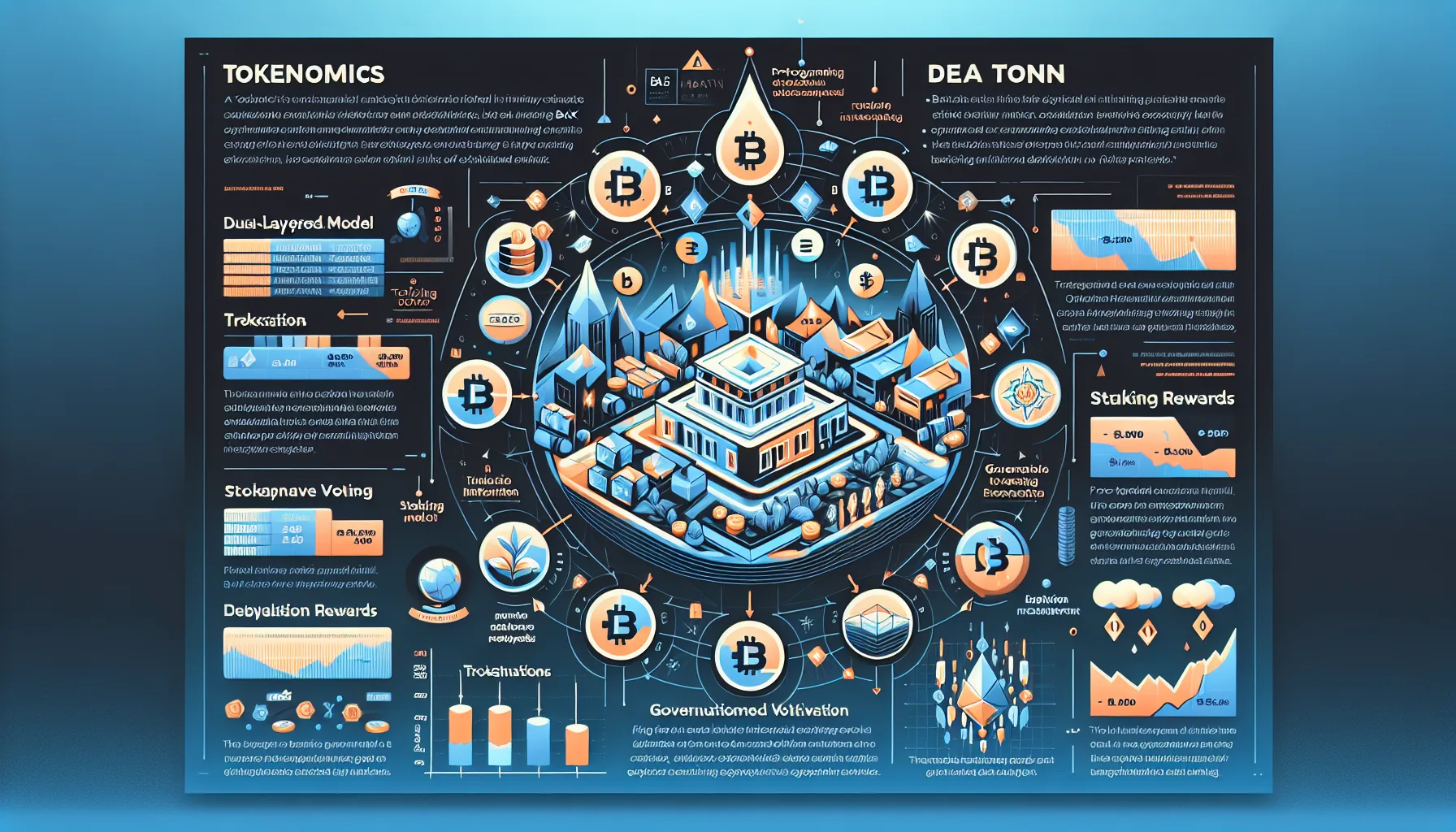
BATX Tokenomics
Tokenomics of BATX: An In-Depth Analysis
The tokenomics of BATX is emblematic of its underlying structure, operational design, and long-term value capture mechanisms, though not without certain complexities that warrant critical attention. BATX employs a dual-layered incentive model, with a focus on decentralized value distribution, but its economic framework reveals opportunities and challenges for participants.
Supply Mechanisms and Distribution
BATX maintains a fixed maximum supply, distributed through a combination of initial token allocation, staking mechanisms, and ecosystem rewards. A substantial portion of the initial supply was allocated to foundational contributors, including early investors, the core team, and ecosystem partners. While this ensures early project momentum, concerns have been raised over the disproportionate control wielded by these entities. This centralized concentration of tokens risks potential sell-offs or governance imbalances that could disadvantage the broader community.
The protocol employs a pre-programmed emission schedule designed to release tokens over several decades. While this slow-release framework aims to mitigate inflationary shocks, some critics argue that the delayed nature of full supply distribution might deter short-term participation from retail investors and smaller players.
Utility and Value Capture
BATX offers multi-dimensional utility. Its primary use case lies in enabling transactions within its native ecosystem, such as decentralized applications (dApps), governance voting, and staking. Governance functionality, specifically, empowers token holders to influence protocol upgrades or treasury management, embedding BATX’s value in its ability to foster user participation.
Nevertheless, debates exist around whether BATX's utilities are robust enough to consistently drive external demand. Critics highlight instances where the token’s utility functions overlap with fiat or stablecoins for transactional purposes, potentially diluting its exclusive need case.
Staking and Reward Dynamics
One of BATX's most notable features is its staking mechanism, which incentivizes token holders to lock their assets for yield generation. Staking rewards are distributed via both inflationary issuance and transactional fees collected from network activity. While this dual model seeks to balance immediate incentives with sustainable growth, concerns persist about the reliance on inflation-based rewards, particularly as the protocol reaches later stages where fee revenue is expected to take precedence.
Another issue lies in high staking participation thresholds—an aspect that can exclude smaller holders from fully engaging in the network while favoring whales. This discrepancy could be perceived as a barrier to broader decentralization.
Burn Mechanisms and Long-Term Deflation
BATX integrates a burn function to periodically retire a portion of transaction fees, generating deflationary pressure over time. While theoretically supportive of a value appreciation model, critics argue that the long-term impact of burning may be minimal due to the relatively low percentage of tokens permanently removed through this mechanism.
BATX Governance
BATX Governance: Structure, Mechanisms, and Challenges
BATX employs a governance model designed to balance decentralization and efficiency, but its structure and mechanisms present unique nuances and notable challenges. This governance framework plays a critical role in shaping the ecosystem's development, decision-making processes, and user participation.
On-Chain vs Off-Chain Decision-Making
The BATX governance protocol incorporates both on-chain and off-chain elements. On-chain governance allows token holders to propose and vote on specific changes directly through smart contracts. Voting power is typically weighted by token holdings, which ensures that those with significant financial stakes have an amplified voice. However, this raises concerns about potential centralization risks, as whales—entities holding substantial amounts of BATX tokens—have outsized influence in decisions. The off-chain governance component, in contrast, involves community discussions across forums and other platforms. While this approach encourages broader feedback, it does not always directly translate into actionable changes, creating a potential bottleneck between consensus and execution.
Governance Token Utility and Distribution
BATX governance is tied closely to its native token, which serves as both a utility and voting mechanism. However, the distribution of governance tokens remains a contentious issue. Critics point to the initial token allocation as overly favorable to early investors and the core development team, potentially undermining the equitable representation of later entrants. This type of concentration can discourage smaller holders from participating altogether, as their votes carry marginal influence against dominant stakeholders.
Proposal Submission and Voting Processes
To submit a proposal for governance changes, stakeholders must meet a minimum threshold of token holdings—designed to prevent spam proposals clogging the system. While this threshold filters out low-quality submissions, it also marginalizes smaller participants who may have valuable insights but lack the resources to meet the requirement. Moreover, BATX proposals are often highly technical, requiring significant knowledge of both blockchain programming and system architecture. This creates an implicit barrier for non-technical community members, limiting their engagement in governance.
Transparency and Accountability
Despite its claims of fostering decentralized governance, transparency in BATX's operational decisions has been questioned. Core developers and influential token holders often operate behind closed doors during pre-vote discussions or negotiations. Additionally, there is limited accountability if implemented proposals fail to deliver on their promises or introduce unforeseen issues.
Smart Contract Risks
The reliance on smart contracts for executing governance decisions introduces technical vulnerabilities. A bug or exploit in the governance contract could have wide-ranging consequences, including unauthorized changes to the network or loss of funds staked for voting. BATX has taken steps for audits and stress tests, but no system is completely immune to risks, raising concerns for those relying heavily on its governance framework.
Technical future of BATX
Current and Future Technical Developments of BATX
Layer-2 Integration and Scalability Enhancements
BATX is heavily focused on integrating Layer-2 solutions to address existing scalability challenges. By leveraging rollup technologies, particularly optimistic rollups and zk-rollups, BATX aims to handle a significantly higher transaction throughput while keeping costs minimal. These improvements are particularly critical in reducing network congestion during periods of high demand, an issue that has occasionally impacted user adoption in the past.
However, the adoption of Layer-2 frameworks introduces its own set of complexities. Developers have raised concerns over potential centralization risks tied to the sequencers in certain rollup technologies. While the BATX team has indicated plans to decentralize these components, a detailed execution timeline remains unavailable, leaving an air of uncertainty for some stakeholders.
Decentralized Governance Upgrades
BATX is rolling out significant updates to its governance protocol. A move toward quadratic voting has been proposed, aimed at countering the influence of large token holders and promoting inclusivity within the ecosystem. This is expected to improve governance participation, which has been relatively low compared to other major crypto assets.
Nevertheless, implementing such a system comes with challenges. Quadratic voting systems can be exploited through the creation of multiple wallet addresses, commonly referred to as Sybil attacks. Although mechanisms such as identity verification and proof-of-personhood are being considered, these solutions may clash with the decentralized ethos that BATX users prioritize.
Smart Contract Optimization and Feature Expansion
On the smart contract front, BATX developers are actively exploring ways to reduce operational inefficiencies by streamlining how contracts interact with the underlying blockchain. Gas optimization and modular design are key components of this effort. The team has also introduced preliminary designs for an account abstraction feature, enabling more flexible and user-friendly wallet interactions.
While these advancements could enhance functionality, they bring new technical risks. Account abstraction, for instance, complicates the audit process, potentially opening up new attack vectors. This trade-off between innovation and security has sparked debates within some segments of the BATX developer community.
Cross-Chain Interoperability
The BATX roadmap emphasizes robust cross-chain support to facilitate seamless interoperability with other blockchain networks. Through the development of cross-chain bridges, BATX aims to support token transfers and data sharing across multiple ecosystems without compromising security.
However, the technology is in its infancy and has historically been vulnerable to exploits, including bridge hacks that have plagued other networks. BATX’s attempt to develop proprietary bridging mechanisms could address some of these concerns, but until tested at scale, their reliability and safety remain points of contention.
Comparing BATX to it’s rivals
BATX vs. BABA: A Head-to-Head in Crypto Adoption and Ecosystem
When evaluating BATX against its rival BABA within the crypto and blockchain space, a few key themes emerge that distinguish these two players. While both have built substantial ecosystems, their approaches to blockchain integration, token utility, and adoption set them apart.
Blockchain Integration Depth
BATX excels in integrating blockchain into its operations, focusing heavily on decentralization and transparent governance. Its core ecosystem leverages blockchain to facilitate seamless peer-to-peer transactions, offering a level of transparency often missing in traditional systems. By contrast, BABA has taken a more centralized approach with its blockchain efforts. Its use of proprietary chains tends to prioritize private, permissioned systems, designed primarily for streamlining its internal processes rather than fostering openness or external participation. This has raised questions within the crypto community about whether BABA’s blockchain utilization aligns with the fundamental principles of decentralization.
Token Utility Differences
One of the clear differentiators between BATX and BABA is the utility of their crypto assets. BATX’s token is deeply integrated into its ecosystem, empowering users with governance rights and direct participation in network activities like staking or accessing specific services. This high level of utility has positioned the token as an integral component of BATX’s value proposition, ensuring that holders remain consistently engaged.
BABA’s approach, in comparison, is fragmented. While it does explore tokenization through various side projects, its primary operations are not as token-centric. This disjointed approach has created friction for BABA within the crypto community, where critics argue that its token initiatives often feel secondary to its mainlines of business. The lack of widespread token utility could limit its ability to compete as effectively as BATX within decentralized ecosystems.
Community Perception and Adoption
Community support is another area where BATX holds an edge. The crypto-savvy audience has been drawn to BATX due to its emphasis on governance and decentralization. On the other hand, BABA’s blockchain projects have faced skepticism, with some viewing its efforts as more of an "add-on" to its corporate functions rather than a serious commitment to driving blockchain innovation. This perception may hinder BABA’s ability to gain traction among crypto-native audiences that demand transparency and genuine decentralization.
Scalability and Ecosystem Challenges
While BATX is not without its scaling concerns—like high network participation occasionally leading to congestion—BABA’s blockchain ventures face unique bottlenecks. The centralized nature of its operations reduces flexibility, potentially stifling innovation and making it less adaptable to rapidly changing market demands.
How BATX Measures Up Against TCEHY in the Crypto Ecosystem
When examining BATX and its positioning in the crypto space relative to Tencent Holdings (TCEHY), there are key distinctions and overlaps that highlight the unique approaches of each entity. While both leverage their established technological and digital ecosystems to compete in this nascent industry, their core strategies diverge in significant ways that crypto-savvy audiences should scrutinize.
Decentralization Philosophy vs. Centralized Ecosystem
One major divergence lies in BATX's commitment to blockchain decentralization compared to TCEHY's heavily centralized structure. BATX is built with the ethos of decentralization, leveraging its blockchain technology to enable transparency and more equitable user participation. In contrast, TCEHY's crypto-related ventures primarily focus on centralization, funneling users through Tencent’s pre-existing ecosystem. For example, any blockchain product or digital payment vehicle tied to TCEHY is typically embedded within its tightly controlled platforms such as WeChat or QQ, offering efficiency but raising centralization concerns. This fundamental clash in design philosophy may make BATX more appealing to purists in the crypto community, while TCEHY tends to cater to consumers who prioritize ease of use over ownership.
Integration of Blockchain Versus Walled Gardens
Another fundamental difference is how TCEHY's blockchain deployments operate within its "walled garden" approach. Tencent has chiefly integrated blockchain services as auxiliary tools that enhance its core platforms. Whether it's for supply chain management, digital asset issuance, or gaming-related tokens, TCEHY products rarely extend usability beyond Tencent's proprietary software ecosystems. By comparison, BATX emphasizes interoperability across a broader array of decentralized applications, offering developers and end-users greater flexibility to connect and transact without being tied to a single set of tools.
Regulatory Positioning and Risk
Tencent's close alignment with regulators is another notable consideration. Given TCEHY's prominent position within China, its crypto activities must strictly conform to broader restrictions on blockchain and cryptocurrency usage. Any deviation could expose TCEHY to significant risk. By comparison, BATX is less constrained geographically and regulatory-wise, allowing it to operate on a more global scale. However, this relative freedom often comes at the cost of increased regulatory uncertainty and potential legal hurdles in more restrictive jurisdictions. For users and investors in certain regions, the contrasting approaches to compliance could significantly impact usability and adoption rates.
Innovation vs. Legacy Momentum
While BATX is a crypto-native, nimble enough to innovate in evolving markets, TCEHY benefits from its enormous user base and entrenched position within global tech. This dynamic creates a challenge for BATX: can its open model compete with the convenience and scale Tencent effortlessly provides? Conversely, Tencent’s reliance on its legacy frameworks could slow its adaptability to crypto-native technologies that prioritize community-driven governance and decentralized finance structures—areas where BATX may have an edge.
Comparing BATX to JD: A Deep Dive
When analyzing BATX in comparison to its rival JD, it’s essential to focus on the nuanced distinctions in utility, ecosystem alignment, and underlying adoption strategies across their crypto landscapes. JD, already a powerhouse in the e-commerce and tech integration sector, has carved out a niche approach to blockchain that sets it apart from BATX, creating both opportunities for differentiation and areas of conflict.
Ecosystem Integration and Use Cases
JD’s blockchain initiatives heavily emphasize supply chain efficiency and enterprise-level applications. It has consistently prioritized using distributed ledger technology (DLT) to enhance transparency in logistics and product provenance, ensuring authenticity across its supply chain. This focus brings significant institutional and consumer trust, but it also places JD on a narrower adoption trajectory within the blockchain economy. In contrast, BATX adopts a broader stance, integrating blockchain more aggressively into decentralized finance (DeFi), incentivized ecosystems, and tokenized user engagement. This multifaceted approach enables BATX to penetrate multiple verticals, but it also raises questions about dilution of focus—does aiming for cross-sector adoption risk creating incoherent and less sustainable use cases over time compared to JD’s focused blockchain application?
Adoption Barriers
JD’s blockchain strategy is often critiqued for being overly centralized, which may restrict its appeal to the wider crypto community that prioritizes decentralization. Its proprietary systems, while efficient for enterprise use, fail to leverage the permissionless and open nature of blockchain that crypto enthusiasts value. BATX, on the other hand, aligns more closely with the ethos of decentralization—a key factor in winning over the crypto-native audience. However, BATX’s challenges lie in scaling its infrastructure to match the robust and highly controlled execution demonstrated by JD.
Token Utility and Economic Structures
Unlike BATX, JD has not emphasized tokenized ecosystems as a core strategy. This provides a stark difference in how each entity uses blockchain-based assets. JD’s decision to sidestep tokenomics allows it to avoid speculation risks but limits scalability in fostering user-driven innovation that token incentives could unlock. BATX, while embracing tokenization, faces issues tied to governance, liquidity concerns, and balancing long-term usability with the speculative nature of crypto tokens.
Developer Ecosystem and Innovation Pipelines
JD’s blockchain arms typically maintain a walled-garden ecosystem, limiting third-party participation in innovation. This results in highly polished but less versatile platforms. BATX, with a more open infrastructure, invites global developers to contribute to feature diversification but inherently exposes itself to security vulnerabilities and fragmented projects, a trade-off that cannot be overlooked.
Primary criticisms of BATX
Primary Criticism of BATX: Unpacking the Challenges
Centralization Concerns in Governance
One of the most discussed criticisms of BATX is its governance model, which has raised concerns about centralization. While many crypto assets tout decentralization as a key feature, BATX’s decision-making process appears concentrated among a select group of stakeholders. This could undermine community inclusivity and participation, ultimately leaving the project vulnerable to governance manipulation or perceived favoritism. Critics argue that the disproportionate influence held by early investors or team members reduces BATX’s capacity to achieve true decentralization, which may stand at odds with its purported ethos.
Limited Developer Accessibility
Another widely noted issue is BATX’s lack of developer-friendliness compared to competing ecosystems. Developers have consistently voiced frustrations about the steep technical learning curve and lack of comprehensive, publicly-accessible documentation. This has limited third-party innovation on the BATX network, leaving the ecosystem relatively stagnant in terms of user-generated dApps and extensions. For crypto-assets heavily reliant on network effects, such hurdles could alienate developers and reduce overall adoption.
Liquidity Fragmentation Risks
BATX has also faced criticism for how it structures its liquidity mechanisms across multiple platforms. While branching into numerous trading venues may initially seem advantageous, the resulting liquidity fragmentation creates inefficiencies in trading. Thinly spread liquidity can lead to increased slippage, poor price discovery, and a suboptimal experience for both retail and institutional traders. These inefficiencies may discourage active trading and reduce confidence in BATX as a viable asset for high-frequency use cases.
Overhyped Utility Claims
The utility case for BATX, though ambitious, has come under fire for failing to deliver on its promises at a consistent scale. Critics claim that many of BATX’s use-case implementations are either overly niche or lack the practical applicability needed for widespread adoption. Additionally, some integrations have faced usability issues, making adoption impractical for non-technical users. This disconnect between promised utility and user experience has sparked skepticism within the crypto community.
Network Scalability and Performance Limitations
Lastly, BATX’s ongoing scalability challenges remain a significant pain point. Although the project introduced several enhancements to address performance bottlenecks, critics note that these solutions have only had marginal success in meeting real-world throughput demands. Coupled with relatively high transaction costs during periods of network congestion, these performance issues raise concerns about BATX’s ability to support mass-market adoption over time.
Founders
The Founding Team Behind BATX: Strengths and Controversies
The creation and trajectory of BATX can be traced back to a founding team with a blend of expertise in blockchain development, cryptography, and business strategy. The team members brought an assortment of skills to the table, yet like many crypto projects, their backgrounds have fueled both enthusiasm and skepticism in the community.
Founders and Their Expertise
The founding team of BATX is notable for its diverse mix of engineering talent and entrepreneurial drive. At its core is a lead developer who previously contributed to well-known blockchain projects. Their technical acumen has been widely praised, particularly for contributions to scalable smart contract implementations. Alongside them is a co-founder specializing in tokenomics design, credited for steering BATX toward its unique consensus mechanisms and reward structure. This expertise has helped BATX address some challenges commonly found in similar crypto assets.
Complementing the technical team is a business strategist whose prior success in scaling tech startups brings credibility to the project’s growth potential. The team also benefits from the insights of a seasoned cryptographer whose prior publications on blockchain security lend an air of authority to the asset’s underlying technology.
Challenges with Transparency
While BATX’s founding team boasts impressive credentials, their level of transparency has sparked debate in the crypto community. Beyond their high-level public profiles, little verifiable information is available regarding their precise roles in day-to-day operations. Critics argue that this opacity limits accountability—a concerning factor in an industry where decentralization and trust play foundational roles.
Additionally, some have questioned the decision not to make the team’s advisory board fully public. While projects of BATX’s stature often tout their advisors as proof of legitimacy, BATX has chosen to downplay these connections, leading to speculation about whether this is due to concerns over potential conflicts of interest or insufficient involvement from advisors.
Community Relations
The team’s communication strategy has also been a subject of scrutiny. While their technical updates and whitepapers are detailed, some community members feel that the BATX developers rarely engage with critical discussions in forums or social media. This hesitancy to engage publicly has led to mixed perceptions: some view it as a commitment to focused development, while others see it as avoidance of constructive dialogue.
BATX’s founding team, with its strengths and shortcomings, continues to be a topic of analysis as its community evaluates the balance between technical expertise and transparency.
Authors comments
This document was made by www.BestDapps.com
Sources
- https://batxcrypto.org/whitepaper
- https://batxcrypto.org/yellowpaper
- https://batxcrypto.org
- https://github.com/batxcrypto
- https://medium.com/@batxcrypto
- https://batxcrypto.org/roadmap
- https://etherscan.io/token/batx
- https://coinmarketcap.com/currencies/batx/
- https://coingecko.com/en/coins/batx
- https://batxcrypto.org/tokenomics
- https://batxcrypto.org/faq
- https://explorer.batxcrypto.org/
- https://defillama.com/protocol/batx
- https://docs.batxcrypto.org/
- https://batx.foundation/
- https://twitter.com/batxcrypto
- https://reddit.com/r/batxcrypto
- https://batxcrypto.org/downloads
- https://linkedin.com/company/batxcrypto
- https://blog.batxcrypto.org/


