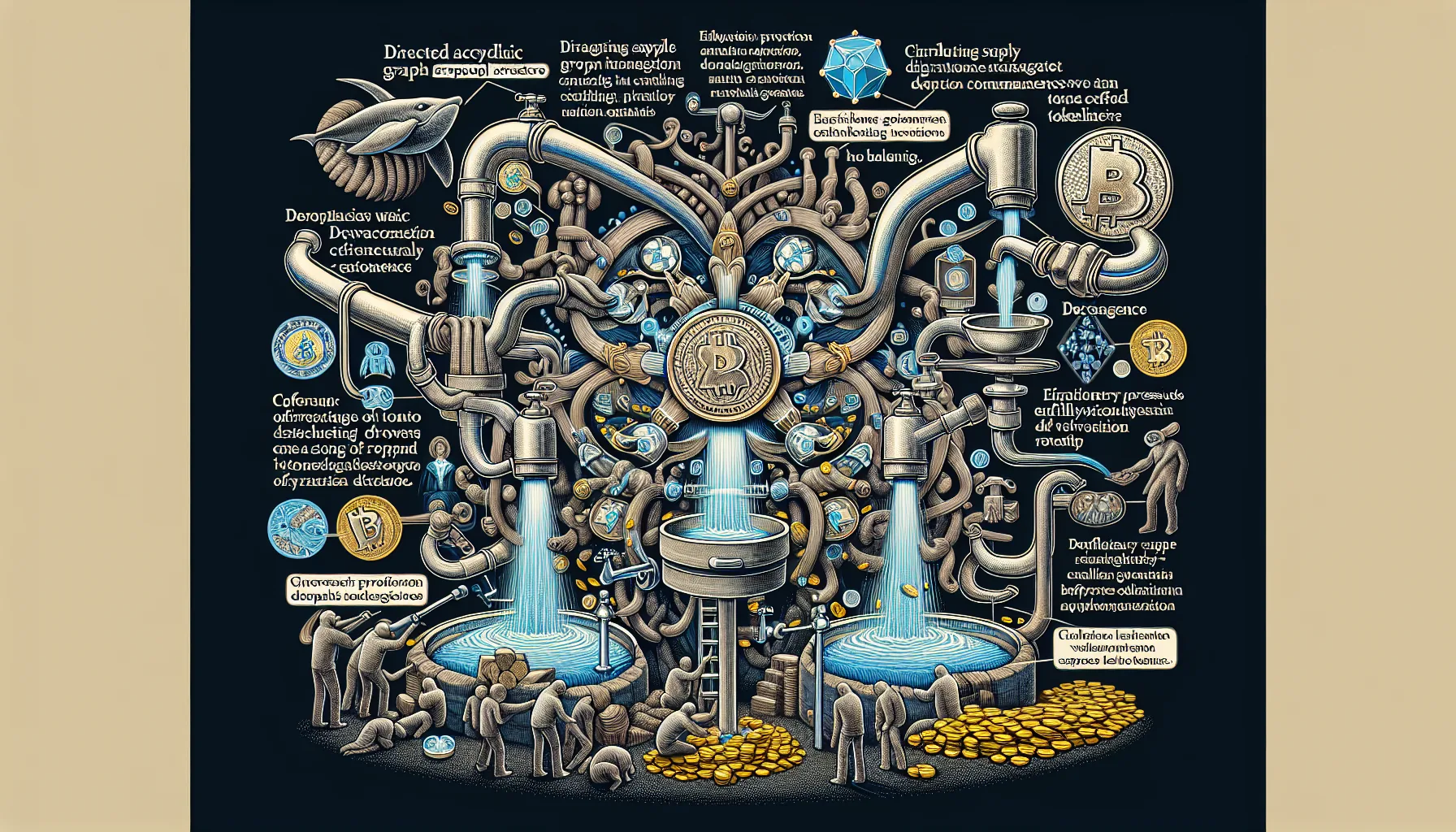
History of BAN
The History of BAN: From Meme Roots to DeFi Ambitions
BAN, better known as Banano, emerged in 2018 as a fork of Nano (formerly Raiblocks), a feeless cryptocurrency known for its lightweight block-lattice architecture. While Nano primarily aimed for seriousness and efficiency, BAN leaned heavily into community-driven, meme-based branding. This unconventional approach at its inception both helped Banano gain a loyal following and created long-term challenges in being taken seriously beyond its niche audience.
At its core, BAN retained the same technical foundation as Nano, utilizing a Directed Acyclic Graph (DAG) structure for instant transactions and scalability. However, from the outset, the project deliberately differentiated itself by gamifying adoption and blending irreverent humor into its ecosystem. This included periodic "faucet" distributions through contests, giveaways, and interactive games. While this method rapidly grew its user base, critics pointed out that such practices could create an unsustainable token economy driven by speculation rather than utility.
A key moment in BAN’s history occurred when the project began experimenting with decentralized finance (DeFi) integrations. While Banano initially existed as a standalone chain, developments around bridges to Ethereum and Binance Smart Chain allowed holders to interact with broader DeFi tools, including liquidity pools and yield farming. This evolution opened doors for advanced use cases but also exposed the project to risks, such as smart contract vulnerabilities and potential governance issues stemming from cross-chain deployments. Some early adopters voiced concerns that these shifts diluted Banano’s original mission of simplicity.
Another pivotal challenge faced by BAN stemmed from its association with its parent chain, Nano. While Banano’s unique branding attracted die-hard members to its community, critics have argued that the project’s heavy reliance on Nano's codebase made its technological differentiation superficial. Moreover, questions about long-term sustainability have persisted, particularly as BAN eschewed traditional mining in favor of a distribution model which skeptics argued could lead to centralization if mishandled.
Despite these challenges, Banano achieved moderate success in building a highly engaged, if eccentric, community. This level of user participation became a defining characteristic of the project, but it also highlighted tensions between its whimsical branding and the growing emphasis on integration with serious blockchain applications.
BAN’s history is both a case study in how meme culture can drive short-term virality within crypto and a cautionary tale about the pitfalls of trying to mature a project without losing its original identity. Ultimately, its evolution reflects a delicate balance between community-driven growth and technological innovation layered on top of novel incentives.
How BAN Works
How BAN Works: Exploring the Mechanics of the Cryptocurrency
At its core, BAN operates as the native currency for the Banano ecosystem, a lightweight and energy-efficient cryptocurrency built on a directed acyclic graph (DAG) architecture. BAN shares a similar structural foundation to its predecessor Nano, leveraging a feeless and near-instant transaction framework, but with unique community-driven enhancements. This section delves deeply into how BAN functions technically, describing its key mechanisms, including its block-lattice structure, emphasis on accessibility, and potential challenges to its adoption.
Block-Lattice Design
BAN deviates from traditional blockchain systems by employing a block-lattice architecture. Unlike linear blockchains, which rely on miners to validate transactions in sequential blocks, each user account in the Banano network has its own chain of blocks. This structure allows transactions to occur asynchronously, without requiring consensus across the entire network.
When a user initiates a transaction, two separate events occur: a "send block" is added to the sender's chain, and a corresponding "receive block" is added to the recipient's chain. These paired blocks represent a completed payment, all while maintaining decentralization via the network’s consensus algorithm.
Feeless Transactions through Open Representative Voting (ORV)
Central to the functionality of BAN is its Open Representative Voting system. Inherent to DAG-based cryptocurrencies, ORV enables consensus by assigning weight to specific validators ("representatives") chosen by BAN holders. This mechanism allows the network to maintain both security and efficiency without requiring transaction fees.
The ability to accommodate streaming micropayments and high-frequency transfers without fees makes BAN particularly suitable for low-value financial interactions. However, some critics argue that the absence of fees could lead to spam attacks, where bad actors flood the network with illegitimate transactions to disrupt operations. While advocates point to existing rate-limiting mechanisms as a deterrent, scalability under heavy loads remains an open area of concern.
Distribution and Inflation
BAN employs a unique "faucet-based" distribution model rather than coin mining or staking. Tokens are disbursed through community-based initiatives, such as games, social media interactions, and content creation. This emphasis on accessibility fosters inclusivity within the ecosystem, though it has also been criticized for contributing to inconsistent token allocations. Additionally, the fixed supply of BAN — much like Nano — raises questions around long-term token velocity and whether deflationary pressures could harm its usability over time.
Technical Simplicity Versus Limitations
While BAN’s technical simplicity makes it easy to integrate into everyday transactions, it introduces potential decentralization trade-offs. The reliance on a small pool of trusted representatives for ORV may lead to centralization risks if voting power consolidates over time. Moreover, its DAG structure, while innovative, differs fundamentally from traditional blockchain systems, which may present challenges in terms of broader interoperability with established protocols.
Through its highly specialized framework, BAN balances feeless efficiency and usability with some inherent risks related to scalability and trust. Understanding these mechanics is crucial to evaluating its strength as a viable crypto asset at a technical level.
Use Cases
BAN Crypto Asset: Exploring Real-World Use Cases
Banano (BAN) is a feeless, instant cryptocurrency that has found niche utility in various online environments, from tipping systems to community-driven events. Despite its playful branding and meme-inspired origins, BAN demonstrates practical applications that resonate with its tech-savvy and privacy-conscious audience, although scalability and adoption challenges remain.
Content Distribution Platforms and Microtransactions
One of BAN's primary use cases lies in the realm of microtransactions, particularly within content platforms and social ecosystems. By eliminating transaction fees, users can send fractional amounts of BAN to support creators, tip contributors in online forums, or even pay for small-scale digital services. This has positioned BAN as a viable alternative to traditional tipping mechanisms typically saddled with platform restrictions or excessive fees. However, its utility in this space hinges heavily on existing integrations, as limited third-party support outside specific social communities curtails broader adoption.
Gamified Community Rewards
BAN has carved out a niche within gamified reward systems. Communities frequently leverage BAN for event-based giveaways, treasure hunts, and participation incentives, fostering engagement among users. Its near-instant transaction speeds make it ideal for such dynamic use cases, as recipients can quickly access their rewards without delays. However, this heavy reliance on community-driven initiatives raises a potential scalability issue; BAN’s adoption often doesn't extend far beyond these niche activities, limiting its role as a broader payment network.
Onboarding Crypto-Newcomers
BAN is often used as a gateway currency for individuals new to the crypto space, largely due to its feeless design and low entry barriers. New users can experiment with sending and receiving BAN without incurring costs, which simplifies the onboarding experience. Nevertheless, this onboarding use case is inherently tied to BAN's lighthearted identity, which some crypto-savvy users might perceive as less serious or not suitable for high-value transactions, affecting its perception among more institutional or enterprise actors.
Considerations for Broader Utility
While BAN excels in fast, feeless transactions for micro-use cases, the lack of smart contract functionality or programmability limits its potential within more complex decentralized finance (DeFi) ecosystems. Additionally, its reliance on community trust and niche adoption creates a bottleneck for achieving utility at scale. Critics argue that its status as a "fun" crypto leaves it vulnerable to being overlooked in environments that prioritize utility over branding or meme culture.
BAN Tokenomics
BAN Tokenomics: Detailed Insights for Crypto Experts
The tokenomics of BAN (Banano) reflects a structured yet unconventional approach within the crypto asset market, leveraging its position as a fee-less, instant cryptocurrency while exposing unique characteristics and notable challenges. Deeply rooted in its predecessor Nano, BAN employs a Directed Acyclic Graph (DAG) structure, removing traditional blockchain bottlenecks. However, these efficiencies come with specific tokenomic dynamics worth dissecting.
Fixed Supply but No Cap in Distribution Control
BAN operates with a fixed maximum supply of 3.4 billion tokens. However, unlike many capped or pre-minted cryptocurrencies, the token distribution is reliant on a faucet-based system and engagement-based rewards. While this gamified distribution model encourages community participation, critics often highlight its susceptibility to uneven allocation patterns and potential gaming by savvy users. Decentralized control over token distribution mitigates some risks, but this approach remains vulnerable to accusations of favoritism or exploitation.
Deflation and Circulation Challenges
A core issue in BAN’s tokenomics revolves around balancing deflationary pressures while maintaining circulating supply relevance. While there is no mining or transactional fee burn mechanism, the utility-focused use cases of BAN in tipping and microtransactions risk confining it to niche adoption. Furthermore, long-term holders represent a non-contributing supply segment, creating pockets of inactive tokens. As circulation resistance increases, economic inefficiencies may arise, particularly for a currency reliant on high transaction velocity.
Governance Tokenomics: Missing Link in Decentralization?
BAN lacks an explicit governance token mechanism, leading to questions about its path to total decentralization. Unlike projects that integrate token-holder voting rights into decision-making, BAN relies primarily on community-driven consensus without directly tying contributions to token ownership. This can limit incentives for token retention and reduce the appeal for institutional or large-scale stakeholders accustomed to governance-based yield structures.
Whale Risk and Distribution Centralization
While BAN’s faucet-driven distribution model aims for parity, the natural consolidation of tokens among “crypto whales” is a double-edged phenomenon. Whales can provide network stability but also pose centralization risks. Tokenomics-savvy analysts often scrutinize wallet concentration data as it may indicate volatility predisposition or single-party influence. With faucets and faucets-derived distributions over time, there remains concern that earlier adopters disproportionately control a substantial share of the supply.
Inflation Mitigation vs. Growth Incentives
BAN’s lack of inflation mechanics poses a double-sided tokenomic dilemma. On one hand, maintaining a fixed supply ensures scarcity fundamentals. On the other, its zero-fee, abundant distribution method occasionally hinders market scarcity's intrinsic value. Conflicting pressures between incentivizing new participants while ensuring that existing token holders see value appreciation remain unaddressed nuances within BAN’s tokenomic design strategy.
BAN Governance
Governance in BAN: Understanding Decentralization and Decision-Making
The governance structure of BAN—built upon its foundational principles of decentralization and community-led decision-making—plays a crucial role in determining the project's direction and resilience. However, like many decentralized crypto assets, its governance framework has both strengths and notable challenges.
BAN operates on a framework that emphasizes minimal hierarchy and relies heavily on its community for proposal creation, discussion, and voting. Token holders are given the ability to participate in governance decisions, ensuring that those with a vested interest in the network have a proportional say in its evolution. This democratized approach is intended to enhance transparency and accountability while promoting a collectively guided roadmap.
A major benefit of this model is its alignment with the ethos of cryptocurrency: empowering individuals instead of central authorities. However, this reliance on community participation creates potential bottlenecks. For instance, achieving sufficient voter turnout has been a recurring issue in decentralized ecosystems, and BAN is no exception. Low engagement during governance votes can lead to a small subset of participants disproportionately influencing decisions, raising questions about the representativeness of outcomes.
The off-chain versus on-chain debate in BAN’s governance workflow also presents challenges. BAN currently employs a hybrid model, where discussions often take place in off-chain forums such as community platforms or social media channels. While this approach fosters accessibility and inclusivity by lowering barriers to participation, it opens the door to transparency concerns. Off-chain discussions are harder to audit compared to recorded on-chain governance mechanisms, which could lead to discrepancies between the community’s stated consensus and what is formally implemented.
Furthermore, governance in BAN faces scaling issues. As the ecosystem grows, the sheer volume of proposals can overwhelm participants and dilute attention from high-priority topics. Without effective curation or filtering mechanisms, the governance process risks stagnation or decision fatigue.
Finally, the question of incentivization is also critical. While BAN holders may be motivated by long-term network health, there is limited active encouragement for participation from less-involved stakeholders. This gap can result in disparities between engaged power users and passive token holders, potentially impacting governance inclusivity.
In summary, BAN’s governance strikes a balance between decentralization and functionality, yet its reliance on community involvement introduces challenges related to participation, accountability, and scalability. As the network evolves, addressing these friction points will be critical to maintaining a fair and adaptive governance ecosystem.
Technical future of BAN
BAN: Current and Future Technical Developments and Roadmap
Banano (BAN), a DAG-based cryptocurrency focused on fast and feeless microtransactions, continues to prioritize technical evolution through both community-driven improvements and core development team initiatives. Below, we examine the ongoing and anticipated updates shaping BAN’s technical landscape.
Current Developments Enhancing the Network
One area seeing active refinement is Banano's DAG (Directed Acyclic Graph) architecture, which mirrors the Nano protocol. This design allows for near-instantaneous transactions without traditional blockchain bottlenecks. A key focus has been fine-tuning network reliability under heavy transaction loads. Recent upgrades have targeted transaction finality and mitigation tools for network spam, ensuring nodes can effectively filter malicious activity without impacting legitimate users.
Another significant front of development involves contributions to the Kalium Wallet, the main mobile wallet for users. Regular updates have integrated increased security measures like biometric authentication and seed encryption, alongside performance optimizations. However, critics in the community highlight that the Kalium Wallet lacks more advanced features such as multi-sig support and native hardware wallet integration, which may be crucial for appealing to institutional-grade users or further securing large accounts.
Additionally, improvements continue on MonkeyTalk, the custom peer-to-peer in-wallet chat feature. While highly innovative in aligning with Banano’s community-centric ethos, concerns persist regarding the centralization dependencies tied to message servers, which could pose vulnerability risks without appropriate decentralization.
Future Technical Roadmap
On the horizon, Banano developers are exploring the integration of Layer-2 scaling solutions or sidechains to improve scalability as potential adoption increases. Speculation grows over whether such implementations could enable interoperability with other DAG-based projects. However, lacking a detailed public roadmap on this specific direction introduces an element of opacity for users and developers following the project closely.
Another upcoming initiative revolves around privacy enhancements, aligning with demand for confidential transactions in the crypto space. While there’s speculation of implementing protocols like zero-knowledge proofs, any firm commitments or deployment timelines remain ambiguous, leaving room for doubt regarding Banano’s ability to execute such a technically demanding undertaking.
Challenges Impacting Technical Progress
Despite Banano's technical strengths, notable challenges deserve attention. The open-source community model, while fostering innovation, leads to inconsistent development prioritization. Additionally, criticisms persist about the network’s handling of orphan blocks in spam scenarios, which, if unresolved, could undermine the usability envisioned in its architecture. Similarly, low developer activity compared to larger ecosystems like Ethereum creates a dependency on a small, passionate core team — a potential risk to long-term sustainability.
Comparing BAN to it’s rivals
BAN vs. BTC: A Comparative Analysis
When evaluating BAN (Banano) against BTC (Bitcoin), one must account for the stark differences in their design philosophies, use cases, and underlying infrastructure. While both are cryptocurrencies, their functions, consensus mechanisms, and target audiences diverge significantly.
Consensus Mechanism: Proof-of-Work vs. Directed Acyclic Graph
BTC operates on the Proof-of-Work (PoW) consensus mechanism, requiring miners to solve cryptographic puzzles to confirm transactions and secure the network. This process, while robust and battle-tested, demands vast amounts of energy and computational resources, leading to criticisms of environmental inefficiency. BAN, in contrast, utilizes a Directed Acyclic Graph (DAG) structure and a modified version of Nano's block-lattice framework, which eliminates energy-intensive mining entirely. This allows BAN transactions to be validated by users themselves with minimal computational effort, making it cost-efficient and eco-friendly. However, the tradeoff is evident—a lower energy footprint comes with increased questions about BAN's scalability and long-term security against potential attack vectors, something Bitcoin has been rigorously stress-tested against.
Target Use Case: Microtransactions vs. Digital Gold
Another significant distinction lies in their primary use cases. BTC has cemented itself as "digital gold," appealing to institutions and retail investors as a store of value and a hedge against inflation. Its capped supply of 21 million coins is central to its appeal for scarcity-focused adoption. BAN, on the other hand, is optimized for high-throughput microtransactions. With zero transaction fees and near-instant confirmation times, BAN excels in use cases like tipping, small peer-to-peer payments, and gaming integrations. That said, the narrow focus of BAN's use case limits its appeal and adoption compared to the universal functionality of BTC. Additionally, relying on tipping and niche ecosystems may constrain BAN’s ability to scale in relevance over time.
Decentralization: Network Strength and Adoption
Bitcoin boasts unparalleled levels of decentralization, with thousands of nodes and miners distributed globally, making it resistant to censorship, manipulation, and single points of failure. BAN, though decentralized, operates on fewer nodes, and its smaller network size raises concerns about resilience. Furthermore, BTC's widespread adoption among governments, institutions, and individuals reinforces the strength of its network effects. BAN’s adoption remains niche, which may hinder its ability to compete directly on the robustness of its ecosystem.
Tokenomics: Inflationary vs. Deflationary Design
BTC’s deflationary model, with halving events occurring approximately every four years, drives increasing scarcity over time. BAN, while pre-mined and distributed freely, has no active mechanism to reduce its circulating supply. While this inflation-free distribution model is sustainable for fostering grassroots adoption, it lacks the long-term scarcity-driven value proposition that BTC offers.
Final Takeaway
While BAN shines in specific areas like efficiency, accessibility, and eco-friendliness, its trade-offs in adoption, decentralization, and scalability set it apart significantly from BTC. Understanding these differences is crucial for delineating their complementary roles in the cryptocurrency space.
BAN vs. ETH: How BAN Stacks Up Against Ethereum
When comparing BAN to Ethereum (ETH), one of the most critical considerations is how each network approaches scalability and energy efficiency. Ethereum, while being the pioneer in decentralized smart contracts and decentralized finance (DeFi), has faced long-standing challenges around its network congestion and energy consumption, though these issues have seen partial remediation with the transition to Ethereum 2.0's proof-of-stake (PoS) consensus mechanism.
BAN, operating on what it describes as a "block-lattice" architecture, boasts inherent scalability advantages. Each wallet in the BAN ecosystem has a dedicated blockchain, allowing transactions to process asynchronously without competing for network-wide resources. By contrast, Ethereum relies on a single shared blockchain where every transaction must be validated globally, which has historically led to steep transaction fees—especially during times of high network demand. While Ethereum's Layer-2 solutions (e.g., rollups) aim to mitigate these inefficiencies, they come at the cost of added technical complexity and reliance on off-chain infrastructure.
Another prominent differentiator is energy efficiency. BAN's novel consensus model, known as Open Representative Voting (ORV), eliminates the need for traditional mining, drastically reducing its energy usage. Although Ethereum's shift to PoS has brought significant energy savings compared to its former proof-of-work (PoW) model, the network’s overall computational demands remain higher than BAN’s lightweight transaction model. For environmentally conscious projects and users, this disparity could be a deciding factor.
However, BAN's simplicity also reveals a trade-off: the absence of smart contract functionality. Ethereum's rich ecosystem, with its programmable capabilities, has cemented its position as the go-to platform for building decentralized applications (dApps), token standards like ERC-20 and ERC-721, and DeFi protocols. BAN, in contrast, focuses exclusively on payments and transfers, which may narrow its appeal compared to Ethereum's versatile toolkit.
From a network decentralization perspective, Ethereum enjoys a broader and more diverse validator set, bolstering its censorship resistance. BAN's lesser adoption and more centralized voter representation may pose risks for users prioritizing maximum trustless operation.
Ultimately, while BAN outshines Ethereum in transaction speed, fee structure, and energy efficiency, Ethereum's stronger ecosystem and flexibility leave BAN limited to more niche use cases in its current form.
How BAN Stands Against Solana (SOL)
When comparing BAN to Solana (SOL), the contrast in blockchain architecture and ecosystem focus is stark, highlighting both advantages and challenges for BAN. Solana, a high-performance blockchain emphasizing scalability and transaction throughput, has carved a niche in the decentralized finance (DeFi) and non-fungible token (NFT) spaces, which many projects have struggled to emulate effectively. BAN operates on a fundamentally different proposition, designed for feeless and efficient peer-to-peer transactions, eschewing the complexities of smart contract functionality in favor of simplicity and speed.
Scalability and Network Design
Solana’s primary asset lies in its scalability. Using its unique Proof of History (PoH) in conjunction with Proof of Stake (PoS), Solana achieves block finality within seconds, supporting thousands of transactions per second (TPS). BAN, on the other hand, uses a Directed Acyclic Graph (DAG)-based architecture with its implementation of the Block Lattice structure. While this allows BAN to deliver near-instant transactions without fees, its scalability model is highly dependent on network activity and user participation for full decentralization, which remains a common concern in DAG-based systems. As a result, while Solana boasts a higher ceiling for network congestion resistance during surges in activity, BAN’s performance advantage lies in its lightweight transactions for smaller-scale, frequent payments.
Energy Consumption
BAN has positioned itself as a very eco-friendly project, requiring minimal energy to facilitate transactions due to its completely feeless model. By not relying on traditional consensus mechanisms such as mining or energy-intensive staking, BAN provides an environmentally sustainable alternative to many blockchain systems. Solana’s PoH-PoS hybrid has been known to require significantly more energy due to its high throughput and computing requirements. However, as Solana addresses energy optimizations over time, its network might become more competitive in this area.
Ecosystem and Use Cases
The divergence in ecosystem priorities is perhaps where BAN struggles most in head-to-head comparisons. Solana has cultivated a robust ecosystem of dApps, games, NFTs, and DeFi platforms, supported by strong developer tooling and venture-backed initiatives. BAN’s ecosystem, by contrast, is much leaner, focusing almost exclusively on facilitating fast, feeless payments. While this simplicity appeals to those seeking a straightforward digital currency, it inherently limits BAN in attracting the developer activity and broader adoption seen in Solana’s thriving ecosystem.
Security Trade-offs
Solana’s high-profile downtimes due to network overload or software bugs have raised concerns in the crypto community about its resilience. BAN avoids many of these risks by eschewing smart contracts and by its architecture inherently not relying on massive validator consensus. However, BAN’s DAG system has faced its own critiques about potential vulnerabilities in terms of spam attacks or reliance on centralized voting-weight mechanisms during certain network phases.
BAN’s contrasting approach to crypto utility offers a lightweight alternative to Solana's performance-focused, developer-centric ecosystem. Yet the stark difference in functionality raises questions about long-term usage scenarios for both.
Primary criticisms of BAN
Primary Criticism of BAN: Key Issues and Challenges
Lack of Decentralization in Governance
One of the most significant criticisms of BAN is its governance structure, which some view as insufficiently decentralized. While BAN's ecosystem has mechanisms in place to coordinate network upgrades and development, a notable portion of the decision-making power appears centralized within a small group of developers and early adopters. Critics argue this concentration of influence contradicts the ethos of decentralization that underpins the broader crypto space, raising concerns about potential conflicts of interest or unilateral decision-making that could alienate its user base.
Network Scalability and Throughput Limitations
Despite BAN's focus on microtransactions and feeless transfers, scalability challenges persist, particularly as network activity scales upward. While BAN's block-lattice infrastructure offers theoretical advantages over traditional blockchain designs, it can encounter bottlenecks during periods of heightened activity. These challenges could hinder BAN’s ability to accommodate widespread adoption and sustain its competitive edge against emerging alternatives with more scalable architectures.
Compromises in Security for Speed
BAN's focus on speed and transaction efficiency has led critics to question whether its protocol sufficiently prioritizes security. BAN uses a delegated proof-of-stake (DPoS) consensus mechanism, which inherently places security responsibility in a limited number of validator nodes. While this enables faster transaction processing, it also introduces potential vulnerabilities to collusion or attacks targeting validators. The lack of robust mechanisms to counter these vulnerabilities has fueled debate about whether BAN's network security will remain resilient as its user base grows.
Limited Utility Beyond Transactions
Another common issue raised by skeptics is the relatively narrow utility of BAN. The network is heavily tailored toward fast and feeless transfers, which, while appealing for niche use cases such as remittances or tipping, may limit its broader applicability. Unlike many competing platforms that support smart contracts or decentralized applications (dApps), BAN does not currently enjoy the same versatility. This raises questions about its long-term relevance and ability to attract a more diverse range of developers and users.
Concerns Around Validator Centralization
The DPoS system employed by BAN relies on a small group of elected representatives or validators to confirm transactions and secure the network. However, critics argue that this design can lead to disproportionate influence among a few large stakeholders who control significant voting power. This validator centralization, if left unchecked, could erode the trust and neutrality of the network, particularly within a crypto-savvy community that prioritizes transparency and equal representation.
Founders
The Founding Team Behind BAN: Key Contributors and Insights
The founding team of BAN (Banano) has consistently been a point of intrigue within the crypto sphere, given the project’s unconventional branding and grassroots ethos. Unlike many blockchain projects that spotlight high-profile founders or corporate-like structures, BAN identifies itself as a community-driven initiative with a pseudonymous and decentralized development model. While this approach aligns with the broader ideals of decentralization, it has also raised questions among crypto-savvy users regarding transparency and organizational accountability.
The project is spearheaded by the pseudonymous figure known as "Bantano." Positioned as the primary project leader, developer, and community coordinator, Bantano’s role is critical. However, their identity has not been disclosed to the public. While pseudonymity is not uncommon in crypto—arguably popularized by figures like Satoshi Nakamoto—this lack of transparency introduces a layer of ambiguity. For those prioritizing transparency in leadership, this might be a drawback. Despite this, the community often points to Bantano's significant contributions to open-source code, fast-paced feature updates, and consistent communication as evidence of their credibility and commitment.
Additionally, the broader BAN development team is distributed globally with contributors spanning development, marketing, and community engagement roles. Core contributors such as Kugi, often involved in technical development and providing backend support, play an indispensable part in maintaining the Banano ecosystem. Alongside developers, individuals managing meme-based marketing strategies—an integral part of BAN’s identity—highlight the team’s reliance on humor and viral communication to sustain the network’s visibility.
A key strength of the BAN team is their ability to mobilize community contributions. BAN operates with a flat hierarchy where passionate, skilled community members are encouraged to aid the project’s growth. While this decentralized approach strengthens its grassroots appeal, it also results in occasional delays or unclear accountability in resolving high-priority decisions—a potential concern for users who value structured governance.
Critics argue that the pseudonymous nature of its leadership, though philosophically aligned with decentralized ideals, could pose challenges in terms of trust-building, especially as the project scales. Despite this, supporters of BAN view the team's agile and non-traditional approach as essential to the project’s uniqueness and its resistance to the pitfalls of overly corporatized blockchain ventures.
In summary, the BAN founding team merges pseudonymity, open-source collaboration, and an unconventional marketing strategy, representing both its strengths and potential areas of concern for the crypto-savvy community.
Authors comments
This document was made by www.BestDapps.com
Sources
- https://banano.cc
- https://github.com/BananoCoin/banano-whitepaper
- https://banano.cc/yellowpaper
- https://docs.banano.cc
- https://medium.com/banano
- https://github.com/BananoCoin/banano-node
- https://banano.cc/stats
- https://banano.apex
- https://nanswap.com/exchange/ban
- https://kalium.banano.cc
- https://explorer.banano.cc
- https://banano.chat
- https://banano.cc/mining
- https://banfam.org
- https://play.banano.cc
- https://faucet.banano.cc
- https://banano.cc/infographics
- https://banano.subreddit.com
- https://tip.cc/features/banano
- https://banano.ninja/


