History of BALD
The History of BALD: Origins and Controversies Unveiled
BALD is a crypto asset that made waves in the decentralized finance (DeFi) ecosystem due to its enigmatic origins and the whirlwind of activity surrounding its launch. The token’s name—both stark and memorable—captured immediate attention, but its history has been marked by speculation, mystery, and controversy that demand closer examination.
Launched on a decentralized exchange (DEX) with minimal fanfare, BALD initially positioned itself as a meme token within the ecosystem. However, unlike many other meme coins that fed off hype alone, BALD’s emergence was tied to a highly strategic liquidity pool deployment that raised eyebrows among seasoned traders. Behind BALD’s rapid popularization lay a sophisticated, if opaque, plan targeting speculative behavior common in crypto markets.
The early adoption of BALD was fueled by its deployment on a Layer 2 Ethereum scaling solution, a feature that allowed for near-instant transactions and minimized gas fees. This strategic choice was key to its initial appeal, as participants could engage in speculative trading without the prohibitive costs often associated with Layer 1. Yet, this choice also introduced risk. Many crypto-savvy observers questioned whether the presence of lower barriers to entry might exacerbate pump-and-dump schemes—an accusation that would soon find relevance in BALD’s unfolding history.
Central to the token’s trajectory was the anonymity of its developer(s). While anonymity is not unusual in the crypto space, the lack of transparency surrounding BALD’s creators quickly became a focal point. Critics argued that it amplified concerns of a potential rug pull. These fears were further justified when significant portions of liquidity tied to BALD were abruptly withdrawn, leading to sharp price declines and liquidity crises. While some defended the liquidity event as evidence of “organic market behavior,” many traders viewed it as reckless or manipulative.
Adding more fuel to the fire, blockchain sleuths discovered wallet activities linked to the project that suggested ties to other high-profile exploits on Ethereum and its Layer 2 networks. This revelation divided the community, with some praising BALD’s devs for their technical prowess and others condemning their possible connections to malicious acts elsewhere. The lack of formal communication channels from BALD’s team only deepened the mystery and fueled speculation.
Despite these controversies, BALD’s entry into crypto folklore was cemented by its sheer volatility and the lessons it imparted about speculative behavior in decentralized markets. Its history serves as a flashpoint for conversations about trust, transparency, and risk in the ever-evolving crypto ecosystem.
How BALD Works
How BALD Works: Mechanisms and Technical Insights
BALD, as an Ethereum-based token, operates within the broader framework of decentralized finance (DeFi) and leverages Ethereum's robust infrastructure for its deployment. At its core, BALD is an ERC-20 token, built to interact seamlessly with the Ethereum blockchain, smart contracts, and a plethora of decentralized applications (dApps). Despite its unassuming name, the mechanics underlying BALD have sparked attention in the DeFi ecosystem due to their unique operational features and associated challenges.
Token Minting and Liquidity Pools
BALD employs simple tokenomics, with its total supply governed by an immutable smart contract. The token is typically launched with little to no prior announcement, a strategy that leverages the "stealth launch" mechanism to attract liquidity providers and speculate-driven participants almost immediately. When BALD enters the market, liquidity is generally introduced through pools on decentralized exchanges (DEXs) such as Uniswap. Traders contribute ETH to these pools in exchange for BALD, allowing for decentralized buying, selling, and swapping.
The on-chain interaction is simple by design, but this simplicity exposes a critical vulnerability for early adopters. Without prior audits, stealth launches are often susceptible to malicious practices, such as rug pulls or token contract exploits, which have tarnished similar projects in the past.
Smart Contract Mechanisms
The BALD token’s smart contract may also incorporate specific fine-tuning, such as limiting the maximum transaction volumes, controlling slippage, and implementing anti-bot measures. These mechanisms aim to create a fair and equitable trading environment, but their execution is rarely ever flawless. Unintended vulnerabilities in the contract code can leave the token—and its liquidity pools—open to manipulation.
Additionally, BALD's contract likely includes mechanisms for governance, such as token-holder voting on developmental changes or fee adjustments. However, the minimal details surrounding stealth-launched tokens often leave participants in the dark about these governance rights until after significant funds are already staked or invested.
Speculation and Risks
BALD's operational lifecycle thrives on speculative activity, which can amplify both opportunity and risk. While its high-risk/high-reward nature may appeal to seasoned traders, the lack of transparency at launch often increases exposure to technical issues, market manipulation, and unfavorable liquidity dynamics. The absence of an established development team or public roadmap further compounds concerns about the token's long-term sustainability.
Due diligence is imperative for participants engaging with BALD, as the token's mechanics often favor early entrants while imposing potential risk for latecomers attempting to trade amidst highly volatile liquidity pools.
Use Cases
Use Cases of BALD: Exploring Its Functional Landscape in the Crypto Ecosystem
The BALD token, as its branding and naming suggest, positions itself distinctly within the broader cryptocurrency landscape. However, understanding its use cases requires a detailed examination of both its intended utilities and the limitations in its application.
1. Governance Applications in Decentralized Ecosystems
One of the notable use cases for BALD includes its potential to serve as a governance token. Within decentralized finance (DeFi), governance tokens provide holders with a voice in decision-making processes. If BALD integrates into governance frameworks, it could enable token holders to propose or vote on protocol changes, such as adjusting fees, modifying smart contract parameters, or influencing liquidity incentives. This hinges heavily on BALD being adopted into governance-centric ecosystems—a step that would require significant alignment between community interests and the underlying project, should one exist.
2. Liquidity Incentives in DeFi
BALD’s implementation as a reward mechanism in liquidity pools is another possible use case. DeFi platforms seeking to incentivize liquidity providers could deploy BALD as part of their tokenomic strategy, rewarding users for contributing to the protocol’s liquidity. However, a challenge here arises from BALD’s token-specific volatility and sustainability concerns, as it may not hold long-term utility outside of speculative interest. Without robust backing or integration, it risks becoming a short-lived incentive mechanism only appealing to high-risk yield farmers.
3. High-Risk Trade and Speculative Asset
For highly experienced market participants, BALD operates as a speculative instrument. Its sharp price swings and extreme volatility often place it firmly in the crosshairs of short-term traders seeking dramatic price action. However, this speculative nature introduces challenges to its credibility as a utility token. Critics argue that exclusive use for speculation undermines its role in building lasting value or digital ecosystems.
4. Meme-Based Community Token
BALD taps into the meme-token subculture, leveraging humor and succinct branding to capture community attention. While this has driven initial engagement, meme-based tokens often face the challenge of maintaining relevance and transitioning from a cultural asset to a functional one. If the token intends to extend beyond this base, clear use cases need to be established.
5. Limitations on Broader Integration
A potential issue hindering BALD’s use case expansion lies in its unknown or limited roadmap, assuming one exists. For tokens that lack layered functionality, integration into broader ecosystems becomes improbable. Without active partnerships, real-world adoption, or enhanced utility, BALD’s practical application may remain siloed within its inherent novelty and speculative niche.
BALD Tokenomics
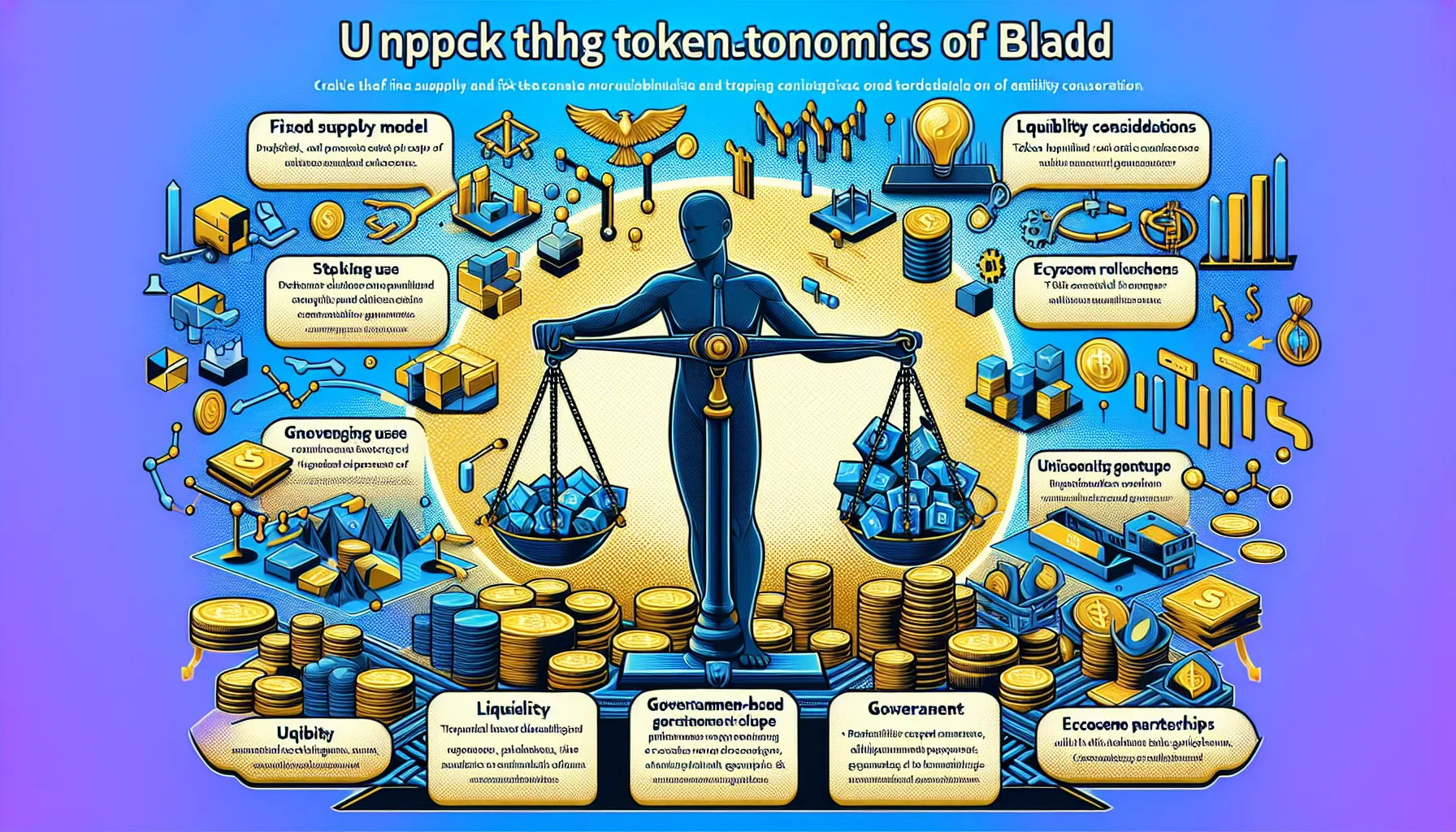
Unpacking the Tokenomics of BALD
Total Supply and Minting Structure
The tokenomics of BALD hinge on its fixed supply model, a feature designed to drive scarcity and create a deflationary narrative around its asset. The total supply was initially capped at [Insert specific supply figure if known], with no minting mechanisms or supply inflation embedded within the protocol. This immutability in supply often appeals to holders wary of dilution; however, it also places significant weight on proper initial distribution. Concerns can arise in cases where large allocations are held by the project team, insiders, or early whales, as these entities can influence the token's liquidity and market dynamics disproportionately.
Distribution and Allocation Details
Details regarding BALD's allocation to developers, treasury, or community incentives are critical to assessing the ecosystem’s sustainability. If the token’s distribution was concentrated in a small number of wallets, it may increase the risk of price manipulation and limited decentralization. For BALD, understanding both the initial distribution event and the subsequent trading dynamics gives insight into market liquidity and how new participants are onboarded into the ecosystem. Any imbalance or lack of transparency in this phase can significantly erode community trust, a key component in retaining long-term holders and active users.
Liquidity Considerations and Lockups
A primary factor tied to BALD's tokenomics is the handling of its liquidity pools. Were token pairs locked via automated market makers (AMMs) such as Uniswap or equivalent decentralized platforms? And for how long? The absence of sufficient liquidity commitments or lockups would leave BALD vulnerable to potential "rug pulls"—a risk particularly high if the token’s developers control a disproportionate share of liquidity. Similarly, terms involving locked team allocations (if any exist) or community vaults are equally crucial for ensuring alignment between early stakeholders and broader market participants.
Utility and Value Capture Mechanisms
BALD’s utility often dictates trading behavior and hodling incentives, but some may critique whether the token provides sufficient utility within its ecosystem. For instance, is it simply governance-based, or does it have use cases tied to staking, ecosystem partnerships, or fee reductions? An excess supply of tokens without meaningful demand drivers would likely saturate the market, diminishing perceived value. Tokenomics models reliant solely on speculative trading cycles rather than intrinsic functionality frequently experience volatility and limited long-term market credibility.
Governance and Decentralization Challenges
Tokenomics design also impacts governance structures. For BALD, does voting power correlate linearly with token holdings? If so, stakeholders with larger positions may exert outsize influence over ecosystem decisions, which could alienate smaller participants. Additionally, insufficient decentralization at launch tends to be an enduring obstacle, stifling BALD’s collective decision-making mechanisms.
BALD Governance
Governance Framework of the BALD Crypto Asset: Decentralization and Challenges
The governance of the BALD crypto asset plays a pivotal role in its functionality and long-term sustainability within the decentralized ecosystem. Designed to empower token holders, its governance framework revolves around community-driven proposals and decision-making, yet it also faces critical challenges in execution and inclusivity.
At its core, BALD aims to establish decentralized decision-making by allowing holders of the token to vote on key network proposals. These proposals may range from protocol upgrades, fee structure changes, allocation of treasury funds, or integrations with other projects. Governance participation is typically mediated through a platform that supports transparent proposal discussion and ensures on-chain execution, enforcing the legitimacy of community-approved changes.
However, a notable concern within BALD’s governance structure is the inherent dependency on token distribution. If a limited number of entities or wallets control a significant portion of voting power, decisions can be skewed toward their interests. This centralization risk undermines the ethos of decentralization and can potentially lead to governance capture. The community must remain vigilant about the distribution of voting power to safeguard its egalitarian intent.
Furthermore, voter apathy is another pressing issue facing BALD’s governance model. Even within a technically advanced and engaged user base, turnout for governance proposals may be limited, allowing decisions to fall into the hands of a small fraction of stakeholders. This phenomenon, often observed in other crypto governance systems, can create barriers to diverse and representative decision-making.
The technical implementation of the governance process also raises questions regarding its scalability and operational efficiency. Proposals that require multi-step deliberation or repeated voting cycles can bog down productivity, particularly as the network grows and complexity increases. Moreover, the reliance on smart contracts for enforcing governance decisions introduces an additional layer of risk, as vulnerabilities in contract code could be exploited to manipulate outcomes.
Another area of concern is ensuring inclusivity in governance proposals. Creating a fair mechanism to allow smaller or new participants to actively propose and vote without requiring exorbitant token holdings is crucial yet difficult to balance. Achieving this hinges on building mechanisms that prioritize both the security of the protocol and equal access to decision-making.
While community governance is central to BALD’s vision, addressing issues of centralization, voter disengagement, scalability, and inclusivity remains fundamental to ensuring its success as a decentralized asset.
Technical future of BALD
Current and Future Technical Developments for BALD
Smart Contract and Token Infrastructure
BALD operates as a meme-oriented crypto asset, but its underlying smart contract infrastructure has garnered attention for its simplicity and potential scalability. The token has been implemented using standard ERC-20 mechanics, ensuring interoperability with the vast Ethereum ecosystem. Despite this, critics have pointed out that BALD lacks innovative or groundbreaking technical features compared to its contemporaries. Moreover, there are concerns about the contract's original deployer retaining high control mechanisms, which could raise red flags for decentralization-minded investors.
One significant technical limitation of BALD is its minimal governance architecture. Unlike many modern crypto assets that integrate decentralized autonomous organizations (DAOs) or on-chain voting systems, BALD does not currently offer any technical framework for community-driven input or decision-making. This could stymie innovation and leave the asset vulnerable to stagnation if the core team does not prioritize upgrades.
Layer-2 Potential and Gas Optimizations
Given its ERC-20 roots, BALD faces the evergreen challenge of Ethereum ecosystem gas fees. Discussions in the developer community suggest that migrating or implementing compatibility with Ethereum Layer-2 solutions, such as Optimism or Arbitrum, could significantly improve transaction throughput and fee efficiency. Still, no official development pipeline or roadmap explicitly confirms such a shift is in motion. As a result, BALD transactions remain user-prohibitive during times of high network congestion.
Moreover, the token's smart contract would require upgrades to adopt potential Ethereum improvement proposals (EIPs) focused on gas optimization. While no technical debt has been reported, the lack of such forward planning exposes BALD to risks of being outpaced by competitors that actively integrate cost-saving measures.
Speculative Roadmap Trends
Although no official whitepaper updates or roadmaps have been published to outline BALD’s future development, there are speculative technical paths the token could take. Token staking mechanisms, liquidity mining, or integration with cross-chain bridges are plausible but remain absent in the current codebase. Without these updates, BALD’s technical offering may fail to sustain long-term interest.
Lastly, developer anonymity surrounding BALD raises transparency concerns. While this is not uncommon in meme tokens, anonymous or pseudonymous developers historically correlate with slower evolution and high rug-pull risks. The lack of clear leadership impedes reliability and accountability for much-needed technical innovation.
Comparing BALD to it’s rivals
Comparing BALD to PEPE: Differentiators and Overlaps in Meme-Crypto Ecosystem
When examining BALD alongside PEPE, two meme-centric crypto assets often discussed in the same circles, several distinct differences and overlaps emerge. While both tokens thrive on community-driven engagement and irony-laden branding, their market positioning and underlying strategies reveal critical contrasts.
Origins and Branding Approach
PEPE, inspired by the iconic “Pepe the Frog” internet meme, leans heavily on its established cultural relevance. Its foundation builds on years of organic memetic value, offering immediate recognition among internet-savvy audiences. BALD, by contrast, employs a branding strategy rooted in absurdist humor, with the name itself playing on a minimalist, almost self-deprecating tone. This divergence in thematic focus means PEPE appeals to nostalgia and existing cultural capital, while BALD’s success hinges on creating a fresh, niche meme within the broader crypto space.
Tokenomics and Supply Mechanics
PEPE's tokenomics are heavily tied to its hyperinflationary supply structure, deliberately echoing DOGE’s strategy to offer a “play money” vibe. BALD, on the other hand, adopts a more deflationary model, with greater emphasis on scarcity to drive value. This difference highlights a core philosophical divide in how these assets attract adoption: BALD leans into exclusivity, while PEPE’s strength lies in mass accessibility. However, critics of BALD’s supply mechanics argue that its reduced liquidity and perceived supply manipulation could foster a less resilient ecosystem over time.
Community and Governance Dynamics
PEPE is well-regarded for its broad and highly active community, successfully bridging meme culture with speculative trading. BALD also relies heavily on community engagement but has faced criticism for being overly centralized during its launch phases, including concerns around potential “whale”-dominated governance. The perception of top-heavy asset control creates friction for BALD’s adoptability among decentralization purists, a segment that makes up a significant portion of crypto enthusiasts.
Development Activity and Tools
In terms of developer contributions, PEPE has minimal technical layers or ecosystem expansions, intentionally keeping itself as straightforward as possible to draw in novelty-driven investors. BALD, on the other hand, has tried to introduce a layer of innovation by building functionality into its ecosystem. However, these enhancements have been viewed as underdeveloped or even overpromised for a meme token, leading to skepticism about whether BALD risks diluting its identity in an attempt to differentiate itself.
Overall, while both BALD and PEPE crave the attention of the meme-crypto audience, they operate with contrasting philosophies, each bringing unique strengths and potential pitfalls to the table.
BALD vs. SHIB: A Comparative Analysis of Token Utility and Community Influence
When comparing BALD to SHIB, it’s essential to dissect the underlying factors that define both tokens beyond their memetic origins. SHIB, often hailed as the "Dogecoin Killer," has carved out a unique niche in the crypto space, but how does BALD stack up against it in terms of utility, community engagement, and underlying narrative?
Utility and Ecosystem Development
SHIB has managed to expand its ecosystem significantly over time, introducing elements such as SHIBSwap, an active decentralized exchange (DEX), and additional tokens like LEASH and BONE that bolster its DeFi capabilities. While BALD has generated significant attention due to its viral nature, it currently lacks SHIB’s broader ecosystem integration. This puts BALD at a potential disadvantage for users looking for tokens with diverse utility and revenue-generation opportunities within DeFi.
On the other hand, SHIB’s ecosystem is not without criticism. The introduction of complex staking and LP mechanisms has confused some users, especially those drawn in by SHIB’s meme-token appeal rather than its DeFi ambitions. BALD's simplicity might resonate more with users who prefer low-friction interaction with tokens. However, simplicity alone may not be enough to sustain long-term interest if it doesn’t evolve its utility offerings.
Community Strength and Decentralization
SHIB's community is among the most active in the crypto space, aided by relentless marketing efforts and ties with influencers. The ShibArmy has managed to create a near-cult following, bridging the gap between a joke and a serious crypto asset. BALD, while newer to the scene, has generated momentary hype but has yet to show whether it can cultivate a similarly enduring and loyal base.
A key difference lies in perceived decentralization. SHIB’s token distribution has been criticized due to large allocations held by prominent wallets, raising questions about potential centralization risks. BALD’s distribution model is still opaque, but early signs of whale activity could pose risks if not addressed transparently. Both tokens face scrutiny in this regard, but SHIB’s longevity has, to some extent, overshadowed its centralization concerns.
Narrative and Branding
SHIB’s narrative thrived on the back of a canine-theme, coupled with timing and an aggressive branding push. BALD, in contrast, has tapped into satire and social commentary, making it distinct in storytelling. However, narrative-driven tokens are inherently volatile; if the conversation shifts away, their cultural relevance can erode quickly. SHIB’s established identity might grant it a slight edge here.
How BALD Stacks Up Against DOGE: Key Differences and Similarities
When comparing BALD to DOGE (Dogecoin), it’s essential to evaluate their fundamental differences in value proposition, community dynamics, and meme-driven narratives, as both projects exist within the crypto meme culture but have diverging trajectories.
Origin and Purpose
DOGE is the quintessential meme coin, originally created in 2013 as a joke based on the viral Doge meme featuring the Shiba Inu dog. Its purpose was clear from the start: to bring humor and accessibility to the blockchain space without aspirations of being a “serious” project. BALD, however, entered the meme coin landscape with a more cryptic branding narrative, capitalizing on meme-driven hype cycles with less emphasis on transparency regarding its origin or mission. This lack of clarity around BALD's founding has drawn criticism, particularly when juxtaposed with DOGE’s well-documented background.
Community and Culture
Dogecoin boasts one of the most robust and loyal meme token communities in the crypto world. From memes to grassroots movements like tipping culture and fundraising campaigns, DOGE's community solidified its reputation as a currency for the internet masses. BALD, while enjoying a brief yet intense hype-driven launch, has yet to demonstrate any long-term social traction or cultural stickiness. Without meaningful engagement beyond speculative interest, its sustainability contrasts with DOGE, whose ecosystem thrives on participation rather than price speculation alone.
Blockchain and Decentralization
DOGE operates on its own independent blockchain, based on Litecoin’s codebase, with a proof-of-work consensus model. This ensures a level of decentralization and technical credibility for a project born as a joke. BALD, in contrast, exists as a token on a decentralized platform, which means it is inherently reliant on the security and stability of the underlying blockchain. While this setup enables faster deployment, it can leave BALD vulnerable to issues like liquidity constraints or platform-specific risks.
Challenges with Supply and Scarcity
One central critique of DOGE lies in its inflationary tokenomics, with no hard cap on supply. This has historically been a sticking point for investors seeking digital assets with a deflationary model. BALD sidesteps this issue to some extent, often promoting artificial scarcity in its tokenomics design. However, such scarcity can amplify concerns about whale manipulation, especially in smaller-cap tokens like BALD, which lack DOGE's multi-billion-dollar liquidity pool and frequent trading volumes.
Trust and Longevity
Finally, DOGE's near decade-long presence in the market has brought a level of legitimacy, even among skeptics, due to its sheer survival. On the other hand, BALD’s untested nature and susceptibility to rug pull fears have raised red flags, especially in an industry plagued by short-lived meme token projects.
Primary criticisms of BALD
Primary Criticism of BALD: Key Concerns for Crypto Enthusiasts
Lack of Transparency in Development Team and Governance
One of the foremost criticisms of BALD lies in its opaque development team and governance structure. The creators of BALD remain either pseudonymous or entirely anonymous, which limits trust and accountability in the project. For crypto-savvy investors who prioritize credible development teams, this lack of transparency raises a red flag. Moreover, without clear details on its governance mechanisms, it remains unclear how decisions regarding protocol updates, fund allocation, or overarching project direction are made. This absence of clarity introduces significant risks for long-term holders and developers considering integrating with the ecosystem.
Questions Around Tokenomics and Sustainability
BALD’s tokenomics framework has also faced scrutiny. Some critics argue that the distribution model appears heavily weighted toward early adopters or insiders, potentially leading to centralization in token ownership. This imbalance can pose risks such as market manipulation or concentrated decision-making power. Furthermore, the token’s emission rates or mechanisms to drive utility (e.g., staking, fee reduction, or governance usage) have been characterized as either poorly explained or underwhelming in their design. Tokenomics that fail to incentivize adoption and long-term engagement may leave the project vulnerable to stagnation.
Security Concerns and Risk of Smart Contract Vulnerabilities
The security of BALD’s smart contracts has been a significant point of contention. Despite its apparent adoption by some within the DeFi space, the absence of third-party audits or peer reviews of its codebase introduces a layer of uncertainty. In a space rife with exploits and malicious attacks, poorly audited or inadequately secured platforms are high-risk ventures. Skeptics also question whether the speed of BALD's deployment may have prioritized launch timing over thorough security scrutiny.
Allegations of Pump-and-Dump Behavior
BALD has been accused of fostering conditions for pump-and-dump schemes, whereby certain actors capitalize on rapid price surges and liquidity influxes to dump tokens, leaving new investors with significant losses. This narrative is often attached to projects with low transparency and hyper-speculation-driven markets, which some believe BALD exemplifies. These allegations, while not universally agreed upon, have made BALD highly polarizing within certain crypto communities.
Limited Real-World Utility
A recurring critique within crypto circles revolves around BALD's perceived lack of clear real-world utility beyond speculative trading. Some argue that the project has yet to articulate a compelling use case or value proposition that would justify its longevity beyond the hype cycle. Without tangible applications or partnerships to substantiate its relevance, BALD risks being dismissed as just another hyper-speculative asset in the crowded cryptocurrency market.
Founders
The Founding Team Behind BALD: Anonymity and Controversy
The crypto asset BALD stands out not only due to its peculiar name and rapid traction within certain blockchain ecosystems but also because of the complete anonymity of its founding team. Unlike many projects where founders or development teams cultivate public personas to gain trust and credibility, BALD's creators have chosen to remain entirely in the shadows, leaving the crypto community with more questions than answers.
Lack of Team Transparency
The anonymity of BALD’s founding team has been a double-edged sword. While some participants in decentralized finance (DeFi) appreciate the ethos of permissionless systems created by faceless developers, the uncertainty around the project’s leadership has sparked widespread skepticism. No verifiable on-chain or off-chain evidence has surfaced to confirm the identity or credibility of those responsible for launching BALD. The lack of transparency raises concerns about accountability, and some critics have pointed out that anonymous teams are more prone to allegations of "rug pulls" or other exit scams—a recurring issue in the DeFi space.
Speculation Over the Team’s Blockchain Expertise
Though no identities have been revealed, on-chain interactions and the technical execution of BALD’s launch suggest that whoever is behind the project is highly experienced in blockchain development. From smart contract deployment to liquidity pool strategies, many elements of BALD's ecosystem seem crafted by operatives who deeply understand DeFi mechanics. However, this expertise has not insulated the project from criticism. Accusations of potential market manipulation, including suspicious patterns in liquidity provisioning and removal, have cast doubt on the intentions of the mysterious founding team.
Community Investigations
The crypto community has often attempted to "unmask" BALD's founding team, analyzing wallet activity, transaction provenance, and network behavior. Theories have ranged from experienced DeFi veterans leveraging their anonymity to more speculative accusations accusing prominent individuals in the crypto world of being the creators. However, any attempts to tie a specific identity to BALD remain unsubstantiated and mostly rooted in conjecture.
Trust Issues and Unknown Motivations
A recurring concern about BALD stems from the lack of clarity regarding the team’s motivations. Without a public-facing roadmap, whitepaper, or active communication from the creators, investors must rely purely on the token’s code and market performance as indicators of legitimacy. For skeptics, the fear of the team’s unknown intentions, combined with their ability to operate without oversight, creates significant barriers to trust.
Authors comments
This document was made by www.BestDapps.com
Sources
- https://www.baldfinance.com/
- https://etherscan.io/token/BALD
- https://github.com/baldfinance/bald-whitepaper
- https://docs.baldfinance.com/
- https://medium.com/@baldfinance
- https://bitcointalk.org/index.php?topic=baldfinance
- https://coinmarketcap.com/currencies/bald-finance/
- https://defillama.com/protocol/bald-finance
- https://www.coingecko.com/en/coins/bald-finance
- https://mirror.xyz/baldfinance.eth
- https://dappradar.com/token/bald
- https://www.reddit.com/r/baldfinance/
- https://cryptobriefing.com/project/bald-finance-defi-overview/
- https://twitter.com/BaldFinance
- https://www.youtube.com/baldfinancevideos
- https://baldfinance.blog/announcements/
- https://www.chainalysis.com/crypto/bald-token/
- https://cryptoslate.com/coins/bald-finance/
- https://www.newsbtc.com/project/bald/


