History of BAL
The History of BAL: Origins and Development
Balancer's native token, BAL, was introduced to the crypto ecosystem as part of Balancer Protocol's launch, aiming to disrupt traditional automated market maker (AMM) models. Developed by Balancer Labs, the protocol itself emerged as a decentralized alternative to centralized exchanges, allowing users to create and manage liquidity pools with custom weightings. The BAL token, however, was introduced later as a governance mechanism to decentralize control of the protocol.
The journey of BAL began with the launch of the Balancer Protocol on Ethereum, rapidly gaining traction as one of the key projects within the DeFi space. BAL tokens were initially distributed through a liquidity mining program, a strategic approach designed to incentivize user participation in Balancer's liquidity pools. This program allocated BAL tokens to users on a weekly basis based on pool participation, fueling early adoption and spiking usage across the platform. As the first adopters were primarily crypto-savvy DeFi participants, BAL quickly became recognized within the tokenized governance structure model.
A significant aspect of BAL's history lies in its governance role. The token was envisioned not just as a reward but as a way to allow token holders to directly vote on protocol decisions, ranging from fee adjustments to new feature proposals. While this governance model aligns with decentralization ideals, one persistent critique has been the concentration of voting power. BAL’s supply distribution initially favored early contributors, developers, and investors, which has led to concerns over whether the governance process is truly decentralized or if key decisions are influenced by a small group.
Furthermore, BAL’s inflationary tokenomics have not been without controversy. Each week, the protocol mints and distributes additional BAL tokens through ongoing liquidity mining. While this is intended to keep incentivizing engagement and liquidity, critics argue that the continuous issuance could dilute value over time, especially as the market for governance tokens becomes increasingly saturated. This inflationary structure also raises questions about long-term sustainability, particularly in a highly competitive DeFi landscape.
Lastly, BAL's history has occasionally intersected with broader network congestion on Ethereum. High gas fees during periods of network activity have posed challenges for users interacting with Balancer pools, potentially creating friction in achieving widespread adoption.
Despite these hurdles, the historical trajectory of BAL undeniably reflects its ambition to decentralize liquidity management and governance in DeFi. It also underscores the complexities of sustaining user participation while maintaining equitable and effective governance.
How BAL Works
How Balancer (BAL) Works: An In-Depth Analysis
Balancer (BAL) operates as the native utility and governance token of the Balancer protocol, a decentralized automated market maker (AMM) and liquidity management platform built on Ethereum and compatible blockchain networks. At its core, Balancer redefines liquidity solutions by enabling customizable liquidity pools and self-balancing weighted portfolios, which are foundational to its design.
Smart Pools and Customization
Balancer's standout feature lies in its ability to support liquidity pools with up to eight tokens and customizable weightings. Unlike traditional AMMs, where liquidity providers are often required to deposit equal value-weighted pairs, Balancer allows pools to be created with variable weight distributions. For example, a liquidity provider could create a pool that holds 80% of one token and 20% of another, a mechanism that enables unique flexibility for portfolio strategies.
This customization is achieved through the Balancer smart contracts, which dynamically rebalance the pools as token values fluctuate. Traders interact with these pools by swapping tokens, while automated mechanisms ensure that the pool weights remain aligned with their predefined ratios.
Governance via BAL Tokens
BAL tokens serve as the decision-making backbone of the Balancer protocol. BAL holders exercise governance rights, including voting on proposals that shape the network's future, adjusting protocol parameters, and allocating resources from the ecosystem fund. Though decentralization is a key philosophical tenet, critics have noted that governance participation is often skewed toward larger token holders, raising concerns about potential centralization of decision-making power.
Fees and Incentives for Liquidity Providers
Balancer’s fee structure is determined by the pool creator, enabling variability in trading fees. While this flexibility empowers pool creators to adjust fees to align with market conditions, it also means users must carefully evaluate the trading costs associated with each pool. Additionally, Balancer rewards liquidity providers with BAL tokens through liquidity mining programs—a model some argue over-rewards liquidity at the expense of long-term sustainability.
Potential Challenges and Limitations
One crucial limitation of Balancer lies in its gas-intensive nature. With Balancer being Ethereum-based, high gas fees during periods of network congestion can deter smaller transactions and participants, creating barriers to entry for users with less capital. Moreover, the complexity of its highly customizable pools serves as a double-edged sword—while offering flexibility, it also amplifies the potential for human error in pool configuration and inefficiencies in capital allocation.
Furthermore, impermanent loss remains an inherent risk for liquidity providers, particularly in volatile markets with asymmetric token allocations. While advanced users can leverage Balancer's features to mitigate this risk, new users often underestimate its impact, leading to potential financial losses.
Overall, Balancer’s architecture provides significant innovation in DeFi liquidity management, but its complexity and reliance on gas-heavy infrastructure present clear challenges for broader adoption.
Use Cases
Exploring the Use Cases of BAL Token in DeFi and Beyond
BAL, the native utility token of Balancer Protocol, plays a crucial role in advancing decentralized finance (DeFi) functionalities. Built on Ethereum, BAL helps power various aspects of this sophisticated automated market maker (AMM) and decentralized exchange (DEX) protocol. Below is a detailed analysis of BAL's existing use cases, as well as some associated challenges that crypto-savvy users should consider.
1. Governance and Protocol Decision-Making
One of the primary use cases for BAL is in governance. BAL holders can participate in the decision-making processes of the Balancer Protocol by voting on proposals related to protocol changes, upgrades, and fee structures. This decentralized governance framework empowers token holders to shape the protocol, although it also introduces challenges. Voting mechanisms require active participation and understanding of technical proposals. Apathy among token holders or concentrated voting power among large holders (whales) can undermine decentralization and decision quality.
2. Liquidity Provider Incentives
BAL is distributed as an incentive for liquidity providers (LPs) who deposit assets into Balancer pools. By rewarding LPs, Balancer ensures deep liquidity, which is essential for seamless trading and low slippage. However, the sustainability of these incentives has been a persistent concern. Heavy reliance on token rewards can encourage short-term liquidity mining rather than long-term participation, leading to potential liquidity fluctuations when rewards are reduced or cease.
3. Fee Reduction Mechanisms
BAL may also be used in protocols associated with Balancer as a tool to reduce transaction fees or gain enhanced trading privileges. This positions BAL similarly to "utility tokens" that grant specific financial benefits within an ecosystem. That said, such incentives are vulnerable to value dilution over time, especially if the protocol fails to sustain user growth or economic demand.
4. Supporting Innovative Pool Designs
Balancer Protocol stands out in its ability to create custom-weighted pools, multi-token pools, and smart pools. BAL's integration into these complex liquidity systems helps facilitate broader use cases, such as rebalancing ETFs, programmable asset management, and treasury diversification strategies. While this flexibility is a strength, it also increases the protocol's complexity, which may alienate less experienced users or introduce unforeseen risks from poorly constructed pools.
5. Staking and Yield Opportunities
Some integrations and Balancer-related ecosystems enable BAL staking, allowing token holders to earn passive income or additional rewards. Nonetheless, staking BAL comes with typical risks seen in DeFi, such as smart contract vulnerabilities and impermanent loss. Additionally, depending heavily on DeFi protocols for BAL staking introduces systemic risks stemming from interconnected platforms.
BAL token's utility extends beyond mere speculative trading. However, the complexity of its use cases requires significant user understanding, and challenges such as centralization risk, incentive sustainability, and security considerations remain persistent. These factors make BAL a multifaceted yet intricate asset to navigate within the DeFi space.
BAL Tokenomics
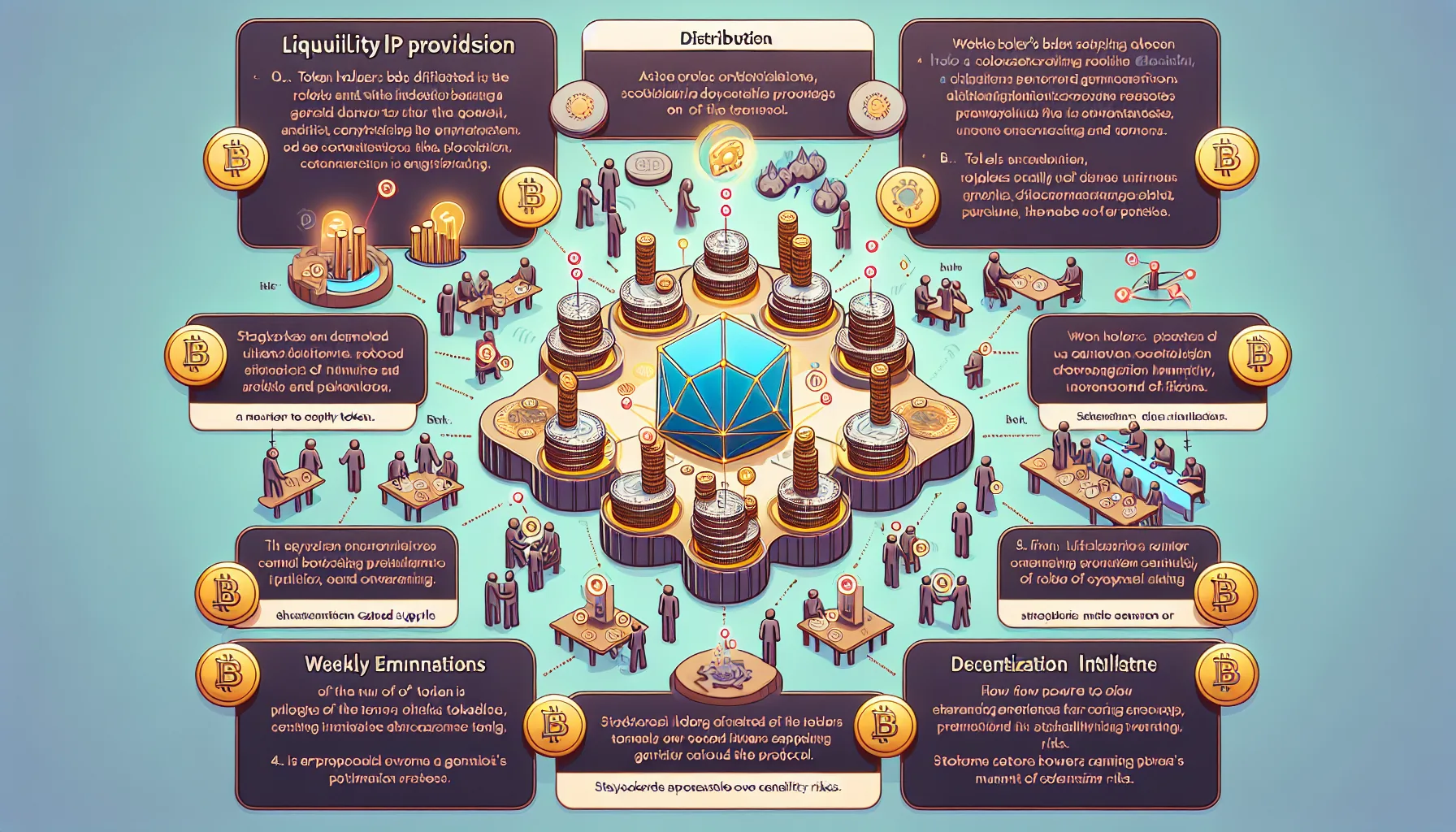
Tokenomics of BAL: A Deep Dive into Distribution and Governance Dynamics
The Balancer (BAL) token operates at the core of the Balancer Protocol, serving as both a utility and governance token. Its tokenomics are specifically designed to incentivize liquidity provision, foster ecosystem growth, and ensure decentralized decision-making. However, a closer look at BAL’s design also surfaces challenges tied to distribution, utility balance, and inflationary dynamics.
Initial Distribution and Incentives
Balancer released BAL via liquidity mining, rewarding users who provide liquidity to its pools. This approach aligns with its decentralized ethos by distributing tokens to active participants. However, the total supply of BAL is capped at 96,150,000, with a current circulation determined by its ongoing release rate. Weekly emissions, initially set at 145,000 BAL per week, have sparked discussions around inflationary pressure. While this incentivizes participation, critics point to diminishing rewards over time as a potential disincentive for sustained engagement, especially for newer participants joining later in the mining schedule.
The team and early investor allocations, constituting a significant percentage of the total supply, also raise concerns surrounding centralization risks. How these tokens are managed long-term remains a pivotal factor in maintaining trust among the broader community.
Participation in Governance
BAL’s primary utility lies in enabling holders to participate in the governance of the Balancer Protocol. Token holders can propose and vote on key parameters, such as pool fees and protocol upgrades, directly impacting the protocol’s direction. Notably, governance power is proportional to the number of tokens held, which has led to concerns about vote centralization. Large BAL holders, including protocol stakeholders and early investors, potentially have an outsized influence on governance outcomes—an issue that remains a common critique across many decentralized autonomous organizations (DAOs).
Inflation vs. Utility Balance
A key consideration in BAL’s tokenomics is its inflation structure. While inflationary emissions create continuous incentives for liquidity providers, this approach faces scrutiny in terms of long-term sustainability. Constant issuance could lead to downward price pressure if demand fails to outpace the rising supply. For BAL to maintain intrinsic value, the ecosystem must ensure balanced use cases for the token beyond governance. This includes the exploration of yield streams, staking mechanisms, or other adaptive utilities to retain engagement from token holders.
Conclusion of Token Flows
The interplay between BAL’s capped supply, ongoing liquidity incentives, and governance power illustrates a carefully calculated tokenomics model that drives short-term ecosystem participation. Yet, questions about long-term token distribution, potential governance centralization, and inflationary impacts highlight areas where refinement is critical. Balancer's ability to navigate these challenges will dictate the ongoing alignment of incentives within its decentralized ecosystem.
BAL Governance
Governance Mechanisms of BAL: Decentralized Decision-Making in the Balancer Protocol
Balancer (BAL) operates as the governance token for the Balancer Protocol, a decentralized automated market maker (AMM) and liquidity provisioning platform. BAL’s governance model is designed to empower its community to influence and shape the protocol’s future. This section explores the critical dynamics and challenges of BAL’s governance framework and how it impacts the protocol's operations.
Decentralized Governance via Voting
The Balancer Protocol employs a token-weighted governance model where BAL holders are granted voting rights proportional to their token holdings. This voting power allows participants to submit and vote on proposals that cover a wide array of protocol decisions, including updates to smart contracts, fee structures, and liquidity mining parameters. By leveraging on-chain governance, disputes are minimized, and decisions are implemented via smart contracts, ensuring transparency.
Governance Challenges and Centralization Risks
Despite its decentralized approach, there are inherent issues tied to BAL token governance. One concern revolves around token concentration among a small number of whales or early stakeholders. A high percentage of voting rights in the hands of a few participants could compromise the goals of decentralization, leading to governance decisions that favor the interests of those large holders over the broader community.
Additionally, voter participation remains a challenge. Many BAL holders are passive participants, choosing not to engage in governance decisions actively. This can lead to low voter turnout, undermining the legitimacy of key decisions. Protocol enhancements and community discussions often rely heavily on dedicated actors, such as core developers or incentivized participants, to carry initiatives forward.
Delegated Voting and Governance Complexity
To mitigate voter apathy, the Balancer Protocol allows delegation, where BAL holders can transfer their voting power to trusted individuals or organizations. While delegation increases participation, it also introduces risks. Delegates with disproportionate influence might steer governance decisions in directions that align with their preferences, diverging from the community’s collective interests.
Another complexity lies in the technical nature of governance proposals. For non-technical community members, understanding the implications of smart contract modifications or fee adjustments can be daunting. This knowledge gap could lead to uninformed voting or overreliance on specialized contributors for decision-making.
Evolving Dynamics Through Layered Proposals
Balancer governance uses a proposal process structured in layers. Proposals must generally pass through multiple phases, including discussions in forums, initial polls, and formal governance votes. This phased approach ensures that ideas are reviewed thoroughly but may slow the protocol’s adaptability compared to quicker governance mechanisms utilized by other protocols.
By navigating these challenges, Balancer continues to refine its governance model, relying heavily on its engaged community while striving for a balance between inclusivity and efficiency.
Technical future of BAL
Current and Future Technical Developments in Balancer (BAL)
Balancer (BAL) continues to evolve through substantial technical upgrades aimed at enhancing efficiency, interoperability, and security within its decentralized finance (DeFi) ecosystem. The protocol's development roadmap prioritizes addressing scalability constraints, improving gas efficiency, and enabling deeper integrations with other blockchain ecosystems.
Layer-2 Scaling Solutions
One of the most notable technical advancements for Balancer involves Layer-2 scaling integrations. Leveraging Optimistic Rollups and zk-Rollups, Balancer has sought to reduce gas fees and transaction times, which remain significant barriers for DeFi adoption. These enhancements streamline liquidity provision and trading on the platform, although critics argue that Layer-2 adoption introduces added complexity for end-users, including liquidity fragmentation across multiple chains. The development could potentially dilute market access for users operating on Layer-1 Ethereum or alternative protocols.
Balancer V2: Smart Order Routing and Protocol Optimizations
The rollout of Balancer’s V2 protocol introduced Smart Order Routing (SOR), a feature that optimizes trades across liquidity pools by directing transactions through the most cost-efficient pathways. While V2 achieves notable gas savings and flexible pool architecture, concerns exist regarding the potential for centralization risks within its asset manager contracts. Some developers have expressed that the dependency on external asset managers could become a vulnerability in governance or instances of integration failure.
Composability and Cross-Chain Compatibility
As part of its roadmap, Balancer is also focusing on cross-chain compatibility, expanding interoperability beyond Ethereum. By partnering with ecosystems like Polygon, Arbitrum, and future cross-chain bridges, the protocol aims to attract a broader user base while addressing Ethereum's congestion issues. However, additional bridging layers may expose users to new attack vectors, such as bridge exploits, which are an increasing concern in the broader DeFi industry. Thoroughly securing these integrations will require consistent testing and audits, areas that have sometimes lagged in rapid protocol rollouts.
Automated Liquidity Management and Efficient Pool Upgrades
Another technical priority for Balancer is the automation of liquidity management, allowing liquidity providers to optimize returns with less manual intervention. This includes new types of programmable pools, such as weighted pools and stable pools, further diversifying the protocol's capabilities. However, as the architecture and use cases for these pools grow more complex, users who fail to fully understand their configurations may face unforeseen risks, including impermanent loss or inefficient yield performance.
Persistent Governance Challenges
Despite technical progress, Balancer’s decentralized governance mechanism, mediated by BAL token holders, faces ongoing scrutiny. The governance process can be slow to implement urgent security patches or adapt to rapidly changing DeFi dynamics. Additionally, the concentration of BAL among early investors and large stakeholders raises concerns about equitable protocol control.
In conclusion, while Balancer showcases substantial technical innovation, ongoing challenges like governance centralization, cross-chain security risks, and the complexity of scaling solutions require vigilant attention to sustain its long-term viability within the competitive DeFi space.
Comparing BAL to it’s rivals
How BAL Stacks Up Against UNI in the Decentralized Finance Ecosystem
Balancer (BAL) and Uniswap (UNI) have carved out distinct niches in the DeFi landscape, but their underlying models and approaches to liquidity provisioning reveal notable differences. For crypto-savvy users who navigate these platforms regularly, understanding how BAL compares to UNI uncovers both operational strengths and potential limitations.
Liquidity Provisioning Models
UNI, as the governance token of Uniswap, powers an automated market maker (AMM) model that thrives on simplicity. In contrast, BAL distinguishes itself by offering customizability for liquidity pools. While Uniswap primarily uses 50/50 ETH-token pairings for its pools, Balancer allows for multi-asset pools with differing weight ratios. For example, liquidity providers on Balancer can create pools with as many as eight tokens and set ratios (e.g., 70/30 rather than 50/50). This versatility provides greater flexibility, especially for institutional users or advanced traders seeking specific portfolio exposure.
However, the complexity of configuring custom provisions on Balancer may alienate casual users who value Uniswap's plug-and-play liquidity setup. UNI has managed to dominate retail-facing liquidity provision due to its simplicity, whereas BAL caters primarily to sophisticated market participants.
Fee Dynamics and Incentives
Uniswap's fee structure is driven by fixed transaction fees. While this model has scaled effectively with increasing adoption, liquidity providers are exposed to impermanent loss risks that balance out with high trading volumes. On the other hand, Balancer introduces the ability to adjust swap fees within pools, giving pool creators greater control. This customization could, in theory, attract liquidity providers experimenting with dynamic reward structures, but it also introduces additional management overhead. For some, particularly smaller liquidity providers, this complexity can be a deterrent compared to UNI's simplicity.
Governance Participation
UNI and BAL both play pivotal roles in governance, but their dynamics differ subtly. UNI utilizes a one-token, one-vote system, similar to many DAO ecosystems, where governance influence scales directly with token holdings. In contrast, BAL incentivizes active participation by offering governance rewards that encourage deeper community involvement.
That said, governance in the BAL ecosystem faces challenges. The complexity of proposals in Balancer's ecosystem often results in low voter engagement from retail participants who may not have the resources or understanding to assess the implications of nuanced protocol changes. UNI, benefiting from a simpler protocol and wider user base, typically enjoys higher engagement on governance proposals.
Market Position and Trade Volume
Balancing fees and trade efficiency remains a critical area where UNI outshines BAL. Uniswap consistently captures larger trade volumes due to its first-mover advantage and simpler user experience. Even with BAL's innovations like weighted pools, it struggles to match the network effects of UNI's vast liquidity ecosystem.
The disparity in liquidity depth also impacts slippage tolerance for users. High-volume traders often find UNI to be more accommodating, while BAL's smaller pools and fragmented liquidity can lead to higher slippage unless specific optimizations are applied.
Conclusion
When comparing BAL to UNI, several trade-offs emerge that cater to different segments of the DeFi audience. While Balancer appeals to advanced users with its custom liquidity solutions, Uniswap retains dominance through simplicity and widespread liquidity. Nonetheless, Balancer's niche functionality and flexibility remain its core differentiating factors.
Comparing BAL and SUSHI: A Deep Dive into Decentralized Liquidity Models
When evaluating Balancer (BAL) against Sushiswap (SUSHI), the contrast lies heavily in their differing approaches to automated market making (AMM) and liquidity provision. While both projects are cornerstones in the Decentralized Finance (DeFi) ecosystem, their distinct mechanisms and design choices present specific trade-offs for users, liquidity providers, and developers.
Architectural Philosophies: Flexible Pools vs. Incentivized Farming
Balancer's hallmark is its highly flexible liquidity pool architecture, allowing up to eight tokens in a pool with custom weightings. This flexibility is designed to cater to niche use cases and sophisticated DeFi strategies but often comes at the cost of complexity for less experienced users. In contrast, Sushiswap employs a more straightforward liquidity pool model, typically limited to 50/50 ratios, which simplifies usability but sacrifices the customization options Balancer provides.
Sushiswap relies heavily on its liquidity mining incentives to attract participants, offering significant rewards in SUSHI tokens. While this has proven effective in building liquidity quickly, critics argue it leads to "mercenary liquidity," where participants chase high yields rather than long-term engagement. Balancer attempts to address this issue with its liquidity bootstrapping pools (LBPs) and protocol-level incentives designed to reward long-term alignment. However, Balancer’s higher learning curve can deter more casual users, giving Sushiswap an edge in onboarding liquidity providers new to DeFi.
Governance and Ecosystem: Community-Centric vs. DAO-Led
Sushiswap differentiates itself with its community-centric narrative, arising from its origins as a Uniswap fork and its strong emphasis on decentralized governance. SUSHI holders actively propose, debate, and vote on governance changes, with a particular focus on rewarding token holders and liquidity providers. While BAL also employs a decentralized governance model, its system can sometimes feel less accessible due to the protocol's greater technical intricacies, which require deeper understanding from participants.
One glaring issue for Sushiswap, however, is its history of controversies, including its infamous "chef nomi" exit and concerns about centralized control during its early days. While the protocol has matured significantly, reputational baggage can still influence user perception, particularly among sophisticated DeFi participants balancing trust and efficiency.
Feature Set Evolution: Focused Growth vs. Broad Innovation
Sushiswap has aggressively branched into a larger ecosystem, integrating features such as lending, staking, and yield aggregation through projects like BentoBox and Kashi. While this diversification adds utility for ecosystem participants, some critics argue that Sushiswap’s fragmented focus has diluted the core AMM experience.
Balancer, on the other hand, has maintained a laser focus on innovating within its niche, particularly by enabling liquidity providers to optimize their returns through weighted pools and automated rebalancing strategies. However, its slower expansion into new functionalities could make it less appealing to users seeking an all-in-one DeFi solution, where Sushiswap appears more competitive.
Trade-Offs and Liquidity Dynamics
For advanced DeFi users, the choice between BAL and SUSHI often comes down to strategic priorities. Sushiswap’s simpler mechanisms, gamified incentives, and broader ecosystem appeal to users seeking immediate and varied utility. However, the downside is a perception of overreliance on token emissions for sustainability. Balancer, with its custom architecture and intensive optimization capabilities, caters to those who prioritize innovative strategies but carries the trade-off of higher technical requirements and a steeper learning curve.
This dichotomy between SUSHI’s accessible ecosystem growth and BAL’s highly customizable liquidity options represents a fundamental trade-off between usability and sophistication in the DeFi space.
BAL vs CRV: Decentralized Liquidity Governance at Odds
When comparing BAL (Balancer) to CRV (Curve), two key protocols vying for dominance in the DeFi liquidity landscape, the contrast emerges sharply in their approach to liquidity optimization and governance. While both platforms operate in the AMM (Automated Market Maker) universe, CRV's singular focus on stablecoins and its veTokenomics model creates a distinct niche that challenges Balancer's broader asset diversity and configurable pool architecture.
Liquidity Focus: Diversification vs. Specialization
Balancer prioritizes flexibility, allowing users to create customizable liquidity pools with weighted allocations among a variety of ERC-20 tokens. By design, its multi-token pools (up to 50/50/50/50 configurations or beyond) aim to maximize utility across diverse market conditions. In contrast, CRV specializes in stableswap pools, targeting minimal slippage for price-pegged assets like stablecoins and wrapped tokens (e.g., wBTC, ETH derivatives). This specialization ensures Curve’s liquidity providers (LPs) face less impermanent loss in stable asset pools, which often appeals to risk-averse capital.
CRV’s strategy, while efficient for stablecoins, inherently limits composability when dealing with volatile assets. Balancer, by embracing heterogeneity in pool assets, enables broader use cases like dynamic portfolio management or index funds. Yet, this broadened scope can fragment liquidity, making it harder for specific pools to compete with CRV’s depth in stables.
Tokenomics and Incentives
Balancer’s BAL token incentivizes liquidity provision across its ecosystem with governance rights and liquidity mining rewards. However, its comparatively egalitarian approach can dilute user engagement compared to Curve’s veTokenomics system. CRV holders can lock their tokens into veCRV to access boosted rewards, governance control, and voting power for gauge weight distributions. This locked-stake model has created a powerful flywheel effect, encouraging long-term participation while centralizing influence among dominant veCRV holders (sometimes labeled "cartel-like behavior").
The absence of such a locking mechanism in Balancer could signal more decentralized governance, but it also risks lower user retention. Moreover, Balancer’s model depends on consistent innovation in pool types (e.g., smart pools, liquidity bootstrapping pools) to offset any stagnation in token utility and LP incentives.
Protocol Activity and Ecosystem Limitations
Where Curve shines in activity metrics due to its focus on stablecoin yields, Balancer’s usage can be more cyclical, tied to the popularity of specific liquidity bootstrapping events or new pool configurations. CRV’s simplicity in addressing a single use case has allowed it to establish itself as a go-to platform for stablecoin-centric strategies, but this also represents a potential Achilles' heel if the stablecoin market experiences regulatory disruption or diminished demand. Conversely, Balancer’s multi-purpose functionality expands its potential market reach but risks being outpaced in specialized liquidity segments by single-focus protocols like CRV.
In conclusion, BAL and CRV reflect two different paradigms within DeFi’s liquidity protocols: one built on versatility, the other on specialization. This divergence shapes user behavior, incentives, and protocol priorities.
Primary criticisms of BAL
Primary Criticism of BAL: Examining Key Weaknesses in the Balancer Ecosystem
While the Balancer (BAL) protocol has established itself as a significant player in the decentralized finance (DeFi) industry, it is not without its share of criticisms. The crypto-savvy community often raises pointed concerns about BAL, particularly focusing on its technical complexities, liquidity distribution, governance centralization, and economic challenges.
Technical Complexity Limits Adoption
One of the most persistent criticisms of BAL is its steep learning curve. Balancer's platform, while innovative, is highly sophisticated, catering primarily to advanced users and developers. The modular design of Balancer pools, with options for custom weightings and multi-token liquidity, enhances flexibility but comes at the expense of convenience. For many retail participants, the technical complexity of setting up custom-weighted pools or managing smart contract interactions creates a barrier to entry. This lack of accessibility can deter wider adoption, leaving the protocol predominantly in the hands of experienced DeFi users and institutional participants.
Uneven Liquidity Distribution
Balancer's liquidity distribution model has also faced scrutiny. While its multi-token liquidity pools offer unique advantages, the protocol has struggled to achieve liquidity parity among its pools. Larger pools with higher trading volumes attract the majority of activity, leaving smaller or experimental pools underutilized. This uneven distribution can diminish incentives for liquidity providers in less popular pools, potentially stifling innovation as well as diversity in the types of assets supported within the ecosystem.
Centralized Governance Critiques
Another point of contention revolves around governance centralization. Like many protocols operating under a decentralized autonomous organization (DAO) model, Balancer's governance relies heavily on BAL token holders. However, this system has prompted criticism about concentration of power. A relatively small group of large holders, such as venture capital firms and protocol insiders, often wields significant influence over major proposals. This dynamic risks underrepresenting smaller stakeholders and the broader community in decision-making processes, raising questions about true decentralization.
Economic Challenges and Token Incentive Issues
Critics also highlight challenges with BAL's tokenomics. The reliance on liquidity mining incentives to distribute BAL tokens has drawn skepticism for fostering short-term participation rather than encouraging long-term engagement with the protocol. Furthermore, the inflationary nature of these rewards has led to supply concerns, with some arguing that it places downward pressure on the token's value over time. This model, paired with the competitive nature of DeFi, makes it difficult for Balancer to retain liquidity when newer protocols offer more lucrative incentives.
These specific criticisms illustrate notable weaknesses within BAL and the broader Balancer ecosystem, shaping ongoing debates about its long-term sustainability and scalability in the evolving DeFi space.
Founders
The Founding Team Behind Balancer (BAL): Expertise and Challenges
Balancer (BAL) was developed by a highly skilled and experienced team with deep roots in the blockchain and DeFi ecosystem. The protocol is the brainchild of Fernando Martinelli and Mike McDonald, who co-founded Balancer Labs with the aim of revolutionizing automated market making (AMM) by prioritizing flexibility and efficiency in liquidity provision.
Fernando Martinelli: The Visionary Builder
Fernando Martinelli, the CEO and co-founder of Balancer Labs, brings a robust background in engineering and entrepreneurship to the table. With a career that spans industries including AI, biotech, and fintech, Martinelli has a strong foundation in problem-solving and leveraging disruptive technologies. His strategic vision for Balancer aligns closely with the core principles of decentralization, as he sought to create a platform that empowers liquidity providers and traders alike.
However, some critics argue that Martinelli's broad focus on multiple industries in the past might raise concerns about maintaining full-time commitment to long-term development. While his versatility is undoubtedly an asset, questions about scaling and sustained leadership during high-demand periods in crypto remain valid for scrutiny.
Mike McDonald: The Technical Backbone
Mike McDonald, the CTO of Balancer Labs, is widely respected among the crypto-native community for his technical expertise and contributions to blockchain technology. Before Balancer, McDonald was known for creating mkr.tools, a data analytics dashboard for the MakerDAO ecosystem, showcasing his ability to deliver value with powerful Ethereum-based solutions. His deep understanding of smart contracts and algorithmic structuring laid much of the foundation for Balancer’s innovative approach to AMMs.
However, Balancer’s reliance on McDonald’s technical leadership highlights concerns about potential key-person dependency. Decentralized protocols aim for resilience, and while McDonald’s involvement has been instrumental, diversifying the core technical contributors to mitigate any single point of failure could be seen as a future challenge.
Additional Contributors and Ecosystem Collaboration
The founding team has worked alongside a skilled group of developers, economists, and DeFi experts to scale Balancer’s offering. However, the project has occasionally faced criticism for an initial lack of transparency around governance decisions, which some users have attributed to a limited presence of non-core contributors during the early decision-making phases. Although Balancer has taken steps to address this through DAO-driven governance, lingering questions about the early concentration of authority in the founding team remain a topic of discussion among crypto-savvy observers.
Authors comments
This document was made by www.BestDapps.com
Sources
- https://balancer.fi/
- https://docs.balancer.fi/
- https://github.com/balancer-labs/balancer-core-v2
- https://medium.com/balancer-protocol
- https://etherscan.io/token/0xba100000625a3754423978a60c9317c58a424e3d
- https://coinmarketcap.com/currencies/balancer/
- https://cointelegraph.com/tags/balancer
- https://www.coingecko.com/en/coins/balancer
- https://defillama.com/protocol/balancer
- https://balancer.fi/whitepaper
- https://balancer.fi/faq
- https://blog.balancer.fi/
- https://app.balancer.fi/
- https://gov.balancer.fi/
- https://academy.binance.com/en/articles/what-is-balancer-bal
- https://twitter.com/Balancer
- https://www.reddit.com/r/BalancerLabs/
- https://decrypt.co/36537/what-is-balancer-and-how-does-it-work
- https://www.masari.io/balancer-guide
- https://www.gemini.com/cryptopedia/balancer-bal-token