History of AXT
The History of AXT: Unveiling the Evolution of a Controversial Crypto Asset
AXT has cemented its position as one of the more polarizing crypto assets in the digital currency space, and its history offers a deep dive into the nuances of its development, challenges, and milestones. Originally conceived as a solution to optimize decentralized token utility, AXT’s genesis was rooted in lofty ambitions—ambitions that have, at times, worked both for and against it.
The inception of AXT can be traced back to its launch via a private token sale, bypassing the traditional Initial Coin Offering (ICO) model that was popular during its emergence. While this move was strategically designed to attract high-profile institutional players, it also sparked controversy among retail investors, who criticized the asset's lack of early-stage accessibility. The decision highlighted the tension between exclusivity and decentralization that would go on to characterize much of the token's narrative.
The development roadmap for AXT initially focused on integrating enhanced privacy mechanisms into both transaction processing and smart contract functionalities. These features were heralded by proponents as necessary for protecting user anonymity in an increasingly surveillance-heavy era. Yet critics argued that this emphasis on privacy invited regulatory scrutiny, with some warning that such capabilities could put AXT in the crosshairs of global authorities battling illicit blockchain activity. The tradeoff between technological innovation and compliance challenges became a recurring theme in AXT's journey.
Significant technical hurdles further marked AXT's history, particularly in the context of scalability. Early testnet deployments revealed unforeseen limitations in network throughput, a discovery that dampened initial enthusiasm. Developers, however, responded with aggressive upgrades, introducing an enhanced consensus mechanism aimed at improving transaction finality. Despite these advancements, industry observers have noted that AXT has struggled to gain traction among decentralized application (dApp) developers, who often gravitate towards more established blockchain ecosystems.
Another pivotal moment in AXT’s trajectory was its controversial tokenomics revision. The original supply model faced backlash for perceived centralization risks, as a small cohort of early stakeholders retained disproportionate control. In response, the team enacted a redistribution plan through treasury allocations, but this pivot was met with mixed reactions. Some argued it restored balance, while others asserted it was a poorly executed attempt to pacify dissent.
As AXT matured, external factors also played a role in shaping its history. Market shifts, competitive pressures, and evolving community dynamics all tested the resilience of this asset and its ecosystem. Meanwhile, the lingering challenges around adoption, developer engagement, and regulatory clarity remain critical focal points as the story of AXT continues to unfold.
How AXT Works
How AXT Works: The Mechanics Behind the Protocol
AXT operates as a decentralized crypto asset designed to address specific gaps in blockchain infrastructure by leveraging its unique consensus mechanism and interoperability features. At its core, AXT utilizes a hybrid proof-of-stake (PoS) and delegated consensus model, which optimizes both scalability and security while attempting to mitigate common issues like centralization and validator dominance.
Multi-Layer Architecture
A key feature of AXT is its multi-layer architecture, which separates transaction processing from smart contract execution. This design enhances transactional throughput by isolating fundamental operations like token transfers from resource-intensive decentralized application (dApp) executions. The operational layers communicate through a specialized bridge protocol, reducing cross-layer bottlenecks but occasionally introducing latency challenges during peak usage periods.
Token Utility and Governance
The AXT token serves multiple roles within its ecosystem: staking, governance, and fee payment. Validators and delegators stake AXT tokens to secure the network, earning rewards proportional to their contributions. However, the system faces criticism for its relatively high staking threshold, which can discourage smaller investors from participating in the validation process.
Governance is conducted through a decentralized voting process, where token holders propose and vote on protocol upgrades. While this furthers decentralization, voter apathy remains a concern, as many token holders opt out of governance participation, effectively consolidating decision-making among a subset of active users.
Interoperability Protocols
AXT prioritizes interoperability, supporting cross-chain operability via custom-built transport layers. These enable the seamless transfer of assets and data between supported blockchains. However, critics point to a reliance on external oracles and third-party relayers within this system, which could create attack vectors if these components are compromised. Despite measures like cryptographic multi-signatures, the use of external dependencies raises questions about the protocol’s trustless nature.
Smart Contract Optimizations
Designed with scalability in mind, AXT employs virtual machine optimizations that reduce gas fees for developers deploying complex contracts. However, this lowered cost has led to an influx of redundant or low-quality projects, increasing strain on the ecosystem's resources. The network addresses this partially through automated resource allocation, though inefficiency remains an ongoing issue.
Potential Bottlenecks
Although AXT boasts technical prowess, its adoption heavily depends on developer support and community engagement. Critically, the network has faced challenges scaling its validator pool without compromising decentralization. Furthermore, ecosystem growth is constrained by the relatively high learning curve for developers, stemming from the protocol’s unique features and toolsets.
By combining innovative technical features with a focus on interoperability, AXT aims to provide robust infrastructure for modern dApp ecosystems. However, like many crypto networks, its long-term efficacy may hinge on resolving scalability, usability, and centralization challenges.
Use Cases
Detailed Use Cases for AXT: Unlocking Practical Applications in the Crypto Ecosystem
The AXT token boasts a range of specific use cases that highlight its functional design within decentralized ecosystems. As an advanced crypto asset, AXT is engineered to serve both utility and governance purposes, facilitating activities across decentralized finance (DeFi), network staking, and tokenized ecosystems. However, understanding its potential requires an in-depth look into its real-world applications and notable considerations.
1. Decentralized Finance (DeFi) Integration
AXT plays a prominent role in DeFi protocols, offering functionality for yield farming, liquidity provisioning, and lending platforms. DeFi users can leverage AXT tokens to gain privileged access to reduced transaction fees on certain decentralized exchanges (DEXs), or even as collateral for borrowing other assets. This duality of purpose as both utility and collateral enhances its flexibility in DeFi ecosystems. That said, due to its design, AXT holders may encounter liquidity fragmentation across multiple chains, which could lead to inefficiencies or increased slippage during high-volume trades.
2. Governance Voting Mechanisms
With governance features baked into its tokenomics, AXT empowers holders to actively participate in decision-making processes, such as protocol upgrades, parameter optimization, or ecosystem investment strategies. However, participation thresholds can be problematic for smaller holders, as governance power may disproportionately favor whales or entities holding significant token concentrations. This imbalance raises concerns about the centralization of influence, which could contradict the decentralization ethos expected of blockchain governance systems.
3. Staking and Incentive Programs
AXT holders can stake their tokens to secure underlying networks while earning staking rewards. This incentivized staking model not only boosts long-term token retention but also strengthens the network's security by discouraging short-term speculation. Yet, staking lock-up periods are often rigid, meaning participants forfeit liquidity during volatile market conditions. Additionally, staking rewards denominated in AXT can lead to inflationary pressure, particularly if rewards outpace real demand growth.
4. Token Utility in DApp Ecosystems
AXT is extensively incorporated into decentralized applications (DApps) as a native medium of exchange. Developers often implement AXT as a preferred payment token for exclusive platform features or services. While this enriches its interoperability, scaling its adoption across diverse applications remains a challenge, especially in competitive markets where interoperability standards vary widely. The lack of seamless integration with certain protocols could hinder broader utility adoption.
5. Cross-Chain Functionality
AXT is compatible with cross-chain bridges, allowing users to transfer assets between blockchains. Such functionality positions AXT well within a multi-chain framework, but it is not without vulnerabilities. Cross-chain solutions can introduce risks like exploits or downtime, particularly if external bridge mechanisms lack robust security audits.
By examining the practical applications of AXT, it becomes evident that while its versatility is a strength, there are technical and economic factors that could impact usability or scalability in some environments.
AXT Tokenomics
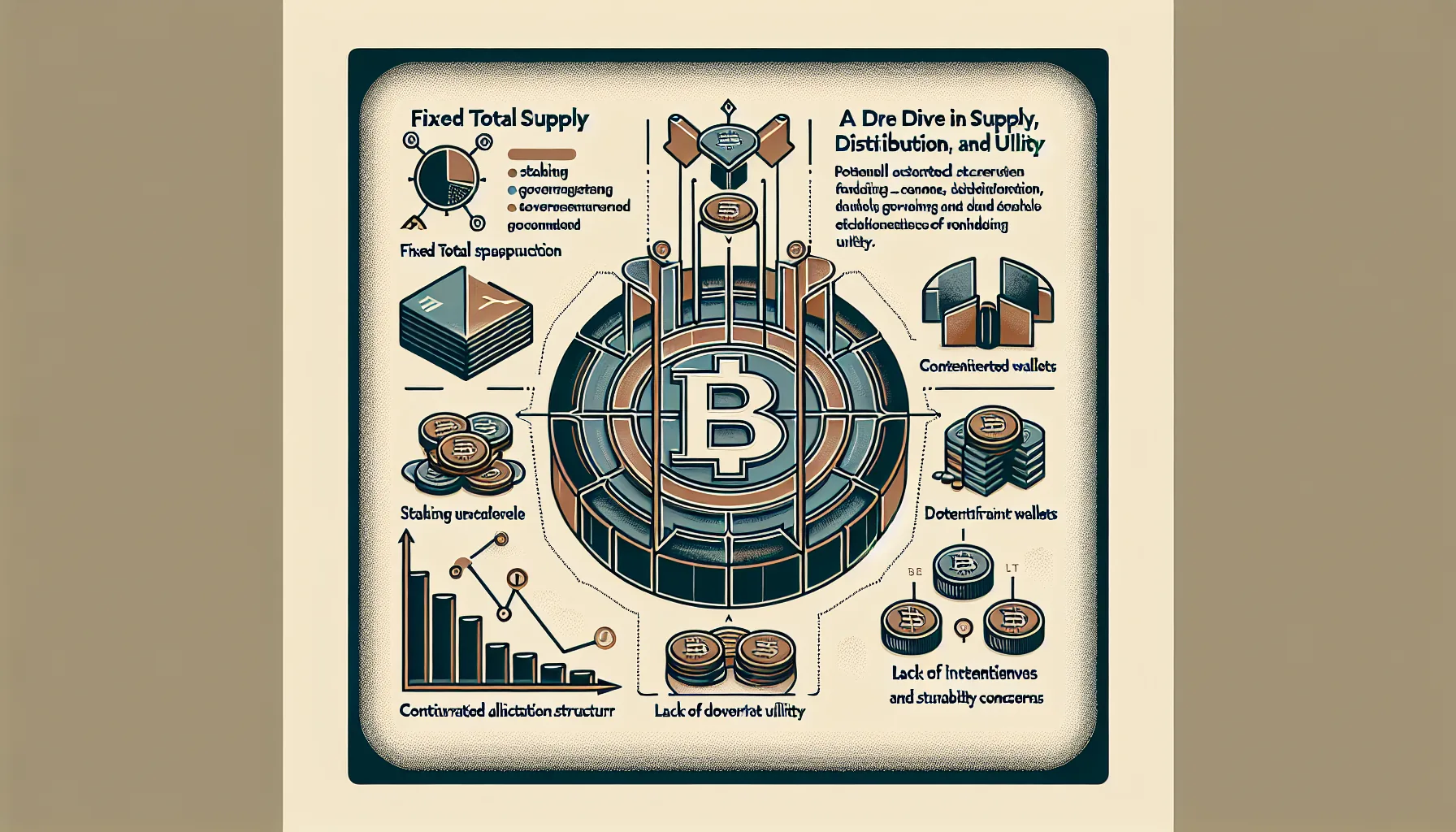
AXT Tokenomics: A Deep Dive into Supply, Distribution, and Utility
Understanding the tokenomics of AXT requires a detailed analysis of its supply mechanics, allocation strategy, and the underlying incentives driving its utility within the ecosystem. As a crypto-savvy audience, you know the foundation of any digital asset lies in how effectively its economics foster adoption, decentralization, and sustainable value accrual.
Fixed or Elastic Supply?
AXT operates on a fixed total supply mechanism, capping the number of tokens ever minted. While fixed supplies are often lauded for their deflationary properties, the token's tokenomics require scrutiny regarding how new tokens are being brought into circulation. AXT utilizes a phased vesting schedule—distributing tokens across different stakeholders at set intervals—which could potentially create market pressures, particularly if large unlock periods coincide with low demand. This schedule warrants monitoring to avoid risks of dilution.
Token Distribution and Concentration Concerns
AXT’s initial token distribution reveals a concentrated allocation structure, where a significant percentage of tokens are reserved for core team members, advisors, and private investors. While this incentivizes innovation and early-stage contributions, it raises questions about the potential for centralized control and market manipulation. Conversely, the allocation toward community rewards and ecosystem growth appears small, possibly limiting grassroots adoption and developer incentives.
Another point to consider is the potential impact of wallets holding substantial amounts of AXT tokens. If whale wallets dominate governance or liquidity incentives, it could skew decentralized decision-making over time, creating vulnerabilities for smaller participants in the community.
Utility and Value Generation
The primary utility of AXT lies in its integration within a decentralized protocol—with use cases spanning governance, staking, and transactional incentives. However, the lack of diversified utility could prove problematic in the longer term. As of now, staking for yield appears to dominate AXT’s on-chain activity, potentially introducing inflationary concerns if insufficient demand is generated for token usage elsewhere.
Additionally, governance participation rates remain a crucial metric. AXT’s governance framework, while permissionless in theory, could become inertial if token holders are disengaged, especially among non-technical communities intimidated by governance mechanisms.
Incentives vs. Sustainability
AXT’s staking and yield farming incentives introduce both opportunities and risks. While these rewards are essential for bootstrapping liquidity and participation, overreliance on inflationary rewards could lead to unsustainable sell pressure. Balancing short-term incentives with long-term sustainability remains a challenge for AXT’s economic model.
Lastly, the absence of clear mechanisms for token burn or other deflationary measures leaves the ecosystem without safeguards against inflationary oversupply if demand lags.
AXT Governance
Governance Structure of AXT: Decentralization and Challenges
AXT’s governance framework plays a pivotal role in deciding the future direction of this crypto asset and its underlying ecosystem. Designed to be decentralized, the governance model enables token holders to directly participate in important protocol decisions. However, as with many decentralized systems, AXT’s governance faces its own set of complexities and challenges that warrant deeper examination.
Token-Weighted Governance: Power Dynamics
AXT governance operates on a token-weighted voting model, where the influence of a user’s vote is directly proportional to the amount of AXT tokens they hold. While this system allows for those with significant “skin in the game” to have greater input, it does raise concerns about centralization of power. Large token holders, such as early investors, whales, or institutional participants, often dominate voting processes. While this is designed to align incentives, it risks sidelining smaller holders and creating governance outcomes that disproportionately benefit the largest stakeholders.
Proposal Mechanism: Accessibility vs. Complexity
AXT governance typically requires users to submit proposals to the community for voting prior to the implementation of changes. While the open nature of this system is intended to encourage innovation and community-driven improvements, the high technical and financial barriers to submitting proposals can inadvertently limit participation. For instance, submitting governance proposals may require a significant deposit of AXT tokens to deter spam or frivolous suggestions, effectively excluding smaller contributors who lack the resources to participate.
Voter Apathy and Participation Rates
One of the common hurdles for governance within the AXT ecosystem, and in many decentralized communities broadly, is voter apathy. Despite the intention to empower token holders, participation rates in governance proposals often remain low. This could be attributed to a lack of understanding among some users about the proposals, the perceived complexity of voting procedures, or simply a lack of tangible incentives to engage. As a result, decision-making power often concentrates further among active governance participants, exacerbating issues of centralization.
Smart Contract Governance Risks
Another critical aspect of AXT governance lies in its reliance on smart contracts to execute decisions automatically. While this approach minimizes the need for trust in human intermediaries, it is not without risks. Vulnerabilities within governance smart contracts can lead to exploitation or manipulation, potentially placing the ecosystem at risk. Although audits and rigorous testing aim to mitigate these risks, they cannot entirely eliminate the possibility of unforeseen exploits.
Governance Token Inflation Debate
An additional layer of contention within the AXT governance model revolves around token issuance and inflation. Governance decisions related to increasing the token supply to fund development or ecosystem growth can polarize the community. Supporters argue that inflation supports long-term sustainability, while critics highlight the potential for dilution of existing holders' stakes. Balancing these conflicting perspectives remains a delicate issue within AXT’s governance structure.
Technical future of AXT
Current and Future Technical Developments of AXT: A Detailed Roadmap Analysis
Layered Architecture Enhancements: Scaling AXT's Core Infrastructure
AXT's current technical roadmap prioritizes improvements to its foundational blockchain architecture, specifically focusing on scalability. It leverages a layered solution combining its base layer with a second-layer protocol designed to reduce transaction bottlenecks without compromising decentralization. However, while this architecture has been conceptualized to handle high transaction throughput, early stress-testing data suggests certain inefficiencies in smart contract execution speeds during high-volume scenarios. The upcoming development sprints are expected to address these latency issues by optimizing the virtual machine architecture, but timelines for these fixes remain ambiguous.
Smart Contract Functionality: Expanding Its Scope
AXT is actively transitioning from its original limited scripting environment to one that supports a broader range of composable decentralized applications (dApps). The release of a multi-language smart contracting SDK aims to attract developers from a wider technical background. While this effort positions AXT for growth within the DeFi and NFT ecosystems, critiques have surfaced regarding the incomplete security audits for this module. Bugs and exploits have previously emerged in early test networks, raising concerns about whether its smart contracts can meet the stringent demands of institutional-grade applications.
Cross-Chain Interoperability: The Bridge Initiative
A significant effort is being directed at enabling cross-chain capabilities through its Bridge Initiative, allowing seamless interaction between AXT and other blockchain ecosystems. The technical stack employs a novel cross-chain relay protocol that operates on decentralized oracles. This eliminates dependence on centralized intermediaries and reduces trust assumptions. While promising, analysts highlight potential attack vectors, particularly vulnerabilities in the relay consensus mechanism, which could render these bridges susceptible to exploitation.
Governance and Layer Updates: AXT's DAO Transition
AXT plans to pivot toward decentralized governance, implementing an advanced DAO structure. This governance model will oversee future protocol updates, tokenomics adjustments, and resource allocation. The technical implementation relies on quadratic voting mechanisms embedded within the ecosystem's native governance tokens. However, scalability concerns have arisen as DAO participation grows, with critics noting that gas fee structures during governance transactions could disincentivize smaller token holders from participating meaningfully.
Future-Forward Development: Privacy and Zero-Knowledge Proofs
Perhaps the most ambitious aspect of AXT's technical roadmap involves integrating privacy features using Zero-Knowledge Proofs (ZKPs). This initiative seeks to balance regulatory compliance with the growing demand for private transactions. Yet, the complexity of implementing ZK circuits and proving systems poses significant engineering challenges. The team faces trade-offs between privacy and computational efficiency, as early prototypes show excessive resource consumption during on-chain ZKP verification.
Comparing AXT to it’s rivals
Comparing AXT to QNT: Key Differences in Approach and Functionality
When evaluating AXT against QNT, it’s crucial to dissect their underlying architectures and intended functionalities to understand their positioning within the blockchain ecosystem. While both cryptocurrencies are designed to address significant gaps in interoperability, their methodologies and technical structures exhibit fundamental differences.
Architectural Foundations: Modular vs. Overarching
AXT has positioned itself as a modular layer focused on seamless plug-and-play solutions within existing decentralized infrastructures. Its system emphasizes customizability, catering to developers looking to integrate interoperability solutions into purpose-built dApps or smaller networks. This targeted modularity contrasts significantly with QNT's Overledger, which operates as an overarching interoperability layer, aiming to connect various distributed ledger technologies (DLTs) in a more centralized manner.
This distinction creates different user implications. AXT’s modular design allows for narrower, more specific use cases, making it appealing for niche projects but potentially limiting broader scalability due to fragmented adoption. Conversely, QNT’s universal approach could foster larger ecosystem connectivity but raises questions about bottlenecks associated with a framework that centralizes control within an umbrella solution.
Token Utility and Use Case Integration
AXT’s token utility is rooted in its staking mechanisms within its interoperability protocol, designed to ensure decentralized governance and incentivize validator participation. However, one critique is AXT’s complexity of staking rules, which some users argue can be overly counterintuitive for smaller-scale participants.
In contrast, QNT’s token, Quant (QNT), serves primarily as the currency required to access Overledger’s infrastructure services. While this streamlined utility attracts institutional use, AXT's staking-first model leans on community-driven decentralization, presenting a different ethos that resonates more with purists in the crypto space but might limit enterprise use cases due to perceived operational risks.
Decentralization vs. Centralized Oversight
A significant differentiation arises in how AXT champions decentralization compared to QNT’s governance model. AXT’s ecosystem is built around an open, permissionless approach where contributors can freely join the network. Critics, however, have pointed out that this open structure occasionally leads to network inefficiencies, such as delayed interoperability updates or resource misallocations due to fragmented coordination.
On the other hand, QNT’s Overledger utilizes a more centralized governance strategy, which results in streamlined decision-making but introduces risks of centralized failure points—something that AXT’s architecture inherently avoids.
Adoption Challenges
Currently, one notable challenge for AXT is its relative obscurity compared to QNT. As QNT has gained more recognition for onboarding enterprises, AXT’s community-driven model has had a slower adoption curve, especially outside developer-centric spaces. Some industry insiders argue that AXT’s marketing efforts lack the cohesion and outreach seen with QNT, despite AXT's technical robustness.
AXT vs LINK: Key Differentiators in the Cross-Chain Arena
When analyzing AXT against LINK, one of the crypto industry’s most prominent players, it becomes evident that the unique differentiation lies in their core focus and implementation mechanics within the decentralized infrastructure landscape. While both operate in overlapping domains of blockchain interoperability and data utility, their approaches diverge dramatically, revealing both strengths and limitations.
Underlying Architecture and Functional Focus
LINK, powered by Chainlink's decentralized oracle network, has firmly established itself as a middleware layer that connects off-chain data to on-chain environments. This makes it indispensable for smart contracts requiring real-world data, such as price feeds or sports results, to execute properly. By contrast, AXT seeks to be more of a universal interoperability enabler, streamlining interaction between blockchain ecosystems rather than serving merely as a conduit for external data. AXT’s architecture emphasizes seamless cross-chain state transfer, which positions it as potentially more versatile in multi-chain scenarios. However, this also introduces complexity and scalability challenges, particularly when matched against LINK’s relatively narrowed and highly-optimized oracle focus.
Security Design: Decentralized Consensus vs. Validation Layers
LINK’s security is rooted in its extensive network of node operators, incentivized to deliver accurate and tamper-proof data. Its decentralized oracle mechanism adds redundancies that minimize the risk of data manipulation. On the other hand, AXT employs a topology that requires abstracting verification layers entirely across blockchains — a broader scope but one that may expose it to a wider attack vector. While the flexibility of AXT’s design is notable, the reliance on multi-chain consensus introduces heightened coordination challenges, especially for chains employing conflicting protocols.
Ecosystem Entrenchment
One area where LINK outpaces AXT is the depth of its ecosystem penetration. Chainlink has forged partnerships across blockchain platforms, DeFi projects, and institutional systems, carving out a near-monopoly in oracle services. The consistency of its network has built unrivaled trust, while AXT’s comparatively nascent position has raised questions about its network maturity and operational reliability under heavy utilization. This difference highlights a core weakness for AXT: competing with LINK’s established presence in the DeFi sector, which remains a dominant use case for these technologies.
Areas of Overlap and Bottlenecks
Both assets face congestion issues, though the nature differs. LINK scales horizontally by adding more oracles, but this strategy incurs cost inefficiencies over time. AXT’s multi-chain focus theoretically allows for optimized resource distribution, but the operational complexity increases bottlenecks around governance and protocol compatibility. In instances where integration across highly fragmented chains is required, AXT’s trade-offs may slow adoption rates compared to LINK’s tried-and-tested model.
AXT vs. HBAR: Technical Focus and Architectural Differences
When comparing AXT and Hedera Hashgraph (HBAR), it's clear that the two projects have diverging approaches in how they aim to solve core blockchain and distributed ledger challenges. While AXT positions itself as a flexible, modular asset optimized for cross-chain compatibility, HBAR takes a more centralized, enterprise-driven path through its unique consensus mechanism and governance structure.
Consensus vs. Modular Approach
HBAR operates on Hedera Hashgraph’s consensus algorithm, which is technically not a blockchain but rather a Directed Acyclic Graph (DAG). This structure enables high transaction throughput and finality without relying on proof-of-work or proof-of-stake, advantages that HBAR promotes heavily. However, critics point out that its reliance on a permissioned network of governing council members, composed of large corporations, limits decentralization—core to many blockchain purists’ values.
In contrast, AXT is built with modularity in mind, allowing developers to customize how assets are deployed across chains or used in various DeFi ecosystems. The trade-off here is complexity; while AXT offers flexibility and scalability, the fragmented tooling and developer experience could slow adoption in enterprise or retail use cases.
Governance Dynamics
A significant point of contention between AXT and HBAR lies in governance. HBAR is governed by a fixed council of 39 pre-selected corporations, rotating membership to ensure some level of diversity. Proponents argue this ensures professional oversight and institutional-grade reliability, attracting big names in technology and finance. However, the heavy reliance on centralized governance has sparked criticism amidst the crypto-savvy audience. This is in stark contrast to AXT's community-driven focus, where governance proposals and major updates are decided through token-holder voting. While this decentralized model aligns with crypto ethos, it is prone to slower decision-making processes, especially in situations requiring rapid consensus.
Smart Contract Ecosystems
HBAR also lags behind many of its competitors in fostering robust decentralized application (dApp) ecosystems as of now. Despite Hedera introducing the Hedera Smart Contract Service built on the Ethereum Virtual Machine (EVM), adoption remains incremental compared to AXT's multi-chain focus, which inherently increases interoperability. However, it’s worth noting that AXT's reliance on generalized interoperability comes with potential security risks, particularly in bridging solutions—a recurring vulnerability vector in the broader Web3 space.
Energy Efficiency Debate
A notable strength for HBAR lies in energy efficiency; Hedera’s underlying DAG structure is touted as highly eco-friendly, with minimal computational overhead compared to traditional blockchains. AXT, while making strides in scalability and efficiency, still operates within blockchain frameworks that, depending on implementation, may lag behind HBAR in environmental sustainability. This could pose reputational risks for AXT as ESG (Environmental, Social, Governance) narratives gain momentum.
Adoption Trade-offs
Finally, adoption rates differ significantly between the two projects. HBAR has aimed its infrastructure at enterprise contexts, where centralized control can actually be a feature rather than a bug. AXT, catering instead to crypto-native markets, emphasizes decentralized finance (DeFi) and peer-to-peer functionality, which tends to attract a broader but less institutionally oriented audience. Such divergent focuses lead to strikingly different adoption challenges—HBAR’s corporate focus risks being overly niche, while AXT's broader ambition may spread resources too thin.
Primary criticisms of AXT
Primary Criticism of AXT: Challenges Facing the Token
Centralization Concerns
One of the most significant critiques of AXT revolves around its level of centralization, particularly in terms of governance and token distribution. Despite being marketed as a decentralized solution, skeptics argue that AXT's voting mechanism is heavily influenced by a small group of large token holders. This can create a power imbalance where major decisions are decided by a concentrated minority rather than the broader community. Critics contend that this undermines the core ethos of decentralization that blockchain technologies strive to uphold and poses risks of collusion or self-serving behavior among elite stakeholders.
Limited Real-World Utility
AXT has faced frequent criticism for its limited adoption outside the crypto ecosystem. While its use case might be compelling in theory, implementation in the real world has been slow or, in some cases, non-existent. Many detractors argue that AXT operates more as a speculative instrument than a functional tool with tangible applications. This perception could stifle its long-term credibility and adoption as potential users seek more established or readily implemented alternatives in the blockchain space.
Token Inflation Mechanics
Another sticking point for AXT is its tokenomics model, particularly concerns around token inflation. With new tokens being introduced to the system—via staking rewards, validator incentives, or ecosystem development—some argue that this dilutes the value of existing holdings. Critics claim that these inflationary rewards may incentivize short-term financial participation rather than fostering a sustainable network with long-term utility. Over time, this could lead to downward pressure on token prices and reduced incentive alignment between stakeholders and the broader ecosystem.
Lack of Development Transparency
AXT has also been criticized for its lack of transparency when it comes to development activity and roadmap execution. Observers have noted irregularities in delivering promised milestones or delayed public communication about key updates. Additionally, some in the investor community have expressed frustration over the perceived opacity of AXT’s developer allocation funds, raising questions about how resources are being utilized. Transparency is key to building trust within any blockchain ecosystem, and critics argue that AXT needs to address this shortcoming to improve its standing.
Security and Auditing Gaps
Though AXT employs a robust technological framework, concerns have been raised about the depth and frequency of third-party audits. In a rapidly-evolving industry where vulnerabilities and exploits are not uncommon, some crypto analysts believe AXT’s approach to ensuring the security of its smart contracts and infrastructure lacks the rigor needed to inspire full confidence. Without clearly addressing these gaps, the risk of potential technical flaws remains an ongoing point of contention.
Founders
AXT Founding Team: Visionaries and Controversies Behind the Crypto Asset
The founding team of AXT has been a polarizing topic within the crypto community, earning both praise and critical scrutiny for its composition and operational approach. Led by a group of tech-savvy innovators with backgrounds in blockchain development, decentralized systems, and cryptographic security, their combined expertise helped launch AXT as a distinctive player in the crowded digital asset market. However, understanding the nuances surrounding the team is crucial when evaluating the long-term integrity and trajectory of AXT.
Core Members and Their Backgrounds
The core team behind AXT initially gained traction due to their ability to execute on ambitious technological roadmaps. Central to its founding is a figure who previously worked on Layer 1 protocols and scaling solutions, bringing technical credibility to AXT’s early development stages. Additional founding members come from diverse areas such as enterprise-grade cybersecurity, academic research into distributed ledger technologies, and decentralized applications (dApps). Their cumulative track records have attracted a dedicated audience within crypto-native circles.
However, critics argue that while the team excels from a technical standpoint, their relative lack of experience in traditional business operations, especially within regulatory frameworks, may hinder AXT’s ability to navigate high-stakes challenges in certain jurisdictions. With increasing global scrutiny on digital assets, this potential gap in leadership remains a lingering concern.
Anonymity vs. Transparency
The AXT founding team initially maintained an ambiguous public profile, favoring pseudonymous personas over full transparency. While such approaches are not unprecedented in crypto, especially for privacy-oriented projects, they did spark debates around trust. Calls for greater transparency were eventually met, as the identities of a few core members became public after AXT’s initial adoption phase. Still, questions remain as to whether this partial disclosure is sufficient for fostering long-term confidence among both centralized exchanges and institutional participants.
This decision for partial anonymity contributed to early skepticism, with some observers questioning whether a lack of unrestricted visibility signals potential vulnerabilities in governance or accountability mechanisms. Others view it as a deliberate choice to keep the focus on code and protocol rather than personalities.
Divisions in Leadership Philosophy
Among the leadership team, visible tensions have surfaced over the project’s direction—specifically regarding trade-offs between decentralization and scalability. These opposing viewpoints have led to speculation about faction-like divisions within the core team. While most disagreements seem to remain internal, occasional public-facing comments during developer-focused forums have hinted at underlying fractures.
Authors comments
This document was made by www.BestDapps.com
Sources
- https://www.axtcrypto.io/whitepaper
- https://www.axtcrypto.io/yellowpaper
- https://www.axtcrypto.io
- https://etherscan.io/token/AXT
- https://github.com/axtcrypto/axt
- https://community.axtcrypto.io
- https://medium.com/@axtcrypto/official-updates
- https://docs.axtcrypto.io
- https://coinmarketcap.com/currencies/axt
- https://messari.io/asset/axt
- https://cryptoquant.com/asset/axt
- https://www.coingecko.com/en/coins/axt
- https://defillama.com/protocol/axt
- https://twitter.com/axtcrypto
- https://forum.axtcrypto.io
- https://nft.axtcrypto.io
- https://www.axtcrypto.io/security-audit
- https://www.axtcrypto.io/roadmap
- https://explorer.axtcrypto.io
- https://defipulse.com/project/axt


