History of AXS
The History of AXS: The Evolution of Axie Infinity’s Native Token
Axie Infinity Shards (AXS) became a pivotal part of the blockchain gaming phenomenon known as Axie Infinity, one of the first Play-to-Earn (P2E) ecosystems. The token was introduced to serve as the governance token for the Axie Infinity ecosystem, enabling decentralized decision-making and incentivizing active community involvement. It entered the scene in late 2020, marking the beginning of its journey alongside the wider Axie Infinity ecosystem's explosive growth.
The origins of AXS tie closely to Axie Infinity's broader goal of creating an immersive virtual economy powered by blockchain technology. Developed by Sky Mavis, a Vietnam-based blockchain gaming studio, Axie Infinity sought to combine NFT-based ownership of in-game assets with real-world economic value. AXS was crafted not only to govern platform decisions but also to support staking and reward mechanisms, placing it at the heart of the Axie experience.
The token's launch coincided with Axie Infinity's migration from the Ethereum mainnet to its sidechain, Ronin. This move was necessitated by scalability concerns, as the network congestion and high gas fees on Ethereum were limiting Axie Infinity’s growth. Ronin offered reduced fees and faster transaction speeds, directly influencing the usability of AXS and increasing its adoption. However, this dependency on a single sidechain also sparked criticism about centralization risks, as Ronin's validators were initially controlled by a limited number of parties.
AXS was integrated into a dual-token ecosystem that also included Smooth Love Potion (SLP), which was used for breeding Axies and rewarding gameplay activities. However, the interplay between AXS and SLP introduced unique challenges. The sustainable balance between token emissions and demand became an ongoing issue, as excessive minting of SLP during peak player activity periods led to inflationary pressures. This, in turn, impacted the earning potential for Axie Infinity participants and raised questions about long-term economic viability.
Another major event shaping AXS’s history was the high-profile Ronin bridge hack, which resulted in significant losses for the Axie Infinity ecosystem. This incident amplified criticisms about the project's security infrastructure and called into question the robustness of AXS’s underlying ecosystem. Although recovery efforts were initiated, the event underscored the risks inherent in blockchain gaming platforms.
In essence, AXS’s history is inextricably linked to both the meteoric rise and growing pains of Axie Infinity. Its development reflects the challenges of balancing innovation, scalability, and economic sustainability in a rapidly evolving industry.
How AXS Works
How Axie Infinity Shards (AXS) Work: Mechanics and Underlying Functionality
Axie Infinity Shards (AXS) serve as the native governance token for Axie Infinity, a blockchain-based play-to-earn game. AXS operates within the Axie ecosystem to align incentives between players, developers, and community stakeholders. Built on Ethereum, Axie Infinity leverages AXS for decentralized decision-making, incentivization, and utility across its economic and gaming model.
Governance and Decentralization
One of the core uses of AXS is governance. Holders can stake their tokens to participate in voting on key ecosystem decisions, such as updates, fee structures, and fund allocation. While this theoretically gives power to the community, governance staking requires a substantial token holding to have significant influence—raising concerns about centralization, as whales or entities with large holdings could disproportionately shape decisions.
Utility in the Axie Ecosystem
AXS is integral to multiple in-game activities in Axie Infinity. Users need AXS to breed Axies (the in-game creatures), participate in special events, and sometimes access exclusive game modes. This utility adds demand pressure on the token, while simultaneously providing a deflationary mechanism if tokens are burned through certain activities. However, this model ties the value and demand for AXS to the game’s long-term popularity—a potential vulnerability in its design, as diminishing player interest could directly impact token utility.
Rewards Through Staking
AXS provides an additional layer of ecosystem participation through staking. Token holders can lock up their assets to earn staking rewards—typically given in AXS itself. This mechanism incentivizes retention and reduces circulating supply, theoretically stabilizing price volatility. Criticisms of this model include the risk of inflation as rewards increase token supply, and a tendency for staking mechanisms to primarily benefit early adopters at the expense of newcomers.
Play-to-Earn Intersection
In Axie Infinity’s play-to-earn model, players can earn AXS and other in-game tokens (like SLP) through battling, breeding, and trading Axies. While this aligns well with decentralized gaming’s ethos, the reward pools are heavily dependent on continuous influxes of players and external funding. Questions about sustainability arise if reward emissions outpace new player acquisition or if token sinks fail to offset the increasing supply of AXS.
Smart Contract and Blockchain Integration
AXS relies on Ethereum for its underlying smart contract functionality while utilizing sidechain solutions like Ronin to mitigate Ethereum’s high gas fees. Although Ronin improves transaction scalability, its centralized nature introduces potential security risks and makes it reliant on the development team’s oversight—a point of contention for decentralization purists.
Use Cases
Use Cases of AXS: Exploring Axie Infinity's Core Utility
AXS (Axie Infinity Shards) functions as the native governance and utility token within the Axie Infinity ecosystem, which is built on blockchain technology and emphasizes user-owned digital economies. AXS enables players and stakeholders to interact with the Axie Infinity platform in unique ways, beyond simple gameplay or asset ownership.
Governance and Decentralized Decision-Making
One of the primary use cases for AXS is its role in ecosystem governance. Token holders can vote on important proposals concerning the future development of Axie Infinity, including changes to prize distributions, funding allocations, or ecosystem parameter updates. As the platform evolves toward increased decentralization, AXS holders are expected to play a more active role in shaping its direction. However, critics question the practical impact of decentralized governance in crypto games, as actual implementation can sometimes prioritize developer control, limiting the community's influence.
In-Game Payments and Staking Rewards
AXS also functions as a medium for in-game transactions. Whether it's breeding new Axies, participating in tournaments, or trading inside the marketplace, AXS provides a core payment mechanism. Additionally, users can stake AXS to earn rewards, further incentivizing long-term participation. However, the reliance on staking mechanics has drawn criticism, as high staking rewards might disincentivize productive token usage, creating an overemphasis on yield farming versus active engagement in the ecosystem.
Play-to-Earn Dynamics
AXS underpins the economic backbone of Axie Infinity’s play-to-earn model. By maintaining the token's utility across the platform, players can earn rewards through competitive gameplay, which can then be reinvested in the ecosystem or monetized externally. While this model has proven appealing, scalability challenges have emerged, as balancing token rewards with sustainable ecosystem growth remains an ongoing concern. Additionally, critics argue that these earning opportunities often create barriers for new or non-affluent players due to initial entry costs, partially driven by AXS's intertwined role in gameplay economics.
AXS in Long-Term Ecosystem Sustainability
The integration of AXS as a revenue distribution and allocation mechanism highlights its importance in Axie Infinity’s broader vision. A portion of fees generated via the Axie marketplace or in-game activities flows back to AXS staking rewards, reinforcing the token’s utility. Yet, critics note that this feedback loop risks creating a dependency on continuous growth. If user adoption plateaus, the sustainability of staking rewards and overall platform viability could be impacted.
In sum, while AXS has several compelling use cases driving utility within Axie Infinity, its broader success hinges on balancing token economics, user accessibility, and governance decentralization.
AXS Tokenomics
Deep Dive into AXS Tokenomics: Supply Dynamics and Allocation
The tokenomics of Axie Infinity's native token, AXS (Axie Infinity Shards), presents a detailed ecosystem aiming to balance user incentives, governance, and ecosystem sustainability. However, careful examination reveals certain complexities and potential pressure points.
Fixed Supply and Distribution Breakdown
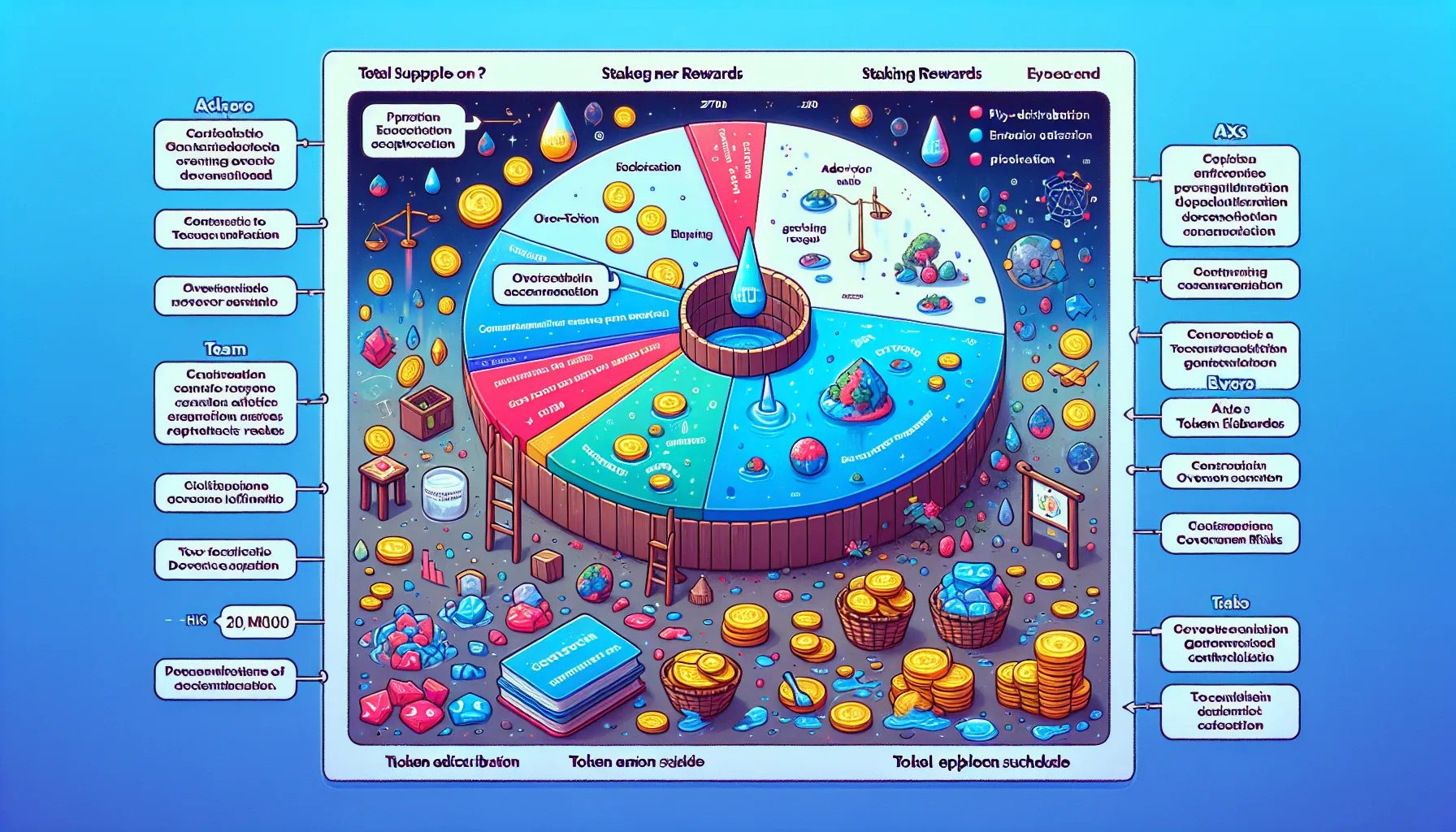
AXS has a capped total supply of 270 million tokens, which introduces scarcity while maintaining long-term issuance controls. The allocation is designed to serve diverse stakeholders, divided roughly into the following key categories:
- Play-to-Earn Rewards: A significant 20% of the total token supply is earmarked for user rewards, incentivizing engagement, and rewarding in-game activities. This allocation aims to attract participants to Axie Infinity's ecosystem sustainably. However, critics argue that heavy reliance on play-to-earn mechanics could lead to over-distribution and disproportionate selling pressure during bear markets.
- Staking Rewards: Approximately 29% is reserved for staking incentives to promote long-term token holding and network participation. The inflationary nature of staking rewards, however, raises questions about their impact on token value as emissions dilute circulating supply.
- Team and Advisors: Roughly 21% is allocated to the Axie Infinity team and advisors, vested over a multi-year period. While this aligns incentives with long-term project success, some in the community have raised concerns over perceived centralization risks and potential sell-offs once vesting periods end.
- Ecosystem Fund: 8% is set aside to drive platform growth and innovation, such as funding partnerships, strategic investments, and development initiatives.
Emission Schedule and Inflationary Concerns
The token emission schedule plays a key role in AXS's tokenomics. The gradual release of tokens into circulation occurs over a multi-year period, primarily through staking and play-to-earn mechanisms. Although designed to ensure steady growth and incentivization, the emission rate can potentially oversaturate the market with new supply, particularly if demand falters. An overly aggressive unlocking schedule risks applying negative pressure on AXS’s price trajectory and undermining holder confidence.
Governance Utility and Holder Risks
AXS doubles as a governance token, granting holders voting power over proposals within the Axie Infinity ecosystem. While this decentralization goal is worthy, low participation in governance processes across crypto projects is a known issue, and Axie Infinity is no exception. Concentrated holdings among whales and the team compound this problem, leading to concerns over whether meaningful decentralization can truly be achieved.
Final Observations on Tokenomics Challenges
While AXS’s tokenomics design is ambitious and thoughtfully constructed, the heavy reliance on staking and play-to-earn emissions, combined with inflationary pressures and governance centralization risks, points to areas that warrant further scrutiny from the community and investors alike.
AXS Governance
Governance Mechanisms of AXS: Decentralization and Challenges
The governance system of Axie Infinity Shards (AXS) is designed to establish decentralized decision-making within the Axie Infinity ecosystem. At its core, AXS enables token holders to participate in shaping the platform's future by voting on critical proposals such as development initiatives, funding allocations, and protocol upgrades. This structure aims to align players, developers, and investors by giving them direct influence over the platform's evolution.
Governance Through Staking
A key governance feature tied to AXS is its staking mechanism. Token holders who stake their AXS are granted voting rights proportional to the quantity staked. This incentivizes holding and staking AXS in the long term, theoretically fostering a more balanced and committed governance system. However, this method also results in inherent centralization risks, as those with larger holdings exert disproportionately more influence. The "whale dominance" issue—where a small group of large token holders may overshadow the voice of the broader community—remains a valid concern for the governance process.
Community Treasury Control
One unique aspect of AXS governance is the management of the Community Treasury. AXS token holders can vote on how these funds are deployed, whether for player rewards, ecosystem development, or partnerships. While this feature adds transparency to treasury operations, it poses logistical challenges as the decision-making process can be slow and fragmented. Low voter participation has also been noted as a problem in many decentralized governance systems, which could hamper efforts to execute critical initiatives.
Governance Participation Barriers
Although the governance model aspires to decentralize decision-making, participation remains a bottleneck. Technological, educational, and financial barriers may prevent smaller players or newer participants from actively engaging in governance. High gas fees on associated blockchain transactions can deter voting activity, particularly during network congestion periods, further skewing governance toward wealthier participants.
Governance Token Utility Debate
Another point of contention within the AXS ecosystem is the utility of governance tokens beyond voting. While AXS holders share in governance power, critics argue that token incentives might prioritize speculation over active governance or long-term commitment to the Axie Infinity ecosystem. This concern is common in crypto projects that offer governance tokens but struggle to foster active and meaningful participation from their communities.
In summary, the governance structure of AXS is characterized by its innovative approach but also faces challenges tied to voter inequality, participation issues, and potential misalignment of incentives within the ecosystem.
Technical future of AXS
AXS Technical Developments and Roadmap: Current and Future Perspectives
Axie Infinity Shards (AXS), the governance token of the Axie Infinity ecosystem, has undergone a series of technical updates that aim to solidify its role as a key component within the blockchain gaming landscape. The team’s ongoing development cycle emphasizes scalability, interoperability, and enhanced utility through both technical upgrades and roadmap initiatives. However, these advancements are not without challenges, reflecting the complexities inherent to blockchain-based ecosystems.
Current Technical Developments
A significant technical advancement in AXS’s ecosystem is its integration with Ronin, a layer-2 sidechain specifically designed for blockchain gaming. Ronin facilitates high-speed transactions, significantly reducing fees associated with Ethereum’s mainnet. The chain's Proof-of-Authority (PoA) consensus mechanism is a notable feature that prioritizes performance and reduces latency, though it has faced criticism for its perceived trade-off in decentralization due to its reliance on a limited number of validators. As of now, progress toward more distributed validation layers is anticipated.
Additionally, AXS staking mechanisms have been optimized to increase engagement within the ecosystem. AXS token staking currently enables users to earn rewards while participating in governance. However, the staking model has prompted discussions regarding sustainability, as rewards are tied to inflationary emissions. Balancing governance participation incentives with long-term tokenomics remains a critical challenge.
Future Technical Roadmap
The Axie Infinity development roadmap outlines several prospective upgrades aimed at retaining user interest and combating ecosystem stagnation. One highlight is the planned transition of Ronin from a PoA to a Delegated Proof-of-Stake (DPoS) consensus model. This change is intended to enhance security and decentralization, although practical implementation could face delays and technical hurdles.
Another key development is related to broader metaverse integration. The team has signaled intentions to support cross-chain compatibility, allowing AXS and Axie Infinity assets to interact with other blockchain-based ecosystems. This involves incorporating blockchain-agnostic protocols like bridges, but such mechanisms inherently carry risks of exploits and vulnerabilities, as has been seen with high-profile bridge attacks across the crypto space.
Finally, additional utility for AXS token holders is in progress, including plans for unique governance proposals that may allow direct influence over key ecosystem updates. Critics, however, cite low participation rates in token governance, raising concerns about whether the envisioned decentralization is achievable in practice.
Potential Technical Concerns
Despite its robust technical goals, the AXS ecosystem faces risks such as centralization challenges from Ronin’s validator model, potential delays in executing roadmap objectives, and vulnerabilities associated with cross-chain compatibility. Addressing these limitations will require a careful balance between innovation and security, which the development team will need to navigate as the ecosystem evolves.
Comparing AXS to it’s rivals
Comparing AXS to SAND: A Deep Dive into Gaming-Centric Crypto Assets
Axie Infinity Shards (AXS) and The Sandbox (SAND) both stand as dominant players in the blockchain-based gaming and metaverse sectors. While their core focus lies in empowering decentralized gaming ecosystems, their approaches and underlying models reflect distinct operational philosophies. Despite both targeting the intersection of gaming and DeFi, their differentiators reveal considerable trade-offs for users, investors, and developers.
Ecosystem Structure and Scalability
AXS centers around Axie Infinity, a gamified ecosystem geared toward play-to-earn mechanics. The platform's main driver is its collection-based gameplay, where players breed and battle Axies, their customizable digital pets. Scalability is one of Axie's critical challenges, as it relies on its Ronin sidechain to mitigate congestion and gas costs on the Ethereum network. However, long-term reliance on a proprietary chain raises concerns about centralization—notably when compared to SAND's decentralized, extensible structure.
The Sandbox, by contrast, offers a more modular and visually expansive metaverse built on UGC (user-generated content). Its voxel-based platform emphasizes open participation through tools like VoxEdit and Game Maker, enabling creators to integrate assets and gameplay mechanics directly within the ecosystem. This versatility in creation has contributed to a wider appeal, particularly among third-party developers, which could highlight AXS's narrower target audience and ecosystem rigidity.
Token Utility and Incentive Models
AXS tokens primarily operate within a dual-token economy alongside Smooth Love Potion (SLP). While AXS governs the platform through staking rights, SLP serves as the operational currency for in-game activities like breeding Axies. This bifurcated structure has occasionally faced criticism, as inconsistent SLP sinks and imbalances between token demand and token supply can destabilize the broader economic loop.
SAND, on the other hand, consolidates governance, access, and transactions into a single token. This streamlined approach may simplify operations for users and contributes to a cleaner incentive alignment. However, the downside is that utility concentration in SAND potentially increases speculative risk, meaning broader token adoption hinges on the appeal and engagement of the platform itself—a pressure point somewhat mitigated by Axie's dual-token model.
Gameplay vs. Socialization
AXS is inherently focused on competitive gaming mechanisms. While this approach has proven popular among players seeking financial incentives through skill-based gameplay, it limits its appeal for casual users looking for social or exploratory digital environments. The Sandbox delivers an alternative, leveraging its expansive metaverse framework to position itself as both a gaming and virtual socialization hub.
This focus on community-driven interaction in The Sandbox extends user retention beyond gaming and into broader collaborative creation. Yet, the absence of structured competitive mechanics, as seen in Axie's battle systems, may alienate users who prioritize structured, reward-based engagement. Conversely, AXS risks alienating non-competitive audiences seeking immersive, non-linear experiences.
Governance and Decentralization
While both tokens are utilized in governance, Axie Infinity’s ecosystem governance with AXS is still maturing. Critics often highlight Ronin's centralized validation as a potential conflict with the ethos of decentralization. In comparison, The Sandbox's governance and platform are more decentralized in design, at least on paper, though its relatively larger emphasis on corporate partnerships has led to discussions around the long-term implications of brand-driven metaverse integrations.
AXS vs. ILV: A Focused Comparison in the Blockchain Gaming Space
When comparing Axie Infinity Shards (AXS) to Illuvium (ILV), it’s clear that both projects target blockchain gaming enthusiasts, yet their approaches are significantly distinct. While AXS powers Axie Infinity, a game centered on breeding, battling, and trading digital pets, ILV serves as the governance and utility token for Illuvium, a high-fidelity RPG-like auto-battler with open-world exploration.
Gameplay Depth and Audience Appeal
AXS revolves around a relatively simple gameplay loop where players focus on tactical turn-based battles and economic strategies. In contrast, Illuvium offers a more immersive and visually rich experience, integrating exploration mechanics into its auto-battler framework. This dichotomy reflects a philosophical difference: AXS’s appeal lies in its accessibility, whereas ILV targets a niche of hardcore gamers who favor AAA-quality graphics and in-depth gameplay mechanics.
For some, this stark difference could align ILV with a narrower audience, given the steep time commitment and potentially higher hardware requirements needed to play Illuvium. AXS’s comparatively low barrier to entry allows it to capture casual gamers or those new to blockchain-based games. This difference in audience targeting highlights the larger market scope AXS may enjoy but could also point to a lack of depth that more demanding gamers seek in projects like Illuvium.
Tokenomics and Player Incentives
A significant point of divergence is in reward distribution and token utility. ILV integrates both ILV and sILV2 tokens into its reward mechanism. While sILV2 allows players to bypass lockup periods for in-game perks, ILV stakers can earn governance rights, creating a dual-token economy that can be both empowering and convoluted. AXS, conversely, employs a single-token structure for staking, governance, and rewards. However, the simplicity of AXS comes with the potential downside of over-dependence on its core game economy. During prolonged downturns in user activity, this could create challenges in sustaining token value.
Scalability and Ecosystem Expansion
Another critical distinction is the ecosystem's scalability. Illuvium is pursuing a modular approach with plans for interconnected Illuvium titles, building out its ecosystem to create synergy across games. AXS, while adding new features like Axie Origins or land-based gameplay, is still highly centralized around one core game. This creates a scalability bottleneck and may hurt AXS’s ability to diversify its revenue streams compared to ILV’s multi-pronged ecosystem vision.
Critiques and Challenges
Some of ILV's touchpoints, however, bring potential friction. The highly ambitious nature of Illuvium’s design raises questions about deliverability and execution timelines, particularly in a competitive market. Additionally, its foray into bridging traditional gaming aesthetics with blockchain concepts may alienate purists who aim for seamless crypto integration without mainstream gaming tropes. This leaves room for AXS to maintain its relatively consistent identity within the GameFi sector but could also indicate its resistance to evolving beyond what brought initial success.
AXS vs. GALA: A Critical Comparison of Crypto Gaming Ecosystems
When analyzing Axie Infinity Shards (AXS) against GALA, it becomes evident that both projects aim to dominate the blockchain gaming sector but adopt significantly different approaches in execution and ecosystem development. Though each has its strengths, a closer look at AXS in contrast to GALA unearths intriguing distinctions that highlight diverse design philosophies and community engagements.
Ecosystem Approach: Singular Focus vs. Multi-Game Expansiveness
One of the most stark differences between AXS and GALA lies in their ecosystem structures. AXS operates as the primary governance and utility token of Axie Infinity, a single flagship game with an expansive focus on breeding, battling, and trading creatures called Axies. In contrast, GALA is designed to power an entire gaming ecosystem with a decentralized approach, supporting multiple independently developed games. This multi-game emphasis serves as both GALA's strength and potential weakness. Unlike AXS's laser-sharp focus on refining one game, GALA's strategy of dispersing resources across various projects could dilute its overall impact if key game releases fail to gain meaningful traction.
Community vs. Studio-First Development
A unique selling point of AXS is its deep integration with the gaming community, particularly through its play-to-earn (P2E) model and community-driven governance mechanisms controlled via the AXS token. This structure aligns closely with the community-focused ethos of blockchain technology. GALA, however, emphasizes empowering developers with tools and freedom to create games, effectively prioritizing a studio-first approach. While this broad-based development model can foster diverse game offerings, it also raises questions regarding the sustainability of community engagement across multiple titles, especially if certain games underperform compared to high-profile competitors like Axie Infinity.
Token Utility and Economy Design
Tokenomics marks another critical comparative point between AXS and GALA. AXS introduces a dual-token structure involving AXS and Smooth Love Potion (SLP), creating complexity but also clear delineation of governance versus gameplay-related utility. GALA simplifies this by maintaining a single token that enables various functions like network governance, in-game purchases, and staking. While simplicity is attractive, it may risk overshadowing the clarity and specificity offered by AXS's dual-token system. Further, inflation concerns for GALA's token supply remain a contentious issue in crypto-savvy circles, whereas Axie Infinity's token-burning mechanisms tend to moderate supply inflation pressures more effectively.
Scalability and Blockchain Choices
Lastly, scalability and blockchain considerations are pivotal. Axie Infinity operates on the Ronin sidechain, providing cost-effective and efficient transactions specifically tailored to its ecosystem. GALA, on the other hand, utilizes the Ethereum blockchain with plans for its bespoke chain, GalaChain. This choice introduces advantages like broader Ethereum interoperability but also risks such as higher transaction fees and potential congestion during peak usage, which could frustrate users expecting seamless gaming experiences.
While both AXS and GALA target the blockchain gaming revolution, their starkly different approaches to ecosystem design, community involvement, and scalability provide a compelling narrative for investors and gamers alike to dissect.
Primary criticisms of AXS
Primary Criticism of AXS: Key Issues Facing the Axie Infinity Ecosystem
Axie Infinity Shards (AXS), the native token of the Axie Infinity ecosystem, has faced several pointed criticisms as both a governance and utility asset. These critiques largely center on sustainability, tokenomics, and the potential vulnerability of the platform’s play-to-earn (P2E) model.
Economic Sustainability Challenges
One of the primary concerns surrounding AXS is the economic sustainability of the Axie Infinity ecosystem. The platform’s P2E model incentivizes users with rewards, which are funded through both token issuance and fresh capital inflows from new players. Critics argue that this structure closely resembles a closed-loop system, vulnerable to collapse if new user growth stagnates or declines. Without consistent external revenue streams that replenish the ecosystem more robustly, the reliance on attracting new players to prop up rewards is considered economically precarious.
Hyperinflation of Secondary Tokens
While AXS itself functions primarily as a governance and staking token, the in-game token Smooth Love Potion (SLP) has faced severe inflationary issues. Since SLP is minted in large quantities by players and drives much of the in-game economy, its dilution can erode its value quickly. This hyperinflation impacts the broader ecosystem, as devalued rewards diminish the financial incentives for players to remain engaged. Consequently, it indirectly affects AXS by undermining confidence in the long-term viability of the game’s economy.
Governance Decentralization in Question
Although marketed as a governance token, critics note that the decentralization of AXS’s decision-making power remains an aspiration rather than a reality. A substantial percentage of AXS tokens is held by the development team, early backers, and corporate entities, raising concerns around centralization. This concentrated ownership limits the ability of the broader community to effect significant changes and calls into question the degree to which AXS truly delivers on its governance promise.
Barriers to Entry and Inaccessibility
Another frequent criticism of AXS is tied to the steep barriers to entry associated with Axie Infinity itself. For prospective players, the initial cost of acquiring Axies—which are required to participate in the ecosystem—can be prohibitively high. While various scholarships and partnerships aim to alleviate this burden, this accessibility issue continues to hinder broader adoption and has sparked debates about whether the system truly democratizes gaming or simply caters to a niche audience.
Speculation Over Utility
Finally, skepticism has been directed at AXS's long-term utility beyond staking and governance. Some view the token's price movements as overly speculative, driven less by intrinsic utility within the ecosystem and more by broader crypto market trends. This perception can lead to concerns over whether AXS serves genuine functional purposes or primarily operates as a vehicle for speculative trading.
Founders
Founding Team Behind AXS: The Visionaries and Builders of Axie Infinity
The founding team of Axie Infinity, the blockchain-based play-to-earn game powered by the AXS token, has been a critical driver behind the project’s success and challenges. Developed by Sky Mavis, a Vietnam-based gaming studio, Axie Infinity was brought to life by co-founders Trung Nguyen, Aleksander Larsen, and Jeffrey Zirlin. Each had a distinct role in shaping the ecosystem and addressing the complexities of building a blockchain-driven virtual economy.
Trung Nguyen – CEO and Tech Architect
Trung Nguyen, Sky Mavis' CEO, transitioned from a career in software engineering to blockchain gaming with a vision to create a decentralized digital economy. While he provided the foundational architecture for Axie Infinity, critics have occasionally pointed to the ecosystem's centralization under Sky Mavis as a potential vulnerability. Despite the game’s focus on NFTs and decentralization, parts of its infrastructure, including the Ronin sidechain, have raised concerns about single points of failure—a notable issue underscored by the high-profile Ronin Bridge exploit.
Nguyen’s leadership in prioritizing user experience and scalability has driven much of Axie Infinity’s growth, but his handling of crisis situations has been scrutinized. For example, the team’s response to security breaches and tokenomics adjustments exposed challenges in maintaining transparency while managing community expectations.
Aleksander Larsen – COO and Industry Evangelist
Aleksander Larsen, the COO, has been instrumental in steering Axie Infinity’s strategy and partnerships. A former competitive gamer, Larsen tapped into his industry insights to create a product that appealed to both crypto enthusiasts and traditional gamers. He played a crucial role in scaling the player base, particularly within regions like Southeast Asia, where play-to-earn gaming saw explosive adoption.
However, this aggressive growth has not been without friction. The game’s economy faced rising concerns over sustainability as user rewards and token emissions reached unsustainable levels—a challenge tied directly to the tokenomics framework managed by the team. While Larsen’s efforts in community-building have been praised, some argue that Axie Infinity’s early success masked systemic issues that went unaddressed for too long.
Jeffrey Zirlin – Growth Lead and Community Voice
Jeffrey Zirlin, often referred to as "Jihoz," leads growth and community initiatives. With a deep understanding of blockchain culture, Zirlin has been the public face of Sky Mavis, frequently engaging with Axie Infinity’s loyal player base. This emphasis on community relations has been a double-edged sword. On one hand, Jihoz has effectively amplified user engagement by leveraging grassroots marketing and crafting a strong narrative about Axie’s play-to-earn potential. On the other hand, the team’s inability to control speculative behavior, particularly during periods of hype, has drawn criticism for enabling an unsustainable player influx motivated more by financial gains than genuine interest in the game.
While the founding team brings a diverse skillset to the table, their collective ability to navigate operational, technical, and economic challenges continues to define Axie Infinity’s trajectory within the broader crypto ecosystem. However, their full reliance on Sky Mavis’ infrastructure underscores a lingering tension between decentralization ideals and practical execution.
Authors comments
This document was made by www.BestDapps.com
Sources
- https://whitepaper.axieinfinity.com/
- https://axie.substack.com/
- https://github.com/axieinfinity
- https://www.axieinfinity.com/
- https://explorer.roninchain.com/
- https://community.axieinfinity.com/
- https://www.coingecko.com/en/coins/axie-infinity
- https://coinmarketcap.com/currencies/axie-infinity/
- https://twitter.com/AxieInfinity
- https://medium.com/@AxieInfinity
- https://docs.roninchain.com/
- https://nansen.ai/research/axie-infinity-state-of-the-economy-2022
- https://dappradar.com/ethereum/games/axie-infinity
- https://forum.axieinfinity.com/
- https://www.binance.com/en/trade/AXS_USDT
- https://etherscan.io/token/0xbb0e17ef65f82ab018d8edd776e8dd940327b28b
- https://www.skymavis.com/
- https://academy.binance.com/en/articles/what-is-axie-infinity
- https://www.theblock.co/research/125922/axie-infinity-state-of-play
- https://decrypt.co/resources/what-is-axie-infinity-how-do-you-play


