History of AXL
The History of AXL: Origins and Evolution of the Cross-Chain Native Asset
AXL emerged as the native asset of the Axelar Network, a blockchain interoperability project designed to enable seamless cross-chain communication and asset transfers across a diverse ecosystem of blockchains. The development of Axelar Network began in response to the growing fragmentation of the blockchain space, where individual chains, despite their advancements, often operated as isolated silos. This lack of connectivity created inefficiencies in transferring value and information, which Axelar developers aimed to solve with their decentralized communication protocol.
The roots of Axelar can be traced back to its founding team, which included core developers with deep expertise in cryptography, distributed systems, and blockchain design. Drawing from their prior experience with layer-1 blockchain networks, the developers sought to address two primary limitations of existing interoperability solutions: security vulnerabilities and reliance on centralized intermediaries. These early goals heavily influenced the design of the Axelar protocol and its mechanisms, including the introduction of AXL as a utility token critical for its ecosystem.
AXL was introduced as a multi-functional crypto asset supporting Axelar’s foundational architecture. Its primary roles included staking for validators, incentivizing network security, and facilitating fee payments for transactions conducted via the network. The token also played a role in governance, granting holders the ability to propose and vote on upgrades or protocol changes. This governance feature positioned AXL as not just a transactional unit but also an integral component of Axelar’s decision-making process.
Despite its technical innovations, AXL’s history has not been without challenges. One key concern involves Axelar’s reliance on a permissionless validator set that requires robust participation to remain decentralized and secure. Critics have argued that network adoption and validator incentives posed hurdles in the early stages, as insufficient participation could have rendered the protocol exposed to centralization risks. Additionally, integrating the protocol with multiple blockchain ecosystems introduced complexities. Each chain’s unique architecture and consensus mechanisms created interoperability bottlenecks that the Axelar team consistently worked to address.
AXL also faced scrutiny regarding its utility within its network. While essential for validator staking and transaction fees, questions occasionally arose about the token’s broader use cases outside the Axelar ecosystem. Critics argued this created a dependency on the network’s adoption growth, leading to debates within the crypto community on AXL’s long-term sustainability and competitiveness compared to other cross-chain solutions.
In its progressive iterations, Axelar Network focused on refining its programming frameworks and partnerships to strengthen AXL’s role in facilitating decentralized interoperability.
How AXL Works
How AXL Works: Bridging Cross-Chain Interoperability with Secure Decentralization
AXL operates as a cross-chain communication layer designed to facilitate seamless interoperability across disparate blockchain ecosystems. At its core, AXL leverages a decentralized network of validators and novel cryptographic protocols to enable secure message passing, asset transfers, and smart contract interactions between otherwise siloed blockchain networks. Here's a deep dive into the mechanics:
The AXL Network Architecture
The AXL network is fundamentally built on a decentralized validator set that operates under a delegated proof-of-stake (DPoS) consensus model. Validators are responsible for processing cross-chain transactions, verifying cryptographic proofs, and maintaining the operational integrity of the network. Users who hold AXL tokens can stake them to either secure validator spots or delegate their holdings to active validators in exchange for a share of the rewards. While DPoS provides scalability benefits, it does open the door to concerns about centralization, particularly in the distribution of voting power among wealthier participants.
A pivotal aspect of AXL’s architecture is its use of cryptographically secure gateways for cross-chain interactions. These gateways rely on permissionless light-client proofs to verify state changes across different chains without requiring centralized intermediaries. However, this approach necessitates constant updates to remain compatible with blockchains that frequently undergo upgrades, raising questions about long-term sustainability.
Cross-Chain Messaging and Smart Contract Calls
AXL enables cross-chain message passing via its proprietary Axelar Messaging Protocol (AMP). The protocol supports asynchronous message delivery and ensures finality by utilizing a multi-signature consensus mechanism. AMP is designed to be blockchain-agnostic, meaning it can interact with both EVM-based and non-EVM chains. That said, integrating non-EVM chains often involves additional engineering complexity, which could create bottlenecks if the ecosystem experiences rapid expansion.
Notably, AXL simplifies cross-chain smart contract interactions by abstracting the complexities of managing gas fees. Users only need to pay fees in their native chain’s token, while AXL’s relayer network handles the conversion and execution. Though this abstraction enhances user experience, it also adds systemic risk if relayer incentives are not adequately aligned.
Security and Reliability
Security in AXL relies heavily on the cryptographic integrity of its validator network and the correctness of its gateway protocols. However, like any protocol operating in decentralized finance, AXL is susceptible to potential vulnerabilities, including validator collusion, bridge exploits, and network congestion during periods of high demand. Furthermore, the reliance on DPoS introduces attack vectors that hinge on an economic majority, which could pose a threat to smaller stakeholders in contentious situations.
By focusing on modularity and scalability, AXL aims to solve the persistent fragmentation of blockchain ecosystems. However, its reliance on complex cryptographic standards and DPoS ensures a lingering trade-off between decentralization and practicality.
Use Cases
Exploring AXL Crypto Asset Use Cases
Cross-Chain Communication and Interoperability
One of AXL's most prominent use cases resides in its capacity to enable seamless cross-chain communication and interoperability. AXL is fundamental to Axelar's decentralized protocol, which connects various blockchain ecosystems, thereby addressing the persistent fragmentation within the crypto space. By utilizing AXL as a governance and utility token, the Axelar network facilitates cross-chain message passing and multi-chain DeFi development, allowing dApps to interact across blockchains like Ethereum, Cosmos, and beyond. However, scalability challenges may arise as adoption grows, introducing potential latency or bottlenecks.
Decentralized Governance
AXL empowers token holders with voting rights that influence Axelar network upgrades, parameter adjustments, and resource allocation. This governance mechanism emphasizes decentralization, with decisions driven by the community rather than centralized authorities. While this democratized approach benefits transparency, it requires active and informed participation from AXL stakeholders. Low voter turnout is a common issue in many governance frameworks, and AXL’s system is no exception, potentially slowing down decision-making processes or keeping the network vulnerable to governance risks like voter apathy or concentration of voting power.
Incentivizing Validators and Staking
AXL is also central to securing the Axelar network through its staking and validation processes. Validators stake AXL to support network operations, and, in turn, are rewarded for their efforts. End-users can delegate their AXL to validators to earn staking rewards, contributing to the ecosystem's overall security. However, this creates potential centralization risks if staking power disproportionately accumulates within large, well-funded validator entities. Furthermore, staking mechanisms are inherently exposed to smart contract vulnerabilities and economic exploits, which could ripple across Axelar's multi-chain framework.
Enhancing Multi-Chain dApp Development
By streamlining blockchain connectivity, AXL enables developers to build multi-chain dApps that can operate across fragmented networks. This functionality is crucial for use cases in DeFi, NFTs, and gaming, as developers are no longer confined to single-chain limitations. Still, building on top of cross-chain infrastructure introduces an added layer of complexity for developers. Poorly planned integrations and reliance on Axelar's network stability could delay deployment or expose dApps to unforeseen issues, such as cross-chain liquidity puzzles or message confirmation delays during peak network activity.
Payments in Network Usage
AXL is used as a payment method for transactions and operations that occur within Axelar's ecosystem, such as fees for cross-chain transfers. While this creates a sustainable economic model, the reliance on AXL for transaction payments raises concerns about price volatility, which could deter users if fees fluctuate unpredictably outside robust risk management. Additionally, regular fee adjustments determined by governance may face criticism from stakeholders who see these changes as either punitive or poorly timed within the market context.
AXL Tokenomics
Understanding AXL Tokenomics: Supply, Distribution, and Utility
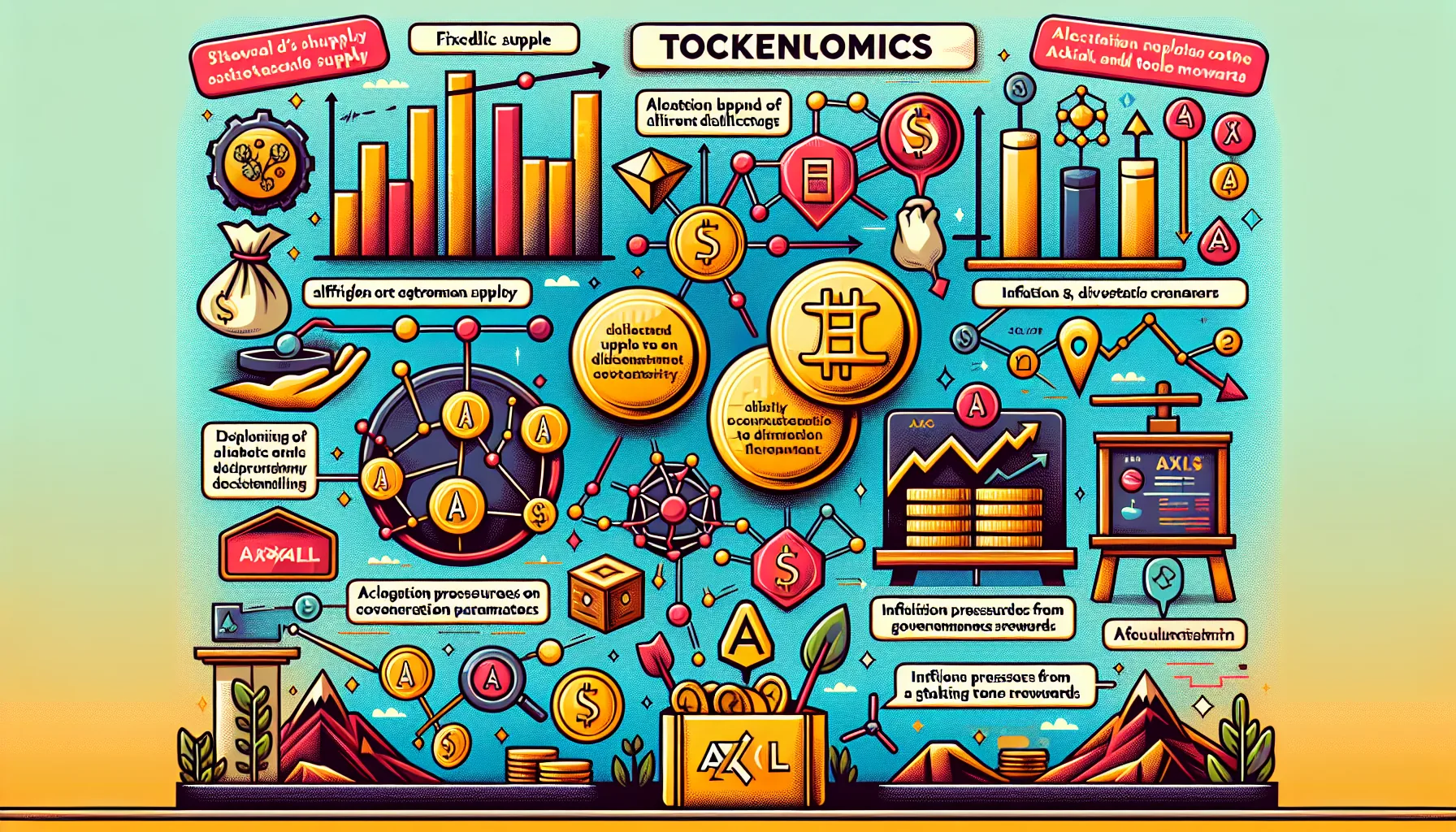
The tokenomics of AXL are designed to underpin the operational framework of its ecosystem, though its structure reveals both strengths and potential vulnerabilities. A clear breakdown of AXL's supply, allocation, and mechanisms for maintaining value within its network is essential for a comprehensive understanding.
AXL Token Supply: Fixed or Elastic?
The total supply of AXL tokens is a critical aspect to consider. If the supply is capped, this ensures a fixed scarcity, which can theoretically support long-term value appreciation. However, capped supply models often lead to concerns about token hoarding and reduced liquidity. On the other hand, if AXL adopts an elastic supply model or includes mechanisms for inflationary issuance, such as staking rewards or validator compensation, the token faces risks of long-term dilution. Monitoring token supply mechanisms is essential to assessing its role in the ecosystem and its impact on token holders.
Allocation and Distribution Challenges
The initial distribution of AXL and ongoing token release schedules are potential points of contention. A skewed allocation favoring insiders, such as team members, early investors, or advisors, could create centralization risks, harming the decentralized ethos of the project. High concentration in a limited number of wallets might also lead to market manipulation or volatility if large holders choose to liquidate their stakes. Conversely, fair and transparent token launches, as well as vesting schedules, can build confidence in the project’s long-term vision.
Token Utility: How AXL Drives Engagement
The direct utility of the AXL token within its ecosystem is essential to driving demand. If the token lacks meaningful use cases—such as governance voting, transaction fees, or staking—it may suffer from speculative trading rather than fundamental adoption. Projects that fail to align token utility with ecosystem growth often struggle to maintain community engagement. Defining utility is especially critical for interoperability-focused crypto assets like AXL, as its core use cases should create sustained demand across multiple blockchain platforms.
Inflationary Pressures from Staking Rewards
If AXL employs staking rewards to incentivize network participation, the influx of newly issued tokens can exert downward pressure on its market value. A delicate balance is required to attract validators and delegators without overly diluting existing holders. Additionally, it’s important to evaluate whether staking rewards are proportional to network growth, as disproportionate inflation can undermine long-term sustainability.
Governance Implications on Tokenomics
AXL’s governance structure may influence key economic parameters, such as token burn rates, inflation schedules, or reserve fund allocations. A governance model overly reliant on large AXL stakeholders risks entrenching centralization in a system that ideally should favor equitable participation. The effectiveness of governance mechanisms is directly tied to the health of AXL’s token economy, as poorly designed processes could lead to stagnation or misuse of funds.
AXL Governance
Governance in AXL: Decentralized Oversight and Decision-Making
AXL’s governance framework is a critical component of its ecosystem, designed to distribute power among stakeholders while maintaining the efficiency needed for protocol upgrades and network sustainability. At its core, the governance model revolves around enabling token holders to actively participate in decision-making processes. However, this structure comes with unique challenges that influence both engagement and the stability of the ecosystem.
Token-Based Voting Mechanism
The AXL governance system leverages a token-weighted voting mechanism, where voting power is proportional to the amount of AXL tokens held or staked by users. While this ensures that those with greater economic stakes in the network have a more significant influence, it raises concerns about centralization. Wealthy entities or early adopters may wield disproportionate control, potentially sidelining smaller participants. This imbalance is a common issue in token-based governance systems and underscores the ongoing need for mechanisms that foster equitable participation.
Proposal Submission and Approval Workflow
The governance protocol allows stakeholders to create and submit proposals addressing technical upgrades, fee adjustments, or allocation of resources for ecosystem development. Each proposal undergoes a predefined review process, often including an on-chain voting phase. While this ensures transparency, it can result in slower decision-making during periods of contention. Furthermore, the threshold for proposal approval—often measured in stake-weighted participation or affirmative votes—can be difficult to meet during periods of low voter turnout, leaving proposed changes stagnant.
Incentivizing Participation
Low voter engagement is a persistent issue within the AXL governance system. Many token holders, despite having the power to influence decisions, abstain from participating due to the perceived complexity of governance processes or lack of immediate rewards tied to voting. To mitigate this, mechanisms such as staking incentives or gas rebates for voting have been considered. Nevertheless, these solutions carry trade-offs, potentially increasing inflationary pressure or introducing additional layers of complexity.
Governance Security Risks
Decentralized governance is not immune to security risks, and AXL is no exception. Governance attacks, such as vote buying or Sybil attacks, remain a credible threat. Additionally, reliance on smart contracts to automate governance features introduces potential vulnerabilities to exploitation. This emphasizes the need for continuous auditing and stress-testing of governance mechanisms to ensure robust security.
Alignment Between Developers and Token Holders
Another challenge lies in maintaining alignment between the AXL development team and the broader token-holder community. While core developers often drive technical proposals, there is sometimes friction between long-term technical roadmaps and the short-term interests of stakeholders. Striking this balance remains a central governance consideration for the ecosystem.
Technical future of AXL
Current and Future Technical Developments of AXL: Deep Dive Into Technological Progress
AXL, designed as a cross-chain communication protocol, is a critical piece in the blockchain interoperability puzzle. While its ambition to facilitate seamless exchanges between distinct layer-one blockchains aligns with current industry needs, several ongoing and future developments are set to define its technical trajectory. However, this path is not without challenges.
Current Technical Innovations
At its core, AXL functions as an interoperability enabler, relying on a decentralized validator network and cryptographic primitives. A primary focus has been optimizing its consensus mechanism to improve scalability without compromising security. The use of threshold cryptography, particularly for decentralized key management, has positioned AXL as a pioneer in secure cross-chain transactions. Additionally, the introduction of the General Message Passing (GMP) framework extends its functionality beyond token transfers, enabling developers to build more complex decentralized applications (dApps) with seamless cross-chain interactions.
Yet, critiques have emerged around the syncing time for certain bridging operations, which has been a bottleneck for user experience. The AXL team has made strides toward reducing latency, but the improvements remain incremental in some scenarios. This trade-off between security and performance poses ongoing questions for scalability.
Future Road Map and Technical Objectives
One of the most anticipated developments in AXL's road map is the integration of zero-knowledge proofs (ZKPs) to enhance privacy in cross-chain interactions. ZKP integration could allow for trustless validation of transactions without disclosing sensitive information. This would significantly differentiate AXL's offering in an increasingly crowded interoperability space. However, ZKP implementation is computationally intensive and could exacerbate existing latency issues. Whether AXL can balance these demands effectively remains a key area of scrutiny.
Another major focal point is the planned modular expansion of the validator set. AXL aims to onboard specialized validators to handle high-volume transactions and complex operations, improving efficiency. The challenge, however, lies in maintaining decentralization while increasing validator network specialization—a delicate equilibrium.
Additionally, discussions around implementing quantum-resistant cryptographic standards have gained attention. While this signals foresight, the technical community has questioned whether prioritizing such long-term issues diverts resources from more pressing optimizations.
Challenges and Risks
Despite these ambitious plans, AXL’s reliance on external blockchain networks introduces dependency risks. Downtime or changes in third-party blockchain protocols could disrupt AXL's functionality. Moreover, the intricacy of scaling interoperability solutions increases the attack surface for potential exploits, particularly in multi-chain environments. With the rise in bridge exploits industry-wide, AXL’s ability to strengthen its security layers without sacrificing usability remains an open challenge. In this context, further audit transparency and community engagement are anticipated by the crypto-savvy audience closely monitoring its progress.
Comparing AXL to it’s rivals
AXL vs. ATOM: Bridging Layer-1 Ecosystems with Distinct Approaches
When comparing AXL and ATOM, it’s important to understand their roles in the broader crypto ecosystem and how they tackle the challenge of interoperability—both are deeply intertwined in enabling seamless communication and asset transfer across blockchains, yet their methods and priorities diverge in critical ways.
AXL serves as a cross-chain communication protocol, designed with a modular framework to bridge assets and data between multiple blockchain networks. It emphasizes decentralized governance and trustless connectivity using a network of validators and its General Message Passing (GMP) framework. This flexibility enables AXL to support a wide range of use cases, from DeFi applications requiring multi-chain liquidity to cross-chain NFT marketplaces. The platform places a strong emphasis on developer accessibility, providing SDKs and APIs that allow projects to integrate cross-chain functionality with relatively minimal technical complexity.
In contrast, ATOM, driven by the Cosmos ecosystem, focuses on creating an “Internet of Blockchains” through its Inter-Blockchain Communication protocol (IBC). While AXL provides bridging solutions for multiple blockchain types, including non-Cosmos-based networks like Ethereum, ATOM’s primary interoperability mechanism is optimized for networks built within the Cosmos SDK. As a result, ATOM shines in creating a tight, highly interconnected ecosystem, but it struggles with broader connectivity to non-Cosmos chains without additional bridging tools.
Security Paradigms: Layer-1 vs. Middleware A key difference lies in their relative positions in the tech stack. ATOM acts as the native asset for the Cosmos Hub, a sovereign Layer-1 blockchain, while AXL operates as middleware. This distinction reflects a variance in security guarantees—AXL depends on the security of the underlying blockchains it bridges, introducing potential risks from vulnerabilities in external chains or smart contracts. ATOM, on the other hand, benefits from the shared security model of Cosmos-enabled chains while maintaining its own consensus mechanism.
Scalability and Adoption Challenges One area where AXL faces friction is scalability. Routing transactions across multiple chains can introduce delays and higher gas fees due to the complexity of its cross-chain architecture. ATOM, leveraging IBC’s tight-knit architecture, generally achieves faster and cheaper communication within the Cosmos ecosystem but sacrifices seamless reach to networks beyond its native stack.
These differences highlight how AXL and ATOM represent contrasting philosophies in tackling the cross-chain conundrum—one pursuing broader connectivity, the other a tightly integrated interchain framework. Understanding these nuances is critical for users and developers evaluating which approach aligns better with their specific requirements.
AXL vs. DOT: Cross-Chain Connectivity and Network Architecture Compared
When comparing AXL to DOT, one of the primary areas of divergence lies in their design philosophies surrounding cross-chain interoperability and network scalability. AXL positions itself as a dedicated bridge protocol, focusing squarely on seamless communication across blockchain networks, while DOT approaches the same challenge through a more structured, hub-and-spoke model facilitated by its Relay Chain. However, these differing approaches reveal both strengths and limitations between the two.
At a core level, DOT's architecture is deeply rooted in its emphasis on parachains—specialized blockchains designed to integrate with the Relay Chain for scalability and interoperability. This setup introduces a competitive evaluation framework for parachains via slot auctions, which can be both a strength and a pain point. For projects that are well-funded or widely supported, parachain slots ensure deep security guarantees and reduced concerns around synchronization issues. However, for smaller or emerging blockchain networks, the auction process can represent a significant barrier to entry. Comparatively, AXL's interoperability model does not rely on such exclusivity; its primary focus is to create a universal communication layer between networks, essentially streamlining access for assets and projects without requiring participation in competitive processes.
Another critical difference between AXL and DOT revolves around decentralization versus central control. While Polkadot’s architecture, governed by the Web3 Foundation and its active governance model, promotes flexibility and community adaptability, it introduces risks associated with central influence. AXL, on the other hand, relies on its core validation network to ensure trustless communication, eschewing governance-heavy mechanisms to focus purely on operational excellence in bridging chains. This design difference has led to debates about the trade-offs between protocol agility (DOT) and operational reliability (AXL).
In terms of scalability, DOT’s parachains offer significant transaction throughput, as each parachain functions semi-independently while benefiting from shared security. However, this scalability is limited by the finite number of parachain slots available, presenting constraints for a rapidly expanding ecosystem. In contrast, AXL’s solution scales horizontally by maintaining its position as an agnostic bridge rather than a hosting environment, which could sidestep scalability bottlenecks but might limit engagement with on-chain programmability prevalent in DOT ecosystems.
Finally, inter-chain messaging functionality in DOT, while robust within its ecosystem, raises challenges when interacting beyond Polkadot-native parachains and its sister network, Kusama. AXL’s architecture is built with broader compatibility in mind, but this comes at the risk of potential fragmentation in its validation system if not addressed meticulously.
Comparing AXL to Stargate Finance (STG): Bridging Capabilities and Ecosystem Depth
When juxtaposing AXL with Stargate Finance (STG), the conversation inevitably centers around their respective focuses in cross-chain interoperability and bridging technologies. Both projects tackle the significant challenge of seamless asset transfers across blockchain networks, but their core architectures and ecosystem priorities reveal meaningful distinctions.
Bridging Mechanism Design
Stargate Finance operates through a novel liquidity layer approach that utilizes its omnichain compatibility via LayerZero. The “liquidity pool” mechanism allows users to perform single-transaction, native asset swaps across chains, eliminating wrapped tokens and preserving value continuity. AXL, in contrast, leverages its General Message Passing (GMP) framework, which is broader in scope and extends beyond asset transfers to include generalized smart contract calls. While AXL’s GMP is architecturally versatile, the layered complexity can sometimes slow interoperability compared to Stargate's streamlined liquidity-centric model, specifically for straightforward asset swaps.
Security Profiles
Security design is a critical differentiator between AXL and STG. Stargate’s infrastructure is closely tied to LayerZero’s multi-party validation system, relying on both Oracles and Relayers to ensure cross-chain messages are accurate. However, Stargate’s reliance on the LayerZero parent protocol intertwines its fate with a broader ecosystem, potentially creating shared vulnerabilities. AXL, on the other hand, deploys decentralized validator-powered consensus to safeguard its network. While this adds a degree of additional decentralization, the validator model could introduce delays in message validation during high network congestion, a potential pain point for time-sensitive use cases.
Ecosystem Integrations
One realm where Stargate Finance’s focus is razor-sharp is its DeFi-specific integrations. STG is deeply entrenched in liquidity provisioning, enabling use cases centered on yield farming and composable DeFi strategies. AXL, while robust in multi-chain support, casts a wider net, extending its utility to sectors such as decentralized governance, gaming, and cross-chain dApp development. For users looking for specialized liquidity routing, Stargate Finance may provide more tailored flows than AXL’s more generalized feature set.
Decentralization Philosophy
AXL’s roadmap emphasizes gradual decentralization of network validators and governance decision-making. Stargate, while decentralized in its liquidity mechanisms, is arguably somewhat constrained by its dependence on LayerZero's technological oversight. This could raise questions about central points of failure, especially among crypto proponents prioritizing trust-minimized frameworks.
Community Support and Adoption
In assessing user loyalty and adoption metrics, Stargate benefits from its tight focus on DeFi audiences. AXL, by targeting a broader use case spectrum, risks diluting its community's attention and engagement. While versatility can attract diverse developers, it may also stretch resources compared to STG’s concentrated efforts.
Primary criticisms of AXL
Primary Criticism of AXL: Challenges Facing the Cross-Chain Ecosystem
While AXL has garnered significant attention due to its focus on enabling cross-chain interoperability, several criticisms have emerged surrounding its execution, utility, and scalability. Below, we delve into key concerns that have been raised by the crypto community.
Centralization Concerns in a Decentralized Landscape
Despite claiming to facilitate trustless cross-chain communication, AXL has often been criticized for having potential centralization vectors within its infrastructure. Specifically, critics have pointed out that its validator set is relatively small and may not be sufficiently decentralized to withstand censorship or single points of failure. In a blockchain ecosystem where decentralization is a core tenet, any indication of centralizing tendencies raises red flags for proponents of trustless and permissionless systems.
The reliance on a limited group of validators also raises questions about long-term governance. If governance decisions are concentrated among a handful of key participants, it opens the door to potential collusion and decisions that may not serve the broader network’s best interests.
Security Risks with Cross-Chain Bridges
Axelar, the protocol underpinning AXL, has positioned itself as a solution for interoperability, yet cross-chain bridges have historically been susceptible to security vulnerabilities. Critics argue that AXL has exposure to the same inherent risks, including potential smart contract exploits and bridge failures. Since cross-chain technology requires the transfer of assets across various networks, failure in one node or integration point could lead to significant losses, a concern exacerbated by the complexity of Axelar’s infrastructure.
Moreover, detractors emphasize that cross-chain technology is still evolving, and AXL’s approach is no exception. Security audits and rigorous stress testing are crucial, yet skeptics argue that no cross-chain solution, including AXL, has yet proven its capability to operate without vulnerabilities in a high-adoption scenario.
Lack of Differentiation in a Competitive Sector
The market for interoperability-focused projects is becoming increasingly crowded, with protocols such as Polkadot, Cosmos, and others presenting their own solutions. Critics have questioned whether AXL offers sufficient differentiation to distinguish itself within this competitive landscape. While its specific technological approach may have unique elements, skeptics argue that AXL has not adequately addressed why users and developers should prioritize its ecosystem over more established alternatives.
Additionally, the ease—or lack thereof—of integrating AXL into existing decentralized applications has sparked concerns over adoption barriers. The perception that Axelar Network’s integration is overly complex or resource-heavy for developers could hinder AXL from achieving widespread utility.
Token Utility and Economic Sustainability
Another recurring criticism involves AXL’s tokenomics. While the utility token is required for transaction fees and governance, some in the crypto community have raised concerns about the overall economic viability of its model. Questions have been posed about whether the demand for AXL tokens will scale in proportion to the ecosystem's growth, or if the token risks being relegated to a speculative asset with limited intrinsic demand.
Moreover, skeptics argue that the incentives offered to validators and users may not be sustainable in the long term. If token rewards were to dwindle as network adoption increases, this could potentially lead to lower validator participation, undermining the security and reliability of the network.
Developer and Community Engagement Gaps
Community-driven projects thrive on strong developer and user engagement, yet AXL has faced criticism for lacking robust outreach strategies. Some observers have pointed to other interoperability-focused initiatives having more active development ecosystems, leaving AXL at a relative disadvantage. Without aggressive efforts to attract developers and foster on-chain activity, long-term network effects could remain limited.
Founders
AXL Founding Team: Visionaries Behind the Network
The founding team of AXL has played a pivotal role in shaping the project's technological foundation and strategic direction. Comprised of blockchain engineers, cryptographers, and seasoned entrepreneurs, the team brings a broad range of expertise to the table. However, like many crypto initiatives, the makeup of the team presents both strengths and challenges worth examining.
Technical Expertise and Blockchain Background
One of the standout aspects of AXL's founding team is its deep technical background in blockchain infrastructure. Several team members have previously worked on Layer 1 and Layer 2 scaling solutions, which positions AXL as a project deeply rooted in technical competence. This foundation has likely influenced the development of AXL’s interoperability protocols, smart contract frameworks, and security layers. Additionally, the team’s experience spans notable stints at blockchain-focused organizations and research institutes, bringing credibility to the project's technological claims.
However, technical depth alone doesn’t guarantee success. Critics have highlighted that while the team excels in blockchain engineering, there have been concerns about balancing the practical usability of the network with the high complexity of its underlying technology. This could impact broader adoption if not addressed in parallel with innovation.
Anonymity vs. Transparency
The AXL founding team has chosen a partially pseudonymous approach, with some key contributors opting for transparency in their identities while others remain anonymous. This dual strategy is not uncommon in the crypto space, where some projects prefer anonymity to emphasize decentralization and avoid regulatory spotlight. However, this approach has also raised skepticism within the crypto-savvy community. Transparency often breeds trust, particularly in an ecosystem where rug pulls and scams have eroded confidence in small to mid-sized projects. For AXL, striking a balance between maintaining the ethos of decentralization and offering accountability remains an ongoing challenge.
Leadership and Project Vision Alignment
On the leadership front, the founding team has articulated a clear vision for AXL as a cross-chain interoperability solution. However, aligning this ambitious vision with consistent execution has been an area of mixed reviews. Internal reorganizations and shifts in project priorities have occasionally surfaced in community discussions, fueling concerns about coordination at the leadership level. While such adjustments are common in fast-paced blockchain projects, they can sometimes signal short-term misalignment between team members or shifting focus areas.
In conclusion, the AXL founding team brings significant expertise and innovation to the crypto field. However, concerns around usability, transparency, and alignment are aspects to watch as the project matures.
Authors comments
This document was made by www.BestDapps.com
Sources
https://axelar.network/
https://whitepaper.axelar.dev/
https://github.com/axelarnetwork/whitepapers
https://axelar.network/tokenomics
https://docs.axelar.dev/
https://medium.com/axelar
https://github.com/axelarnetwork/axelar-core
https://coinmarketcap.com/currencies/axelar/
https://www.coingecko.com/en/coins/axelar-network
https://forum.axelar.dev/
https://axelarscan.io/
https://axelar.network/blog
https://www.notion.so/axelarnetwork
https://hub.axelar.network/
https://twitter.com/axelarcore
https://docs.axelar.dev/resources/security-audits
https://blog.sikka.tech/axelar-blockchain-security-audit-report-4ac271c2de82
https://defillama.com/protocol/axelar
https://liquidstaking.axelar.dev/


