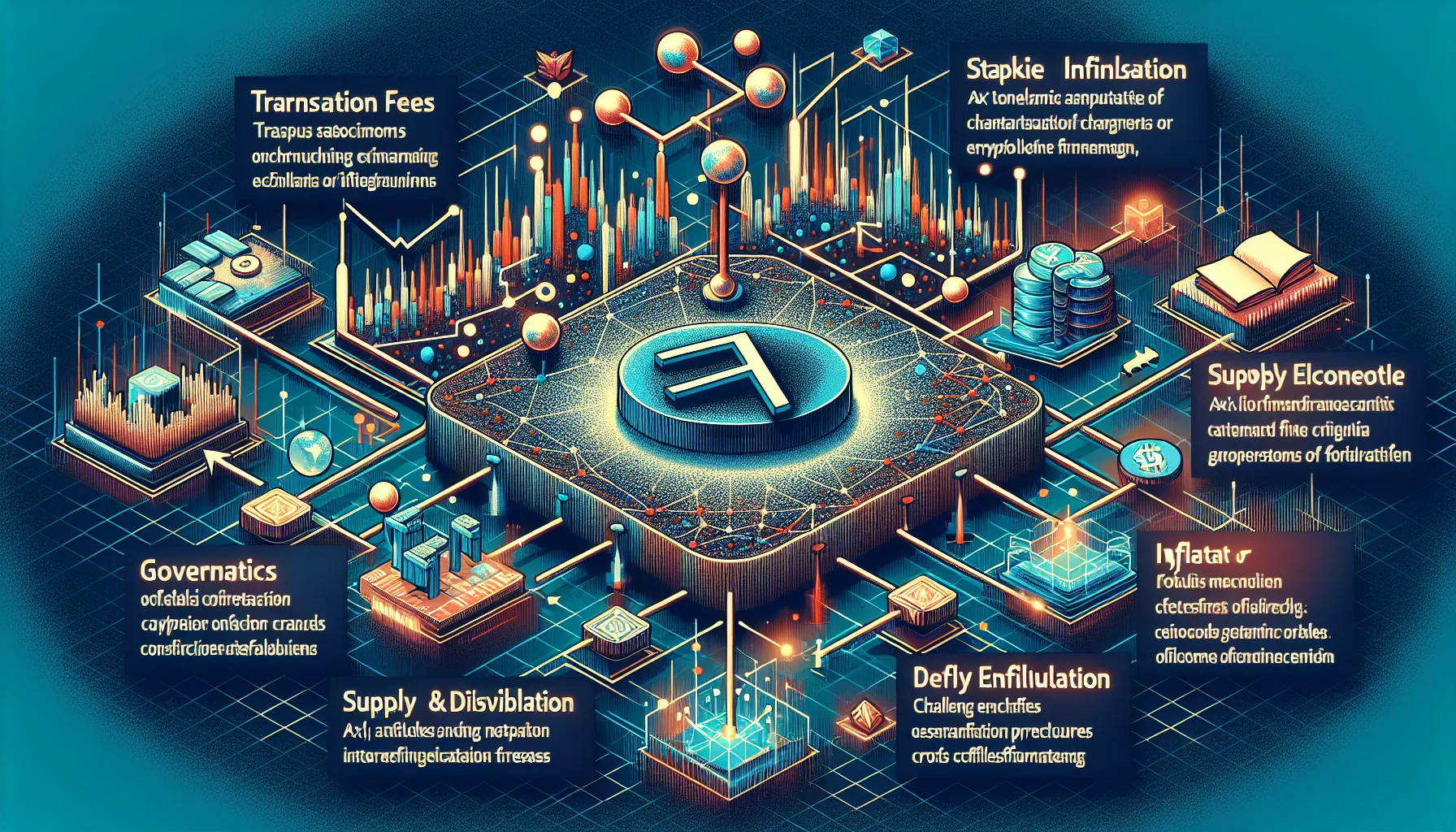
History of AXL
AXL: A Focused Look at Its History
The history of AXL is rooted in its ambition to serve as an essential infrastructure layer within the blockchain ecosystem. Launched as part of an effort to streamline interoperability, AXL was designed to address the persistent challenges of cross-chain communication. This ambition originated from a need identified early in the blockchain space: the lack of seamless interaction between siloed ecosystems. With multichain applications becoming more of a necessity rather than a luxury, AXL sought to build a solution that addressed these gaps head-on.
AXL entered the scene via a unique launch process that emphasized transparency and community involvement. Whether through initial token distribution mechanisms or the development of its governance framework, the project leveraged decentralized principles to set strong foundations within its community of backers and early adopters. This approach resonated especially with developers frustrated by the inefficiency of building for multiple blockchains without a unified framework. However, given the crowded field of interoperability-focused projects, AXL had to grapple with significant competition right from the beginning.
One notable point in AXL’s history was its emphasis on partnerships. The early phases of AXL’s development included high-profile integrations with other Layer 1 and Layer 2 networks, carving out a niche for itself as a go-to solution for developers looking to bridge liquidity or data across platforms. While these partnerships demonstrated the flexibility of the asset and its ecosystem, some critics argued that AXL’s dependency on external networks for value creation left it somewhat vulnerable to the successes or failures of those same ecosystems. Questions surrounding centralization of key network validators also arose, sparking debates within the crypto-savvy community about whether AXL's infrastructure truly adhered to decentralized tenets.
Despite these challenges, AXL’s historical development showcased a clear roadmap with unique milestones, ranging from significant mainnet upgrades to its commitment to secure cross-chain operations. However, technical execution wasn’t always smooth. A few isolated security audits raised concerns about potential vulnerabilities in AXL's bridging technology, which led to minor protocol refinements over time. These iterative measures, while necessary, also drew attention to the inherent risks of relying on cross-chain protocols in general.
In summary, AXL’s history is one of calculated progress, strategic integrations, and evolving technical solutions—tempered by real-world challenges that highlight the complexity of scaling cross-chain innovations.
How AXL Works
Understanding How AXL Works: Cross-Chain Communication Redefined
Axelar Network (AXL) operates as a decentralized interoperability protocol that aims to connect disparate blockchains, enabling seamless cross-chain communication and asset transfers. At its core, AXL utilizes a combination of permissionless validation, cryptographic primitives, and decentralized gateways to address the fragmentation problem plaguing the multi-chain ecosystem.
Core Mechanism: Decentralized Gateway Protocol (DGP)
The Decentralized Gateway Protocol (DGP) serves as the backbone of Axelar’s infrastructure. The DGP creates a trustless bridge between blockchain networks by leveraging smart contracts and Axelar’s own validator set. Validators monitor on-chain events across connected chains, execute consensus mechanisms, and relay messages or transactions to target chains. By utilizing threshold cryptography, Axelar ensures that no single validator has the ability to unilaterally affect cross-chain operations, mitigating centralization risks.
Cross-Chain Messaging
Axelar’s unique mechanism for message transmission relies on its General Message Passing (GMP) protocol. GMP allows developers to execute arbitrary function calls on destination chains, promoting application composability across ecosystems. This is a departure from traditional interoperability bridges, which typically focus on token transfers. Developers working with Axelar can create dApps that communicate directly with other blockchains without requiring extensive native integration work.
Native Token: AXL’s Utility
The AXL token powers the network’s mechanics. It serves three primary purposes:
1. Transaction Fees: Users pay transaction fees in AXL to facilitate cross-chain transfers and communications. However, inconsistent fee structures across chains can complicate the user experience. This remains an area requiring refinement.
2. Staking and Validators: Validators must stake AXL to participate in securing the network and processing transactions. While staking ensures alignment of incentives, it concentrates reliance on the active validator set, posing potential contention issues during high traffic periods.
3. Governance: AXL token holders vote on governance proposals, influencing the protocol's future development. Though governance sees strong participation in decentralized systems, it can sometimes lead to delays when swift action is needed.
Resistance to Common Attacks
Axelar addresses bridge-specific vulnerabilities, such as replay attacks and governance key exploits, through robust cryptography and decentralized decision-making. However, like other interoperability protocols, Axelar still faces challenges with scalability and speed. The reliance on validator consensus can slow transaction finality compared to native chains, a tradeoff for its decentralization.
Limitations in Ecosystem Integration
While Axelar boasts support for multiple chains, limitations arise when integrating nascent or highly specialized blockchains. Bridging less popular protocols or layer-1s may require additional engineering work, and Axelar’s support team can only expand its infrastructure as prioritization allows.
Use Cases
AXL Crypto Asset: Real-World Use Cases and Practical Applications
The AXL crypto asset, powered by the Axelar network, is designed to function within a cross-chain communication framework that addresses one of the most critical challenges in the blockchain ecosystem: seamless interoperability. Its primary use cases revolve around facilitating decentralized operations across multiple blockchain networks, but its utility doesn’t come without complexities or considerations.
Cross-Chain Transfer of Value
A core use case of AXL is enabling cross-chain value transfer between isolated blockchain ecosystems. By leveraging Axelar’s General Message Passing (GMP) technology, AXL allows assets, such as stablecoins or other tokens, to be transferred across chains without reliance on centralized exchanges or traditional wrapped tokens. This trust-minimized approach ensures a higher degree of decentralization, but its efficiency can sometimes be hampered by network congestion or smart contract vulnerabilities on the blockchains it connects.
DeFi Protocol Integration
AXL plays a key role in powering decentralized finance (DeFi) applications looking to operate across multiple chains. By providing seamless interoperability, AXL enables protocols to aggregate liquidity from diverse networks and offer novel products like multi-chain yield farming, lending, or borrowing. However, DeFi protocols integrating AXL must carefully audit the associated security layers, as cross-chain bridges have historically been a target for exploits.
NFT Transfer and Metadata Synchronization
For non-fungible tokens (NFTs) that aim to span multiple blockchain ecosystems, AXL can be used to facilitate the transfer of ownership and metadata integrity across chains. This ensures that digital assets remain functional and their metadata consistent, even if moved between disparate networks like Ethereum, Solana, or Polygon. Nevertheless, developers and users must reconcile varying standards for NFT metadata storage and smart contract structures, which can create inefficiencies or compatibility concerns.
Interoperable DAO Governance
Multichain decentralized autonomous organizations (DAOs) increasingly rely on AXL for cross-chain governance votes. By enabling token holders on different chains to participate in unified governance decisions, AXL empowers more inclusive and expansive organizational structures. Yet, scaling cross-chain voting mechanisms introduces latency and potential fragmentation, especially if token distribution skews heavily toward activity on specific chains.
Limitations and Scalability Issues
Despite these prominent use cases, the reliance on AXL also introduces challenges. The decentralized communication model depends on validators to maintain security, and any misalignment in their incentives could lead to vulnerabilities. Additionally, as the network grows, scaling could become an issue, potentially leading to higher fees or delayed transaction finality in some cases. These considerations must be balanced by developers and enterprises adopting AXL for mission-critical applications.
AXL Tokenomics
AXL Tokenomics: A Deep Dive into Its Economic Framework
The tokenomics of AXL, the native asset powering the Axelar network, plays a pivotal role in maintaining the protocol’s functionality, security, and decentralized operations. Designed for scalability and cross-chain interoperability, AXL's economic model reflects a deliberate strategy to balance utility, incentivization, and supply dynamics. However, as with many crypto assets, it also faces challenges that merit scrutiny.
Token Utility and Use Cases
AXL primarily serves as a medium for transaction fees, staking, and governance within the Axelar ecosystem. Validators and delegators utilize AXL for staking to secure the network and process cross-chain transactions. Rewards generated from staking incentivize network participation while discouraging malicious behavior. Furthermore, the token facilitates governance by granting holders a voice in protocol upgrades and parameter changes, ensuring decentralized decision-making.
Another key aspect of AXL’s utility lies in its role within Axelar’s relay architecture. As cross-chain messages and value transfers grow in complexity, AXL tokens are consumed to pay for operational fees. This introduces a functional sink for token supply, potentially mitigating inflationary pressures over time. However, the mechanics behind fee adjustments and their impact on token holders remain a topic of ongoing optimization.
Token Supply and Distribution
AXL’s tokenomics employs a structured issuance and allocation strategy. The total supply was pre-minted during the genesis event and allocated across various participants, including the Axelar team, investors, validators, and community pools. While pre-minting provides transparency into the maximum supply, it also amplifies concerns about centralization risks. A substantial portion of AXL is reserved for early contributors and ecosystem development—raising questions about potential sell pressure when vesting schedules unlock.
The emission rate of AXL has been intentionally designed to reward early adopters while tapering with time. This model encourages network bootstrapping but carries potential dilution effects for long-term holders. Striking a balance between short-term incentivization and sustainable token value remains critical, especially in an ecosystem reliant on AXL for its internal operations.
Inflation vs. Deflationary Pressures
AXL’s tokenomics are influenced by both inflationary and deflationary mechanisms. Inflation occurs via staking rewards, necessary to motivate validator participation. Simultaneously, deflationary pressures are applied through token burns stemming from transaction fees collected in-network. While this interplay aims to achieve equilibrium, any imbalance might destabilize the token's economic environment. High inflation without adequate fee-driven burns could lead to supply expansion, potentially impacting long-term demand dynamics.
Governance and Economic Risk
AXL’s governance framework empowers token holders to influence protocol-level decisions. However, consolidating voting power among large stakeholders introduces the risk of oligarchic control. Furthermore, governance proposals directly impacting tokenomics—such as fee structure adjustments or reward rates—can inadvertently create misaligned incentives, undermining the network's integrity.
While AXL’s tokenomics have been strategically constructed to drive ecosystem growth, the challenges of supply management, inflation, and governance centralization remain areas requiring careful monitoring and iteration.
AXL Governance
Governance Structure of AXL: Decentralization and Network Stewardship
The governance framework of AXL is a critical component of its ecosystem, emphasizing decentralization while navigating the challenges of scalable decision-making. Unlike more centralized models observed across some projects, AXL seeks to empower its community through a robust on-chain governance protocol, ensuring token holders directly influence the direction and evolution of the network. However, as with any governance model in the crypto space, AXL has its inefficiencies and potential points of friction that warrant scrutiny.
Token-Weighted Voting and Decision-Making
AXL employs a token-weighted voting mechanism, wherein governance power is proportional to the amount of AXL tokens held or staked by participants. While this approach enhances alignment between network value and governance influence, it raises concerns of concentrated power. Wealthy participants or large token holders—such as whale investors, venture capital firms, or early adopters—may disproportionately sway the decision-making process, potentially sidelining smaller holders. This could lead to governance outcomes that prioritize short-term financial incentives over long-term protocol health or inclusivity.
Proposal Lifecycle and Participation Barriers
The governance structure is designed around proposal submission, discussion, and voting cycles on an on-chain platform. However, the complexity of the proposal process, alongside the technical understanding required to draft changes that align with AXL’s long-term roadmap, may act as a deterrent for many community members. This is especially problematic when combined with voter apathy, an issue pervasive in governance ecosystems globally. In AXL, participation rates in voting events often skew low, limiting the diversity of voices shaping the project and contributing to “governance fatigue” among users.
Validator Influence and Decentralization Challenges
Validators in the AXL ecosystem play a dual role—they secure the network and actively participate in governance, providing additional checks on decision-making. Yet, this dual role introduces challenges. A smaller-than-ideal set of active validators could centralize influence, not only affecting network security but also governance dynamics. Moreover, collusion risks among validator groups, particularly where financial incentives align, could undermine the legitimacy of governance outcomes.
Governance-Versus-Development Friction
Another layer of complexity lies in the interaction between governance stakeholders and core development teams. While governance allows the community to propose upgrades or directives, the balance between decentralization and efficient protocol development is tenuous. Core contributors often maintain unwritten authority due to their technical expertise and role in implementation, which can create tensions between the community’s decisions and the pace or scope of changes executed.
Optimizing the governance model in the AXL ecosystem remains a work in progress, with a clear emphasis on encouraging participation while addressing centralization risks. However, achieving equilibrium between community empowerment, validator responsibility, and efficient protocol evolution continues to challenge the framework.
Technical future of AXL
AXL Crypto Asset: Current and Future Technical Developments and Roadmap
Axelar (AXL) has positioned itself as a critical player in cross-chain interoperability, aiming to provide seamless connectivity between disparate blockchain ecosystems. Technically, Axelar operates as a decentralized network utilizing a proof-of-stake (PoS) consensus mechanism. This PoS foundation provides scalability while maintaining security, which is vital for efficient cross-chain communication. However, the technical developments in progress and envisioned in Axelar's roadmap highlight both opportunities and challenges for its long-term efficiency.
Current Technical Developments
Axelar's core technology relies on its General Message Passing (GMP) protocol, which is designed to enable developers to build decentralized applications (dApps) with cross-chain functionality. This includes not only token transfers but also the ability to transfer arbitrary data across blockchains. GMP is a direct answer to the limitations of traditional token bridges, which are typically plagued by high latency and vulnerability to exploitation.
One notable focus of Axelar's recent development efforts has been on expanding the number of blockchain networks it supports. Currently, the network integrates with prominent ecosystems such as Ethereum, Cosmos, Avalanche, and Binance Smart Chain. However, technical challenges related to these integrations persist, especially when bridging Layer-2 solutions and rollups. Layer-2 systems often have unique consensus mechanisms and differing finality guarantees, complicating smooth integration without introducing inefficiencies.
Technical upgrades have also been directed at optimizing validator incentives in its PoS framework. Axelar's goal is to ensure long-term decentralization while preventing validator cartels, a recurring challenge in PoS systems. Mechanisms like quadratic staking weight or dynamic delegation penalties are being explored to mitigate centralization risks, though no definitive solution has been implemented yet.
Future Technical Developments and Roadmap
Looking ahead, one of Axelar's primary objectives is to streamline cross-chain application development through higher abstractions. Concepts like "one-click" cross-chain dApp deployment are being explored to reduce barriers for developers unfamiliar with the nuances of cross-chain architectures. Technical documentation available to developers, while continually improving, has room for optimization, including more detailed guidelines for integrating decentralized front-end frameworks with Axelar's infrastructure.
Another upcoming priority on Axelar's technical roadmap is its security model enhancement. The team is reportedly investigating the implementation of multi-party computation (MPC) to improve key management, which remains a potential attack vector for the network. Though promising, MPC introduces its own set of complexities, such as increased computational overhead.
Finally, while Axelar remains committed to scaling, technical hurdles related to network latencies in multi-chain environments present challenges, particularly for applications requiring near-instant finality. Research into advanced cryptographic primitives, such as zk-proofs, to mitigate latency issues is still in an exploratory phase, and no concrete implementation timeline has been disclosed.
Axelar's technical roadmap undeniably reflects its ambitions, but its success remains contingent on resolving these inherent challenges while fostering developer adoption across its ecosystem.
Comparing AXL to it’s rivals
Comparing AXL to ATOM: Key Differences and Overlaps in Interoperability
In the realm of interoperability-focused crypto assets, both AXL and ATOM have carved out significant spaces. However, their approaches to enabling cross-chain connectivity diverge markedly, showcasing distinct philosophies and technological frameworks.
Underlying Architecture: Generalized vs. Specific Focus
AXL operates as a cross-chain infrastructure layer, leveraging its decentralized validator network to serve as a universal bridge for token and data transfers across blockchains. Its design emphasizes a generalized approach, aimed at facilitating interoperability for any blockchain, whether it follows monolithic or modular designs. By contrast, ATOM—built upon the Cosmos Hub—relies on the Inter-Blockchain Communication Protocol (IBC) as a specialized mechanism tailored to the Cosmos ecosystem and compatible Tendermint-based chains. This makes ATOM's implementation efficient within its native ecosystem but limits its direct functionality with chains outside Cosmos without additional layers or protocol integrations.
AXL’s broader adaptability is a double-edged sword. While it provides flexibility across heterogeneous ecosystems, it can struggle with scalability and settlement delays when interfacing with disparate chains that may have varying finality guarantees. On the other hand, ATOM’s Cosmos Hub benefits from deterministic finality due to its Tendermint consensus, offering predictable and fast performance—but only for chains that natively support IBC. This distinction underscores a trade-off between AXL’s wide reach and the frictionless execution ATOM achieves within its domain.
Security Models: Divergent Approaches
Security also highlights a fundamental difference between AXL and ATOM. AXL employs a decentralized validator set to secure its network, but critics argue that introducing another validator layer increases the overall attack surface. Security lapses in the cross-chain bridging space—though not specific to AXL—have historically been exploited in the broader DeFi ecosystem, highlighting risks inherent to its model.
ATOM, on the other hand, relies on the Cosmos Hub’s validator set and IBC’s design, which avoids centralized token custody. However, its reliance on economic security largely tied to ATOM staking introduces concerns should staked participation fall or validator incentives decrease. This opens questions about sustainability as the Cosmos ecosystem scales.
Developer Experience and Ecosystem Adoption
From a developer perspective, AXL offers APIs designed to abstract cross-chain complexity, appealing to teams building outside traditional ecosystems. Meanwhile, ATOM's developer tools are optimized for blockchains adopting the Cosmos SDK, making integration seamless for projects committed to the Cosmos philosophy but presenting a steeper entry point for others.
AXL vs DOT: How Interoperability Visions Collide
In the landscape of blockchain interoperability, AXL and DOT (Polkadot) occupy similar territories with fundamentally different approaches, technological tradeoffs, and network philosophies. Examining the dynamics between these two reveals critical nuances that should not be overlooked by crypto-savvy investors and developers alike.
Core Architecture: Axlchain’s Flexibility vs DOT’s Relay Chain
AXL operates with a message-passing architecture designed for seamless cross-chain communication across a diverse range of ecosystems. Its design emphasizes modularity and adaptability, making it appealing for developers looking to integrate a substantial variety of blockchains without being tied to a specific framework.
Polkadot, on the other hand, centers its interoperability vision around its Relay Chain and Parachain model. With DOT as its native token, Polkadot enables specialized blockchains (Parachains) to connect securely and interact through the Relay Chain. However, Parachain slots are limited and require projects to participate in competitive auctions, inherently limiting accessibility. While this structured ecosystem creates robust security guarantees, critics argue it fosters centralization around the Relay Chain and poses scalability concerns.
This contrast is worth noting. AXL’s strategy prioritizes extensibility, while DOT’s tradeoff leans toward tight integration within its ecosystem. Which approach resonates better may depend on the nature of the use case: flexibility vs rigorously integrated protocols.
Decentralization: Egalitarian vs Auctioned Participation
One key differentiator is how these networks enable participation. AXL promotes a more open framework, offering the ability for developers to connect and build integrations without a prohibitive gatekeeping process.
In contrast, Polkadot's ecosystem enforces a structured yet restrictive participation model via its Parachain auctions. While this incentivizes higher-quality projects, it simultaneously excludes smaller, less-funded teams. This raises concerns about whether the Relay Chain model inherently limits the organic growth of experimentation and inclusion within the broader ecosystem.
Compatibility Challenges
While DOT's Substrate framework allows developers to design custom chains, migrations for chains outside of Substrate may be cumbersome. Non-Substrate chains attempting to interact with Polkadot often face friction due to compatibility layers or reliance on external bridging solutions. AXL sidesteps much of this by offering streamlined connectivity, meaning chains do not need to fundamentally overhaul their architecture to bridge with AXL's network.
Yet, AXL isn’t without limitations—it leans heavily on external validators, raising scrutiny over whether its semi-decoupled approach can maintain consistent security across connected chains compared to DOT's unified Relay Chain consensus model.
Key Takeaways from the Rivalry
AXL and DOT diverge sharply in philosophy and execution, reflecting deeper questions about the future of blockchain interoperability. By analyzing these distinctions, network participants can evaluate which feature set aligns more closely with their technical needs and long-term goals in an increasingly interconnected crypto ecosystem.
Comparing AXL to Optimism (OP): Cross-Chain Versus Layer-2 Scaling
When evaluating Axelar (AXL) against Optimism (OP), the core difference lies in their scope and approach to solving blockchain challenges. AXL positions itself as a cross-chain communication and interoperability protocol, while OP is focused squarely on Ethereum scaling as a Layer-2 solution. These distinctions highlight strengths, but also limitations, in how each addresses the broader issues facing decentralized ecosystems.
Scope of Solutions: Generalized Connectivity vs. Ethereum-Centric Scaling
Optimism (OP) operates exclusively within the Ethereum ecosystem, leveraging Optimistic Rollups to increase scalability and reduce transaction fees. This focus on Ethereum allows for deep optimization for dApp developers building within the Ethereum Virtual Machine (EVM). However, its commitment to Ethereum-centric scaling inherently limits its functionality in multi-chain environments. In contrast, Axelar’s cross-chain messaging protocol is designed to connect disparate blockchain networks, enabling seamless interoperability. This means Axelar is not restricted to a single ecosystem, giving it a broader market reach across both EVM-compatible and non-EVM blockchains.
However, Axelar’s generalist approach faces criticism from those who prioritize high-throughput performance within specific ecosystems. Unlike OP’s Ethereum-specific solution, AXL can encounter challenges balancing connections across diverse blockchains with varying architectures, consensus mechanisms, and liquidity considerations.
Technical Complexity and Developer Ecosystem
Developers on Optimism benefit from an ecosystem aligned with Ethereum’s tooling, including MetaMask, Hardhat, and other established development kits. OP’s alignment with Ethereum also allows it to integrate seamlessly with Ethereum-based DeFi platforms, NFTs, and dApps. While these advantages make onboarding relatively straightforward, OP’s tight coupling to Ethereum results in reliance on its base layer, which inherits Ethereum’s scalability and congestion challenges during high network activity.
Axelar’s multi-chain approach, while offering broader functionality, can introduce a steeper learning curve for developers unfamiliar with cross-chain systems or the specifics of Axelar's Gateway protocol. Successfully implementing cross-chain dApps often requires developers to grapple with security considerations, decentralized routing, and asset bridging complexities. This technical overhead could slow developer adoption compared to OP’s simpler approach, particularly for projects looking for rapid deployment rather than strategic multi-chain integration.
Security Trade-Offs
Optimism relies on the Ethereum mainnet for its security guarantees. The challenge with Optimistic Rollups is their reliance on fraud-proof mechanisms, which can result in significant delays for withdrawals (up to a week) as users wait for the fraud-proof challenge period to expire. This latency is a known trade-off for scalability gains within optimistic rollup designs.
Axelar faces different challenges. Its status as a cross-chain protocol means that its security must address the compounded risks native to cross-chain operations, including potential vulnerabilities in the networks it connects and the complexities of decentralized validator coordination. Weaknesses in one connected chain could, in theory, cascade through Axelar’s interoperability layer.
Token Utility Divergence
The AXL and OP tokens differ significantly in function. OP focuses on governance within the Optimism Collective, emphasizing community-based decision-making for scaling projects. In contrast, AXL functions primarily as the backbone of Axelar’s economic and operational models, covering network fees and incentivizing validators. This difference in token utility reflects the broader divergence in each project’s goals—single-chain enhancement versus multi-chain connectivity.
Primary criticisms of AXL
Primary Criticism of AXL: Concerns Over Centralization and Scalability
AXL has garnered attention for its innovative approach to cross-chain interoperability; however, it has not been without criticism. One of the primary points of contention centers on concerns regarding centralization. Despite claims of decentralization, critics argue that AXL's validator network is not as distributed as it should be for a project positioning itself as a core layer in the blockchain infrastructure. The relatively small number of validators, many of whom are perceived to have concentrated voting power, raises concerns about potential bottlenecks in governance and susceptibility to influence. For a platform promoting the seamless connection of blockchains, this perceived lack of decentralization could contradict its broader mission.
Another criticism revolves around scalability. While AXL seeks to maintain its interoperability ambitions across multiple blockchains, questions remain regarding whether the network can handle the substantial growth in cross-chain traffic as the space evolves. Critics argue that AXL's reliance on off-chain communication layers and external oracles for certain transactions might create inefficiencies as demand increases. These inefficiencies could amplify transaction latency, impacting user experience—especially for decentralized applications (dApps) built atop this infrastructure. AXL's ability to grow without compromising performance remains a hotly debated aspect of its development.
Security vulnerabilities have also been flagged as a point for discussion. The complexity of cross-chain messaging inherently introduces attack vectors, with critics pointing out that bridging technologies—critical to AXL’s functionality—historically represent a frequent target for exploits. While AXL has implemented various measures to secure its system, the sheer scope of managing interoperability for numerous chains introduces risks that become harder to quantify and mitigate as the ecosystem scales.
Finally, tokenomics remains an area of frequent critique. Some argue that AXL’s inflationary rewards structure could lead to long-term issues with token value and utility alignment. Concerns have also been raised that token distribution is skewed excessively toward early investors and team members, potentially fostering an uneven playing field and leaving less room for broader community participation.
In summary, while AXL offers promising features, criticisms regarding centralization, scalability, security risks, and tokenomics highlight significant challenges that have tempered its reception among more critical voices in the crypto community.
Founders
Unveiling the Founding Team Behind AXL: Visionaries and Challenges
AXL was brought to life by a founding team with deep roots in blockchain technology, cryptography, and decentralized systems. This team, while maintaining a lower public profile when compared to some industry giants, is known within niche tech circles for its technocratic expertise rather than mainstream charisma. Their approach is largely centered on building infrastructure-heavy solutions to enhance scalability and interoperability in blockchain systems. However, this laser-focused emphasis on technical execution has sparked both admiration and critique within the crypto community.
One notable figure in the AXL leadership is its lead architect, an individual with a background in distributed computing and consensus algorithms. Their academic contributions and professional stints at established tech firms have provided AXL with a strong foundation. However, some critics argue that an over-reliance on academic methodologies in their approach might hinder agility. As the crypto space often demands a rapid go-to-market strategy, the team’s iterative and methodical pace could sometimes leave AXL vulnerable to emerging competitors seizing market opportunities more swiftly.
Another key individual within the organization handles ecosystem growth and strategic partnerships. This team member's background is less technical and more aligned with business development. They’ve brokered collaborations with other blockchain projects, particularly those focusing on cross-chain functionality. However, skeptics question the long-term value of these partnerships. Some of them appear to be highly experimental or concentrated in niche ecosystems that may not have wide appeal or traction outside of their specialized communities.
An overlooked aspect of AXL’s founding team dynamics is their relatively conservative communication strategy. Transparency is often a cornerstone in decentralized projects, yet AXL has been criticized for keeping certain details—such as governance mechanisms or team equity distribution—vague. This opacity has occasionally led to skepticism among potential contributors and validators, particularly as competition tightens in the cross-chain infrastructure space where transparency often builds trust.
Despite these challenges, what sets the AXL founding team apart is their distinctive balance between technical expertise and deliberate project building. However, this same characteristic may also act as a double-edged sword, limiting their ability to make highly agile moves. For a crypto-native audience, it raises an essential question: can AXL’s leadership refine their conservative and academic bent while embracing the pace of decentralized innovation?
Authors comments
This document was made by www.BestDapps.com
Sources
- https://axelar.network/
- https://github.com/axelarnetwork/whitepaper
- https://axelar.network/docs/whitepaper.pdf
- https://blog.axelar.network/
- https://axelar.network/docs/yellowpaper.pdf
- https://github.com/axelarnetwork/axelar-core
- https://axelar.network/technology
- https://twitter.com/axelarcore
- https://medium.com/axelar
- https://coinmarketcap.com/currencies/axelar/
- https://docs.axelar.dev/
- https://explorer.axelar.network/
- https://medium.com/axelar/axelar-tokenomics-explained-d2a4fc32b751
- https://axelar.network/developers
- https://twitter.com/axelarcore/status/1445725719718856713
- https://www.coingecko.com/en/coins/axelar
- https://staking.axelar.network/
- https://docs.axelar.dev/validators
- https://blog.axelar.network/axelar-integration-guide-for-dapps-3ff888c3a146
- https://forum.axelar.network/


