History of APE
The History of ApeCoin (APE)
ApeCoin (APE) was launched as the governance and utility token for the ApeCoin DAO, an organization closely tied to the Bored Ape Yacht Club (BAYC) ecosystem. The token was introduced as an ERC-20 asset with the goal of decentralizing decision-making and providing utility within the BAYC and broader Yuga Labs ecosystem. However, its origins, distribution, and governance have been points of debate within the crypto community.
The Token Launch and Distribution Controversy
When ApeCoin debuted, a large portion of the total supply was allocated to insiders, including Yuga Labs, BAYC NFT holders, the ApeCoin DAO treasury, and various other contributors. While airdrops to BAYC and Mutant Ape Yacht Club (MAYC) holders ensured some community involvement, concerns arose regarding centralization due to the significant token portions reserved for insiders and contributors. Critics pointed out that a sizable amount of APE was allocated to organizations and individuals with direct financial interests in the token’s long-term viability, potentially giving them outsized influence over governance decisions.
The Role of the ApeCoin DAO
Governance of ApeCoin was placed in the hands of the ApeCoin DAO, theoretically allowing the community to vote on proposals related to the token's development and ecosystem. However, early governance decisions highlighted concerns over voter participation and the influence of major APE holders. Large stakeholders could exert significant control over proposals, making true decentralization a challenge. The governance framework also raised questions about whether ApeCoin was truly an independent entity or an extension of Yuga Labs, despite Yuga’s public statements distancing itself from direct control over the DAO.
Integration into the Yuga Labs Ecosystem
As ApeCoin became established, its adoption grew within the Yuga Labs metaverse projects, such as Otherside, and in various platforms accepting APE for transactions. However, this tight integration led to debates over whether the token’s success was too reliant on a single ecosystem. The broader crypto community questioned if ApeCoin had substantial utility beyond Yuga Labs’ projects or if it was primarily a reward mechanism within a closed environment.
Volatility and Regulatory Concerns
ApeCoin's history has been marked by high volatility, with significant price swings driven by speculation, NFT market trends, and governance-related developments. Additionally, regulatory scrutiny surrounding governance tokens and their classification raised concerns for APE holders. Uncertainty around how regulators viewed ApeCoin's structure and whether it could be considered a security added a layer of complexity to its adoption and governance decisions.
How APE Works
How ApeCoin (APE) Works: Token Utility, Governance, and Mechanics
ApeCoin (APE) is an ERC-20 token designed for governance and utility within the ApeCoin ecosystem. Functioning on the Ethereum blockchain, it enables decentralized decision-making via the ApeCoin DAO while also acting as a medium of exchange for various applications.
Governance and ApeCoin DAO
APE holders participate in the ApeCoin DAO, a decentralized autonomous organization governing the token’s ecosystem. Voting power is directly proportional to token holdings, allowing holders to influence treasury allocations, ecosystem fund expenditures, and protocol updates. However, concerns persist regarding voting centralization, as significant APE holdings among early adopters and institutional players may disproportionately influence decision-making.
Utility in the Ape Ecosystem
APE is designed to be the primary utility token within the ecosystem, particularly for applications associated with Yuga Labs’ intellectual property, such as metaverse integrations and digital assets. It facilitates transactions, payments, and exclusive access to ecosystem-based content and experiences. However, its acceptance remains largely limited to a closed environment, raising concerns about long-term demand and external adoption.
Staking and Incentives
The staking mechanism is structured to incentivize long-term participation, with rewards distributed based on locked APE holdings. While this model encourages ecosystem engagement, it can also create artificial demand, as users stake primarily for token rewards rather than fundamental usage. Furthermore, staking emissions can contribute to inflationary pressure, potentially diluting existing holders over time.
Ethereum-Based Limitations
As an ERC-20 token, APE operates on Ethereum, inheriting the network’s security and decentralization but also its congestion and fee issues. Gas fees can make transactions inefficient for smaller users, posing a barrier to broader usability. While layer-2 solutions or cross-chain integrations could mitigate these concerns, no native alternative infrastructure currently exists.
Token Distribution and Supply Concerns
APE’s distribution model allocates a significant portion of the total supply to early contributors, which includes Yuga Labs, the DAO treasury, and prominent stakeholders. This allocation has prompted concerns about sell pressure from early recipients once token cliffs expire, potentially impacting market stability. The finite supply design introduces scarcity mechanics, but large token unlock events could create periodic volatility.
Smart Contract and Security Considerations
Like all ERC-20 tokens, APE relies on smart contracts to manage its functionality. While audited smart contracts reduce risk, they remain vulnerable to potential exploits, governance attacks, or contract upgrades that could impact the ecosystem’s integrity. Security remains an ongoing concern, particularly as the token expands its use cases beyond governance.
Use Cases
APE Token Use Cases: Governance, Transactions, and Ecosystem Utility
Governance and DAO Participation
APE token holders can participate in the governance of the ApeCoin DAO. Voting power is proportional to the amount of APE held, allowing users to influence decisions related to ecosystem fund allocations, protocol upgrades, and strategic partnerships. While this governance model provides an avenue for community-driven decisions, concerns exist regarding token concentration. A small number of large holders can exert disproportionate influence, potentially limiting true decentralization.
In-Game and Metaverse Transactions
APE is integrated into various gaming and metaverse applications, serving as a primary currency for in-game assets, upgrades, and exclusive content. Several NFT projects and virtual worlds accept APE, enhancing its utility beyond speculation. However, reliance on external developers to support APE creates an adoption risk—if games or platforms pivot away, demand could diminish.
Payments and Merchant Adoption
Certain merchants and platforms accept APE as a payment method, primarily within crypto-native communities. While this showcases real-world usability, broader merchant adoption remains limited compared to more established cryptocurrencies. Additionally, network fees and price fluctuations introduce friction, making it less practical for everyday transactions.
Staking and Incentive Mechanisms
APE staking enables holders to earn rewards, often through ecosystem-driven incentive programs. These mechanisms encourage long-term holding but also raise concerns about token inflation. If emissions outpace demand, downward price pressure can result, reducing the token's value proposition.
NFT and Community Access
APE functions as an access token for exclusive NFT drops, events, and gated communities tied to the ecosystem. By holding APE, users can gain privileged access to digital assets, further integrating the token into Web3 culture. However, the sustainability of this model depends on continued interest in token-gated experiences. If demand for exclusive access wanes, the utility of APE in this sector could diminish.
Smart Contract and Third-Party Integrations
Developers can integrate APE into their decentralized applications (dApps), smart contracts, or DeFi protocols. While this extensibility broadens its use cases, the token’s long-term success relies on continued third-party adoption. If developers opt for alternative tokens with superior liquidity, lower volatility, or stronger incentives, APE’s role within the broader Web3 ecosystem may weaken.
APE Tokenomics
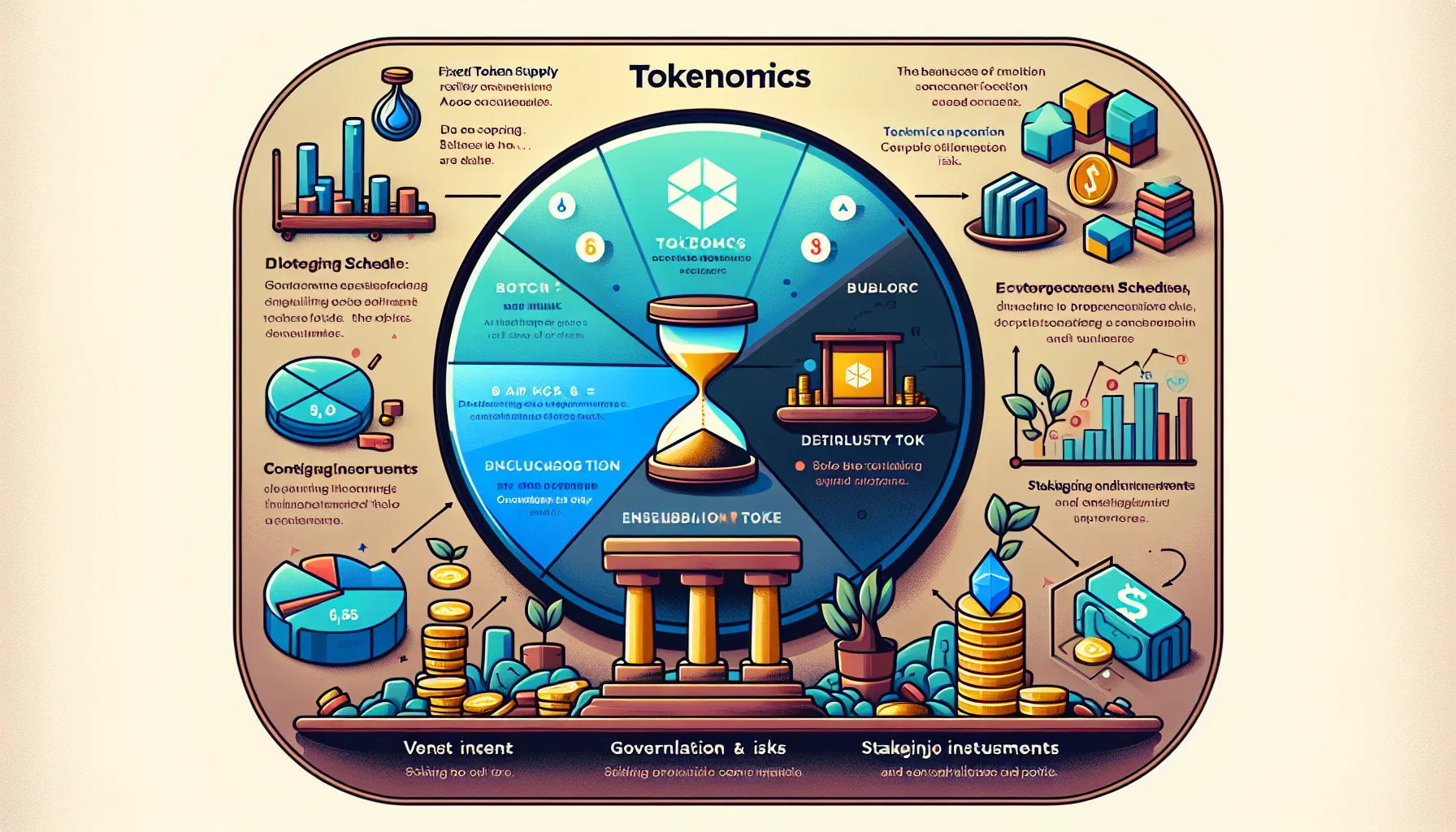
APE Tokenomics: Supply, Distribution, and Utility
Fixed Supply and Allocation
APE has a total supply of 1 billion tokens, with no mechanisms for further issuance or inflation. The allocation follows a structured model, distributing tokens among ecosystem participants, investors, the DAO treasury, and early contributors. A significant portion was reserved for the founders and launch contributors, which raises concerns about centralization risk, particularly given the vesting schedules that periodically release large quantities of tokens into circulation.
Vesting Schedules and Sell Pressure
A large portion of APE’s supply remains locked in structured vesting contracts, unlocking over time. As these tokens gradually enter circulation, they introduce potential sell pressure, particularly from early investors and team allocations. This has historically been a major point of interest for traders monitoring liquidity shifts and potential volatility spikes around unlock dates.
Utility and Governance
APE functions as both a utility and governance token within its ecosystem, giving holders voting rights on key decisions made through the DAO governance structure. However, the concentration of APE among large early holders sometimes raises concerns regarding decentralized governance, as voting outcomes may be heavily influenced by a small subset of participants.
Beyond governance, APE is used as a primary transactional token for certain purchases, access to exclusive content, and incentivization mechanisms within partnered projects. The extent of its actual on-chain usage compared to speculative holding remains a key point of analysis for token holders.
Staking and Emissions
Staking mechanisms have been introduced to incentivize long-term holding, but rewards distribution has also attracted participants looking to farm and subsequently sell rewards, potentially affecting market dynamics. The sustainability of staking incentives long-term is dependent on ecosystem adoption rather than continuous token emissions.
Centralization Concerns
Despite being positioned as a decentralized asset, APE maintains significant holdings among a small number of wallets, including team allocations and treasury reserves. This concentration poses potential risks in the form of governance control, token dumps from early recipients, and overall liquidity effects when large transactions occur.
Conclusion on Tokenomics Risks and Opportunities
The supply structure, governance concentration, and staking incentives all contribute to APE’s tokenomics dynamic. While designed to support an evolving ecosystem, aspects such as vesting unlocks, governance distribution, and reward mechanisms play a pivotal role in APE’s broader market behavior.
APE Governance
APE Governance: Decentralized Decision-Making and Challenges
ApeCoin DAO and Governance Structure
APE governance operates through the ApeCoin DAO, a decentralized autonomous organization where APE holders participate in shaping the ecosystem. Governance relies on a proposal system, with APE holders able to submit, discuss, and vote on Ape Improvement Proposals (AIPs). The process is structured into different stages, including idea submission, community feedback, and formal voting.
Voting power is directly proportional to APE token holdings, meaning larger holders wield more influence. This token-weighted governance model, while common in DAOs, raises concerns about decentralization. Wealth concentration among a small group of holders can lead to governance capture, where influential parties dictate major decisions.
Voting Mechanisms and Proposal Development
ApeCoin DAO uses off-chain voting for proposal discussions (via platforms like Snapshot) and on-chain transactions for treasury management and execution. AIPs cover a broad spectrum, including ecosystem fund allocations, governance structure modifications, and partnerships.
A key aspect of governance is establishing funding priorities. Given the DAO’s controlled treasury, proposals seeking financial support require community approval. This process is designed to foster decentralized decision-making but can also lead to bureaucratic inefficiencies. Complex funding requests or controversial governance changes often face lengthy deliberation, delaying execution.
Centralization Risks and Whale Influence
A major governance concern is the influence of APE whales. Token distribution plays a significant role in determining voting outcomes, and high-profile investors or early adopters can dominate decision-making. While the DAO theoretically allows broad community participation, the reality is that decentralized governance often skews toward centralized control by those with significant holdings.
Another challenge is voter engagement. Many DAOs, including ApeCoin DAO, struggle with governance apathy, where only a small portion of token holders participate in proposals. This lack of engagement can lead to key decisions being made by a limited subset of active users, further amplifying whale influence.
Transparency and Governance Evolution
ApeCoin DAO regularly communicates governance updates through community forums and official channels. Transparency is a priority, yet governance processes can still feel opaque for less active participants. The DAO continuously iterates on its governance model, but structural challenges, including power imbalances and participation barriers, remain persistent concerns.
The long-term success of APE governance depends on balancing decentralization with efficiency, ensuring that decisions are both inclusive and executable while addressing voter turnout and whale control issues.
Technical future of APE
APE Token: Current and Future Technical Developments
Evolution of ApeCoin’s Smart Contract Infrastructure
APE operates as an ERC-20 token on Ethereum, relying on the underlying network’s security and scalability solutions. However, the limitations of Ethereum’s mainnet—such as high gas fees and network congestion—have prompted ongoing discussions around layer-2 scaling solutions. Potential integrations with Optimistic Rollups or ZK-Rollups could reduce transaction costs and improve the efficiency of decentralized applications (dApps) utilizing APE. Any transition to layer-2, however, would require careful smart contract audits to ensure compatibility and security.
Governance Upgrades and DAO Efficiency
ApeCoin DAO governs the token’s ecosystem, yet its governance structure has faced criticism for participation barriers and centralization concerns. Efforts to improve DAO operations include potential modifications to the voting mechanism, such as quadratic voting or delegation models, to enhance participation and reduce governance manipulation by large holders. Additionally, discussions around implementing smart contract-based governance automation could remove reliance on manual execution of DAO decisions.
Cross-Chain Functionality and Bridging Solutions
To improve liquidity and adoption, cross-chain interoperability is a key technical focus. Current bridges enabling APE transfers between Ethereum and other chains present security risks, as bridges remain high-profile targets for exploits. Upcoming developments may involve native cross-chain functionality or partnerships with more secure interoperability protocols, reducing dependency on third-party bridges.
NFT and Metaverse Integration
Given APE’s role within ecosystems like Otherside and interactions with major NFT projects, further technical development is expected in metaverse-related smart contracts. Enhancements may include dynamic NFTs that evolve based on APE token holdings or staking, as well as better integration with virtual worlds. The scalability of these interactions remains a concern, especially as metaverse platforms demand low-latency, high-throughput blockchain solutions.
Tokenomics Adjustments and Smart Contract Revisions
APE’s initial token distribution and unlock schedules have raised concerns about supply concentration and inflationary pressure. Future technical updates could involve governance-driven reconfigurations to token emissions, staking rewards, or vesting schedules. Any such adjustments would require contract modifications, potentially leading to complex migrations or forks if governance decisions lead to significant changes.
Security Audits and Smart Contract Resilience
As exploits remain a persistent challenge in DeFi and NFT ecosystems, ongoing security audits are necessary. The ApeCoin ecosystem’s reliance on various contracts—including staking mechanisms and governance protocols—requires continuous stress testing and third-party audits to identify and patch vulnerabilities before they can be exploited.
Comparing APE to it’s rivals
APE vs. SAND: Ecosystem, Utility, and Adoption Compared
Ecosystem and Development Focus
APE and SAND both serve as utility tokens within their respective metaverse ecosystems, but their developmental trajectories differ significantly. APE is deeply integrated into the Yuga Labs ecosystem, which includes projects like Bored Ape Yacht Club (BAYC) and Otherside. In contrast, SAND powers The Sandbox, a virtual world that emphasizes user-generated content and partnerships with mainstream brands. SAND's ecosystem revolves around enabling users to create, own, and monetize virtual land and assets, whereas APE has broader applications beyond just metaverse interactions, including governance and interoperability within the Yuga Labs universe.
Token Utility and Governance
SAND operates as the primary currency within The Sandbox, facilitating land purchases, asset trades, and staking rewards. Its governance is managed by the Sandbox DAO, allowing holders to participate in development and platform decisions.
APE, on the other hand, is utilized within the ApeCoin DAO, which governs a range of decisions related to the token’s ecosystem expansion. APE also plays a role beyond just metaverse applications, with integrations across Web3 projects, gaming, and NFT-based economies. While both tokens offer governance rights, the extent of DAO control differs, with APE aiming for a more expansive role in guiding future developments across multiple projects.
Adoption and Interoperability
When it comes to real-world adoption and partnerships, both tokens have seen significant integrations, but with different approaches. SAND has focused on collaborations with mainstream brands and celebrities, securing partnerships with names like Atari and Snoop Dogg to increase visibility. Its model emphasizes virtual land ownership and creator-driven content.
APE, benefiting from Yuga Labs' dominance in the NFT space, has gained traction partly due to the influence of BAYC and its holders. The token's adoption extends into gaming, metaverse platforms, and NFT-related applications, creating a highly interconnected ecosystem. However, whereas SAND has established itself as a primary currency for The Sandbox, APE faces challenges in defining a clear utility outside of its immediate ecosystem, raising concerns about long-term token sustainability.
Liquidity and Market Presence
Both tokens enjoy deep liquidity and strong exchange listings, allowing for ease of trading. However, SAND has had a longer presence in the Web3 gaming sector, leading to wider recognition as an established metaverse asset. APE benefits from its association with high-profile NFT projects but still confronts the challenge of differentiating itself from being solely a BAYC-related token.
APE vs. MANA: How the Two Metaverse Tokens Stack Up
The competition between ApeCoin (APE) and Decentraland’s MANA highlights key differences in metaverse strategy, governance, and utility. While both tokens serve as core assets within their respective ecosystems, the way they function and their long-term roles in digital ownership and virtual economies diverge significantly.
Governance and Decentralization
MANA operates within the Decentraland DAO, which governs platform decisions and treasury allocations. While this DAO framework allows for decentralized control, proposals can take time to implement, and participation is often tied to large MANA holdings, potentially skewing decision-making power toward significant stakeholders.
APE, on the other hand, is governed by the ApeCoin DAO, giving token holders influence over ecosystem decisions. However, questions around the centralization of influence have been raised, particularly given its strong ties to Yuga Labs, the entity behind Bored Ape Yacht Club. This has sparked debates on whether APE’s governance is truly decentralized or if major stakeholders exert significant informal control.
Utility Within the Ecosystem
MANA is integral to Decentraland, facilitating purchases of virtual land, in-game assets, and other digital goods. The token’s primary utility is for transactions within this virtual world, but its usage remains largely confined to Decentraland itself. A challenge MANA faces is maintaining sustained user engagement—Decentraland’s user base fluctuates, and the overall adoption of metaverse platforms has been inconsistent.
APE, by contrast, is structured as a utility and governance token that extends beyond a single virtual world. While it is used within Yuga Labs’ metaverse project, Otherside, its broader application in gaming, NFT-related initiatives, and potential interoperability with other platforms gives it a wider scope. However, maintaining real utility outside the Yuga ecosystem remains a challenge, as many integrations are still in development or reliant on broader industry adoption.
NFT and Metaverse Integration
MANA was designed specifically for Decentraland’s virtual environment, where users can buy and sell land parcels as NFTs. However, Decentraland’s visuals and interactivity have been criticized for being relatively outdated compared to newer metaverse projects.
APE benefits from Yuga Labs’ deep connection with the NFT space. With Bored Ape Yacht Club at the forefront of NFT culture, APE has a built-in community of high-value holders. Even so, its long-term success depends on whether Otherside can deliver a functional and compelling metaverse experience that competes with existing platforms.
Token Supply and Economic Model
MANA features a fixed supply model aimed at creating scarcity as adoption grows. While this can be beneficial for long-term tokenomics, Decentraland’s ability to continuously attract users is a key determinant in MANA’s valuation and relevance.
APE’s token emissions include allocations for treasury reserves, ecosystem incentives, and Yuga Labs stakeholders. While this model fosters development, concerns exist about potential selling pressure from large allocations, particularly as more tokens unlock over time.
APE vs. GALA: Comparing Ecosystem Strengths and Weaknesses
Ecosystem and Utility Differences
APE and GALA serve different but overlapping segments within the blockchain gaming and metaverse space. APE functions as the native token for the ApeCoin ecosystem, largely centered around Yuga Labs’ NFT projects and their expanded metaverse ambitions. In contrast, GALA is the primary token within the Gala Games network, a decentralized gaming platform focused on player-owned economies across multiple game titles.
One notable difference is the extent of decentralization. While APE operates under the ApeCoin DAO governance structure, its initial token distribution and ongoing influence from Yuga Labs raise questions about centralization. GALA, despite branding itself as a decentralized gaming ecosystem, maintains a high level of control through Gala Games' internal decision-making processes.
Gaming and Metaverse Integration
Within the gaming sector, GALA holds a significant advantage in terms of existing game offerings. The Gala Games platform has already introduced multiple playable titles with integrated blockchain mechanics, allowing users to own, trade, and monetize in-game assets. This contrasts with APE’s nascent gaming and metaverse presence, which is still in development stages primarily through Otherside, Yuga Labs’ metaverse project.
However, APE benefits from a strong NFT-first approach, leveraging Bored Ape Yacht Club (BAYC) and other high-profile digital assets. This provides cultural and brand value that GALA, despite its game-heavy focus, does not inherently possess.
Tokenomics and Economic Model
GALA operates on a dual-token and node-based ecosystem, where users can run Gala nodes to earn rewards. This structure incentivizes active participation but has also been criticized for its complexity and potential sustainability issues regarding long-term token distribution. APE, in contrast, follows a more traditional ERC-20 model with set governance, staking capabilities, and ecosystem rewards.
Another differentiator is token supply management. GALA does not have a hard-capped total supply, which has led to inflation concerns among investors. APE, with its fixed token supply, avoids unchecked dilution but remains subject to unlock schedules that may impact market dynamics.
Community and Adoption Challenges
Both APE and GALA emphasize community-driven growth, yet their approaches differ. GALA focuses on incentivized gaming participation, while APE leans on DAO governance and NFT ecosystems. GALA’s reliance on game adoption poses challenges, as blockchain gaming struggles with mainstream appeal. APE, while supported by a strong NFT community, faces hurdles in proving long-term utility beyond speculation.
Primary criticisms of APE
Primary Criticism of APE Token
Centralization Concerns in Governance
One of the primary criticisms of APE revolves around its governance structure. While it operates under a decentralized autonomous organization (DAO) model, concerns have been raised about the concentration of voting power among a small group of holders. Large allocations to insiders, early investors, and members of the parent ecosystem create an imbalance that can lead to governance decisions disproportionately favoring specific stakeholders. This raises questions about the true level of decentralization and whether regular holders have meaningful influence over key protocol decisions.
Ecosystem Dependence and Long-Term Utility
APE's utility is closely linked to a specific ecosystem, creating potential risks in terms of long-term relevance. Critics argue that its value proposition is primarily derived from a single NFT collection and its associated projects, limiting broader adoption. If ecosystem expansion stagnates or fails to garner long-term engagement, APE’s role and demand could diminish. Additionally, its use cases outside the immediate ecosystem remain relatively limited compared to other utility tokens that offer multi-platform integrations.
Token Distribution and Market Impact
A significant portion of APE’s token supply was allocated to founders, early contributors, and project insiders. This has raised concerns about sell pressure when large allocations unlock over time. Historical patterns with similar token models suggest that dramatic supply inflations from vested allocations can impact market dynamics, leading to volatility and price suppression. While structured unlock mechanisms aim to mitigate this, skepticism remains regarding how these distributions affect the token's broader stability.
Adoption Beyond Speculation
Another major criticism is that APE’s usage beyond speculative trading remains relatively constrained. While the token is presented as a governance and utility asset, a large portion of activity appears to stem from trading rather than organic adoption. The extent to which APE is actively used within its intended ecosystem—versus being held or traded for speculative purposes—remains a fundamental concern. Without stronger non-trading adoption metrics, it risks being perceived primarily as a speculative asset rather than a functional component within a broader digital economy.
Regulatory Uncertainty
As with many governance and utility tokens, APE operates under an evolving regulatory landscape. Questions surrounding its classification, particularly in jurisdictions with strict securities regulations, introduce potential risks for holders and ecosystem participants. The level of decentralization in its governance structure, combined with insider allocations, could draw regulatory scrutiny if authorities view it through the lens of traditional financial instruments. This uncertainty may influence both institutional and retail adoption moving forward.
Founders
APE Crypto Founding Team: Key Figures Behind the Project
The APE token is closely linked to the broader ApeCoin ecosystem, which originates from the cultural and financial success of the Bored Ape Yacht Club (BAYC). However, the direct founding team behind APE is structured differently from traditional crypto asset launches.
Yuga Labs’ Role and Influence
Yuga Labs, the company behind BAYC, played a crucial role in the ecosystem’s creation, but they do not officially control ApeCoin. Instead, the token’s launch was positioned as an independent initiative. Despite this, Yuga Labs’ influence remains significant, as they granted intellectual property rights to the ApeCoin DAO and continue to be one of the dominant forces shaping the token’s utility and adoption. This has led to ongoing discussions regarding decentralization, as some argue that Yuga Labs still holds substantial sway over APE’s trajectory.
ApeCoin DAO and the Founding Contributors
Instead of a single founding entity, APE was launched through the ApeCoin DAO, a decentralized autonomous organization tasked with governance decisions. The DAO received early backing from notable industry figures and organizations, but its structure has sparked debate. While promoted as a decentralized initiative, key early contributors—such as venture capital firms and insiders—held a large influence over initial token allocations and governance frameworks.
The ApeCoin Foundation
The ApeCoin Foundation was established to handle administrative and operational tasks for the DAO. A key component of this foundation was the initial “Board” composed of notable figures within the crypto and gaming industries. Early board members included prominent names from companies like Animoca Brands and Reddit, adding credibility but also raising questions regarding the extent to which retail participants truly controlled the DAO’s decisions. The board structure was designed with term limits, suggesting an evolving leadership model, but concerns about governance centralization persist.
Early Backers and Venture Capital Involvement
A significant portion of APE’s initial token supply was allocated to early contributors, including venture capital firms and strategic partners. This distribution model has been a point of contention, as it meant that a select group of investors had access to a large number of tokens before public circulation. This dynamic has fueled criticism about potential market influence and whether the tokenomics align with a truly community-driven ethos.
The composition of the founding team and its governance model remains a critical discussion point for those assessing long-term alignment between institutional players, retail investors, and the decentralized ideals that ApeCoin claims to support.
Authors comments
This document was made by www.BestDapps.com
Sources
- https://apecoin.com
- https://apecoin.com/constitution.pdf
- https://github.com/ApeCoinDAO
- https://etherscan.io/token/0x4d224452801aced8b2f0aebe155379bb5d594381
- https://docs.apecoin.com
- https://apecoin.com/governance
- https://forum.apecoin.com
- https://snapshot.org/#/apecoin.eth
- https://coinmarketcap.com/currencies/apecoin
- https://www.coingecko.com/en/coins/apecoin
- https://dune.com/queries/1279573
- https://yuga.com
- https://otherside.xyz
- https://blog.apecoin.com
- https://twitter.com/apecoin
- https://discord.gg/apecoin
- https://www.sec.gov/Archives/edgar/data/1846415/000184641523000005/filename1.htm
- https://defillama.com/protocol/apecoin
- https://analytics.apecoin.com


