History of ANKR
The History of ANKR: From Concept to Implementation
ANKR was introduced in 2017 by a team led by Chandler Song and Ryan Fang, leveraging their combined expertise in blockchain and decentralized infrastructure. The concept originated as a response to the limitations of traditional cloud computing, aiming to create a decentralized alternative that would optimize idle computational resources while reducing costs for end-users. The platform's development coincided with the rise of decentralized finance (DeFi) and the growing need for scalable blockchain infrastructure, situating ANKR at the junction of two major trends in the crypto economy.
Early development efforts focused on building the ANKR protocol's foundational elements, including the proof-of-useful-work (PoUW) model. This innovative consensus mechanism was designed to repurpose excess computational power into productive workloads, addressing inefficiencies in more conventional proof-of-work (PoW) systems. Despite the innovation, the model faced criticism from some within the blockchain community due to concerns about network scalability, adoption hurdles, and the complexity of implementation.
A key milestone in ANKR's timeline was its initial coin offering (ICO), which successfully attracted early investors. Revenue generated from the ICO was pivotal in funding the project's technical development and subsequent networking efforts. However, the ANKR token faced challenges in distinguishing itself amid the ICO boom, an era marked by oversaturation of new blockchain projects and regulatory scrutiny from global financial authorities.
The next phase of ANKR's evolution concentrated on aligning its value proposition with the burgeoning demand for blockchain node hosting services. By simplifying node deployment across multiple chains, ANKR positioned itself as a solutions provider for staking platforms and DeFi applications. Nevertheless, early iterations of the platform were met with technical criticism, particularly concerning uptime reliability and the learning curve for non-technical users. These issues highlighted operational vulnerabilities that the project prioritizes to address in its ongoing updates.
Throughout its journey, ANKR fostered strategic partnerships with key blockchain ecosystems, integrating with various layer-1 and layer-2 protocols to solidify its role in the decentralized cloud services market. Such integrations amplified its functionality but also introduced dependencies that some argue could complicate its future ability to remain fully decentralized. This dual dynamic—growth through partnerships and the risks of centralization—continues to influence ANKR’s trajectory and reception within the crypto community.
In summary, the history of ANKR reflects a balancing act between innovation and pragmatism, demonstrating both technical achievements and challenges inherent in carving a niche within the competitive blockchain landscape.
How ANKR Works
How ANKR Works: Decentralized Node Infrastructure for Web3
ANKR operates as a decentralized blockchain infrastructure provider, delivering a streamlined solution for building, deploying, and interacting with Web3 applications. It achieves this by connecting distributed node operators with developers and enterprises in need of reliable blockchain access. At its core, ANKR's protocol facilitates a trustless and decentralized mechanism for optimizing node deployment, data throughput, and scalability. Here’s a breakdown of how ANKR functions within the Web3 stack:
Staking Infrastructure and Liquid Staking
An integral part of ANKR is its staking infrastructure, designed to simplify validator participation across various proof-of-stake (PoS) networks. ANKR enables token holders to stake their assets through a distributed network of validators without directly maintaining nodes themselves. Additionally, the platform supports liquid staking, which allows users to maintain utility over staked assets by minting derivative tokens. These liquid tokens can be used in DeFi (Decentralized Finance) protocols, enhancing the capital efficiency of locked PoS tokens.
However, the reliance on staking derivatives introduces a potential risk of fragmentation. When multiple derivative tokens exist across different ecosystems, bridging and liquidity issues may arise. Moreover, the reliance on third-party node validators in liquid staking introduces a degree of centralization, which could conflict with the ethos of decentralized finance.
Node Hosting Marketplace
ANKR leverages a marketplace where developers can quickly deploy blockchain nodes without significant hardware overhead. This node-hosting model is built on a distributed network of independent node operators who are financially incentivized through staking rewards. ANKR ensures decentralized access by routing requests across these nodes via its application programming interface (API) and remote procedure call (RPC) services.
While ANKR’s distributed model mitigates single points of failure, the system’s reliance on a relatively small network of active node operators could lead to bottlenecks during periods of high demand. This may reduce reliability for large-scale enterprise use cases.
Multi-Chain Access via ANKR RPCs
ANKR supports multi-chain development by providing RPC endpoints for a wide variety of blockchain networks. This simplifies cross-chain interaction for developers, enabling them to work on dApps (decentralized applications) without needing to configure individual nodes for each supported blockchain. By abstracting this complexity, ANKR positions itself as a critical infrastructural layer in the growing multichain ecosystem.
That said, this reliance on ANKR's RPC layer could create dependencies on third-party infrastructure, which runs counter to the goals of full decentralization. If ANKR’s service is disrupted or becomes centralized over time, developers dependent on this tooling may face availability issues.
Token Utility
The native ANKR token underpins the ecosystem, functioning as a means of payment for accessing services, staking, and rewarding node operators. This utility design ensures alignment between service demand and decentralized network participation. However, tokenomics challenges could surface if demand for the token grows disproportionately or stagnates relative to network use cases, potentially impacting its value stability within the ecosystem.
ANKR combines decentralized infrastructure with ease of use, but its design introduces potential points of concern around scalability and decentralization, particularly as adoption scales.
Use Cases
ANKR: Exploring Its Diverse Use Cases in Decentralized Infrastructure
ANKR has carved out a unique niche within the blockchain ecosystem through its focus on decentralized infrastructure solutions. At its core, ANKR aims to tackle one of the most pressing challenges in the cryptocurrency industry—streamlining access to scalable, cost-effective, and decentralized cloud services for developers, enterprises, and individual users. Below is an in-depth look at how ANKR is utilized across various applications, along with critical considerations surrounding its implementation.
1. Staking Infrastructure for Proof-of-Stake Blockchains
ANKR powers staking-as-a-service solutions by providing an accessible, user-friendly platform that supports staking on multiple PoS blockchains. Validators and node operators leverage ANKR to deploy nodes without having to invest in costly hardware or navigate the technical complexity of maintaining infrastructure. This plays a critical role in democratizing node operation and staking, enabling smaller participants to earn staking rewards. However, the reliance on ANKR’s infrastructure raises concerns about true decentralization, as extensive third-party participation could lead to centralization risks if too many operators depend on ANKR’s ecosystem.
2. Decentralized Cloud Computing for dApps
ANKR offers decentralized cloud services that cater to developers building blockchain-based dApps. By reducing reliance on traditional cloud providers, such as AWS or Google Cloud, ANKR enables dApps to integrate with a more decentralized backend, aligning with Web3 principles. Additionally, ANKR's pay-as-you-go model lowers barriers to entry for early-stage projects. A notable limitation here is the adoption curve—many developers raised on legacy systems may hesitate to migrate to decentralized frameworks due to a lack of comprehensive support or perceived operational risks.
3. Cross-Chain DeFi Liquidity Solutions
ANKR facilitates cross-chain interoperability through its multi-chain framework. This feature is particularly valuable in DeFi ecosystems, where ANKR helps bridge liquidity across different blockchains seamlessly. Its role in unifying fragmented ecosystems makes it critical for enhancing DeFi accessibility and potential yields. That said, the execution of such interoperability solutions places heavy demands on scalable infrastructure, and ANKR's network performance must remain consistent under high transaction volumes to avoid bottlenecks.
4. Decentralized API Marketplace
The ANKR protocol also supports an API marketplace that gives developers access to blockchain data in a decentralized, secure manner. This is a critical use case for projects requiring real-time blockchain statistics without compromising security or reliability. A potential issue, however, is data integrity—ensuring that decentralized data feeds remain accurate and free from manipulation is a challenge that ANKR and similar platforms must continuously address.
ANKR stands as an innovative player in the decentralized infrastructure space, but its reliance on hybrid approaches and ongoing technical challenges highlight the delicate balance required to maintain decentralization, scalability, and user trust.
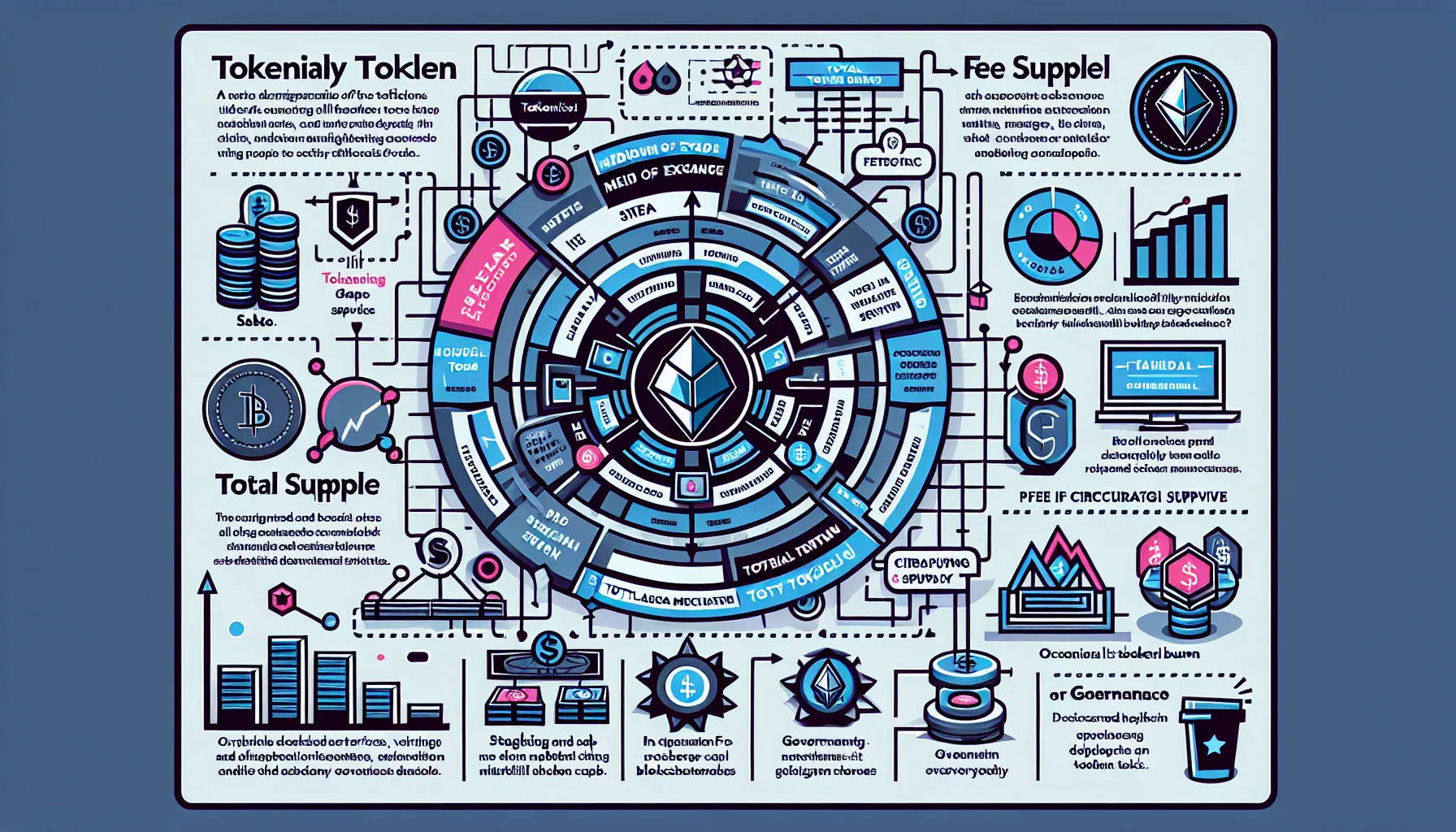
ANKR Tokenomics
ANKR Tokenomics: Unpacking the Economics Behind the Utility
The core of ANKR’s tokenomics architecture lies in its role as the native utility token within the Ankr ecosystem. ANKR serves as both a medium of exchange and an incentive mechanism, designed to power decentralized infrastructure solutions, including staking, API services, and enterprise-grade blockchain hosting. However, like other utility tokens, its functionality and distribution mechanics bring distinct advantages and potential challenges for participants in the crypto space.
Circulating Supply vs. Total Supply Dynamics
One of the noteworthy aspects surrounding ANKR is its circulating supply in relation to its total supply. With a predefined cap, the supply structure ensures no unexpected inflation, a favorable factor when modeling long-term token value. However, it’s critical to evaluate the vesting schedules tied to its early allocations. A significant portion of ANKR tokens was initially distributed to seed investors, team members, and development initiatives. Depending on the frequency and scale at which vested tokens are released, this could amplify sell-side pressure, particularly during periods of diminished market demand.
Fee Models and Utility Sustainability
ANKR’s tokenomics incorporate a fee-based model. Fees are required for accessing staking node services, deploying decentralized applications, and interacting with multi-chain development tools. The model relies on continuous growth in network adoption for the token’s demand to scale. While this creates strong use cases, demand elasticity is contingent on the ecosystem’s ability to attract and retain developers, enterprise clients, and validators. Any stagnation or competition from rival decentralized platforms could directly impact the token’s utility velocity.
Staking and Reward Incentives
The ability to stake ANKR within the protocol is central to its token utility. By delegating ANKR, users contribute to node security and reliability while earning yield in return. Nevertheless, staking APYs (annual percentage yields) fluctuate depending on overall network participation and staking pool saturation. A challenge arises when lucrative staking opportunities in other blockchain ecosystems divert attention away from ANKR staking, reducing its appeal among yield-seekers. Furthermore, high inflationary reward mechanisms could dilute token value if network participation doesn’t scale proportionally with issuance.
Governance and Participation
ANKR also incorporates governance functionality, where token holders can propose and vote on network upgrades or directional changes. While this democratizes decision-making, effective governance depends on the active participation of token holders. Low turnout during votes can concentrate decision-making power in the hands of a few large stakeholders, reducing decentralization—a critical risk factor common to many governance-based blockchain projects.
Token Burn and Deflationary Pressure
ANKR tokenomics also include occasional token burning mechanisms to reduce supply, enhancing deflationary pressure. While this may benefit long-term scarcity, the sporadic and minimal nature of burns means their impact on supply dynamics remains subdued when compared to demand-driven token movements.
ANKR Governance
Governance of ANKR: Decentralization and Decision-Making Frameworks
ANKR operates within a governance framework designed to facilitate participation and decision-making within its ecosystem. As a project focusing on decentralized infrastructure and Web3 enablement, ANKR incorporates governance mechanisms that aim to balance community engagement, token-holder influence, and technical development priorities. However, like any crypto asset governance model, its framework presents unique opportunities and challenges.
Token-Based Governance Structure
ANKR governance is primarily token-centric, where ANKR token holders have a say in shaping network policies, upgrades, and other critical decisions affecting the protocol. This approach empowers stakeholders who actively hold or stake ANKR tokens, aligning governance influence with financial incentives. Token holders can propose improvements or vote on existing proposals through a formalized process, which is critical for maintaining transparency and decentralization.
While token-based governance enhances inclusivity, it is not without its limitations. Concentration of voting power among large token holders or institutional entities can skew decision-making processes. Critics of ANKR’s governance structure often point out this potential for centralization, a common issue across crypto projects with similar frameworks.
Community Governance Participation
The ANKR ecosystem actively encourages participation from its broader community, including stakers, developers, and node operators. By integrating individuals from various roles, the protocol aims to maintain a comprehensive decision-making process that reflects the needs of its users and contributors. Governance proposals often encompass actions such as protocol enhancements, fee adjustments, or strategic partnerships.
However, achieving robust community participation remains a consistent challenge. Due to the complexity of technical proposals and the time commitment required, many token holders disengage from governance activities. As a result, participation may tend to cluster around a smaller group of highly engaged individuals or organizations.
Staking and Governance Synergy
ANKR’s staking model is deeply interwoven with its governance processes. By staking ANKR tokens, users not only earn rewards but also gain governance privileges, creating an intrinsic link between economic and participatory incentives. This connection provides a mechanism for ensuring active involvement and network security alignment. Nonetheless, the barrier to entry for meaningful staking participation may deter smaller stakeholders, potentially limiting the diversity of governance contributors.
Smart Contract-Based Governance Risks
ANKR’s governance operations leverage smart contracts to ensure automation and transparency. While this adds efficiency and reduces the potential for human tampering, governance reliant on smart contracts is prone to vulnerabilities. Smart contract risks, such as exploitation and bugs, could disrupt governance proceedings or undermine trust within the ecosystem.
In summary, the governance of ANKR presents a decentralized model with both strengths and weaknesses. Balancing token-based power with wider community engagement will remain a fundamental consideration as the protocol evolves.
Technical future of ANKR
ANKR: Current and Future Technical Developments and Roadmap
Advanced Staking Solutions With Liquid Staking Expansion
ANKR has made significant strides in its liquid staking protocols, positioning itself as a leader in decentralized staking infrastructure. The introduction of multi-chain staking features allows users to stake assets across various blockchains, broadening its reach and driving adoption among developers and end-users. However, challenges remain with fragmented liquidity across smaller ecosystems. The project aims to scale its integration with newer PoS networks to capture additional market share, though interoperability hurdles still present an obstacle.
Continued Growth of RPC Node Infrastructure
ANKR’s focus on providing scalable Remote Procedure Call (RPC) endpoint services continues to evolve. By supporting blockchain developers with lower-latency and decentralized API endpoints, the network targets improved speed and decentralization. Current developments include auto-scaling RPC services capable of supporting high-traffic networks during peak congestion. However, maintaining these improvements without compromising the decentralization aspect is a pressing issue, as centralized node reliance could risk central points of failure.
Advancements in Decentralized Cloud Infrastructure
ANKR’s decentralized cloud platform enhances the hosting of dApps, offering greater control and reliability for developers. The current focus is on the deployment of decentralized Kubernetes clusters, aimed at simplifying containerized application management. Future iterations reportedly plan to introduce AI-driven workload optimizations, which could strengthen the competitiveness of ANKR’s platform against traditional centralized cloud services. That said, technology adoption remains conditional on market education around decentralized cloud utilities.
Focus Areas for Cross-Chain Strategy
ANKR has placed heavy emphasis on interoperability through multi-chain capabilities facilitated by cross-chain bridges. The technical roadmap prioritizes enhancing security for bridges, an area frequently targeted by exploits in the broader DeFi ecosystem. While its collaborations with prominent blockchain networks provide strong growth opportunities, navigating scalability challenges inherent to bridges presents a notable technical obstacle.
Potential Roadblocks to Development
Despite the technical ambition of the roadmap, the challenge remains in balancing decentralization with scalability. The reliance on partnerships for ecosystem expansion might hinder independent innovation if ANKR becomes overly dependent on external support. Additionally, the risk of network overload amidst expanding demand for RPC endpoints and staking services has not been fully addressed in upcoming developments. Proactively solving these capacity issues will play a crucial role in ANKR’s ability to meet its goals.
Comparing ANKR to it’s rivals
ANKR vs. FTM: A Detailed Comparison of Blockchain Infrastructure
The blockchain ecosystem is evolving rapidly, and both ANKR and FTM have carved out significant niches, albeit taking fundamentally different approaches. While ANKR positions itself as a decentralized infrastructure provider focusing on Web3, staking, and node hosting services, FTM (Fantom) primarily operates as a high-performance Layer 1 blockchain targeting fast transaction finality and scalability. Below is a breakdown of how ANKR stacks up against FTM, focusing on key technical and operational differences.
Core Specializations: Decentralized Nodes vs. Layer 1 Blockchain
ANKR’s primary value proposition lies in decentralized node infrastructure and staking-as-a-service, empowering developers and institutional stakeholders to seamlessly integrate blockchain technology. Its multi-chain node hosting services cater to over 20 blockchains, making it blockchain-agnostic and widely interoperable. By contrast, FTM operates as a standalone Layer 1 blockchain focused exclusively on low-latency, high-throughput decentralized applications (dApps). This intrinsic difference highlights how ANKR functions more as a Web3 facilitator, while FTM leans toward being a single-ecosystem solution.
Performance and Scalability
FTM’s Lachesis protocol, its Directed Acyclic Graph (DAG)-based consensus algorithm, enables near-instant finality and transaction confirmation times of one to two seconds. This provides FTM with a distinct scalability edge for decentralized finance (DeFi) and high-frequency dApps. Comparatively, ANKR does not maintain a standalone blockchain network but instead optimizes the performance of existing blockchains by providing easily deployable validator nodes and RPC (Remote Procedure Call) gateways. While scalable infrastructure matters to ANKR, its performance is tied to the blockchains it supports rather than being a defining feature of its own ecosystem.
Decentralization Trade-Offs
ANKR prides itself on decentralization by distributing its node hosting services across a global network. While this ensures reliability, critics have raised concerns about its potential reliance on centralized cloud providers like AWS, which might undermine true decentralization. Meanwhile, FTM utilizes a more centralized validator set due to its Proof-of-Stake mechanism, requiring a minimum stake to run validators, potentially limiting network participation and decentralization.
Ecosystem Breadth
ANKR’s ecosystem focuses heavily on developer tooling, staking rewards, and enterprise-grade solutions, making it an infrastructure companion rather than a direct competitor to most Layer 1 chains. FTM, on the other hand, concentrates on building its DeFi and NFT ecosystem, with key applications directly leveraging its blockchain. This differentiation further reflects the divergence in target audiences: ANKR appeals to blockchain-agnostic developers, whereas FTM focuses on end-users within its own ecosystem.
Smart Contract Integration
As ANKR is not a smart contract platform, its strengths lie in enhancing access to platforms that do support such functionality. Conversely, FTM’s Ethereum Virtual Machine (EVM) compatibility makes it a direct competitor for other smart contract-enabled blockchains. ANKR’s neutrality could limit its ability to dominate any one ecosystem, whereas FTM’s tight integration with its smart contract framework enhances its appeal for dApp deployment.
In conclusion, ANKR and FTM address different blockchain use cases, and their inherent trade-offs reflect this. While ANKR excels in infrastructure versatility, FTM’s edge lies in its Layer 1 efficiency and speed. Understanding these differences is critical for those evaluating the role these projects play within the blockchain landscape.
ANKR vs. MATIC: Comparing DeFi Infrastructure and Scaling Solutions
When examining the rivalry between ANKR and MATIC, it’s critical to dissect how these two projects differ in terms of technical focus, scalability approaches, and overall ecosystem compatibility in the rapidly advancing blockchain space. While both cater to developers and aim to enhance the Ethereum ecosystem, their methodologies and target audiences provide a clear basis for comparison.
Layer-2 vs. Decentralized Web Services Focus
MATIC, also known as Polygon, primarily operates as a Layer-2 solution for Ethereum, designed to address network congestion and high transaction costs that plague Ethereum's base layer. It accomplishes this via sidechains, rollups, and zk-based scaling technologies aimed at optimizing throughput for dApps and smart contracts. ANKR, on the other hand, focuses on decentralized web services (DWS) and infrastructure for blockchain nodes, staking, and DeFi protocols. While Polygon is deeply entrenched in Ethereum scaling, ANKR ties its utility to multi-chain capabilities, targeting a more generalized infrastructure solution that caters to developers across a range of Layer-1 blockchains.
Developer Ecosystem: Specialization vs. Generalization
The divergence between ANKR and MATIC becomes apparent when analyzing each network's developer-first offerings. MATIC’s ecosystem is highly specialized; it appeals to Ethereum developers seeking a seamless way to scale applications while leveraging its low-latency and cost-efficient environment. This specialization means MATIC is heavily reliant on the success and expansion of Ethereum’s ecosystem, making it more concentrated in scope. ANKR, by contrast, provides generalized services such as node hosting, staking-as-a-service, and multi-chain API integrations. While this multi-chain approach broadens ANKR’s domain, one could argue it lacks the laser-focus MATIC showcases in tackling Ethereum's specific scaling issues.
Network Limitations and Adoption Challenges
Another key differentiation lies in user adoption and network bottlenecks. Polygon’s scaling tech has been praised for significantly reducing fees and boosting transaction speeds. However, critics argue that it introduces certain centralization risks, especially in its sidechain configurations. ANKR, while decentralization-focused in its ethos, has faced questions about reliability and user trust in its node infrastructure services, especially as the industry demands increasingly robust and censorship-resistant nodes. Additionally, MATIC’s deeper pool of layer-2 competitors might dilute its unique position, while ANKR’s adoption in the fragmented infrastructure space poses its own scalability hurdles.
Token Utility and Interoperability
MATIC's token utility is straightforward, primarily revolving around governance, staking, and fee payments within its ecosystem. ANKR's token, however, serves as a medium for payments across its DWS offerings and plays a role in incentivizing node contributors. While MATIC’s token utility thrives in a relatively confined ecosystem, ANKR’s adaptability enables interoperability but may dilute the token's perceived value in contrast to MATIC’s clear use-case dominance.
ANKR vs. SOL: Evaluating Decentralized Infrastructure and Layer-1 Efficiency
When comparing ANKR with Solana (SOL), the conversation shifts toward key differences in infrastructure, consensus mechanisms, and scalability strategy. While both projects aim to optimize throughput and network efficiency, their approaches cater to different use cases, creating areas of distinct divergence.
Scalability and Performance
Solana’s architecture prioritizes raw transaction throughput, utilizing its Proof-of-History (PoH) consensus mechanism alongside Proof-of-Stake (PoS) to process a significantly higher number of transactions per second (TPS) compared to most networks. This design has allowed Solana to cater primarily to high-speed DeFi applications and NFT ecosystems. ANKR, on the other hand, operates as a decentralized Web3 infrastructure provider, focusing on offering accessible APIs, RPC nodes, staking services, and multi-chain solutions. While ANKR’s infrastructure enhances the usability and decentralization of various blockchain ecosystems, it lacks a direct focus on creating its own highly-scalable, standalone Layer-1 blockchain.
However, Solana’s high TPS often comes with trade-offs in decentralization. Its reliance on validator nodes requiring substantial hardware has sparked criticisms around centralization risks, potentially making it less appealing for Web3 purists. ANKR, being chain-agnostic, avoids these centralization accusations by offering decentralized infrastructure services spread across multiple networks without being tied to a single Layer-1 protocol.
Network Reliability
Another area worth examining is network stability. Solana has been plagued with intermittent outages and performance bottlenecks caused by its aggressive scalability design. This raises questions about its ability to handle long-term reliability under increasing usage. ANKR sidesteps this issue by not directly hosting dApps but rather supporting and optimizing infrastructure for Layer-1 and Layer-2 protocols. However, delegating reliability concerns onto other blockchains means ANKR's strength hinges on the standards set by the chains it supports.
Development Focus
The divergence in development approaches is also apparent. Solana is developer-friendly with its Rust programming framework, enabling high-speed dApp deployment but limiting accessibility to developers unfamiliar with Rust. ANKR counters this by standardizing multi-chain development access, allowing broader integration without forcing developers to commit to a specific programming ecosystem.
Tokenomics and Incentives
While Solana’s token (SOL) powers its Layer-1 network, fueling both transaction validation and staking rewards, ANKR’s token incentivizes node providers, decentralizing the infrastructure ecosystem. However, ANKR’s reliance on external blockchain adoption for growth potentially puts it at the mercy of those underlying chains, whereas Solana’s blockchain benefits from self-contained dynamics.
In conclusion, comparing ANKR and SOL sheds light on trade-offs between scalability, decentralization, and ecosystem breadth, showcasing distinct project strategies and limitations.
Primary criticisms of ANKR
Key Criticisms of ANKR: Challenges Facing the Decentralized Web3 Infrastructure Provider
-
Centralization Concerns in Node Hosting
A recurring criticism of ANKR revolves around its node hosting services, which some argue lack sufficient decentralization. While ANKR aims to provide reliable and scalable infrastructure for Web3 projects, skeptics point out that it depends on centralized cloud providers like AWS, Google Cloud, or others. This reliance means that a substantial portion of the network's operations can be disrupted if these centralized entities experience outages or other issues. Critics view this as counterintuitive for a project rooted in blockchain ideals of decentralization, presenting potential single points of failure. -
Potential for Staking Centralization
ANKR's liquid staking services, though popular, have attracted scrutiny for fostering staking centralization. By reducing the barrier to entry for smaller participants and offering flexible staking options, ANKR has amassed significant control over pooled assets. This raises concerns about the concentration of delegated assets within their platform, which could lead to governance centralization in Proof-of-Stake (PoS) ecosystems. Depending on how ANKR's voting power aggregates in various ecosystems, this could impact protocol-level decision-making, reducing the influence of smaller participants. -
Competition in the Infrastructure Services Market
Another point of contention is ANKR's positioning in the highly competitive blockchain infrastructure space. Its core offerings, such as RPC services, staking solutions, and dApp hosting, face stiff competition from established players and newer entrants. Critics argue that ANKR has struggled to establish a clear differentiator beyond pricing. Combined with thin margins on infrastructure services, this could hamper long-term sustainability unless ANKR rapidly scales its ecosystem or innovates with unique offerings. Community members and analysts express concern over whether ANKR provides enough of a competitive edge to maintain relevance in an evolving space. -
Token Utility vs. Speculation
A frequently mentioned challenge is the unclear value framework of the ANKR token itself. While it is supposedly designed to facilitate payments for services like staking and API requests, some question whether its adoption as a utility token aligns with actual demand. The disconnect between the project's ecosystem needs and speculative trading activity has led to skepticism about whether tokenomics are designed to benefit users or primarily incentivize traders. This perception erodes trust for some within the crypto community, particularly those who value projects with transparent and well-aligned token economics. -
Potential Regulatory Risks
ANKR’s involvement in staking, liquid staking, and other decentralized finance (DeFi)-adjacent activities exposes it to uncertain regulatory environments. Some critics highlight the inherent risks of regulatory crackdowns, particularly in jurisdictions with ambiguous crypto regulations. As ANKR grows its footprint, these concerns amplify, particularly for users who fear disruptions to staking services or taxation frameworks that could negatively impact their earned rewards. -
Overextension Across Multiple Ecosystems
Finally, ANKR's strategy of operating across multiple ecosystems has been viewed as overly ambitious. The project supports Ethereum, Binance Smart Chain, Polkadot, and many others, but critics argue this diversification comes at the cost of focus. Instead of mastering a core specialization within a few key ecosystems, ANKR’s broad approach risks diluting its resources and delivering inconsistent performance across chains. Critics emphasize the need for concentration over fragmentation to achieve meaningful market impact and maintain infrastructure reliability.
Founders
The Founding Team Behind ANKR: Visionaries and Challenges
Ankr was founded in 2017 by Chandler Song, Ryan Fang, and Stanley Wu, a trio with backgrounds spanning blockchain technology, cloud computing, and traditional finance. With the shared goal of decentralizing the internet and enabling affordable blockchain node hosting, they set out to create a unique infrastructure project. However, like most crypto initiatives, their journey involved both innovation and challenges.
Chandler Song: The Connector of Worlds
Chandler Song, Ankr’s CEO, is a graduate of the University of California, Berkeley, where he studied Electrical Engineering and Computer Science. Notably, he was introduced to blockchain concepts early in his career through Amazon Web Services (AWS), where he collaborated with Stanley Wu. Song has long been recognized for his ability to translate blockchain technology into scalable business applications. While his leadership is often praised for driving Ankr’s partnerships and positioning the platform as a key player in decentralized web infrastructure, critics argue that his ambitious vision sometimes stretches the project’s resources thin, potentially leading to focus issues.
Stanley Wu: The Technical Backbone
Stanley Wu, Ankr’s CTO and a former senior software engineer at AWS, is instrumental in designing the platform’s technical framework. Wu’s deep expertise in distributed systems and cloud services laid the foundation for Ankr’s innovative approach to leveraging unused cloud infrastructure resources. While his technical leadership has built a reliable product core, skeptics within the crypto community have raised questions about how effectively Ankr can scale under network strain. For example, reliability concerns were voiced after instances of node performance issues, suggesting room for improvement in infrastructure resilience.
Ryan Fang: Financial Strategist with a Traditional Mindset
Ryan Fang, CFO of Ankr and a former investment banker at Morgan Stanley, brings a traditional finance perspective to the project. Fang’s role has been crucial in managing funding rounds and securing capital to sustain the platform's growth. However, some observers point out that Fang’s background in finance has not always aligned seamlessly with the fast-paced, innovation-driven ethos of the crypto space. This dichotomy may occasionally create tension in balancing operational pragmatism with technological experimentation.
Balancing Strengths and Weaknesses
The Ankr founding team possesses a unique mix of technical expertise, entrepreneurial drive, and financial stewardship. However, their varied skill sets also come with challenges—such as aligning long-term decentralized goals with immediate business feasibility. As a result, the project’s community remains divided on whether the team’s centralized decision-making structure fully embodies the ethos of decentralized systems that many blockchain advocates champion.
Authors comments
This document was made by www.BestDapps.com
Sources
- https://www.ankr.com/
- https://www.ankr.com/whitepaper/
- https://github.com/ankr-network
- https://docs.ankr.com/
- https://medium.com/ankr-network
- https://coinmarketcap.com/currencies/ankr/
- https://etherscan.io/token/0x8290333cef9e6d528dd5618fb97a76f268f3edd4
- https://www.coingecko.com/en/coins/ankr
- https://blog.ankr.com/
- https://cryptoslate.com/coins/ankr/
- https://defillama.com/protocol/ankr
- https://twitter.com/ankr
- https://bscscan.com/token/0xf307910a4c7bbc79691fd374889b36d8531b08e3
- https://forum.ankr.com/
- https://www.reddit.com/r/Ankr/
- https://staking.ankr.com/
- https://www.linkedin.com/company/ankrofficial/
- https://academy.binance.com/en/articles/what-is-ankr-ankr


