History of ANIKI
The History of ANIKI: From Niche Concept to Controversial Blockchain Asset
ANIKI’s journey began as a niche, community-driven experiment that sought to redefine the concept of decentralized digital ownership. Its origins trace back to a small team of pseudonymous developers who leveraged an obscure Layer 2 scaling solution, aiming to create a token that prioritized network efficiency and community governance. What initially set ANIKI apart was its unique focus on fostering user-generated utility for the token, encouraging developers and holders to create applications and services around it. This, however, presented both opportunities and challenges that remain intrinsic to its identity.
One of the earliest milestones in ANIKI's history was its initial token airdrop, a mechanism employed to ensure broad token distribution without an exclusive reliance on speculative Initial Coin Offerings (ICOs). While innovative at the time, this decision had consequences. The airdrop structure inadvertently gave rise to “dust wallets”—inactive wallets holding small amounts of ANIKI due to widespread but apathetic claiming activity. This diluted the network’s active participation metrics and triggered debates within the community over how to incentivize long-term engagement. Some argue that this legacy of dormant wallets has created complexities for on-chain analytics and tokenomics calculations.
As ANIKI grew in adoption, its early reliance on a specialized Layer 2 solution garnered mixed reception. While the team emphasized scalability and low transaction costs, critics pointed out centralization concerns tied to its validators. This issue remains a point of contention among crypto purists who advocate for absolutely trustless systems. The project’s developers responded by gradually introducing a more decentralized governance mechanism that gave utility-driven voting power to active participants. Still, detractors argue that the pace of decentralization has been slower than expected, leaving the network vulnerable to centralized influence by early, high-stake participants.
Another hallmark in ANIKI’s history was the creation of “Aniki Nodes,” a community-layer infrastructure aimed at bolstering the asset's secondary use cases, such as decentralized identity and digital asset issuance. While this innovation gave ANIKI considerable attention, the technical complexity of node operation alienated casual users. This dichotomy led to stratification within the community—between tech-savvy node operators who bolstered network performance and non-technical holders who struggled to navigate the asset's ecosystem.
Finally, critics have pointed to the lack of cohesive branding during ANIKI’s early stages as a barrier to mainstream recognition. The development team placed heavy emphasis on protocol functionality while leaving marketing to organic community efforts. This resulted in an asset that, for a time, was better appreciated within insular crypto circles than in broader blockchain adoption narratives.
How ANIKI Works
How ANIKI Works: Mechanisms and Technical Overview
ANIKI operates as a next-generation decentralized asset underpinned by a unique consensus mechanism designed to prioritize both scalability and network security. Unlike conventional Proof of Work (PoW) systems, ANIKI leverages a Proof of Stake (PoS)-hybrid architecture that integrates a dual-layer verification framework. This setup addresses vulnerabilities common in single-layer approaches, such as chain reorganizations and dominant validator centralization risks.
At its core, ANIKI utilizes adaptive staking tiers, which include dynamic delegation incentives for smaller holders and a penalty mechanism for malicious validators. These adaptive tiers are calibrated to reduce the risk of network stagnation caused by staking monopolies—an issue that plagues many PoS-based assets. Stakers are required to lock their assets for a minimum bonding period, during which their stakes are subject to slashing if they fail to perform their duties or engage in network attacks.
The underlying smart contract infrastructure on ANIKI is EVM-compatible (Ethereum Virtual Machine), enabling frictionless interoperability with a wide range of decentralized applications (dApps). Developers building on ANIKI benefit from enhanced modularity in smart contracts, where templates and standard libraries allow for faster deployment. However, this modularity has also raised security concerns, as vulnerabilities in pre-set modules could allow exploit vectors to propagate across multiple contracts.
ANIKI adopts a sharded execution model, which splits the blockchain into manageable segments, significantly boosting transaction throughput without sacrificing decentralization. This model is reinforced by a cross-shard communication protocol, ensuring seamless data integrity between shards. Critics of this approach, however, argue that cross-shard message passing introduces complexity that could, under certain stress conditions, hinder synchronization, raising the potential for bottlenecks during sustained network activity.
Another notable aspect of ANIKI is its multi-asset functionality. Users can mint and manage custom tokens within the ecosystem, but this functionality is not without its trade-offs. Increased tokenization, particularly without rigorous auditing requirements, could lead to a proliferation of lower-quality or outright malicious tokens, adding security risks to the ecosystem.
Overall, ANIKI’s technical intricacies and ambitious features appeal to advanced crypto users, but the system’s layered complexity necessitates an equally complex approach to network monitoring, security audits, and governance adjustments.
Use Cases
Use Cases of ANIKI: Beyond Standard Crypto Applications
ANIKI, as a blockchain-based crypto asset, is carving out specialized use cases within decentralized ecosystems. Its architecture and functionality enable unique applications, distinguishing it from conventional tokens while also highlighting specific challenges that accompany its adoption. Below, we delve into the primary use cases of ANIKI and their implications.
1. Governance and Community Engagement
ANIKI token holders are empowered to participate in DAO-driven governance models. The token’s design facilitates decentralized voting mechanisms, enabling users to propose, deliberate, and vote on protocol upgrades, community initiatives, or treasury allocations. While this ensures active community involvement, adoption challenges emerge due to potential centralization risks if tokens are unevenly distributed. Additionally, voter apathy, a common issue in decentralized governance, may affect the effectiveness of ANIKI-driven decision-making processes.
2. Staking for Rewards and Utility
ANIKI leverages staking mechanisms that reward participants for securing its ecosystem. Token holders can lock their ANIKI to earn yields, incentivizing loyalty while bolstering network security. However, staking requires careful calibration of inflation rates to maintain token value without eroding its utility. ANIKI’s design must also contend with the general crypto ecosystem's ongoing criticism of staking, partly due to concerns over energy efficiency in proof-of-stake models or potential lock-up periods leading to temporary illiquidity.
3. DeFi Integrations
ANIKI’s compatibility with decentralized finance (DeFi) protocols expands its use case by enabling liquidity provision, borrowing, and lending via smart contracts. Its deployment on prominent DeFi platforms amplifies its presence in token pools, yield farming, and automated market-making (AMM) utilities. While these integrations enhance ANIKI’s functionality, they also introduce vulnerabilities, including exposure to smart contract exploits, impermanent loss for liquidity providers, and liquidity fragmentation across competing protocols.
4. Token-Gated Access
A growing use case for ANIKI includes token-gated services where users must hold specific quantities of ANIKI to access exclusive features or participate in limited events. This is particularly prevalent within gaming, content creation, and virtual spaces tied to ANIKI’s ecosystem. However, accessibility concerns arise as token price fluctuations can disproportionately restrict participation for smaller holders, raising inclusivity questions.
5. Cross-Chain Operability and Bridging
ANIKI aims to reduce fragmentation by supporting interoperability between multiple blockchain networks. Through advanced bridging solutions, ANIKI holders can seamlessly move assets across chains, empowering its utility in increasingly fragmented crypto ecosystems. On the downside, interoperability infrastructure introduces risks such as bridge exploits and higher transaction fees, which could hinder its broader adoption.
ANIKI’s niche-specific use cases undeniably unlock significant opportunities while exposing complex trade-offs related to governance, staking, and DeFi risks. High stakeholder engagement is critical to fully realizing its potential without compromising equitable access and sustainability.
ANIKI Tokenomics
Tokenomics of ANIKI: A Deep Dive into Mechanics and Distribution
The tokenomics of ANIKI is designed to strike a balance between utility, governance, and scarcity, making it a key component of the ecosystem. However, like any crypto asset, its model presents certain challenges alongside its innovative features.
Supply Dynamics and Distribution Breakdown
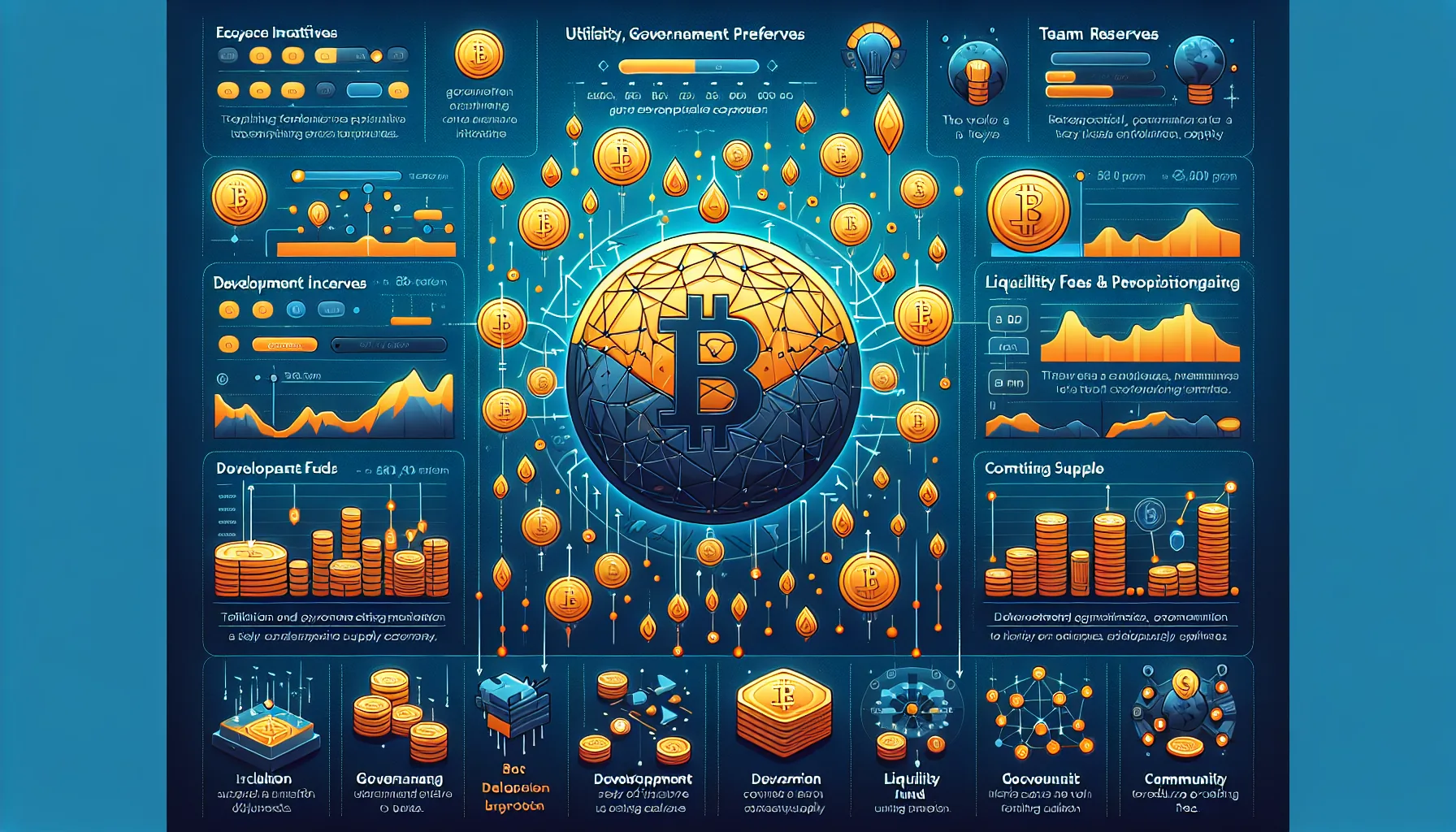
ANIKI features a fixed total supply, ensuring scarcity over time. At its genesis, the total token allocation was divided into distinct categories, including ecosystem incentives, team reserves, development funds, liquidity provisioning, and community airdrops. A significant percentage is earmarked for user rewards in staking and governance participation, encouraging long-term network engagement.
However, the token distribution has raised some concerns among community members. The relatively large allocation to the team and development funds, while standard in many projects, has been questioned for its potential centralization risks. Critics argue that if these tokens are not locked adequately or released gradually, they could be dumped onto the market, introducing price instability and diluting community ownership.
Deflationary Features and Potential Risks
ANIKI incorporates deflationary mechanisms within its protocol. A portion of transaction fees is automatically burned, reducing the circulating supply over time. In theory, this model supports price appreciation and discourages speculative selling. But the burn rate raises questions about its sustainability, particularly in a bear market when transaction volumes drop. Lower network usage could translate to minimal burning, undermining the deflationary intent.
Additionally, the hard cap on total supply means the tokenomics must account for long-term incentives for validators, stakers, and developers. Without mechanisms to recycle value into system incentivization, ANIKI may face challenges in maintaining network security and development momentum.
Governance and Utility
The ANIKI token is integral to governance within the network, granting holders voting rights on protocol upgrades, treasury allocation, and other key decisions. This governance utility locks more tokens out of circulation, theoretically reducing liquid supply. However, low voter participation—a common issue in DAO-driven ecosystems—could concentrate decision-making power in the hands of a few large holders, effectively reducing decentralization.
ANIKI also serves as the primary utility token for fees and ecosystem applications. This imbues it with additional demand, though heavy reliance on one token for multiple use cases could create bottlenecks, particularly during periods of intense network activity. Without scalability improvements, users might face high transaction fees, dampening the token's usability.
The balance between incentivization, governance power, and deflationary design defines ANIKI’s tokenomics, but these strengths come with trade-offs that warrant deeper community discussion.
ANIKI Governance
Governance in the ANIKI Ecosystem: Decentralization and Challenges
ANIKI’s governance framework is a critical pillar of its ecosystem, enabling token holders to participate in decision-making processes that impact the protocol's development, upgrades, and overall functionality. Governed primarily through a token-weighted voting system, ANIKI allows stakeholders to propose changes and vote on various aspects, such as protocol updates, treasury allocation, and parameter adjustments. While this approach aims to promote decentralization, it also introduces distinct challenges and nuances.
Token-Weighted Voting: Inclusion or Centralization?
ANIKI employs a governance model where the voting power of participants is proportional to the number of tokens they hold. This naturally raises questions about inclusivity versus centralization. While large token holders, often referred to as "whales," can exert significant influence over governance outcomes, smaller participants may perceive a lack of agency in this system. This imbalance has been an ongoing challenge in decentralized governance models and remains a point of contention for ANIKI, particularly when high-stakes decisions arise.
Proposal Process and Accessibility
To initiate a proposal in ANIKI’s governance structure, token holders must meet certain thresholds, such as holding a minimum number of tokens or staking them for a specified period. This is designed to prevent spam and ensure serious proposals, yet it can create barriers to entry for smaller contributors who may have innovative ideas but lack the required holdings. This dual-edged system has sparked debates on how to foster accessibility without compromising governance efficiency.
Off-Chain Coordination and Transparency
While on-chain voting mechanisms provide transparency, much of the discussion and coordination for governance proposals occurs off-chain, such as on forums or social media platforms. This reliance on off-chain communication can introduce opacity, as discussions are not always documented or accessible to all token holders. Additionally, the influence of key opinion leaders (KOLs) in these discussions can unintentionally sway outcomes, sometimes resulting in a perceived lack of genuine decentralization.
Governance Token Utility: Balancing Incentives
ANIKI governance token holders are not merely participants; they also face the opportunity—or expectation—of staking their tokens to earn voting rights or additional yield. However, the intertwining of governance and financial incentives has occasionally led to conflicts of interest. For example, there may be proposals that prioritize short-term financial rewards over long-term development goals, driven by the voting power of profit-focused stakeholders.
Future Upgrade Risks
As ANIKI’s protocol evolves, the governance structure itself is subject to modification through consensus. While this ensures adaptability, it also opens the door to potential governance capture or hasty decision-making during times of heightened community tension. The lack of a formalized dispute resolution mechanism further complicates high-stakes decisions.
Technical future of ANIKI
Current and Future Technical Developments of ANIKI: A Detailed Look at the Roadmap
ANIKI, a blockchain-backed crypto asset, is built on a foundation of advanced modular architecture. The current technical framework of ANIKI focuses heavily on scalability, interoperability, and security. As ANIKI aims to position itself within decentralized finance (DeFi) ecosystems and emerging Web3 infrastructure, the team has outlined various ongoing and future upgrades to its protocol.
Current Developments Driving Technical Growth
-
Layer-2 Integration: ANIKI has committed significant resources to adopting Layer-2 scaling solutions. These implementations focus on reducing transaction bottlenecks and improving throughput. The emphasis is not solely on popular rollup designs like ZK-rollups and Optimistic Rollups but also on leveraging hybrid approaches to enhance composability between dApps. However, a lack of detailed public technical audits on this integration has raised concerns from some developers about operational transparency.
-
Cross-Chain Interoperability: A core focus of ANIKI’s architecture is seamless movement of assets across multiple blockchains. ANIKI currently employs bridge solutions to enable this function, but plans are underway to introduce native interoperability protocols to reduce reliance on centralized bridging services. Although promising, vulnerabilities in existing bridges have left skeptical users worried about potential exploits during the transition.
-
Smart Contract Refinements: The ANIKI smart contract suite is undergoing significant upgrades targeted at supporting programmable liquidity and dynamic asset collateralization. While these improvements are aimed at expanding DeFi capabilities, they come with technical challenges. The pivot to highly customizable contracts has brought about increased complexity, which some developers argue could introduce unforeseen vulnerabilities.
Future Upgrades on the ANIKI Technical Roadmap
-
EVM Compatibility Expansion: While ANIKI is already partially compatible with Ethereum’s Virtual Machine (EVM), future upgrades intend to achieve full compatibility while maintaining its distinct, feature-rich programming environment. This shift is expected to attract a broader developer base but has raised concerns about diluting unique features of the native ANIKI chain.
-
Enhanced Node Infrastructure: Plans to decentralize node hosting and reduce reliance on centralized providers are a standout feature of the roadmap. ANIKI’s team is working on tools to lower barriers for independent validators. However, the timeline for rolling out these tools has been vague, raising speculation about possible delays.
-
Decentralized Governance Optimization: ANIKI intends to overhaul its governance protocol by adopting quadratic voting mechanisms to improve stakeholder decision-making. Although this could democratize voting power, the challenge lies in ensuring that these mechanisms cannot be gamed, a task easier said than done.
As ANIKI continues its journey of technical evolution, the project faces both opportunities and challenges. While the roadmap prioritizes expanding capability and resilience, potential risks tied to execution and security remain areas that demand careful attention. The balance between innovation and stability will ultimately determine the success of ANIKI’s technical trajectory.
Comparing ANIKI to it’s rivals
ANIKI vs. Ethereum (ETH): A Technical and Functional Comparison
When comparing ANIKI to Ethereum (ETH), it’s important to evaluate the divergence in their approach to scalability, consensus, and network utility. Ethereum, as the industry's leading Layer 1 blockchain, presents a formidable benchmark against which emerging crypto assets like ANIKI must position themselves.
Scalability: ANIKI’s Architectural Choice vs. Ethereum’s Transition
Ethereum has historically faced challenges with throughput, primarily due to its original proof-of-work (PoW) mechanism and later its early-stage implementation of proof-of-stake (PoS) through Ethereum 2.0 upgrades. While Ethereum's TPS (transactions per second) remains higher than its early iterations, network congestion and high gas fees still haunt its usability during peak activity.
In contrast, ANIKI adopts a sharding-based Layer 1 consensus model supported by modular enhancements to optimize scalability. This architecture allows ANIKI to sidestep bottlenecks associated with Ethereum's earlier single-chain model. However, ANIKI's reliance on advanced computational proof states requires a higher baseline for developer proficiency and node support, which could hinder broader adoption compared to Ethereum's already-established ecosystem.
Smart Contracts and Developer Ecosystem
Ethereum's dominance in decentralized applications (dApps) and smart contracts remains a critical competitive factor. Its extensive library of SDKs, tooling, and community-driven resources provides an unparalleled advantage for developers. With Solidity at its core, Ethereum has cultivated an ecosystem that is both mature and heavily documented.
ANIKI, meanwhile, introduces its proprietary contract language that emphasizes efficiency and security for high-frequency transactions. This creates a niche appeal for projects seeking lower latency, but it poses a barrier for developers entrenched in Ethereum's Solidity paradigm. Furthermore, ANIKI is still actively building third-party integrations, which, while promising, leave current developers with fewer resources to kickstart development compared to Ethereum’s robust toolkit.
Decentralization Trade-Offs
Ethereum has long been a champion of decentralization, although transitioning to PoS has slightly concentrated its validator network relative to its PoW days. ANIKI, structured around a more adaptive consensus algorithm, has seen improved energy efficiency but at the potential expense of validator diversity. This could raise concerns for crypto purists who prioritize decentralization over performance optimization.
Interoperability Challenges
Ethereum’s widespread adoption has carved a niche for it as a foundational layer for numerous blockchain solutions. Its network effect gives ETH a compatibility edge in cross-chain integrations. ANIKI, in contrast, employs a siloed architecture that prioritizes internal optimization but can lack the seamless interoperability that Ethereum-based projects often enjoy.
When it comes to real-world deployment, ANIKI’s design and development priorities diverge significantly from Ethereum, leading both networks to cater to fundamentally different use cases—a factor that prospective users and developers must weigh carefully.
ANIKI vs. SOL: A Detailed Comparison of Technical and Ecosystem Differences
When comparing ANIKI to Solana (SOL), one of the most notable distinctions lies in their fundamental approach to scalability and decentralization. While both projects aim to address blockchain performance limitations, their paths diverge significantly in architecture, trade-offs, and ecosystem development.
Scalability Architecture: How ANIKI Challenges Solana
Solana has built its reputation on its high throughput, implementing an innovative Proof of History (PoH) mechanism combined with Proof of Stake (PoS). This design enables Solana to process thousands of transactions per second (TPS) in an ultra-fast, low-latency environment. However, this scaling has come at a known cost: decentralization. Solana's high hardware requirements have drawn criticism from industry participants for making it naturally exclusionary to smaller validators, centralizing control over the network.
On the other hand, ANIKI employs a minimalist and highly modular framework for scalability. While specifics can vary depending on network parameters, ANIKI prioritizes lightweight node operations, ensuring wider participation across a decentralized validator set. Though this decentralized approach is commendable, it can introduce constraints regarding how quickly and efficiently high transaction loads can be handled compared to Solana's speeds. This represents a primary trade-off: decentralization versus raw performance.
Developer Ecosystem and Tooling
Solana’s focus on building a cohesive ecosystem has been reflected in its development. It offers a strong developer-focused framework, including a robust software development kit (SDK) optimized for its higher-performance virtual machine. However, the relative complexity of integrating existing decentralized applications (dApps) onto Solana has been pointed out by some developers, as its unique programming requirements (e.g., Rust) demand a steeper learning curve compared to blockchain ecosystems using more mainstream programming languages.
ANIKI positions itself in contrast by emphasizing modularity and language flexibility, catering to developers seeking easier interoperability with existing Web3 infrastructure. Despite these advantages, the comparatively smaller size of ANIKI's ecosystem remains a factor, leading some to view it as less attractive for large-scale applications at present.
Network Downtime: A Point of Contention?
Solana’s history with network reliability has raised questions about its ability to sustain constant uptime under stress. Periodic outages—often attributed to congestion or distributed denial-of-service (DDoS) attacks—have prompted scrutiny from stakeholders. ANIKI attempts to mitigate such risks by adopting fault-tolerant consensus features and decentralized communication pathways. Still, the long-term reliability of ANIKI under similar stress remains unproven, as it has not undergone the same high-profile network pressure tests as Solana.
User Access: The Cost Barrier Debate
With a focus on sub-penny transaction fees, Solana is appealing for users involved with microtransactions. This cost-efficiency, however, is counterbalanced by the requirement for high-end hardware to participate as a validator, which raises entry barriers. ANIKI, by contrast, promotes lower-cost validator participation, though transaction fees may not yet rival Solana’s ultra-low levels in certain scenarios. This represents another critical dimension of comparison between the two blockchains.
ANIKI vs. DOT: A Technical and Ecosystem Comparison
When comparing ANIKI to Polkadot (DOT), one of the most notable distinctions lies in their approach to interoperability and network scalability. DOT has positioned itself as an industry leader with its parachain architecture, which enables multiple blockchains to operate in parallel, sharing security and scalability via Polkadot’s Relay Chain. This architecture contrasts starkly with ANIKI’s scaling mechanisms, which are rooted in its proprietary Layer 3 protocol. While ANIKI emphasizes granular scalability tailored for specific application demands, DOT’s broader focus on generalized interoperability makes it a clear rival in this niche.
One major advantage DOT brings to this comparison is its high degree of decentralization in governance. The use of a robust staking-based voting system ensures community-wide consensus on network upgrades and parachain auctions. By contrast, ANIKI’s governance framework—though innovative—leans heavily on weighted reputation among token holders. For highly decentralized crypto users, this may represent a potential risk of centralization over time.
On the performance side, DOT’s reliance on Substrate tooling streamlines the onboarding process for projects building custom blockchains. This has cultivated a vibrant ecosystem of developers who capitalize on the modular flexibility of Substrate. However, ANIKI counters with a leaner developer onboarding process that sidesteps the complexity of designing fully independent chains, offering rapid deployment of functional modules directly on its Layer 3. While promising for speed and resource efficiency, critics argue that ANIKI’s developer ecosystem lacks the sheer depth and tooling maturity offered by Polkadot.
Another key area of differentiation is economic design. DOT’s tokenomics are deeply integrated with its parachain leases, where projects bid for slots using large-scale DOT holdings. This creates a high-stakes system that rewards the most financially capable participants but potentially sidelines smaller, innovative projects. ANIKI sidesteps this with its fee-based scaling model, but this approach introduces a different kind of economic bottleneck: high user costs on especially congested Layer 3 segments.
Finally, both networks face challenges with adoption, but the reasons diverge. DOT’s complex parachain auction system can alienate newcomers, particularly smaller developers. Meanwhile, ANIKI struggles with fragmented reputation valuation in its governance and limited support for horizontal interoperability across distinct Layer 3 instances, which could become a critical bottleneck as its ecosystem grows.
Ultimately, ANIKI and DOT target overlapping use cases, but their architectural philosophies set them apart, offering key trade-offs in scalability, governance, and developer targeting.
Primary criticisms of ANIKI
Primary Criticism of ANIKI: Unpacking the Challenges
1. Centralization Concerns Within Governance
While the ethos of decentralization is a cornerstone of most blockchain ecosystems, ANIKI has not been immune to allegations of centralization within its governance structures. Critics argue that decision-making power remains unevenly distributed, with a small group of core developers and early stakeholders wielding disproportionate influence. This has raised questions about whether ANIKI’s governance model truly aligns with decentralized ideals or is simply replicating traditional top-down hierarchies cloaked in blockchain jargon.
2. Tokenomics and Long-Term Viability
ANIKI’s tokenomics model, although innovative in theory, has raised eyebrows among analysts due to concerns over potential inflationary pressure and insufficient mechanisms to ensure sustained demand. Some have questioned whether the current supply structure adequately incentivizes long-term adoption versus simply facilitating short-term speculation. Furthermore, the utility of ANIKI tokens within the ecosystem has been criticized as being overly niche, limiting broader use cases that could help solidify its value proposition.
3. Barriers to Developer Adoption
A persistent point of contention for ANIKI is what some describe as a steep learning curve for developers. Critics have highlighted the platform’s overly complex architecture and lack of accessible documentation as significant hurdles for newcomers. While seasoned developers may be able to navigate these complexities, the broader ecosystem could suffer from reduced participation if smaller teams and independent developers are deterred by the challenge of working within ANIKI’s framework.
4. Scalability Trade-offs in Consensus Mechanism
ANIKI employs a unique consensus mechanism designed to optimize network efficiency and security. However, detractors argue that these optimizations come at the expense of scalability. This has prompted skepticism about ANIKI’s ability to handle large-scale adoption without compromising performance or network stability. Slow transaction throughput and high fees during periods of peak demand have been cited as evidence of this trade-off manifesting in real-world use.
5. Community Divides and Fragmentation Risks
ANIKI’s community, once hailed as one of its greatest strengths, has shown signs of growing fragmentation. Disagreements over protocol upgrades, governance proposals, and the roadmap have ignited contentious debates, often spilling into public forums. Such divisions pose the risk of alienating key stakeholders and eroding the cohesion crucial for driving the project forward.
6. Perceived Over-reliance on Ecosystem Partnerships
Lastly, ANIKI's reliance on ecosystem partnerships has drawn scrutiny. While collaborations with other projects and protocols are common in crypto, some critics see ANIKI's heavy emphasis on external integrations as a sign of strategic overreach. This reliance could expose the ecosystem to vulnerabilities if key partnerships falter or competing platforms deliver superior functionality.
Founders
The Founding Team Behind ANIKI: Strengths and Hurdles
The backbone of any crypto asset is its founding team. In the case of ANIKI, the team comprises experienced builders pulled from blockchain development, decentralized finance (DeFi), and open-source technology communities. This multidisciplinary mix has provided ANIKI with robust technical underpinnings and a unique approach to sector challenges. However, while the team’s expertise is notable, a deeper dive into its dynamics reveals both strengths and potential concerns.
Decentralized Vision, Centralized Leadership?
ANIKI’s founding narrative centers on decentralization, which is a cornerstone of its ideology and development roadmap. However, the team is not fully decentralized in its operations. Leadership appears concentrated around a small cluster of co-founders, particularly the lead architect and protocol designer, who both hold outsized influence over decision-making. While their technical prowess and strategic foresight have propelled the project, this centralization has raised questions among community members who prioritize governance structures that embody true decentralization.
Transparency: Room for Improvement
Although the ANIKI team has gained respect for their technical documentation and frequent GitHub updates, transparency regarding their identities is noticeably inconsistent. While some team members are publicly active within technical forums and social media channels, others remain pseudonymous, opting to interact indirectly through official communications. Although pseudonymity is not uncommon in the crypto space, it has sparked debate within the ANIKI community regarding accountability and trust. For a project that claims to champion transparency in decentralized ecosystems, this ambiguity could be seen as contradictory.
Strength in Proven Experience
Several members of ANIKI’s founding team have verifiable track records in high-profile blockchain projects. Their experience spans Layer-1 protocol design, DeFi algorithm optimization, and security infrastructure for smart contracts. The team’s ability to navigate complex developer niches and adapt to evolving consensus mechanisms demonstrates technical competence. However, past involvement in some projects with unresolved controversy has drawn scrutiny from the more critical segments of the crypto audience.
Communication Challenges
Another frequently discussed issue is the team's approach to community engagement. While ANIKI’s developers appear highly focused on the technical aspects of the project, their communication style is often regarded as overly technical or opaque. Some within the community argue that clearer communication is required to ensure broader understanding among ANIKI’s investors and stakers. The team's reluctance to address certain governance-related topics during AMAs (Ask Me Anything) sessions has only added to these concerns.
Overall, while the ANIKI founding team brings exceptional technical expertise, questions about centralization, transparency, and communication remain points of contention. How the team addresses these areas will likely shape ANIKI's trajectory in the intensely scrutinized crypto landscape.
Authors comments
This document was made by www.BestDapps.com
Sources
- https://www.aniki.network/
- https://www.aniki.network/whitepaper.pdf
- https://github.com/aniki-project
- https://docs.aniki.network/
- https://explorer.aniki.network/
- https://medium.com/@aniki_project
- https://twitter.com/aniki_project
- https://aniki.network/roadmap
- https://forum.aniki.network/
- https://aniki.network/tokenomics
- https://aniki.network/audit-report
- https://www.coingecko.com/en/coins/aniki
- https://www.coinmarketcap.com/currencies/aniki/
- https://defillama.com/protocol/aniki
- https://aniki.network/partnerships
- https://aniki.network/governance
- https://community.aniki.network/developers
- https://aniki.network/ecosystem
- https://www.youtube.com/channel/AnikiProject


