History of ACH
The History of Alchemy Pay (ACH)
Alchemy Pay (ACH) was founded to bridge the gap between traditional finance and cryptocurrency by offering seamless fiat-to-crypto payment solutions. Since its inception, the project has focused on establishing a hybrid payment system that integrates blockchain technology with existing financial infrastructure.
Early Development and Launch
The development of Alchemy Pay began with the goal of solving crypto’s real-world usability challenges. By leveraging partnerships with traditional payment processors, the project aimed to create a system where merchants could accept digital assets without complex blockchain integrations. The ACH token was launched as the ecosystem’s native utility asset, primarily used for transaction fees, rewards, and governance functions.
Key Integrations and Adoption
Alchemy Pay quickly sought partnerships with major payment service providers and businesses requiring crypto-to-fiat conversion. This focus led to integrations that enabled cryptocurrency transactions in retail environments without requiring customers to convert assets manually. Over time, the project expanded its network to include collaborations with exchanges, wallets, and financial institutions, increasing ACH’s use cases.
Regulatory and Compliance Challenges
As with many payment-focused crypto projects, Alchemy Pay faced regulatory scrutiny in multiple jurisdictions. The necessity of compliance with financial regulations led to adjustments in business strategy, including obtaining licenses and partnering with regulated financial entities. Certain restrictions in specific regions slowed adoption, requiring Alchemy Pay to emphasize legal frameworks and risk mitigation strategies.
Network Expansions and Technical Developments
Alchemy Pay’s roadmap has included technological advancements aimed at improving the efficiency and accessibility of its payment network. The project has worked on scaling solutions to lower transaction costs and mitigate congestion-related issues. Additionally, developments have focused on enhancing cross-border remittances and B2B payment infrastructures.
Despite these efforts, competition from both centralized payment providers and decentralized alternatives has been a long-standing challenge. The presence of established fintech players and emerging blockchain-based payment solutions puts ongoing pressure on Alchemy Pay to innovate and maintain relevance within the rapidly evolving market.
Security Incidents and Network Limitations
Security and operational stability have been critical concerns for crypto payment networks. While Alchemy Pay has implemented various security measures to protect transactions and user funds, reliance on third-party financial intermediaries poses inherent risks. Any vulnerabilities in these integrations could impact the reliability of the network and the broader adoption of ACH as a payment mechanism.
Alchemy Pay's history reflects a continuous effort to adapt to the evolving crypto landscape, balancing regulatory demands with the push for seamless fiat-crypto transactions.
How ACH Works
How Alchemy Pay (ACH) Works
Alchemy Pay (ACH) operates as a hybrid payment gateway that bridges the gap between cryptocurrencies and traditional finance. It facilitates crypto-to-fiat and fiat-to-crypto transactions, enabling businesses to accept digital assets seamlessly. The system revolves around a combination of on-chain and off-chain mechanisms that ensure efficient transaction processing while minimizing volatility risks.
On-Ramp and Off-Ramp Infrastructure
Alchemy Pay provides a fiat on-ramp, allowing users to purchase cryptocurrencies using traditional payment methods such as credit cards, bank transfers, and regional payment networks. The off-ramp functionality, on the other hand, facilitates the conversion of digital assets back into fiat, supporting merchant withdrawals and direct-to-bank settlements.
These processes leverage banking relationships and liquidity providers to execute conversions at competitive rates. However, the reliance on third-party financial institutions introduces potential bottlenecks, including regulatory constraints and regional availability limitations.
Smart Contract-Based Transaction Settlements
ACH transactions are executed using smart contracts on supported blockchains, ensuring transparency and security. The ACH token plays a key role in transaction processing, primarily used to pay fees, incentivize network participants, and settle payments within the ecosystem.
However, the use of smart contracts introduces potential vulnerabilities, such as contract exploits or bugs that could impact transaction integrity. Additionally, network congestion on supported chains may lead to delayed settlements or increased transaction costs.
Merchant and Business Integrations
Alchemy Pay integrates with e-commerce platforms, point-of-sale (POS) systems, and digital wallets. Merchants can accept payments in crypto while receiving fiat in their preferred currency, eliminating exposure to market volatility. The platform uses a dynamic pricing mechanism to lock exchange rates at the time of transaction, mitigating price fluctuations.
Despite its convenience, merchant adoption remains a challenge due to regulatory uncertainty around crypto payments. Additionally, dependency on Alchemy Pay’s centralized settlement infrastructure means that network outages or service disruptions could impact transaction flow.
ACH Token Utility in the Ecosystem
The ACH token acts as a medium for transaction fees, staking, and governance participation. Businesses can stake ACH to receive lower transaction fees, and ecosystem participants may use it for loyalty rewards or cross-border remittances.
Token utility is largely dependent on platform adoption, and reduced network usage could lead to diminished demand for ACH. Furthermore, reliance on ACH for fee payments means that value fluctuations may impact businesses holding the token for operational purposes.
Use Cases
Alchemy Pay (ACH) Use Cases: Bridging Traditional Finance and Crypto Payments
Alchemy Pay (ACH) serves as a utility token and payment mechanism within its hybrid crypto-fiat payment network. The ACH token underpins various functionalities, primarily focused on enabling seamless transactions between traditional financial institutions and blockchain-based assets.
On-Ramp and Off-Ramp Payment Processing
One of the core use cases for ACH is its role in Alchemy Pay’s fiat-crypto on-ramp and off-ramp services. Through integrations with global payment providers, ACH enables users to purchase cryptocurrencies using bank cards, mobile wallets, and even local payment methods. Conversely, it also facilitates the conversion of digital assets into fiat currency, simplifying crypto payments for non-crypto-native users.
A key advantage of this system is reduced friction for merchants that want to integrate cryptocurrency payments without managing complex custodial solutions. However, regulatory compliance varies by jurisdiction, potentially limiting adoption in regions with strict financial controls.
Merchant Payments and Crypto Acceptance
Alchemy Pay also supports direct crypto payments for merchants, allowing businesses to accept digital assets while receiving settlements in fiat. This use case is particularly beneficial in high-inflation economies where crypto serves as an alternative store of value.
ACH is used to pay transaction fees, earn network incentives, and sometimes function as a settlement mechanism. However, merchant adoption remains an ongoing challenge due to volatility risks, potential tax complications, and fluctuating regulatory landscapes affecting the broader crypto payments industry.
DeFi and Cross-Border Payments
The ACH token plays a role in decentralized finance (DeFi) by integrating Alchemy Pay’s services into various blockchain ecosystems. Users can stake ACH for network incentives or use it within DeFi applications that leverage Alchemy Pay for fiat connectivity.
For cross-border transactions, ACH helps reduce costs compared to traditional remittance services. However, transaction scalability and network congestion can affect processing efficiency, particularly in high-demand periods. Additionally, reliance on off-chain partners introduces counterparty risks not present in fully decentralized solutions.
Utility in Network Governance and Incentives
Beyond facilitating payments, ACH is also used within Alchemy Pay’s ecosystem for governance and reward mechanisms. Token holders may participate in decision-making processes or receive incentives for liquidity provision and system participation.
Despite its utility, ACH's long-term viability depends on continued adoption of Alchemy Pay’s infrastructure. The token's dependence on third-party integrations, evolving regulatory landscapes, and competitive pressures from alternative solutions remain considerations for participants in the ecosystem.
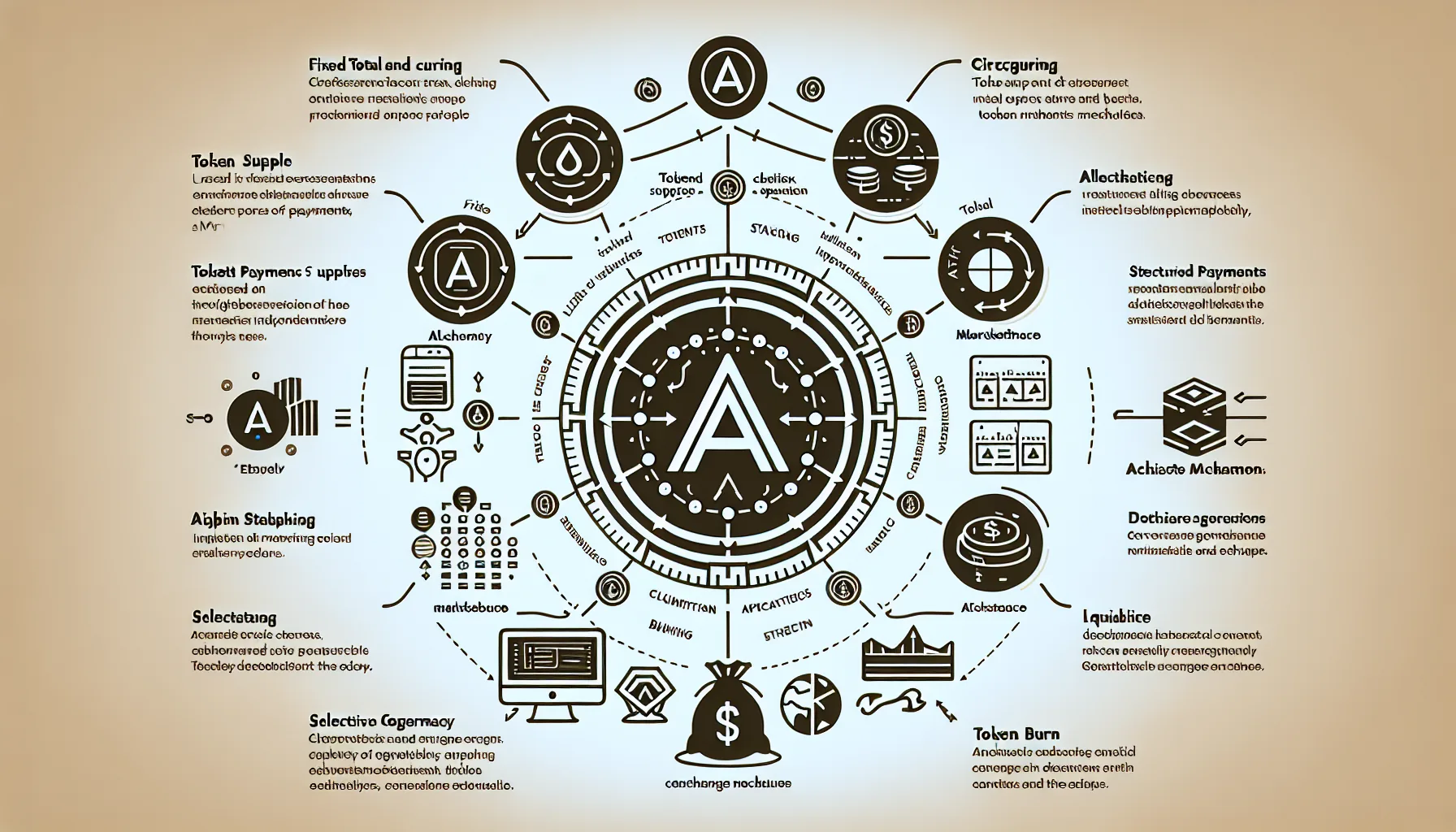
ACH Tokenomics
Alchemy Pay (ACH) Tokenomics: Supply, Utility, and Distribution
Fixed Total Supply and Circulating Emission
Alchemy Pay (ACH) has a fixed total supply, ensuring scarcity over time. However, the circulating supply changes based on token unlocks, vesting schedules, and ecosystem incentives. A significant portion of the total supply is held in reserve for network incentives, partnerships, and developmental funding. The emission schedule plays a crucial role in determining inflationary or deflationary pressure on the token.
Utility Across Payments and Staking Mechanisms
ACH serves multiple utility functions within the Alchemy Pay ecosystem. Primarily, it is used for transaction facilitation, network fees, and cross-border payments. Additionally, merchants and payment processors leverage ACH for discounted settlement fees. Staking mechanisms within the platform add another layer of utility, allowing participants to lock ACH in exchange for reduced fees or enhanced network privileges. However, adoption bottlenecks and integration complexities may impact the token’s actual demand within payment channels.
Token Allocation and Vesting Considerations
Allocation of ACH tokens follows a structured distribution model. A portion of the supply is reserved for early backers, development, and liquidity provisioning. Team allocations are subject to vesting schedules, which help mitigate sudden market sell-offs. Still, historical unlock events highlight potential risks of supply influx impacting market sentiment. Transparency in token distribution remains a key point of interest for long-term holders monitoring inflationary risks.
Burn Mechanisms and Deflationary Events
Alchemy Pay employs a selective token burn mechanism, reducing supply under certain conditions. These burns may be tied to transaction volumes or ecosystem milestones. While this introduces deflationary pressure, the long-term impact depends on the frequency and scale of burns relative to overall supply emissions. Unlike protocols with automatic burn mechanisms coded into transactions, ACH’s burn strategy appears discretionary, raising questions about its effectiveness over time.
Liquidity and Exchange Availability
ACH maintains liquidity across multiple centralized and decentralized exchanges, ensuring accessibility for traders and network participants. However, reliance on external markets for liquidity can lead to volatility concerns, particularly during periods of low transactional volume. Market-making incentives and liquidity provisioning strategies influence spread efficiency, impacting ACH’s usability in real-world payments.
Governance and Ecosystem Influence
While ACH plays a role in platform incentives, its governance function is relatively limited compared to fully decentralized networks. Ecosystem decisions, including tokenomics adjustments, are largely influenced by the core development team and strategic partners. The balance between decentralization and centralized control remains a topic for discussion within the community.
ACH Governance
Governance Structure of Alchemy Pay (ACH)
Centralized Control vs. Decentralized Governance
Alchemy Pay (ACH) operates within a hybrid framework where governance is influenced by both centralized and decentralized elements. While the project employs blockchain-based mechanisms for transaction processing and token utility, governance decisions largely remain within the control of the core development team and affiliated entities. This centralization can be seen in protocol upgrades, ecosystem partnerships, and strategic direction, where community participation is limited compared to fully decentralized projects.
Token Holder Influence on Governance
ACH token holders do not have extensive governance rights in the way that holders of other utility or governance tokens do in decentralized autonomous organizations (DAOs). Unlike protocols that allow token-based voting on proposals, Alchemy Pay has not structured ACH as a governance token by default. This limits the capacity for community-driven decisions on protocol changes, system upgrades, or treasury management, reducing direct engagement from decentralized stakeholders.
Smart Contract Governance and Security
Alchemy Pay integrates with Ethereum and other blockchain ecosystems, meaning some governance-related aspects depend on smart contract protocols. However, the platform does not function as a fully autonomous smart contract-driven ecosystem. Smart contract governance is primarily handled by the core team, which presents both security and centralization concerns. While centralized decision-making can allow for quick responses to vulnerabilities or operational changes, it may create single points of failure or reduce transparency in governance processes.
Lack of DAO Implementation
Many blockchain networks with governance tokens rely on DAO structures to distribute decision-making power among users. Alchemy Pay has not transitioned to this approach, meaning governance proposals, system modifications, and financial stewardship are largely controlled by internal decision-makers. Without a formal DAO, community-driven governance remains minimal, which could be a limitation for those seeking more participatory decision-making processes within projects they support.
Potential Risks and Limitations
The absence of decentralized governance raises concerns about transparency and accountability. Without community-based voting mechanisms, protocol changes are subject to decisions made by Alchemy Pay’s leadership. This could lead to misaligned incentives if governance priorities diverge from user and investor interests. Additionally, centralized governance may impact long-term decentralization goals, potentially reducing trust among users who prefer decentralized financial systems.
Future Governance Considerations
For ACH to enhance decentralized governance, integrating a governance mechanism that allows token holders to participate in decision-making could be a future development. However, given its current structure, governance remains primarily managed by the core team, with minimal decentralized input.
Technical future of ACH
Alchemy Pay (ACH) Technical Developments and Roadmap
Ongoing Smart Contract and Network Upgrades
Alchemy Pay continues to refine its smart contract infrastructure to enhance efficiency and security. Recent upgrades focus on reducing gas fees for transactions, optimizing bridge interactions, and increasing settlement speed across multiple chains. The integration of Layer 2 scaling solutions is underway, aiming to alleviate congestion and improve cross-chain liquidity. However, challenges remain in maintaining decentralization while integrating with off-chain fiat payment solutions, which require compliance-heavy adjustments.
Expansion of On-Ramp and Off-Ramp Capabilities
A key technical focus is the development of more seamless on-ramp and off-ramp alternatives across various blockchain ecosystems. Alchemy Pay is increasing compatibility with emerging stablecoins and central bank digital currencies (CBDCs), requiring constant refinement of API and SDK functionalities. The expansion into additional fiat payment rails introduces technical complexities such as real-time transaction settlement and regional regulatory integration, both of which demand frequent adjustments to the platform’s architecture.
Cross-Chain Compatibility and Bridging Solutions
The ACH token is expanding its utility via cross-chain deployment, supporting greater interoperability between networks. While bridges enhance liquidity movement, the associated security risks pose a significant challenge. Recent hacks targeting cross-chain infrastructure raise concerns about the resilience of existing security mechanisms in Alchemy Pay’s bridging technology. Enhanced verification measures, multi-signature validation, and zero-knowledge proof integrations are being explored to minimize vulnerabilities.
AI and Compliance Automation
To scale global transactions, Alchemy Pay is incorporating AI-driven compliance tools to streamline Know Your Customer (KYC) and Anti-Money Laundering (AML) procedures. These automated mechanisms improve approval times but require constant recalibration due to shifting global regulations. The tradeoff between faster verification and the risk of false positives remains an ongoing optimization issue that developers are addressing.
Upcoming Milestones and Development Roadmap
Alchemy Pay’s roadmap includes deeper integration with mobile payment systems, additional Layer 2 networks, and broader merchant adoption tools. Enhancements to its staking mechanisms are also expected, enabling more flexible yield models for ACH holders. However, implementation timelines remain fluid, subject to technical feasibility and market demand. Scalability remains a central concern, especially with the increasing load on Alchemy Pay’s fiat-to-crypto infrastructure.
Technical Challenges and Potential Bottlenecks
While Alchemy Pay aims to bridge traditional finance with blockchain, the dependency on external banking partnerships introduces risks related to service interruptions and compliance bottlenecks. Furthermore, increased competition in the crypto payments sector forces Alchemy Pay to continuously refine its infrastructure to maintain relevance and performance.
Comparing ACH to it’s rivals
How Alchemy Pay (ACH) Compares to Stripe in Crypto Payments
Alchemy Pay (ACH) and Stripe operate in overlapping but distinct areas of the digital payments ecosystem. Stripe, a traditional fintech giant, launched crypto-related services to support businesses accepting cryptocurrency transactions. However, its focus remains on fiat-centric merchants with crypto acting as an added feature rather than a primary infrastructure component.
Decentralization vs. Centralized Payment Processing
Alchemy Pay is built around a hybrid fiat-crypto payment gateway, prioritizing decentralized financial access. In contrast, Stripe remains a centralized entity with full control over onboarding, transaction flow, and compliance enforcement. The reliance on centralization gives Stripe strong regulatory compliance but limits its ability to operate in permissionless environments. Alchemy Pay's decentralized approach integrates directly with blockchain networks, making it more interoperable with DeFi applications where Stripe is largely absent.
Geographic and Regulatory Constraints
Stripe operates under strict regional licensing, leading to restrictions on crypto transactions in certain jurisdictions. It has a history of adding and removing crypto-related services based on regulatory climates. In contrast, Alchemy Pay builds a more globalized infrastructure by partnering with local payment providers in emerging markets, enabling crypto-fiat transactions where Stripe's services may be unavailable. However, this decentralized model leads to challenges in maintaining compliance with evolving regulations across multiple jurisdictions.
Integration with Web3 & On-Ramps
Alchemy Pay actively supports Web3 applications, offering crypto on-ramps and off-ramps that integrate directly into DeFi platforms, NFT marketplaces, and blockchain gaming projects. Stripe's focus remains on Web2-native businesses, with crypto payment acceptance functioning more as an additional feature rather than a core infrastructure service. While Stripe has piloted USDC on-ramping, its crypto capabilities are limited compared to Alchemy Pay’s deep integrations across blockchain networks.
Merchant & User Adoption Differences
Stripe benefits from a well-established merchant base, providing instant access to millions of businesses. Alchemy Pay, while growing, still faces adoption hurdles in mainstream commerce due to reliance on crypto liquidity and blockchain infrastructure. The volatility of crypto assets also presents a challenge for widespread merchant adoption compared to Stripe’s fiat-first approach, which offers a more predictable pricing model.
Transaction Fees & Settlement Speed
Alchemy Pay leverages blockchain-based transactions to offer lower fees compared to Stripe’s traditional card-based processing. However, gas fees on supported blockchains can be unpredictable, impacting the cost-effectiveness of transactions. On the other hand, Stripe’s settlement speeds remain limited by banking hours and fiat payment rails, whereas Alchemy Pay’s network can process crypto payments nearly instantly, depending on blockchain congestion.
Comparing Alchemy Pay (ACH) to PayPal (PYPL) in Crypto Payments
Decentralization vs. Centralization
Alchemy Pay (ACH) operates as a hybrid crypto-fiat payment gateway, allowing users to transact using both cryptocurrencies and traditional fiat. In contrast, PayPal (PYPL) remains a centralized, corporate-controlled payment network. PayPal’s approach to crypto payments is significantly more restrictive, as users do not have direct control over private keys and are limited in how they can withdraw or transfer crypto assets outside the PayPal ecosystem.
Merchant Adoption & Integration
PayPal boasts a vast merchant network due to its legacy in traditional finance. However, its crypto adoption remains tightly controlled, permitting only specific digital assets on its platform. Conversion from crypto-to-fiat is mandatory for merchants, meaning businesses cannot directly accept or hold cryptocurrencies.
Alchemy Pay, by contrast, provides merchants with more flexibility. Through its hybrid model, businesses can opt to receive settlements in crypto, fiat, or both, making it more appealing to merchants who want direct exposure to digital assets. However, since Alchemy Pay lacks the brand recognition and trust of a long-established processor like PayPal, adoption barriers still exist, particularly for mainstream businesses concerned about regulatory compliance and stability in crypto payment networks.
Supported Cryptocurrencies
PayPal supports only a handful of digital assets and restricts their use within its ecosystem. Users can buy, sell, and hold crypto, but cannot transfer it to external wallets in many cases. PayPal also enforces account limitations and transaction monitoring, which can hinder free and open crypto transactions.
Alchemy Pay, on the other hand, supports a more diverse range of digital assets, including numerous altcoins and stablecoins. This broader support makes it more attractive to users engaged in decentralized finance (DeFi) and cross-border payments. However, compliance frameworks around Alchemy Pay are still evolving, and regulatory challenges in multiple jurisdictions might pose risks for its long-term adoption.
Fees & Transaction Costs
PayPal imposes high fees for international remittances and currency conversions. Crypto transactions within PayPal’s platform also involve spreads and conversion fees that can make it costly compared to direct blockchain transactions.
Alchemy Pay benefits from blockchain efficiency, offering lower costs for crypto-native transactions. However, reliance on fiat on-ramps means users are still subject to banking fees and liquidity provider rates, which can reduce cost advantages in certain regions.
Regulatory & Compliance Constraints
PayPal’s regulatory compliance is well-established, ensuring global legality but at the cost of user privacy and financial sovereignty. It enforces KYC (Know Your Customer) and AML (Anti-Money Laundering) policies that can limit accessibility for users prioritizing decentralization.
Alchemy Pay aims for regulatory compliance while maintaining greater crypto-native flexibility. However, striking this balance comes with risks, as uncertain regulations in different jurisdictions could impact its service availability or force changes to its operational model.
ACH vs. SQ: A Deep Dive into Payment Infrastructure Differences
When comparing Alchemy Pay (ACH) to Block (SQ), the primary difference lies in their fundamental approach to financial transactions. ACH operates as a hybrid crypto-to-fiat payment gateway, facilitating seamless transitions between digital and traditional assets. In contrast, SQ, through its Cash App and merchant services, prioritizes a centralized payment experience with an increasing emphasis on Bitcoin (BTC) rather than a broader crypto integration.
Decentralization vs. Centralization in Crypto Payments
One of the key distinctions between ACH and SQ is their level of decentralization. Alchemy Pay integrates a wide range of cryptocurrencies into its payment system, allowing merchants to accept various digital assets while receiving settlements in their preferred fiat currency. The system relies on a decentralized network of liquidity providers to bridge transactions, reducing the reliance on traditional financial institutions.
Block, on the other hand, is fundamentally a centralized payment processor. While Cash App allows users to buy, sell, and hold Bitcoin, the broader payment ecosystem remains tied to SQ’s infrastructure. Merchant transactions rely on Block’s direct banking relationships rather than decentralized liquidity providers, limiting the flexibility for truly global crypto payments.
Merchant Adoption & Crypto Integration
Alchemy Pay boasts a wide crypto-focused partnership network, integrating with exchanges, wallets, and decentralized platforms. This allows for greater merchant adoption within the Web3 space, as payments can be processed from a wide variety of digital assets, including stablecoins and altcoins. The payment processing mechanism offers direct API integrations tailored to crypto-native businesses.
In contrast, Block’s crypto integration is more restrictive. While Cash App provides BTC-related services, its merchant processing framework does not natively support a broad selection of cryptocurrencies. This limits SQ’s appeal for merchants looking for immediate multi-asset support beyond Bitcoin.
Regulatory Challenges & Compliance Constraints
Both ACH and SQ face regulatory scrutiny, but their challenges differ. ACH operates in numerous jurisdictions where crypto regulations are evolving, requiring ongoing compliance adjustments. The reliance on decentralized liquidity partners necessitates additional KYC/AML processes to bridge crypto-to-fiat efficiently.
Block, operating under stricter financial regulations due to its banking ties, faces compliance challenges on both crypto and fiat fronts. Cash App’s Bitcoin services remain bound by jurisdictional restrictions, limiting broader crypto adoption within its ecosystem. Unlike ACH, which partners with third-party liquidity providers, Block manages regulatory compliance directly, potentially slowing its ability to adapt to newer crypto payment methods.
Primary criticisms of ACH
Primary Criticism of ACH
Centralization Concerns
One of the most prevalent criticisms of ACH is the level of centralization associated with Alchemy Pay’s operations. While the token functions within a larger crypto payment ecosystem, skeptics argue that Alchemy Pay introduces centralized control mechanisms that undermine the permissionless nature of cryptocurrency. The company retains significant authority over integrations, partnerships, and merchant adoption, leading some to question whether ACH aligns with the core principles of decentralization.
Token Utility and Adoption Challenges
ACH is designed as a utility token within the Alchemy Pay ecosystem, but critics point to a lack of clear necessity for the token beyond its stated use cases. While it facilitates transaction fees, incentives, and staking mechanisms, some argue that its role is redundant in comparison to stablecoins or more established cryptocurrencies used for payments. This raises concerns over whether ACH is truly indispensable to the platform's functionality or if it primarily serves as a speculative asset.
Regulatory Uncertainty
Another major criticism revolves around regulatory uncertainty. Since Alchemy Pay operates at the intersection of fiat and crypto payments, it is subject to evolving regulatory frameworks that could impact its business model. Stricter compliance measures, licensing requirements, or restrictions on crypto-fiat gateways could introduce significant limitations on ACH’s use, particularly if regulators impose stricter oversight on crypto-to-fiat conversion services.
Payment Network Limitations
While Alchemy Pay markets itself as a global crypto-fiat payment solution, adoption remains a major hurdle. Critics highlight that actual merchant acceptance is limited, with many businesses still favoring traditional financial rails or larger payment processors like Visa and Mastercard. The challenge of convincing merchants to integrate ACH as a payment option poses an uphill battle, especially when crypto payments remain a niche use case in mainstream commerce.
Competition from Established Players
The crypto payment space is highly competitive, with established projects such as Ripple (XRP), Stellar (XLM), and other blockchain-based payment solutions commanding significant market share. Some critics argue that ACH lacks a unique competitive edge to differentiate itself from these larger networks, especially when major players already have deeper liquidity, broader adoption, and stronger regulatory relationships.
Token Inflation and Supply Distribution
Concerns regarding ACH’s tokenomics also arise due to its supply distribution and potential inflationary pressure. If a significant portion of tokens are reserved for ecosystem incentives or founder allocations, it raises the risk of price manipulation or long-term dilution concerns. Critics argue that without clear transparency regarding token unlocks and circulating supply management, holders may face an uncertain economic structure.
Founders
The Founding Team Behind Alchemy Pay (ACH)
Alchemy Pay (ACH) was co-founded by a team with backgrounds in traditional finance, blockchain development, and payment solutions. Their goal was to bridge the gap between fiat and crypto payments, creating a seamless interaction between the two financial ecosystems.
Key Figures in Alchemy Pay's Leadership
One of the most notable figures associated with Alchemy Pay is John Tan, who serves as the CEO. With experience in fintech and payments, Tan has played a role in steering the project toward mainstream adoption. However, compared to leadership teams of some other major crypto payment projects, Alchemy Pay’s team has maintained a relatively low-key presence in the broader crypto industry, raising questions about transparency and long-term vision.
Shawn Shi, another co-founder, has also played a significant role in shaping the project, though details about his previous experience and contributions remain somewhat limited. Unlike projects with highly publicized founders who frequently engage with the community, Alchemy Pay’s leadership is not as actively visible, which has led to some concerns within the crypto community regarding communication and long-term operational strategy.
Experience and Industry Background
Alchemy Pay's leadership brings expertise from financial institutions, blockchain technology, and payment solutions. This blend of experience has helped the team secure partnerships with payment processors, merchants, and blockchain projects. However, despite these qualifications, a lack of detailed public profiles for some key members has raised criticism from parts of the crypto community that prioritize transparency.
The crypto sector often sees projects that thrive on strong personalities driving adoption and engagement. In contrast, Alchemy Pay's team has taken a quieter approach. While this may appeal to those who prioritize product development over hype, it has also contributed to some uncertainty regarding leadership accountability and responsiveness.
Challenges and Team Structure
Another point of discussion is Alchemy Pay’s organizational structure. While the project has made strategic moves in terms of integrations and partnerships, the decision-making process and internal leadership dynamics are not always fully visible to the public. This has led to some speculation regarding how the team functions behind the scenes.
Additionally, Alchemy Pay has faced scrutiny over whether its founding team has the necessary influence to drive widespread adoption in a competitive crypto payments landscape. Some rivals have teams with well-established industry connections and high public visibility, making it a challenge for Alchemy Pay to differentiate itself based on leadership alone.
Authors comments
This document was made by www.BestDapps.com
Sources
- https://www.alchemy.com/
- https://docs.alchemy.com/
- https://etherscan.io/token/0xed04915c23f00a313a544955524eb7dbd823143d
- https://coinmarketcap.com/currencies/alchemy-pay/
- https://www.coingecko.com/en/coins/alchemy-pay
- https://whitepaper.io/document/591/alchemy-pay-whitepaper
- https://alchemypay.medium.com/
- https://github.com/AlchemyPay
- https://www.binance.com/en/price/alchemy-pay
- https://twitter.com/AlchemyPay
- https://defillama.com/protocol/alchemy-pay
- https://cointelegraph.com/tags/alchemy-pay
- https://decrypt.co/tag/alchemy-pay
- https://messari.io/asset/alchemy-pay
- https://nansen.ai/
- https://dappradar.com/rankings/protocol/alchemypay
- https://cryptoslate.com/coins/alchemy-pay/
- https://www.reddit.com/r/AlchemyPay/
- https://support.alchemy.com/hc/en-us
- https://blockchair.com/ethereum/token/0xed04915c23f00a313a544955524eb7dbd823143d


