History of AAVE
The History of AAVE: From ETHLend to DeFi Powerhouse
AAVE, one of the most prominent decentralized finance (DeFi) protocols today, embarked on its journey in 2017 under the name ETHLend. This initial iteration was founded by Stani Kulechov with the ambition of creating a decentralized peer-to-peer lending marketplace on the Ethereum blockchain. The protocol used an order book model that allowed users to list loan requests or offers, effectively connecting lenders and borrowers directly. While innovative, ETHLend faced scalability challenges as liquidity was fragmented between listings, making it less efficient for users to secure immediate loans.
Recognizing these shortcomings, ETHLend underwent a major transformation in 2018, rebranding to AAVE—which means "ghost" in Finnish. With the rebrand came a sharp pivot in strategy: instead of relying solely on the order book model, AAVE introduced liquidity pools that made the matching process instantaneous and significantly streamlined. This shift marked AAVE's transition from a peer-to-peer platform to a peer-to-pool model, laying the groundwork for its rise as a core pillar in DeFi.
AAVE’s early adoption of collateralized loans and algorithmically determined interest rates made it a standout in a competitive market. However, its evolution didn’t stop there. The protocol further established itself by launching flash loans in 2020, a novel feature allowing users to borrow unsecured loans provided they are repaid within a single Ethereum transaction. Although flash loans sparked significant interest for legitimate arbitrage and liquidation use cases, they also attracted criticism for enabling exploit opportunities in poorly written smart contracts across the ecosystem.
Throughout its history, AAVE has displayed consistent adaptability in addressing ecosystem demands. However, challenges remain. Instances of protocol and governance exploits have exposed vulnerabilities inherent in decentralized systems. Regulatory scrutiny of DeFi platforms, particularly in jurisdictions with ambiguous laws surrounding lending and borrowing, poses additional hurdles. Furthermore, AAVE’s dependency on Ethereum has left it heavily affected by network congestion and high gas fees, though there are ongoing efforts to expand its cross-chain capabilities and reduce reliance on a single blockchain.
In summary, AAVE’s evolution from ETHLend to a leader in DeFi underscores its resilience and capacity to innovate. However, its past is also a reminder that as much as the protocol has contributed to DeFi’s growth, it operates in an environment with constant technical, economic, and regulatory challenges.
How AAVE Works
How Aave Works: Decentralized Liquidity Protocol Mechanics
Aave is a decentralized, non-custodial liquidity protocol designed to facilitate borrowing and lending within the DeFi space. At its core, the platform enables users to supply cryptocurrency assets to liquidity pools, which other users can then borrow against, unlocking capital without relying on traditional intermediaries. The following provides a deep dive into the mechanics that underpin the Aave protocol.
Lending and aTokens
When a user supplies assets to Aave, they receive an equivalent amount of interest-bearing tokens known as aTokens. For instance, depositing ETH into the protocol yields aETH. These tokens represent the lender's position and accrue interest in real-time, with a gradual increase in their balance reflecting earned interest. aTokens can be freely transferred, allowing users to utilize them in other DeFi applications without affecting their underlying lending positions.
Borrowing Through Collateral
To borrow assets from Aave, users are required to post collateral at a specific loan-to-value (LTV) ratio. The protocol supports overcollateralized loans, meaning the borrowed funds must be worth less than the collateral provided to ensure repayment security even in volatile market conditions. Each asset on Aave has specific LTV parameters and liquidation thresholds; for instance, borrowing against stablecoins tends to allow a higher LTV due to reduced price volatility.
One notable feature is the option between stable and variable interest rates for borrowing. Variable rates fluctuate based on supply and demand, while stable rates offer more predictability, albeit with periodic adjustments to align with broader protocol conditions.
Flash Loans: Borrowing Without Collateral
Flash loans are a distinctive feature of Aave that allows users to borrow funds without collateral, provided the borrowed amount is repaid within the same transaction. This functionality unlocks advanced use cases like arbitrage, refinancing, and liquidation strategies. However, flash loans require deep technical expertise for users to employ effectively. Abuse of flash loans in market manipulation and opportunistic attacks has also raised criticism within the space.
Risk and Liquidation
The Aave protocol incorporates an automated liquidation system to secure the network against bad debt. If the value of a borrower's collateral falls below the prescribed liquidation threshold due to asset price fluctuation, liquidators can repay a portion of the debt and claim the discounted collateral plus a reward. This mechanism ensures solvency but can expose borrowers to liquidation risk during sudden market downturns.
Moreover, Aave’s reliance on external price oracles introduces a single point of vulnerability. If an oracle is compromised, it risks incorrect pricing, leading to unintended liquidations or insolvencies.
Governance and Permissionless Design
Governance within Aave is managed by AAVE token holders via the Aave DAO, which votes on key protocol parameters like interest rate models, collateral types, and protocol upgrades. While this enhances decentralization, the governance process can be slow and may struggle to adapt to rapidly changing market conditions. Additionally, the concentration of voting power among a few large holders raises concerns over governance centralization.
Use Cases
Use Cases of AAVE: Unlocking Flexible DeFi Applications
AAVE, a prominent decentralized finance (DeFi) protocol, boasts a variety of use cases tailored to the needs of experienced users seeking to maximize capital efficiency, liquidity, and yield strategies. As an Ethereum-based platform specializing in lending and borrowing, AAVE’s use cases fold into several distinctive categories:
1. Permissionless Lending and Borrowing
AAVE allows users to lend and borrow assets without relying on intermediaries. By depositing supported crypto tokens into liquidity pools, lenders earn interest, while borrowers can utilize overcollateralized loans. Borrowing is not limited to stablecoins; users can borrow volatile assets, enabling advanced trading strategies such as margin trading or hedging. One common concern, however, lies in the risk of liquidation during volatile market conditions. Borrowers must vigilantly maintain collateralization ratios to avoid losing their initial deposits.
2. Flash Loans: Instant Collateral-Free Borrowing
Flash loans represent one of AAVE’s most innovative offerings, allowing savvy users to borrow funds without collateral, provided the loan is repaid within the same transaction block. This use case is particularly valuable in arbitrage opportunities, refinancing loans, or executing complex DeFi workflows. However, the feature is also a double-edged sword, as it has been exploited in high-profile DeFi attacks. The often technical nature of executing flash loans also limits their utility to highly knowledgeable traders and developers.
3. Yield Optimization Through Liquidity Pool Participation
Depositing assets into AAVE’s liquidity pools generates passive income for users, with interest rates dynamically adjusting based on supply-demand mechanics. Additional yield enhancements are achieved through AAVE’s safety module and staking mechanisms, enabling participants to secure the protocol while earning fees. While appealing, liquidity providers face impermanent loss risks, especially in volatile markets or extended downturns where earnings may not offset asset depreciation.
4. Access to Multi-Collateral and Diverse Assets
AAVE supports a broad range of assets, serving crypto-native users who require flexibility in leveraging their portfolios. The protocol’s multi-market approach further extends to deployments on Layer-2 networks, reducing transaction costs and broadening accessibility. On the downside, its asset diversity places users at risk of exposure to illiquid or lower-market-cap tokens, which may exacerbate slippage during extreme conditions.
5. Rate Switching: Stable vs. Variable
AAVE provides borrowers the option to switch between stable and variable interest rates. This flexibility allows users to react to shifting market conditions. For example, stable rates are advantageous during periods of high volatility, while variable rates may offer lower costs during stagnation. However, misjudging market conditions when selecting a rate mode can prove detrimental, potentially increasing repayment burdens.
6. Governance and Protocol Incentives
Token holders stake AAVE to participate in protocol governance, influencing decisions such as asset listings, risk parameters, and upgrades. While empowering, governance initiatives require significant expertise and engagement, which may deter casual participants or centralize influence among larger holders.
In summary, AAVE’s diverse use cases cater to the advanced needs of DeFi users, offering an array of functionalities with corresponding risks.
AAVE Tokenomics
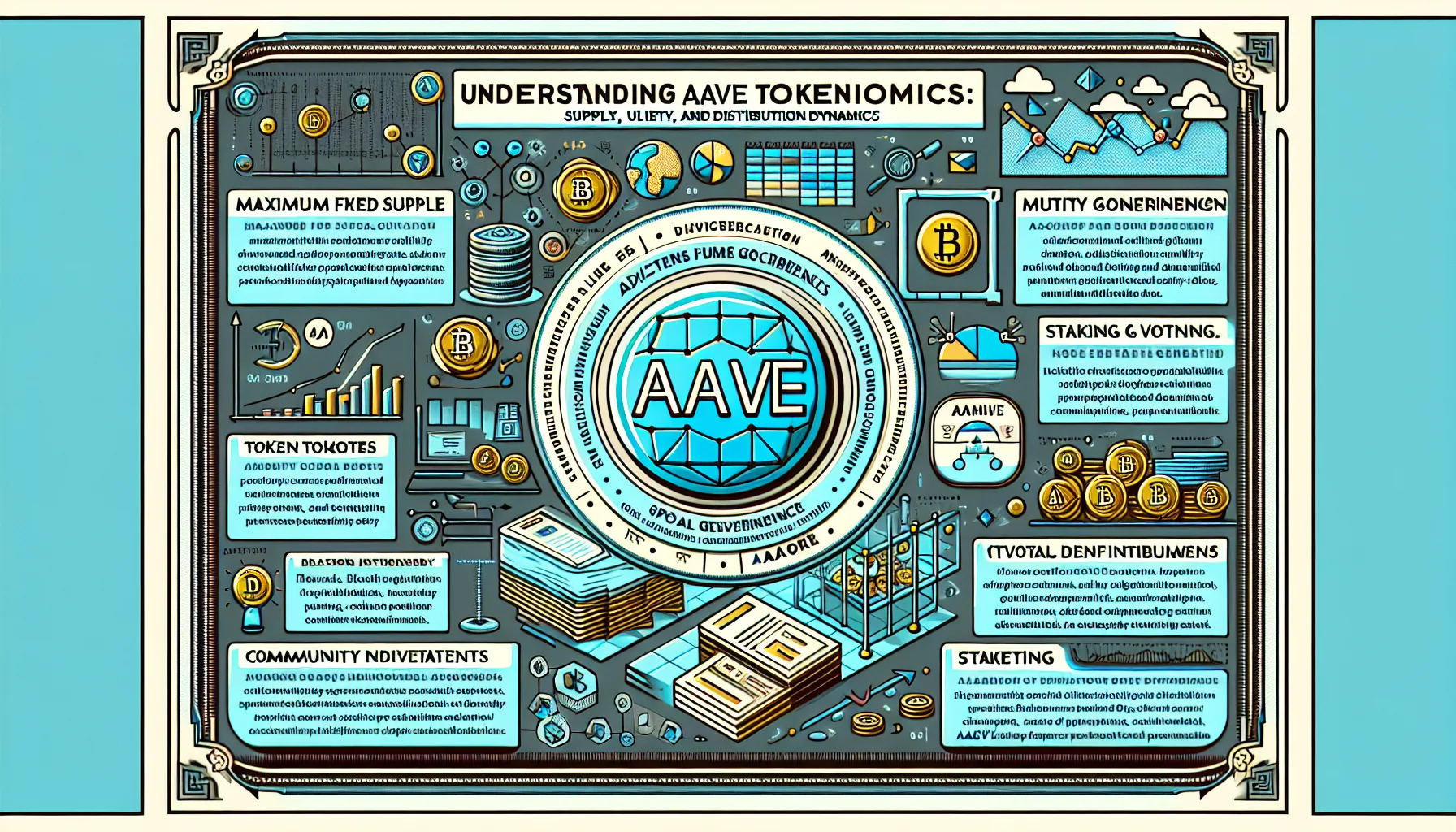
Understanding AAVE Tokenomics: Supply, Utility, and Distribution Dynamics
The tokenomics of AAVE, the native governance token of the Aave protocol, is a critical aspect of its ecosystem and functionality. Designed to optimize decentralization, incentivize participation, and reinforce the protocol’s security mechanisms, AAVE’s tokenomics incorporate a blend of unique features and challenges that crypto-savvy users should be aware of when engaging with the token.
Total Supply and Distribution
AAVE has a maximum fixed supply of 16 million tokens, significantly reduced from the 1.3 billion total supply of its predecessor, LEND, following a migration event at a 100:1 ratio. A portion of the total supply is allocated to the protocol's ecosystem reserve, staking incentives, and governance treasury. Notably, the reduced supply aims to enhance scarcity and align with Aave’s long-term value creation strategy, though it has also sparked debates about whether scarcity alone is enough to sustain demand in increasingly competitive DeFi markets.
Additionally, the token’s initial distribution and subsequent emissions triggered concerns among some community members about centralization risks. While governance has since shifted to community-driven models through AAVE holders, critiques remain regarding the fair distribution of tokens during its early adoption phases. Concentrated token ownership among early participants could pose challenges for democratic governance.
Utility and Staking Mechanisms
AAVE serves several key roles across the protocol. Primarily, it is utilized for governance, granting holders the ability to propose and vote on Aave Improvement Proposals (AIPs). This ensures alignment between protocol upgrades and the community's vision, but the system has been critiqued for the low participation rates in governance voting, a common challenge among DeFi projects.
Beyond governance, AAVE tokens can be staked to earn rewards while simultaneously securing the protocol via the Safety Module (SM). The SM acts as collateral of last resort, mitigating risks from potential shortfalls within the ecosystem. However, this mechanism isn't without trade-offs. Stakers face risks, including the possibility of "slashing," where part of their staked AAVE is utilized to cover protocol deficits. Additionally, as staking yields decline over time due to diminishing emissions, sustaining long-term participation by stakers remains an open question.
Inflation and Burn Mechanics
The tokenomics model includes a balance between inflationary pressures through staking rewards and deflationary mechanisms such as fee utilization. Protocol fees accrued from borrowers are partially used to buy back and burn AAVE tokens, reducing circulating supply and contributing to deflationary tendencies. While this model supports value retention, the scale of buybacks relative to overall supply reduction has been questioned, particularly given growth trajectories of competing DeFi protocols employing more aggressive burn strategies.
Token Liquidity and Market Dynamics
The AAVE token benefits from strong liquidity across decentralized and centralized trading platforms, fostering accessibility for participants. However, this liquidity also invites speculative trading, which may overshadow its utility-driven value. The tendency for high-stakes trading can introduce volatility into the token’s market dynamics, potentially impacting its adoption as a governance and staking tool.
Understanding these tokenomics nuances is critical for advanced users navigating the broader ecosystem. From its supply constraints to its governance architecture, foundational elements shape how AAVE functions yet leave room for improvement amid evolving DeFi trends.
AAVE Governance
AAVE Governance: Mechanics, Challenges, and Considerations
AAVE's governance structure stands as a cornerstone of its decentralized ecosystem, enabling token holders to influence protocol-level decisions. The governance is based on the AAVE token, which doubles as a utility and a governance asset, granting holders voting power proportional to their holdings. This structure, while innovative, carries complexities and risks worth examining.
Governance Voting Mechanism
AAVE governance operates through a proposal and voting framework. Proposals, known as Aave Improvement Proposals (AIPs), can cover various changes including protocol upgrades, risk parameter adjustments, and adding new asset support. Once proposed, these AIPs are subject to a transparent voting process conducted on-chain. For a proposal to be actionable, it must reach a quorum, ensuring sufficient community participation. However, the high threshold can occasionally slow decision-making, especially during periods of low voter engagement or in cases of contentious upgrades.
Delegation and Centralization Risks
A notable feature of AAVE governance is its support for voting power delegation. Token holders can delegate their governance power to others, enabling more active members or prominent entities to steer decision-making. While delegation increases participation for passive token holders, it introduces concerns about governance centralization. Prominent AAVE stakeholders, including large venture capital firms or institutional investors, can accumulate significant influence over key proposals. This raises questions about the protocol's long-term decentralization and whether the interests of smaller token holders are adequately represented.
Technical Committees and Their Role
Key to AAVE's governance framework is the existence of supporting structures like the Risk DAO and service providers. These committees manage specific protocol functions, such as risk assessments for collaterals or technical integrations. While this model helps streamline implementation and ensures operational security, it may dilute the power of token-based governance. Critics argue that decisions made by technical committees might not always align with the broader community, particularly in cases where expertise or operational risks are leveraged to push through controversial measures.
Voter Engagement Challenges
A crucial issue faced by AAVE governance is low voter participation. The time and knowledge required to evaluate proposals can deter many token holders, leaving critical decisions in the hands of a small, active subset of the community. This lack of broad participation not only affects quorum rates but also raises concerns about potential voter apathy undermining true decentralization.
Governance in AAVE is an evolving ecosystem, balancing decentralization, efficiency, and inclusivity. However, challenges such as centralization risks and voter engagement issues remain pivotal areas for improvement.
Technical future of AAVE
AAVE's Current and Future Technical Developments: Navigating Innovations and Challenges
Cross-Chain Functionality and Interoperability
One of AAVE's most critical technical tracks involves enhancing cross-chain compatibility. The protocol's adoption of the Ethereum Layer-2 (L2) ecosystems through integrations such as Optimism and Arbitrum has marked a significant evolution. These implementations aim to reduce transaction costs while preserving liquidity flows. However, AAVE faces the challenge of maintaining seamless interoperability as the multichain ecosystem becomes increasingly fragmented. The integration of additional L2 solutions or alternative chains introduces complexities, particularly around decentralized liquidity routing and cross-chain bridge security, both common attack vectors in DeFi.
Expansion of the GHO Stablecoin
AAVE’s native over-collateralized stablecoin, GHO, is a notable technical undertaking on its development roadmap. Designed to leverage AAVE’s existing liquidity pools, GHO aims to fortify the protocol’s utility while unlocking new use cases for users. However, the success of this stablecoin depends heavily on the protocol's ability to prevent over-leveraging and mitigate systemic risks, especially during market downturns. Optimizing the oracle infrastructure and fine-tuning GHO’s algorithmic parameters remain pivotal areas of focus. Additionally, the competition in the decentralized stablecoin space places immense pressure on AAVE to ensure GHO’s scalability and reliability without sacrificing security.
Upgrades to AAVE V4 Protocol Architecture
The anticipated release of AAVE V4 introduces a host of upgrades that aim to expand functionality and improve efficiency. Central to these developments is the integration of more modular smart contracts, which enables the protocol to incorporate governance upgrades and new features without requiring substantial infrastructure redesigns. Native support for isolated borrowing markets is under exploration, allowing users to interact with higher risk assets without contaminating the wider liquidity base. However, introducing isolated markets requires careful calibration to avoid liquidity fragmentation, a significant technical hurdle AAVE’s developers are tackling proactively.
Emphasis on Decentralized Governance Evolution
AAVE has committed to developing robust governance mechanisms through its DAO (Decentralized Autonomous Organization). While the community-driven model fosters decentralization, it also introduces delays in decision-making, particularly for advancing technical updates or onboarding new assets. To address this, automation tools such as snapshot voting and expedited governance processes are being piloted but remain works in progress. Striking a balance between community inclusivity and operational efficiency is a recurring challenge, with potential bottlenecks in scaling as governance participation increases.
Security Concerns in Scaling
As AAVE expands its technical horizons, its attack surface grows correspondingly. Flash loan vulnerabilities, a cornerstone feature of the AAVE protocol, are a double-edged sword—the same mechanism that enables sophisticated arbitrage opportunities has been exploited in the past for protocol-level attacks. Future updates must address these vulnerabilities while retaining flexibility for developers and users. Enhanced bug bounty programs and collaborations with external security auditing firms underline AAVE’s ongoing commitment to security, though eliminating these risks entirely remains elusive in the rapidly evolving DeFi landscape.
Comparing AAVE to it’s rivals
AAVE vs COMP: A Detailed Comparison of DeFi Lending Protocols
When comparing AAVE and Compound (COMP), both leading decentralized finance (DeFi) lending platforms, it’s evident that each takes unique approaches to decentralized borrowing and lending. While they operate in the same vertical, the differences in functionality, governance, and user experience highlight their contrasting strengths and weaknesses.
User Flexibility and Borrowing Options
A key distinction between AAVE and COMP lies in their approach to borrowing mechanisms. AAVE offers greater flexibility with its flash loans, a feature that allows users to borrow assets without collateral, provided the loan is repaid within the same transaction. This innovation opens up opportunities for arbitrage, debt refinancing, and collateral swapping, making AAVE particularly attractive to advanced users. Compound, by contrast, does not support flash loans, limiting its use case for those seeking rapid, one-block transaction borrowing solutions.
Additionally, AAVE exceeds COMP in the breadth of collateral types and supported assets. AAVE consistently integrates a wider variety of assets, including nuanced risk markets with more volatile cryptocurrencies. While Compound’s asset list is substantial, it focuses on a narrower, conservatively curated pool of crypto assets, appealing to users primarily seeking stability but at the cost of reduced diversity.
Rate Structures and Incentives
AAVE offers both stable and variable interest rates, giving borrowers the flexibility to select a rate type that suits their risk tolerance and preferences. Stable rates provide predictability, while variable rates allow users to capitalize on favorable interest conditions when market liquidity improves. Compound, on the other hand, exclusively uses variable interest rates, which can lead to unpredictability for borrowers during periods of market volatility.
Governance token incentives also diverge. While both AAVE and COMP utilize governance tokens (AAVE and COMP, respectively) for protocol management, COMP rewards are tied directly to lending and borrowing activity through liquidity mining programs. However, this incentive scheme has received criticism for disproportionately favoring large capital providers, potentially reducing equitable participation. In contrast, AAVE introduces ecosystem innovations like its Safety Module, enabling AAVE stakers to earn rewards while securing the protocol against undercollateralized loans—an area where Compound has no direct equivalent.
Risk and Decentralization Considerations
AAVE’s approach to governance is recognized as more decentralized, with a robust governance structure enabling token holders to vote on propositions such as asset listings and protocol upgrades. Compound, while similarly governed by token holders, has faced critique for its on-chain voting system being highly influenced by a handful of large whales, sparking concerns about centralization and power dynamics.
Another risk-related distinction lies in AAVE’s risk mitigation features, such as the Safety Module, which provides a backstop against systemic failures. Compound lacks an equivalent safeguard, making it arguably less resilient during crises like market-wide sell-offs or liquidation cascades.
While both platforms excel in providing decentralized lending and borrowing services, AAVE’s emphasis on user flexibility, innovative features like flash loans, and enhanced risk mitigation make it fundamentally different from Compound. The distinct trade-offs between the two protocols allow users to select the platform that best fits their financial strategies and risk appetites, emphasizing the nuanced landscape of DeFi lending.
AAVE vs. MKR: A Deep Dive into DeFi Lending Models
When comparing AAVE and Maker (MKR), the distinctions in their lending mechanisms and ecosystem design become apparent. Both compete within the decentralized finance (DeFi) sector, yet their approaches to lending stand in stark contrast, revealing strengths and limitations within each protocol.
Collateralization Models: Dynamic vs. Static
AAVE operates under a liquidity pool model, allowing users to deposit a variety of crypto assets to fund its protocol. Borrowers access these funds by supplying collateral, with overcollateralization ensuring stability. Conversely, Maker relies on a single-collateral-to-loan approach through its Dai stablecoin system. To mint Dai, users lock up Ether (ETH) or other approved assets in Maker Vaults, adhering to strict collateralization ratios. While AAVE's model promotes flexibility by supporting a broader asset range, Maker's static approach can limit user options but provides a more predictable system less susceptible to liquidity fluctuations.
Interest Rate Mechanisms: Algorithm vs. Governance-Driven
AAVE’s interest rates are algorithmically determined, reacting dynamically to supply and demand within its liquidity pools. This makes borrowing costs and yields variable but efficient for active participants. Maker, on the other hand, enforces interest rates through governance-driven decisions by MKR token holders. Although this enables a more centralized and deliberate policy, it faces criticism for potential delays or bias due to governance bottlenecks, especially during periods of high market volatility. MKR holders' ability to influence these rates has raised questions about decentralization, especially when compared to the automated structure of AAVE.
Risk Exposure: Liquidations and Stability
Liquidations in AAVE occur when collateral falls below the required thresholds, with penalties ensuring protocol solvency. Maker also employs liquidations via auctions, where undercollateralized vaults are rapidly bid upon by participants to restore system stability. However, Maker's stability mechanisms, reliant on Dai's peg to the US dollar, have faced scrutiny, particularly during market events that stress the peg. AAVE's reliance on variable rates can introduce risk for users during extreme price fluctuations, but it doesn't tether its stability to a single asset like Dai.
Governance: Centralization vs. Token Influence
Maker is heavily dependent on MKR holders for governance, including risk parameters and collateral types. While this model emphasizes community-driven decision-making, it has faced criticism for being overly concentrated among large MKR holders. AAVE's governance also leans on its native AAVE token, but its decentralized liquidity pool design inherently reduces systemic reliance on certain governance decisions, creating less friction in day-to-day protocol operation.
Ultimately, the AAVE and MKR comparison underscores fundamental differences in design philosophies—one prioritizing liquidity flexibility and rapid reactions, the other structured around deliberate governance and stability. These distinctions inform user preferences but also highlight potential vulnerabilities unique to each platform.
AAVE vs. CRV: A Focus on Lending Mechanisms and Token Utility
When comparing AAVE and CRV (Curve DAO Token), the fundamental distinction lies in their areas of focus within the DeFi ecosystem. AAVE primarily positions itself as a decentralized lending protocol, excelling in the facilitation of overcollateralized loans through its liquidity pools. In contrast, CRV serves as the governance token of Curve Finance, a decentralized exchange (DEX) explicitly designed for stablecoin and pegged-asset swaps. While their objectives diverge, there are key areas where the two intersect, particularly in terms of liquidity incentives and governance mechanisms.
Liquidity Models: Lending Pools vs. Stable Asset Swaps
AAVE and CRV approach liquidity from distinct angles. AAVE's liquidity pools are designed to support lending and borrowing of a diversified set of assets, covering both major cryptocurrencies and stablecoins. It incentivizes liquidity providers with interest payments and AAVE token rewards. This mechanism ensures dynamic utilization rates based on supply and demand fluctuations.
CRV, on the other hand, prioritizes low-slippage swaps and efficient trading of stable assets via its unique automated market maker (AMM) algorithm. Liquidity providers on Curve Finance are incentivized with CRV token emissions distributed based on the longevity and volume of their deposited assets. This system emphasizes rewards for stablecoin holders, contrasting with AAVE’s broader asset coverage that includes higher-volatility cryptocurrencies.
Governance: Contrasting Approaches and Challenges
The governance structures of AAVE and Curve represent another point of divergence. AAVE token holders govern the protocol by voting on risk parameters, asset inclusions, and other critical updates. This system enables AAVE to quickly adapt to market trends but also creates governance centralization concerns, as large holders can dominate voting outcomes.
CRV governance places heavy emphasis on "vote-locking," where token holders lock up CRV to obtain veCRV (voting escrowed CRV). This provides enhanced voting power and boosts on liquidity rewards but creates a barrier to entry for smaller participants due to the time commitment required. This model can increase long-term alignment with the protocol but risks disenfranchising shorter-term participants.
Potential Drawbacks of CRV’s Approach
While CRV's mechanism for stable asset swaps is highly specialized, its effectiveness is narrow in scope, particularly for those seeking diverse lending opportunities found on AAVE. Moreover, the heavy dependence on liquidity provider incentives via CRV emissions raises sustainability questions. If token emissions were to decrease, Curve Finance could face challenges in maintaining liquidity levels—a point less critical for AAVE, where liquidity is driven by both lending demand and borrower interest payments.
In conclusion, AAVE and CRV are fundamentally different in design, yet they intersect in the competitiveness of attracting liquidity providers. CRV's singular focus on stable assets provides specialization but narrows its utility compared to AAVE's broader lending and borrowing capabilities.
Primary criticisms of AAVE
Primary Criticism of AAVE: Risks and Limitations of the DeFi Protocol
AAVE, one of the most prominent decentralized lending and borrowing platforms, has garnered widespread adoption within the crypto ecosystem. However, its growth has not shielded it from criticism and scrutiny. Below are some primary concerns associated with the protocol, from potential user risks to deeper structural challenges.
Smart Contract Vulnerabilities
At its core, AAVE operates through sophisticated smart contracts, which automate its decentralized finance (DeFi) functionality. Despite rigorous audits and community trust, the inherent risks tied to bugs or exploits in these contracts remain a key concern. Hackers have routinely targeted DeFi protocols, and while AAVE has largely avoided catastrophic breaches, the sheer complexity of its contract logic makes it a potential target. Any vulnerability could result in significant financial losses for its users and jeopardize the protocol's integrity.
Governance and Centralization Risks
While AAVE promotes itself as a decentralized protocol governed by its community using the AAVE token, critics argue that true decentralization remains elusive. A significant portion of voting power is concentrated in a subset of large token holders. This concentration raises questions about whether the protocol can adequately represent the broader community's interests. Furthermore, the high barriers to participation in governance—such as needing ample tokens to propose or vote on decisions—restrict inclusion and may limit the diversity of perspectives in critical decision-making processes.
Collateralization Requirements and Liquidation Risks
AAVE’s overcollateralization model, while essential for mitigating counterparty risk in a trustless environment, imposes significant constraints on users. Borrowers are required to lock up collateral significantly higher than the amount they borrow, which can make the platform less attractive to users without substantial capital. Additionally, during periods of extreme market volatility, users face heightened risks of liquidation if the value of their collateral drops below the required threshold. Critics argue that this introduces systemic risks, particularly in a broader market downturn, as forced liquidations could spiral into amplified price crashes.
Regulatory Uncertainty
As a highly visible player in the DeFi space, AAVE is not immune to regulatory challenges. Some critics point out that the protocol's non-custodial and permissionless nature could draw scrutiny from global regulators. Issues such as enabling anonymous borrowing/lending activities or potential exposure to illicit transactions may invite stricter oversight. Although the AAVE community has positioned itself as a proponent of compliance-friendly DeFi solutions, such as the Aave Arc platform for institutional investors, balancing decentralization with regulatory demands remains an ongoing challenge.
Usability and Complexity
Another recurring criticism of AAVE is its steep learning curve. Despite being marketed as user-friendly, navigating the platform's interface and understanding its dynamics—such as managing loan health factors, calculating interest accruals, and tracking governance proposals—can be daunting for new users. Even crypto-savvy individuals may find the system’s complexity deterring, limiting its potential for broader adoption.
AAVE’s impressive technical achievements are counterbalanced by these criticisms, offering a nuanced view of its role within the rapidly evolving DeFi landscape.
Founders
The Founding Team Behind AAVE: Visionaries and Challenges
AAVE, the decentralized finance (DeFi) platform that has cemented itself as a cornerstone in the crypto lending ecosystem, was brought to life by a small but determined team of innovators. Stani Kulechov, the founder and CEO, laid the groundwork for AAVE in 2017, initially branding it as ETHLend before rebranding to AAVE in 2018. Kulechov, a lawyer by training, identified early gaps in the Ethereum ecosystem, particularly in lending and borrowing, and sought to address these inefficiencies with a decentralized protocol. The team’s origins highlight an academic-meets-tech ethos, with an emphasis on real-world utility driving their initial efforts.
The founding team also includes key contributors from technical and operational backgrounds, adding depth to the project’s launch. Engineers with expertise in Solidity smart contract development formed the backbone of AAVE’s early development, ensuring the architecture could support the complexity of a trustless lending and borrowing system. Additionally, the inclusion of legal advisors from the outset was a notable factor, reflecting an early recognition of the importance of regulatory considerations in the DeFi landscape. This multidisciplinary approach was instrumental in navigating the technical, operational, and compliance challenges during AAVE’s development phases.
However, despite its notable achievements, AAVE’s founding team is not without criticism. Chief among them is the perception of a somewhat centralized leadership structure, with Kulechov acting as the de facto face of both the project and its strategic direction. Critics argue that this runs counter to the decentralization ethos of DeFi, particularly when token holders and community members feel excluded from key decision-making processes. While governance mechanisms via the AAVE token have been introduced to empower the community, skeptics question whether the founding team disproportionately influences the protocol's evolution.
Another area of scrutiny relates to scalability within the team itself. As AAVE expanded rapidly in popularity and moved into new markets (such as multi-chain deployments), the founding team faced challenges in scaling their operational and developmental capacities. This has led to occasional delays in feature rollouts and the perception of uneven communication with the broader community. Moreover, positioning itself in a regulatory gray area has undoubtedly added external pressures to the founding team, underscoring challenges that come with pioneering in uncharted territories.
Ultimately, the history of AAVE's founding team serves as both a testament to their technical ingenuity and a case study in navigating the complexities of decentralization and crypto innovation.
Authors comments
This document was made by www.BestDapps.com
Sources
- https://aave.com/whitepaper
- https://github.com/aave/aave-protocol
- https://docs.aave.com/
- https://aave.com/faq
- https://etherscan.io/token/0x7Fc6A3eE9c4bEc3335d9Fe36bC410cD8c1bC2080
- https://defipulse.com/aave
- https://medium.com/aave
- https://twitter.com/aaveaave
- https://github.com/aave/aave-v3-core
- https://www.coingecko.com/en/coins/aave
- https://coinmarketcap.com/currencies/aave/
- https://messari.io/asset/aave
- https://governance.aave.com/
- https://snapshot.org/#/aave.eth
- https://analytics.aave.com/
- https://app.aave.com/
- https://aavegrants.org/
- https://dappradar.com/rankings/protocol/aave
- https://cryptoeconomy.com/aave-latest-news/
- https://chain.news/tag/AAVE